Military

Remains of 17 servicemen identified from 1952 crash on Colony Glacier

Search teams retrieving debris from the crash in 2012. (Photo courtesy DoD/Cpt. Jamie D. Dobson, U.S. Army)

The remains of 17 service members who died in a 1952 plane crash near Mount Gannett have been identified by the Department of Defense. An Alaska National Guard Blackhawk helicopter crew discovered the crash site two summers ago on Colony Glacier during a training exercise. A team went back to the site to recover what they could later that month.

The identified remains will be returned to families all over the country and given burials with full military honors.  Some of the family members reflected on the experience.

Mary May and her younger brother Bill Turner were the middle siblings in a pack of six kids growing up in rural Pennsylvania in the 1930s.

“We lived on a tiny little valley. We knew nothing about the outside world. So your family was all you had,” she recalled.

May said her brother loved airplanes and joined the Air Force when he finished school. He was 22 and headed to Korea when the C-124 Globemaster he was navigating crashed with 52 people on board.

“It was a kid trying to realize his dream, you know? And it was cut short, I guess.”

Bad weather made it impossible for search parties to recover the remains of the plane in the last months of 1952. May said she never had closure from his death. “You never give up totally. You always think that he would be found or he would come home somehow.”

When some of the wreckage was spotted in 2012, May said she began to hope. Like other relatives of the victims, she gave a sample of her DNA to the Department of Defense forensic labs. The scientists there managed to match it with the bones of her brother’s leg.

May said she was shocked when she learned they found her brother. She recalled she shouting the news to her daughter over the phone, but then she didn’t know what to say.

“It’s very hard—you didn’t want to accept it before and now you still don’t want to accept it. I don’t know,” she paused. “It’s just a hard thing to live through.”

May said she thinks burying the remains alongside her mother will help. All of her other siblings have already passed.

For Michael Williams, the death of his brother-in-law Howard Martin in the 60 year-old crash was something his wife’s family would never discuss.

“When it was brought up, it immediately brought tears. So I basically did all my research in secret, so to not upset anybody. I just wanted to find out a little more detail than what the family revealed.

Williams said his research connected him with other families around the country who were also seeking closure on the issue. They formed relationships through email and Facebook and remembered even when others forgot.

“It’s kind of disappeared in the fog of time,” he said.  “And fortunately the Alaska National Guard noticed something and decided to take a look down on Colony Glacier.  They could have easily flown over and said ‘ah that’s nothing’ and not went down there and investigated. But they got curious. And really, the families do appreciate it.”

But other families will continue to wait. The remains of 35 of the 52 victims are still lost on the mountain, though the Department of Defense said they will keep looking. In memory of those who died, the mountain where they perished was recently named Globemaster Peak.

Related Stories:
Specialists Survey Old Plane Crash Near Knik Glacier
Recovery Efforts Continue For Old Plane Crash Near Knik Glacier

Begich painted as soft on VA scandal

Sen. Mark Begich, chairman of the Senate Commerce, Science and Transportation Subcommittee on Oceans, Atmosphere, Fisheries and the Coast Guard, speaks during the testimony of U.S. Coast Guard Adm. Robert J. Papp Jr., commandant of the Coast Guard, at a hearing in Washington, D.C, April 23, 2013. Papp discussed the Coast Guard fiscal year 2014 budget. (Photo by Petty Officer 2nd Class Patrick Kelley)
Sen. Mark Begich. (Photo by Petty Officer 2nd Class Patrick Kelley)

Alleging a senator is indifferent to vets is serious anywhere. Even more so in Alaska, which has the highest number of vets per capita. Anti-Begich ads, running on nearly half a million dollars of Alaska airtime, aim to plant Begich in the midst of the scandal.

“Veterans died waiting for care that never came,” says one. “Sen. Mark Begich sits on the veterans affairs committee. His response: ‘If there’s a problem, they need to fix it.’ If there’s a problem?”

It’s paid for by Crossroads GPS, a national group running ads against Begich and for Republican challenger Dan Sullivan.  Sullivan highlighted the same Begich “if there’s a problem” quote in an op-ed published last month in the Anchorage Daily News. Sullivan says Begich acts like he’s a mere bystander to the veteran crisis.

But FactCheck.org, a project of the Annenberg Public Policy Center, says the ad misuses the Begich quote, which is from a Wall Street Journal story. In it, Begich says the administration should have learned its lesson from the healthcare.gov website debacle. The exact Begich quote in the journal is:  “They should have learned from that – If there’s a problem, they need to fix it.” FactCheck says Begich did react to the VA scandal. He called for an immediate hearing, wrote then-VA secretary Eric Shinseki to express outrage, and at a hearing last month, Begich pressed Shinseki on why no one had been fired for falsifying records.

Crossroads unveiled a new TV ad this week, still painting Begich as disengaged on the scandal and suggesting that all he did was write a letter.

Begich is trying to show that he IS helping. He’s trumpeting Senate passage of a bill this week aimed at getting veterans quicker access to care. Begich says it relies on a solution he’s been pressing since he first ran for Senate in 2008 – allowing vets to make appointments at non-VA facilities.

“When I campaigned on the hero’s health card (bill), I just believed that we had a resource that we could maximize, that we could move forward on, that we could make a difference for our veterans,” he said on the Senate floor yesterday. “And we’re seeing it.”

In Alaska, the VA has agreements with Native hospitals and clinics and the Anchorage Neighborhood Health Center that have reduced VA wait times to among the lowest in the country. But that brings us to another charge Begich is facing – that he claims credit for successes that weren’t his alone. Alaska Congressman Don Young knocked Begich for it in a campaign video that surfaced on YouTube this week.

“Don’t take credit for something you did not do,” Young scolded in the video. ” And when we do something together, say we did it. I think it’d be a lot better.”

 The Senate record shows Begich has pressed to have vets seen at Alaska Native health centers for years. But it also shows Sen. Lisa Murkowski has been pushing that cause since at least 2007, back when Begich was still mayor of Anchorage.

New Coast Guard District 17 commander brings Arctic experience

With the buoy tender Sycamore as a backdrop and Coast Guardsmen and women in their dress blues, Rear Adm. Tom Ostebo turned over Coast Guard District 17 command to Rear Adm. Dan Abel on Thursday.

Ostebo is known for his work in the Arctic, and Abel says he’s ready to continue what his predecessor started.

Pacific Area commander, Vice Adm. Charles Ray, praised Ostebo’s leadership over the past three years.

“Tom Ostebo has flown over, sailed across, walked the beaches more than any Coast Guardsman, I believe, in the history of this district,” Ray said.

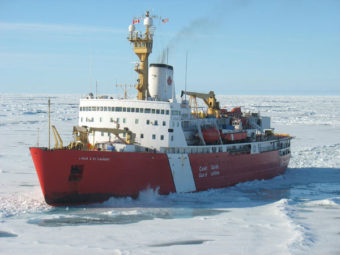
During Ostebo’s tenure, the Coast Guard launched seasonal operations in the Arctic, where shipping traffic is on the rise. When a winter storm prevented a fuel delivery to Nome in 2012, he sent the icebreaker Healy to clear a path for a Russian tanker. He also supervised the Coast Guard’s response to the grounding of the Shell drill rig Kulluk near Kodiak in early 2013.

For these and other successes, Ostebo gave credit to the men and women under his command.

Every day you protect the nation’s commerce, you protect Alaskans, and you protect America’s greatest maritime resources,” Ostebo said. “And you do it better than anyone else, with efficiency and skill.”

Ostebo received a citation for exceptional meritorious service. He’s been nominated for a promotion to vice admiral and a post as the Coast Guard’s Deputy Commandant for Mission Support in Washington, D.C. The position is subject to Senate confirmation. Ostebo says it will allow him to continue focusing on the Coast Guard’s Arctic mission.

He says there’s still a lot of work to be done in that part of the world.

“It’s more than just exploration. It’s the maritime commerce piece,” Ostebo told reporters after the ceremony. “It’s what’s the Bering Strait is going to look like 10, 20 years from now? Will it look like the Straits of Hormuz or the Straits of Malacca? You know, one of these big international straits.”

This will be Abel’s first tour in Alaska, but he says he’s no stranger to the Arctic. In his previous command in Boston, he supervised the International Ice Patrol. That’s the Coast Guard program established to monitor icebergs in the North Atlantic to avoid another Titanic.

“We also supported Operation Nanook, which was practice mass rescue, environmental cleanup in the Arctic,” Abel said. “And the other thing we did, we supported the North Atlantic Coast Guard Forum to 17 nations that band together. Eight of those are the Arctic nations.”

Abel says he plans to travel extensively in Alaska and work with local communities to learn as much as he can about the state’s unique needs.

The far reaches at these high latitudes are going to be the challenge,” he said. “And I’m going to have to learn from the folks that’ve been standing watch a little longer than I.”

Abel is already planning to visit Nome, where Mayor Denise Michels says marine traffic has increased so much that the port, which used to close in October, is now open into November.

“Last year we had over 400 dockings in Nome,” Michels said. “Every year it’s more and more. We have more cruise ships this year.”

Michels hopes Abel can visit in July, when vessel traffic is at its peak.

“Safety is a concern, environmental issues is a concern,” she said. “The marine mammal migration through the Bering Strait, which is the choke point where we’re at, you know, it’s our front yard. So, to have him understand our concerns for subsistence, food security is going to be very important for his leadership for the next couple of years.”

The Coast Guard’s 17th District is based in Juneau. The commander leads 2,500 active duty, reserve, civilian and auxiliary personnel statewide, and manages operations over more than 3.8 million square miles and more than 44,000 miles of coastline.

Missile defense budget shows continued Alaska role

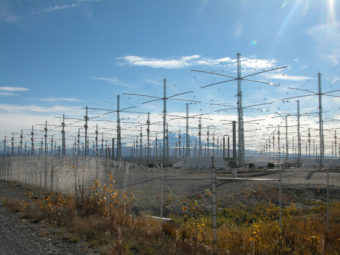
A ground-based missile interceptor is lowered into its missile silo during an emplacement at the Missile Defense Complex at Fort Greely, Alaska in 2006. (Photo courtesy U.S. Army)

The ground-based missile defense system, which includes interceptors at Fort Greeley, failed at target practice over the Pacific last year. Now the Pentagon is asking Congress for money to overhaul the system. The budget request shows Alaska is likely to remain central to missile defense as the system matures.

Missile Defense Agency director James Syring told senators they don’t need to worry about a repeat of last year’s botched test, when an interceptor launched from California missed because the head failed to separate from the booster.

“The failure last July I won’t go into details in this forum, but it was very simple. I’m confident that we’ve corrected that,” he said.

The Missile Defense Agency is asking Congress for $7.5 billion for next year. Syring says one crucial element is a new detection system called LRDR – long-range discrimination radar, which is likely to be based in Alaska. Syring told a Senate Committee he wants to have the billion-dollar radar operating within six years.

“The importance of the radar is that it provides us that needed discrimination capability against the threat from North Korea,” he said. “As they continue to progress and add decoys and counter-measures, and I’ll stop there in terms of classification, we must have a discrimination ability of a radar to counter that.”

Syring says he hopes to announce a location in a few months, but the agency has already told potential contractors to assume the radar will be installed at Clear Air Force Station, near Fairbanks. The budget also calls for 14 more interceptors at Fort Greely, bringing the total there to 40 by mid-2017. One part of Alaska the Missile Defense Agency is giving up on is Kodiak. The agency used to launch rockets from there to serve as targets but stopped in 2010 in favor a Kwajelein atoll in the Pacific. Sen. Lisa Murkowski asked if the Kodiak Launch Facility might be part of a future test. Syring said no, because the testing has to be more realistic now, and the geometry of a launch from Kodiak makes it a poor stand-in for North Korea.

Anchorage rated satisfactory in Veterans Affairs audit

Chart of wait times for VA care for ISN 20. (Chart courtesy U.S. Department of Veterans Affairs)
Chart of wait times for VA care for the Northwest region. (Chart courtesy U.S. Department of Veterans Affairs)

Ninety-nine percent of veterans seeking medical appointments from the Anchorage VA are seen within 30 days. That’s according to a Veterans Affairs audit released yesterday.

The audit found an established patient could schedule a primary care appointment within two days, on average. The average wait time was less than three days to see a specialist, and less than a day for mental healthcare. New patient wait times were closer to 30 days.

The auditors interviewed staff at hundreds of VA hospitals and clinics across the country. Nationwide, 13 percent of schedulers reported they were told to falsify appointment schedules to make wait times appear shorter.

Sen. Mark Begich says the Anchorage numbers reflect great improvement. Sen.

Lisa Murkowski calls them encouraging but warns they represent a snapshot in time and require commitment to maintain.

Coast Guard Sector Juneau gets new leadership

U.S. Coast Guard Sector Juneau has a new commanding officer.

Capt. Shannan Greene took over for Capt. Scott Bornemann in a ceremony Friday at Centennial Hall.

Bornemann led Sector Juneau for the past three years. He said the men and women under his command during that time are the best the Coast Guard has to offer.

“I’d match them with any crew in the country,” he said, before listing some of their accomplishments.

“You sank a derelict Japanese fishing vessel,” Bornemann said, referring to the Ryou-Un Maru, which sailed across the Pacific Ocean without a crew following the 2011 Japanese earthquake and tsunami.

“You planned and conducted multiple unified command-based exercises that broadened stakeholder and tribal engagement and group participation with key agencies in search and rescue, security and natural disaster scenarios,” he said. “You also ensured the safety of the pristine marine environment in Southeast Alaska.”

Bornemann is staying in Juneau as Chief of Prevention for the Coast Guard’s 17th District. He’ll oversee maritime safety, maritime security and environmental stewardship for the entire state.

Greene most recently served as Deputy Chief of Incident Management for the Coast Guard’s 1st District in Boston, where she supervised hazard response and search missions for eight Northeast states. According to a Coast Guard biography, highlights of her tour there include coordinating responses to Hurricane Sandy and the Boston Marathon bombing.

Greene said she was impressed by all aspects of Sector Juneau during her transition week working with Bornemann.

“To our many partners throughout Southeast Alaska, we could not be successful without your expertise and involvement,” she said. “I look forward to continuing the robust relationship that already exists today.”

Greene’s husband is a Coast Guard commander. They have three young sons.

Coast Guard Sector Juneau has about 250 active duty, reserve and civilian employees.

District 17 Commanding Officer Rear Adm. Thomas Ostebo presented Bornemann with a citation for meritorious service to Sector Juneau. Ostebo has been promoted to a position in Washington, D.C. His change of command ceremony is June 12.

Site notifications
Update notification options
Subscribe to notifications