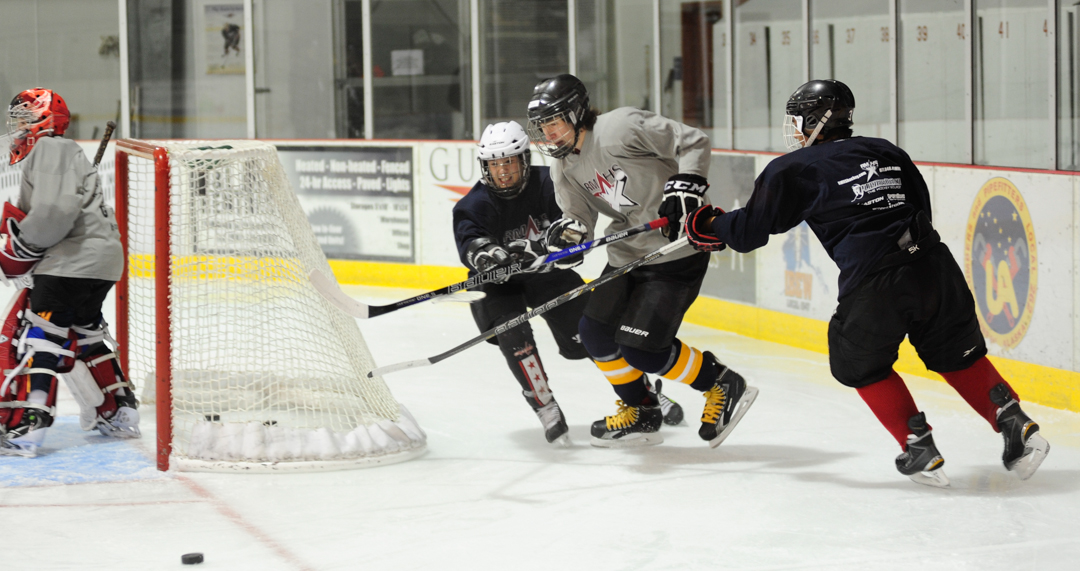
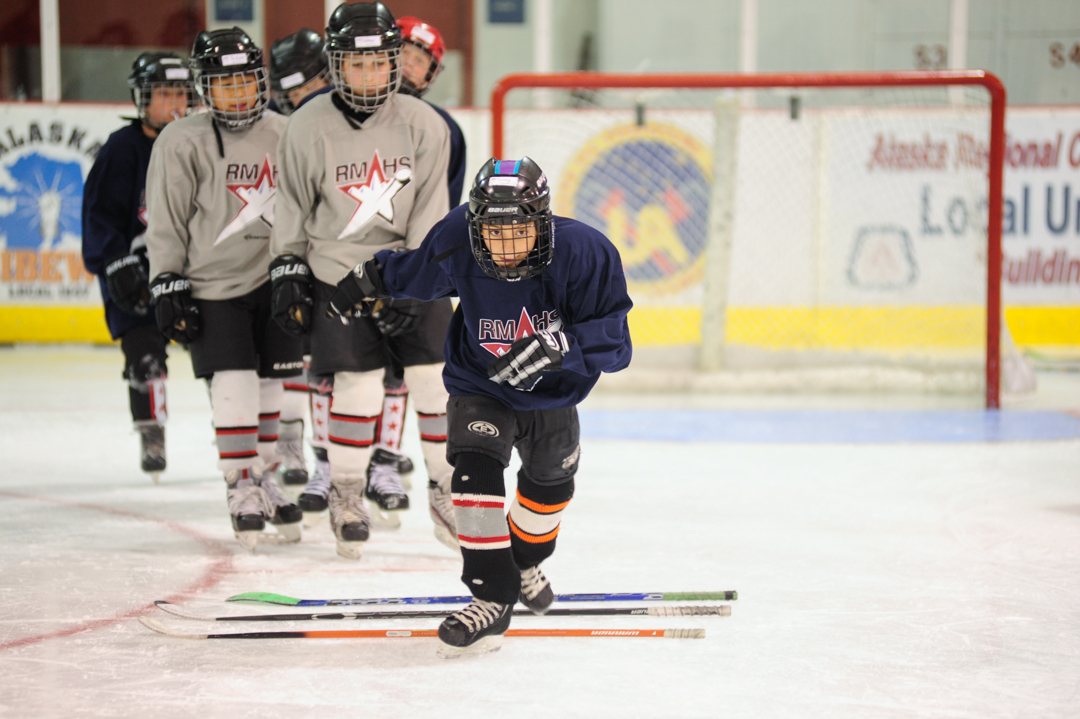
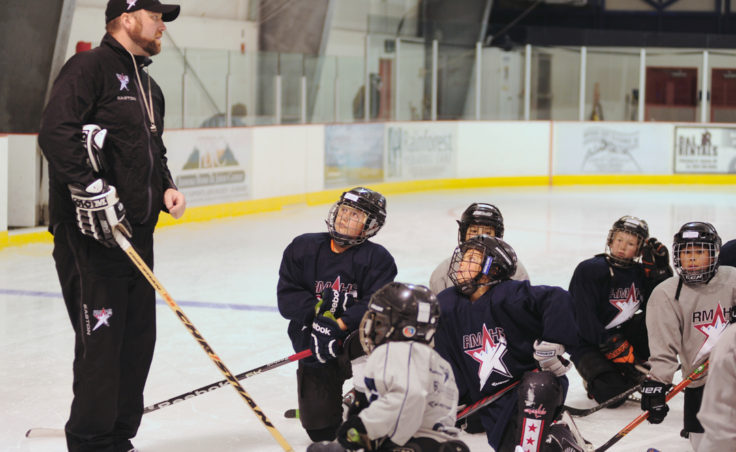
The Juneau Douglas Ice Association helped kick off another season at Treadwell Ice Arena by bringing back the Rocky Mountain Hockey School last week. More than 50 players took the ice for three hours a day during a weeklong camp funded thanks in part with the city’s Youth Activity Grant. The group is hosting a learn to play session on Aug. 30 for kids.
All photos by Steve Quinn.
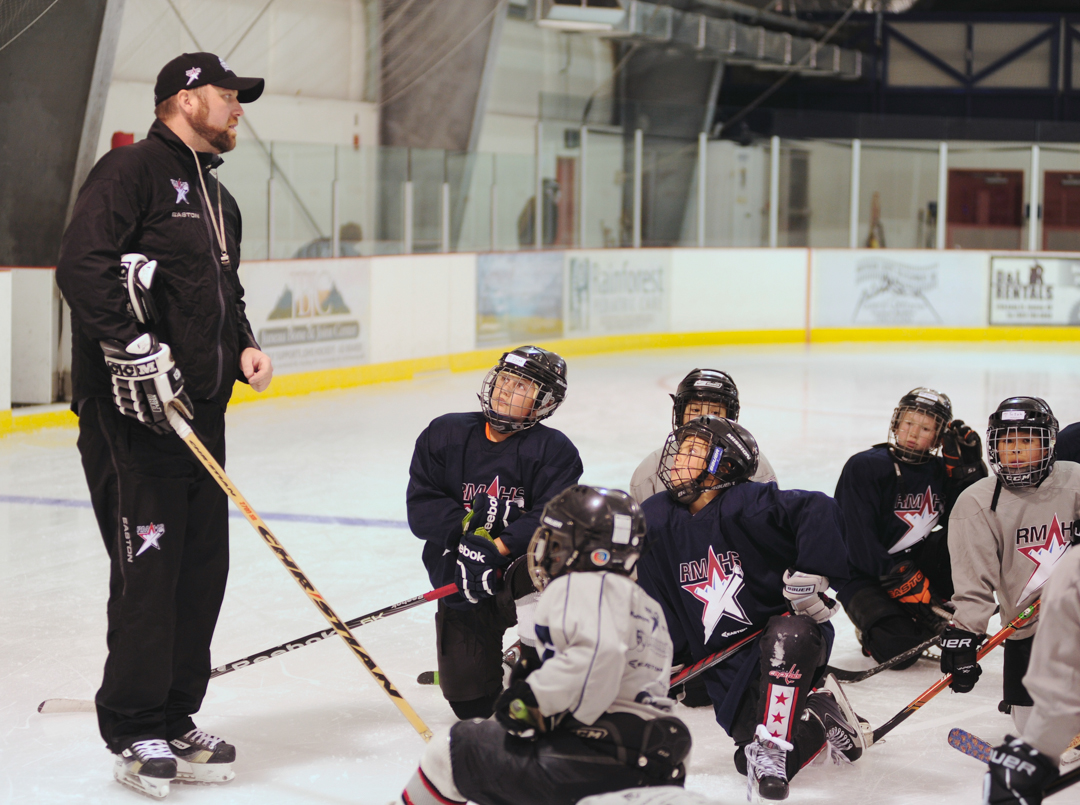
Rocky Mountain Hockey School coach Zac Desjardins gives instructions while Dylan Murdoch (center) and Joey Meir are fixed on the coach’s words during the first week of the new season at Treadwell Ice Arena.
Tezah Haddock works on his form during a passing drill.
Rocky Mountain Hockey School coach Zac Desjardins draws up drill while players look on.
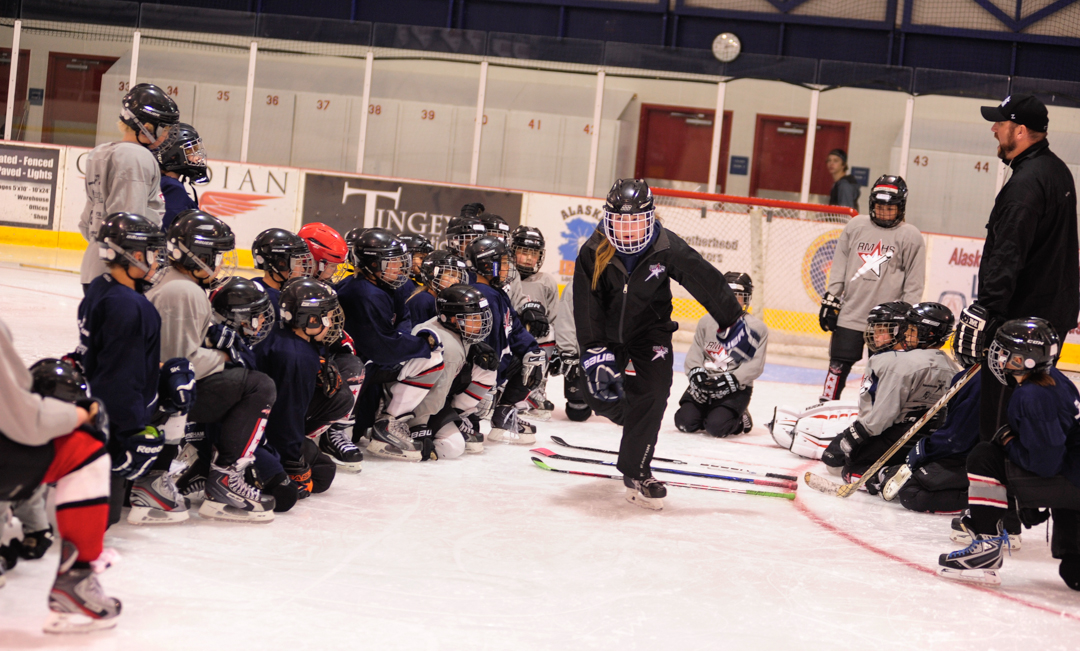
Emma Kaelke demonstrates a drill as young players look on during a Rocky Mountain Hockey School session at Treadwell Ice Arena.
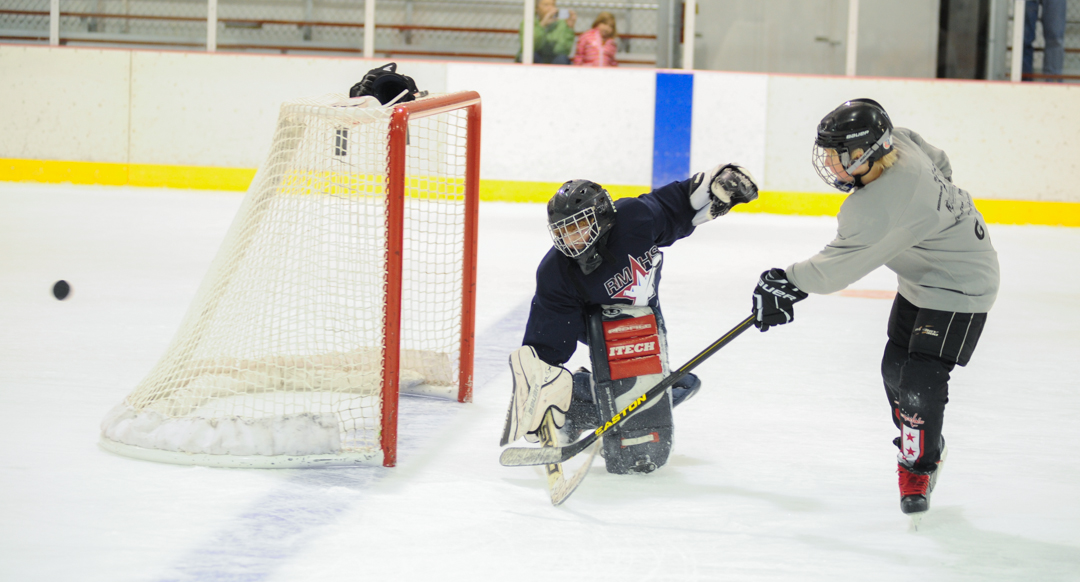
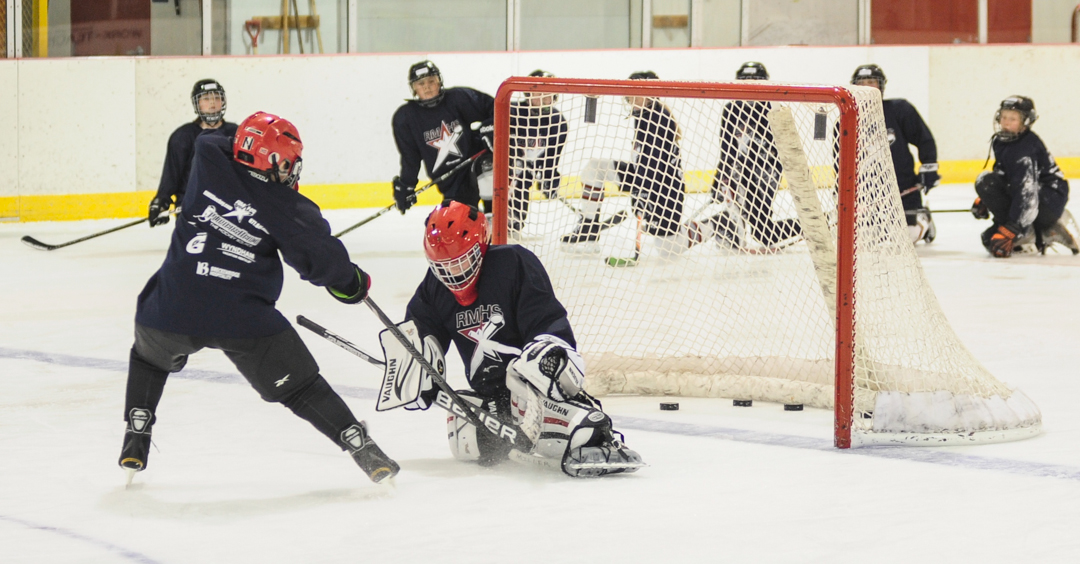
Goalie Zach Stagg turns back Paxton Wildes during a Rocky Mountain High School drill at Treadwell Ice Arena.
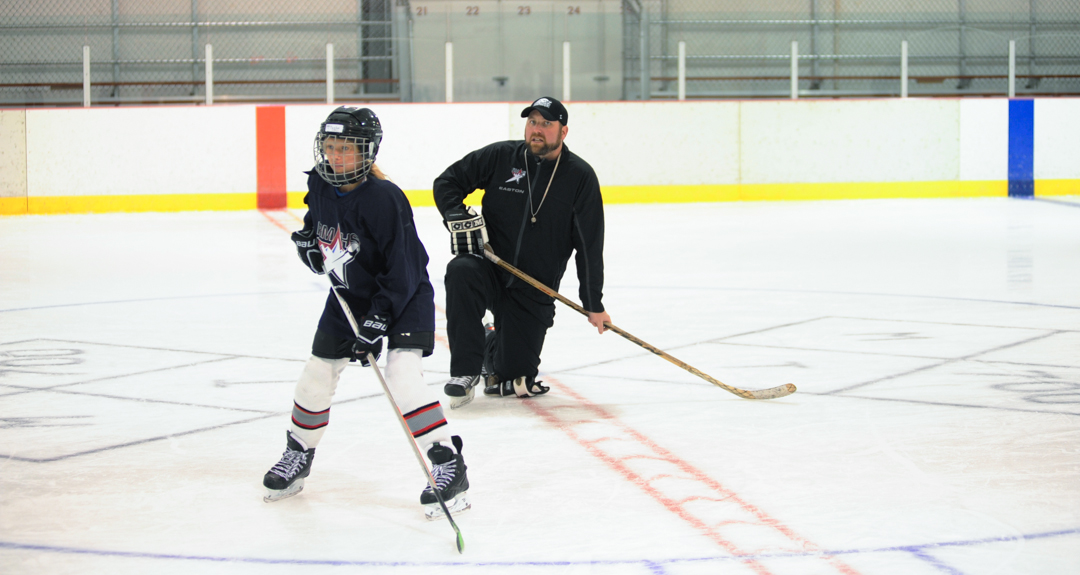
Rocky Mountain Hockey School coach Zac Desjardins watches over Taylor Bentley as she’s about to receive a pass then relay it to another player during a Rocky Mountain High School drill at Treadwell Ice Arena.
Gabe Miller runs into goalie Jaxson White during a Rocky Mountain Hockey School drill at Treadwell Ice Arena.
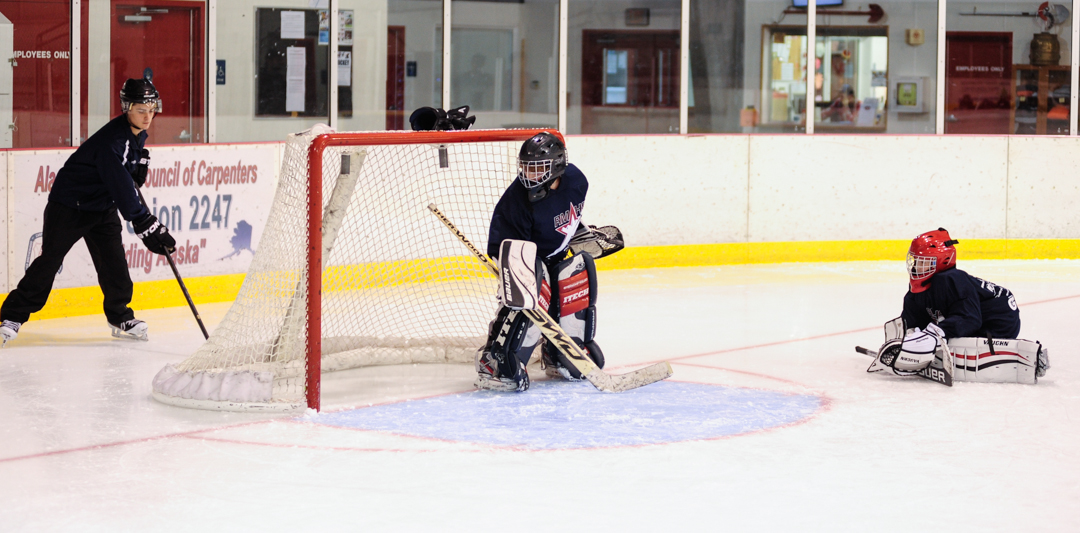
Former Juneau Douglas High School standout goalie Colter Pritchard works with goalies during a Rocky Mountain Hockey School drill at Treadwell Ice Arena.
Ryan Liebelt takes a turn during a drill that times each player in a sprint exercise during a Rocky Mountain Hockey School drill at Treadwell Ice Arena.
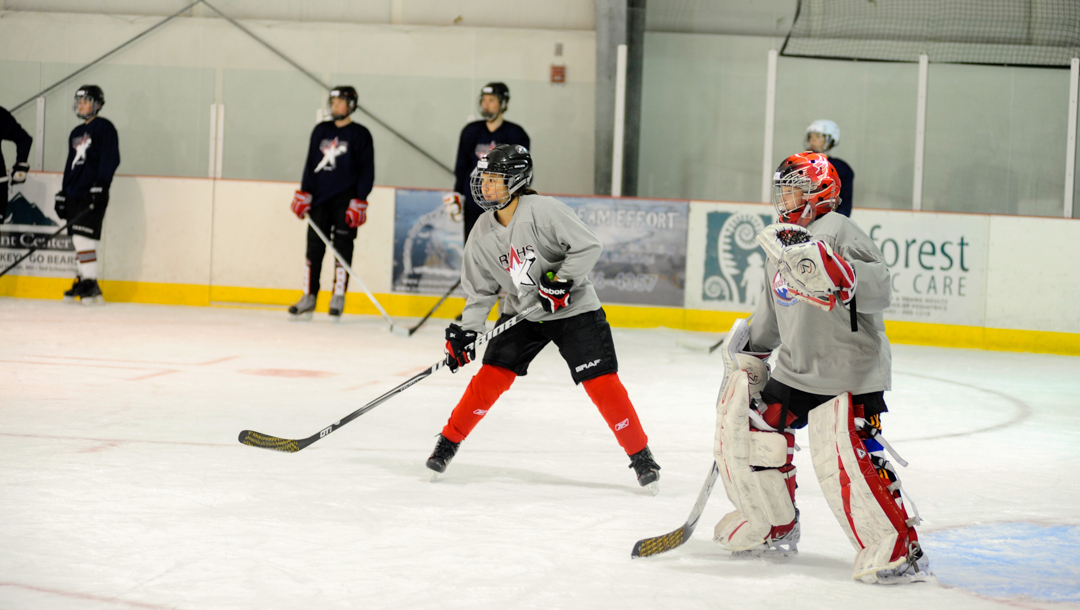
Kaleah Haddock gets in position to redirect a shot into the net, but the shot must first get past goalie Kyle Robinson.
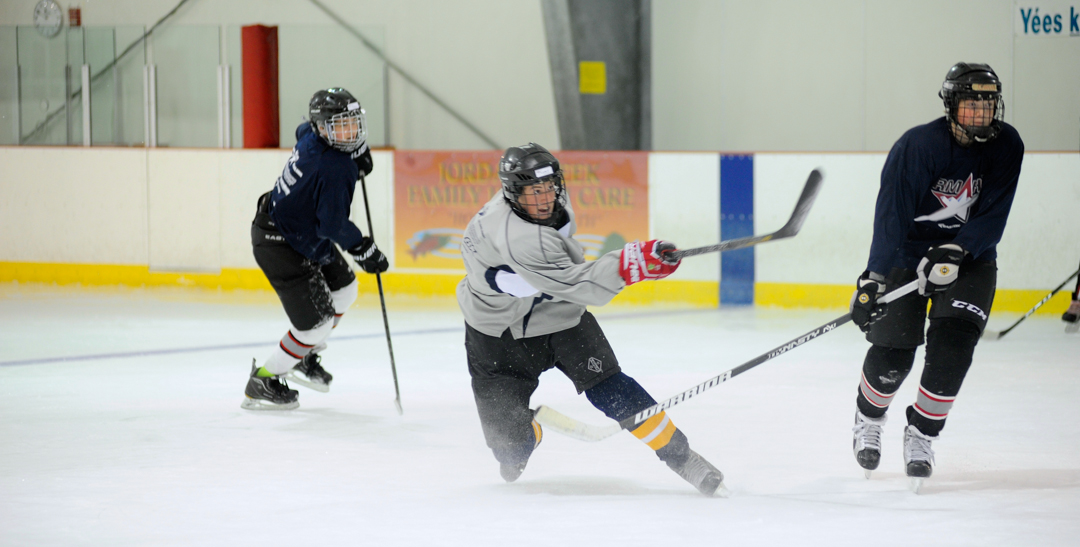
Corey Box unleashes a shot during a three-on-three Rocky Mountain Hockey School drill at Treadwell Ice Arena.
(from left) Culley Corrigan, Quin Gist and Shane Moller race for the puck during a three-on-three Rocky Mountain Hockey School drill at Treadwell Ice Arena.
Sunny Monset participates in a drill consisting of stepping over evenly spaced hockey sticks then break into a sprint.
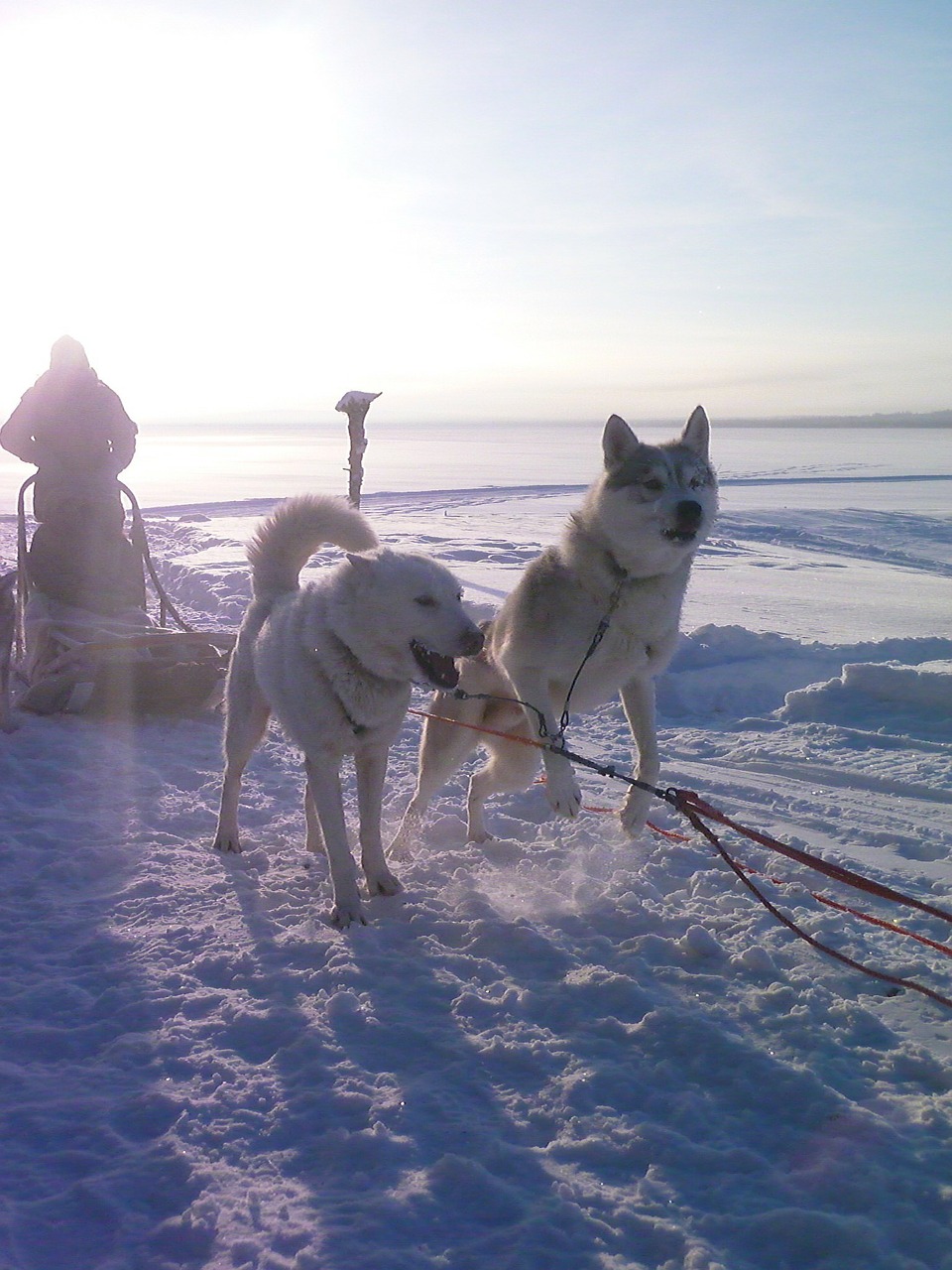
Dog sled team. (Creative Commons image via Pixabay)
Sled dog racing is Alaska’s state sport and Gov. Sean Parnell has officially endorsed Alaska as a “right to mush” state.
On Monday Parnell signed a resolution “recognizing, honoring, supporting, and encouraging support for dog mushing and dog mushers” in Alaska.
Nome residents Diana Haecker and Nils Hahn drafted House Concurrent Resolution 24 to safeguard the sport and its human and canine participants throughout the state.
Explaining the cultural significance of mushing in Alaska, Haecker said, “It has it’s place in history, it’s place in the present, and I think more important certainly it’s place in the future, and we felt it needed to be preserved.”
Haecker and Hahn run their own kennel and modeled the resolution off the nation’s “right to farm” statutes, which protect farmers and ranchers from nuisance lawsuits complaining of farming-related activities like noise or smell.
Alaska’s “right to mush” resolution is not statutory but rather signifies the legislature’s support of mushing and its significance to the culture and people of Alaska.
“It’s more of a symbolic resolution,” Haecker explained, “but I think it also speaks that every legislator in the state has agreed that mushing is worth preserving and that it is an acceptable activity in the state.”
The pair created the resolution after mushers across the state began reporting harassment like obstructed trails, traps set on trails, and lawsuits threatening kennel operations.
The resolution received state-wide support from the Alaska Federation of Natives, the Association of Village Council Presidents, and the Willow Area Community Organization. Four-time Iditarod champion Lance Mackey and 15-time Iditarod finisher Mike Williams Sr. rallied behind its passage. Nome Kennel Club President Chrystie Salesky signed a resolution of support.
“It gives backing to us,” Salesky said, speaking on behalf of the Nome Kennel Club, “reassuring us from the state that this is something that they want to see continued and not cease to exist.”
Salesky points out many mushers engage in the sport recreationally rather than competitively though some still use teams to run trap lines and haul wood. Salesky said the resolution goes beyond protecting a sport to sustaining a lifestyle.
“Even though we have all these races going on,” Salesky explained, “there’s a lot of people in smaller communities— Nome, too— where we’re just recreational mushers, but it’s still our way of life. And it’s just great to have something in effect from the state that supports our way of life so mushing can still continue to thrive into the future.”
Rep. Neal Foster carried the resolution through the House.
Addressing the legislature during a floor speech in March, Foster said in support of the resolution, “It’s good for the state because it’s an image of the state. When people think of Alaska, they also think of dog mushing. And it’s great for the economy, because so many people come from other states to Alaska to see the various races. So we see this as a positive thing, you know, and we just want to let folks know that we support them.”
Both the House and Senate unanimously passed the resolution in March as Iditarod finishers were crossing beneath the burled arch in Nome.
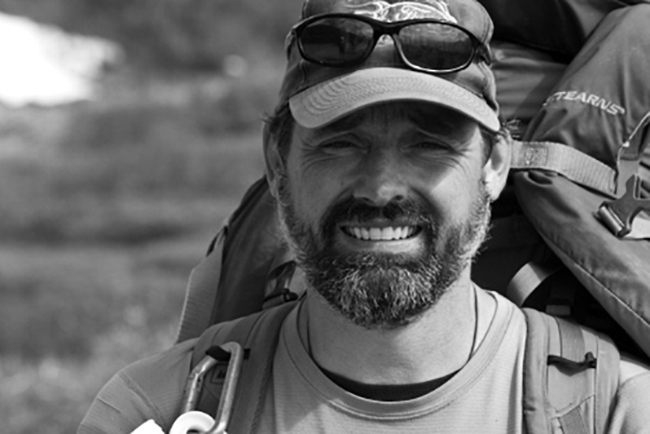
The body of 44-year-old Rob Kehrer, pictured here on the 2013 Wilderness Classic website, was found by search and rescue personnel after he was last seen in his pack raft on the Tana River. (Photo courtesy of the 2013 Wilderness Classic website)
A long time competitor in one of Alaska’s most famous and dangerous backcountry races has died. Rob Kehrer was found dead while competing in the Alaska Mountain Wilderness Classic over the weekend in Wrangell-St. Elias National Park and Preserve.
On Sunday morning, Wrangell-St. Elias Park and Preserve officials received a call from the Rescue Coordination Center at Joint-Base Elmendorf-Richardson needing help locating Rob Kehrer. Peter Christian is the Chief Ranger for Wrangell-St. Elias. He said the 44-year-old was last seen Saturday afternoon by his partner in his pack raft on the Tana River, a tributary of the Chitina River.
Search efforts were based out of McCarthy. Around 4 p.m., Kehrer’s body was located by an Alaska Air National Guard helicopter crew about two and a half miles downstream from where he was last seen. Hs body was transported to Providence Hospital in Anchorage.
Kehrer, a Mat-Su resident, was a 10-year veteran of the race. The race itself is 32 years old and has been held in various places such as the Brooks Range, Kenai Peninsula, and Talkeetna Mountains. ince 2012, it has been held in Wrangell-St. Elias.
Christian says it is an unsanctioned event and is not permitted in the park.
Christian says park officials cannot stop the event because they don’t know when it’s held every year. He says they plan to talk to the event organizers in order to prevent similar event from happening again.
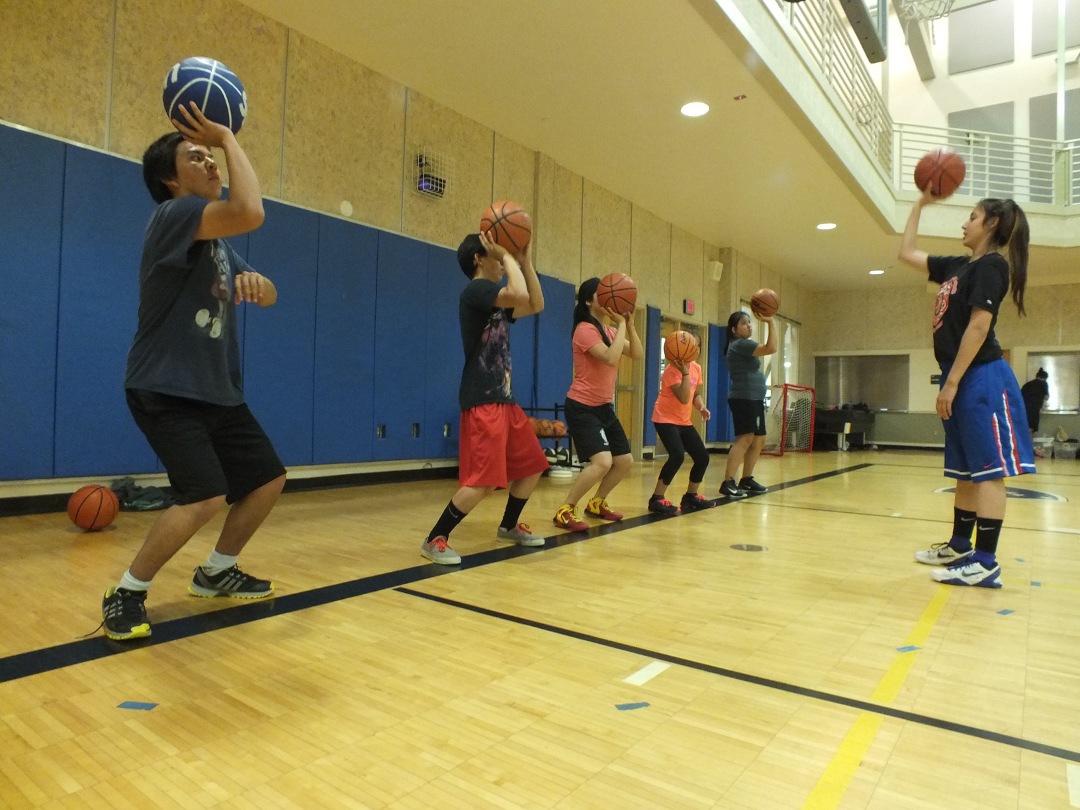
The Tlingit language was incorporated into drills at a recent basketball camp in Juneau sponsored by Sealaska Heritage Institute. (Photo by Casey Kelly/KTOO)
The legislature passed a bill granting the designation to 20 Alaska Native languages. Gov. Sean Parnell is expected to sign the measure soon. Supporters hope it will help boost efforts to revitalize those languages, many of which have just a handful of native speakers left. One such effort took place in Juneau last week: A camp that’s using sport to keep the Tlingit language alive.
On the basketball court at the University of Alaska Southeast in Juneau, a dozen middle and high school students warm up for their first day of camp. As they stretch near half court, Jessica Chester counts to 10 in Tlingit: “Tléix’, déix, nás’k, daax’oon, keijín, tleidooshú, daxadooshú, nas’gadooshú, gooshúk, jinkaat.”
Chester teaches Alaska Native languages for the Juneau School District. She’s been helping out with Sealaska Heritage Institute’s summer basketball camps since 2006. She says all of the drills incorporate at least some Tlingit.
“You know, if they’re saying, ‘Go get a ball,’ I’m going to be behind the coach saying ‘kooch’eit’aa…” You know, go get a ball in Tlingit,” she says.
Chester’s originally from Yakutat, where she grew up hearing elders speak the language. She began studying it herself in college.
Languages carry the ideas, and the feelings, and the emotions and thoughts of a culture, of a people, and so bringing that back is real important to me,” she says.
Linguists say fewer than 150 native Tlingit speakers are alive today. Some Alaska indigenous languages have no remaining native speakers. They exist only in written form or as recordings.
Sealaska Heritage Institute is dedicated to advancing the Tlingit, Haida and Tsimshian cultures of Southeast Alaska. President Rosita Worl says many Alaska Natives grew up ashamed of their languages and traditions.
“We’ve had a policy and history in this country to suppress Native languages and suppress Native culture,” Worl says.
About 15 years ago, the heritage institute decided to make language preservation its top priority. Worl says the inspiration came after meeting with a group of Hawaiian language preservationists. That state officially recognized indigenous languages in 1978.
“We looked at their programs,” Worl says. “And I will tell you, our board of trustees started to cry, because they saw little children speaking the Hawaiian language. And they said, ‘If the Hawaiians can do that, we can do that.'”
Now that Native languages are getting official recognition in Alaska, efforts like this camp are expected to grow.
Worl says she no longer worries about the Tlingit language becoming extinct.
“It may be that it will never be spoken as a first language. But we have always said that you’ll be hearing the voices of our ancestors through our children,” she says.
Michelle Martin’s daughter and son are attending the camp for the third time. Martin’s from Hoonah, where she picked up some of the language from her grandparents. She says her kids already speak it better than she does.
“I can understand phrases and I know what they’re saying,” Martin says. “And I try to learn, and I’m like, oh my gosh, I need to go back and learn some more.”
Most of the kids say they were initially hooked because of the basketball, but keep coming to learn their language. Jaime Kelley-Paul, 16, says he’s not even that interested in sports. Instead, he wants to build up the Alaska Native pride that was almost lost.
It’s my culture. I love it,” Kelley-Paul says. “It’s fun to learn about it. It’s important to keep our culture alive instead of just everyone being one type of person.”
Kelley-Paul says he can’t wait to teach his little brother everything he learned about Tlingit language and culture.
*Editor’s note: A version of this story appeared on NPR’s “All Things Considered” on Friday August 8, 2014.
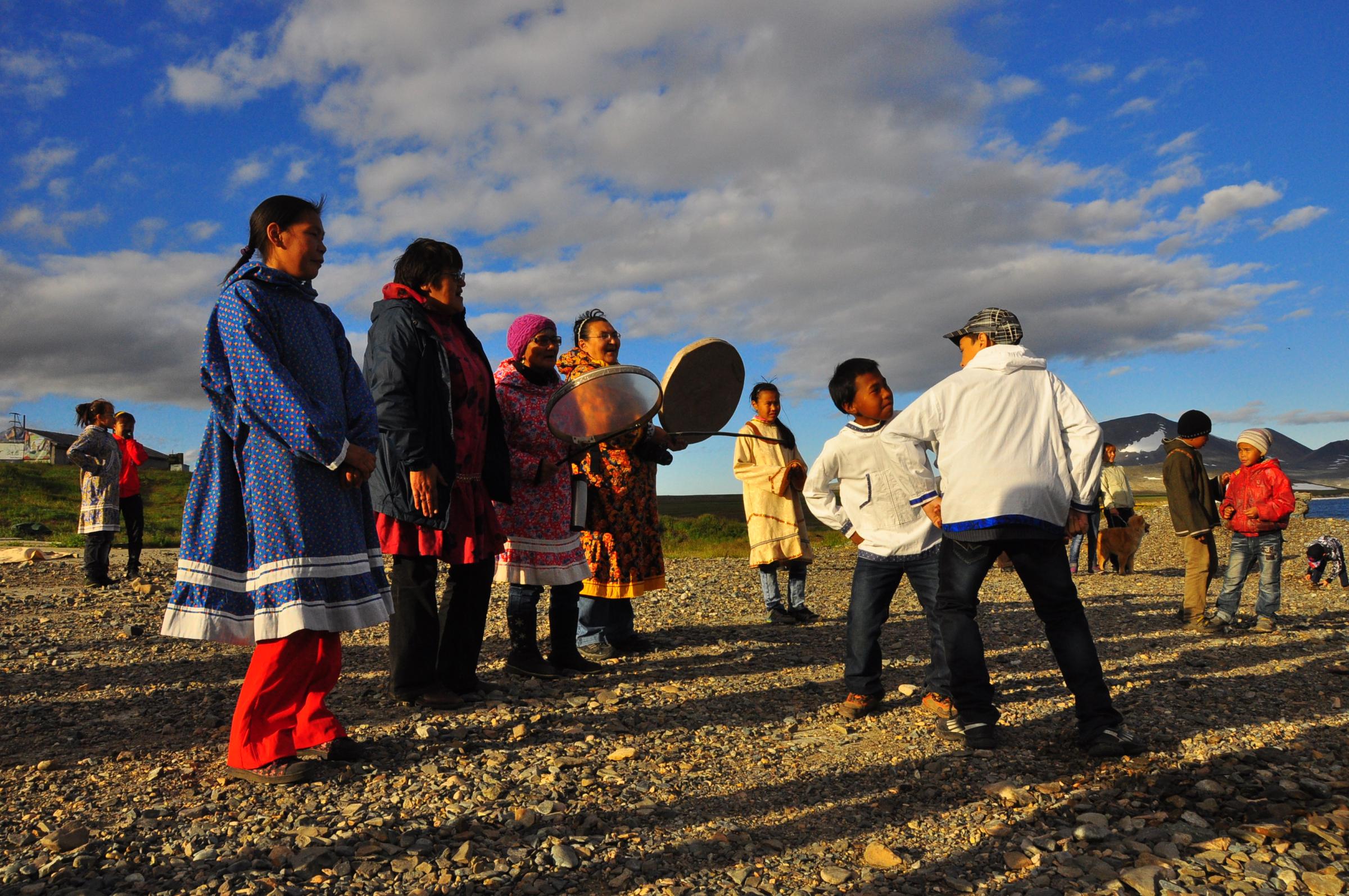
The residents of Novoye Chaplino greeted vistors when they arrived on the beach with traditional song and dance. (Photo by Emily Schwing/KUAC)
This time of year, indigenous people across the Far North gather to play games and celebrate traditions. Earlier this month, in Fairbanks the took part in the World Eskimo Indian Olympics. There was also a gathering of people from across the Circumpolar north in Inuvik, Canada. This year, native people from Arctic nations joined Russia’s Chukchi and Inuit peoples for the first ever Beringia Arctic Games. It was the largest gathering of it’s kind in a once forgotten corner of the world called Chukotka.
Seven women row a long, wide boat out to the middle of a protected bay off Russia’s Bering Sea coast. A flare soars into the air and they pull with all their strength at long wooden oars. They’re in a race against seven other boats and teams.
These are skin boats, made from hand-carved driftwood and the hides of two female walrus. Valentina Attun stands at the back of one. She mans a giant wooden rudder and counts strokes in Russian to help her team keep a cadence. By the end of the race, her voice is hoarse.
“Of course we are very happy to win the race,” says Attun, “but we had a lot of training,” She says her team is very thankful for the men in her village and her uncle who helped build their boat.
This year, more than 20 athletes from seven Arctic nations including Canada, Norway, the United States, Iceland, Greenland and the Faroe Islands joined the competition. They also took part in other games of agility, endurance and strength that test traditional hunting and survival skills.
In a school gymnasium, competition is fierce during the one arm reach. An athlete balances their entire body on one hand and reaches above their head for a tennis ball, but their legs cannot touch the floor. It’s the same movement you might make if you were gathering bird eggs from a rocky cliff.
Johnny Issaluk is from Iqaluit, on Canada’s Baffin Island. He was surprised to discover Russia’s Chukchi people play the same games as Canada’s Inuit.
“When we start competing, it’s just the same as competing at home. There’s nothing different. I am playing with my homeboys.”
Issaluk says the Russian competition is stiff because they are here to represent their villages. Andrej Kainenen agrees. He is one of 200 residents who lives here in Novoye Chaplino.
Kainenan captains a skin boat for his village. He says the event is good because it brings people together. He says the people in Novoye Chaplino took the time to make their village presentable for guests.
The games were met with traditional drumming and dancing. Olga Leitikai is from a small coastal village to the south. She came to sing. She also works as a liaison between the Russian government and local marine mammal hunters. As more attention is paid to natural resources in the region, she says there is dialogue on all sides.
“Of course the society of Chukotka is changing, like all over the world, it’s changing. I think the most important things is to take a balance between tradition and modern life.”
The challenge to find that balance is familiar for Sam Nystad, a native Sami from Norway’s Finnmark region. “The western world has definitely taken a big chunk in the Sami culture,” he says. “The thing is i was actually impressed by how they preserved their culture and how they wanted to chow it to the world through the games.”
After two days, the official games come to a close, but the residents of Novoye Chaplino aren’t ready to quit.
A group of teenage girls from Greenland sings around a bonfire as Andrej Kainenan shows the crowd a new game. Men carry a giant rock around in a circle until their arms are exhausted.
As a midnight sun sinks below the horizon other local games last well into the night, the same way they have for generations.
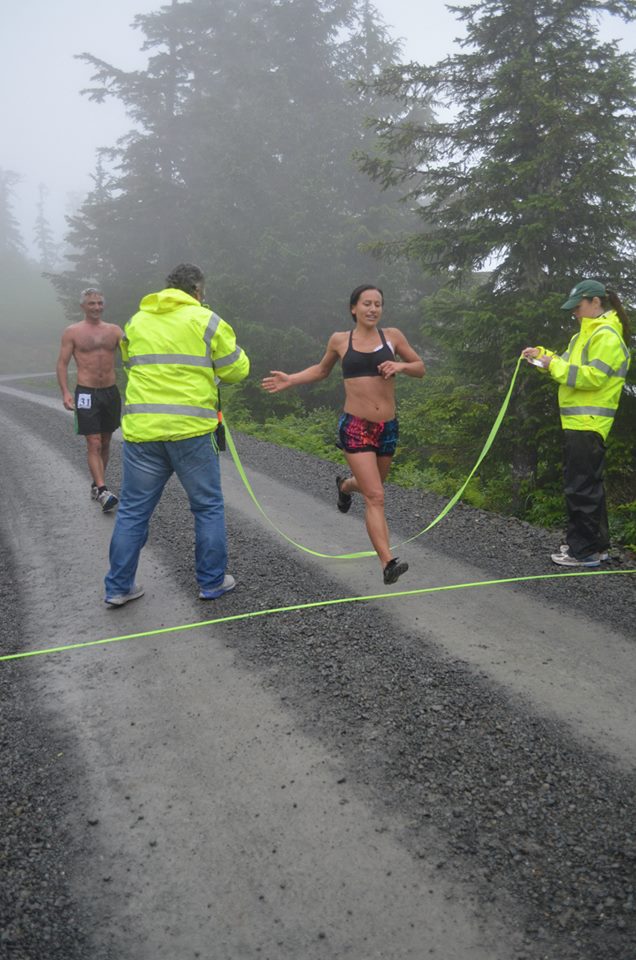
Women’s champion Tasha Folsom crosses the finish line on Harbor Mt. (Photo courtesy Sitka Alpine Adventure)
On a day that seemed almost guaranteed to produce no record times, two Sitka women on Saturday crushed the course record in the 21st Alpine Adventure Run.
Tasha Folsom took first place in the women’s event, with a time of 1:18:10 — a full two minutes faster than the record set last year by New York runner Emily deLaBruyere.
Runners encountered steady rain and winds of about 20 miles per hour on the Gavan Ridge.
Folsom says she’s used to wet conditions.
“I’ve trained in that crappy weather multiple times this season. So I didn’t have to adjust much of anything to get through the course on a wet day.”
Folsom also competed in Alaska’s other classic mountain event, Seward’s Mt. Marathon race, on the 4th of July. That event features a 3,000-foot climb straight up the mountain, and then a wild descent nearly straight down. She finished 13th overall for women in her first time out.
Folsom is not quite sure how Mt. Marathon played in to her success in the Alpine. She believes the Alpine requires more endurance for the long ridge run, while Mt. Marathon requires a lot of strength.
She was surprised to claim the Alpine course record.
“You know, I just wasn’t feeling it the entire race. They told me my time and I just didn’t believe it. I thought, Nah, people are playing a joke on me.”
In second place for women, Sitkan Emily Routon also came in under the previous record pace, finishing in 1:19:58.
Despite the weather, men also posted fast times: Four-time champion Sam Scotchmer of Sitka finished :44 seconds off his record-setting pace last year, finishing in 1:04:47. Anchorage challenger Matias Saari crossed the line about 90 seconds later, with a time of 1:06:10.
The Alpine Adventure Run originated 21 years ago as an Eagle Scout project by Josh Horan. 15 runners participated in that first event. Horan’s mother, Christine, has remained race director ever since. The race is now capped at 75 participants, and usually fills within two hours when registration opens in April.
Close
Update notification options
Subscribe to notifications
Subscribe
Get notifications about news related to the topics you care about. You can unsubscribe anytime.