Archives for:

"Roadless Rule"

Court: Reinstate Tongass roadless rule exemption

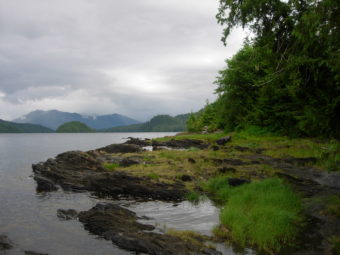
The Tongass National Forest could resume logging in roadless areas under a court ruling. But it won't happen immediately -- or at all. (U.S. Forest Service).
The Tongass National Forest could resume allowing logging in roadless areas under a court ruling. But it won’t happen immediately — or at all. (U.S. Forest Service Photo)

A federal appeals court issued an opinion today saying the roadless rule should not apply to Alaska’s Tongass National Forest.
The rule was enacted nationwide more than a decade ago. It prohibits logging and other industrial activity in national forest lands without roads.

The Tongass forest, the nation’s largest, was later granted an exemption. That was struck down three years ago in U.S. District Court and the rule was re-imposed.

The Forest Service did not appeal that decision, but the state of Alaska did. The 9th Circuit Court of Appeals granted its request.

Tom Lenhart is the state attorney involved in the case.

“Removal of the roadless rule won’t in and of itself increase timber harvests or mining or anything like that. But it will take down the barriers that are preventing some things from happening,” he says.

The 9th Circuit Court’s decision does not immediately lift the rule. It sent the case back to the lower court to decide whether additional environmental review is needed.
Buck Lindekugel is attorney for the Southeast Alaska Conservation Council. It’s one of a dozen groups that sued to bring back the roadless rule.

“The reality is the decision does not immediately reinstate the Tongass exemption. And the Forest Service’s actions have shown it has no desire to go back to the damage, expense and controversy associated with roadless area logging on the Tongass,” he says.

Forest Service officials referred calls about the ruling to the Department of Justice. The staffer handling the issue could not immediately be reached for comment.

Plaintiff’s attorney Tom Waldo of Earthjustice says the decision won’t change much. That’s because the Forest Service is already moving away from the type of timber sales the roadless exemption allows.

“I think that’s where the future direction of the policy debate is going to lie, rather than trying to turn the clock back in time to fight the battle of the 1990s over whether we should be logging in roadless areas of old growth on the Tongass,” he says.

The state has a different view.

“We’re hoping the Forest Service will meet its obligations … to meet timber demand. And we feel that some sale from roadless areas is necessary to do that. I’m sure the state will continue to use every means available to encourage the Forest Service to take actions that will further a certain level of development,” says attorney Tom Lenhart.

The state, the timber industry and other development groups have been pressuring the Forest Service to allow more logging.

That includes a proposal for the federal government to turn over or sell some Tongass lands.

New energy politics changes likely to affect Alaska

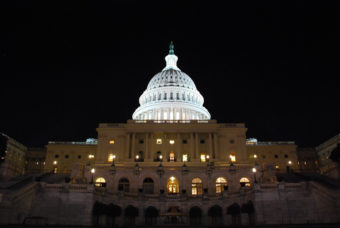
The U.S. Capitol at night.
The U.S. Capitol at night. (Photo by Adam Fagen/Flickr CC)

In Washington, at both the White House and in Congress, 2014 brings changes to the politics of energy that are likely to affect Alaska.

Alaska Sen. Lisa Murkowski is starting the year by reconsidering the crude oil export ban. The ban has been in place since the Arab oil embargo of the 1970s. Then as now, supporters say it lessens American dependence on foreign oil. But oil production is surging in the Lower 48 now, and imports are declining.

Rayola Dougher of the American Petroleum Institute says not allowing sales overseas may be keeping some oil locked in, suppressing revenue and job growth.

“So what you want to do is always expand your market, expand your production. It’s always a net economic benefit for the United States, no matter what product you’re looking at,” Dougher says.

Energy Secretary Ernest Moniz has also suggested it’s time to rethink the ban. Ban proponents, though, say allowing exports could raise fuel prices for American consumers.  Sen. Murkowski is planning to release a white paper on the subject next week, followed by a speech at the Brookings Institution.

Murkowski is the top Republican on the Senate Energy Committee. This year chairmanship of the panel is likely to pass from Ron Wyden of Oregon to one of the oil industry’s favorite Democrats: Mary Landrieu of Louisiana. That could mean a new pro-development direction for the committee. Murkowski energy spokesman Robert Dillon says the senator has worked with Wyden on common goals for hydropower, parks and public lands.

“With Sen. Landrieu, they share a common interest when it comes to oil and gas exploration and production, so their interests dovetail there nicely.”

Together, for instance, Landrieu and Murkowski have pressed for federal revenue sharing for states with offshore production.

John Podesta (Photo by Center for American Progress)

Meanwhile, environmentalists are hoping John Podesta can slow that momentum. He was President Clinton’s chief of staff, and he is re-joining the White House as a counselor to the president on energy and climate.

Athan Manuel of the Sierra Club says Podesta is likely to pay a lot of attention to Alaska.

“With President Clinton he was pretty active on protecting the Arctic Refuge. He was a big backer of that. He was a strong champion of the Tongass National Forest and the entire forest system with the roadless rule. So on a couple of really important Alaska issues he was very, very active in the past, and we expect him to continue to be active now with the Obama administration.”

One of the big Alaska issues facing the Administration is the scope of future lease sales for the Chukchi and Beaufort seas. Podesta wrote an op-ed a year ago claiming there’s no safe way to drill offshore in the Arctic.

U.S. Supreme Court rejects challenge to roadless rule

WASHINGTON (AP) – The Supreme Court has turned away an appeal challenging a federal rule that bars development on 50 million acres of roadless areas in national forests.

The justices on Monday decided to leave in place a federal appeals court decision that upheld the so-called roadless rule that took effect late in the presidency of Bill Clinton.

The state of Wyoming and the Colorado Mining Association challenged the rule, arguing that closing so much forest land to development has had serious consequences for residents of Western states and the logging, mining and drilling industries.

The challenge centered on the contention that that U.S. Forest Service essentially declared forests to be wilderness areas, a power that rests with Congress under the 1964 Wilderness Act. The Forest Service manages more than 190 million acres of land.

With the high court’s decision not to hear the case, the state of Alaska has the only pending lawsuit against the “Roadless Rule.” The state’s challenge is currently pending in federal court in Washington, D.C.

Site notifications
Update notification options
Subscribe to notifications