A bill to fund the federal government emerged Wednesday night in Congress, and environmental groups are celebrating that it does not include policy riders to advance old-growth logging in the Tongass National Forest.
U.S. Sen. Lisa Murkowski is a champion of the Tongass logging industry, and she would like to see the forest exempted from the “roadless rule,” a ban dating to the Clinton administration on new logging roads.
But the massive spending bill does not appear to contain the exemption Murkowski favors.
Nor does the bill have a provision blocking the 2016 Tongass Land Management Plan, which calls for a transition to young-growth timber.
The plan has support in Southeast Alaska from a coalition that includes fishermen and tourism-based business owners.
Murkowski said the transition would be too fast to keep the sawmills in business.
Though the pro-logging policies aren’t in the bill, a report that accompanies the legislation tells the Forest Service not to implement a final transition away from old-growth timber until it completes a tree inventory.
Bill reports are non-binding but agencies typically adhere to them.
Congress has to pass the spending bill by Friday to avoid a government shutdown. It would fund the government until the end of September.
There have been numerous attempts recently to sidestep U.S. Forest Service management of the Tongass National Forest. Sen. Lisa Murkowski has a few plans in the works.
And now the State of Alaska is petitioning for more attention to be given to a very old debate. The Roadless Rule was created to protect wilder areas on federal lands.
If you listened to Gov. Bill Walker’s State of the State speech last week, you might have caught it.
Peppered among tidbits about a natural gas pipeline and budget concerns, there was this:
“Today, my administration filed a petition with the U.S. Department of Agriculture to undertake a rule making process to restore the Roadless Rule exemption to the region,” the Governor said.
Which could give Alaska a pass to build new roads in the Tongass. And that’s only the latest effort to increase access to logging.
Even by a state forester’s standards, there’s been a lot to follow.
“It’s very complicated,” said Chris Maisch, a director at the Alaska Division of Forestry. “You could do a half hour interview just on the history of this.”
He says the state is asking the the U.S. Department of Agriculture to open up the issue for more public discussion on the Roadless Rule. If approved, Maisch estimates it’s a process that could two years or longer.
And while this tactic might be different than what it’s tried before, he says the ask isn’t anything new.
Maisch says there’s a legal and economic argument to be made: Alaska should be exempt from the Roadless Rule.
“Well, the state has always had the position and has never wavered from that,” Maisch said.
The U.S. Forest Service has focused its efforts to areas not subject to Roadless Rule, such as the Big Thorne Timber Sale on Prince of Wales Island. (Photo by Elizabeth Jenkins/Alaska’s Energy Desk)
But Austin Williams, a director of law and policy at Trout Unlimited, thinks the state’s petition could “turn back the clock.”
“And really undo a lot of the good work that has been done over the last several years,” Williams said.
Sticking with the current forest service plan for the Tongass, Williams said, makes the most sense. It was created with years of community input, and finalized in 2016 — outlining a transition away from cutting old growth trees.
Williams said the economy in the region has shifted to industries like tourism and fishing. He asserts that rehashing the Roadless Rule debate isn’t a step moving forward.
But he says more public discussion is better than some of Sen. Lisa Murkowski’s latest efforts on the Tongass.
“That is much preferable, I think, to a budget appropriations rider that doesn’t have that same type of public involvement,” Williams said.
Last November, Sen. Murkowski attached a rider to the Senate Interior Appropriations bill that could exempt Alaska from the Roadless Rule.
Congress has until Feb. 8 to agree on a budget.
In the meantime, the State Division of Forestry is keeping its fingers crossed that one of those efforts sticks.
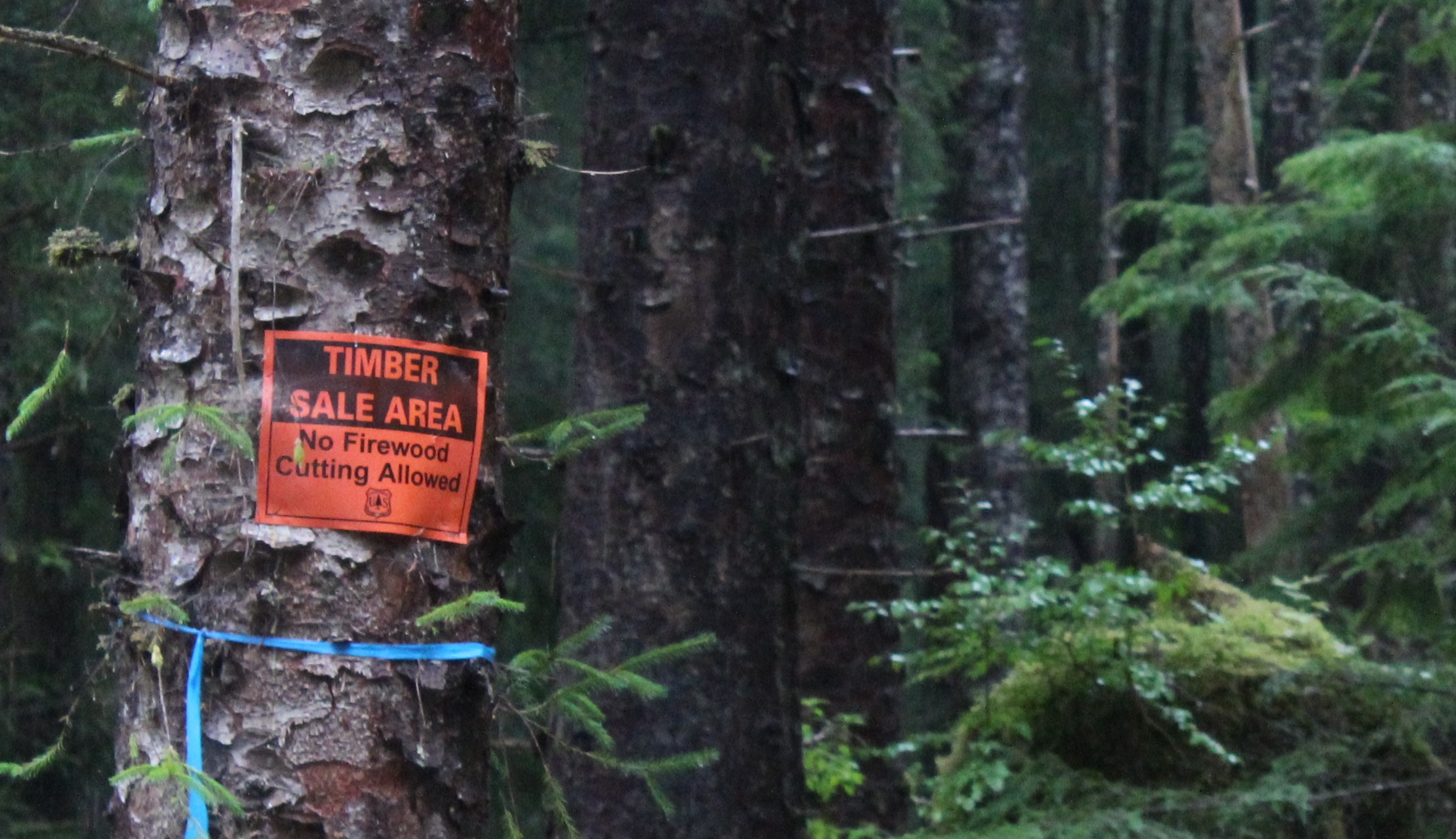
A timber sale sign is posted in the Tongass National Forest on Prince of Wales Island. The state is in court again, trying to end the U.S. Forest Service’s roadless rule, which limits logging and other development in the Tongass. (KRBD file photo)
The state of Alaska is again trying to overturn the U.S. Forest Service’s roadless rule.
Officials on Nov. 6 appealed a September court decision that threw out an earlier state challenge.
It was established more than 15 years ago, but the Tongass was given an exemption, which was later overturned.
Assistant Attorney General Tom Lenhart said the state continues to challenge the roadless rule because it’s damaging Southeast Alaska’s economy.
“It’s played a key role in the almost complete demise of the timber industry,” he said. “It’s impacted utility companies and rural communities who may have future plans to build additional roads to connect to the outside world.”
Attorney Buck Lindekugel said the state’s appeal doesn’t make sense.
“They seem stuck in the past. Today’s economy here in Southeast is driven by tourism, recreation and fishing, not old-growth logging,” he said.
State Forester Chris Maisch manages state timberlands near the Tongass National Forest.
He said the timber economy could rebound if the roadless rule is overturned.
“It essentially provides the ability to manage in a much more flexible manner, not only just forest resources, but energy resources as well as mining resources on the forest,” he said.
Among other arguments, the state said the roadless rule violates federal legislation requiring the U.S. Forest Service to meet the demand for Tongass timber.
The state filed this case in 2011 in the U.S. District Court for the District of Columbia. The appeal was made to the D.C. Circuit Court of Appeals.
The state’s Lenhart said some earlier rulings have been close, so it’s worth another try.
“We’re relatively optimistic that a three-judge panel at the D.C. Circuit may well come to a different conclusion and may in part or in total invalidate the roadless rule this time,” he said.
SEACC’s Lindekugel said the appeal is a waste of time and money.
A separate challenge has already been rejected by the U.S. Supreme Court.
“Instead of working with local communities to change things on the ground for the long-term interests of everybody, they’re focusing on a fraction of the economy by propping up the timber industry at everybody’s expense,” he said.
The U.S. District Court for the District of Columbia’s decision Thursday was hailed by Alaska conservation groups defending the U.S. Forest Service’s roadless rule.
“It’s a huge victory,” said Meredith Trainor, executive director of the Southeast Alaska Conservation Council which opposes expanded logging in the Tongass National Forest. “The state of Alaska has been attacking the roadless rule almost since the rule was first written back in the early 2000s. The roadless rule protects intact forested lands within the national forest system, so it obviously has a big impact on the people of Southeast Alaska and the Tongass National Forest.”
The roadless rule was put into place by the Clinton administration and has since seen numerous challenges from Alaska and other states in federal courts all the way up to the U.S. Supreme Court.
Alaska Assistant Attorney General Cori Mills said the state is still reviewing whether it would appeal.
“We are disappointed in the District Court’s ruling,” Mills said. “It upheld the 2001 roadless rule and that just has huge impacts on Southeast Alaska and the needed responsible resource development in the region.”
Alaska’s timber industry sided with the state. It said the rule denied access to some of the more valuable timber stands in the Tongass.
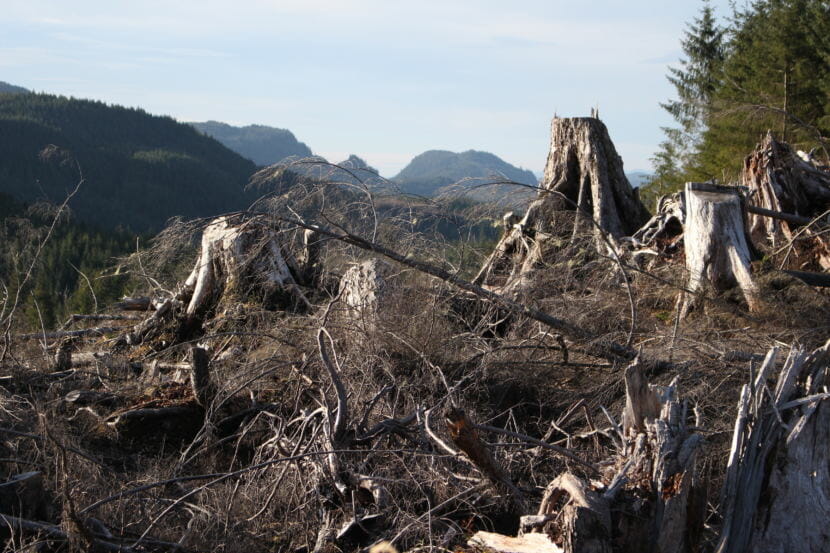
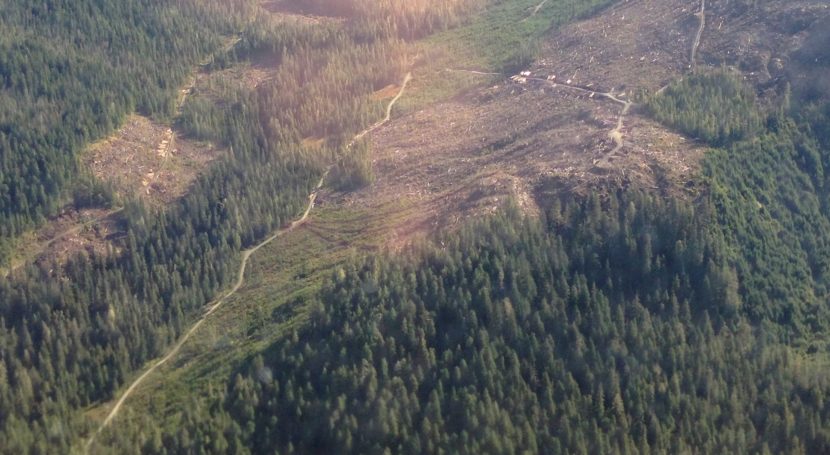
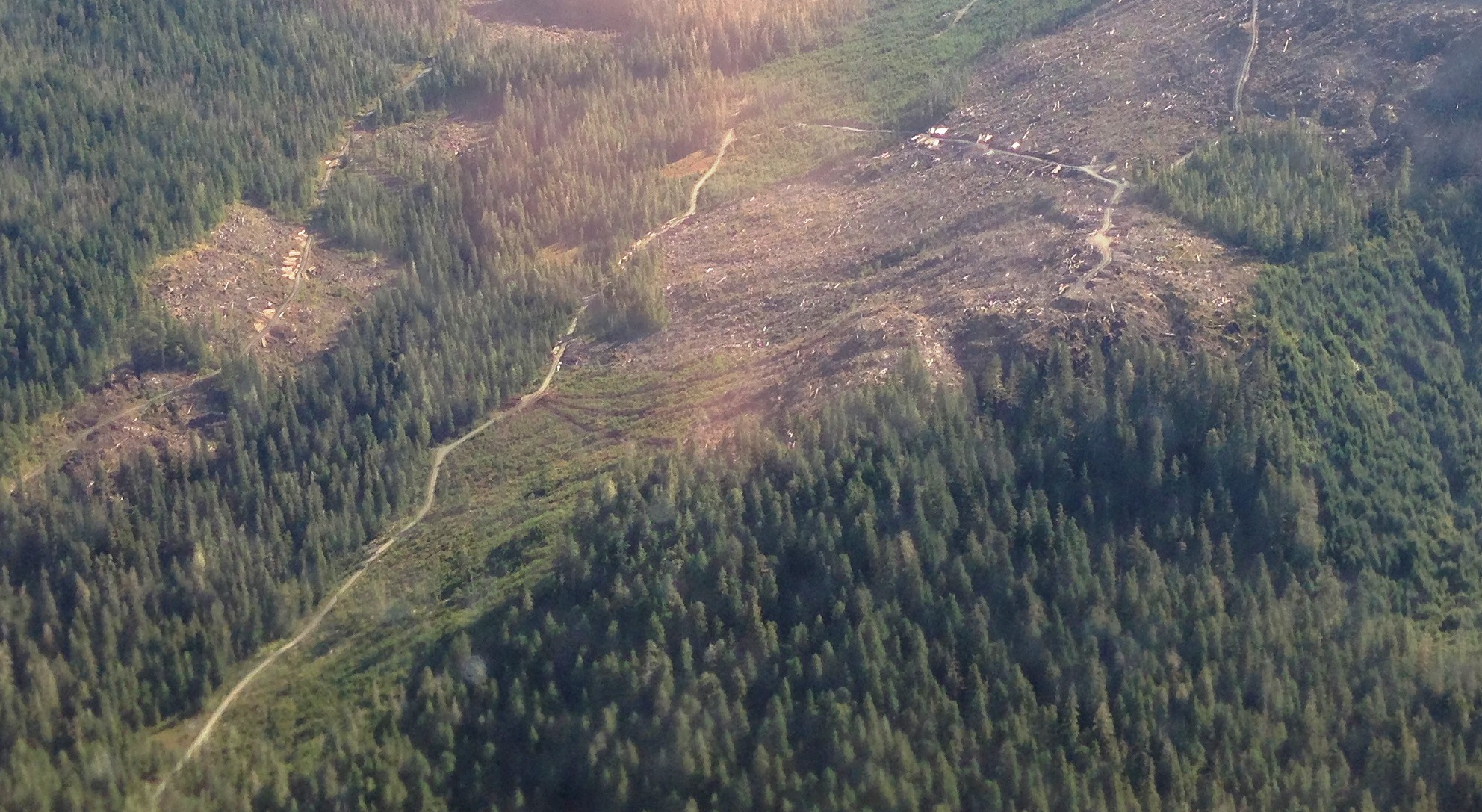
A Tongass National Forest clearcut is shown in this 2014 aerial view. A new court decision limits logging on roadless areas of the forest. (Photo by Ed Schoenfeld/CoastAlaska News)
The U.S. Supreme Court will not take up a case that could have expanded logging in Southeast Alaska’s Tongass National Forest. It’s the final step in one legal battle involving what’s called the Roadless Rule.
About 15 years ago, the U.S. Forest Service issued a ban on logging, roadbuilding and some other development in many of the wilder lands under its jurisdiction.
Put in place at the end of the Clinton administration, it targeted areas without roads and became known as the Roadless Rule.
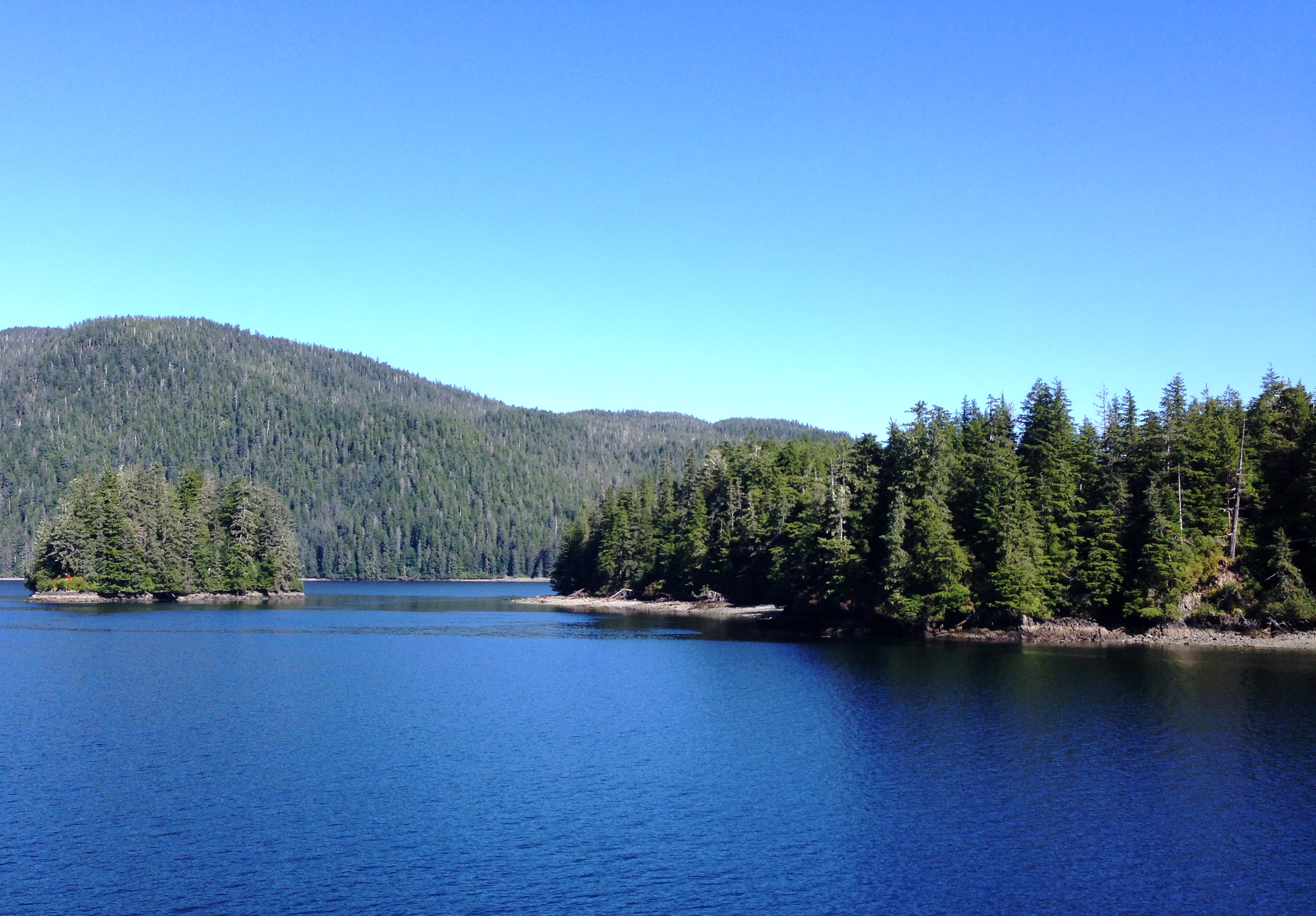
A portion of the Tongass National Forest along Peril Strait is seen from the ferry Chenega Sept. 3, 2015. (Photo by Ed Schoenfeld/CoastAlaska News)
It quickly attracted the scrutiny of the first Bush administration, which delayed its implementation. About two years later, that administration announced an exemption for Alaska’s Tongass – and later Chugach – National Forests.
The latest – and final – action in the case came from the U.S. Supreme Court. It decided Monday not to hear a state challenge to a ruling against the exemption by the San Francisco-based 9th Circuit Court of Appeals.
Tom Waldo of the Earthjustice environmental law firm said that means roadless areas of the Tongass are protected.
“It just doesn’t make any sense to keep trying to build expensive new roads that no one can afford to maintain into the wild and remote parts of the Tongass,” he said.
Waldo and other Roadless Rule supporters say it protects salmon and wildlife habitat critical to the region’s tourism and fishing industries.
Owen Graham of the Alaska Forest Association trade group said the Supreme Court action delivers a substantial blow to a hard-hit regional economy.
“What the timber industry needs desperately is a timber supply. And this is one of a number of issues that are preventing us from having that timber supply,” he said.
State officials say they’re disappointed, but not surprised.
“Only about 4 percent of all petitions are ever granted review by the Supreme Court. So it’s always something of a long shot,” said Tom Lenhart, a state assistant attorney general involved in the case.
A separate state suit, filed in a District of Columbia court, challenges the whole rule, as well as its Alaska provisions. It claims the rule conflicts with terms of the Alaska National Interest Lands Conservation Act.
“We think very clearly that the Roadless Rule as applied to Alaska violates that federal law, which makes the rule invalid,” he said.
“The Roadless Rule has survived many other legal attacks, like the State of Alaska’s, and we expect the Washington D.C. Circuit [Court] to uphold the Roadless Rule, just like the other courts have,” he said.
Even if that happens, the logging industry could try other approaches.
The forest association’s Graham said lawsuits are just one approach to increasing the amount of timber available for harvest. Another would be to seek congressional action.
“And then the other thing is we could just get a … federal administration that’s friendly toward responsible resource development and they can just rescind the rule because it’s an administrative rule. It’s nothing that Congress passed,” he said.
Tongass logging is a small fraction of what it was 20 or 30 years ago when the forest service regularly scheduled large timber sales and mills operated in Sitka, Ketchikan and Wrangell.
In recent years, the forest service has changed its focus from old-growth logging to harvesting younger trees.
The 9th Circuit Court of Appeals struck down a 2003 exemption Wednesday that would have made it possible to build roads through the Tongass National Forest.
Malena Marvin, Director of the Southeast Alaska Conservation Council, says this decision underscores management that’s already happening.
“The Forest Service is already not planning sales in roadless areas and proceeding in the same direction as the rest of the country in preserving these areas for future generations,” Marvin says. “So we’re really seeing the final legal decision just guaranteeing that direction.”
Tongass National Forest near Ketchikan, Alaska. (Creative Commons photo by Mark Brennan)
“Roadless areas” are habitat for endangered species, subsistence hunting and fishing, outdoor recreation and sacred sites.
In 2001, the Department of Agriculture created the Roadless Rule, which limits road construction and logging on nearly 50 million acres of wilderness. The Tongass National Forest was exempted two years later when George W. Bush was in office. “Economic hardship” for timber-dependent Southeast communities was given as the reason.
Earthjustice attorney Eric Jorgensen says a coalition of conservation groups and Alaska Native tribes challenged that ruling. Earthjustice provided legal representation.
“(We) argued that the agency hadn’t adequately explained its rationale for reversing course and deciding to exempt the Tongass from the protection,” Jorgensen says.
In a press release, Sen. Lisa Murkowski called the ruling a “setback for the economies of Southeast Alaska.”
Owen Graham of the Alaska Forest Association echoed that sentiment. He believes the Forest Service has a “monopoly supply” over the timber industry in the region.
“They won’t allow enough timber sales to keep our industry alive and we’re dying,” Graham says. “It’s hindering all kinds of development for no good reason other than pacifying environmental groups but we hope to get it overturned eventually.”
The state could still petition the Supreme Court to exempt the Tongass from the Roadless Rule. The Supreme Court, however, declined to hear an appeal of the rule in 2012 when the State of Wyoming and the Colorado Mining Association challenged it.
Close
Update notification options
Subscribe to notifications
Subscribe
Get notifications about news related to the topics you care about. You can unsubscribe anytime.