Archives for:

"Roadless Rule"

The Alaska Roadless Rule decision is moving along. Some tribal governments say it’s moving too fast.

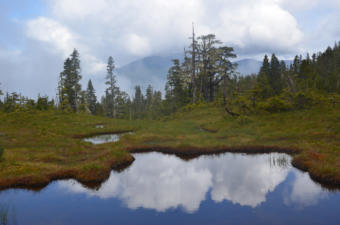
The Tongass National Forest near Wrangell, Alaska, 2016.
The Tongass National Forest near Wrangell, Alaska, in 2016. (Creative Commons photo by Rob Bertholf)

The U.S. Forest Service quietly hit another milestone in its ongoing efforts to consider building new roads in the Tongass National Forest. Last month, it received comments on an important document from cooperating groups.

The state has been providing feedback that could shape the outcome of the new rule, and so have Southeast Alaska tribes.

But some of the tribal governments say the timeline has felt rushed for a decision that could have a major impact on rural Alaska.

Joel Jackson, the tribal president of the Organized Village of Kake, said it’s impossible to separate the Tongass National Forest from the dinner table.

“That’s the way I was taught from my father,” Jackson said. “He never liked the word ‘subsistence’ either. He always explained it to me, it’s our way of life.”

And Jackson feels like that way of life could be threatened if new roads are built in the national forest surrounding Kake. Historically, large-scale industrial logging in the region damaged deer habitat and salmon streams.

Jackson said the village can’t afford to have its main food source jeopardized again.

“We have no other choice but to stand up and say, ‘No more logging. No more road-building in our area,'” Jackson said.

This decades-long battle isn’t centered on the roads themselves. For Alaska’s congressional delegation, it’s about access. Or, as Sen. Lisa Murkowski put it, making sure the Tongass is a “working forest.” Much of the remaining harvestable, old-growth trees are in areas that are hard to get to.

Last summer, Murkowski and a top federal official toured the last remaining large sawmill. And in August, the Forest Service announced it would revisit how — and if — the Roadless Rule should apply to Alaska.

Jackson said he wanted Kake to be a part of that conversation. The plans include Southeast Alaska tribes as cooperating agencies — providing crucial input.

But he said it hasn’t always felt that way.

“That remains to be seen,” Jackson said.

In February, the Organized Village of Kake and the other cooperating agencies received a robust, 500-page document, detailing the various options on the table for the Tongass. From one extreme to the other: from the Roadless Rule staying in place, to the Roadless Rule going away for Alaska. And of course, everything in between.

In any case, Jackson said it was a lot to take in for the small tribal government, and the Forest Service gave them just two weeks to make comments.

“We’re not lawyers or anything. We have to get help to understand a lot of what they’re saying,” he said.

Jackson said he asked the Forest Service for more time — a few more days, so the tribe could sort everything out and make meaningful suggestions.

“They said they had a timeline and they were going to stick to it,” Jackson said.

In an emailed statement, the Forest Service didn’t directly address why it didn’t grant the tribal government the extension. But it said there are other ways for cooperating agencies to participate.

Raymond Paddock, the environmental coordinator at Central Council of the Tlingit and Haida Indian Tribes of Alaska, said he thinks the Forest Service is trying to do its best with the directions it was given.

However, Paddock said, “It was definitely a rushed process.”

Central Council is also a cooperating agency providing feedback on the Roadless Rule.

But ultimately, the tribal government decided not to weigh in on this latest comment period because Paddock said they wanted to defer to the smaller tribes.

“Where we feel those are the most impact areas,” Paddock said.

The Forest Service is shooting for a summer release of its draft environmental impact statement on the Roadless Rule.

As for the Organized Village of Kake, they made the two-week deadline and got their comments in.

But Jackson said it wasn’t without a struggle.

“It just takes a lot of time to go page-by-page,” Jackson said.

Now he’s looking forward to getting back to another big project.

Kake is in the process of restoring a cannery with the hopes of attracting more small cruise ships.

Jackson thinks that’s the future, and he wants those visitors to be able to appreciate the old growth trees that are left.

Of 140,000 comments, most favor keeping the Tongass Forest Roadless Rule

Tongass National Forest
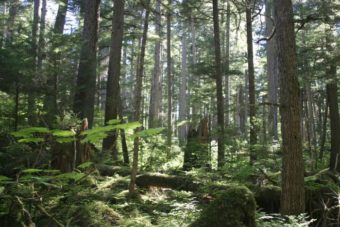
Part of the Tongass National Forest on Douglas Island pictured in 2004. (Creative Commons photo by Henry Hartley)

The U.S. Forest Service released a summary of public comments on changes to the Roadless Rule in the Tongass National Forest. The takeaway is that the majority of the comments are in favor of leaving the rule in place in Alaska, which limits most road building in wilder parts of the forest.

Over 140,000 people submitted an opinion on the controversial topic. Back in August, the Forest Service said it would consider the state’s ask for an exemption that would make it easier to build new roads through the federal land.
It was prompted by a decades-long battle over access to timber and mining.

But the themes expressed in most of the comments suggest the Tongass is more valuable without the addition of new roads. People mentioned the tourism and fishing industries as examples of business that could be negatively impacted.

Though the consensus was to essentially do nothing, the Forest Service is still working on plans to create an Alaska-specific rule.

The agency plans to release a draft environmental impact statement that the public can comment on this summer.

Shutdown not stopping review of Alaska’s Roadless Rule

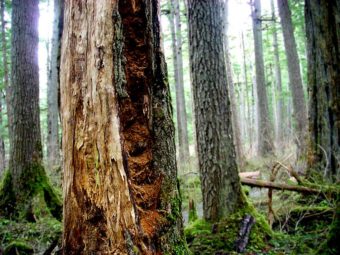
A fire left its mark on this Tongass National Forest tree trunk, as seen in 2008.
The Tongass National Forest. (Creative Commons photo by Xa’at)

The bulk of federal employees will miss two paychecks by Friday, Jan. 25, as the partial government shutdown continues. But the U.S. Forest Service is dedicating paid staff to a controversial initiative in Alaska.

The agency released an update on its website earlier this week, saying it’s still working on “high-priority projects,” such as reviewing how the Roadless Rule applies to Alaska. The rule is a federal regulation most states have to follow, which makes it difficult to build new roads on wilder parts of national lands. Alaska has asked for an exemption to the rule.

It’s been a decades-long battle in the state — centered mostly on the timber industry and energy development in the Tongass National Forest.

In August, the Forest Service said it would review the state’s ask and deliver a draft environmental impact statement by the summer of 2019. Now, despite limited staffing, the agency is still working to meet that deadline.

The Forest Service is using leftover federal funds from last year to pay its employees.

Recently, conservation groups in Alaska criticized the agency for planning a timber sale during the shutdown and for a lack of transparency.

Is there something for everyone in a new vision for Tongass roads?

Tongass National Forest
Tongass National Forest. (Creative Commons photo by Henry Hartley)

Over the summer, Alaska got the go-ahead to propose its own alternative to a federal rule most states have to follow. The Roadless Rule prohibits new roads from being built in wilder parts of national lands.

It’s something the state has been battling for decades. But now, the issue seems to be moving forward fast. On Tuesday, a citizen advisory committee released new recommendations, which could shape the future of the Tongass National Forest.

The thing to keep in mind about the four new options being recommended is that they represent a spectrum of ideas about how the Tongass should be managed.

On one end of the spectrum, nothing new would really happen: Things would stay the same, and road-building would remain difficult in some parts of the national forest. On the other end, the national Roadless Rule basically wouldn’t apply to Alaska.

Andrew Thoms, with the Sitka Conservation Society, said the advisory committee weighed these options carefully.

“People saw that Southeast rural communities are facing challenges and there are no easy answers,” Thoms said.

Gov. Bill Walker appointed Thoms and 11 others to the Alaska Roadless Rule Citizen Advisory Committee in October to represent various stakeholders around Southeast Alaska. The state has long maintained the region needs better access to logging, energy and mining opportunities, and that would be easier without the Roadless Rule hanging over the Tongass.

Thoms said the group agreed they’d like to see a sustainable timber industry kept alive. But where do you strike the balance?

“I think new road-building that opens up new areas for logging, especially on landscapes like Prince of Wales that’s already been heavily impacted, could cause some big problems,” Thoms said.

Two of the options on the spectrum would scale back some environmental protections. Right now, the U.S. Forest Service can’t build roads through areas with the top salmon producing watersheds, known as the Tongass 77, or Audubon-designated habitat important for wildlife and fish.

One of the options would do away with both of those protections.

Thoms said the message the committee heard from a lot of the community meetings was this: Keep things as they are. The Forest Service has already received over 140,000 public comments on this. In fact, they’re still combing through them.

But Thoms said the Forest Service hasn’t analyzed the responses yet.

“What we’re hearing from the public … is that they want to keep the Roadless Rule in place,” Thoms said. “And the public testimony seemed to indicate that people were leaning toward a ‘no action’ alternative.”

At the public meeting in Ketchikan, the community input was more split.

Bert Burkart said that’s not surprising. He’s the President of the Alaska Forest Association, a consultant with Viking Lumber and part of the citizen advisory committee.

Burkhart prefers option D — the very end of the spectrum. The one that said the Roadless Rule basically doesn’t apply to Alaska. Still, he said he’d take the closest other outcome.

“But it’s still not what we’re shooting for,” Burkhart said.

It’s not what the state is shooting for either.

Chris Maisch, the state forester, said the state’s perspective hasn’t changed: Alaska shouldn’t have to follow the Roadless Rule.

“But we think the body of work that was done by the committee, it did reflect well what we heard,” Maisch said. “I think everyone that participated could find something about their opinion on this matter.”

Ultimately, it’ll be up to the Forest Service to decide which of the advisory committee’s options will move on for an environmental analysis — with the state acting as a cooperating agency.

It’s expected the public will get another chance to weigh in this summer. A final decision on Alaska’s Roadless Rule is anticipated by 2020.

Roadless advocates pack Tongass hearing

Governor Bill Walker’s advisory panel tasked with recommending ways to relax the U.S. Forest Service’s roadless rule is taking public comment across Southeast Alaska. At a recent hearing in Juneau, most people supported keeping the roadless rule intact in the Tongass National Forest

Part of the Tongass National Forest, between Wrangell and Petersburg, is seen in this view from an airplane in 2014. (Photo by Ed Schoenfeld/CoastAlaska)

Gov. Bill Walker appointed the 12-member advisory committee to make recommendations to the state on where roads could be built inside 7.4-million acres of roadless areas in the Tongass National Forest.

In Juneau, more than two dozen people told the committee they didn’t like the idea of rolling back the roadless rule.

“Expanding roadless areas to make access for logging in Southeast Alaska amounts to a government subsidy of private industry,” said retired federal research chemist Jeff Short.

Juneau resident Carl Brodersen complained that the hearing was announced with little warning and held in the middle of a workday.

“It’s akin to holding a vote on a salmon issue during a king opening,” he told the committee.

Fly fishing guide Mark Hieronymus was among those in the tourism industry who have argued for keeping the roadless rule. He said people from the Lower 48 come to Southeast Alaska, “in greater and growing numbers for the incredible fishing opportunity in natural roadless settings still enjoyed here in the Tongass.”

A pair of supporters for more access also spoke out.

“I feel like I’m a weird duck sitting in here listening to all these people that really don’t know much about what’s going on out there,” Ketchikan City Councilman Dick Coose said. “But that’s beside the point. I’m retired forest service, 35 years.”

Coose was Ketchikan’s district ranger in the 1980s. He said there’s room for managed development in the Tongass.

“And my goal’s very simple: you manage a healthy forest, you have healthy communities and you have healthy businesses,” Coose said.

State Forester Chris Maisch presides over the advisory committee.

“Certainly, the weight of the testimony that we heard was not to change the rule, or in some cases, even to provide more protection,” he said in an interview.

The State of Alaska fought the nationwide 2001 roadless rule in federal court. The Bush administration granted an exemption. But the ninth circuit court of appeals struck it down in 2011.

An appeal filed in 2017 is pending in the D.C. Circuit Court.

Maisch said that makes the state’s position very clear: it’s against the roadless rule.

“And one way or the other the state’s been engaged in trying to overturn the rule since the day it was put in place,” Maisch said.

But on the ground the federal roadless rule is polarizing in Southeast Alaska.

The Tongass National Forest makes up most of Southeast Alaska (Courtesy U.S. Forest Service)

“There’s a lot of passion around this issue,” said Brian Holst, executive director of the Juneau Economic Development Council. He’s one of the 12 appointed to sit on the advisory committee.

Holst said the group hopes to find some compromise. The historic fight has been between keeping the roadless rule intact or doing away with it altogether.

“Our task is not to endorse either of those sides because both of those options are out there,” Holst said, “but is to generate alternatives somewhere in the middle and that’s challenging, that will be challenging.”

The panel doesn’t have much time to deliberate. It’s charged with crafting an Alaska-specific rule that would keep some areas roadless while accommodating areas for road building and development –principally logging – before the end of November.

Before that happens the panel will convene and hold meetings in both Ketchikan from Oct. 24 to 26 and in Sitka from Nov. 6 to 8.

Gov. Walker’s ‘roadless rule’ panel takes shape

This clear-cut in the Tongass National Forest on Kupreanof Island north of Petersburg is visible from the air in 2014.
This clear-cut in the Tongass National Forest on Kupreanof Island north of Petersburg was visible from the air in 2014. (Photo by Ed Schoenfeld/CoastAlaska)

Gov. Bill Walker had named a dozen Alaskans to weigh in on potential road building in Tongass National Forest. Critics note that none of the appointees work in tourism — one of Southeast’s fastest growing sectors.

The U.S. Forest Service announced this summer it was taking steps to allow road building in Tongass National Forest.

Logging interests say new roads are essential for keeping the timber industry alive.

Eric Nichols, a partner with Alcan Forest Products, was tapped for the panel.

He said Monday he applauds the Forest Service for drawing up a plan, “that relaxes some of the roadless that allows Southeast to have economic, viable communities.”

But conservationists and some tour operators want the Tongass to stay intact.

“Roadless areas protect the core of the visitor experience here in Southeast Alaska and we’re talking about Skagway to Ketchikan,” said Dan Kirkwood, general manager of Pack Creek Bear Tours; he’d applied to sit on the panel but didn’t make the cut.

“We need to protect scenery, fish and wildlife, the things that are bringing a million people – more than a million people – to Southeast Alaska every year,” Kirkwood said.

Another roadless advocate that applied was Austin Williams, a campaigner for Trout Unlimited. He didn’t make it on the panel, either.

“The committee seems to be heavily focused on resource extraction,” Williams said.

When he reads down the list of names he sees logging, commercial fishing and mining.

“Certainly there are some good individuals on the committee and I’m glad to see that,” he said. “But it’s alarming to see that there isn’t anyone specifically advocating for sport fishing or hunting or outfitters and guides. And those are some of the most lucrative and important uses of the forest currently and really need a voice in this process.”

The only appointee tied to tourism is Brian Holst of the Juneau Economic Development Council.

The governor’s press release describes Holst as representing “tourism and other commercial interests on the committee.”

Holst declined to comment.

Conservationists will be represented by Sitka Conservation Society and The Nature Conservancy.

“You can always find somebody who thinks they were left out or there’s a balance one way or too much of the other,” said Michael Kampnich, a Prince of Wales Island-based staffer for The Nature Conservancy, tapped for the committee.

On the whole, Kampnich said he’s pleased with the composition given the tight time frame. But he also noted the lack of professional guides.

“I also hope that there’s some things in there that I can help advocate for,” he said.

Governor’s office spokesman Austin Baird said interest on serving on the panel was high.

“When you had 37 applicants and you had to narrow the field to 12 appointees there were definitely tough decisions that needed to be made,” Baird said.

Native corporations will be represented by Sealaska’s Jaeleen Kookesh; Ralph Wolfe, a member of Yakutat Tlingit Tribe is also on the panel.

The Alaska Roadless Rule Citizen Advisory Committee will get to work immediately.

It’s scheduled to begin a two-day meeting in Juneau on Tuesday.

The committee will advise the State of Alaska. Their recommendations will go toward a state specific roadless rule which could relax road building and logging restrictions in the Tongass.

Anyone interested in attending to calling in or attending the meeting in downtown Juneau’s Centennial Hall can find more information here.

Site notifications
Update notification options
Subscribe to notifications