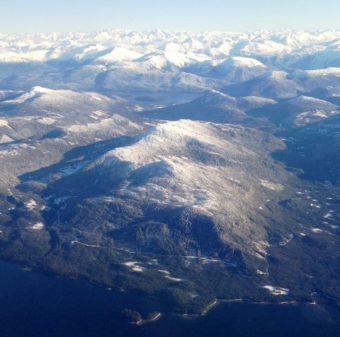
The U.S. Forest Service announced Tuesday that it’s seeking a full exemption from the Roadless Rule of the Tongass National Forest.
The rule, which has applied to Alaska for more than a decade, makes it difficult to build new roads through national lands. But the U.S. Forest Service is proposing changes that could make Alaska the only state that doesn’t have to follow it.
Of six alternatives listed in the plan, a full exemption is the Forest Service’s recommended choice.
Alaska’s congressional delegation has long pushed for the full exemption in the state, saying there needs to be more access to timber and energy opportunities in the region.
Owen Graham, President of Alaska Forest Association, agrees. He calls Tuesday’s announcement a “great thing.”
“What we want is year-round manufacturing jobs and a lot more stability,” said Graham.
But, he says, this is just one step in the right direction. Retaliation tariffs placed on logs shipped to China have been hitting some sectors of the small industry hard.
Graham is uncertain how long it will take to see big systemic changes in how the Tongass National Forest is managed.
“Right now the industry’s just crumbling apart. There’s hardly anybody left,” he said. “Every year we lose more of our loggers because there’s not enough to keep everyone going.”
Joel Jackson, the President of the Organized Village of Kake, says he’s worried about what these changes could mean for his community. Kake is a remote village that depends on the wild food the Tongass provides. Historically, large-scale industrial logging damaged salmon streams.
“You know it’s sad that we have to continue to fight our own government to protect our forests and streams,” Jackson said.
He says the Organized Village of Kake is considering filing a lawsuit against the Forest Service. He suspects many other organizations will, too.
“We don’t throw our hands up in the air. We just buckle down and start talking [about] what’s the next step,” he said.
The full exemption would release 9.2 million acres of wilderness from Roadless Rule protection and open 165,000 old-growth acres and 20,000 young-growth acres to logging. The change would only apply to the Tongass National Forest. The Chugach National Forest would remain under the Roadless Rule.
According to Chris French, a top Forest Service official, this could change how the Tongass is federally managed and undo a 2016 plan amendment to move away from old growth logging in the region.
The U.S. Forest Service will publish its justification for the change in the federal register later this week.
The public will have a chance to weigh in on the proposed change, which is included in the draft environmental impact statement, until Dec. 17.
A final decision is expected to be reached by 2020.
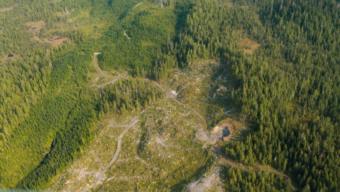
A clear-cut section of the Tongass National Forest in August 2010. (Creative Commons photo by Alan Wu)
The U.S. Department of Agriculture is in the middle of making a crucial decision about how it manages the Tongass National Forest.
In 2018, the state of Alaska was granted millions of dollars in federal funds to help facilitate dialogue about potential changes to the Roadless Rule, which could open up new areas of the Tongass to old-growth logging.
But a state records request reveals that a timber industry group was paid out of that grant for additional input, and some people involved in the rule-making process say that’s not fair.
What is the Roadless Rule?
The Roadless Rule debate has dragged on for decades. Last summer, when the U.S. Forest Service announced it would be looking at how the rule applies to Alaska, it was a big deal.
And the state wasn’t looking for a compromise. It wanted a full exemption — meaning Alaska wouldn’t be burdened by the same restrictions nearly all national lands have to follow, making it easier to build new roads through parts of the Tongass.
Access roads for logging have been a sticking point for the region’s struggling timber industry, which employs less people than a Walmart store. The remote location has made harvesting trees difficult, and the federal red tape made it nearly impossible, or so the argument goes.
Still, throughout this process, U.S. Sen. Lisa Murkowski has said that’s not the only reason she supports full exemption. In an interview this month, the Alaska Republican reiterated that she supports more access in the Tongass.
“Not necessarily just to access to timber, but access at all,” she said.
The state gets federal money to work on a state-specific rule
The Alaska Division of Forestry was awarded $2 million shortly after the Forest Service’s announcement last summer. It’s actually a modification of a grant that’s part of the USDA State Fire Assistance program. It’s typically used for things like fighting wildfires or insect prevention.
But in this case, it was awarded to the state to work on the Roadless Rule as a cooperating agency. Essentially, the state would be a point person to the federal government leading up to a final decision.
“I was kind of astonished about that,” said Andy Stahl, the executive director of Forest Service Employees for Environmental Ethics, a watchdog group.
He said it’s not uncommon for the federal agency to grant states money. But given the circumstances in Alaska, he thinks this grant presents a conflict.
“The state has said, ‘Change the rule.’ And the federal government, which wrote the rule … turns around and says, ‘Here’s $2 million to help you convince us to change the rule.’ And that’s just weird,” Stahl said.
How the state spent the money
To date, the state has spent close to $500,000 on a variety of things, like putting together a citizen advisory committee. Last fall, former Alaska Gov. Bill Walker appointed a team of people representing diverse perspectives for that committee, from conservation groups to timber interests.
Together, they provided important feedback to top federal officials on how the Roadless Rule should apply to Alaska.
But the Alaska Forest Association — a timber industry group — has gotten another opportunity to weigh in. An opportunity that comes with a payment.
So far, the Alaska Forest Association has been given more than $200,000 in funds from the $2 million grant the state got from the Forest Service in 2018.
And there’s potentially more coming.
The Alaska Forest Association is under two contracts with the state, signed in March of this year, worth up to $360,000. The group is providing the industry’s perspective — how its business will be affected by changes to the Roadless Rule and work plans moving forward.
Stahl said the the Forest Service couldn’t have granted this money to the Alaska Forest Association directly, because the grant is being managed under state laws.
But he’s confused why the money is being given to a group with a clear agenda.
“Nobody in their right mind would turn to that organization for the unvarnished, dispassionate facts,” Stahl said. “You’d go hire a private consultant.”
But Chris Maisch, the director of the Alaska Division of Forestry, disagrees.
“We want a party that has the expertise and knowledge to give us an accurate answer, so that will inform our policy,” Maisch said.
He said spending a portion of the federal grant this way shouldn’t come as a surprise. The state regularly partners with stakeholder groups.
And since the fate of the timber industry is being considered, an industry group like the Alaska Forest Association makes the most sense in this role.
“The state has a vested interest in continuing the industry, and that’s what we’re trying to do,” Maisch said. “That’s the whole purpose behind the Roadless Rule petition.”
Another cooperating agency
Joel Jackson, the tribal president of the Organized Village of Kake, doesn’t think that’s OK.
Like the state, the tribal government is another cooperating agency. They’re also supposed to be providing context to the Forest Service as the decision gets made.
But unlike the state, Kake wasn’t granted any federal money to help make its case.
“We didn’t get any funding for staff to be working on (the Roadless Rule),” Jackson said. “And that’s very, very important, because we have limited funds.”
If major changes are made to how the Tongass is managed, he said there’s a lot at stake for the village.
For example, he’s worried about food security. Historically, large-scale industrial logging damaged salmon streams.
“I want the people to know who don’t live out in the rural villages how important the salmon are to our people,” Jackson said.
The Forest Service wouldn’t provide comments for this story. Though the state said the Forest Service is aware of how the grant money is being spent.
An announcement on the Roadless Rule decision was expected to come out in draft form this summer, but it’s been delayed. A national report suggests, at Gov. Mike Dunleavy’s urging, that President Donald Trump’s administration is now working on a full Alaska exemption.
Lena Loop trail near Juneau in the Tongass National Forest. (Creative Commons photo by Gillfoto)
President Donald Trump is pushing for a full exemption of the Roadless Rule in Alaska, according to a Washington Post story published this week.
It’s what Alaska Gov. Mike Dunleavy and U.S. Sen. Lisa Murkowski, R-Alaska, have been advocating for. But it’s a big departure from what most people say they’d like to see happen in the nation’s largest national forest.
Recently, the president made a dad joke about Dunleavy on a phone call at a private political event in Soldotna. But he also referenced a few of the governor’s priorities.
“He’s doing something with your logging and all your other things.” Trump said. “We’re working on that together, and that’s moving along now.”
The U.S. Department of Agriculture is deciding right now if new roads should be built in the Tongass National Forest and to what degree. It could increase access to new stands of old-growth trees and, Murkowski says, renewable energy projects.
One option is to fully roll back the Roadless Rule in Alaska. But that’s one extreme.
The Roadless Rule has been in place for two decades across the country. And it makes it difficult to build new roads on national lands.
Niel Lawrence, a senior attorney with the Natural Resource Defense Council, thinks fully exempting the Tongass from the Roadless Rule is a bad idea.
“I think what we would see, as a practical matter, is a substantial increase in road building,” Lawrence said.
Lawrence doesn’t think repealing the Roadless Rule would restore Alaska’s struggling timber industry. Despite an increase in access, he said it’s not easy to make federal timber sales pencil out.
“Southeast Alaska is a really challenging, difficult, terrible place to run a logging industry,” Lawrence said. “It’s one giant wetland. It’s remote.”
But he said a full exemption could open up the floodgates for other types of environmental damage. For example, the agency could be allowed to build roads in areas designated as important habitat for deer or salmon.
“If you were to have a full exemption, it doesn’t mean that all of a sudden anywhere anyone wants to put something, it’s going to happen,” Murkowski said. “I think it’s reactionary, and I would just urge greater caution.”
Residents in the Organized Village of Kake are concerned sweeping changes could affect the habitat in their backyard.
Kake Tribal President Joel Jackson said the salmon streams in Kake are still healing from the industrial logging of the past. He doesn’t want the see a full exemption being considered today, though he suspects it might be a possibility.
“As we move forward here and the economy gets tighter and tighter, it’s going to be more important to our community that we have food security,” Jackson said.
In an emailed statement, the U.S. Forest Service said it was still looking at a “range of alternatives to roadless management.” The agency expects a draft environmental impact statement to be released this fall and a final decision in 2020.
U.S. Sen. Lisa Murkowski, R-Alaska, answers questions in a studio at KTOO on Aug. 13, 2019, in Juneau, Alaska. (Photo by Rashah McChesney/KTOO)
A decision by President Donald Trump’s administration over exempting the Tongass National Forest from the Roadless Rule is expected soon.
That’s according to U.S. Sen. Lisa Murkowski, R-Alaska, who said Tuesday that rolling back restrictions to roadbuilding is crucial for Southeast Alaska’s economy.
“I, very early on, went to the Trump administration and said as we look to the state of Alaska and the application of the Roadless Rule, we have to be able to have a plan that is specific to us,” she said Tuesday.
The head of the U.S. Forest Service was directed by U.S. Department of Agriculture Secretary Sonny Perdue last summer to initiate an Alaska-specific rule for the Tongass.
A 90-day comment period last fall received over 144,000 comments, and the majority expressed opposition to rolling back protections. According to the Forest Service’s summary, a minority of comments supported a full exemption from the Roadless Rule for Alaska — which is what Murkowski is advocating.
“I think complete exemption from the Roadless (Rule) is what is best suited for Alaska,” Murkowski said. “We’re encouraging the secretary of Agriculture as he is moving forward with these decisions to include a full exemption as one of the preferred alternatives. At this moment in time, we’re still waiting. In fairness, I thought we would already have it by mid-August.”
The next step for the Forest Service is the release of a draft environmental impact statement. That could include a full exemption or some hybrid rule for the Tongass.
Another public comment period would be held before a final report is released in 2020.
Sen. Lisa Murkowski and U.S. Forest Service Chief Vicki Christiansen visited Naukati July 6 on Prince of Wales Island where the forest service completed a land swap with the Alaska Mental Health Trust. (Photo courtesy of Senate Energy & Natural Resources Committee)
Sen. Lisa Murkowski recently hosted the U.S. Forest Service’s top official in a visit to Tongass National Forest. The delegation kept a low profile during its visit to Southeast Alaska.
“It is a challenge and I’d be glad to work with you more even come up to Alaska that we can roll up our sleeves and really look at this,” Christiansen replied.
Murkowski — who chairs the powerful Senate Energy & Natural Resources Committee — acted on this opening.
“I welcome you up to this state any time summer, winter, spring fall,” she said.
Christiansen chose summer. She spent July 6 and 7 in Wrangell, Ketchikan and Prince Wales Island as part of a flying visit with Alaska’s senior senator.
At a Saturday morning meeting in Wrangell, the delegation heard from the timber industry and its boosters.
That would be Viking Lumber Mill on Prince of Wales Island which employees a few dozen people.
“And they’re struggling to get enough wood to keep going,” said Frank Roppel, a veteran figure in Southeast Alaska’s logging industry who sat in on the meeting.
The octogenarian was a top Alaska Pulp Corporation executive. In its day, the company was a top regional employer, operating a sawmill in Wrangell and a pulp mill in Sitka from the 1950s until the ’90s.
Roppel told CoastAlaska that the forest service chief asked good questions and was receptive to concerns over timber supplies for commercial logging.
“We were encouraged that there’s some interest and willingness to try and help the industry,” he said.
But at a roundtable of tribal leaders in Ketchikan the delegation heard a different perspective.
“We prefer that there is no change the forest plan and I think most of the tribes are going that way,” said Ronald Leighton, president of the Organized Village of Kasaan on Prince of Wales Island.
He says he used the audience with the Forest Service delegation to press for preferential access to old growth red cedar for traditional carvers.
“When we did our longhouse we were having trouble finding quality cultural logs for that,” he said. “So, in fact, we had to buy from Sealaska.”
The Forest Service is expected to hold public hearings to a draft environmental impact statement for an Alaska-specific Roadless Rule later this year.
“I would hope that Chief Christensen comes back during the public comments and the public meetings to actually hear from Alaskans,” Cannon said, “and travel to places beyond Ketchikan and Wrangell and go to Juneau go to Sitka and hear from larger swath of Southeast Alaskans.”
Secretary of Agriculture Sonny Perdue, left, and U.S. Sen. Lisa Murkowski talk July 5 with Kirk Dahlstrom at the Viking Lumber mill in Klawock. The mill is the largest private employer on Prince of Wales Island. (Photo by Leila Kheiry/KRBD)
The delegation also visited Naukati on Prince of Wales Island where the Forest Service completed a land swap with the Alaska Mental Health Trust.
“We talked about past work and collaboration between the Nature Conservancy in the Forest Service,” said Michael Kampnich, the nonprofit’s field representative on Prince of Wales Island.
Commercial logging didn’t come up in those discussions, he said.
This time around, the Forest Service chief opted to keep a low profile in Alaska. But why?
“This was a relationship building visit with Senator Murkowski in the State of Alaska,” Babete Anderson, a spokeswoman for the Forest Service in Washington, D.C. said in a statement in response to questions from CoastAlaska.
Tonya Parish, a spokeswoman for the Senate committee that organized the trip, said in a statement that current protocol is to almost never give advance notice of visiting high-ranking officials and that the itinerary didn’t allow for public meetings or media interviews.
She declined further comment.
With additional reporting from KFSK’s JoeViechnickiin Petersburg.
A few states are in the process of challenging a federal rule that makes it difficult to build new roads through national lands, called the Roadless Rule.
In Alaska, the debate centers on the Tongass National Forest, where Republican Sen. Lisa Murkowski says more access is needed to timber, energy and mining opportunities.
But on Thursday, U.S. Sen. Maria Cantwell, D-Wash., and Rep. Ruben Gallego, D-Ariz., introduced legislation which could eliminate the possibility of an Alaska-specific exemption to the Roadless Rule.
Under the Roadless Area Conservation Act, the U.S. Department of Agriculture wouldn’t have the authority to grant that exemption.
Right now, the agency is on track to release a draft environmental impact statement this summer, including various options for road-building in the Tongass. An official decision is expected by 2020.
It’s unclear how the new legislation will interfere with those plans. It still has to pass both the House and the Senate, where Murkowski chairs the Senate Committee on Energy and Natural Resources.
Close
Update notification options
Subscribe to notifications
Subscribe
Get notifications about news related to the topics you care about. You can unsubscribe anytime.