U.S. Rep. Mary Peltola in the Alaska Public Media studio on April 4, 2023. (Matt Faubion/Alaska Public Media)
Congresswoman Mary Peltola emphasized her support for Arctic drilling and other Alaska energy projects in a call-in forum with constituents last week.
“I’ve worked with our senators Lisa Murkowski and Dan Sullivan, our labor unions and Alaskans from every region to get the Willow project approved,” she said, referring to ConocoPhillips’ new project in the National Petroleum Reserve. “This is the largest North Slope oilfield investment in decades, which will bring 2,000 jobs and billions of dollars of revenue for Alaska.”
Next week marks Peltola’s one-year anniversary in Congress. As a Democrat running for re-election in an oil-producing state, she’s setting herself apart from the mainstream of her party on energy. While Republicans, including opponent Nick Begich, aim to tie Peltola to high gas prices and conservation policies of the Biden administration, she used the largely scripted forum, billed as a tele-town hall, to highlight her pro-development views.
In addition to lauding Willow, Peltola also spoke of her support for Alaska’s Liquified Natural Gas export plan and smaller renewable energy projects for Alaska communities. Peltola said climate change is hitting Alaskans particularly hard, but she called out climate advocates who engage in what she views as hypocrisy.
“I take umbrage with some of these extreme environmental groups,” she said. “Because I don’t feel like they – many of the people in that movement – are willing to curtail any of their energy uses, whether it’s on their computer or in their car or plane trips, but they expect us to stop producing.”
Peltola’s office described the tele town hall as the congresswoman’s first use of this format. Among the callers was Peltola’s ninth grade English teacher, now living in Colorado, who talked about the importance of leadership.
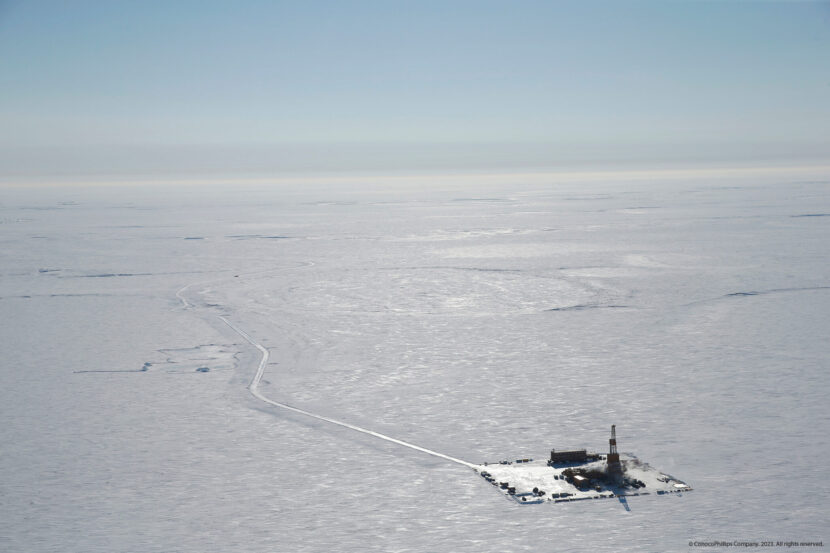
An exploration site at ConocoPhillips’ Willow prospect is seen from the air in the 2019 winter season. (Photo by Judy Patrick/provided by ConocoPhillips Alaska Inc.)
In documents filed Tuesday in Anchorage, international oil company ConocoPhillips said an ongoing federal court case is likely to make or break Alaska’s largest planned oil development in decades.
If Alaska District Court Judge Sharon Gleason cancels required federal approvals, “the Willow project is highly unlikely to proceed at all,” said Connor Dunn, vice president of Willow for ConocoPhillips.
Dunn’s statement came as ConocoPhillips filed a legal reply to several environmental groups who sued the federal government earlier this year and asked Gleason to overturn existing federal approvals as inadequate.
The plaintiffs include the Alaska Wilderness League, Sierra Club and Sovereign Iñupiat for a Living Arctic. After a similar lawsuit, filed in 2020, overturned a previous federal approval and forced regulators to restart their process, and new approval was granted this spring.
The federal government is opposing the environmental groups’ lawsuit and is backed by ConocoPhillips, the state of Alaska, the North Slope Borough, and a variety of companies and industry groups who hope to see the project developed.
ConocoPhillips said in this week’s filings that through July, it has already spent $925 million on Willow, and if allowed to proceed, it expects to spend another $903 million by the end of the winter 2023-2024 construction season.
As many as 1,200 people would be involved in direct construction, the company said, with another 600 offering support.
Willow is expected to hold as much as 600 million barrels of recoverable oil and would generate billions for the state of Alaska in the long term but would cost the state money during its initial years.
The environmental groups are scheduled to reply to ConocoPhillips and other defendants by mid-September, allowing Gleason to decide the case before the start of the winter construction season.
If the case isn’t resolved by then and ConocoPhillips can’t work this winter, there is a risk that the company could fail to meet the requirements of its land lease with the federal government.
Willow would be the first large project constructed in the National Petroleum Reserve-Alaska, and ConocoPhillips’ 30-year lease was signed in 1999.
Under the terms of the agreement, the first oil must flow by September 2029. Writing to Gleason, Dunn said that “timely first oil requires a highly integrated series of construction milestones from 2023 through 2029, and there are no opportunities to further compress the construction schedule that would not create major execution risk.”
It’s possible that the federal government allows a lease extension, he said, but that’s not guaranteed.
If Gleason overturns the existing approval altogether through what’s known as a “vacatur” order, it would likely cost ConocoPhillips at least two winter construction seasons, Dunn said, because of the time needed for federal regulators to redo the approval process.
“It could take years, depending on market conditions, to reassemble the right team to execute the project safely and efficiently,” Dunn said. “This is a real, practical consequence of a vacatur order, and it would weigh heavily against ConocoPhillips moving forward with a project that faces a risk of lease expiration.”
An exploration site at ConocoPhillips’ Willow prospect is seen from the air in the 2019 winter season. (Photo by Judy Patrick/provided by ConocoPhillips Alaska Inc.)
The Alaska Oil and Gas Conservation Commission is appealing the decision of a federal judge who ruled in March that ConocoPhillips, a major North Slope oil producer, may keep some drilling data secret.
According to a filing dated Wednesday, the commission is appealing the decision by U.S. District Judge Sharon Gleason to the 9th U.S. Circuit Court of Appeals.
In March, Gleason determined that a federal law preempts a state law that requires North Slope companies to make data publicly available.
The state’s goal was to encourage drilling on the North Slope, but Gleason determined that the state law should be overridden by federal rules because the relevant data comes from five oil wells in the federally owned National Petroleum Reserve.
ConocoPhillips Alaska is developing part of the reserve under its Willow Project, which is also the subject of separate litigation.
Gleason determined that the Willow data should be released only after ConocoPhillips’ leases with the federal government expire.
ConocoPhillips filed a lawsuit against the commission last year after unsuccessfully asking the state to extend the privacy period.
As of Thursday morning, the state’s appeal had not been processed by the 9th Circuit, and no additional documents had been posted online.
The Alaska Oil and Gas Conservation Commission later determined that Conoco had underestimated the gas production potential of one zone the well went through. And then, shortly before the underground blowout, workers had pumped in freeze-protection fluids that briefly over-pressurized the well, beyond allowable limits.
Compounding the company’s faults, the operator failed to submit regulatory paperwork.
The incident was a black eye for ConocoPhillips, and it occurred just as the Biden administration was considering whether to allow the company to develop its highly controversial Willow project, just 30 miles away.
The leak at Alpine continued for days before workers got control of it. It took more than three weeks to stop the flow at the source. The total amount emitted was roughly equivalent to the annual gas consumption of a small city subdivision.
A company spokeswoman says Conoco is reviewing the investigative findings and proposed civil fine. The company can request a review or a hearing if it chooses to contest the commission’s determinations.
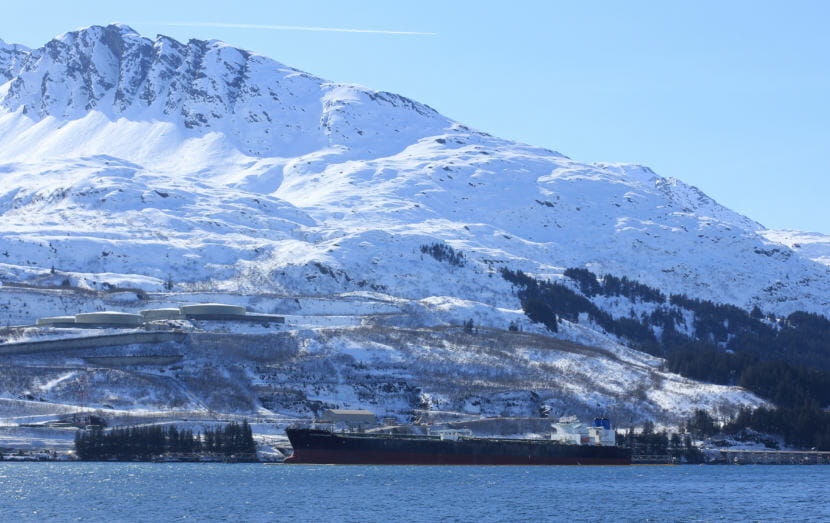
An oil tanker docked at the Valdez Marine Terminal in April. (Photo by Elizabeth Harball/Alaska’s Energy Desk)
The Valdez terminal of the Trans-Alaska Pipeline System is at “risk of a serious accident or incident in the near future.” That’s a main takeaway of a sweeping 180-page report that was published in April, detailing wide-ranging safety concerns at the Valdez Marine Terminal, where North Slope crude is loaded onto ocean tankers.
The Alyeska Pipeline Service Company says it’s taking the report seriously, but coastal communities say time is of the essence.
Early last year, an Alyeska employee working at the Valdez Marine Terminal — which is the southern end of the trans-Alaska pipeline — reported smelling fumes. Heavy snow had damaged oil storage tanks at the facility — venting petroleum vapors into the atmosphere.
“It was noticed by an employee at Alyeska that was walking around, happened to smell toxic fumes coming out of the tanks,” said Wayne Donaldson, the city of Kodiak’s representative on the Prince William Sound Regional Citizens’ Advisory Council, or PWSRCAC.
The advisory council is one of two federally mandated oil spill prevention groups formed in response to the 1989 Exxon Valdez spill, which saturated more than a thousand miles of Alaska’s coastline – including Kodiak Island’s shores – in oil.
Donaldson is one of 19 members of the group and has served on the council for eight years. The federal Oil Pollution Act of 1990, which was passed after the Exxon Valdez oil spill, also led to the formation of the Cook Inlet Regional Citizens Advisory Council.
He said after the incident at the terminal last year, more Alyeska employees started contacting the group.
“And as time went on, more people started coming to us giving safety concerns, as well as retired people from Alyeska,” Donaldson said.
The advisory council commissioned a review of safety practices at the terminal last summer in light of the complaints. And a final report was published last month.
It encompasses nearly 200 pages of major safety concerns at the Valdez Marine Terminal: equipment the report calls “aging and obsolete;” a work culture that includes retaliation among employees, mismanagement and turnover; and shrinking federal and state budgets that have decreased regulatory oversight.
In response to the report, the advisory council sent letters to lawmakers – including Gov. Mike Dunleavy and Alaska’s congressional delegation – citing the need for federal audits of the terminal by the Government Accountability Office and the Occupational Safety and Health Administration.
The report was prepared by corporate safety consultant Billie Garde, who has worked both with Alyeska and BP in the past. Harvest Alaska, a Hilcorp subsidiary, ConocoPhillips and ExxonMobil all own portions of Alyeska Pipeline, which operates the terminal.
“We don’t agree with everything in the report, but we do take it as an opportunity to improve,” said Michelle Egan, Alyeska’s chief communications officer.
Egan is also from Kodiak, and she says she – like many others at Alyeska – is acutely aware of what an oil spill does to coastal communities. She said Alyeska has formed a management team to work on an action plan in response to the report.
Much of the report, however, comes directly from Alyeska staff — many of whom said they think a “serious incident is imminent.”
Brooke Taylor is the director of communications for the Prince William Sound Regional Citizens’ Advisory Council. She said the internal knowledge of problems at the terminal is one of the biggest weaknesses identified in the report.
“There wasn’t any substantive information in the report regarding safety or process safety issues that wasn’t already available to Alyeska,” said Taylor.
About 4% of the nation’s crude oil departs from the Valdez Marine Terminal, a percentage that could swell in the coming years as oil from the recently approved Willow project makes its way down the pipeline.
Taylor said an incident at the Valdez Marine Terminal has the potential to be environmentally devastating, and it threatens one of the state’s main sources of revenue.
“For us, it’s not pro or con industry, it’s — if oil is going to be transported through our region, we want it done as safely as possible,” she said.
Alyeska hired a new chief executive officer the same month the report came out, former BP executive John Kurz. Egan said he’s met with members of the group several times since then.
“He wants to work with [PWS]RCAC and with our employees to make this the safest environment we can possibly have,” she said. “So, I think that commitment has been clear. He’s communicated that repeatedly to our workforce, and to all of our stakeholders.”
The advisory council’s Taylor agrees that Alyeska has responded quickly to the report, and understands changes at the terminal won’t happen overnight.
“Time will tell on what actions are done. So, we know our biggest successes have always happened when industry regulation and citizen groups work together. And so we are hoping this will be another example of that,” Taylor said.
Wayne Donaldson said he’s also encouraged by Alyeska’s initial response to the report. But it’s been more than 30 years since the Exxon Valdez oil spill – he worries that the biggest challenge now is time and complacency.
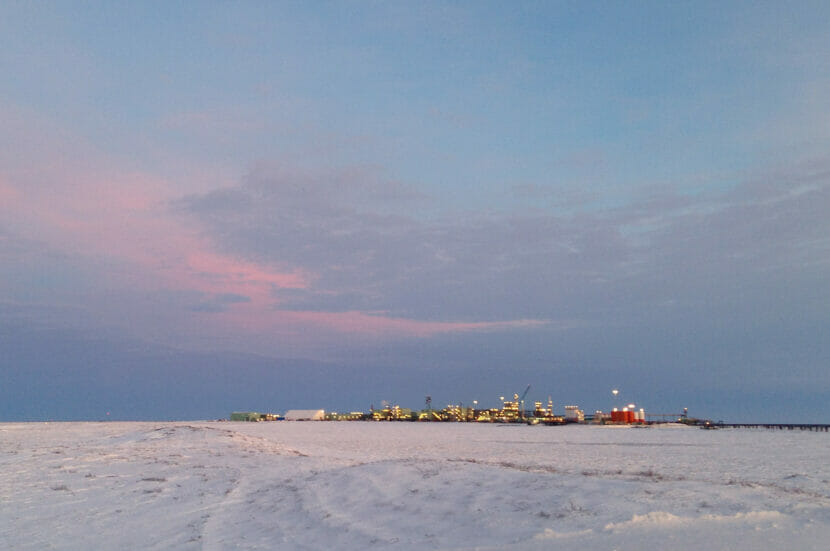
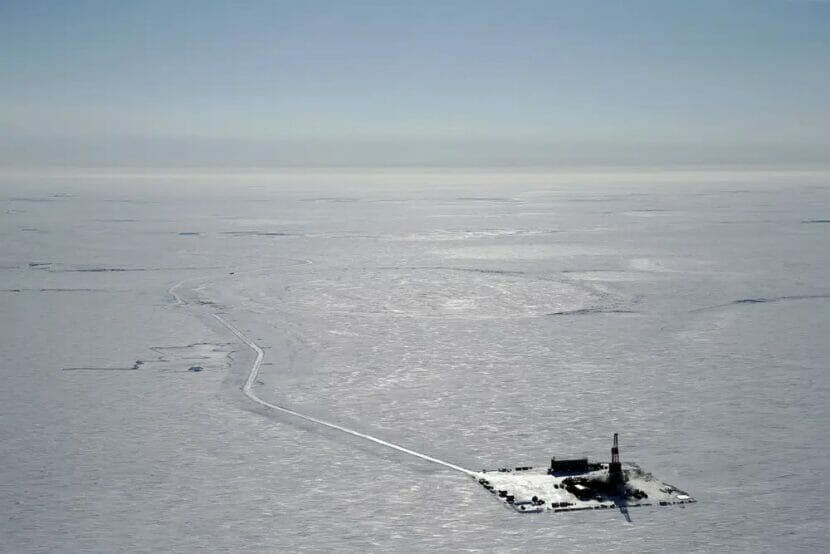
This 2019 aerial photo provided by ConocoPhillips shows an exploratory drilling camp at the proposed site of the Willow oil project on Alaska’s North Slope. (ConocoPhillips)
ConocoPhillips can begin construction immediately on the Willow project in the western Arctic, a federal judge ruled Monday.
U.S. District Court Judge Sharon Gleason denied requests for an injunction that would have stopped the company from working in the final weeks of the winter construction season, which will likely end in late April, when the tundra becomes too soft for heavy equipment to travel on.
Environmental groups and local residents who oppose the project filed two lawsuits last month, claiming the decision to allow ConocoPhillips to develop its leases in the National Petroleum Reserve was made contrary to environmental laws.
Those cases are still pending. But the judge declined to stop work on Willow in the meantime, saying the plaintiffs did not convince her that the company’s winter construction plans would cause serious and irreparable harm.
Her decision frees ConocoPhillips to embark on its plan to build ice and gravel roads, open a gravel mining site and begin hauling and dumping gravel in the National Petroleum Reserve-Alaska. Noise and vibration from blasting at the mine site won’t cause permanent harm, the judge wrote.
She acknowledged that the mayor and some residents of Nuiqsut — the closest village — have concerns about Willow, but Gleason said she gave “considerable weight” to the views of the North Slope Borough, the regional Native corporation and the village corporation for Nuiqsut, all of whom support the project and the winter construction activities.
The Wilderness Society, one of the groups that is suing, issued a statement vowing to continue to fight the project.
Close
Update notification options
Subscribe to notifications
Subscribe
Get notifications about news related to the topics you care about. You can unsubscribe anytime.