Archives for:

"Willow project"

Biden approves Willow project, announces new limits elsewhere in NPR-A

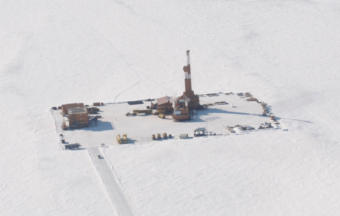
Harball_CD5
CD5, ConocoPhillips’ first oil development within the boundaries of NPR-A. Conoco may soon get approval for a third development there. (Photo by Elizabeth Harball/Alaska’s Energy Desk)

The Biden administration announced Monday morning that it will approve the Willow development, a major ConocoPhillips project in the National Petroleum Reserve-Alaska.

ConocoPhillips wanted approval for five drilling pads. The Biden administration approved a plan for three drill pads, with more than 200 wells.

The approval comes hours after the administration said it intends to seek “maximum protection” for sensitive areas of the National Petroleum Reserve Alaska.

The unusual Sunday night announcement of new Arctic protections seems aimed at softening the blow to Willow opponents. Environmental advocates and younger voters are urging the administration to move the country away from fossil fuels to avoid a catastrophic climate crisis.

Several conservation groups responded immediately to say the protections are good but don’t outweigh the impact of granting the Willow permit.

“No matter what they’re doing with all of these protections, in terms of the special areas or the offshore drilling, it’s not enough if they’re going to permit Willow,” said Karlin Itchoak, Alaska director for The Wilderness society.

The announcement says the administration will propose a new rule seeking additional protection for 13 million acres – more than half the refuge – that are already considered to have high natural and historical value.

It’s not clear if any of the limits will apply to the 2.5 million acres that are already under lease in the NPR-A.

Willow has widespread support from Alaska’s political and business establishment. It’s been a top priority of Alaska’s congressional delegation. The Alaska Legislature passed a unanimous resolution asking the Biden administration to approve it. Support is particularly strong in the North Slope Borough. The borough and local governments in the region would gain millions of dollars a year in payments and taxes.

At peak, Willow would boost Alaska’s oil production by 40% over today’s output. It’s projected to remain in operation for 30 years.

The green section show the area President Obama put off-limits to oil and gas drilling in 2016. President Biden proposes to withdraw the area in brown from consideration as well. (Map: BOEM)

The tribe and city of Nuiqsut, the nearest community to Willow, oppose the project. They cite concerns about pollutants, industrial noise and disruption to the wildlife central to their subsistence way of life.

The administration’s announcement also says President Joe Biden will use executive authority to withdraw 2.8 million acres of the Beaufort Sea from potential offshore oil and gas leases. In 2016, President Barack Obama removed nearly the entire Beaufort and Chukchi seas from consideration for leasing. Biden’s action would remove the remaining section – a strip of ocean near the NPR-A.

This story has been updated with the addition of the Willow decision announced Monday morning.

Can TikTokkers sway Biden on oil drilling? The #StopWillow campaign, explained

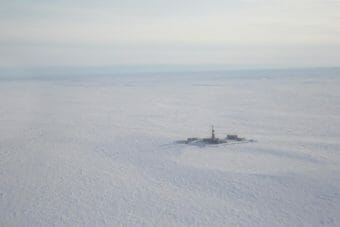
ConocoPhillips’ undeveloped Willow prospect, pictured here, is still being explored. The company announced this week that it’s selling a one-fourth stake in Willow and other projects in Alaska. (Photo courtesy ConocoPhillips)

Any day now, the Biden administration is expected to decide whether to approve a controversial oil drilling project that’s become a galvanizing issue for Gen Zers passionate about climate change. They’ve taken their message to platforms like TikTok, amassing top views on videos outlining the issue. They’ve also sent millions of letters to the White House.

Supporters of the so-called Willow Project say drilling in Arctic Alaska will lower oil prices and boost national security. But its opponents say it comes with unacceptable environmental consequences and disincentivize a transition to cleaner fuels.

That leaves the Biden administration stuck in the crosscurrents of its own conflicting priorities — and Gen Zers are prepared to read the decision as a clarification on where the country’s political power lies.

Here’s an overview of where things stand.

First things first: What is the Willow Project?

The Willow Master Development Plan is a $6 billion proposal from ConocoPhillips to drill oil inside the National Petroleum Reserve in Alaska.

The oil giant says the project could deliver up to $17 billion in revenue for federal, state and local governments, creating over 2,800 jobs.

Willow would also yield an estimated 600 million barrels of oil, a volume nearly 1.5 times the current supply in the U.S. Strategic Petroleum Reserve. The Biden administration says boosting oil production could help keep consumer energy prices down — a statement that economists caveat, saying it’d take years to actually see prices drop.

Willow’s proposed development would unfold on the North Slope of the petroleum reserve, a 23 million-acre region that represents the largest undisturbed public land in the U.S.

The Bureau of Land Management describes the proposed site as “critical” to local wildlife, supporting “thousands of migratory birds” and serving as “a primary calving area” for local caribou. Beyond the region, the BLM says the project would release 9.2 million metric tons of annual carbon pollution, which contributes to human-caused climate change. That’s equivalent to the emissions of roughly 2 million gas-powered cars.

The decision comes at a key crossroads for the Biden administration

The Trump administration initially approved the Willow Project in late 2020, but a federal judge vacated development permits, saying initial federal reviews failed to include measures to mitigate the impact on polar bears.

On Feb. 1, the BLM published a new environmental impact analysis of the plan, proposing one fewer drilling sites and less surface infrastructure such as roads and pipelines. ConocoPhillips called it “a practical way forward”.

Ultimately, Interior Secretary Deb Haaland formally gets the final say. She could approve the original ConocoPhillips plan, greenlight the BLM’s revised plan, halt the project altogether or take any action in between.

The Interior Department initially said that the revised plan still left substantial concerns about Willow’s impact on greenhouse gas emissions.

But halting Willow would put the Biden administration in a tricky political position. The president made a campaign promise not to start any new drilling on federal lands — but, in office, he’s prioritized lowering energy prices amid uncertainty in the global oil market.

But more than four days have passed since the end of a formal 30-day review period on the BLM plan, the date many observers had been expecting a decision.

On Friday morning, the Interior Department told NPR it had no update on the timing of a decision. White House Press Secretary Karine Jean-Pierre confirmed during Friday’s press briefing that the president had met with the Alaskan congressional delegation about the project last week but that the decision would ultimately come from the Interior Department.

Who supports the project?

As the wait drags on, the debate only grows louder.

On Wednesday, Alaska’s congressional delegation urged swift approval for the BLM plan, citing, above all else, the need for economic relief.

“We all recognize the need for cleaner energy, but there is a major gap between our capability to generate it and our daily needs,” wrote the two Republican Senators and one Democratic representative in an opinion piece for CNN.

“Even those who practice a subsistence lifestyle in Alaska — living primarily off the land and water — rely on boats, snowmachines and ATVs, and those all need fuel. In rural parts of our state, gasoline prices have been as high as $18 a gallon.”

Alaska Native leaders themselves are split on whether the project will be a positive impact to the community. Leaders for Voice of the Arctic, a coalition of Inupiat North Slope leaders, says yes: The estimated $1 billion in taxes alone would fund critical education, police and firefighting improvements.

But leaders of the City of Nuiqsut and Native Village of Nuiqsut, the residential areas sitting closest to the proposed development site, said in their own scathing letter that their input hadn’t been heard.

“It seems that despite its nod to traditional ecological knowledge, BLM does not consider relevant the extensive knowledge and expertise we have gained over millennia, living in a way that is so deeply connected to our environment,” they wrote directly to Haaland.

And who’s behind the #StopWillow campaign?

Opposition to the project has spread so far and fast on social media. TikTokkers say the decentralized nature of the issue is well suited to the platform: It’s popular because there’s no unified message or group dominating the conversation.

“This is an economic issue, an environmental issue and a social issue,” explained Alex Haraus, a 25-year-old environmentalist whose videos on the Willow Project have been viewed millions of times.

“A lot of times in the past, we’ve seen groups take a stance on one thing and say that’s why everyone should care. But in this case, we’ve really just said, ‘here are all of the reasons why you should care. Pick whatever you’re passionate about and talk about it in your own way,'” Haraus said.

The formula worked. Hashtags like #willowproject, #stopwillow and #stopthewillowproject have appeared in TikTok’s daily top 10 lists, beating out hot celebrity feuds and universal trends like #springbreak. Posts tagged with #willowproject have attracted over 88 million U.S. views in the last month alone.

As of Friday, a change.org petition calling for an end to the project had amassed more than 3.1 million signatures, and a letter-writing form hosted by the advocacy group Protect the Arctic has tracked over 1.1 million unique letters to the White House.

What will the decision say about Biden’s political priorities?

Elise Joshi, a 20-year-old climate activist who’s been posting environmental content for the last two years, says she hasn’t seen this much interest in a climate issue “in a long time, maybe ever.”

Joshi says the 30-day review window for the project lent an omnipresent, slow-moving emergency (climate change) a tangible deadline. But just as urgent, Joshi says, is the feeling that the Biden administration could betray the very people who put the president in power.

“I hope the administration sees the same people who we worked with on climate legislation are rallying against [Project Willow],” she said, adding that she was among the activists invited to the White House signing of the Inflation Reduction Act.

“This isn’t the Trump administration. This is someone we voted for,” she added.

Neither Joshi nor Haraus sees the decision on the Willow Project as the end to Gen Zers’ interest in stopping oil drilling. But if successful, #StopWillow could serve as a key argument for how digital attention is remaking the landscape of political power.

“If this doesn’t represent an issue that’s resonating with general Americans, then I don’t know what does,” Haraus said.

Copyright 2023 NPR. To see more, visit https://www.npr.org.

Federal judge rules in favor of ConocoPhillips to keep Willow drilling data secret

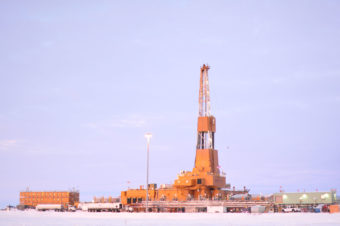
An aerial view of one of the exploration pads and wells that ConocoPhillips drilled during the 2018 exploration season at its Willow prospect. (Photo courtesy of Judy Patrick Photography/ConocoPhillips Alaska)

A federal judge has blocked the public release of exploration data from five oil wells drilled in the National Petroleum Reserve as part of ConocoPhillips Alaska’s Willow project.

Wednesday’s decision by U.S. District Judge Sharon Gleason preempts a state law intended to encourage oil and gas development on the North Slope by requiring companies to make data publicly available after two years.

Gleason determined that the state law was overridden by federal law because the five wells were drilled in the federal National Petroleum Reserve as a result of federal oil leases. She concluded that federal disclosure rules — which require the data be released after ConocoPhillips’ federal lease expires — should be followed instead.

ConocoPhillips filed its lawsuit against the Alaska Oil and Gas Conservation Commission last year after unsuccessfully asking the Alaska Department of Natural Resources for an extension of the privacy period.

A spokesperson for the Alaska Department of Law, which represented the state in the lawsuit, said attorneys there are evaluating Gleason’s decision, which could be appealed.

The Willow project, which was the subject of the lawsuit, remains under environmental review by the Department of the Interior. A final decision is expected within days.

At its peak, Willow is expected to produce as much as 180,000 barrels of crude oil per day. State estimates indicate it will generate between $5 billion and $9 billion in tax revenue during its lifetime, and local governments in the North Slope Borough will receive billions more in direct payments from the federal government, which will collect significant tax revenue as well.

Project opponents say Willow oil would contribute to global climate change, with one analysis concluding that if oil is burned, it would create 287 million metric tons of carbon dioxide, more than seven times the amount of carbon released by the state of Alaska in 2020.

This story originally appeared in the Alaska Beacon and is republished here with permission.

Alaska leaders fly to D.C. to press for Willow project

Rep. Josiah Patkotak, I-Utqiaġvik, was among the Alaska Native leaders at the U.S. Capitol Wednesday to urge approve of the Willow oil drilling project. (Screen shot from livestream)

The Biden administration is expected to announce soon whether it will approve the ConocoPhillips permit for Willow, a major oil drilling project in the National Petroleum Reserve.
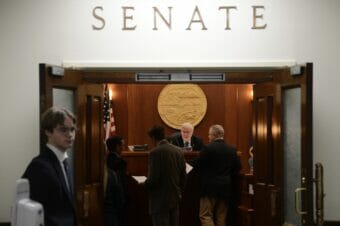
Rallying for the project at the U.S. Capitol Wednesday, Alaska Native leaders stood with the state’s congressional delegation and union representatives. They wore “Willow Yes” lapel stickers.

State Rep. Josiah Patkotak, I-Utqiaġvik, said revenues from the oil production will support rural communities and buy the fuel that makes subsistence whaling and hunting possible.

“When we talk about environmental justice and protecting the environment, us Alaska Natives, we’re part of that environment. We always have been and we always will be,” he said, at a press conference outside the Senate. “And that’s why it’s important to underscore the opportunities for a better quality of life, staying away from the third-world conditions that the generation immediately before me grew up in.”

Over its 30-year lifespan, Willow is projected to produce as much as $10 billion in revenue for the state and the North Slope Borough.

Alaska Congresswoman Mary Peltola said the administration should listen to her constituents, particularly the consensus opinion of the Inupiaq people of the Arctic.

“This is their region. This is their land,” she said. “This is about their sovereignty and their autonomy to go forward with their economic development, which will help the state of Alaska. It will help residents across our state.”

Environmental groups say approving the Willow project would be the wrong move for an administration committed to slowing climate change and moving to an economy based on renewable energy.

A decision could come as early as next week.

Alaska Senate votes to support Willow oil project as all legislators line up behind the effort

Senate President Gary Stevens, R-Kodiak, is seen before the start of a session of the Alaska Senate on Monday, Feb. 27, 2023. (Photo by James Brooks/Alaska Beacon)

The Alaska Senate voted unanimously to support the Willow oil project on Monday, following the Alaska House, which voted unanimously in favor of the project last week.

The Department of the Interior is scheduled to release its final decision on the project as soon as March 6, and state legislators are only the latest group trying to sway the federal government in the last days before the decision.

Federal officials have been working for years on the environmental permitting for the project, and the upcoming record of decision is a formal document that puts the Interior Department’s final word in writing. The Willow project has already gone through the process once before, but a lawsuit forced a redo.

This week in Washington, D.C., officials representing the Alaska Federation of Natives, the Alaska chapter of the AFL-CIO, Voice of the Arctic Iñupiat and Arctic Slope Regional Corporation will be talking about Willow, said an official in the office of Rep. Mary Sattler Peltola, D-Alaska.

Those are just the groups arguing in favor of the project. Representatives of environmental groups are also headed east to argue against the project, and a rally against the project is scheduled for Friday, said Dawnell Smith of Trustees for Alaska.

But judging by the stances of the state’s chief officials, those arguing against the project represent a clear minority in Alaska.

Gov. Mike Dunleavy supports the project, and all three members of Alaska’s congressional delegation urged the state Legislature to unanimously approve a nonbinding resolution stating their support for the project. In the final tally, none of Alaska’s 60 state legislators voted against it, though four House members and one senator — Robert Myers, R-North Pole — were absent. Several legislators said they plan to travel east to deliver the resolution to the U.S. Capitol in person.

The University of Alaska Board of Regents approved a separate resolution on Friday, and various trade organizations have also chimed in with their support.

Sen. Donny Olson, D-Golovin, represents the North Slope in the state Senate.

“I think it will definitely help the issue,” he said of the legislative resolution.

Sen. Donny Olson, D-Golovin, speaks Monday, Feb. 27, 2023, in favor of a resolution offering support to the Willow oil project. The resolution passed the Senate unanimously. (Photo by James Brooks/Alaska Beacon)

Rep. Josiah Patkotak, I-Utqiagvik, guided the resolution through the state House and said that an AFN event in Washington, D.C. that was intended to discuss infrastructure will also be an opportunity to “beat on the drum” for Willow as well.

The North Slope is slated to receive billions of dollars in impact payments from the federal government if Willow enters full production, and state projections indicate the project would generate between $5 billion and $9 billion in tax revenue to the state of Alaska during its lifetime.

Project opponents point to its potential impact on global climate change. Environmental impact documents conclude that if the oil produced by Willow is burned, it would create 260 million metric tons of carbon dioxide.

That’s more than seven times the amount of carbon dioxide released by the entire state of Alaska in 2020, according to figures from the federal Energy Information Administration.

Support for Monday’s Senate resolution came from both Democrats and Republicans. Sen. Bill Wielechowski, D-Anchorage, said he’s heard from people who want a transition to renewable energy.

“The problem is that it is impossible to get to 100% renewable energy anytime soon,” he said, which makes a project like Willow important.

Sen. Mike Shower, R-Wasilla, said Willow is an issue of national security. The more oil and gas — and mineral resources — produced in the United States, the less it needs to rely on resources from hostile nations, such as Russia.

“We want to make sure we can never be leveraged by a hostile power,” he said.

ConocoPhillips Alaska, which is developing Willow, originally requested permission to drill for oil and gas from five sites within the federal National Petroleum Reserve on the North Slope.

In early February, the Bureau of Land Management said it would likely approve three drilling sites. A fourth drill site could be constructed later.

Sen. Shelley Hughes, R-Palmer, said that if the Biden administration tries to cut things back by approving only two sites in a final record of decision, it will make the project uneconomic.

That position was previously stated by ConocoPhillips.

“This is going to require a line in the sand. We need the president, we need the Department of the Interior to approve three drill sites,” Hughes said.

Alaskans may have an answer on Willow as soon as next week, but regardless of the decision, it won’t be the final answer. Proponents and opponents each expect the result to be challenged in federal court.

The Alaska Senate voted unanimously Monday, Feb. 27, 2023, to support the Willow oil project on the North Slope. (Photo by James Brooks/Alaska Beacon)

Murkowski delivers ‘tough love’ address to Alaska Legislature

U.S. Sen. Lisa Murkowski addresses the Alaska Legislature on Wednesday, Feb. 22, 2023. (Gavel Alaska staff/KTOO)

U.S. Sen. Lisa Murkowski listed a string of accomplishments in her address Wednesday to a joint session of the Alaska Legislature, as she does every year.

Murkowski spoke about the millions of dollars coming to the state from the federal infrastructure law, and from the Alaska-bound earmarks — “nearly three-quarters of a billion dollars” — she requested in the yearly appropriations bills.

And then she pivoted.

“It’s a beautiful day in Juneau. And as sunny a day as it is, there’s also this next part of my speech, which is perhaps not so sunny,” she said, adding that she previewed the speech for her son, who called it the “tough love” portion.

She spoke of a decade of outmigration and economic stagnation in Alaska, as well as a slower recovery from COVID-19 than almost any other state.

“Alaska needs to be the place where people want to move to and want to stay, because they have good jobs that support their families, they have a good place to live, they have good schools, where their kids can excel, they have a quality of life that cannot be matched anywhere else,” she said. “Where we take care of our fellow Alaskans when they hit rough patches.”

Murkowski, 65, has been in the U.S. Senate for 20 years. This was her first address to the Legislature as the senior member of the state’s congressional delegation, and she strayed more than she usually does into the Legislature’s remit. The theme of her address seemed aimed at Republican lawmakers who are unwilling to solve the state’s fiscal crisis, except by shrinking government services.

Murkowski challenged lawmakers to have a vision and reach for it, particularly in the area of transportation. She invoked former Rep. Jeannette James of North Pole, who sought a rail link to Canada, and her own father, former Gov. Frank Murkowski, a champion of “big ideas” like rail extensions.

“We need to be thinking big about how we move our people, our resources, our freight, our trash,” she said. “Let’s not lower our sights here.”

She told lawmakers they can’t rely solely on federal money and need to step up with the state’s share of the cost.

“I hope I didn’t step on anybody’s toes with some of my perhaps more direct comments,” she said as she wrapped up. “I didn’t necessarily stay in my lane today.”

Site notifications
Update notification options
Subscribe to notifications