Archives for:

"WWAMI"

In feud over PFD bill, work grinds to a halt in the House when minority Republican lawmakers refuse to show up for a floor session

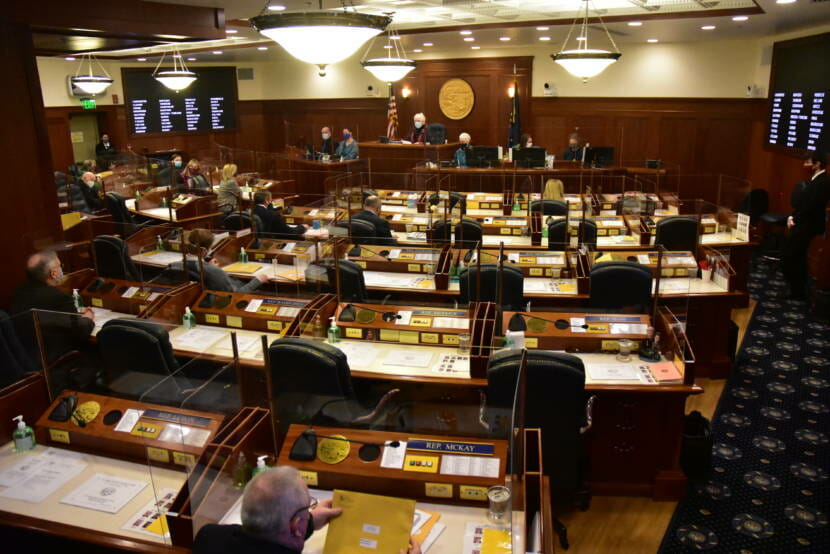
Speaker of the House of Representatives Rep. Louise Stutes, R-Kodiak, presides over a partially filled floor session on Feb. 12. A similar scene played out on August 25 when minority-caucus Republicans refused to attend a floor session. There were too few members present to conduct business. (Peter Segall/Juneau Empire via AP, Pool)

The Alaska House of Representatives couldn’t conduct any business Wednesday when minority-caucus Republicans refused to attend a floor session. The mostly Democratic House majority didn’t have enough members present to reach a quorum. 

The two sides traded accusations. House Speaker Louise Stutes said the absence of minority Republicans is holding up the Legislature’s ability to pay for permanent fund dividends, or PFDs. Stutes is a Kodiak Republican who caucuses with the majority. 

“It’s very sad for me, to see these people putting Alaskans secondary to the my-way-or-highway — and that seems to be the way their approach is: It’s their way or the highway, instead of ‘let’s sit down and work this out,’” she said. 
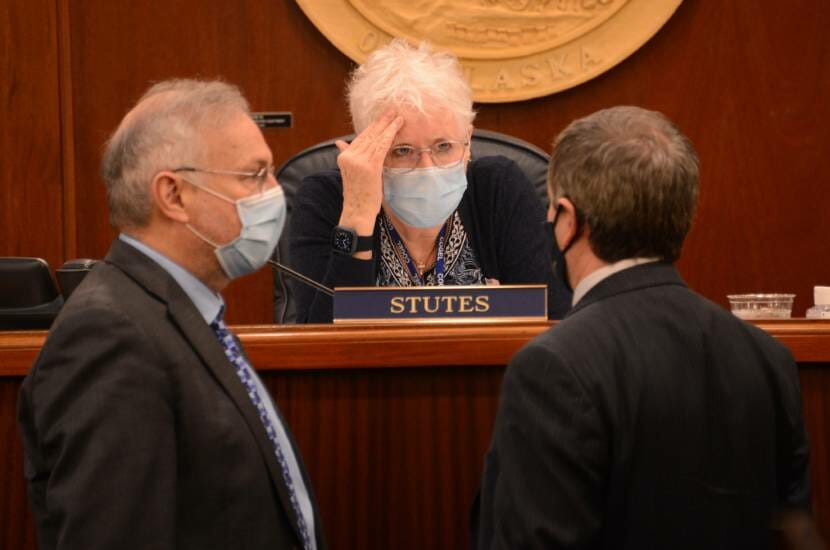
Alaska Speaker of the House Louise Stutes, R-Kodiak, presses a hand to her forehead as she talks to Rep. Bryce Edgmon, I-Dillingham (left) and House Majority Leader Chris Tuck, D-Anchorage on Wednesday, March 3, 2021 in the Alaska State Capitol at Juneau, Alaska. (James Brooks/Anchorage Daily News via AP, Pool)
Alaska Speaker of the House Louise Stutes, R-Kodiak, presses a hand to her forehead as she talks to Rep. Bryce Edgmon, I-Dillingham (left), and House Majority Leader Chris Tuck, D-Anchorage, on March 3 in Juneau. (James Brooks/Anchorage Daily News via AP, Pool)

Dillingham independent Rep. Bryce Edgmon said there’s limited time to pass the dividend bill, since both chambers are struggling to have enough members in Juneau. 

“And unfortunately, the alternative — if we miss that window of time, in August as we turn the corner into September — we may walk out of here with a zero PFD. And that’s not what our majority wants,” he said.

But Minority Leader Cathy Tilton, a Wasilla Republican, pushed back against the idea that her caucus caused the failed floor session. She said it was the majority that couldn’t get a quorum. The majority caucus holds a slim one-member advantage and Anchorage Democratic Rep. Chris Tuck was absent. Republican Rep. Sara Rasmussen, who doesn’t belong to either caucus, also was absent. 
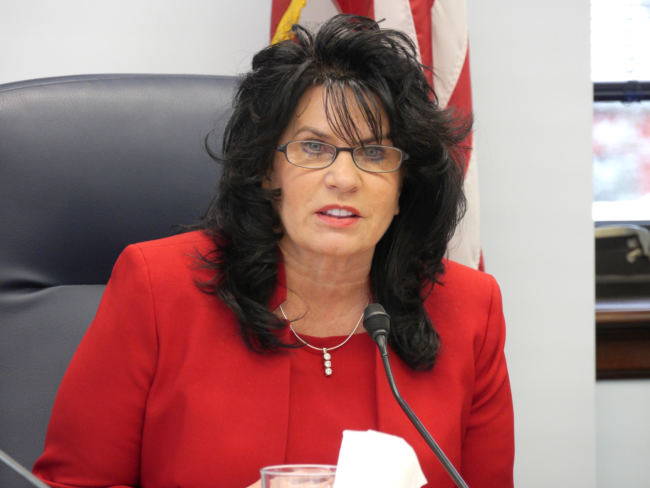
Rep. Cathy Tilton, R-Wasilla, at a House Minority press availability on Feb. 23, 2017. (Photo by Skip Gray/360 North)
Rep. Cathy Tilton, R-Wasilla, at a House Minority press availability on Feb. 23, 2017. (Photo by Skip Gray/KTOO)

Tilton said she warned the majority that minority Republicans may not attend the session because they don’t want to see a PFD bill pushed through that they can’t weigh-in on; her caucus asked for the ability to draft and vote on amendments to the bill. 

Stutes told legislators in an email Wednesday that she planned to get through all amendments last night. Tilton said that wasn’t enough time, since the lawyers who draft legislation don’t have enough time to draft amendments requested after 6 p.m. for the same night.

Anchorage Democratic Rep. Matt Claman said he’s not aware of any previous time when legislators in the Capitol refused to attend a floor session. He compared it to a recent dispute in the Texas Legislature, in which Democratic lawmakers left the state to prevent a quorum to conduct some business. While the Texas House speaker signed arrest warrants for absent members, Stutes said she hoped Alaska legislators would work together. 

Minority Republicans also asked for hearings on the governor’s proposals to amend the state constitution to include the dividend and lower the state limit on spending, as well as to debate other legislation affecting the state budget in the long term. 

“We should be having hearings,” Tilton said. “There’s nothing holding us back from having those hearings, so it doesn’t seem like there should be a problem with making those  happen.” 
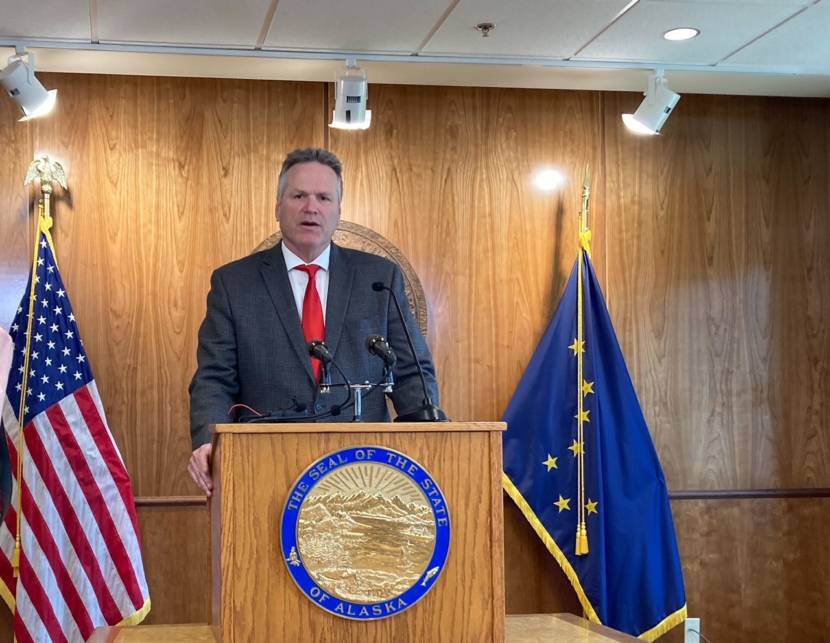
Alaska Republican Gov. Mike Dunleavy, speaking at a Capitol news conference Wednesday, introduces a new proposed constitutional amendment to restructuring the Permanent Fund. (Screenshot)
Alaska Republican Gov. Mike Dunleavy, speaking at a Capitol news conference introducing a new proposed constitutional amendment to restructuring the Permanent Fund. (Screenshot)

After hours of trying, and failing, to reach a quorum – majority members held a brief news conference. They said they planned to hold hearings on the governor’s constitutional amendment idea and the other budget bills next week. The House Special Committee on Ways and Means has scheduled five meetings in the next two weeks, including hearing a bill from Wasilla Republican Rep. David Eastman – who is in the minority – that would make changes related to the budget.

The majority caucus had planned to act quickly on the bill to fund dividends, which the House Finance Committee passed in the morning.  The current version would set dividends at $1,100, which is less than half of the $2,350 that Republican Gov. Mike Dunleavy and some minority Republicans support.

 Tilton said the caucuses differ on how to pass the dividend funding. 

“While it’s important that we get a dividend out to Alaskans — I would completely agree with that — I think we may disagree on the amount of that dividend, and what it looks like,” she said.  

In other news, Dunleavy announced that the state would fund university scholarships and the medical education program, known as WWAMI. Funding for the two programs — about $15 million — has been held up in a legal dispute over unspent funds that get swept into a state savings account each year. He said the programs were funded for the next year before the rest of the money in the accounts to pay the programs was swept.
Dunleavy’s proposed $2,350 PFD scrutinized by lawmakers

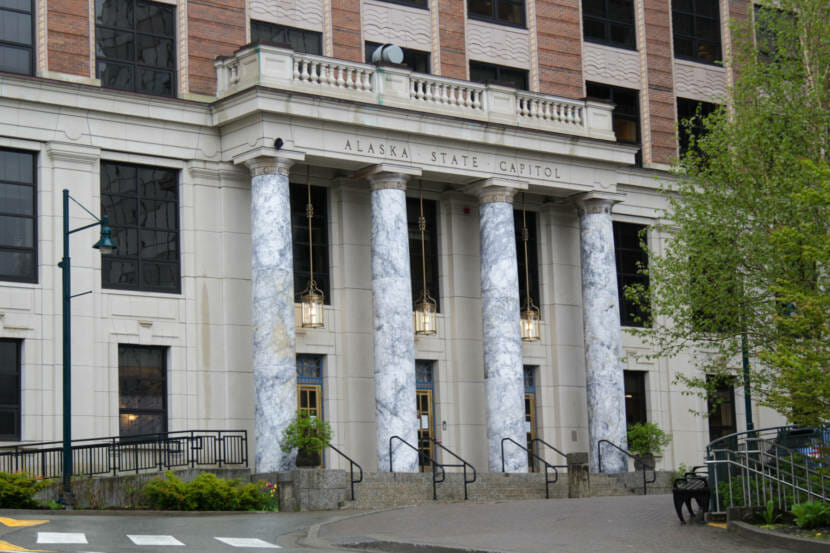
The Alaska Capitol on Wednesday, June 2, 2021. (Nat Herz/Alaska Public Media)

This year’s permanent fund dividend would be $2,350 under a proposal by Gov. Mike Dunleavy. But legislators are raising questions about whether the state can afford that amount. 

Dunleavy added legislation on Thursday to the special session agenda that would pay for this year’s PFD. If that hadn’t happened, there was a chance Alaskans wouldn’t receive a dividend at all for the first time in 40 years. 

Dunleavy’s bill would also fund university scholarships and the state’s medical education program, known as WWAMI.  

State budget director Neil Steininger said the governor still wants the Legislature to pass the constitutional amendments he’s proposed. They would enshrine the PFD in the state constitution and lower the state’s spending limit. 

“This appropriation bill isn’t … the agenda in and of itself,” he said. “This appropriation bill is there to support the discussions and the decisions that need to be made on those bigger policy issues.”

Steininger testified on the measure, House Bill 3003, to the House Finance Committee on Friday. 

Dunleavy has proposed drawing $3 billion more than planned from the permanent fund to cover costs for the next few years, as part of a broader compromise. Half of that money would pay for this year’s dividend. 

Committee member Rep. Bryce Edgmon said he’s concerned the dividend amount the governor proposed would commit the state to pay more than it can sustain. Edgmon is a Dillingham independent who caucuses with the mostly Democratic majority. 

“I’m very concerned about overdrawing the permanent fund because — speaking of compromising — we’ll be compromising the future,” he said. “And if there’s a downturn anywhere near what we experienced in 2008, 2009 — certainly back in the late ‘80s — where the bottom essentially falls out, that overdraw this year could be magnified many times over.”

Kodiak Republican House Speaker Louise Stutes expressed optimism that the Legislature would be able to work toward a compromise on solving the long-term gap between what the state spends and what it raises. 

She praised Dunleavy’s decision to add funding for this year’s dividend to the special session agenda. 

“I’m grateful to the governor for putting on an appropriation bill, which allows us to do this,” she said. “I’m excited about a good, solid compromise, where we can all feel good and get things rolling.”

She said the PFD bill would go through the normal committee process, in which it could be amended. She said one potential path for this year’s dividend would be to choose an amount that would not draw more than planned from permanent fund earnings. 

If the Legislature later reaches a broader compromise on a long-term budget plan, Stutes said it could pass another bill that would add to this year’s dividend. 

The House Finance Committee plans to consider amendments to the bill on Sunday. 

Committee Co-Chair Neal Foster, a Nome Democrat, said the committee is working under a constrained timeline because some lawmakers won’t be available beginning in roughly a week. 

Neither legislative chamber voted on Dunleavy’s vetoes of line items in the budget by the deadline on Friday. But vetoed items would be funded under House Bill 3004, introduced by the House Special Committee on Ways and Means. That committee is meeting on Monday to discuss the conclusions of a working group of lawmakers who met since mid-July to discuss a long-term budget plan.

Dunleavy adds proposed $2,350 PFD to special session agenda

Gov. Mike Dunleavy at a press conference on June 17, 2021. (Andrew Kitchenman/KTOO)

Gov. Mike Dunleavy on Thursday added proposed permanent fund dividends of $2,350 to the agenda for the legislative special session.

Without the move, it was possible Alaskans wouldn’t receive PFDs this fall for the first time in 40 years.

The change to the agenda also would allow funding for $18 million in scholarships and need-based grants to pay for students to attend college, as well as $3.3 million for the state’s medical education program, known as WWAMI.

Dunleavy is proposing to pay for this year’s PFDs and the other programs by drawing $1.53 billion from the permanent fund’s earnings reserve account.

His proposed bill would also transfer $1.47 billion from the earnings reserve to a separate savings account, the Constitutional Budget Reserve, or CBR. This amount could be used for the budget in future years.

Dunleavy said in a statement that he may add funding for more programs to the special session agenda as his administration works with the Legislature. When both chambers failed to get enough votes to draw from the CBR, the programs that were left unfunded included oil and gas tax credits as well as some of the funding for 16 other programs.

“Alaskans are still in recovery mode from the economic impacts of the pandemic,” Dunleavy said in the statement. “With this in mind, and following recent encouraging conversations with legislators, my administration has put forth a vehicle for the legislature to fund the PFD and student scholarships — two critical programs that directly impact Alaskans.”

The additions to the agenda by the governor, a Republican, drew immediate praise from legislative leaders across caucus lines.

Dunleavy originally left the appropriation bill — which includes the funding for the PFDs — off of the agenda for the third special session that started on Monday. He wanted the Legislature to focus on his proposals to amend the state constitution to include PFDs and to reduce the state limit on spending for government services.

But legislators, including House Speaker Louise Stutes, a Kodiak Republican, said an appropriations bill for dividends and other programs was needed.

After months of back-and-forth earlier this year, the House and Senate passed a state budget that would have set PFDs at $1,100, but a failed vote to draw money from the CBR shrunk the amount to $525.

And Dunleavy vetoed that remaining amount in July, saying Alaskans would regard it as a “joke.”

But most members of the both chambers have been opposed to drawing more from permanent fund earnings than a 2018 law would allow. Dunleavy is now proposing drawing $3 billion more than that law says.

The House and Senate are scheduled to hold floor sessions on Friday, when Dunleavy’s newly proposed bill could be introduced.

Alaska medical students face large tuition increase due to funding dispute

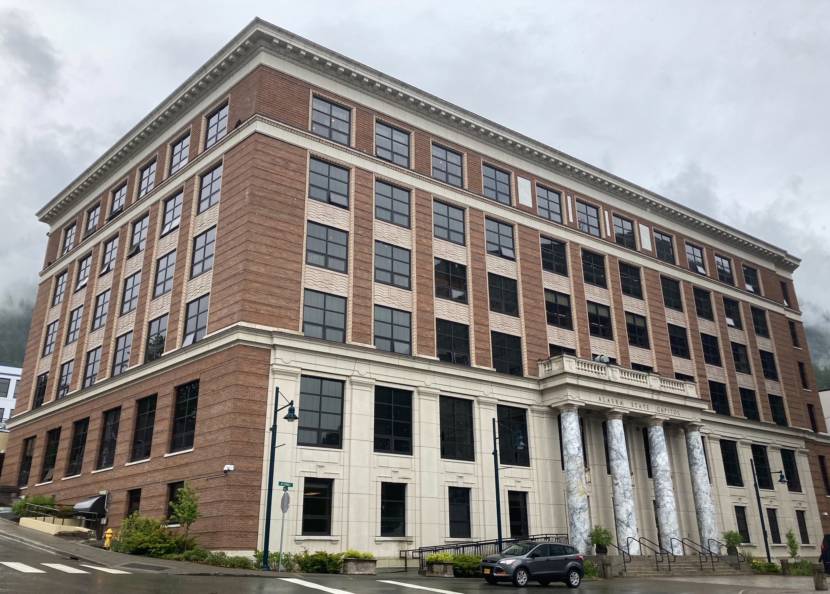
The Alaska State Capitol in Juneau hosts budget negotiations on a rainy day, April 15, 2021. (Photo by Andrew Kitchenman/KTOO and Alaska Public Media)
The Alaska State Capitol in Juneau hosts budget negotiations on a rainy day in April. Supporters of the state’s medical education program, WWAMI, want the Legislature to agree to fund the program during the special session scheduled to start on Aug. 16. (Photo by Andrew Kitchenman/KTOO and Alaska Public Media)

Alaskans’ participation in a medical school program is threatened by an impasse over how to pay for it. While lawmakers’ disagree over the program, students are worried that they will see large tuition increases. 

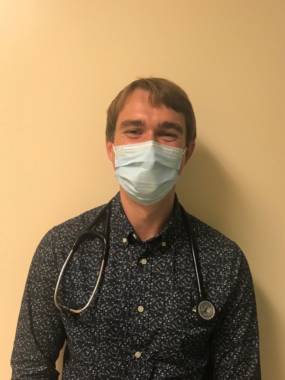
Jesse Klejka is a second-year student in Alaska's medical education program, WWAMI. (Photo provided by Jesse Klejka)
Jesse Klejka is a second-year student in Alaska’s medical education program, WWAMI. (Photo provided by Jesse Klejka)

Jesse Klejka was born and raised in Bethel, where his father is a doctor. He’s one of 20 Alaskans who are accepted each year into a program that allows Alaska to support medical education without having to operate a medical school. The students graduate from the University of Washington School of Medicine.

Klejka is in his second year of the program. He’s been interested in it since he was 9 years old.

“I was excited to hear about a program that puts special emphasis on training and retaining docs for Alaska, with assistance for those students who are interested in going down the path of rural medicine,” Klejka said.

He said it serves as a pipeline for doctors to serve in Bethel. 

“Our hospital works to recruit talented individuals, but for many who aren’t from Alaska, it’s hard to call it home,” he said. “I’ve seen the same challenge exists across the state, with hospitals having to spend money on recruitment and travel docs to help fill shifts.”

Klejka is working in a clinical rotation in Ketchikan. Students in the program attend the University of Alaska Anchorage for a year and a half, then get clinical training at locations around Alaska and the other states.

On Friday, he was told that barring a resolution to the legislature’s budget dispute, his class will have to pay out-of-state tuition this year. While he doesn’t know what that difference will be; last year the average difference was $30,000. In addition, recruitment for Alaska students for the class that would start next year has stopped for now. First-year students, who start class on Aug. 17, will still pay in-state tuition this year.

The program is known as WWAMI. It’s named after the first letters of the names of the five states that participate — Washington, Wyoming, Alaska, Montana and Idaho. 

For many years, the Legislature has voted to fund the program from an account that’s separate from the rest of the state budget, the Alaska Higher Education Investment Fund. But this year, the vote failed and students could have to pay tens of thousands of dollars more for tuition.

So students and others involved in health care in Alaska are asking lawmakers to agree to fund the program in the upcoming special session. They spoke Monday at a meeting of the working group of legislators weighing changes to the state budget for the long term.

Dr. Kristin Mitchell is a WWAMI faculty member who lives in Kenai and works in Soldotna. She moved to the state in 1998 to attend the program. 

She told lawmakers that the state receives an impressive return on its investment, because WWAMI students tend to stay in the state. 

“Alaska has a primary care shortage, and I know you’re aware,” she said. “And we urgently need to train excellent Alaskan physicians to provide medical care to Alaskans.”

It’s not just in primary care that Alaska has a problem. Mitchell said that most psychiatrists in the state are older than 60, as are nearly half of orthopedic and heart doctors.

She said the budget dispute is causing anxiety for students over how to pay for their education. And she said a similar budget dispute two years ago caused Alaska to lose future doctors.

“I fielded untold calls from students and families who wondered if they should accept offers of admission from other schools than the University of Alaska and from WWAMI,” she said. “And we lost the opportunity to train some outstanding students over that funding uncertainty.”

Kathryn Mitchell grew up in North Pole and chose WWAMI so she could stay in Alaska. She’s not related to Kristin Mitchell. Kathryn Mitchell is concerned that the funding problem will mean the end of the program.

“I ask you to think about your own experiences in health care and ask yourself what it could mean if you could have a doctor who is from your community, knows your environment and the needs of your region,” she said. 

Not everyone who testified supported the program. Some who support higher permanent fund dividends, consider WWAMI a  special interest. 

Kerri Mullis of Delta Junction said the Legislature’s first priority should be putting the PFD in the state constitution and paying Alaskans the dividend amounts they would have received the last five years if the state followed the formula in a 1982 law. Including this year’s dividend, that adds up to more than $10,000. 

“The WWAMI people shouldn’t be calling in tonight,” she said. “This is about people and their PFD. The WWAMI people shouldn’t even be allowed to talk tonight. And I just want you guys to do the right thing, which is to do the constitutional PFD and give us back our money.”

Some Republican House members who voted against restocking the fund that would pay for the program have said they still support it. But they want the funding to be paid along with the rest of the budget, not from a separate fund. Opponents of this proposal say it would require drawing more than planned from the permanent fund’s earnings reserve, and that this would open the door to spending down the permanent fund in the future.  

Gov. Mike Dunleavy hasn’t put funding for WWAMI and similar programs on the agenda for the special session, which means lawmakers won’t be able to consider it. But he could add it to the agenda at any time before the session ends. The session is scheduled to start on Aug. 16 and can last up to 30 days.

Alaska’s state budget is signed, but programs to lower electricity costs and provide scholarships remain unfunded

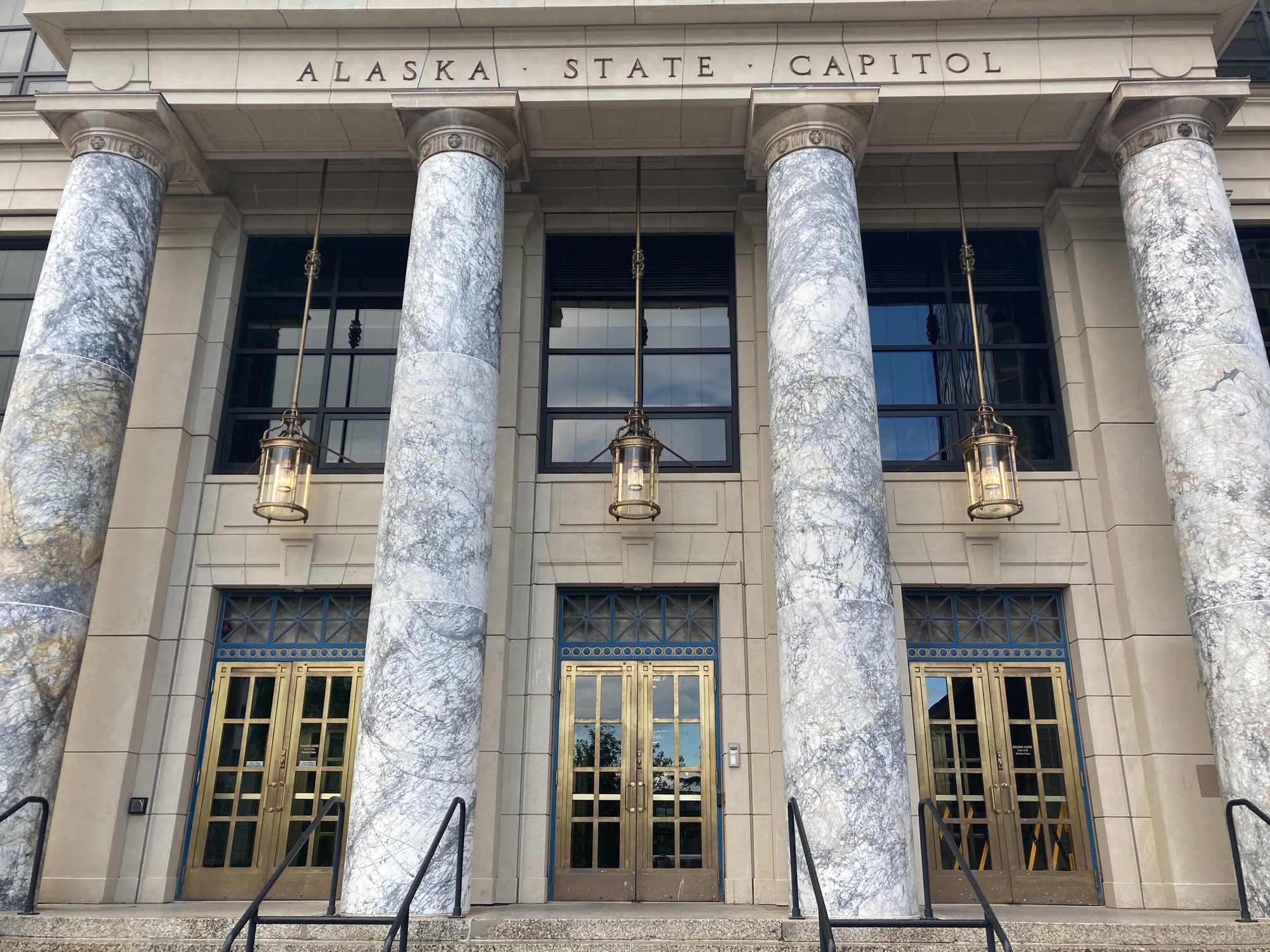
The Alaska State Capitol doors have required key cards to unlock throughout the 2021 legislative session, June 16, 2021. (Photo by Andrew Kitchenman/KTOO and Alaska Public Media)
The Alaska State Capitol hosted special sessions in the past six weeks. But legislators have not reached a consensus on how to fund the Power Cost Equalization and university scholarship programs, as well as other programs that have been funded from separate accounts. (Photo by Andrew Kitchenman/KTOO and Alaska Public Media)

Gov. Mike Dunleavy signed the state budget late Wednesday afternoon. But programs to lower the cost of electricity in high-cost areas and to pay for university scholarships won’t be funded starting on Thursday. And permanent fund dividends are set at $525. That’s the lowest level in PFD history when adjusted for inflation.

Both the governor and legislators from every caucus have said they want to fund these programs, but legislators haven’t agreed on how to fund them.

In previous years, the programs were funded through separate accounts the state has maintained, like the $1 billion Power Cost Equalization Endowment Fund and the $340 million Higher Education Investment Fund. 

But this year, both the House of Representatives and the Senate fell short of the support of three-quarters of their members needed to maintain the programs, by drawing from the Constitutional Budget Reserve to refill these accounts. The Constitutional Budget Reserve vote passed in previous years. But it was delayed in 2019, which led to the programs briefly being suspended. 

Wasilla Rep. Cathy Tilton leads the all-Republican House minority caucus. She said the members of the caucus will withhold the votes needed to fund these programs for now. They are first asking that the Legislature discuss and vote on a plan for the future of the budget. 

“We still have the three-quarter vote ahead of us,” she said on Monday. “And we’re going to hold onto that.” 

Along with Power Cost Equalization and university scholarships and grants, several other programs will have to stop until they receive funding. The soonest that can happen is during the next legislative special session, currently scheduled to begin on Aug. 2. 

Some members of the House minority have said they want the programs to be funded in the regular state budget, rather than from separate accounts. But majorities in both chambers oppose that approach because it would eliminate the Power Cost Equalization Endowment Fund and other accounts. They have said that eliminating the funds will undermine the programs. 

Dunleavy has proposed combining the PCE Endowment Fund with the Alaska Permanent Fund, which he said would protect it. But some lawmakers have expressed skepticism about his overall plan, which includes setting permanent fund dividends at roughly $2,350. After a backlash to his budget proposal two years ago, Dunleavy hasn’t proposed policy changes that would both pay for larger dividends and balance the state budget. 

Anchorage Democratic Rep. Chris Tuck is the House majority leader, after having served as the minority leader several years ago. He pointed out during the debate on Monday that the vote used to fund these programs gives the minority caucus influence. 

“Negotiations aren’t done yet,” Tuck said. “There is tremendous power in the three-quarter vote. As the minority leader in the past, I knew the importance of that three-quarter vote.”  

Along with the Power Cost Equalization program and university scholarships and grants, the unfunded programs also include the program to fund medical education

A working group with members from each legislative caucus is expected to make recommendations ahead of the August special session for a fiscal plan that would include funding these programs.

Editor’s note: This article has been updated to reflect the governor signed the state budget late Wednesday afternoon.

Alaska university students notified that millions in scholarships and grants currently in limbo

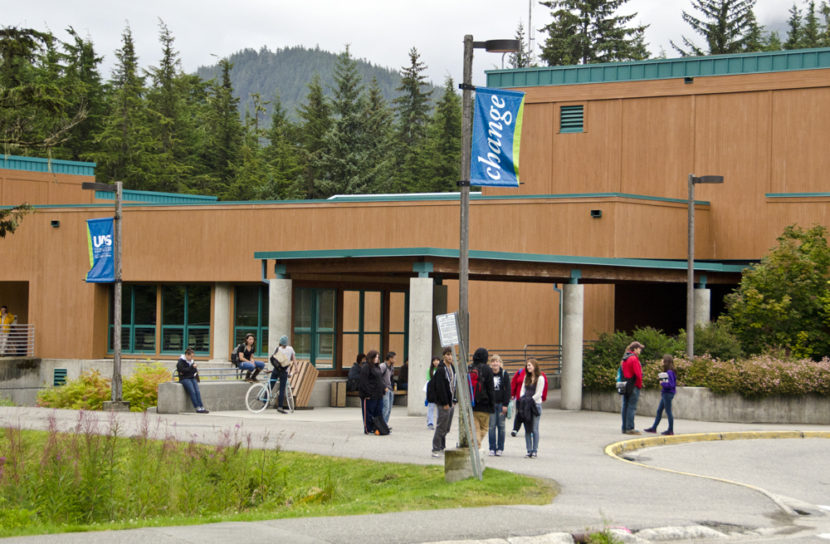
Students gather outside at the University of Alaska Southeast on Tuesday, Sept. 4, 2012. (Photo by Heather Bryant/KTOO)

Notice went out to 12,000 Alaska students on Tuesday afternoon that money for their grants and scholarships isn’t currently available for the next school year.

But it’s not because the funds were vetoed from the budget. The Alaska Commission on Postsecondary Education wrote in the message that funds for the Alaska Performance Scholarship and Alaska Education Grant aren’t currently available and require legislative action to be restored.

The commission is a state corporation tasked with planning for higher education and administering financial aid programs.

Funding for a program that provides money for students from Alaska to attend the University of Washington School of Medicine is also unavailable.

At issue is nearly $350 million in Alaska’s Higher Education Investment Fund. Each year, funds from nearly every state program get swept into a constitutionally-mandated savings account. Typically lawmakers vote to put the money back into the programs it was designated for. But that process requires a supermajority of the Legislature — three-quarters of them — to vote to put the money back. This year, that didn’t happen.

It’s also unusual for the Higher Education Fund to be included in the funding sweep — historically, that hasn’t happened.

According to data from the University of Alaska, nearly 1 in 5 students gets a merit-based Alaska Performance Scholarship. Altogether, the performance scholarships and education funds support more than 5,000 students with more than $15 million in financial aid each year.

Site notifications
Update notification options
Subscribe to notifications