Anchorage Daily News is our partner in Anchorage. KTOO collaborates with partners across the state to cover important news and to share stories with our audiences.
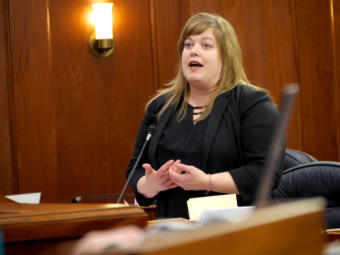
Rep. Geran Tarr, D-Anchorage, speaks during a House floor session, March 11, 2019. (Photo by Skip Gray/360 North)
A Democratic member of the Alaska House of Representatives will become an independent Democrat in the House, creating the possibility that the House will organize on Thursday without any side controlling a majority of its 40 votes.
Late Wednesday, Rep. Geran Tarr, D-Anchorage said she will not remain a part of the House’s multipartisan coalition. That decision leaves the coalition with only 20 members, one short of a majority.
It’s the latest sign of the uncertainty and confusion that remains in the House after the election of Speaker Louise Stutes, R-Kodiak, by a bare-minimum 21-19 vote.
Even though she will not be a member of the coalition, Tarr said she will still vote in favor of a plan of organization that leaves coalition members in charge.
“I am hoping we’ll be on the floor tomorrow, we’ll vote on the committee on committees report,” she said. “That will pass as soon as possible and we will get to work.”
She said a 21- or 22-member House majority is “marginal,” and that by withdrawing from the coalition, she may force the creation of a larger “committee of the whole” that includes additional Republicans.
Two years ago, Rep. Gary Knopp, R-Kenai, took a similar action, forcing the House into an extended deadlock that ended with the creation of a 25-member coalition majority.
Tarr said her top priority is reinvigorating Alaska’s COVID-19 response by supporting passage of a bill that retroactively extends a state of emergency that expired Sunday.
“I just am hoping to find a way to move forward and start working on the public health emergency declaration,” she said.
Tarr’s decision follows a similar action Tuesday from Rep. Sara Rasmussen, R-Anchorage, who said she will act as an independent Republican. If both decisions stand (and no other House members adjust their positions), the House will be left with an unprecedented 20-18-1-1 split.
No bloc will have enough votes to pass legislation on its own, creating what parliamentary democracies call a minority government.
Stutes said in a written statement that she is committed to finding a place within the coalition for Tarr to fight for the extension of the emergency declaration.
Acting Alaska Attorney General Ed Sniffen’s abrupt resignation was announced Friday as the Anchorage Daily News and ProPublica were preparing an article about allegations of sexual misconduct with a 17-year-old girl three decades ago.

Nikki Dougherty White, now 47, recently contacted the news organizations with a detailed account of how she and Sniffen began a sexual relationship in 1991 while she was a student at West Anchorage High School. At the time, he was a 27-year-old attorney with a local law firm and a coach of her school’s mock trial competition team.
The sexual relationship began during a trip to New Orleans for a national competition when she was 17, and it continued for about two years back in Anchorage, she said.
One of White’s former teammates said White confided in her about the sexual encounter with Sniffen while the team was still in New Orleans. A second former teammate said he learned of the sexual encounter around the same time, possibly on the plane ride home. A third teammate remembered hearing that something inappropriate had happened between Sniffen and White upon the team’s return to Anchorage.
The Daily News and ProPublica started asking questions about Sniffen’s relationship with White on Monday and began speaking to former members of the mock trial team and others throughout the week. At about 3 p.m. on Friday, the governor’s office issued a statement saying Sniffen had “removed himself for consideration as attorney general and will be leaving state service.”
In his resignation letter, Sniffen wrote that he had decided to step aside “after discussions with family, and for personal reasons.” Sniffen did not respond to calls to his home phone and cellphone numbers.
On Saturday afternoon, a spokesman for Gov. Mike Dunleavy, Jeff Turner, said the governor was unaware of the allegations against Sniffen when he accepted his resignation on Wednesday. (The resignation was announced publicly two days later, a delay that Turner said was due to the need to select a replacement and “prepare for an orderly transition.”)
The state Department of Law has now launched an investigation at the governor’s request.
“As details of the allegations became known, the governor directed Attorney General Treg Taylor (Sniffen’s replacement) to appoint a special outside council, independent of the Department of Law, to investigate possible criminal misconduct by Mr. Sniffen,” Turner wrote in a statement provided to the Daily News and ProPublica.
In a separate statement from the Alaska Department of Law, spokeswoman Maria Bahr said the new attorney general has determined that a conflict of interest exists given Sniffen’s history with the department, and the state “will contract with special counsel to ensure an independent and unbiased investigation into any possible wrongdoing.”
Undated photo of former Alaska Attorney General Ed Sniffen. (National Association of Attorneys General / naag.org)
Sniffen is the second Alaska attorney general to step down within the past six months amid a Daily News and ProPublica investigation into their interactions with women. Former Attorney General Kevin Clarkson quit in August, hours after the newsrooms revealed he had sent hundreds of unwanted text messages to a junior colleague. Sniffen was named his temporary replacement and, on Jan. 18, Dunleavy designated him as Clarkson’s permanent successor, subject to confirmation by the Legislature. At that time, the governor said Sniffen “has a long and proven record of leadership within the Department of Law and I am proud to appoint him to serve as our state’s next Attorney General.”
Following Clarkson’s resignation, survivor advocates called on the governor to carefully consider the selection of his replacement given the state’s “continued crisis with rape culture.” Alaska has the highest rate of sexual assault in the nation, and the appointed attorney general oversees all criminal prosecutions in the state.
Sniffen started working for the Alaska Department of Law in 2000, serving as a senior assistant attorney general in the consumer protection unit, then as a chief assistant attorney general, deputy attorney general and chief of staff. He worked for multiple administrations run by Democrats, Republicans and an independent. Former Alaska Attorney General Jahna Lindemuth, who elevated Sniffen to the position of deputy attorney general during her term, said she had never heard any allegations against him.
Several Anchorage attorneys said they had been aware for decades that Sniffen had an inappropriate relationship with a young woman early in his career.
In addition to helping coach the mock trial team at West High, Sniffen also volunteered for the nonprofit Anchorage Youth Court, said White, who said she dated Sniffen for about two years from 1991 to 1993. Public records show White and Sniffen lived at the same address in Anchorage after she turned 18.
White said that while they were dating, Sniffen was told he could no longer volunteer for youth-oriented organizations when those nonprofits learned of his potential relationship with a former student. William Bankston, then a board member for the Anchorage Youth Court, said he recalls telling an attorney at Hughes Thorsness Gantz Powell & Brundin that the attorney could no longer volunteer at the youth court after the attorney was seen attending a party with the former student. He did not recall the lawyer’s name, but Sniffen worked at the firm at the time.
Attorney Michael D. White was the statewide coordinator of the high school mock trial competitions in the early 1990s. He said that within a year of the New Orleans trip, the event organizers also learned that Sniffen was in a relationship of some kind with one of the students he had coached.
White, who is not related to Nikki White, said the mock trial organizers looked into the matter and were assured, he can’t remember by whom, that the sexual relationship did not begin until after the school competition.
He said that he can’t recall if Sniffen was barred from volunteering in the mock trial events, but that after the discovery Sniffen no longer served as a coach.
“We never had an issue with any complaints against anybody, other than this Ed thing,” White said in a phone interview.
Four of Nikki White’s former high school teammates who joined her on the trip to New Orleans corroborated key details of her account. One teammate, who asked not to be named for fear of retribution given Sniffen’s prominent position, said White confided in her after White and Sniffen first had sex at the hotel.
That teammate said she then told two other members of the team who are now attorneys, James Christie and Chester Gilmore, on the flight home to Anchorage. Gilmore confirmed that account.
Gilmore said he later became aware that Sniffen’s relationship with his classmate continued after the trip and that over the years he thought about it every time Sniffen’s name was mentioned. He said he was surprised to see Sniffen nominated as attorney general.
“There were people there who knew,” he said.
• • •
In 1990, the Alaska Legislature sought to close an apparent loophole in state sex crimes statutes after charges were dismissed against an English teacher at Bartlett High School who had been accused of having consensual sex with a 17-year-old student. A judge at the time found there was no law against the relationship.
The English teacher, Gordon “Satch” Carlson, was also a Daily News and Autoweek columnist and the case regularly made headlines throughout 1990 and 1991. The Legislature amended the sexual abuse of a minor law in 1990 to make it a crime for a teacher, coach, youth leader or someone in a “substantially similar position” to engage in sexual activity with someone they are teaching or coaching and is under the age of 18.
Nikki White said she first met Sniffen in early 1991, when she joined the mock trial team at West Anchorage High School. The competitions involve students learning about the law and the judicial system by playing the roles of attorneys and witnesses. Some of the participating students were also involved in the debate team and Anchorage Youth Court, a separate nonprofit.
Sniffen advised the school’s mock trial team in 1990 and 1991. White said that meant the young attorney worked with her and other students about once a week leading up to the state competition. In May 1991, he traveled with them to the national competition in New Orleans.
Several of the high school students, now in their 40s, said they spent two nights in that city taking advantage of the lax enforcement of liquor laws.
“We found our way to Bourbon Street within the first, you know, probably four hours of arriving at the hotel,” said Christie, who is now an attorney in Anchorage.
“We were like kids in a candy store down there,” he said. “I remember being surprised we were able to go into bars and clubs. I remember guys selling 48-ounce hurricanes on the side of the street. There didn’t seem to be any enforcement whatsoever.”
A West Anchorage High School teacher, Gail Knutson, was on the trip as a chaperone but the students were able to slip out without her knowing, Gilmore and Christie said. At times, Sniffen, though a coach for the team, was with them, according to White, Gilmore and another teammate.
Knutson, in a recent phone interview, said she had no knowledge of White and Sniffen having a sexual encounter on the New Orleans trip. She said she also did not know the students had been out drinking.
The students had curfews and restrictions, she said, “But unless I slept in the hallway, people could come and go.”
Gilmore said that on one of the nights, the group was at a jazz club or bar and one of the other students nudged him to look at Sniffen and White sitting together.
“He had his arm around her and was kind of kneading her shoulder,” Gilmore said.
Nikki Dougherty White. (Photo courtesy of Nikki Dougherty White)
White, in a nearly two-hour interview over Zoom, described going out to eat at a crawfish boil and drinking at bars with Sniffen and others.
“I do remember him putting his arm around me,” she said. “I remember him flirting with me. I remember him touching me on my upper thigh.”
White said Sniffen bought her a pina colada and hurricanes and paid for beers.
“I grew up in a very strict household. I probably up to that point had, like, two glasses of champagne and maybe two beers my entire life,” White said. “So I asked him for a virgin pina colada. And what he brought me later I found out was not virgin and he actually had an extra shot added.”
The group walked from Bourbon Street to the Hyatt, where the team was staying. Sniffen and the students were on the same floor, she said. Instead of going back to her room, she went to his room, White said.
In an account of the night that White wrote about two years later, at a time when she was considering telling the bar association about the relationship, she wrote that she leaned in and kissed Sniffen. She did not send the letter but kept it and shared it with the Daily News and ProPublica.
“And it escalated from there,” she said in the Zoom interview. The two had sex that night and the next, she said. “I remember him saying, you know: ‘I could lose my job for this. I can’t believe I’m doing this. You can’t tell anyone ever.’”
Asked if the sex was consensual, White said, “Yes, with the caveat that I was drunk. I was 17. And he was in a position of authority.”
• • •
Another member of the team who is now an Anchorage attorney, Matthew Block, said he did not go out drinking with the other students and did not see anything unusual between Sniffen and White. But upon returning to Anchorage and before the end of the school year, he heard something inappropriate happened involving Sniffen and White.
“There was something involving Ed, and Nikki said that something happened. And shortly after that, Ed left the mock trial program and wasn’t involved anymore,” said Block, who later became an attorney coach for West’s mock trial teams.
“I heard he had inappropriate contact in the sense that he was alone in a room with a female student,” Block said. Block said he had no knowledge of whether they had sex or not, and he said that he did not know that White moved in with Sniffen after graduation.
White said that she had sex with Sniffen a few times after returning from New Orleans and before she graduated. On her graduation night, she said, the couple went to a room at the Hotel Captain Cook, where one of Sniffen’s friends worked, and had sex in a room that the hotel employees were using to store baggage, she said.
White said Sniffen helped her obtain an apartment a few months after graduation by co-signing the lease but pretending to be her uncle to the landlord.
White provided copies of letters from two friends that year asking about her ongoing relationship with Sniffen.
“So how is Mr. Ed? Are you still together? Do your parents know?” wrote White’s childhood friend Ally Lattman in a letter dated June 9, 1991.
In a two-page timeline of events provided to the Daily News and ProPublica, White wrote that between May and October 1991 she sometimes went on dates with Sniffen in public but would take her seat first in the movie theater or at a concert, and he would join her after the lights went down to avoid being seen together.
White turned 18 in October and moved in with Sniffen, she said.
On public records from that time period, White and Sniffen both listed the same Taku/Campbell area address as their home address. White provided photos of a letter she received that was addressed to Sniffen’s home in 1992.
White said the relationship with Sniffen continued off and on for two or three years, but she eventually married a man she had dated before Sniffen, and Sniffen married another woman.
White’s parents declined to be interviewed. White said they moved to Southern California soon after she graduated and did not know about her relationship with Sniffen until recently, when she made the decision to go public. The parents, Mike and Mary Dougherty, provided a short statement by email:
“My wife and I agreed to let our then 17 year old daughter Nikki go on the school trip to New Orleans to participate in the National High School Mock Trial Tournament because we were led to believe that our daughter would be taken care of properly,” it read. “Through his actions, the chaperone, Attorney Ed Sniffen, violated that trust.”
Sniffen’s departure follows another high-profile resignation by an Alaska politician, Anchorage Mayor Ethan Berkowitz, who quit office in October after admitting to an “inappropriate messaging relationship” with a local television anchor and reporter.
White said she decided to make her allegations against Sniffen public after one of the other women who was on the high school trip forwarded her a news story about Clarkson’s resignation. “Look at the last line in this story,” the friend said. It was a reference to Clyde “Ed” Sniffen serving as Clarkson’s replacement.
Lindemuth, the former Alaska attorney general who promoted Sniffen, said the nature of the allegations against Sniffen gave him little choice but to step aside.
“The only thing he could have done is resign, and I would have done the same thing if such allegations were made against me.” Even if she thought the allegations were baseless, she said. “You just can’t be in charge of investigating yourself.”
Gov. Mike Dunleavy’s gives his State of the State address on Monday, January 27, 2020 in Juneau, Alaska. (Photo by Rashah McChesney/KTOO)
JUNEAU — Alaska Gov. Mike Dunleavy’s third State of the State address will be delivered from his Anchorage office, not in front of the Legislature in Juneau.
It may be the first time an Alaska governor has not delivered the annual speech in person to the Legislature. The speech will be broadcast at 7 p.m. Thursday on the governor’s Facebook page and public broadcasting.
In a brief written statement Monday night, the governor said his action was caused by “complications created by the COVID global pandemic.” However, Senate President Peter Micciche, R-Soldotna, said the governor’s action was actually caused by the failure of the Alaska House of Representatives to organize and formally invite the governor.
The House remains tied 20-20 between a bloc of Republicans and a bloc that includes Democrats, independents and a single Republican.
“It’s not COVID,” Micciche said. “We can adapt safely to have joint session on the House floor.”
The governor’s office declined to respond to Micciche’s assertion, which he said was based on a conversation with the governor.
Micciche said he believes the Alaska Constitution and state law require the governor to deliver the address in person. The governor’s office did not respond on the record.
“We must be able to deliver the statutorily required processes that include this State of the State address,” Micciche said.
But he said the House’s failure to organize and invite the governor to a joint session has created a “quandary,” and he supports the governor’s decision. He said Dunleavy has already delayed the speech once — it was intended to be delivered last week, he said — and the governor has done everything he can do.
Two years ago, when the House deadlocked for a record 31 days, members of the House were able to select a temporary leader, allowing them to follow the formalities needed to invite the governor to speak on Jan. 22.
On Monday this week, the House failed to even nominate a temporary leader.
In 1981, then-Gov. Jay Hammond delivered his address on Jan. 13 amid a House leadership deadlock lasting more than three weeks.
In 1963, when the state House was tied at 20-20 for eight days and failed to appoint a temporary leader, then-Gov. Bill Egan delayed his address until Feb. 5.
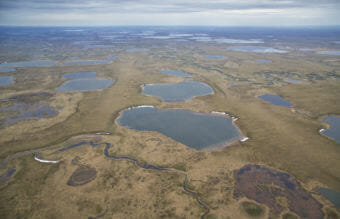
National Petroleum Reserve in Alaska. (Photo by Bob Wick, image courtesy Bureau of Land Management)
In another last-minute move, the Trump administration on Monday finalized a plan to dramatically increase the land available for oil and gas drilling in the National Petroleum Reserve-Alaska, an effort already facing legal challenges from groups concerned about threats to polar bears, caribou, migratory birds, climate change and subsistence resources.
The Bureau of Land Management on Monday announced that it had finalized a new activity plan for the 23-million-acre reserve in the Arctic, with a signing by Interior Secretary David Bernhardt on New Year’s Eve.
The reserve, the largest area of federally managed land in the U.S., is located west of the Prudhoe Bay oil fields in an area containing large new oil discoveries, including ConocoPhillips’ Willow prospect.

The new activity plan will allow oil and gas leasing across 18.6 million acres — up by 7 million acres from a 2013 plan completed during the Obama administration.
The plan includes protections for the environment, the agency said in a statement. New activity such as drilling would require additional government review before it could occur.
Oil and gas leasing could occur in the Teshekpuk Lake Special Area, according to the plan, but with limits on surface use, among other protections. The Teshekpuk Lake Special Area is considered highly important wildlife habitat. Timing restrictions would also help protect wildlife there, the agency said.
“We developed a plan that is responsive to state and local government requests and needs,” said Chad Padgett, the BLM’s state director for Alaska. “Our team of subject matter experts worked diligently to provide a robust environmental review that achieves a balance between conservation stewardship, being a good neighbor, and responsibly developing our natural resources to boost local and national economies.”
The announcement comes as the Trump administration moves swiftly to finalize plans promoting future development in other parts of Alaska, as well. On Wednesday, it will hold the federal government’s first-ever oil and gas lease sale in the Arctic National Wildlife Refuge. Conservation groups are also fighting that effort in court.
The expanded acreage in the petroleum reserve opens much of northern Alaska to the possibility of oil and gas leasing, the Defenders of Wildlife said in a statement. The conservation group has joined others in a lawsuit to halt the expansion of available acreage in the petroleum reserve.
“More drilling will just exacerbate the climate crisis in a region that is already experiencing warming twice as fast as anywhere on the planet. It is bad for the Western Arctic, bad for people and bad for wildlife,” said Nicole Whittington-Evans, Alaska program director for Defenders of Wildlife.
A federal estimate in 2017 estimated the petroleum reserve holds 8.7 billion barrels of recoverable oil and 25 trillion feet of recoverable natural gas.
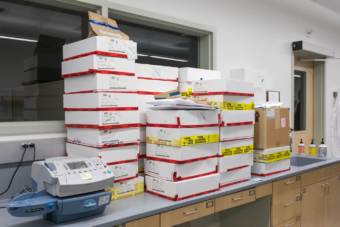
Rape kits stacked in the Alaska State Crime Lab in 2019. Though Alaska has a backlog of DNA from rape kits like these, law enforcement agencies across the state have failed to collect DNA from people arrested for violent crimes. (Loren Holmes / ADN)
Law enforcement agencies across Alaska are failing to collect DNA from people arrested for violent crimes, violating a state law passed with much fanfare in 2007 that was going to put Alaska at the leading edge of solving rape cases.
The Anchorage Daily News and ProPublica found that across the state, some law enforcement agencies are not aware of the law or are not following it. That lapse means the database is potentially missing thousands of people and may explain why the effort to test a backlog of unexamined rape kits for DNA has yielded only one new prosecution.
Emails obtained by the Daily News and ProPublica show state officials have been aware of the problem since at least December 2017, when the director of the police regulatory board forwarded a request to all police departments.
“The Department of Public Safety has determined that jail personnel are not consistently collecting DNA samples from offenders arrested for ‘qualifying offenses,’ particularly those arrested in rural areas serviced only by contract or municipal jails,” then-Assistant Attorney General John Novak wrote. (The Alaska Police Standards Council sent the memo on behalf of Novak. Officials overseeing the state crime lab, the Department of Law and then-Department of Public Safety Commissioner Walt Monegan also received the email.)
Years later, supervisors at some police departments said they still were unaware of the requirement.
The problem extends to local police and to state troopers, according to a progress report published this year by the Department of Public Safety on efforts to clear a backlog of sexual assault evidence kits.
The failure was perhaps most striking in the case of accused serial rapist Alphonso Mosley, whose DNA was not submitted to the state crime lab after a qualifying arrest in 2012. In the years that followed, prosecutors say, Mosley committed three more rapes across the city, impregnating one of his victims. Even when he was arrested a second time for domestic violence in 2015, no DNA was collected, contrary to state law.
Alaska was among the first states in the nation to require all suspects arrested for a violent crime such as robbery, domestic violence or rape, even misdemeanor assault, to be swabbed for DNA. The swabs would be sent to the state crime lab, where the DNA would be extracted and could be matched against evidence from cold cases and kept on file to aid in future cases.
Privacy advocates have long fought such laws, saying they infringe on civil liberties and should not be allowed prior to conviction. Alaska lawmakers were unmoved, comparing the swabs to jailhouse mugshots.
“What we have before us is the 21st century version of fingerprints,” Sen. Con Bunde, R-Anchorage, told his colleagues.
Alaska is now one of at least 31 states that require DNA samples be collected upon arrest or when criminal charges are filed against a person. Many of those states are now discovering that their laws have been ignored and they’re missing DNA evidence, in some cases tens of thousands of samples.
The problem of states passing DNA collection laws that are ignored or partially implemented is being discovered on a national scale and is sometimes known as “owed DNA.” It involves people arrested, convicted or sentenced for crimes who now “owe” a DNA sample because authorities neglected to collect or process it.
The reason the owed DNA problem is significant is that it inhibits investigators’ ability to solve crimes. In recent years, states, including Alaska, have come under pressure to process backlogs of untested sexual assault exam kits, an effort that is undermined if the DNA databases are incomplete.
Researchers in Ohio were among the first to quantify the problem, reporting in 2019 that about 15,300 DNA samples had been missed in Cuyahoga County. The Tennessee Bureau of Investigation estimates that there are more than 76,000 missing DNA profiles from felony offenders in that state, based on preliminary research.
The attorney general’s office in Washington state calculates that “tens of thousands” of people legally owe the state DNA samples for entry into the FBI’s Combined DNA Index System (CODIS).
Angela Williamson, who oversees the Sexual Assault Kit Initiative for the U.S. Bureau of Justice Assistance, said states with larger populations likely have about 50,000 missing samples each.
It’s not clear how to fix the problem nationwide, because it’s not clear if the laws in various states allow authorities to seek out people released from custody and obtain DNA samples. In some states, including Alaska, officials have started collecting missed samples from those who are still in jail or prison or who are on probation.
Matching DNA doesn’t just solve sexual assault cases; it can also deliver justice in burglary and murder cases, save Alaska money on years-long investigations and even exonerate the wrongly accused, said Rachel Lovell, a research assistant professor at Case Western Reserve University who has co-authored studies on owed DNA in Ohio.
When the DNA is finally collected, she said, “there are crimes waiting to be solved.”
An accused serial rapist roamed free
In 2019, Anchorage police announced the arrest of a man prosecutors called the “definition of a serious serial rapist,” precisely the kind of offender the DNA collection laws were meant to capture.
Alphonso Mosley, 35, is awaiting trial for three alleged sexual assaults committed between 2012 and 2019. (Mosley has pleaded not guilty to the charges. His DNA also linked him to an earlier attack in 2009, but that victim had since died.)
One of Mosley’s victims was developmentally disabled, the charges say. One became pregnant with his child. One moved away from Anchorage, prosecutors wrote, “out of fear and shame.”
“The victims are already terrified of the defendant because he has freely roamed the streets for years,” Assistant District Attorney Betsy Bull wrote in a bail memo describing why Mosley posed a risk to the public. She told the judge Mosley looked for women who had been drinking, offered them alcohol, then pinned them down and assaulted them in the woodsy Town Square Park of downtown Anchorage, in the back of a van and even outside the city jail. (The judge denied the defense’s request to reduce his bail.)
When announcing the indictment, the state Department of Law said Mosley’s DNA was collected under Alaska’s DNA identification law following his arrest in a 2018 case unrelated to the sexual assaults.
But what police and prosecutors didn’t say is that Mosley’s DNA had also been collected by the state Department of Corrections in 2012 after he assaulted a girlfriend. For reasons that remain unclear, the sample was never received by the state’s crime lab, according to the Department of Public Safety. As a result, Mosley’s DNA profile was not entered into the FBI’s CODIS database.
The Anchorage Police Department and jailers had another chance to obtain Mosley’s DNA and add it to the database in 2015, when he was arrested for punching his girlfriend in the face and pleaded guilty to domestic violence assault. According to the Department of Public Safety, his DNA was not collected after that arrest, which would have been contrary to state law.
If the Alaska system for gathering and processing DNA from arrestees worked as intended, Mosley might have been identified years earlier and before at least two of the sexual assaults. That’s because authorities collected the DNA of an unknown man from the victim of the 2009 rape and entered it into CODIS in March 2010. Had Alaska law enforcement officials followed the law and put Mosley’s DNA into the system after either the 2012 or 2015 arrests, he would have been immediately flagged as a suspect in the earlier rape.
After police identified Mosley as a suspect in a 2017 rape during their investigation, his DNA was finally collected and entered into the database in 2018, according to the Department of Public Safety, leading to “hits” on DNA taken from rape victims in 2009 and 2012. The woman in the earliest case had died, but police recommended Mosley be charged with rape for the 2012 and 2017 assaults.
It took the district attorney’s office eight months to file the felony charges in court. During that time, he committed another outdoor assault, according to the criminal complaint. A Department of Law spokeswoman said the department cannot comment on specifics of a pending case.
In August 2019, the same month Mosley was charged with the three sexual assaults, the Anchorage Police Department for the first time began training officers to collect DNA upon arrest, 12 years after the Legislature passed the law requiring it to do so.
“We received clarification and guidance last year from the Department of Law with the Municipality of Anchorage and the State of Alaska because the 2007 legislation as written wasn’t clear about which agencies, outside of the (state) Department of Public Safety, are authorized to collect DNA samples,” said Anchorage police spokesman MJ Thim. “Today, our officers can and do, if warranted, collect DNA samples at the time of an arrest.”
“It’s all news to me”
When Alaska became one of the first seven states to enact a law requiring police to obtain DNA samples upon arrest, Karen Foster provided much of the lobbying muscle.
Foster’s daughter, a freckled, baby-faced 18-year-old named Bonnie Craig, had been abducted and raped in Anchorage in 1994, her body found face down in a creek. One of the most high-profile murder cases in Alaska history, in part due to Foster’s relentless efforts to keep the investigation in the public eye, the killing went unsolved until a DNA hit 12 years later.
DNA evidence from Craig’s body matched the profile of Kenneth Dion, a former Alaskan who was serving time out of state for armed robbery. He’d been in and out of jail over the years since the killing but had never before been a suspect in Craig’s death. His DNA was uploaded into the FBI database while he was serving time in New Hampshire. It’s unclear why his profile was not uploaded earlier.
Dion had pleaded no contest to violent crimes such as robbery and assault in Alaska in the early 1990s, before the state enacted any DNA collection laws.
“I found out that if they had collected DNA on arrest, they would have known probably within a week, or at least a month, who the killer was,” Foster said in a recent phone interview.
News that a DNA match had solved the Craig case came around the same time the Alaska Legislature was considering an omnibus bill that included the sample-upon-arrest proposal. The state Senate voted unanimously for the bill despite protests from the American Civil Liberties Union and privacy advocates who worried about the government collecting genetic material from people who had not yet been convicted of a crime. (The law calls for DNA samples to be removed in the event the arrestee is found not guilty or the charges are dismissed; the state says it does not know how many DNA profiles have been expunged.)
“Let’s take their DNA when arrested and let’s match them up,” Sen. Bill Wielechowski, D-Anchorage, said at the time. “There are a small percentage of people committing crimes in our communities.”
The state crime lab expected the new law to increase DNA samples by 70% and called for about $400,000 a year in additional funding to handle the extra work.
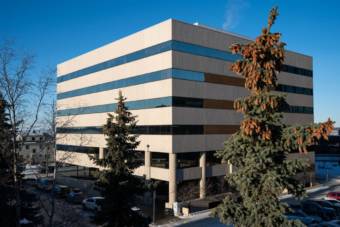
The Alaska State Crime Lab. (Loren Holmes / ADN)
Foster, who has since moved out of the state, said she looked into the matter a few years after the law passed and was surprised to see it seemed as if little had changed. She’d been assured by the state that the system was working and the question of owed DNA never came up, she said.
“So it’s all news to me,” Foster said. Perhaps looking at the number of arrests in Alaska, compared with the number of DNA samples collected, she said, might reveal the scope of the problem.
But Department of Public Safety records for the number of DNA samples collected from arrestees each year is incomplete. The available information shows a high of 6,082 samples collected from arrestees in 2009. That number fell by half to 2,830 samples in 2017.
The number of people arrested for crimes against a person each year in Alaska is not readily available, said Barbara Dunham, project attorney for the Alaska Criminal Justice Commission.
But the justice commission does track the number of criminal cases filed each year that involve one or more assault charges, one of the most common types of crimes that would require collection of a DNA sample upon arrest. In some years, including 2017 and 2015, the number of assault cases filed in state court alone exceeds the total number of arrestee samples submitted to the crime lab. (Dunham noted that some offenders are arrested more than once and might already have their DNA on file at the time of their arrest.)
In fact, as the number of reported violent crimes rose in Alaska between 2013 and 2017, the number of DNA samples sent to the lab fell. It is unclear why.
Meantime, a 2016 audit of the state crime lab found that it had not expanded its services or increased the speed of evidence processing despite its move into a new $90 million building in 2012.
The Department of Public Safety would not make the state crime lab’s sexual assault and CODIS program supervisor, Michelle Collins, available for an interview. The department also denied requests for an interview with Randi Breager, a special assistant to the public safety commissioner who prepared the report that said troopers and police in Alaska are rarely swabbing for arrests.
For now, the overall number of missing DNA samples in Alaska, each representing an opportunity to solve past or future criminal cases, remains unknown.
“We do not have that estimate,” Department of Public Safety spokeswoman Megan Peters wrote in an email. The department recently created a working group to address the missing DNA problem, among others, she said.
The group “will be working with multiple departments to collate data to help identify the scope and magnitude of the gaps in collection,” she said.
Number of missing samples remains unknown
In Ohio’s Cuyahoga County, Lovell’s team had no idea how many missing samples they might discover when they began looking at arrests and convictions from 2008 to 2016. A 2016 federal Sexual Assault Kit Initiative grant funded the research, with findings published in 2019. By the time the research was complete, they discovered that more than 15,300 people had been missed or owed DNA.
That’s for just two law enforcement agencies, the Cleveland Police Department and county sheriffs, in one county with a population of about 1.24 million. (Alaska’s statewide population is 732,000.)
As of January 2019, efforts to swab just 10% of the previously missed samples led Ohio authorities to open dozens of new criminal investigations including into sexual assaults, burglaries and homicides.
“Several rapists have been convicted as a direct result” of tracking down the owed DNA, Lovell said.
Williamson, who heads the Sexual Assault Kit Initiative program, said the Bureau of Justice Assistance considers owed DNA to be phase two of the agency’s efforts to clear rape kit backlogs nationwide.
It’s fantastic that states and cities across the country are testing sexual assault kit evidence for the first time, she said. “But if you know the offenders who are responsible are not in CODIS, you are not going to get justice for the victims.”
As of December, law enforcement agencies and local governments in a dozen states have received $10.6 million Sexual Assault Kit Initiative grants for tracking down owed DNA. Alaska isn’t one of them.
The state has not applied for one of the grants, the Department of Public Safety said.
Slipping through the cracks
The remoteness and isolation of Alaska makes this a place of escape. Not always in a good way. Some criminals see Alaska as the end of the road, a place to distance themselves from trouble with the law in other states.
Enforcing the DNA collection laws here, and entering those samples in the federal database, could solve crimes elsewhere, Lovell said.
“For Alaska, or any rural jurisdiction, the mobility of many of the individuals, I think, is what’s particularly scary,” she said. “Many people who live in Alaska are not actually from Alaska.”
The state faces law enforcement challenges unlike anywhere else in the United States. As of 2019, about 1 in 3 communities had no local law enforcement of any kind. State troopers must fly to make arrests in villages across the state that sometimes lack a public safety building or even running water.
Despite the breadth of Alaska’s law on owed DNA, there’s confusion within police departments about who is responsible for collecting it. Some police departments interpreted the law to mean the responsibility to collect DNA upon arrest falls to the state Department of Public Safety, not individual departments. Other smaller departments assumed the Department of Corrections would collect the sample.
People arrested for a qualifying offense also might not be booked into jail and instead appear at an arraignment without submitting a sample.
The Daily News and ProPublica asked police departments across Alaska if their officers obtain DNA swabs upon arrest. Of the 17 that responded, six said they did not.
“I believe that all the DNA collection is done at the correctional center. We only collect when we have a search warrant,” said Soldotna Police Chief Peter Mlynarik. Police in Wrangell and Palmer also said they do not collect DNA at the time of arrest.
In Juneau, Lt. Scott Erickson said that police do not collect DNA at the time of arrest and that he was unaware of the 2007 law.
Asked how the state first discovered the failure to swab some arrestees and inmates, Department of Public Safety spokeswoman Peters said in an email, “This issue has come up a number of times since the statute came into effect through examples and interagency conversations about protocol and policy.”
The one conviction that resulted from Alaska’s three-year, $1.5 million effort to test 568 rape kits collected by state troopers showed the potential of shelved DNA evidence when combined with samples obtained from suspects by police in the field.
In that case, a Kenai jury found one-time Iditarod musher Carmen Perzechino guilty of raping and kidnapping a woman in his van in 2001. Perzechino’s DNA was in the database because he voluntarily gave a sample to Anchorage police in 2012, when he was arrested for attempting to solicit a prostitute. When the Department of Public Safety recently tested the rape kit from an unsolved 2001 attack, it matched his profile.
Retired state trooper Mike Burkmire investigated the crime, phoning Perzechino last year to confront him about the rape for the first time.
Despite his 25 years in Alaska law enforcement, Burkmire said he had never heard about a state law mandating DNA collection at the time of arrest until he began working as a cold case investigator in 2018.
At a national Sexual Assault Kit Initiative conference in Washington, D.C., Burkmire attended a presentation on owed DNA and saw Alaska listed among the states that collect samples when someone is first taken into custody.
While flying across the state to train police departments on DNA collection over the past two years, Burkmire found that most Alaska cops he spoke to didn’t know about the mandate either.
“I have met two police officers that actually knew the law existed,” Burkmire said, “but none that have ever actually collected a sample upon arrest.”
In October, Anna Sattler saw the man who raped her for the first time since she jumped from his van 19 years earlier.
He wore a dark tie and a blue face mask, appearing in one of Alaska’s first felony jury trials of the COVID-19 pandemic. Sattler was committed to getting justice for what had been done to her. She had subjected her body to the swabbing and prodding and picture taking of a forensic exam after the 2001 kidnapping, so troopers could collect a sample of the rapist’s DNA. In court, where a jury of socially distanced strangers examined images of her genitalia, she answered the defense lawyer’s questions about why she was barhopping the night of her rape.
In the end, all the little humiliations built a case. A Kenai jury found Carmen Perzechino, a former dog sled musher who had fled to the Philippines, guilty of all counts. He is awaiting sentencing.
The state public safety commissioner celebrated the verdict as a win in Alaska’s push to test hundreds of old sexual assault kits collected by state troopers, some dating back to the 1980s. The “kits” are textbook-sized boxes or even bags of evidence collected at the beginning of a sex crime investigation. For a variety of reasons, they were never before submitted to a crime lab where the suspect’s DNA would have been extracted, possibly identified and entered into a database.
Sattler figured the verdict was just the beginning of a reckoning, brought about by the grant-funded effort, for Alaska men who’d gotten away with rape.
“I expected this to be like the floodgates,” she said.
Carmen Perzechino was found guilty on Nov. 4, 2020, of raping and kidnapping Anna Sattler in a cold case from 2001. In the proceeding held via Zoom are, in the upper row from left, Superior Court Judge Jennifer Wells, Perzechino and defense attorney Andy Pevehouse. In the lower row are investigator Mike Burkmire and prosecutor Jenna Gruenstein. (Obtained by Anchorage Daily News and ProPublica)
But what the state’s news releases didn’t mention is that Perzechino is and will likely remain the only offender arrested as a result of the initial effort to clear the backlog of unsubmitted evidence. After spending three years and $1.5 million to test 568 kits and review the results, Alaska has filed only this one new criminal charge.
The Sexual Assault Kit Initiative grants paid for a prosecutor, Assistant Attorney General Jenna Gruenstein, and a cold case investigator to review the DNA results from every test, but that money will run out in 2021. Asked if the project will lead to any more charges filed, Gruenstein said the state concluded the majority could not be prosecuted but “a few cases” are still being reviewed.
Now, Alaska is spending an additional $2.75 million from state coffers to test about 2,400 more rape kits from local police departments in hopes of solving other cases.
This story is the first in a two-part examination by the Anchorage Daily News and ProPublica of why Alaska’s effort to clear the backlog was not as effective as politicians or the public might have hoped and why it has not identified serial rapists.
In the next story we will examine how Alaska law enforcement may have limited the effectiveness of the rape kits by failing to collect DNA swabs from people arrested or convicted of certain crimes, contrary to state law. Those missing DNA profiles might have matched evidence found in rape kits.
The reasons for the low success rate are complex. Many of the backlogged kits involved cases where DNA evidence did not solve the crime because the identity of the suspect was already known, and the investigation turned on consent rather than who was involved. In even more cases, the sealed rape kits were opened to reveal no usable suspect DNA at all.
Still, some places, such as Cuyahoga County in Ohio, have used DNA to file hundreds of criminal indictments and identified serial rapists like Nathan Ford, whose DNA matched evidence in 19 sexual assault kits. The city of Fayetteville, North Carolina, used $1.1 million in grants to clear a backlog of 688 kits leading to 59 cases “solved and charged,” including some involving serial rapists, Lt. Michael Petti said.
They are the exception. Most states and local governments are reporting modest results, but few have tested so many kits resulting in so few new charges as Alaska.
In Washington state, federal Sexual Assault Kit Initiative grants paid for the testing of 5,096 backlogged rape kits as of Nov. 30, but the state attorney general’s office and a state patrol spokesman could not say how many charges had been filed as a result. A December report to the state’s Legislature notes two cases that led to convictions and three that are awaiting trial.
Wisconsin tested 4,472 kits, leading to the convictions of four people, and several more are awaiting trial. In Iowa, the state Department of Justice received $3 million in federal grants resulting in the testing of 1,535 kits and two new criminal cases. In Connecticut, which received $4.7 million, the Sexual Assault Kit Initiative coordinator provided two examples of arrests made as a result of genealogy testing funded by the grants. The Hawaii Department of the Attorney General tested 1,512 kits resulting in one new conviction.
All told, the federal government has spent more than $223 million on the Sexual Assault Kit Initiative program, known as SAKI, over the past six years. The Sexual Assault Kit National Training and Technical Assistance Program reports some 71,491 kits were sent for testing from September 2015 to June 2020.
In that period, charges were filed in 1,521 new criminal cases, according to the program.
A senior policy adviser at the Bureau of Justice Assistance, Angela Williamson, who manages the SAKI grant program, said it’s unfair to compare the performance of various grantees until the sites have completed their projects.
“We don’t know these numbers yet,” she said. “But testing is only one part of the solution, which is why SAKI supports so many other critical activities such as crime analysis and investigation.”
The delayed testing comes too late for some. In Alaska, some victims contacted long after reporting the attack no longer wanted to disrupt their lives and pursue a criminal trial. In other cases, victims and suspects have died in the years between the report of a sexual assault and the new initiative.
“On a shelf gathering dust”
The federal Bureau of Justice Assistance began the Sexual Assault Kit Initiative in 2015 under President Barack Obama. The money was intended not only to clear existing backlogs but to help state and county leaders come up with ways to avoid future ones.
The issue was gaining nationwide attention as states and cities began to realize that countless sexual assault kits had gone untested over decades. Some had never been submitted by police to crime labs; others were considered a low priority and languished in evidence backlogs.
That year, state Rep. Geran Tarr, an Anchorage Democrat, urged colleagues in the Alaska Legislature to launch a statewide inventory of untested kits. The audit would serve as the first step in identifying the scope of the problem here and would be necessary to obtain grant money for testing.
“There are perhaps violent criminals who are still out on the streets only because these kits haven’t been processed,” said Tarr, who’d heard about the issue of sexual assault kit backlogs from a national advocacy group. Sen. Berta Gardner, also an Anchorage Democrat, proposed a companion bill in the state Senate.
“The evidence that could bring the guilty to justice, and prevent the perpetrator from raping, again sits on a shelf gathering dust,” Gardner wrote in January 2016.
The statewide inventory of untested kits included those collected by state troopers, which were directly in the state’s control, and those kept by local police departments, which were one step removed. Then-Gov. Bill Walker said his administration aimed to clear the trooper backlog by 2017. “It is now a top priority,” he said.
Advocacy groups estimate that hundreds of thousands of such kits had been sitting in evidence lockers, some containing the only key that could solve certain cases: a sample of the rapist’s DNA.
Sometimes the evidence was never submitted for testing because police believed it wouldn’t have made a difference in the pending sex crime case. Some suspects had already pleaded guilty. Others admitted to having a sexual encounter with the victim but claimed it was consensual. In those cases, a DNA sample that confirmed the identity of the suspect wouldn’t change the investigation, police believed at the time, because it hinged on a he-said-she-said question of consent rather than identity.
But many sexual assaults reported in Alaska involve a woman who is unconscious and can’t give consent. In past decades, police might not have sent DNA samples in such cases for testing, thinking it wouldn’t solve the case. (Investigators already knew who the suspect was; he had admitted sexual contact but said it was consensual.) However, testing all such kits could reveal patterns such as a string of identical accusations against a single person. With enough evidence, prosecutors might be able to file charges.
At the time of some older cases, such as the 2001 attack by Perzechino, state troopers had a “standard practice” of declining to test a kit unless a suspect had been identified, according to Department of Public Safety Commissioner Amanda Price. Today, many states, including Alaska, have mandated testing of all kits.
After testing, the state crime lab can add eligible DNA profiles of suspects to a state database where it can be compared to the FBI Combined DNA Index System to see if that person’s DNA was found at another crime scene, in another sexual assault kit or matches a known offender.
Rachel Lovell, a researcher at Case Western Reserve University in Ohio, and colleagues described many reasons for the massive rape kit backlogs in a recent edition of the FBI’s Law Enforcement Bulletin: “Poor evidence tracking, outdated and ineffective investigation practices, scarce resources and personnel, misunderstanding of crime lab case acceptance policies, and lack of knowledge among law enforcement personnel about the value of testing the kits.”
As the backlogs gained national attention, the issue resonated across the country, Lovell said in an interview. People were enraged to learn that evidence of such serious crimes was often bagged, boxed and forgotten on a shelf.
“I think that’s why people are sort of disgusted or sort of shocked at all these rape kits that haven’t been tested,” she said.
Alaska attempted its first statewide inventory by 2016. The initial count showed some 3,600 untested sexual assault kits. That year, the Department of Public Safety received a $1.1 million, three-year SAKI grant to assess the problem.
“We owe it to victims and their families to deliver justice to perpetrators and bring closure to these tragic experiences,” Walker, the governor, said at the time. The next year the state received another grant, for $450,000, to continue the work.
The program quickly expanded across the country. Two grants in Oklahoma. Three in Montana. Four in Oregon.
Today, more than half of Americans live in one of the 71 jurisdictions that have received the federal grants.
When speaking to other legislators about the motivation to count and test shelved rape kits in 2015, Tarr said she’d come to a realization that violent offenders might be roaming Alaska towns purely because the evidence against them had been forgotten.
“Maybe even just one crime could be solved if we had this information in a more timely fashion,” she said.
Five years later, that’s precisely what happened.
Most kits contained no suspect DNA
In Alaska, the first round of testing focused on about 700 kits collected by state troopers; a fraction of the untested kits identified statewide. That initial number quickly shrank as investigators identified, for example, some that had been previously tested, were too damaged to test or had been mislabeled.
Ultimately, 568 trooper kits were sent to a private lab in Virginia to be unsealed and tested. By spring 2019, the testing was complete.
The lab found that as was the case in other states, nearly two-thirds of the previously unsubmitted rape kits in Alaska contained no DNA samples from anyone other than the victim.
From there, the number of kits that could unlock unsolved cases grew even smaller, as investigators began to pore over the DNA results arriving in monthly batches from the lab. Of the 199 kits that had DNA from someone other than the victim — meaning a potential suspect — 99 were set aside. Either the DNA belonged to someone other than the rape suspect, such as a partner, the DNA sample was of poor quality or degraded and couldn’t be matched to a single person, or authorities determined the case didn’t meet the statutory definition of sexual assault.
Now the 568 kits were down to about 100 that might be used to solve a cold case. Of those, 59 of the DNA samples matched a known person in law enforcement databases.
The cold case investigator, retired trooper Mike Burkmire, and prosecutor Gruenstein huddled over the 59 cases to determine if they could make new arrests. Most of the DNA “hits” confirmed the identity of a person who was already a named suspect in the case rather than revealing a previously unknown suspect.
Burkmire investigated the cases that remained and forwarded four for prosecution, according to a Department of Public Safety report. The Department of Law declined three of the cases, including one in which the suspect was deceased and two in which the survivors did not want to move forward with a trial.
Gruenstein, the prosecutor, said deference to victims played a role in the low number of charges filed in Alaska and was based on the recommendations of survivor advocates. “While we might not have charged certain cases because of a victim’s wishes, it is possible that in other states, those cases would have been charged, resulting in higher numbers of charged cases.”
The remaining case resulted in the arrest of Perzechino, whom Sattler said she wouldn’t have recognized as her rapist because so many years had passed. Had it not been for the new test of her old kit, the case never would have been solved.
With the testing of trooper kits well underway as a pilot project, the Legislature in 2018 agreed to spend state money to test about 2,400 additional kits held by police departments around Alaska.
It is unclear what will happen if Alaska’s expanded testing uncovers new leads. The state funding does not include money for a cold case investigator, meaning any new leads will compete for attention from detectives focused on other duties.
That’s what happened in Akron, Ohio, years ago. The DNA results from 1,200 previously untested kits started coming back to the police department in 2015, said Lt. David Whiddon, but the department had a shortage of detectives. There was no one to consistently follow up on the new leads.
Akron obtained two SAKI grants beginning in 2018 to fund police work and prosecutions. As of this month, the department had arrested nine suspects known to have attacked 14 victims, plus it filed “John Doe” warrants against an additional 15 people who could be arrested if the identity of the person matching the DNA pops up in the federal database.
Walker, the former governor who sought the first inventory of untested kits in Alaska, said in a recent phone interview that you can’t judge the testing project by the numbers alone.
Alaska has the highest rate of reported sexual assault in the country. As governor, Walker said, he spoke to sexual assault survivors who saw no point in reporting they had been attacked because they didn’t think the justice system would take them seriously.
Testing every sexual assault kit sends a message that every report matters, he said, and no evidence will be ignored.
“Anytime there’s any conviction of someone who has committed that heinous crime, it’s worth it,” said Walker, an independent who dropped his reelection bid in 2018.
Anna Sattler isn’t so sure. She’s grateful for the SAKI program and to the cold case investigator and prosecutor who bulldogged her 2001 case to a conviction. But following the verdict she assumed other trials would soon follow.
“It can’t be one out of 568 that went to court and found someone guilty. Those aren’t good numbers. That doesn’t say anything,” she said.