Andrew Kitchenman

State Government Reporter, Alaska Public Media & KTOO

State government plays an outsized role in the life of Alaskans. As the state continues to go through the painful process of deciding what its priorities are, I bring Alaskans to the scene of a government in transition.

Legislature passes budget taking big bite from Constitutional Budget Reserve

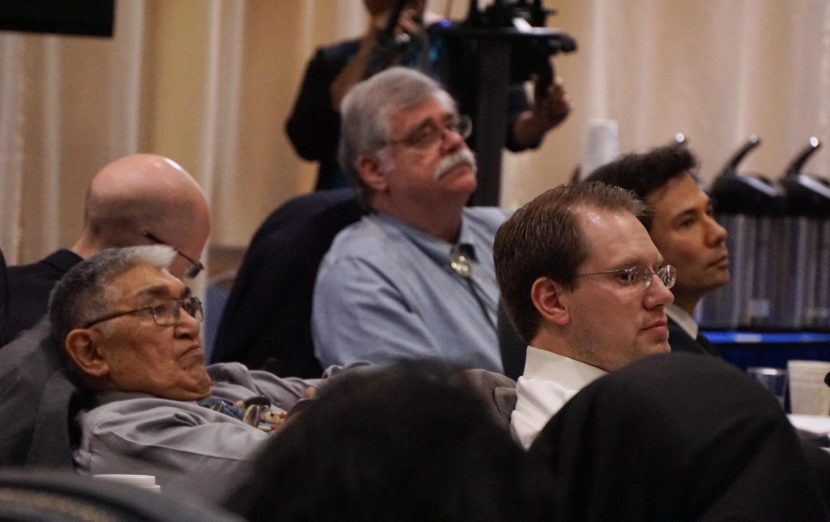
Reps. Ben Nageak, D-Barrow, Kurt Olson, R-Soldotna, Lance Pruitt, R-Anchorage, and Neal Foster, D-Nome, watch as a budget-related vote is tallied in the Terry Miller Gym in Juneau, May 31, 2016. (Photo by Jeremy Hsieh/KTOO)

The legislature passed a state budget that prevents layoff notices going out to state workers Wednesday. But that budget could draw $3.2 billion from the state’s piggy bank, the Constitutional Budget Reserve. It’s not clear how Gov. Bill Walker will respond to a spending plan that doesn’t address Alaska’s long-term state fiscal imbalance.

After weeks of quiet, behind-closed-doors negotiations, the legislative conference committee on the budget passed a funding plan for the fiscal year that starts July 1. That action set the stage for both the House and Senate to vote on the budget Tuesday. The vote came ahead of a Wednesday deadline, preventing thousands of layoff notices from being sent to state workers.

Conference committee chairman Sen. Pete Kelly, R-Fairbanks, said this session will provide lasting budget savings, due to overhauls of Medicaid and criminal justice. Under the proposed budget, total spending – including federal funds – would fall from $9.3 billion this year to $8.8 billion in the coming year.

“Our goal was to cut somewhere (around) $400 million, $500 million,” Kelly said. “We’re over a $400 million reduction. And as we said before, those reductions will continue into the future, because of the reform bills.”

House Minority Leader Chris Tuck, D-Anchorage, highlighted money that was restored to the budget, including funds for senior benefits, early education, the University of Alaska, and the Alaska Marine Highway.

House Minority members have supported changes to the oil and gas tax system that would cut subsidies to producers. But Tuck said the top priority was preventing layoff notices.

“Now that we got this off the table – now that we’re no longer threatening state employees – it’s time to get to work and fix Alaska’s future,” Tuck said.

Rep. Les Gara, D-Anchorage, said it wouldn’t have been appropriate to use the budget as leverage to pass oil and gas tax changes.

“You can’t leverage other peoples’ votes by saying, ‘I’m going to shut down government if you don’t give me the oil tax bill I want,’” Gara said. “Those things have to be decided on their merits.”

But the lack of progress on reaching a comprehensive fiscal plan to stabilize the state budget for future years is a concern for many residents. That’s according to Rasmuson Foundation President and CEO Diane Kaplan. Foundation surveys found Alaskans want the legislature to adopt a comprehensive plan this year.

Walker has proposed a series of new taxes and tax increases, as well as cuts to oil and gas tax credits. Kaplan says Alaskans would like to see the legislature do more than pass the budget.

“In the long-term, nothing is being done this session – other than the modest budget cuts – that puts us in a good position to have a bright economic future for any Alaskans …,” Kaplan said. “This is not a sustainable way to operate the state of Alaska – using reserves.”

The potential $3.2 billion Constitutional Budget Reserve draw would be more than 40 percent of the entire $7.75 billion fund. And it would be nearly a fifth of all savings that the state can spend, including the Permanent Fund earnings reserve.

One party that will be keeping a close eye on what the state government does in the coming weeks is the bond-rating firms. Standard and Poor’s analysts have said negative pressure on the state’s credit rating could intensify if the legislature doesn’t make structural changes.

San Francisco-based S&P analyst Gabe Petek said his firm is watching for what happens next.

“We have not viewed the state’s fiscal structure as sustainable over the longer term,” Petek said. “And so, we’ve been watching to see if the legislature could reach an agreement on some package of reforms that would put the state’s finances on a more sustainable trajectory.”

While Majority Caucus legislators have said they would bring pieces of Walker’s fiscal plan up for votes, it’s not clear whether any will pass.
Walker calls special session for lawmakers to finish work on budget, shortlisted legislation

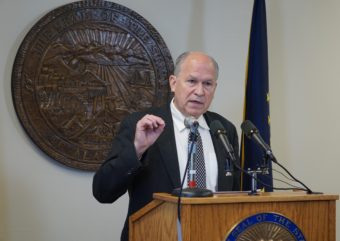
Alaska Gov. Bill Walker answers questions from the press in his temporary office in the community building in Juneau, May 19, 2016. (Photo by Jeremy Hsieh/KTOO)

Gov. Bill Walker called the legislature into a special session that begins Monday to finish the work lawmakers failed to complete during the 121-day session that ended Wednesday.

Big differences remain over the how to pay for the state’s budget and it’s not clear how lawmakers will overcome challenges in the 30-day special session that they couldn’t solve in the past four months.

There are several things that will be different from the regular session. The first is that the legislature will be focused on 10 items included in Walker’s call for the special session.

These items include the state’s operating and capital budgets, legislation to draw money from Permanent Fund earnings to pay for the annual budget, as well as a bill to overhaul the state’s oil and gas taxes.

Walker also called for legislators to consider bills to introduce an income tax and to raise taxes on motor fuel, alcohol, mining, tobacco, marijuana and commercial fishing.

House Minority Leader Chris Tuck, D-Anchorage, said it will be good for the legislature to focus on these items.

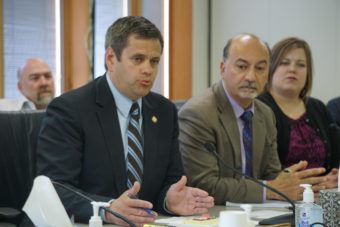
House Minority Leader Chris Tuck addresses questions from the press, May 19, 2016. Also pictured: Anchorage Reps. Les Gara and Geran Tarr. (Photo by Jeremy Hsieh/KTOO)

“We don’t want to see guns on campus being brought up,” Tuck said. “We don’t want to see a bunch of things being brought up that really would distract us from fixing the fiscal situation that we have now.”

The legislature faces a July 1 deadline to avoid laying off workers and shutting down state government. Pink-slip notices will go out if the legislature doesn’t pass a budget by June 1.

House Speaker Mike Chenault said these notices should have been avoided.

“It causes … maybe not a lot of physical damage, but it causes mental damage to state employees,” Chenault said. “Not knowing whether you’re going to get laid off in 30 days. Not knowing whether … you are going to be able to pay the rent.”

Walker said he plans to play a more active role talking with legislators than he did during the regular session.

“I’m very respectful of the separation of powers, but I think that these are pieces of legislation with my name on it,” Walker said. “They’re in a special session that I have called, and I will be very engaged on a daily basis.”

The legislature spent the last day disagreeing on how to extend its session. The majority caucuses wanted to pass a 10-day extension, but they couldn’t get the House Minority to agree.

The bigger disagreement is over how to pay for the budget. Chenault said his caucus would prefer to pay for the budget by drawing on the state’s savings – the Constitutional Budget Reserve.

House Speaker Mike Chenault (center), R-Nikiski, talks about the end of the session. Majority Leader Charisse Millett, R-Anchorage, and House Rules Chairman Rep. Craig Johnson, R-Anchorage, flank Chenault. May 19, 2016. (Photo by Andrew Kitchenman/KTOO/APRN)
House Speaker Mike Chenault (center), R-Nikiski, talks about the end of the session, May 19, 2016. Majority Leader Charisse Millett, R-Anchorage, and House Rules Chairman Rep. Craig Johnson, R-Anchorage, flank Chenault. (Photo by Andrew Kitchenman/KTOO/APRN)

“It’s the easiest option for members of my caucus,” Chenault said, adding that he believes “it’s the best for the state of Alaska.”

But this will take a vote by three-quarters of both legislative bodies, and the House Minority has enough members to block a CBR draw.

Tuck said agreement on oil and gas tax changes is essential to a broader agreement. He expressed disappointment that the Senate didn’t stay closer to the other body’s version of House Bill 247, a bill that would reform oil and gas industry credits.

“There was a bipartisan effort that went out from the House over to the Senate,” he said. “The Senate passed something back over to us that just simply wasn’t acceptable to us.”

Tuck also said he wants the budget to be part of a longterm fiscal plan for the state.

Walker still wants the legislature to pass a plan that will balance the budget by the fiscal year that starts in July 2018.

The bond rating firm Standard and Poor highlighted the importance of the state balancing its spending and revenue Thursday. In a ratings update, an S & P analyst said the firm expects negative pressure on Alaska’s credit rating to intensify if lawmakers can’t agree on fiscal reforms.

Walker has included many of the different tax increases in one item. They stalled when they were in separate bills.

“Maybe what’s been seen is how difficult it is to do the plan one piece at a time,” Walker said.

Some legislation that isn’t related to the budget will be on the agenda. It includes a bill that would make changes to some child adoption procedures. Other measures are aimed at foster care, the state’s individual insurance market and benefits for law enforcement officers and firefighters who die in the line of duty.

Governor calls special session after legislature fails to pass budget

Gov. Bill Walker has called the legislature into a special session to address the budget and other bills lawmakers failed to pass during the 121-day session that ended Wednesday.

A minute past midnight, Walker called for legislators to return to Juneau on Monday. He asked them to consider the capital and operating budgets. The special session will also focus on legislation to draw money from Permanent Fund earnings to pay for the annual budget, as well as a bill to overhaul the state’s oil and gas taxes.

Walker also called for legislators to consider bills to introduce an income tax and to raise taxes on motor fuel, alcohol, mining, tobacco, marijuana, and commercial fishing.

Some legislation that isn’t related to the budget will be on the agenda. It includes a bill that would make changes to some adoption procedures. Other measures are aimed at foster care, the state’s individual insurance market, and benefits for law enforcement officers and firefighters who die in the line of duty.

The majority caucuses of both houses tried to extend the session by 10 days. But the House minority caucus opposed an extension. State workers would receive layoff notices on June 1 if the legislature hasn’t passed a budget by then.

Special session likely even with Alaska Legislature poised to finish budget

Senate Floor Session-20160518-2
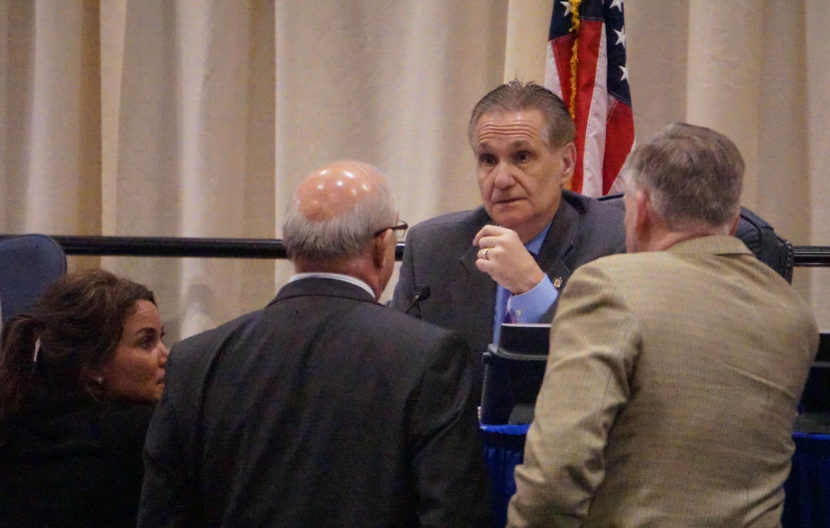
Senate President Kevin Meyer, R-Anchorage, consults with a huddle of senators during a break in the floor session Wednesday. Pictured from left to right are Sens. Lesil McGuire, R-Anchorage, John Coghill, R-North Pole, and Charlie Huggins, R-Wasilla. (Photo by Jeremy Hsieh/KTOO)

The legislature is preparing  to vote on the capital and operating budgets Wednesday. But how the state will pay for the spending plans remains uncertain. And there’s much work left to do. So legislators expect Gov. Bill Walker to call them back into a special session.

It’s not clear if the House minority caucus – with 12 Democrats and an independent – will vote to close a more than $3 billion budget deficit with funds from the Constitutional Budget Reserve.

The House minority has made a CBR vote dependent on passing deep cuts to oil and gas tax credits. But the Senate scaled back cuts made by the House.

tuck
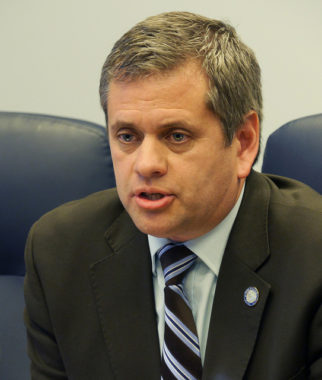
Rep. Chris Tuck, D-Anchorage, in April. (Photo by Skip Gray/360 North)

House Minority Leader Chris Tuck, R-Anchorage, said the Senate’s changes could prevent a budget agreement.

“What came out of the Senate today is something I don’t think that our minority members are going to want to accept – and that’s a huge part of our budget,” Tuck said.

If the two caucuses can’t agree on a CBR draw, the legislature could  vote to close the deficit with a large draw from the Permanent Fund earnings reserve. Or it could pass a budget without saying how the state will pay for it. This would require the legislature to return to the topic in a special session.

Perhaps as notable as what the legislature did pass were the bills it didn’t — like most of the revenue-generating bills Gov. Walker proposed. They include Walker’s plan to introduce a state income tax, and various bills to increase taxes on motor fuel, mining and fishing.

The legislature also didn’t vote on Walker’s plan or any other bills to restructure Permanent Fund earnings.

House Majority Leader Charisse Millett, R-Anchorage, said there was no agreement on these proposals.

“I think that most of what prevented that from happening is that there was no consensus that that was something that either the Republicans or the Democrats were interested in doing,” Millett said.

The Permanent Fund proposals aren’t popular because they would lead to lower dividends. But Walker said a large draw from Permanent Fund earnings without a long-term plan would be more risky for dividends, because they would put the state on a course to deplete the earnings in as little as four years.

Millett said the legislature could still finish its work on Wednesday.

“Our obligation, obviously, is to get an operating budget, and that’s the only constitutional mandate,” Millett said. “I’m optimistic that we’ll get through that tonight, with both the House majority and the House minority. I think we’re coming to a consensus.”

If that doesn’t happen, the legislature could vote to extend the session 10 days. If not, it’s all but certain Walker would call them back into a special session.

Tuck said he’d prefer a special session to an extension.

“We need to get all other distractions off the table, and then allow the governor to call us in on the things that he wants to see done,” Tuck said. “And it’s going to be probably revenue and the budget. And that’s what we should be focusing on in the next few days.”

With the end of the regular session, all bills that the legislature hasn’t passed will die. If Walker calls a special session, his announcement would say what the subjects of the session would be. They’ll likely include bills that would fund the budget. But Walker could also call to revive other legislation, such as a bill intended to improve the state’s individual health insurance market.

For the first time, Alaska Permanent Fund earnings may balance state budget

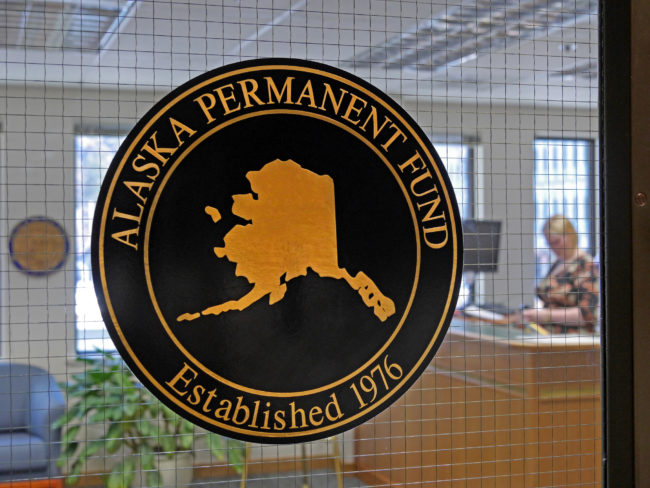
An Alaska Permanent Fund Corp. sign in the office in Juneau, March 14, 2016. (Photo by Skip Gray/360 North)
An Alaska Permanent Fund  sign at the Alaska Permanent Fund Corp. office in Juneau in March. (Photo by Skip Gray/360 North)

In 40 years, Alaska’s government has never used Permanent Fund earnings to balance the state budget. But that could change this year and have big implications on Alaskans’ Permanent Fund dividends.

Lawmakers head into the last day of the legislative session Wednesday without knowing how they’re going to fill a roughly $3.5 billion deficit.

Majority legislative leaders would prefer to close this shortfall by spending money from the Constitutional Budget Reserve. This nearly $8 billion reserve has been used to close deficits in previous years.

But three quarters of both legislative chambers must approve a Constitutional Budget Reserve draw. The Senate majority could pass it. But members of the Democrat-led House minority caucus are in position to block this draw. They want to make deep cuts in tax credits to oil and gas producers.

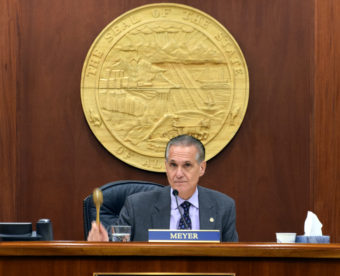
Kevin Meyer
Senate President Kevin Meyer, R-Anchorage, in 2015. (Photo by Skip Gray/360 North)

So legislators, like Senate President Kevin Meyer, are considering drawing money from the Permanent Fund earnings reserve account.

“The CBR draw is our preference, of course,” Meyer said. “And we will have the three-quarter vote to do that and that will be our recommendation. If that doesn’t happen, then our only option is to then use the earning reserve account in some capacity. So, that will pretty much be up to the House.”

Meyer said the legislature could pass the budget tomorrow, and then return for a special session that would focus in part on making long-term changes to a fiscal plan for using Permanent Fund earnings, similar to what Gov. Walker has called for.

Different proposals to restructure fund earnings could cut Permanent Fund dividends, possibly halving them.

The Permanent Fund is made up of two pieces. The main body of the fund is $43 billion. It’s protected by the state constitution. That’s what makes it permanent.

The other piece is the earnings reserve account. It’s about $7.5 billion. Normally, these earnings are just used for dividends and to replenish the main fund.

But it’s also easier for the legislature to spend than the Constitutional Budget Reserve. It only takes a majority of both legislative body to spend this money, which could happen for the first time Wednesday.

The prospect is drawing the attention of longtime observers of Alaska’s budget process. Like Oregon-based economist Gregg Erickson, the former publisher of the Alaska Budget Report.

“We know that if you take money from the earnings reserve, it’s going to reduce the dividend,” Erickson said. “And that, in a sense, puts the burden of this financing on the people of Alaska who are least able to pay for it.”

Erickson added that it would be foolish for Walker to agree to a deep draw from the earnings reserve if he’s not certain what the legislature would do in a special session.

“Anybody who wants to trust the legislature and give up all their cards, basically, in the expectation that they’ll do something later – particularly when it’s so vague – is just not realistic,” he said.

It’s a point reinforced by political scientist Clive Thomas. His book “Alaska Politics and Public Policy” is being published next month.

Thomas said legislators may be hoping that oil prices will increase. He added that Gov. Walker’s budget plan included both a reduction in Permanent Fund dividends – which affects lower-income and rural Alaskans the most – and an income tax – which would affect upper-income residents more heavily. The legislature hasn’t passed the income tax. Thomas said lawmakers would like to put off politically difficult choices in an election year.

“The state is in a bad situation, and you’ve got to do something about it,” Thomas said. “And it’s going to mean in some way a reduction in Alaska’s lifestyle, and quality of life. I think that’s just inevitable. But no politician will say that to anybody.”

Institute of Social and Economic Research Director Gunnar Knapp said how ever the legislature and governor spend from the state’s savings, it will have significant implications for the future.

“There’s all the difference in the world between doing that in a thoughtful, structured way, and simply saying ‘Here’s a pot of money we can go to to make up for the spending we’re not willing to cut and we’re not willing to tax ourselves to pay for,'” he said.

The legislature is preparing to pass both the capital and operating budgets on Wednesday. Walker has said he can’t accept a budget with a Permanent Fund draw, without having a sustainable fiscal plan. A spokeswoman for Walker said he’ll decide after the session ends if there’s a need for a special session.

Industry executives, senators give oil and gas tax overhaul a cool reception

Oil and gas industry advocates and Senate Finance Committee members gave a cool reception to a bill overhauling industry tax credits.

The House rewrote the bill Friday with a wide-ranging amendment that would end large companies’ ability to deduct losses from future tax bills. The amended House Bill 247 also would limit the amount of time new oil projects benefit from special tax treatment to seven years. And it would raise the minimum production tax that companies must pay from 4 percent to 5 percent when oil prices reach $70 per barrel.

But oil industry advocates say the bill would devastate the state’s economy by discouraging investment. Most industry representatives who testified during a hearing on Sunday said they want to keep the current tax system.

Armstrong Oil and Gas owner Bill Armstrong said North Slope exploration depends on the tax system. He said the bill would harm the state’s future.

“This latest version of (HB) 247 is absolutely a joke,” Armstrong said. “It’s illogical. It’s reckless. It’s irresponsible. It’ll be devastating to the state.”

Sen. Pete Kelly, R-Fairbanks, at a Senate Majority press availability, Feb. 22, 2016. (Photo by Skip Gray/360 North)
Sen. Pete Kelly, R-Fairbanks, in January. (Photo by Skip Gray/360 North)

House Finance Committee Co-Chairman Pete Kelly, R-Fairbanks, spoke against the bill on Saturday, saying it would discourage production. He added that the state has changed its oil and gas tax “as much as we change our underwear,” and the bill would be counterproductive.

“The changes we’re talking about making are going to make it so we have even less money,” Kelly said.

Some residents who testified during a hearing on Sunday supported the bill.

Kasilof resident George Pearce said that oil and gas taxes changed several times due to industry lobbying.

“Raise taxes on oil companies in Cook Inlet and the North Slope,” Pearce said. “Let these credits expire.”

Senate Finance Co-chairwoman Anna MacKinnon, R-Eagle River, raised concerns about the bill. But she also told oil and gas executives that the state is trying to respond to a revenue shortfall, just like the industry is.

Amendment sponsor Rep. Paul Seaton, R-Homer, said the bill would bring the state more revenue sooner, reduce long-term liabilities, and support current projects.


Site notifications
Update notification options
Subscribe to notifications