
State Government Reporter, Alaska Public Media & KTOO
State government plays an outsized role in the life of Alaskans. As the state continues to go through the painful process of deciding what its priorities are, I bring Alaskans to the scene of a government in transition.
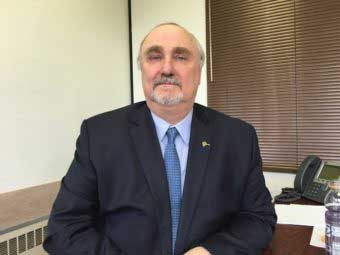
Kara Moriarty, president and CEO of the Alaska Oil and Gas Association, tracks testimony of other oil and gas executives in a House Resources Committee meeting in February. The committee was taking testimony on House Bill 247, which would reduce the tax credits available to oil and gas companies. (Photo by Skip Gray/360 North)
Lawmakers say cutting tax credits to oil and gas companies may be a necessary step to close the state government’s budget deficit.
But Alaska Oil and Gas Association President and CEO Kara Moriarty said the House Rules Committee substitute bill, known as a “C.S.,” would be disastrous.
“We see the C.S. as a money grab that will without question lead to less oil production, less investment, fewer Alaskans working, and ultimately – and somewhat ironically – less revenue for the state,” she said.
Moriarty spoke during a committee hearing Wednesday on the bill.
Sitka Democratic Rep. Jonathan Kreiss-Tomkins challenged Moriarty, saying that reducing subsidies isn’t a money grab.
Rep. Jonathan Kreiss-Tomkins addresses the Alaska House of Representatives in April 2014. (Photo by Skip Gray/360 North)
“It would seem to me that the money is Alaska’s money – and it’s going to you – and not the other way around,” Kreiss-Tomkins said.
Moriarty said the industry is losing money today, and the government is asking it to pay more – whether through cuts to tax credits or through paying more in taxes.
The bill doesn’t raise oil and gas tax rates. But the changes to subsidies would have the effect of requiring companies to pay at least 4 percent in production taxes. This would begin in roughly 2020.
Members of Gov. Bill Walker’s administration have raised concerns about the current version of the bill. They said it will benefit established oil producers, but not companies that are looking to start production.
Bill Armstrong, president and CEO of Armstrong Oil and Gas, also is concerned about House Bill 247. He said ending the ability of companies to receive tax credits based on net operating losses would hurt companies that want to expand into the North Slope.
“The new version of HB 247 – the nickname should be hell-bent 24-7 on kicking all the new players off of the North Slope,” Armstrong said. “Because the new version of HB 247 is heavily stacked to the benefit of the three existing producers up on the North Slope.”
After weeks of delays, a bill to overhaul Alaska’s oil and gas taxes could advance quickly. The House Rules Committee held the first public hearing in more than three weeks on the legislation Tuesday.
Rep. Craig Johnson (R-Anchorage) is the House Rules Committee chairman. (Photo by Andrew Kitchenman/KTOO/APRN)
The committee’s version of the bill, House Bill 247, would phase out refundable tax credits over the next three years.
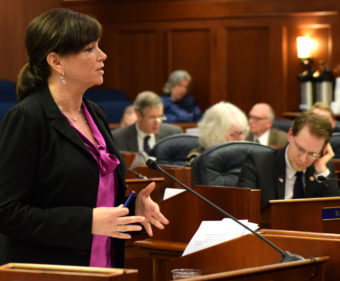
Chairman Craig Johnson, R-Anchorage, said the bill draws on input from industry, as well as lawmakers from both parties.
“We’d like to continue incentivizing companies,” Johnson said. “The question is: ‘What can we afford?’ And I don’t know that we can afford to continue writing checks to oil companies in this environment.”
The bill initially doesn’t go as far as Gov. Bill Walker’s proposal to reduce subsidies. But once the reductions are fully phased in, they would be similar in size to Walker’s.
Rep. Chris Tuck, D-Anchorage, said the new version doesn’t cut subsidies quickly enough.
“It’s just hard to say, ‘OK, Alaskans, it’s time for you to cut your Permanent Fund dividend in half, so the oil industry can benefit from that,’ because basically, that’s what we’re doing. We’re asking Alaskans to pull out of their pocket and subsidize the largest industry in the world,” Tuck said.
Tuck said reducing the tax subsidies more quickly is important to closing the state’s budget deficit.
But Johnson said the new version of the bill is fair to companies that have made their plans around the current tax system.
“We still give everyone an opportunity to succeed,” Johnson said. “We give them time to get partners. We give them time to readjust their business plans. But I think mainly we generate revenue for the state and we basically … stop the hemorrhaging. We quit writing checks to oil companies.”
The Rules Committee will take public testimony on the bill Wednesday. Johnson said he wants to finish work on the bill – including amendments – tomorrow as well.
There’s a debate in Alaska over how to provide health insurance to the family members of law enforcement officers and firefighters who die in the line of duty.
Three families of state troopers who died in the past three years have been covered under orders issued by Governors Sean Parnell and Bill Walker, but a future administration could change this.
The families are looking for a permanent solution that will cover themselves and other survivors in the future.
When Nikki Toll’s husband, Alaska State Trooper Tage Toll, died in a helicopter crash in 2013, she quickly found out that health coverage for her and their three sons was ending.
“His body hadn’t even been positively identified yet and we were without insurance,” Nikki Toll said.
She was able to purchase coverage through the Public Employee Retirement System, but she paid extra for it due to paperwork problems with her husband’s death certificate. She only received relief a year later. That’s when the shooting deaths of Trooper Sergeant Patrick “Scott” Johnson and Trooper Gabe Rich led Parnell to order that the survivors’ families receive health benefits.
Rep. Charisse Millett, R-Anchorage, during a floor debate last year. (Photo by Skip Gray/360 North)
Rep. Charisse Millett, R-Anchorage, introduced House Bill 66 to permanently provide these benefits to survivors.
But the bill stalled after it was referred to the House Labor and Commerce Committee.
Committee Chairman Kurt Olson, R-Soldotna, said the proposal needs to be considered more.
He says it’s not clear whether the federal law that regulates state-provided insurance allows for survivors to be covered. He also questioned whether it’s legally appropriate to cover some survivors of public workers and not others. He noted that workers with duties other than public safety die while performing their duties.
Olson also said it may be more appropriate for troopers’ families to be covered through labor contracts, rather than changes in state law.
“If each of the bargaining units are looking for something like that, it should be something that will be negotiated,” Olson said. “And there are other ways that it could be addressed — for example, life insurance or annuities.”
Majority Leader Millett tried to insert the legislation as an amendment to the wide-ranging criminal justice bill that’s advancing in the Legislature. But House Speaker Mike Chenault of Nikiski ruled the amendment out of order, saying that it violates the rule that state laws must pertain to a single subject.
Chenault also said survivors should be covered, but he’s unsure about the best way to do that. He added that the state shouldn’t require local governments to cover their law enforcement officers and firefighters, like the proposed bill would.
While others legislators expressed support for covering survivors, they said it may take more time. Rep. Mark Neuman, R-Big Lake, said the Legislature should take up the issue next session.
“I know that myself, the majority leader and others have focused to make this a very high priority when we come back next year,” Neuman said during the floor debate on the criminal justice legislation, Senate Bill 91.
For her part, Millett conceded that survivor benefits wouldn’t be included in the criminal justice bill. But she vowed to continue to fight for it, “to assure that those folks that are watching and reaching out to us via email and phone calls and through Facebook messages that it’s not over.”
Nikki Toll says it’s been difficult to see the bill’s progress stop.
“To be told repeatedly over and over again you’re going to be taken care, this is the right thing to do, that why hasn’t this already been done, and then to not even get heard (is) intensely frustrating,” she said.
Toll wants action this year. She said Trooper Sergeant Johnson’s widow faces the end of her coverage in December — which Toll sees as a deadline for the state to act.
“We need to be able to say to future families, ‘You genuinely are taken care of.’ Right now, that’s an offensive, disrespectful lie and it needs to get done,” Toll said.
The House voted 28-11 on Thursday to adopt one of the largest overhauls ever to Alaska’s criminal justice system.
It would allow some low-risk nonviolent offenders to avoid jail time. It also would establish a new pretrial services program with a goal of reducing recidivism. And it would allow those in treatment programs to receive credit for time served instead of imprisonment.
Both sides displayed passion over four days of debate on Senate Bill 91. Anchorage Republican Rep. Gabrielle LeDoux said it’s time for a different approach to criminal justice. She noted that nearly two-thirds of inmates re-offend within three years.
“So it’s not helping them and it’s not helping the public, because they’re returning and they’re committing crimes,” LeDoux said. “We’re not getting a good return on our investment.”
But Rep. Charisse Millett, another Anchorage Republican, said the bill should do more to target drug and alcohol abuse. She cited the cases of four local residents who died as a result of substance abuse.
“People decided that they needed to drink, they needed to take drugs, they needed to do all these things … and killed my constituents,” she said.
The bill draws on recommendations from the Alaska Criminal Justice Commission. They include putting in place a new system to assess the risk posed by offenders and allowing low-risk offenders to avoid jail time.
Juneau Republican Cathy Muñoz recalled the example of her friend Mark Canul, who she said wasn’t dangerous when he was arrested. He was attacked in jail and died. Muñoz said he would have benefited from the risk assessments in the bill.
“If SB 91 were in place, Mark would have had a risk assessment right after being arrested. And I’m 100 percent sure that he would not have been held in prison,” she said. “And he would be alive today.”
The debate reflected the challenge of balancing the goal of lowering the number of repeat offenders with concerns raised by some victims’ rights advocates and law enforcement. It’s this reduction in the number of prisoners that drew the most concern from bill critics.
Big Lake Republican Rep. Mark Neuman said reducing jail time requires more drug treatment – but the bill doesn’t provide money for it.
“I can’t get past the fact that we’re going to be letting more people out on the street and arresting less people, unless there’s money for treatment,” Neuman said.
While bill supporters say their primary goal is to reduce crime, they also point to the potential for savings. Without reducing the number of prisoners, the state will likely have to build another prison.
Anchorage Democratic Rep. Matt Claman said it’s time for the state to try a new approach.
“What we know today is what we’re doing today is not working,” Claman said. “We cannot imprison our way to improve public safety.”
The House and Senate will likely form a conference committee to resolve the differences between the chambers’ different versions of the bill.

The Wells Fargo building in the Spenard neighborhood of Anchorage in July 2006. (Creative Commons photo by Dana)
The Legislative Council approved spending up to $12.5 million to buy the Walls Fargo Bank building in Anchorage’s Spenard neighborhood on Monday. The building would be used for legislative offices and to provide a venue for public testimony.
The council turned to the building after Gov. Bill Walker threatened to veto $32.5 million the council planned to spend to buy the Anchorage Legislative Information Office. A judge found the council violated the competitive bidding law and invalidated the state’s LIO lease.
Council chairman Kodiak Republican Sen. Gary Stevens said the Wells Fargo building could be a better deal than having legislators use space in the state’s Atwood Building. The bank would continue to rent first floor retail space.
“It would cost probably less,” Stevens said. “And in the end, we would own the building. Not that we don’t own the state building – the Atwood — but it is the governor’s to use, primarily.”
The Anchorage Downtown Partnership asked the council to keep the office downtown, saying that moving it would conflict with municipal plans. But Stevens noted that lawmakers have had offices in Midtown in the past.
“Just an enormous problem downtown is the parking,” Stevens said. “In our current building, we have plenty of space for our legislators, but not much space for the public.”
In other action, the Legislative Council voted to release the late Rep. Max Gruenberg’s papers to his widow, Kayla Epstein. The council also set up a process for releasing a legislator’s records after their death to his or her family.
A lawyer with the legislature’s legal services division advised that Gruenberg’s papers shouldn’t be released under legislative immunity after the Anchorage Democrat’s death in February.
The Bill Ray Center, April 29, 2016. It’s the temporary location for legislative offices and the House and Senate Finance Committees for the 2016 extended legislative session. (Photo by Skip Gray/360 North)
Lawmakers found they had less space and not enough desks or phones to go around Monday. That’s because they’re sharing space in Juneau’s Bill Ray Center while the Capitol is being renovated.
They gathered for their floor sessions in a former school gym in another building — the Terry Miller Legislative Office. The House made slow progress on a bill that would overhaul criminal sentencing and prisoner re-entry laws.
The body added four amendments to the bill Monday afternoon before taking a break. It figures to be a long night of debate on the measure, which has raised concern from some victims’ rights advocates. The legislation draws on recommendations by the Alaska Criminal Justice Commission.
House Speaker Nikiski Republican Mike Chenault says legislators are still trying to understand all of the changes that are being proposed to the bill.
“There’s a number of amendments — probably 20-some-odd other amendments — and some folks don’t know what they do, so they want to spend a little bit of time to decide what they do and how to either argue for or against them,” Chenault said.
The only other meeting held Monday was the Legislative Council, which was scheduled to discuss office space in Anchorage. Gov. Bill Walker has said he would veto money to buy the Anchorage Legislative Information Office.
Close
Update notification options
Subscribe to notifications
Subscribe
Get notifications about news related to the topics you care about. You can unsubscribe anytime.