Andrew Kitchenman

State Government Reporter, Alaska Public Media & KTOO

State government plays an outsized role in the life of Alaskans. As the state continues to go through the painful process of deciding what its priorities are, I bring Alaskans to the scene of a government in transition.

Gov. Mike Dunleavy vetoes PFD funding from state budget, says dividends must be funded in special session

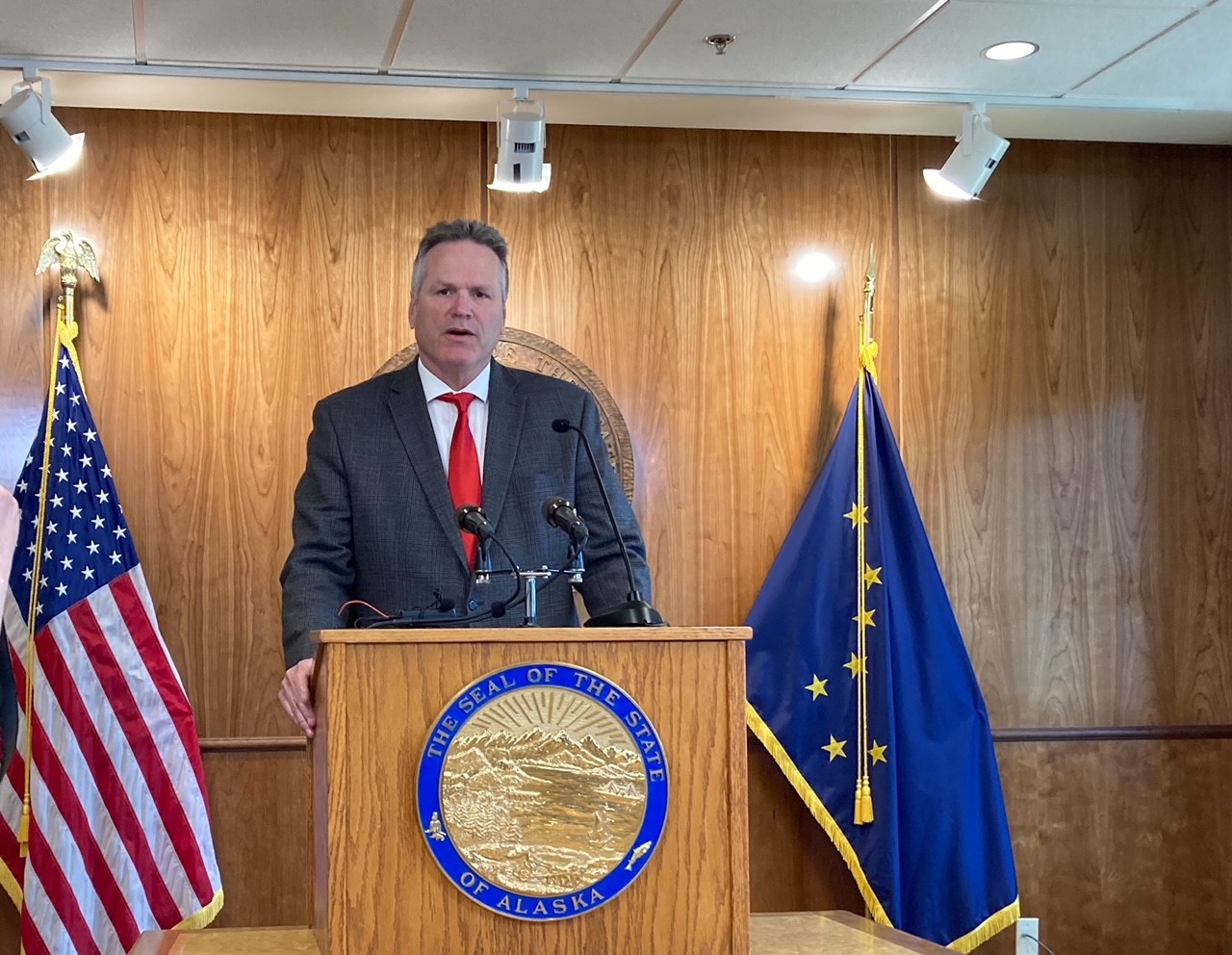
Gov. Mike Dunleavy at a press conference on June 17, 2021. (Photo by Andrew Kitchenman/KTOO)

Gov. Mike Dunleavy announced on Thursday that he vetoed all remaining funding for permanent fund dividends in the state budget. He asked the Legislature to pass PFD funding during a special session scheduled to start on Aug. 2.

There was only enough money for $525 dividends before it reached Dunleavy’s desk. He said the dividend should follow a formula.

“We need to have a PFD that is going to follow a formula,” he said, describing the amount in the budget as “picked out of the air” and that Alaskans viewed it as “a joke.”

Dunleavy, a Republican, announced the veto as part of a larger list of line-item vetoes he announced a day after he signed the budget.

Dunleavy said Alaskans have asked him to fight for the PFD.

The budget bill would have paid for $1,100 PFDs, but there weren’t enough votes to pass a motion that most of the dividend money depended on.

House Speaker Louise Stutes, a Kodiak Republican, noted in a statement that most lawmakers voted for $1,100 dividends. She said that the PFD veto, as well as other vetoes, “creates uncertainty for families and individuals.”

She said the House majority caucus supports “the largest dividend we can afford.”

“We are also steadfast in our belief that we must protect the fund from overspending that mortgages our future by paying large dividends today,” she said.

Dunleavy repeated his call for the Legislature to pass major changes that he has proposed. They include adjusting the dividend formula and putting the dividend and protecting the permanent fund’s earnings reserve in the constitution. He also would reduce the state limit on spending and require a public vote to add a broad-based tax.

Nonpartisan analysts for the Legislature have estimated that without policy changes, the gap between what the state would spend under Dunleavy’s PFD proposal and what it would raise in revenue, would be roughly $1 billion annually over the next nine years. Dunleavy has not proposed changes to state policies to close that gap.

On Thursday, he said that shortly after the July 4th holiday, his administration would be publishing its own estimate of the long-term budget gap, which he said has “closed tremendously.”

He also vetoed a $4 billion transfer from the permanent fund’s earnings reserve to the fund’s constitutionally protected principal. Dunleavy said he wants protecting the money in the earnings reserve to be part of a broader plan for the permanent fund.

Dunleavy vetoed the daily payment to legislators that supplements their salaries and pays for living expenses during legislative sessions.

“We’ve got to get the permanent fund permanent,” he said. “It doesn’t make a lot of sense to be paying ourselves if we’re legislators, if we aren’t completing the task.”

In addition to the PFD veto, Dunleavy vetoed $206 million from the budget, which leaves $4.8 billion in the Legislature’s control.

The line-item vetoes include cutting money for more than $30 million in major maintenance projects at the three major university campuses; $38 million to grow and spend from a fund that pays for community assistance to municipal governments; and $17 million for rural school construction.

The Alaska Municipal League described the vetoes of money for community assistance, school constructions and ferries and harbors as “a step backward.”

Dunleavy said he wants to keep “downward pressure” on state spending. But he also said he didn’t want large cuts to existing programs.

“We’re in a fragile state,” he said. “It’s getting better. But we want to make sure our economy…our educational system, our businesses are growing stronger after the pandemic.”

Legislators who worked on the compromise budget have said there’s enough money for $1,100 PFDs this year without drawing more than planned from permanent fund earnings under a 2018 law.

But Dunleavy criticized a plan to reach the $1,100 PFD amount on Thursday.

“We shouldn’t have half-measures, half-approaches,” he said. “We shouldn’t be throwing crumbs at the people of Alaska.”

Nonpartisan budget analysts have estimated that without policy changes, the state could pay dividends of roughly $500 to $600 per year over the next decade without drawing more than planned from permanent fund earnings.

Dunleavy has proposed dividends of roughly $2,350 as part of his proposal to change the formula for setting PFDs, equal to half of the annual draw from the fund. This would require an additional $1.5 billion in spending this year. The full amount if the state followed the existing formula in state law would be roughly $3,700 — this would be equal to more than 77% of the draw and would require an additional $2.4 billion in annual spending.

This story has been updated with additional information about the vetoes and permanent fund dividends.
Gov. Dunleavy requests new nominees for Alaska Supreme Court seat

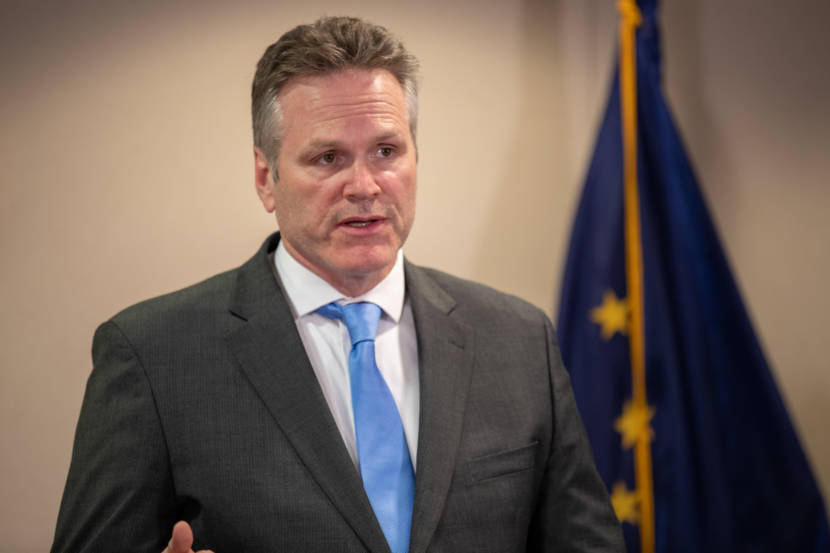
Gov. Mike Dunleavy during a press conference in March 2020. (Office of the Governor)

Gov. Mike Dunleavy on Thursday asked for a new slate of nominees for a vacant seat on the Alaska Supreme Court, to replace Chief Justice Joel Bolger who is retiring. 

A similar rejection of judicial nominees in 2019 became one of the grounds for the recall campaign against Dunleavy. 

The Alaska Judicial Council nominated Anchorage Superior Court Judges Dani Crosby, Jennifer Stuart Henderson and Yvonne Lamoureux on May 25. 

Alaska Supreme Court Chief Justice Joel Bolger waits outside the House Chambers in Juneau before delivering the annual State of the Judiciary Address to the Alaska Legislature on Feb. 20, 2019.
Alaska Supreme Court Chief Justice Joel Bolger at the Alaska Legislature in 2019. Bolger is retiring and the governor has asked for a new slate of nominees to fill Bolger’s spot. (Photo by Skip Gray/KTOO)

The Alaska Constitution requires that Dunleavy appoint someone the Judicial Council has nominated. In addition, under state law, Dunleavy has roughly a week (until July 11) to choose one of the nominees. The law requires he fills the vacancy within 45 days of receiving the nominations. 

Dunleavy described his position in a news conference Thursday.

“We are hoping that we can get sent to our office all of the individuals that are vetted by the Judicial Council, so that we have a larger pool to choose,” he said. “But we will follow the constitution and we’ll follow the law.”

But the Judicial Council is not allowed to reconsider the nominations unless there are not enough nominees available due to disability, death, withdrawal or a nominee being appointed to another position. 

That list doesn’t include the governor requesting more nominees.

“Other situations in which more names are requested are not included in the reasons why the council would reconsider under the bylaw,” explains Council Executive Director Susanne DiPietro.

In a letter to the council, Dunleavy wrote “the slate of candidates put forward could be expanded to reflect the balance and diversity in philosophy and Alaskan experience requisite to adequately make a fair choice for the people of Alaska.”

Dunleavy singled Kotzebue Superior Court Judge Paul Roetman as an applicant who the council didn’t nominate. He noted in the letter that Roetman had the most time as a judge and Alaska resident, and was the only applicant from rural Alaska. 

“The people of Alaska, including myself, wonder how someone like Judge Roetman is qualified to sit where he currently is but not have his name put forward for consideration to the Alaska Supreme Court?” the governor wrote.

Roetman is Mexican American and the only nonwhite applicant. In an Alaska Bar Association survey, he was sixth out of seven applicants. 

DiPietro said the Judicial Council has been following similar procedures to nominate the most qualified applicants since Alaska became a state. 

“The process is so thorough, and there is so much information, and the council members are using the same — each one of them is using the same standards,” DiPietro said. 

The bylaws also require the council to make “every effort to promote diversity, including gender and ethnic diversity.”

Currently, Justice Susan Carney is the only woman on the supreme court. The three nominations from the council are all women.

This is the second time in two years that Dunleavy has asked for different nominees for a vacant judgeship. In 2019, he failed to nominate a nominee for a Palmer Superior Court Vacancy within 45 days, and asked for different nominees. 

Then-Chief Justice Bolger issued a statement saying the governor’s office didn’t seem to understand that the Alaska Constitution requires that the governor appoint one of the council’s nominees. 

After meeting with Bolger, Dunleavy later appointed one of the original nominees — Kristen Stohler — to the Palmer seat. 

Dunleavy’s failure to fill the Palmer vacancy within the legal timeframe became one of the grounds of the ongoing recall campaign against him. 

DiPietro said early Thursday afternoon that the council will be responding to the governor’s letter, but it was too soon to say how it would respond.

Correction: The original headline of this story stated the governor asked for new nominees for chief justice. Chief Justice Daniel Winfree was selected in May to succeed Joel Bolger. A misspelling in Bolger’s first name has been corrected. An earlier version of this story stated Judge Paul Roetman was sixth out of seven nominations, Roetman was sixth out of seven applicants. 

Alaska’s state budget is signed, but programs to lower electricity costs and provide scholarships remain unfunded

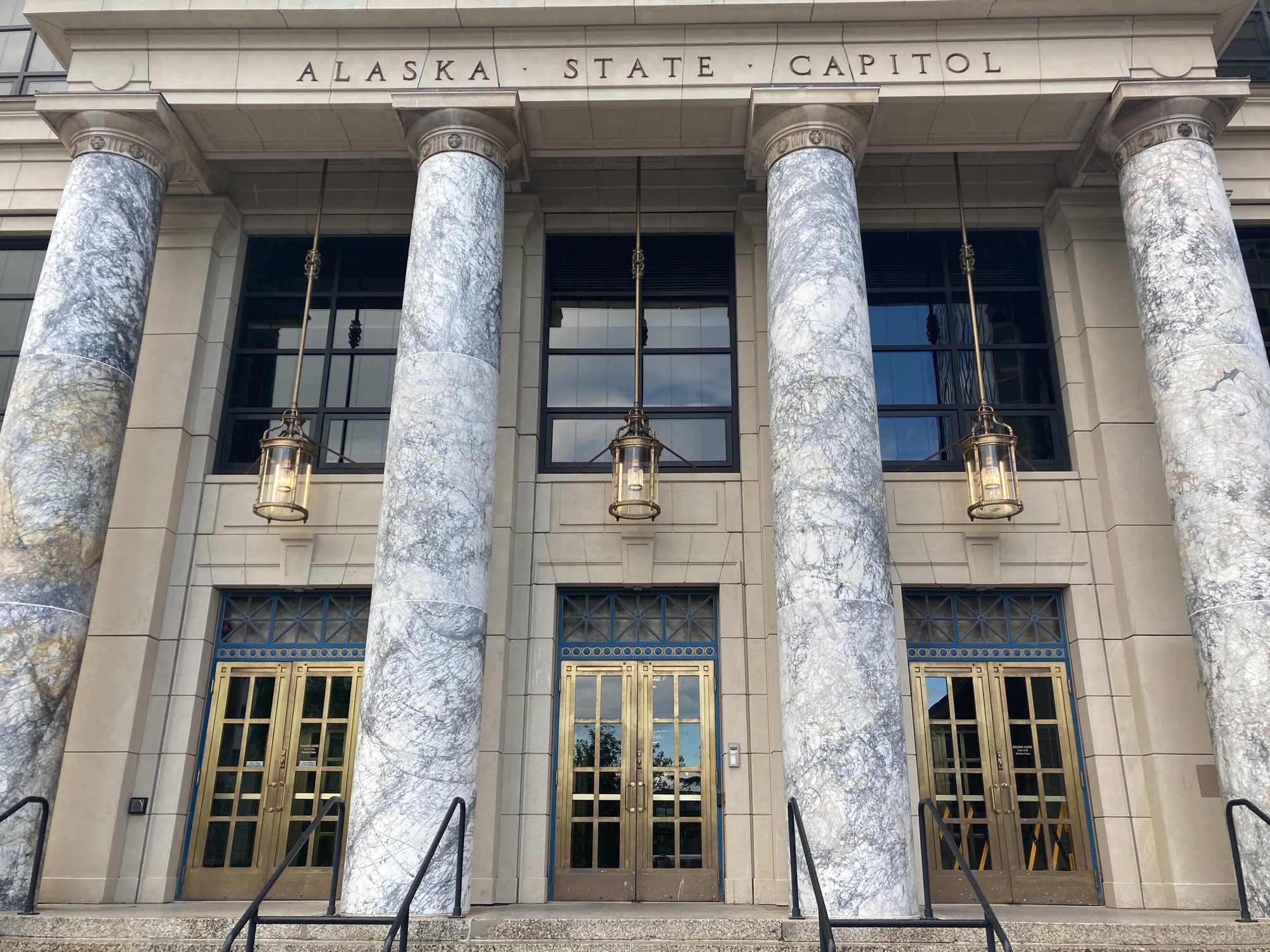
The Alaska State Capitol doors have required key cards to unlock throughout the 2021 legislative session, June 16, 2021. (Photo by Andrew Kitchenman/KTOO and Alaska Public Media)
The Alaska State Capitol hosted special sessions in the past six weeks. But legislators have not reached a consensus on how to fund the Power Cost Equalization and university scholarship programs, as well as other programs that have been funded from separate accounts. (Photo by Andrew Kitchenman/KTOO and Alaska Public Media)

Gov. Mike Dunleavy signed the state budget late Wednesday afternoon. But programs to lower the cost of electricity in high-cost areas and to pay for university scholarships won’t be funded starting on Thursday. And permanent fund dividends are set at $525. That’s the lowest level in PFD history when adjusted for inflation.

Both the governor and legislators from every caucus have said they want to fund these programs, but legislators haven’t agreed on how to fund them.

In previous years, the programs were funded through separate accounts the state has maintained, like the $1 billion Power Cost Equalization Endowment Fund and the $340 million Higher Education Investment Fund. 

But this year, both the House of Representatives and the Senate fell short of the support of three-quarters of their members needed to maintain the programs, by drawing from the Constitutional Budget Reserve to refill these accounts. The Constitutional Budget Reserve vote passed in previous years. But it was delayed in 2019, which led to the programs briefly being suspended. 

Wasilla Rep. Cathy Tilton leads the all-Republican House minority caucus. She said the members of the caucus will withhold the votes needed to fund these programs for now. They are first asking that the Legislature discuss and vote on a plan for the future of the budget. 

“We still have the three-quarter vote ahead of us,” she said on Monday. “And we’re going to hold onto that.” 

Along with Power Cost Equalization and university scholarships and grants, several other programs will have to stop until they receive funding. The soonest that can happen is during the next legislative special session, currently scheduled to begin on Aug. 2. 

Some members of the House minority have said they want the programs to be funded in the regular state budget, rather than from separate accounts. But majorities in both chambers oppose that approach because it would eliminate the Power Cost Equalization Endowment Fund and other accounts. They have said that eliminating the funds will undermine the programs. 

Dunleavy has proposed combining the PCE Endowment Fund with the Alaska Permanent Fund, which he said would protect it. But some lawmakers have expressed skepticism about his overall plan, which includes setting permanent fund dividends at roughly $2,350. After a backlash to his budget proposal two years ago, Dunleavy hasn’t proposed policy changes that would both pay for larger dividends and balance the state budget. 

Anchorage Democratic Rep. Chris Tuck is the House majority leader, after having served as the minority leader several years ago. He pointed out during the debate on Monday that the vote used to fund these programs gives the minority caucus influence. 

“Negotiations aren’t done yet,” Tuck said. “There is tremendous power in the three-quarter vote. As the minority leader in the past, I knew the importance of that three-quarter vote.”  

Along with the Power Cost Equalization program and university scholarships and grants, the unfunded programs also include the program to fund medical education

A working group with members from each legislative caucus is expected to make recommendations ahead of the August special session for a fiscal plan that would include funding these programs.

Editor’s note: This article has been updated to reflect the governor signed the state budget late Wednesday afternoon.

Aiming to communicate, Alaska legislators ran into problems before vote averting shutdown

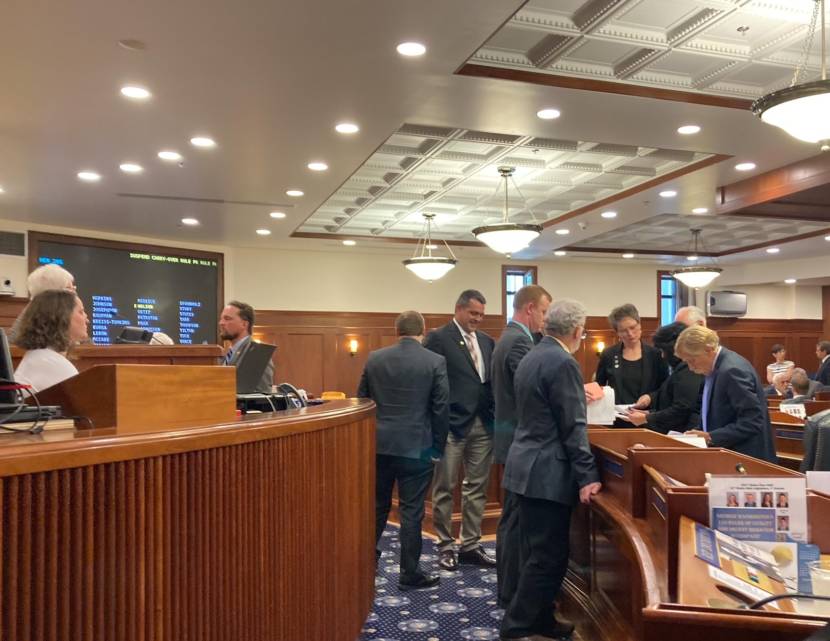
Members of the Republican House minority caucus confer during a break in the floor session on June 29, 2021, in the Alaska State Capitol in Juneau. The House voted to avert a state government shutown, but communication broke down during part of the day, delaying the vote. (Photo by Andrew Kitchenman/KTOO and Alaska Public Media)
Members of the Republican House minority caucus confer during a break in the floor session on Monday in the Capitol. The House voted to avert a state government shutown, but communication broke down during part of the day, delaying the vote. (Photo by Andrew Kitchenman/KTOO and Alaska Public Media)

Communication between the two caucuses of the Alaska House of Representatives broke down briefly on Monday before the House voted to avert a state government shutdown.

And legislators have said successful communication will be important this summer. Gov. Mike Dunleavy has charged the Legislature with coming up with a long-term solution for the state budget. But the vote on the shutdown didn’t go smoothly. It almost didn’t happen. 

Monday’s floor session began as many others have — there was a prayer, the Pledge of Allegiance, and the recognition of guests visiting the Capitol. 

Then the House began to consider steps to make the budget effective on July 1, preventing much of the state government from shutting down. 

But members of the Republican House minority caucus expressed concern about how things were unfolding and asked to briefly stand at ease. 

House Speaker Louise Stutes acknowledged from her chair that things weren’t going according to plan. 

“There was clearly a lack of communication between the … minority leader and myself,” she said. “We will finish this series of votes. We will then take a brief at-ease and see if the minority leader and I can bring to a head the potential sense of the House that we had … been working on.”

The sense of the House was a nonbinding agreement worked out between the two caucuses. And minority caucus members thought they already had a deal that meant they would consider the sense of the House first. Things started to go downhill for a while. 

Four minority caucus Republicans would have to change their position to prevent a shutdown. And Anchorage Republican Rep. Tom McKay was one of the key members who were on the fence. 

He described himself as “fully prepared to vote yes for the good of the state of Alaska to avoid a government shutdown, but if the other side is not negotiating in good faith, and going to play tricks, I’m voting no on the budget.”

Palmer Republican Rep. DeLena Johnson, also a minority caucus member, addressed Stutes: “Be honest, take the high road and keep your word. That’s the right thing to do. Operate in good faith. Negotiate in good faith. I’m not seeing that here, Madam Speaker.”

Members of the majority saw the votes were slipping away. 

One of the majority members — Ketchikan independent Rep. Dan Ortiz — asked for everyone to pause before the vote “to make sure that the vote that they cast … is truly one in the best interest of the state overall and, and one that … will promote pathways for communication to continue and cooperation to continue.”

Stutes then banged the gavel, which started what wound up being a 40-minute recess.

Stutes later reflected that the communication issues started that morning when she met with Minority Leader Cathy Tilton, a Republican from Wasilla.

“When I left her office … I thought she was going to call me after she had her caucus meeting,” Stutes said. “And she thought I was going to call her.”

Stutes is a Republican from Kodiak who is part of a mostly Democratic majority caucus.

Stutes credited Tilton in working to find common ground. They continued to meet during recess.

“Cathy didn’t feel that the negotiations were over,” she said. “And I’m grateful for that because we were able to iron out the stumbling blocks. And now we’re moving onward.”

For her part, Tilton said it took time for her and Stutes to get on the same page. 

“There was a — I guess — what the speaker would like to call a misunderstanding,” she said. “Although I don’t want to counteract what her misunderstanding was, I didn’t feel like there was a misunderstanding.”

Some members had expected things to go smoothly and had already booked their flights home from Juneau. But the floor session was still going.  

“I think that this is an important vote and that [flights] may be something you might want to delay if need be,” Tilton said. 

The House took the time it needed and when they were back, they shifted attention from the budget bill to the sense of the House. In the end, they agreed to form a working group that would make recommendations on a long-term budget plan. 

And that set the stage for the vote to avert the shutdown, which passed 28-10. 

House members have said that a long-term plan for the budget and permanent fund dividends will require passing a major set of state policy changes. It’s not clear whether those votes will go smoother than Monday’s. 

Alaska House of Representatives votes to avert government shutdown

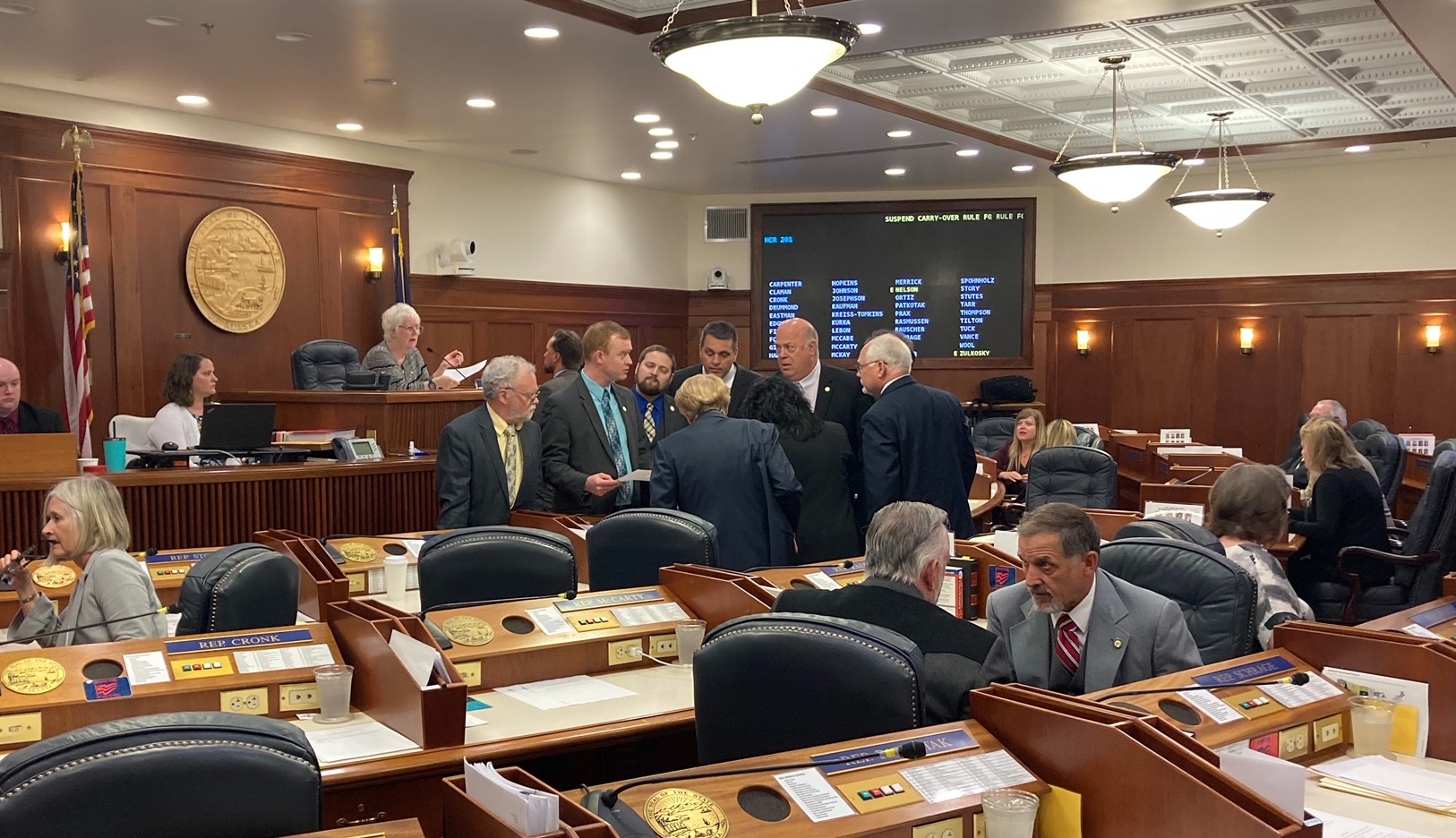
Members of the Republican House minority caucus meet during a break in the floor session on Monday, June 28, 2021, in the Capitol. The House voted to avert shutting down much of state government. (Photo by Andrew Kitchenman/KTOO and Alaska Public Media)

The Alaska House of Representatives voted 28 to 10 on Monday to allow the budget bill to go into effect on July 1, averting a state government shutdown.

Gov. Mike Dunleavy said he is reviewing the budget for individual line items that he could veto, but that the vote means he can now prepare the budget to be implemented.

House Speaker Louise Stutes, R-Kodiak, said the vote will be a relief to many.

“We’ve got a lot of Alaskans that are probably jumping for joy about now, thinking that their paychecks are going to continue on coming,” she said.

Rep. Cathy Tilton, R-Wasilla, changed her vote on Monday for the budget to take effect at the start of the budget year, after voting against it earlier this month.

Tilton is the leader of the Republican House minority caucus. She said there’s much work left to do to fix the state’s structural budget problem.

“I would not say that it is a win or a victory,” she said. “I believe that it is a beginning and a start.”

The House had voted on June 15 against the budget bill starting on July 1, the first day of the budget year. The state constitution requires that two-thirds of both chambers agree to make bills effective on a date other than 90 days after bills become laws. While the Senate cleared that two-thirds bar, the House didn’t.

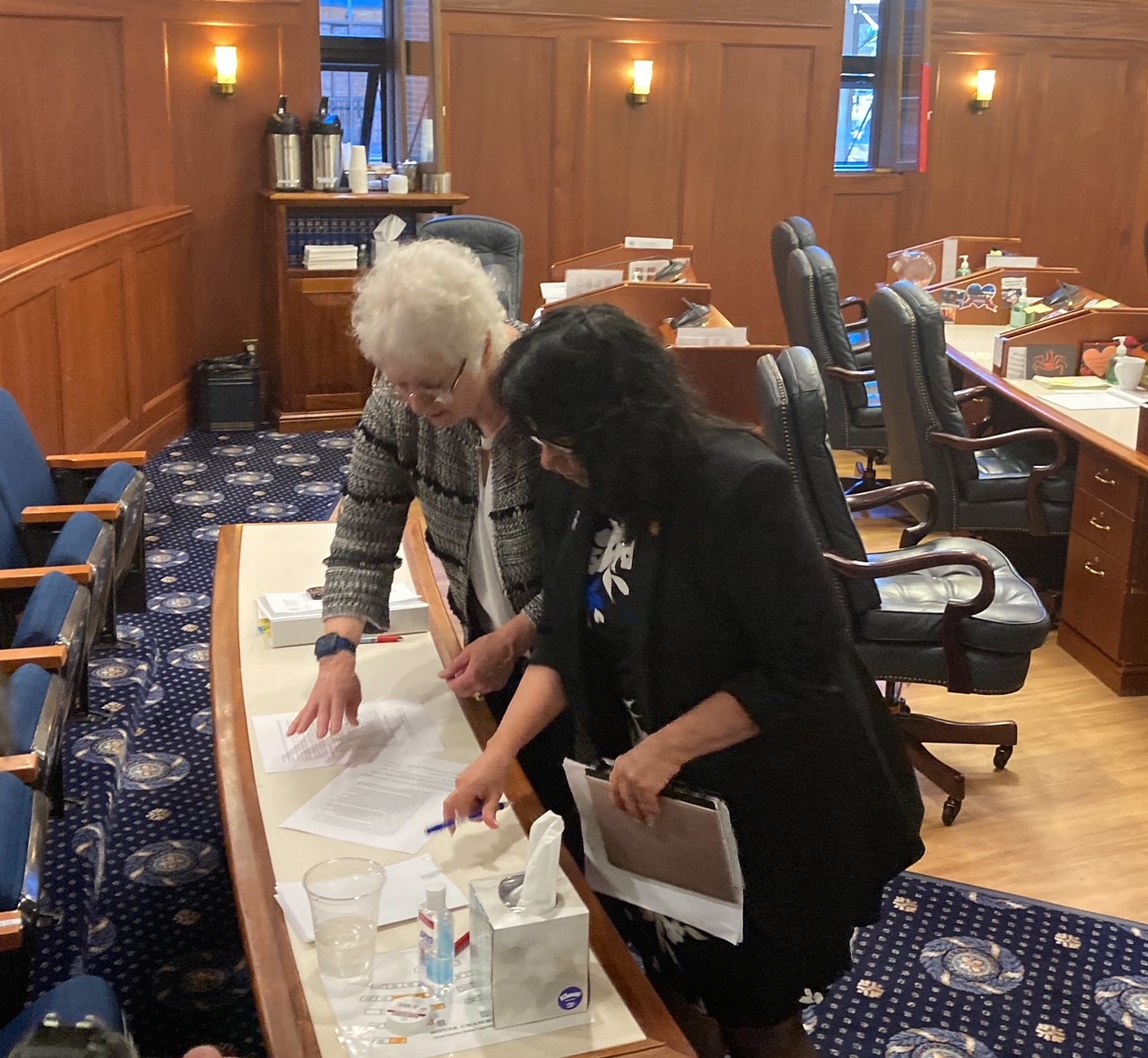
House Speaker Louise Stutes, R-Kodiak, and Rep. Cathy Tilton, R-Wasilla, talk about an agreement they reached to have a working group recommend long-term budget changes, on Monday in the Capitol. (Photo by Andrew Kitchenman/KTOO and Alaska Public Media)

The vote to avoid a shutdown came after some minority-caucus Republican members expressed concern that the majority wasn’t upholding an agreement between Stutes and Tilton

Stutes said there was a lack of communication over whether she and Tilton had reached an agreement on the votes. She credited Tilton with working to resolve their differences.

This new budget vote will allow the vast majority of state services to continue. But some programs will stop at least temporarily. They include the programs to reduce the cost of energy in high-cost regions and to provide academic scholarships and need-based grants for college students. It also leaves the current level of this year’s permanent fund dividend at $525.

Legislators from all four caucuses have said they want to reach an agreement that would allow these programs to resume and for the PFD to be higher. But there are differences over what it will take to reach an agreement. Three-quarters of both chambers must vote to fund these programs from a separate savings account called the Constitutional Budget Reserve.

Tilton said her caucus wants to resolve the future of the PFD this year. And she said withholding the votes to draw from the CBR is part of an effort to make that happen.

“We still have the three-quarter vote ahead of us. And we’re going to hold on to that,” she said.

The House also passed a motion supporting the launch of a working group to recommend changes that would lead to a long-term balanced budget. It would include members of both the House and Senate. The motion said the group will hold at least two public meetings and make recommendations before the next special session. Dunleavy has called for another special session to begin on August 2.

Both chambers voted to adjourn the current special session, which lasted six days.

Dunleavy, a Republican, said earlier this month that without a different outcome, much of state government would shut down on July 1. Members of the mostly Democratic House majority disagreed with his interpretation of the constitution, and said he was choosing to have a shutdown. The Dunleavy administration then sued over the disagreement. Oral arguments on that lawsuit are scheduled for Tuesday.

This story has been updated with more information and comments from lawmakers.

Alaska House speaker expresses confidence in effort to avert shutdown

Alaska House Speaker Luise Stutes, R-Kodiak, center, prepares for the start of the floor session on June 25, 2021, in the Alaska State Capitol in Juneau, Alaska. Stutes expressed confidence that the state would vote to resolve an impending shutdown of much of the state government. (Photo by Andrew Kitchenman/KTOO and Alaska Public Media)

Alaska House Speaker Louise Stutes expressed confidence on Friday that the House will vote on Monday to avert much of state government shutting down

Stutes, a Kodiak Republican, has been negotiating with House Minority Leader Cathy Tilton, a Palmer Republican, over what it would take to avoid a shutdown. Stutes said she and Tilton have worked well together, but they are still “fine-tuning” the details ahead of a vote. 

“I feel positive and it’s nice to know that we’ve been able to work together,” Stutes said. “And it appears that the resolution is just right there on the horizon.” 

The House failed to pass a clause in the budget bill that would make the bill effective on July 1, the start of the budget year. 

House members said the minority is working on a document aimed at preparing a long-term plan for the state budget. If both caucuses agree on the document, House members anticipate that a vote to make the budget effective on July 1 would pass. 

Dillingham independent Rep. Bryce Edgmon said he hopes the House acts quickly. He’s a member of the House majority and voted for the clause that would make the budget effective on July 1.

“We don’t have much time to waste. The clock is ticking and we need to take action,”  Edgmon said. “We need to get the existing budget to the governor so he can begin his work — his constitutional duty to review it to make any decisions, make any vetoes he sees fit. But every day, going forward is precious, every single day.”

Nikiski Republican Rep. Ben Carpenter voted against the July 1 effective date. He said many state services would continue without that start date. He said an incorrect picture has been drawn that the state is going to go off a cliff. 

“It would be more appropriate to say we are taking a path downwards to the bottom of the cliff. And that path downwards starts on July 1,” he said. “There will be impacts on July 1 and the impact will continue to grow on July 2, on July 3, all the way out until the day in which the effective date of the budget is effective.”

Stutes hasn’t sent the bill to Gov. Mike Dunleavy’s desk yet. Once he has the budget, he could sign the bill, veto it or veto individual line items. If the governor takes no action on the bill, it would automatically become law 15 days after he receives it, excluding Sundays, if the Legislature is in session. If the Legislature is in session, it’s 20 days, excluding Sundays. His administration said its provisions would go into effect 90 days after it becomes law. 

At least three of the 16 House minority caucus Republicans who voted against the July 1 effective date would have to change their votes to potentially avoid a shutdown. 

Members of the House minority have said they want the majority to agree to a framework for a long-term plan for the state budget. 

Dunleavy’s administration has said that many state  services required by the constitution would continue, while other services would be shut down fully or partially, without a budget bill in effect. 

The mostly Democratic House majority has differed from the Republican governor over whether a shutdown must occur. Each point to different legal interpretations of provisions of state law and the Alaska Constitution. 

Dunleavy’s administration has sued over the dispute. The Legislative Council — which handles the Legislature’s business — approved hiring the law firm Stoel Rives to represent the Legislative Affairs Agency in the lawsuit.

This story has been corrected to reflect the correct number of days that must pass for bills to be enacted if the governor doesn’t take action.

Site notifications
Update notification options
Subscribe to notifications