Associated Press

Petersburg teen fined $3,000 for intentionally running down deer

PETERSBURG, Alaska (AP) — A Petersburg teenager who intentionally ran down two deer with a pickup has pleaded guilty to two misdemeanor counts.

Alaska State Troopers say the 17-year-old boy on Tuesday pleaded guilty to harassing game and taking game with a motorized vehicle.

He was sentenced to 160 hours of community work service, 30 days of suspended jail time, and fined $3,000.

He will lose hunting privileges for a year and spend a year on probation.

Wildlife troopers investigated after people reported seeing video on a social media site of the pickup being intentionally driven toward three deer on a road and striking two.

A 17-year-old passenger in the truck shot the video. She also was charged.

No ID made of human leg found last year in Gastineau Channel

Gastineau Channel, as seen on May 7, 2018 looking south from over Sandy Beach. (Photo by David Purdy/KTOO)

Authorities have not been able to identify the origins of a human leg that was found last year in the Gastineau Channel.

But investigators determined it had been in the channel for more than 10 years, the Juneau Empire reported Wednesday.

Douglas Indian Association and Natural Resources Consultants Inc. had been collecting old fishing gear from the bottom of the channel May 22, 2017, when workers pulled a human leg with a boot still attached from the water.

Kamal Lindoff, the project manager who pulled the leg up, said it was found in front of Lucky Me, a small community on south Douglas Island.

Police released very few details about the leg, not specifying the race or gender.

A year later, Chief Medical Examiner Dr. Gary Zientek said his office wasn’t able to get any useful DNA from the leg because it had deteriorated in the water.

“So it’s almost impossible to match it up to a missing person,” Zientek said.

He said a forensic pathologist examined the bone and estimated it was more than 10 years old based on how worn down it was.

The bone remains stored at the examiner’s office in case they can figure out a way down the line to do effective testing.

A dive team searched the area where the leg was found, JPD Lt. Krag Campbell said, and found nothing else.

Alaska lawmakers approve funding to test rape kits

JUNEAU — Alaska lawmakers have inserted $2.75 million into the state’s capital budget to fund the testing of the backlog of rape kits.

Juneau Empire reports the funding boost this week will help pay to send the kits to outside labs to examine the untested DNA evidence from sexual assault cases over the past several years.
According to the state Department of Public Safety, there are more than 3,400 untested rape kits from police departments across the state.

Legislators have also approved a bill that requires the state to report the number of untested kits.

Randi Breager, a criminal justice planner at the state crime lab, says the new money will help testing, but getting through the backlog will take time.

Alaska dive fishermen plead for relief from sea otters

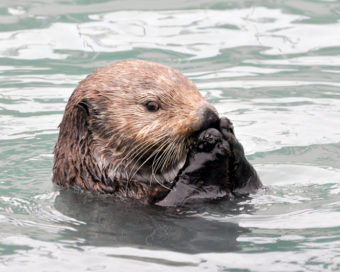
ANCHORAGE — Sea otters have come back from the brink of extinction along Alaska’s Panhandle, but fishermen who dive for crab and other shellfish are seeking relief from their voracious appetites.

Phil Doherty of the Southeast Alaska Regional Dive Fisheries Association said sea otters threaten the livelihood of his 200 members.

Sea otters grow as large as 100 pounds and eat the equivalent of a quarter of their weight each day.

They can decimate beds of red sea urchins and other species harvested for sale in Asia.

Patrick Lemons of the U.S. Fish and Wildlife Service says the agency can’t intervene to protect commercial fisheries until a species is at its “optimum sustainable population.”

Lemons says sea otters are still colonizing southeast Alaska. He says the population remains significantly below the number of animals the region can support without harming the environment.

Alaska marijuana business license applications piling up

FAIRBANKS, Alaska — The number of applications for marijuana business licenses is outgrowing the Alcohol and Marijuana Control Office’s approval system.

The Fairbanks Daily News-Miner reports a May 8 Marijuana Control Office spreadsheet says there are 467 applications being processed with another 46 businesses set for inspection.

Brandon Emmett of the Alaska Marijuana Control Board, which oversees the office, says there is discussion of making Marijuana Control Board meetings longer to deal with the backlog of applications and also to manage the need to revise state regulations.

Emmett also says raising application fees could help cover the cost of hiring more staff.

Emmett says the Alaska Marijuana Industry Association and the Marijuana Control Board requested more state funding from the Legislature for the Alcohol and Marijuana Control Office, but the request was denied.

German museum returning looted items to indigenous Alaskans

BERLIN — A Berlin museum is returning wooden masks, a child’s cradle and other items plundered from the graves of indigenous Alaskans by an explorer sent by its predecessor in the 19th century.

The Ethnological Museum on Wednesday will hand over the items to an official of the Chugach Alaska Corporation, which represents indigenous people in the Chugach region.

The items were collected for Germany’s Royal Museum of Ethnology by Norwegian adventurer Johan Adrian Jacobsen between 1882 and 1884.

They were taken from graves on Chenega Island, though the specific location is no longer known.

Berlin museum authorities have been working with the Chugach since 2015 on the repatriation.

The Chugach requested the nine items from some 200 in the museum’s possession. They plan to put the objects on display in their own museum.

Site notifications
Update notification options
Subscribe to notifications