Claire Stremple

"I support KTOO reporters and guide coverage that informs our community and reflects its diverse perspectives."

When she's not editing stories or coaching reporters, you can find Claire outside with her dog Maya.

COVID hospitalizations in Alaska are at an all-time high

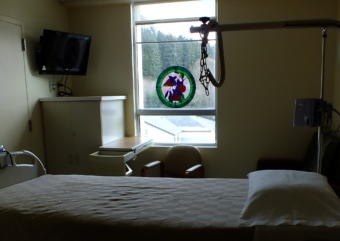
A room at Bartlett Regional Hospital, photographed in April 2020, used to isolate contagious patients who may not need the same level of care as provided in the isolation room used in the hospital’s critical care unit. (Photo by Matt Miller/KTOO)

Hospitalizations for COVID-19 are at an all-time high in Alaska. Nearly a dozen more people were admitted to the state’s overwhelmed hospitals Tuesday, where 1 in 5 patients are sick with the virus. As of Wednesday, there are nearly 200 people in the hospital with COVID-19. 

“Our hospitals are stressed,” said Gene Wiseman with the state’s COVID-19 response team. “There’s no argument about that, right? But we’re trying to level the playing field as best we can.”

To do that, the state’s health department began daily capacity check-ins with all of the state’s hospitals this Tuesday. Hospitals report on their capacity and can send patients to the places in the state with open beds. The health department also requested nearly 500 healthcare workers from the federal government.

According to the state’s data, almost all of Southcentral and Interior intensive care units are full or near capacity. Doctors in the state have repeatedly warned that the system is at its limit. Hospitalizations have roughly doubled since state hospital officials sounded the alarm about a month ago.

The state reported more than 840 new cases of COVID-19 for Tuesday — among the highest single-day counts since the pandemic began. The state reported that another five Alaskans with the virus have died, and also a nonresident died from the virus in the state.

Just over 60% of Alaskans 12 and older have had their first dose of the vaccine, which is below the national average.

This story has been updated with additional information from the Alaska Department of Health and Social Services.

Newscast – Friday, Sept. 3, 2021

  • Some Alaska Native Corporations got large CARES Act payouts while Juneau-based Sealaska, the regional corporation with the most shareholders, got relatively little,
  • Alaska Department of Fish and Game released hundreds of fish into a Nikiski lake for the first time,
  • and the state’s health department urges seniors to beware of scam calls posing as Medicaid or Social Security.

Alaskans wait for vital records as state health department gets back online after cyberattack

It’s been three months since a cyberattack crippled the Alaska Department of Health and Social Services’ online systems. And for Alaskans who need vital records — things like birth, death and marriage certificates — that has put things on hold.
Stephanie Bucheli and her newborn son. (Photo courtesy of the family)

Stephanie Bucheli’s second son was born at home in July. When her husband went to get the birth certificate, he was told it might take up to two months.

Bucheli and her family needed the birth certificate to get her son a passport. Her whole family is in Peru, and she says her mother is anxious to meet her second grandson while he’s still a baby. She didn’t get to meet Bucheli’s firstborn until he was nearly four.

“But you know, it was a month, and I didn’t get anything. And I was getting a little bit anxious,” Bucheli said.

Paperwork is taking so long because the state has to fill orders for things like birth certificates and marriage licenses by hand. The cyberattack in May took out the electronic vital records system that made the process as simple as the few clicks it takes to search and print. 

Luckily, Bucheli lives in Juneau, where there is a state records office. She was able to go in and get someone to process the paperwork on the spot. She said it took about 40 minutes. But that’s not an option for everyone in the state.

The vault at Juneau’s Vital Statistics office. (Photo courtesy of Rebecca Topol)

“I’ve been saying welcome to vital records 1975,” said Rebecca Topol, who heads the Health Analytics and Vital Records section. 

Topol says that instead of searching that electronic database, her staff has to search a literal vault of all the state’s paperwork.

“You know, like the library archives have a big vault, we also have one here for the original records going back to the 1800s,” she said.

The vault is in Juneau. So if someone was looking for a record anywhere else, the staff in Juneau probably had to search for it. 

The electronic system was back up and running a few weeks ago, but Topol says her team is still mired in a backlog.

“So, we literally do have piles of mail that haven’t been all gone through yet. They are processing them in the order that they’re received. So the newest ones would go to the bottom, basically,” Topol said.

There’s still too much of a backup to turn the online order system back on. 

The state has authorized overtime hours and increased staffing to get the work done, but Topol estimates it could take months before services are back to normal.

People like Bucheli, who can walk into the office, have a chance to get records more quickly. But, even so, when she went to get her son’s passport she was told that there’s a slowdown there, too — federal employees said COVID-19 is to blame for that delay. So she’s still waiting. And she said she can’t help but wonder.

“Maybe if I had gotten the verification in, in a day or so — not in a month, then I wouldn’t have this problem,” Bucheli said.

There’s still about two months until her trip. Anything could happen.

Alaska blood bank says nationwide shortage highlights local need: ‘We’re pretty much on our own’

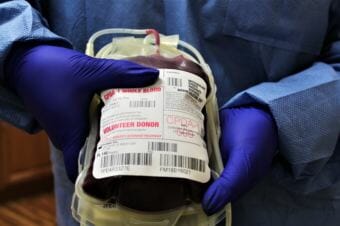
Blood Bank of Alaska said the blood shortage in the state was “critical” this month. Since then, donations have been coming in, but the group says it’s still low on the life-saving fluid.

The state’s only blood distributor sent out an urgent plea for blood donations in August. Blood Bank of Alaska told potential donors that there was a looming shortfall in the state’s inventory of blood products.

“We’ve actually still been able to supply Alaska hospitals with blood. Obviously, that’s the number one concern and priority, said Wes Dahlgren, who is in charge of collections for the non-profit.

He said donor response to the pre-emptive alert has been outstanding over the last two weeks. But, he said the need was critical. Usually, the organization has a 3-5 day supply on hand; it was down to less than a day’s supply of certain blood types.

Dahlgren said there’s still a significant need for increased donations. Usually, he said Alaska can reach out to blood banks in the Lower 48 if inventory falls short — but not lately. “Given the shortage around the country, that’s not possible. Right now, we’re pretty much on our own,” he said.

Curt Bailey runs Bloodworks Northwest, a regional blood distribution center in Washington state that has distributed blood products to Alaska in the past.

“In our main storage facility, there are banks of refrigerators. Normally, one could walk into that refrigeration bank and be surrounded by shelves of, of blood. And now when one walks in, they’re mostly empty,” Bailey said.

Bare shelves at a blood distribution center in Washington. (Image courtesy of Bloodworks Northwest.)

He said demand has increased nationwide for blood products. He attributes that in part to people seeking care now who deferred surgery and other treatments during the first year of the pandemic.

That’s paired with a drop in blood donations. Mobile collections units are usually cramped quarters, so his group shut them down for the pandemic.

“The stocks of blood that all blood collectors, like Bloodworks, keeps for emergencies started to dwindle because we had to use that blood for patients who really needed it. And it’s been very, very difficult to keep up,” Bailey said.

In his region, he said providers are limiting transfusions. Dahlgren at Blood Bank of Alaska said that’s not happening in this state.

You can give blood regardless of COVID-19 vaccination status. BBA is collecting blood donations at the state fair in Palmer through next month. It will resume collections in Juneau on Sept. 7.

Off-label vaccines for kids under 12? Not with us, say Juneau pediatricians

12-year-old Juliet O’Connor shows off her vaccinated arm on May 13, 2021. Dr. Kim Kilgore of Juneau says no parents of kids under 12 have tried to get a vaccine early from her, but she’d like to see more vaccination in those who are eligible. (Matt Faubion/Alaska Public Media)

With full Food and Drug Administration approval of the Pfizer COVID-19 vaccine, some parents are asking if pediatricians can vaccinate kids under 12 as an “off-label” use of the drug.

“Off-label” prescribing is when a doctor says you can take a drug for some reason other than its intended use. It’s fairly common.

But the FDA says that while it often happens, it shouldn’t when it comes to kids and the COVID-19 vaccine. Adults take a vaccine dosage that’s much higher than what’s being tested on children. Clinicians who try it risk liability if anything goes wrong.

The American Academy of Pediatrics has warned against it. And Juneau pediatricians say they won’t do it.

Dr. Amy Dressel says she’s told a few concerned parents that their kids who aren’t quite 12 will just have to wait. But she says most people are pretty diligent about waiting until their children are eligible.

Down the street, Dr. Kim Kilgore says no parents of kids under 12 have tried to get a vaccine early from her. But she’d like to see more vaccination in those who are eligible.

“This new variant is hitting children so much harder,” Dr. Kilgore said. “That it’s, to me, even more important that the 12 and up children do get their vaccines.”

She says as soon as Juneau masked up again, she saw a drop in all the other viruses. Until younger children are eligible, both pediatricians encourage continued distancing, masking, hand-washing — and patience.

Site notifications
Update notification options
Subscribe to notifications