Claire Stremple

"I support KTOO reporters and guide coverage that informs our community and reflects its diverse perspectives."

When she's not editing stories or coaching reporters, you can find Claire outside with her dog Maya.
Juneau’s high youth vaccine rates stand out during delta variant surge

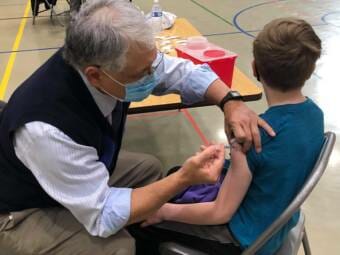
12-year-old Garrett McGuan gets his first dose of the COVID1-9 vaccine at Dzantik'i Heeni Middle School on Monday, May 17.
12-year-old Garrett McGuan gets his first dose of the COVID1-9 vaccine at Dzantik’i Heeni Middle School on Monday, May 17. (Photo by Paige McGuan)

Even though Juneau is experiencing its biggest COVID surge of the pandemic, schools are open, and sports and other after-school activities are happening in person. But statewide, officials say the delta variant is hitting kids hard.

Juneau has not been spared from the delta variant. COVID-19 case counts are much higher than last year when schools were closed. But youth cases here have stayed low, even though students are spending a lot of time together.

This week, the Juneau Douglas High School: Yadaa.at Kalé cross country team is in the gym rearing up for a big meet on Saturday. Matthias or “Tias” Carney says that’s a big change from last year.

“We ran by ourselves,” he said.

All of school last year was a solo sport.

“Kind of just segregated and on the computer, staring at the computer screen and in a computer chair all day,” Carney said.

Not his ideal learning format. But he’s in school for his senior year.

Juneau has one of the highest youth vaccination rates in the state — only the Yukon-Koyukuk census region is higher. And according to state data, that translates really simply to fewer cases of COVID.

“I’d say almost all my friends are vaccinated. And I say at the high school, I think almost everyone I know is vaccinated. And I think a lot of that is because if you want to attend school, the more vaccinated, the more likely we’ll be able to stay in school. And of course, playing sports along with it,” Carney said.

Bridget Weiss, Juneau School District’s superintendent, says vaccinated people don’t have to be quarantined if they’re close contacts of a COVID-19 case so it’s keeping a lot more kids in the classroom.

“When we look at cases in our school district, it’s really clear where the most cases are. It’s our population of children that can’t be vaccinated yet. So we are doing all the right things with all kinds of mitigation layers, including masks, but it is the vaccine that is making a difference,” Weiss said.

She said there are a lot of reasons so many kids are vaccinated in Juneau. The district laid the groundwork for on-campus vaccine clinics even before the 12-18 age group was approved.

And she said another piece of the puzzle is the community: Juneau has one of the only city-wide mask mandates in the state. It’s also got a high rate of adults who are vaccinated.

“If we see a range in adult vaccinations, we see that’s kind of amplified in the 12- to 18-year-old group,” said Dr. Anne Zink, Alaska’s Chief Medical Officer. “So the communities that we have that are least vaccinated, they’re less likely to vaccinate their 12- to 18-year-olds versus those who are vaccinated or have high vaccination rates, they’re more likely to vaccinate their 12- to 18-year-olds.”

Youth tend to handle COVID-19 infections better than adults. They don’t typically get as sick. Though, the long-term effects of a childhood COVID-19 infection are yet to be seen.

And, no kids in Alaska have died from the virus.

But Fairbanks pediatrician Mishelle Nace says the delta variant is still a cause for concern. And there are only two pediatric ICUs in the state, both in Anchorage.

“We’ve even had to ship kids, you know, from Fairbanks to Anchorage because they needed the ICU care. And when you look at the concern on the parent’s face, when you see the kid we have to draw blood from you one more time, when you see them having trouble with their breathing. That’s one kid too many,” Dr. Nace said.

Just over 30% of youth are vaccinated in Fairbanks. Dr. Nace says that means she’s seeing more kids of all ages in the hospital.

“Both those ages 12 to 18, who are eligible, but just didn’t get vaccinated. And we’re seeing those who are younger, down to infants down to newborn period being admitted COVID positive with concern for symptoms,” she said.

Dr. Nace is quick to note that while the vaccine is the most effective tool for preventing COVID-19, it’s not the only one. Things like masking, staying socially distanced, and getting tested are all really important.

Another protection is antibody treatment, which youth older than 12 can use if they’ve recently tested positive or been in close contact with someone who has.

Back at Juneau Douglas High School gym, coach Tristan Knutson-Lombardo says he’s relieved the team is traveling and competing as a group.

“This year, we’ve had the opportunity to say, you know what, we’re going to actually go to the same location as other teams. And now you get to see how your performance helps the larger collective do well in a race,” he said.

He says it’s a mix of a high vaccination rate and open communication about risks that keeps everyone safe — and keeps the team progressing.

“When you do it together, it’s just … it’s easier. It’s more fun. And yeah, you run faster,” Knutson-Lombardo said.

The team hasn’t seen any positive cases yet.

400 health care workers on their way to help fight Alaska’s COVID-19 surge

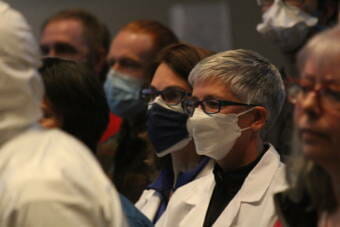
More than two dozen health care workers attended the Anchorage Assembly meeting on Tuesday, Sept. 14, 2021. Providence Alaska Medical Center staff told Assembly members that COVID-19 is overwhelming the hospital. (Wesley Early/Alaska Public Media)

Gov. Mike Dunleavy painted a stark picture of the state’s COVID-19 woes as a surge in cases of the Delta variant put hospitals in crisis mode.
He announced on Wednesday the state has contracted 400 additional health care workers from the Lower 48 and switched to crisis standards of care to alleviate the strain on hospitals.

He said the onslaught of hospitalizations due to COVID-19 is leading to burnout for health care workers.

“Our capacity here in Alaska, as in other places, is actually shrinking at a time when this variant is growing and causing cases to go up,” he said during a press conference on Wednesday.

The state signed an $87 million contract with DLH Solutions to send 300 registered nurses and 100 certified nursing assistants and patient care technicians to the state. Those health care workers will be distributed based on need and are scheduled to arrive next week. The workers are on a 90-day contract. The state has the option of three 30-day renewals.

In addition, the emergency order that governs the state’s Department of Health and Social Services was amended to include Crisis Standards of Care. A few hospitals were already operating this way, but now the guidelines are statewide.

Chief Medical Officer Anne Zink said that means the state is approaching care like it would in a disaster.

“When resources are really limited — it’s primarily around physical resources, like not having enough ventilators and how to be using such resources in a limited capacity,” she said. “Our primary focus is how to make sure that every Alaskan is able to get the care that they need.”

The state leads the nation in infection rates, according to the New York Times, which are often an indicator of hospitalizations to come.

Dunleavy said the state is “on top of this,” but reiterated to Alaskans how serious the situation is.

“The virus is real. It’s causing more infections. It’s causing more people to go to the hospitals. It’s causing more deaths,” he said. “This is a fact.”

Dunleavy has resisted calls to declare a statewide disaster declaration or to mandate preventative measures like masking. He asked Alaskans to “seriously consider” being vaccinated against COVID-19.

This story has been updated with additional information from the governor’s press conference on Wednesday.

A second top-level Bartlett hospital staff member resigned

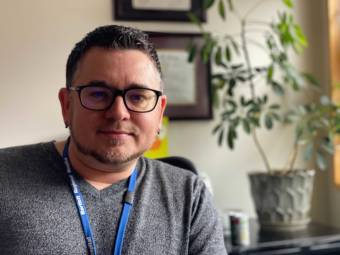
Bradley Grigg in his office on April 15, 2021. (Claire Stremple/KTOO)

A second top-level employee abruptly resigned from Juneau’s Bartlett Regional Hospital late last week. Chief Behavioral Health Officer Bradley Grigg tendered his resignation on Friday, after four years with the city-owned hospital. Neither the city or the hospital board acknowledged publicly that he’d left until Monday.  
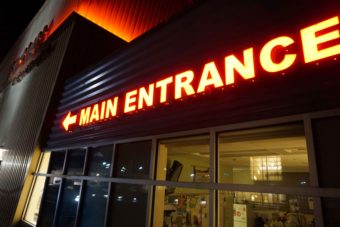
In his letter to the hospital’s Board of Directors, he wrote that his position is no longer a good fit due to “personal issues.” 

Grigg’s letter came just after CEO Rose Lawhorne stepped down. Lawhorne left her role after six months and was subsequently fired for having an “inappropriate relationship” with a subordinate employee. City manager Rorie Watt declined to comment on whether the resignations are related.

Grigg’s resignation comes at a time when the hospital is inundated with behavioral health patients. He was also helming a $14 million expansion of the behavioral health department building.

The volunteer-run hospital board will meet on Friday to discuss a plan for hiring a permanent CEO. It is unclear whether the interim CEO, Kathy Callahan or the yet-to-be-hired permanent CEO will hire Grigg’s replacement.

This is a breaking news story that will be updated.

A previous version of the story misspelled Rose Lawhorne’s surname.

Juneau’s regional hospital opens its COVID wing as case counts rise

Bartlett Regional Hospital 2018 12 01
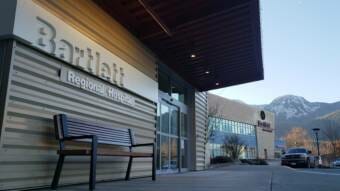
Bartlett Regional Hospital, pictured here on Dec. 1, 2018, is located at 3260 Hospital Drive in Juneau. (Photo by Jeremy Hsieh/KTOO)

Bartlett Regional Hospital opened a wing just for COVID patients Thursday afternoon. Six of its seven beds were full on Friday morning.

The beds are an addition to the 12 critical care spots also used to treat COVID patients.

Infection preventionist Charlee Gribbon says the COVID wing is one of the measures the hospital can take to manage more patients.

“We have many COVID patients, so it helped with efficiency of staff, so we could move them all together,” Gribbon said.

About a third of the regional hospital’s beds are occupied by patients with illnesses related to COVID infections.

Case counts in Juneau are at an all-time high. Gribbon says that does mean the hospital is preparing in case there are more patients, but she says Juneau’s high vaccination rate means fewer hospitalizations.

“We’re seeing that even though we’ve got a positivity rate, people are doing well because they’re vaccinated, and it’s turned it into a mild illness. And they dodged that hospitalization and severe illness, probability because of vaccination,” said Gribbon.

On Friday afternoon, there were seven patients currently at the hospital with infectious COVID-19 cases. One of them is in critical care. Four more patients have illnesses related to previous COVID infections.

Three of the hospital’s 12 emergency department beds are occupied.

Juneau may adopt new hazard maps downtown, but some residents want to wait

Sally Schlichting stands on the deck of her Starr Hill neighborhood home on Aug. 24 in Juneau. In the city’s new hazard maps, her home is shown as being in a severe landslide zone. (Rashah McChesney/KTOO)

The City and Borough of Juneau is asking its assembly to adopt updated hazard maps. A new scientific report puts about half of the structures downtown at moderate to severe risk of landslide or avalanche. But some residents say they aren’t ready for the upgrade.
The Starr Hill neighborhood is nestled into the side of Mount Roberts above downtown Juneau. Sally Schlichting is pushing through some brush on the steep hillside behind her home of 20 years.

“This is a rather unique situation,” she said, gesturing at a stone-lined gully.

When it rains, water flows down the hillside through the gully. She says debris has come down, too, in storms. So when she looks at the new hazard maps the city is proposing, she’s certain this is where the contractors think there’s a severe risk of landslides.

“We had previously been in a moderate landslide zone. And these maps now had us depicted in a severe landslide zone, which was kind of a shock and a major change for us,” Schlichting said.

It was a major change for about a dozen of her immediate neighbors, too. She says the new maps — and all geotechnical information that comes with them— are a lot to digest.

“We just got this information, maybe a month or so ago, and we all need to kind of catch up,” she said. “We need time to catch up with the city in all of this. When it’s your home, and the place where you raised your kids…”

The buzz of neighbor’s saw cuts Schlichting off, but her point is this — it’s emotional, too. She’s lived here for decades, and she says nothing really bad has happened yet.

“I felt like, you know, I felt blindsided by it, but perhaps not too surprised. After I read the report, I felt like the science seems pretty sound,” Schlichting said.

So she’s one of a lot of downtown residents questioning whether or not these new maps do them too much financial harm to be worth their intended public safety value.

Sally Schlichting walks up over a drainage ditch in her backyard on Aug. 24 in Juneau. (Rashah McChesney/KTOO)

And this is the tricky piece — hazard maps ideally come before development. Now the assembly has to decide whether it’s right to adopt the maps or wait until it’s clear what the effects will be on the significant number of people whose downtown property would then be in a hazard zone.

“From my perspective, it wasn’t wise to make those changes without a full understanding of the impacts the changes might have,” said Mike LeVine, chair of the city’s planning commission.

While he can’t speak for the commission as a whole, he said it’s complicated to adopt the maps because that comes with changes that could affect people like Sally Schlichting.

The commission was divided on the issue, but the majority voted to tell the assembly to wait to adopt new safety maps until residents have a better sense of what it means for their homes. Others said the science speaks for itself and voted to recommend the assembly adopt the maps.

“It is not clear, at least to me, whether these changes could have effects on property values for individual owners,” LeVine said. “And could these changes have effects on homeowners’ ability to sell their property or to get financing for purchasing a property? I don’t have the answer to these questions.”

The city doesn’t have those answers either.

“They’re tough questions. They’re very important questions, and we obviously don’t know the answer to them. They’re market questions,” said Teri Camery, Juneau’s senior planner. She’s in charge of the project to evaluate landslide and avalanche risk downtown. She says from a public safety perspective, the city needs new maps now. The ones they have are from the ’70s.

“We know they are outdated. They’re inaccurate. And we’ve had a lot of really serious storm events in Southeast Alaska the past few years. We’ve had deaths from landslides in both Sitka and Haines. And it’s just really critical to get updated hazard information to protect public safety and public property,” Camery said.

Camery says that even though these areas are already developed, there are still a lot of important decisions to be made about where development can increase, and where it may need to be cut back.

Money is also the reason why the department asked the city to adopt the maps now and consider regulations and the market implications later. There’s federal money available for both the maps and the regulations that will affect homeowners, and they come at separate times. Initially the planning department thought it needed the maps to be accepted before it got money to talk about regulations. Camery says that might not be the case any longer.

But back on Starr Hill, Sally Schlichting is worried her home could lose market value and even become uninsurable. Ultimately, she’s not sure if she wants this map upgrade at all.

“Would I like to see them get passed? I think I, I struggle with that,” she said.

She says she wants people to be safe. And for her, that makes the discussion worthwhile.

The maps will be considered in  Committee of the Whole meeting on Sept. 20 before they are scheduled for a first reading before the assembly.

Either way, the maps are out there. Regardless of whether the assembly adopts them, they’ll be available on the city’s website.


Correction: the maps will be considered at only one meeting on Monday, September 20th.

Juneau’s hospital opens antibody therapy clinic to get ahead of COVID hospitalizations

Bartlett Regional Hospital 2018 12 01
Bartlett Regional Hospital, pictured here on Dec. 1, 2018. (Photo by Jeremy Hsieh/KTOO)

Juneau’s Bartlett Regional Hospital opened a clinic to treat COVID-19 patients this week using monoclonal antibody therapy. It’s a method used to reduce symptoms in patients with early-stage COVID infections. The idea is that antibodies support the immune system as it defends against the virus.

“It reduces the chance of people having to be hospitalized and experiencing severe COVID illness,” said chief nursing officer Kim McDowell.

She said the treatment reduces admissions to the hospital, and right now that’s important.

“The last couple of weeks, we did see quite a few, [an] increase of COVID-19 patients. We were seeing them quite frequently through our emergency department, many being admitted,” she said. “And unfortunately, we did see some deaths from that.”

Three people died with COVID-19 at Bartlett in August.

McDowell says admissions have begun to level out at the hospital, but she’s keeping an eye on the rising case counts in the community.

Bartlett has offered the treatment since the first wave of the pandemic, but McDowell says the dedicated clinic will reduce pressure on its limited nursing staff. It’s also intended to reduce pressure on the statewide healthcare system. If a COVID-19 patient at Bartlett requires intubation, they have to be medevaced elsewhere.

“By doing our part with decreasing hospitalizations here, we will also help our partners in Seattle and in Anchorage. If we can prevent severe illness, that would prevent somebody being medevaced to an already full hospital,” McDowell said.

The treatment is pretty simple; it’s a one-time IV that stays in the arm for about 20 minutes. McDowell says patients then stay at the hospital for an hour to make sure they don’t have an allergic reaction.

If you’ve recently tested positive for COVID-19, the best way to learn more about antibody treatment is through a primary care provider. If you don’t have one, call 907-796-8900 to reach Bartlett staff for information and scheduling.

Editor’s note: The headline of this story has been updated to reflect Bartlett Regional Hospital has opened a clinic.

Site notifications
Update notification options
Subscribe to notifications