Jennifer Canfield, KTOO

Muñoz details new bills, priorities for upcoming legislative session

Rep. Cathy Munoz (R-Juneau). File photo.

The budget deficit and marijuana regulations will take center stage during the upcoming legislative session says Juneau Rep. Cathy Muñoz.

Muñoz hopes Gov. Bill Walker will submit his amended budget well before the Feb. 18 deadline. She says Juneau is well taken care of in the capital budget with full funding for continued work on the State Library, Archives and Museum. But, she adds, lawmakers will need as much time as possible to address a $3.5 billion deficit.

“I will be paying close attention to the impact of budget cuts to make sure that there’s not disproportionate impact to one community compared to another community. We’ll be looking for equitable distribution of those reductions,” Muñoz says.

Muñoz will oversee budgets for the Department of Environmental Conservation and the Alaska Court System.

When not tackling the budget, lawmakers will likely spend much of their time debating how to regulate marijuana. While voters approved a ballot measure in November to legalize cannabis, the details of how to do that were left to be resolved.

“I think there’s going to be a lot of focus on the content and packaging issues. Also, enforcement will be a big point of discussion,” Muñoz says.

Muñoz, a Republican, will introduce several bills this session, including one to add sexual orientation to the state’s anti-discrimination laws.

Another bill Muñoz will introduce would allow residents with unforeseen medical conditions to still qualify for a Permanent Fund Dividend if they’re out of the state for too long. Currently , residents who require out-of-state medical care can stay eligible with an extension, but that extension isn’t as generous as for students or military.

Muñoz says she’s also working on a bill to help expand affordable housing by addressing how municipalities assess property taxes on new subdivisions. She says important issues for her office include the new healthcare plan for State of Alaska employees and the Tulsequah Chief Mine.

Muñoz to reintroduce bill adding sexual orientation to anti-discrimination law

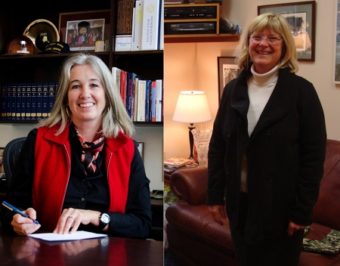
Cathy Munoz Beth Kerttula
Juneau Republican Rep. Cathy Munoz (left). Former Juneau Democratic Rep. Beth Kerttula (right).

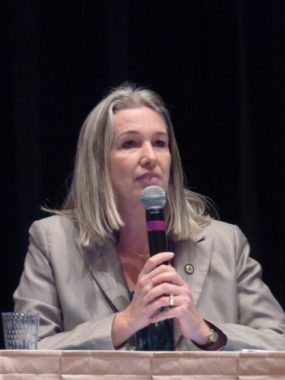
Rep. Cathy Muñoz (R- Juneau) will reintroduce a bill this legislative session to make discrimination based on sexual orientation illegal.

Former Juneau Rep. Beth Kerttula, a Democrat, introduced the same bill in 2011 and then again in 2013.

Muñoz cosponsored the bill in 2013. She says she hopes the bill will hold more weight this time with her majority Republican colleagues.
“We’ll see how it goes, but I definitely think it’s appropriate and it’s needed,” Muñoz says. “I’m willing to put my energy into making it happen.”

Kerttula first introduced the bill a year before Anchorage residents voted against adding sexual orientation to the municipality’s anti-discrimination laws.

The 2015 legislative session begins Jan. 20. Lawmakers’ pre-filed bills will be released over the next two weeks.

Walker halts further spending on Juneau Access

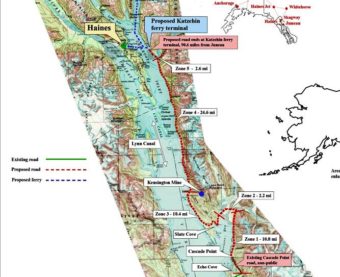
Juneau Access map
Map of the proposed Juneau Access project (courtesy Alaska Department of Transportation and Public Facilities)

Gov. Bill Walker issued an administrative order Friday halting new funding and new contractual obligations for the Juneau Access Road, Ambler Road, Susitna-Watana Dam, Kodiak Launch Complex, Knik Arm Crossing and the Alaska Standalone Pipeline Project.

The state departments which oversee the projects have been asked to submit a report by Jan. 5 listing operating costs to date, funding obligations and “potential effects of delaying, suspending or terminating contracts.”

Until Walker reviews those reports and says otherwise, the departments may not sign any new contracts or commit to any new funding from the federal government.

The administrative order is a response to oil prices that have plummeted over the year. In 2014 oil revenue accounted for 88 percent of the state’s general fund spending. General funds, also known as unrestricted funds, make up more than half of the state’s total budget.
“Our budget deficit grows deeper as oil prices go lower,” Walker said in a statement released Saturday. He added: “This is a way for us to not commit new money into projects that may not be continued during this fiscally challenging time.”

Last spring the state forecasted the average price of oil at $105 a barrel. At that price the state expected a $1.1 billion revenue shortfall against the expected $5.6 billion in FY15 general fund spending. In June the price reached a high of $105, but since then it’s dropped by half to $54.

Estimated cleanup costs included in Gastineau Apartments property appraisal

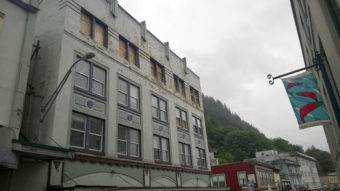
Gastineau Apartments
The Gastineau Apartments  burned in November 2012. (Photo by Jeremy Hsieh/KTOO)

The Gastineau Apartments building has been appraised at $50,000; it could be worth significantly less if hazardous materials such as asbestos or urea-formaldehyde foam insulation are found in the building. If cleared, the lot is valued at $810,200. Juneau’s tax rolls had listed the property’s value as $1.2 million.
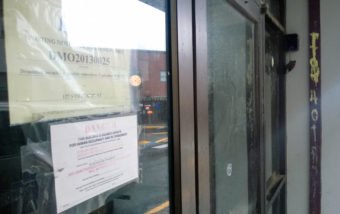
The building has been uninhabitable since November 2012 when an accidental fire destroyed most of the front part of the structure. Since then, the city has made numerous attempts to have the owners either clean up the property or at least install a temporary roof to prevent further damage. The appraisal — dated Oct. 31 —comes as the Juneau Assembly considers purchasing the property.

The appraisal includes estimates for three options the city could choose from to make the property ready for redevelopment; costs to fully rehabilitate the property and make it habitable are not included.

Demolishing the buildings and clearing the property would cost about $160,000 more than the vacant lot’s estimated value. However, with the lot cleared a developer could construct a more efficient and valuable building.

Another option would have the city spend $750,000 to make structural repairs to the building facing Franklin Street. “Building A” is the original part of the Gastineau Apartments building; it was built in 1915 and it suffered the most damage in the fire. It would cost an additional $1 million to clean up and selectively demolish Buildings B and C, the structures in the back of the property. This option would put the city in the red by about $310,000.

The city could come out ahead by about $66,000 if it chose to completely demolish the hundred-year-old portion of the building. The two back buildings would be “selectively demolished.”

The current owners of the building — James and Kathleen Barrett — provided the appraiser with a summary of expenses and income generated during its last four years. Based on that information, the appraiser calculated that the property generated about $140,000 per year after expenses.

Individual Assembly members have reviewed the appraisal, but they’ve not discussed it as a group. The next regularly scheduled meeting is Dec. 1.

Update: City considering purchase of condemned Gastineau Apartments

Gastineau Apartments
The Gastineau Apartments has been vacant since it burned in 2012. (Photo by Jeremy Hsieh/KTOO)

Updated | Nov. 10, 2014 – 9:45 p.m.

The Juneau Assembly met for about half an hour in a closed door session to discuss the Gastineau Apartments with its attorney at its meeting tonight. When the public portion of the meeting resumed, the Assembly took no action on the apartments.

Original Post | Nov. 10, 2014 – 4:07 p.m.

The Juneau Assembly will discuss behind closed doors at Monday’s meeting what’s to become of the Gastineau Apartments building in downtown Juneau. The building has been uninhabitable since it burned in a fire two years ago.
City officials have been mulling several options to deal with the blighted building, which owner James Barrett has been unable to repair or clean up. One of the options being considered during tonight’s meeting is for the city to purchase the building. An appraisal was recently completed on the property with cooperation from Barrett.

Mayor Merrill Sanford says he hasn’t seen the appraisal yet, but the Assembly will hopefully make enough progress in their deliberations tonight to move discussions about the building to public meetings. He says the city has been negotiating with Barrett to purchase the building.

“They’ve got those numbers boiled down and made some offers back and forth and now we have to see if we, the Assembly, the nine of us, can come together on a point of contact,” Sanford says.

At the very least, the city hopes to get a temporary roof on the building before winter sets in to prevent further damage to the structure. Other options the Assembly has considered include offering tax incentives for a private investor to rehabilitate the building and taking the building by eminent domain.

Jeremy Hsieh contributed to this report.

New federal regulations to favor subsistence users, rural residents

moose
(Photo by Heather Bryant/KTOO)

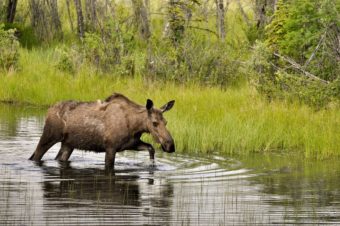
The Federal Subsistence Board’s rural determination process will change, according to an announcement made at the Alaska Federation of Natives Convention last month.

The changes should mean a more favorable process for villages and other rural communities that rely on hunting and fishing. Deputy Secretary of the Interior Michael Connor told AFN attendees that the new regulations will come soon.

“We’re moving out, beginning the discussions,” Connor said. “We’ve got to consult with the state, overall this is strongly supported throughout the leadership at the department of the Interior.”

Title VIII in the Alaska National Interest Lands Conservation Act, or ANILCA, mandates a subsistence preference for rural residents on public lands. Every ten years the Federal Subsistence Board determines whether a community meets certain guidelines to qualify for ANILCA’s subsistence preference. That rural determination process has been harshly criticized in recent years.

In 2007, several communities were told that they were no longer considered to be rural, including the Southeast community of Saxman. The board reasoned that the community’s proximity to non-rural Ketchikan put it in the same category. While the community is incorporated as a municipality, a majority of the population is Alaska Native and are members of the Organized Village of Saxman.

The tribe has fought against the board’s attempt to take away their rural status arguing that they have a history of traditional subsistence gathering in the area. The determination was put on hold in 2009 by then-Secretary of the Interior Ken Salazar pending a comprehensive review of federal subsistence policies. That hold was scheduled to expire this past July, which meant that the Organized Village of Saxman’s opportunity to litigate would also expire.

In April, the Federal Subsistence Board voted unanimously to submit new regulations in the rural determination process. The board does not have authority to implement new regulations, but it can propose them to the Department of the Interior and the Department of Agriculture. While Connor did not give details of the proposal, he did say that the board will defer more to communities and tribes in its decision-making process.

“Once implemented the new determination process will enable the board to use more flexible criteria that could lead to the kind of determinations sought by AFN and others in cases such as Saxman in Southeast Alaska,” Connor said.

Native American Rights Fund attorney Matthew Newman represents the Saxman tribe. He says the proposed rules give residents hope, but that the outcome is still in question. While the tribe favors an administrative fix, Newman says the lawsuit won’t be dropped until they’ve had a chance to review the new rules and are satisfied with them.

“I think everyone is relieved and optimistic that the rule is going to move forward,” Newman says. “This rule moving forward is not just a good thing for Saxman, it’s a good thing for all rural communities subject to ANILCA’s priority. This rural determination process has really been a bane for many communities and this idea that every 10 years your way of life is potentially subject to change causes a very, very uneasy feeling among rural residents in Alaska.”

Deputy Secretary Connor also announced changes in the board’s makeup. Two additional public members were added, Anthony Christianson of Hydaburg and Charles Brower of Barrow. Former AFN co-chair Tim Towarak from Unalakleet was named chair of the board. Towarak has served as a president of the Bering Straits Native Corp. and as rural affairs advisor to Gov. Tony Knowles.

Connor said the Department of the Interior is working on a new process that would make it easier for communities and subsistence users to participate in the board’s decision-making process.

Site notifications
Update notification options
Subscribe to notifications