Jennifer Canfield, KTOO

Unusual tropical storm system headed toward Southeast

A hurricane working its way toward Haida Gwaii could mean heavy rains for the panhandle’s southernmost communities and nicer weather for Juneau.

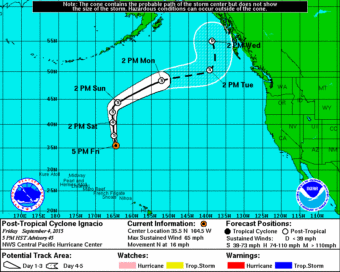
Hurricane Ignacio originated north of Hawaii Friday morning. It’s expected to pass south of Dixon Entrance. Another low pressure system coming across the gulf from the Bering Sea is headed toward the southern third of the panhandle; it’s expected to pull some of the hurricane’s moisture north.

The National Weather Service is predicting heavy rains for the next few days in the lower third of the Southeast pandhandle. (Image generated by the National Weather Service)

Heavy rains are expected Monday for Prince of Wales, Ketchikan and the southern tip of Baranof Island — but not Sitka. Nicole Ferrin, a National Weather Service meteorologist in Juneau, says the low pressure system will travel through the region over the next five days.

“If people down there notice the heavy rain, they might think that it’s Ignacio but it’s really not,” she said. “The low will still be quite a way to the southwest from our area at that time.”

Ferrin said residents of the affected communities should see typical fall weather, but don’t expect tropical storm force winds.

“We get influence from tropical systems frequently. The unique thing about this is we can see it on the map and that’s pretty unusual,” she said.

The weather service may issue a special statement if the heavy rains warrant it.

Ferrin said Juneau would be “marginally affected” by the storm and may even experience nicer weather as a result. Typically when a low pressure system passes south of the capital city it results in drier weather.

Tropical storms are hard to predict once they leave they tropics, so this forecast could change over the weekend. You can find the latest forecast on the National Weather Service’s website.

Yup’ik educator appointed to National Advisory Council on Indian Education

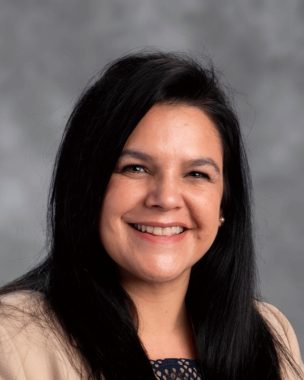
Doreen Brown. (Photo courtesy Anchorage School District)

An Alaska educator has been appointed to the National Advisory Council on Indian Education, the White House announced Wednesday.

Doreen Brown of Anchorage will serve on the council, which was established under the Indian Education Act of 1972. The council is tasked with advising the Secretary of Education and Congress on the administration and funding of Alaska Native and American Indian education programs.

Brown is the executive director of the Title VII Indian Education program at the Anchorage School District. She began her teaching career in Aniak in 1989. She went on to teach in Anchorage classrooms and eventually transitioned into the Indian Education program.

Alaska has the third lowest graduation rate in the country for Alaska Native and American Indian students — about 51 percent in the 2010-11 school year.
Million-gallon wastewater spill from Colorado mine reaches New Mexico

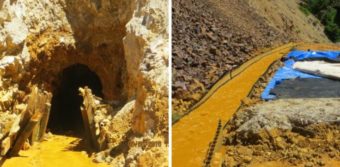
These images provided by the Environmental Protection Agency show the mouth of the Gold King Mine tunnel, at left, and the channeled runoff on the mine dump. (Images courtesy EPA via Colorado Public Radio)

Environmental Protection Agency workers accidentally triggered the spill of a million gallons of mine wastewater into the Colorado River, the agency said Thursday.

Colorado Public Radio reports EPA workers were at the Gold King Mine using heavy equipment to investigate contamination at the site. Southwest Colorado has many abandoned mines, reports CPR, and workers have been in the area for years trying to rehabilitate the sites.

“We typically respond to emergencies, we don’t cause them. But this is just something that happens when we’re dealing with mines sometimes,” said Dave Ostrander, EPA Region 8 Director of Emergency Preparedness.

The spill happened on Wednesday, but the agency didn’t tell anyone about it until Thursday.

The Associated Press reports the EPA says it’s too early to determine health risks, but that they’ve not found any so far.

Federal environmental officials say it’s too early to know whether heavy metals that spilled into a river from a Colorado mine pose a health risk.

The Environmental Protection Agency said Friday that water samples still are being tested but so far no hazard has been detected. The EPA says lead, arsenic and other heavy metals were found in the Animas River in Colorado after 1 million gallons of mustard-colored wastewater surged out of the mine.

The EPA says it has no way to get the discolored water out of the river and that it will eventually dissipate. It wasn’t clear when that will happen.

Officials say an EPA-led cleanup crew accidentally triggered the spill Wednesday.

The Animas flows from Colorado into New Mexico. Tests also were being done there, but results weren’t known.

As of Friday evening, CPR reports, the mine is still leaking water that contains “lead, arsenic, along with cadmium, aluminum, copper and calcium and other pollutants.” The EPA is building a settling pond to collect further discharge.

The Associated Press also reports that the spill has reached northern New Mexico where city officials have cut off the river’s access to water treatment facilities.

A yellow sludge spilling from a shuttered gold mine into a southwestern Colorado river has reached northern New Mexico.

San Juan County Emergency Management Director Don Cooper says the plume arrived in the city of Aztec on Friday night and Farmington on Saturday morning.

Officials in both cities shut down the river’s access to water treatment plants and say the communities have a 90-day supply of water and other water sources to draw from.

About 1 million gallons of wastewater from Colorado’s Gold King Mine began spilling Wednesday when a cleanup crew supervised by the Environmental Protection Agency accidentally breached a debris dam that had formed inside the mine.

No health hazard has been detected, but tests were being analyzed. Federal officials say the spill contains heavy metals including lead and arsenic

Cooper told the Daily Times in Farmington, “It’s not going to look pretty, but it’s not a killer.” He said people shouldn’t panic because the EPA told San Juan County officials that the spill will not harm humans and that the primary pollutants are iron and zinc.

The Colorado Department of Public Health and the Environment told several national news outlets that the spill’s impact on the environment wasn’t clear. There are no fish in the Cement Creek Watershed because of a long history of poor water quality.

Jonathan P. Thompson, a senior editor at High Country News in Durango, Colorado, and the San Juan Citizens Alliance tweeted about the spill Thursday.

Friday afternoon Thompson reported the EPA says the spill would have happened on its own had someone not had someone not intervened and drained it.

KUNC reports the EPA has wanted to label areas around Silverton, Colorado, near where the spill happened, as a Superfund site. The town, however, has resisted the label because it could have a negative effect on tourism.

The EPA is posting photos from the spill on their website, but as of early Saturday afternoon the EPA’s Region 8 office has made no mention of the disaster on Twitter or Facebook; neither has the main EPA office (Facebook, Twitter)


Federal agency launches website to help universities, colleges deal with campus violence

The Office on Violence Against Women has launched a website aimed at helping colleges and universities deal with sexual assault, domestic violence, dating violence and stalking on campus. (Screenshot)
The Office on Violence Against Women has launched a website aimed at helping colleges and universities deal with sexual assault, domestic violence, dating violence and stalking on campus.

The Office on Violence Against Women this week launched a website aimed at helping colleges and universities deal with sexual assault, domestic violence, dating violence and stalking on campus. The office, which is in the U.S. Department of Justice, calls the site a “comprehensive online clearinghouse.”

An introductory video on the site features Bea Hanson, principal deputy director of the office. She says the site includes information from a variety of sources focused on prevention, policy and other topics.

“It’s designed to provide campus administrators, faculty and staff, campus and community law enforcement, victim service providers, students, parents and other key stakeholders with the resources needed to enhance campus safety,” Hanson said.

The website was launched  nearly a year after the U.S. Department of Education’s Civil Rights Office announced it would be investigating post-secondary institutions across the nation — including the University of Alaska system — to determine whether they are handling reports of sexual violence according to federal law.

An Aug. 5 list from the Department of Education shows 129 institutions are under investigation. The department says the list includes institutions that are being investigated for cause and others that are subject to a compliance review. An attorney for the university told KTOO in September that their investigation fell into the latter category.

In February, the University of Alaska launched a survey to determine if sexual assault on campus was a bigger problem than they knew and how well they were handling it. The survey was sent out to 15,000 randomly selected students, faculty and staff who can respond anonymously. A university attorney said the results of the survey would not be published.

Twin Lakes closed to swimmers due to “high fecal bacteria”

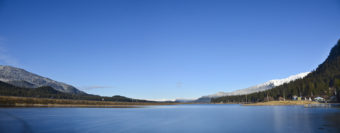
Hardly a cloud in sight over Twin Lakes. (Photo by Heather Bryant/KTOO)
Twin Lakes is closed to swimming due to high fecal bacteria. (Photo by Heather Bryant/KTOO)

Twin Lakes is closed to swimming after sample test water returned results indicating “high fecal bacteria.” The City and Borough of Juneau sent out a notice Saturday recommending that no one, including pets, swim in the lakes. The city issued the same notice about two weeks ago.

Twin Lakes is a popular recreation spot for families and pet owners. Feces not picked up by pet owners can leech into the lake; rain only hastens contamination. Last month was Juneau’s wettest July on record.

The next sampling will take place Monday morning and will include testing of water entering the lakes in an attempt to find the source of the bacteria.
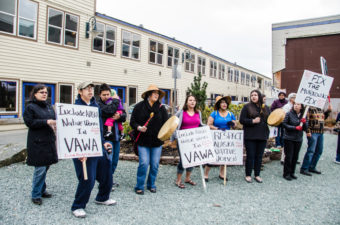
State legal opinion on tribal protection orders ‘a step in the right direction’

Ishmael Hope and a group of concerned people carried signs asking representatives to address issues with VAWA. (Photo by Heather Bryant/KTOO)
A group of concerned Juneau residents in 2013 protest the Alaska exemption in the Violence Against Women Act. Advocates have previously taken issue with the State of Alaska’s resistance to implementing VAWA. (Photo by Heather Bryant/KTOO)

Law enforcement must uphold tribal protection orders the same as state protective orders, whether the order has been registered with the state or not, the attorney general announced in an opinion Thursday. Attorney General Craig Richards also encouraged the legislature to amend state law to comply with the Violence Against Women Act.

Tlingit-Haida Central Council President Richard Peterson addresses the tribal assembly in March 2014. Peterson just announced the council has OK'd same-sex tribal marriages. (Courtesy THCC)
Tlingit-Haida Central Council President Richard Peterson addresses the tribal assembly in March 2014. Peterson just announced the council has OK’d same-sex tribal marriages. (Courtesy THCC)

“I’m very excited to see this,” says Richard Peterson, president of the Tlingit-Haida Central Council. “I think it’s a step in the right direction in rural, tribal justice. It’s going to really, I think, have great impact and effect on our tribal court system and will have a great impact on tribal courts.”

Peterson says Tlingit and Haida is looking forward to more positive action from the Walker administration on tribal issues such as putting land into trust and transboundary mining.

The attorney general says the Violence Against Women Act clearly supersedes Alaska’s conflicting law requiring registration of tribal court and so-called “foreign” protection orders. The opinion basically affirms VAWA’s provision that tribal court and out-of-state protective orders need not be registered with the state to be enforced — a provision with which the Parnell administration refused to comply.

Nick Gasca, a lawyer for the Tanana Chiefs Conference based in Fairbanks, says the opinion is an indication of the thawing relationship between the state and Alaska tribes.

“This again no doubt reflects his position that with applicable law — instead of fighting tribes at every case, despite the fact that the law says otherwise, at least in this case — that he’s moving forward to correct the department’s previous position and reconcile relationships with tribes,” Gasca says.

The provision in VAWA requiring states to honor protective orders issued by other states and tribes was included when the act was first passed in 1994. When Congress reauthorized the act in 2013, a disagreement between the state and the Department of Justice regarding the validity of unregistered protective orders intensified.

In a December 2013 letter to the Indian Law and Order Commission, then-Attorney General Michael Geraghty said that while tribal court protective orders must be registered with the state to be enforceable, Alaska State Troopers could — “without the formality of State court registration” — choose to enforce the order if “confronted with an emergency or tense situation.”

After a June 2014 meeting with Tony West — then an associate attorney general with the Department of Justice — Geraghty sent a follow-up letter listing things the federal government could do to “help address public safety issues affecting Alaska Natives” and Native youths. The letter requested more funding for tribal courts, prevention efforts and support for village public safety officers, among other things.

About a month later West responded to Geraghty’s letter. He acknowledged Geraghty’s suggestions, but focused on how Alaska’s law requiring registration of tribal protective orders directly contradicted federal law. West offered to discuss a way to bring Alaska into compliance and offered training on the provisions of VAWA.

Jacqueline Schafer, an assistant attorney general with the State of Alaska, says the opinion intentionally doesn’t address the sticky issue of tribal jurisdiction. The opinion also makes clear that officers can enforce tribal court directives that are clearly intended to be protective orders. Tribal court orders aren’t necessarily standardized.

“It’s really just saying that as long as the order is clear that the issuing court says that it had jurisdiction and that they provided due process and that the order meets the requirements of VAWA, then the officer will enforce that order on the ground. It doesn’t matter if the order was registered or not,” Schafer says.

She says there is no set protocol for a situation in which a victim claims to have a tribal protection order, but doesn’t have a copy of it on hand and hasn’t registered it with the state. Schafer says she could imagine the officer simply contacting the tribal court in that case to ensure that the order exists.

“That would be an easy resolution but it would be most protective (for) the victim to have the order registered with the state court, and that’s a fairly simple process, you just fax the order to the state court,” she says.

The opinion does mention that orders must meet the requirements of VAWA in order to be valid. One condition is that the order must provide the other party due process. The opinion also points out, however, that the U.S. Supreme Court has indicated a tribal court’s obligation to provide due process does not mean tribal courts must use the same procedures as state or federal courts. What constitutes due process could be a point of contention for someone who wants to challenge a protective order issued against them, but Schafer says this area of the law is also to be determined.

Site notifications
Update notification options
Subscribe to notifications