Jeremy Hsieh

Local News Reporter, KTOO

I dig into questions about the forces and institutions that shape Juneau, big and small, delightful and outrageous. What stirs you up about how Juneau is built and how the city works?

Protect Juneau’s Future shared who paid for its campaign, but no laws require it

Protect Juneau's Future banner at Red Dog Saloon
Visitors glance at a “thank you” banner on The Red Dog Saloon in downtown Juneau on Tuesday. The banner was made by Protect Juneau’s Future, which led a successful campaign against three proposed ballot initiatives to limit cruise ships in Juneau. (Photo by Jeremy Hsieh/KTOO)

A deadline has passed for local candidates and issues groups all over the state to disclose their campaign finances ahead of local elections on Oct. 5.

But the public probably will never know exactly who paid what for the campaign that helped quash a ballot initiative effort to limit cruise ships in Juneau. That’s because campaign finance disclosure laws wouldn’t apply in this case until after it cleared the signature-gathering stage.

The group Protect Juneau’s Future ran the “don’t sign” campaign this spring, opposing three proposed ballot initiatives to limit cruise ships in Juneau.

The campaign’s sunny, orange motif popped up online and all over town in mailers, storefront posters, even at restaurants and bars as those little, folded tabletop adverts. Along with information about the impacts limiting the cruise industry might have.

The campaign was successful. None of the proposals got the signatures needed to get on the ballots recently mailed out.

But who paid for the campaign? Laura Martinson is a co-chair of the group.

“We were so proud of our support that we actually published it in the Juneau Empire twice,” Martinson said. “Our supporters were completely local, every single one of them was from Juneau. And that was our goal from the start.”

Martinson said that also meant excluding the interest with the deepest pockets and the most to lose: the cruise lines. She said her group wanted to keep the debate among locals.

Martinson did share that her group got contributions from 36 individuals, 28 businesses, three business-related nonprofits and one union.

At first, she thought her group would have to file more detailed information with the Alaska Public Offices Commission, the state agency that serves as the clearinghouse for campaign finances.

“So this being my very first political campaign, I was actually really shocked that up until an initiative reaches the ballot, or receives enough signatures to get on the ballot, that you don’t have to disclose where your funding is coming from,” Martinson said. “I think it should be transparent from start to finish.”

Though, she said her group won’t volunteer the names of the individual donors out of respect for their privacy.

For this type of campaign, there’s also no dollar limit to how big contributions can be. Martinson wouldn’t share the actual dollar amounts raised, individually or in total. But she said most contributions were small.

“These are $25 donations for the most part that we’re talking about. I mean, these were, these were lots of little, handwritten checks on rainy sidewalks,” Martinson said. “And, you know, young people in the industry asking if we knew how to use Venmo. I mean, it was a very small scale.”

Karla Hart leads Juneau Cruise Control, the group that was trying to collect signatures for the proposals to limit cruise ships. Hart’s group didn’t have to disclose any of its finances, either. That said, there isn’t much to report.

She says her group didn’t fundraise at all. She and a few volunteers spent a total of about $600 out of their own pockets. She said they paid for video conferencing services, a website, some banners and a fee for some tax paperwork.

Campaigning around Juneau’s cruise ship limit ballot questions went very differently than in Key West, Florida, which inspired Hart.

There, the Miami Herald revealed the cruise industry used “dark money” — contributions to a third party that are difficult to trace back to the source — to pay for ominous and misleading mailers that flooded Key West mailboxes.

Martinson and Hart both said they weren’t aware of any other campaigns trying to influence the ballot initiatives in Juneau.

When it comes to initiatives, referendums and recalls, the state laws about who does or doesn’t have to open up their books — and when — are pretty inconsistent. Initiatives are for creating a new law, referendums are for repealing an existing law and recalls are for booting an incumbent elected official.

For all three types of ballot measures, campaign finances must be disclosed after they’ve gathered enough signatures and the question has been placed on the ballot. But the requirement is inconsistent during signature gathering. Only statewide initiative campaigns must report their finances during the signature gathering stage. Local governments can impose their own campaign finance rules, but Juneau doesn’t.

That could change next year. A bipartisan group of lawmakers is backing a bill to make referendums and recalls at the state level, like the attempt to recall Gov. Mike Dunleavy that fizzled out last month, subject to the same disclosure requirements as statewide initiatives.

Rep. Sara Rasmussen, a Republican from Anchorage, is the bill’s main sponsor.

“I think the big thing here is a transparency issue,” Rasmussen said during a House floor debate in May. “Whichever side of an issue you fall, the important thing is to make sure that Alaskans get the transparency they deserve and knowing who is funding either position in any type of measure that goes before voters.”

In its current form, the bill only applies to ballot questions at the state level. In committee, House lawmakers briefly discussed expanding it to include local campaigns, but it didn’t go anywhere concrete.

House Bill 157 cleared the House in May in a 36-3 vote and is awaiting action in the Senate next year.

Editor’s note: This story has been updated to clarify campaign finance disclosure laws didn’t apply to the campaigns related to a ballot initiative to limit cruise ships in Juneau. The laws apply to statewide initiative campaigns during signature gathering, but the laws don’t apply to all municipal campaigns.
Juneau School Board sides with retired teacher in grievance over leave payout

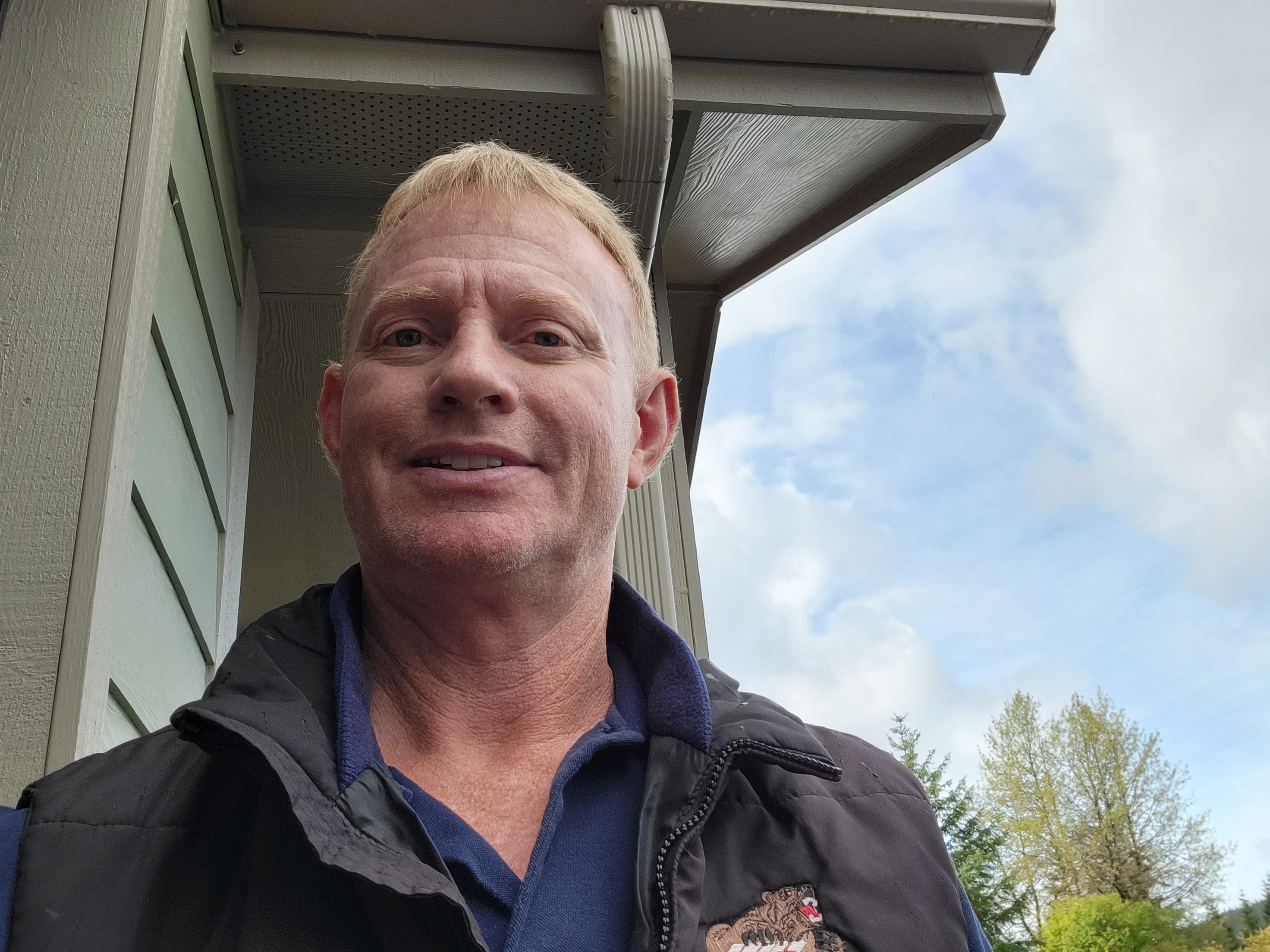
Kevin Hamrick, pictured here on Sept. 15, 2021, retired this year from coaching and teaching for the Juneau School District. He tried to cash out unused leave, but was denied because he missed a deadline. He filed a grievance that the Juneau School Board eventually sided with him on. (Photo courtesy of Kevin Hamrick)

Kevin Hamrick wasn’t following the school board’s meeting on Tuesday, and didn’t know the board had resolved his grievance. He found out Wednesday and started chuckling giddily.

The administration at first denied his $750 cash out request because he missed a deadline set in the teachers’ union labor contract, so he filed a grievance. The Juneau Board of Education decided to pay the newly retired coach and teacher for his unused leave. The decision may affect a handful of other retiring teachers going forward.

Hamrick said he understood the superintendent’s position but was glad the school board found some flexibility in the labor contract language. He hopes it gets clarified so other retirees don’t lose the payout for their unused leave time, like he almost did.

During a grievance hearing earlier this month, Superintendent Bridget Weiss cautioned against sidestepping the precise language in the labor contract.

“If we dismiss the deadline — school year — and we don’t consider that a deadline, then we are deeming a deadline that was agreed upon in the negotiating process meaningless. And that is dangerous territory to go into,” Weiss said.

Weiss said the district has been “incredibly consistent” in its application of the cash out policy.

The school board panel said the contract wasn’t as clear cut as Weiss’ interpretation. The panel concluded that it was ambiguous about retiring teachers’ unused leave.

In its written recommendation, the panel said that teachers who accrue too much are automatically paid for their excess leave. Teachers who aren’t retiring automatically carry forward their leave time into the next school year.

“In every other scenario except this very, very narrow window, if he would have departed, he would have received that leave,” said school board member Brian Holst.

According to the panel, only retiring teachers appear to be at risk of forfeiting this benefit.

Hamrick’s situation isn’t unique. A handful of other retiring teachers have forfeited unused leave time. At KTOO’s request, the administration looked up exactly how much in recent years. In 2019 and 2020, retiring teachers forfeited about 40 days of unused leave time worth $6,105.

The cash-out option in the labor contract gives teachers a reason not to use up all their leave just for the sake of using it up, which generally means instructional benefits for students.

It also helps the district save money by not needing to hire substitute teachers as often. And the payout rate is much lower than a teacher’s salary for a day. A teacher at the bottom of the pay scale earns about $285 a day. The leave policy pays out $150 a day.

School board member Martin Stepetin said the administration didn’t err, but that Hamrick’s grievance highlighted a legitimate issue.

“If a teacher’s retiring and has leave on the books, I think that we have identified something that is important and that the panel believes that, in this case specifically, that person should not forfeit the hours,” Stepetin said.

The school board unanimously agreed with the grievance panel’s recommendations.

The labor contract between the school district and the teachers’ union is up for renegotiation in December.

Hamrick is in the process of moving to Texas. He said the money will help him with the move.

Juneau Assembly greenlights new ballot counting facility

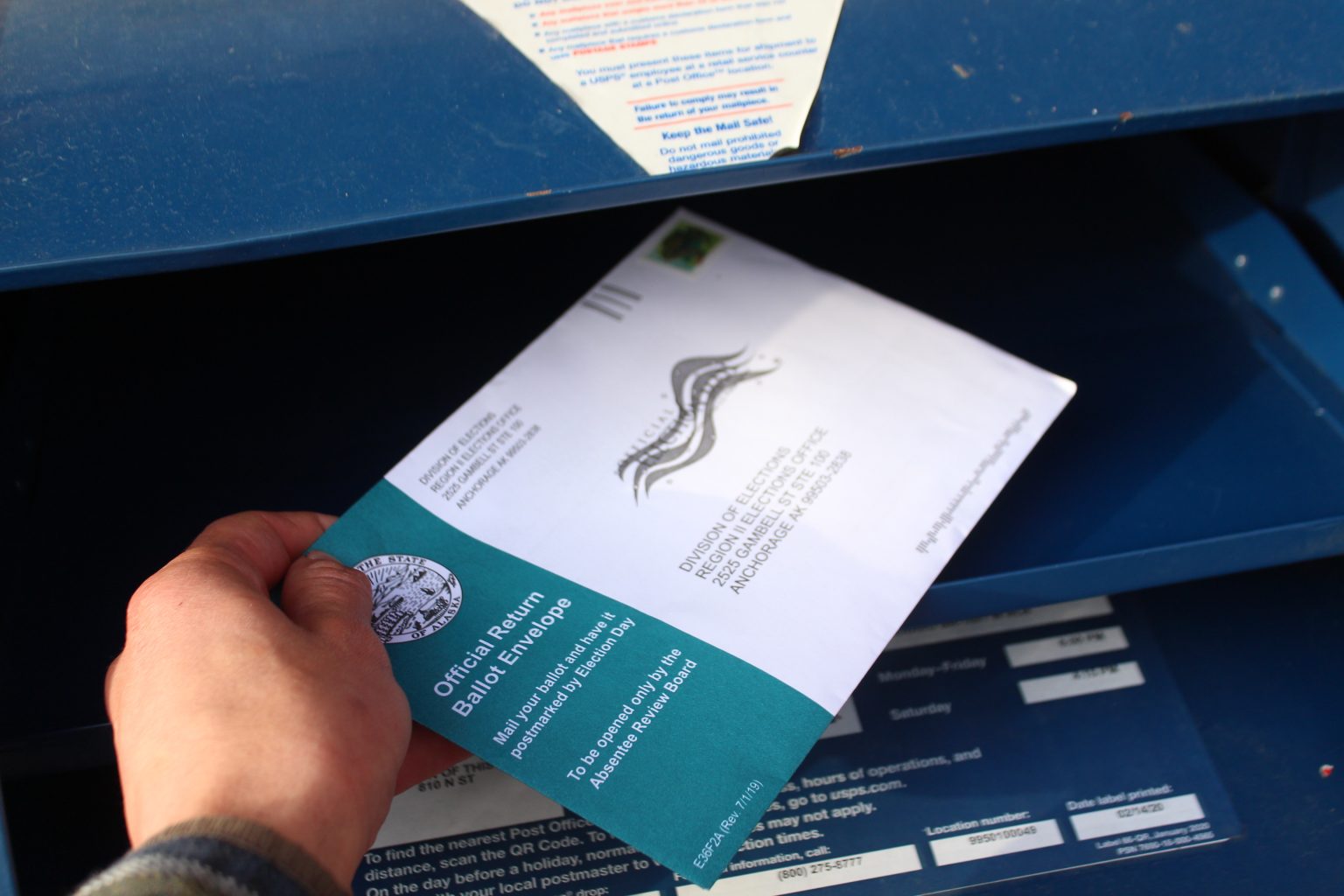
A voter mails an absentee ballot in October 2020.
A voter mails an absentee ballot in October 2020. (Lex Treinen/Alaska Public Media)

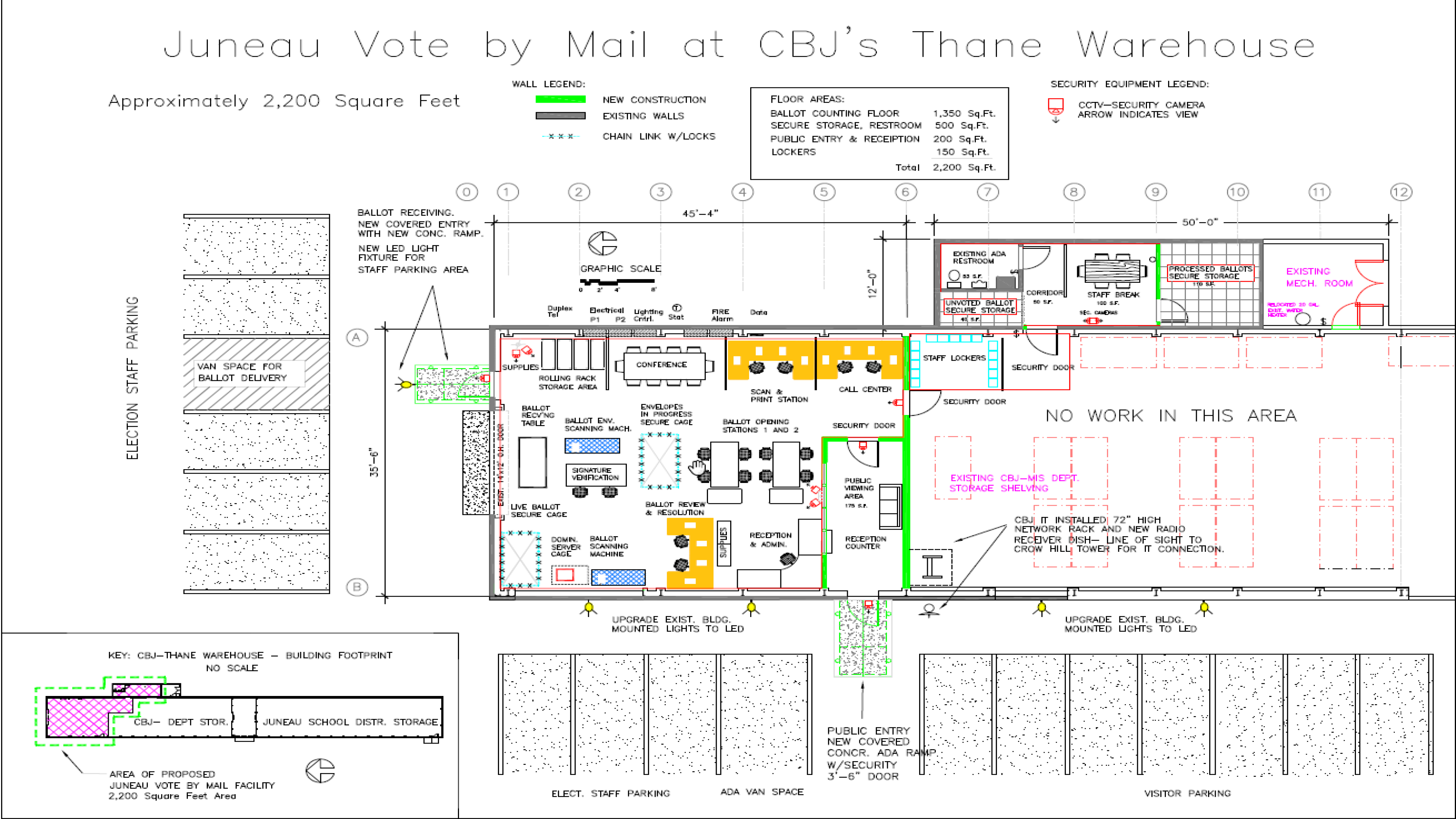
The Juneau Assembly has committed $700,000 to convert a city warehouse into a ballot processing center.

The facility will support a permanent move to holding local elections by mail. Juneau did that for the first time in 2020 because of pandemic concerns, and will again for the election that begins this week and ends Oct. 5.

For now, Juneau’s election officials are relying on Anchorage for a secure facility and equipment to count ballots.

The local League of Women Voters supports the change. Marjorie Menzi with the league told the Assembly on Monday that last year’s by-mail election drew the highest voter turnout in 20 years.

“The league believes that success is identified in a democracy by citizen participation. We consider voting by mail a success in Juneau. Voting by mail is a secure and fraud-free method of voting. … Providing adequate funding for our most fundamental right seems a reasonable expenditure of public dollars.”

City officials expect the facility to be ready for next year’s local election.

Juneau engineering officials drew up this floor plan of how a city-owned, surplus warehouse along Thane Road could be converted to a center for processing mailed-in ballots starting in the 2022 municipal election. The floor plan was in Assembly committee meeting packets in July and August of 2021.

Newscast – Wednesday, Sept. 8, 2021

In this newscast:

  • Hospitalizations for COVID-19 are at an all-time high in Alaska,
  • the state’s largest school systems aren’t doing any kind of COVID-19 surveillance testing,
  • the U.S. Department of Education has approved a state plan for spending $358 million in relief funds,
  • the U.S. Bureau of Land Management is expected to reevaluate a Trump-era environmental review that may affect plans to reopen the National Petroleum Reserve-Alaska to oil and gas leasing,
  • one of nine remaining clan houses in Sitka is on the verge of collapse, and
  • residents of Wrangell and Petersburg can now text 911 when calling isn’t an option.

Juneau commercial property owners fight 50% increase in assessed land values

The view of South Franklin Street from aboard a cruise ship June 20, 2011.
The view of South Franklin Street in Juneau from aboard a cruise ship on June 20, 2011. This stretch of commercial waterfront has changed a lot since then, but the City and Borough of Juneau’s assessed land values had not — until this year. (Creative Commons photo by Jasperado)

Like most commercial property owners in Juneau, PeggyAnn McConnochie is smarting from her tax bill this year after the city raised the assessed value of commercial land by 50%.

“My husband and I own the building that’s also known as Cycle Alaska building, and it is a building that we are appealing the 2021 assessed values on right now,” she said.

Unlike other commercial property owners, McConnochie is also a real estate broker who teaches classes for other real estate professionals.

City officials say this increase is just the first step in a multi-year correction to fix a decade of “neglect” in the annual assessments of commercial properties. Those values directly impact tax bills, and the balance of who’s paying for city services.

McConnochie and the owners of hundreds of other affected properties think this first jump already over values their holdings, and they’re fighting it.

Every April, the Juneau Assessor’s office mails out its new assessed values to property owners. McConnochie’s mailer for this year puts the value of the lot that the bike shop sits on, which is about a sixth of an acre and zoned waterfront commercial, at $463,050. That’s 50% higher than last year. That also means she owes about $1,600 more in property taxes this year.

“It’s not something that makes me kind of happy,” she said.

The assessed value of McConnochie’s property is $1,228,950 after the building is factored in.

“If my property was worth over a million bucks, I’d say I’d put it on the market today and try to sell it,” she said. “Although, there’s no market for it up.”

McConnochie said that’s one of the problems with the assessor’s methodology. She and other property owners don’t think the new assessments capture how volatile the commercial real estate market is in Juneau. There’s the pandemic, of course. But McConnochie said there’s also been longer economic trends that years of flat assessments did reflect.

“We live on the vagaries of us being the capital city,” she said. “And when you have a capital city that goes through things like, oil was $100 per barrel, but goes down to zero … that affects my business, and my building. Just as it affects most other people’s businesses and other people’s buildings. So that is not necessarily true that the properties go up. He’s wrong.”

The assessor is actually a she, but keeps a low profile because her work is supposed to be free from public and political influence.

Instead, city Finance Director Jeff Rogers has been the public face of the assessment issues. The Greater Juneau Chamber of Commerce invited him to speak about commercial assessments back in April.

“Um, I fully recognize that I normally get invited when uh, people are sort of upset with me, uh, or with something that the city’s doing,” he said after being introduced.

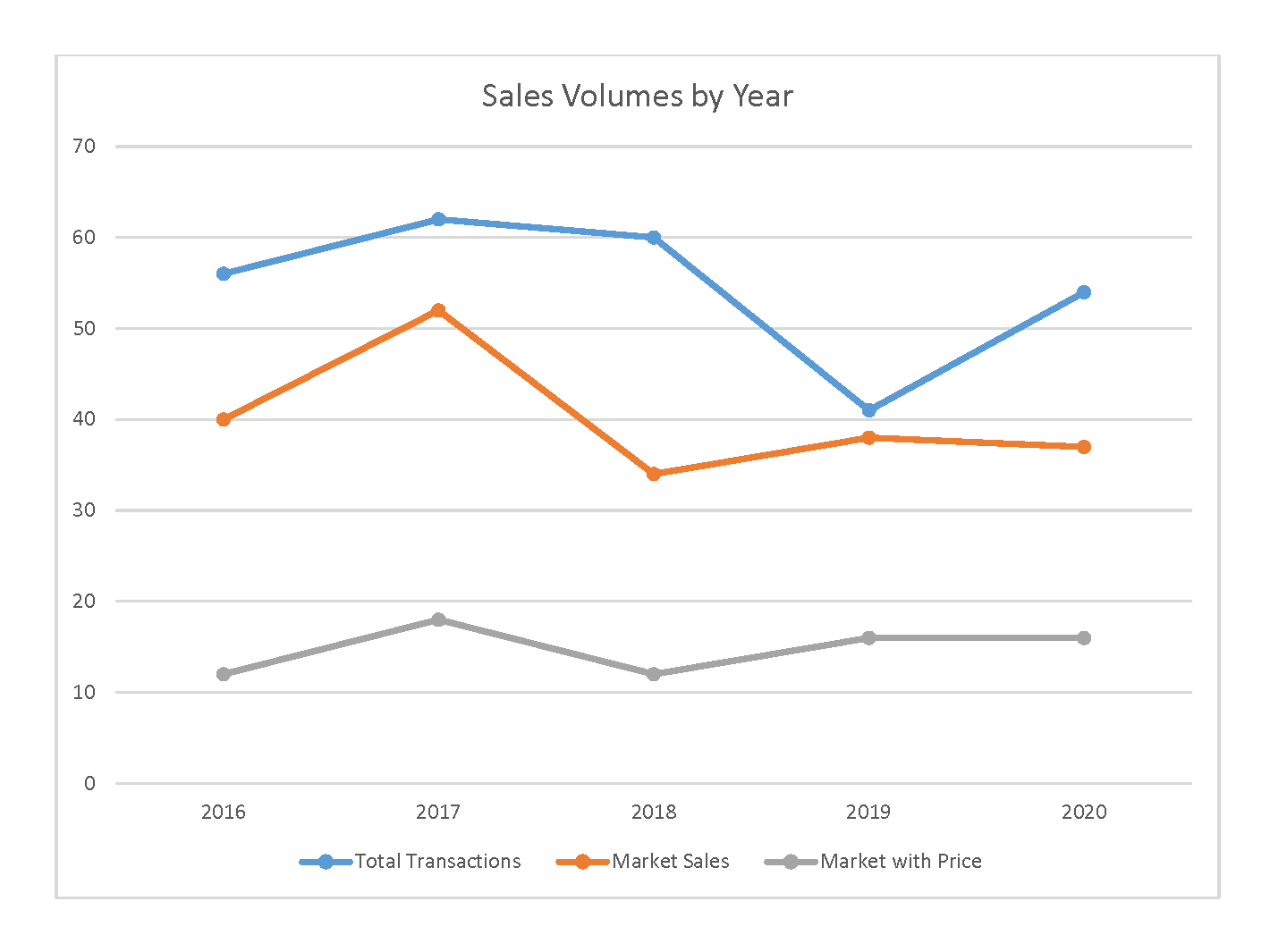
Explaining the correction and justification is complicated and technical. But a big piece comes from a comparison of disclosed sales prices of 57 commercial properties over the last five years against the city’s assessed values. It’s only a partial data set because sale price disclosures weren’t mandatory until a new city law took effect last November.

For commercial properties, sales prices on average were much higher. Rogers said the data indicates that the commercial real estate market isn’t as volatile as unhappy property owners think. Still, the owners of 207 commercial properties filed appeals this year.

Juneau commercial property sales volume by year
The Juneau Assessor’s Office has used this graph to show that the overall volume of sales of commercial properties in Juneau did not change much in 2020, despite the pandemic.

“There’s nothing about the appeals that makes me think that we have made a global error,” Rogers said. “We have demonstrated in a number of analyses that the vast majority of commercial parcels have not seen any increase to their base land value in a decade or longer.”

Some of those appeals are being resolved through conversations with the assessor’s office. Most are pending with the Board of Equalization for individual hearings and decisions. The board is a panel of volunteers appointed by the Juneau Assembly.

Rogers said he wants all of the appeals to be fully settled by the end of the calendar year so that the assessor’s office can shift its focus to the 2022 assessments.

But with so many outstanding appeals, it’s not clear if that soft deadline will be met with the regular process. Rogers said lawyers for the city and a group of property owners that includes McConnochie are trying to see if there’s a way to hold a group hearing.

“And then, if the Board of Equalization doesn’t agree, I’m more than willing to go to court,” McConnochie said. “And I gotta tell you, every single one of the people who are on the consolidation list is more than willing to do that, too.”

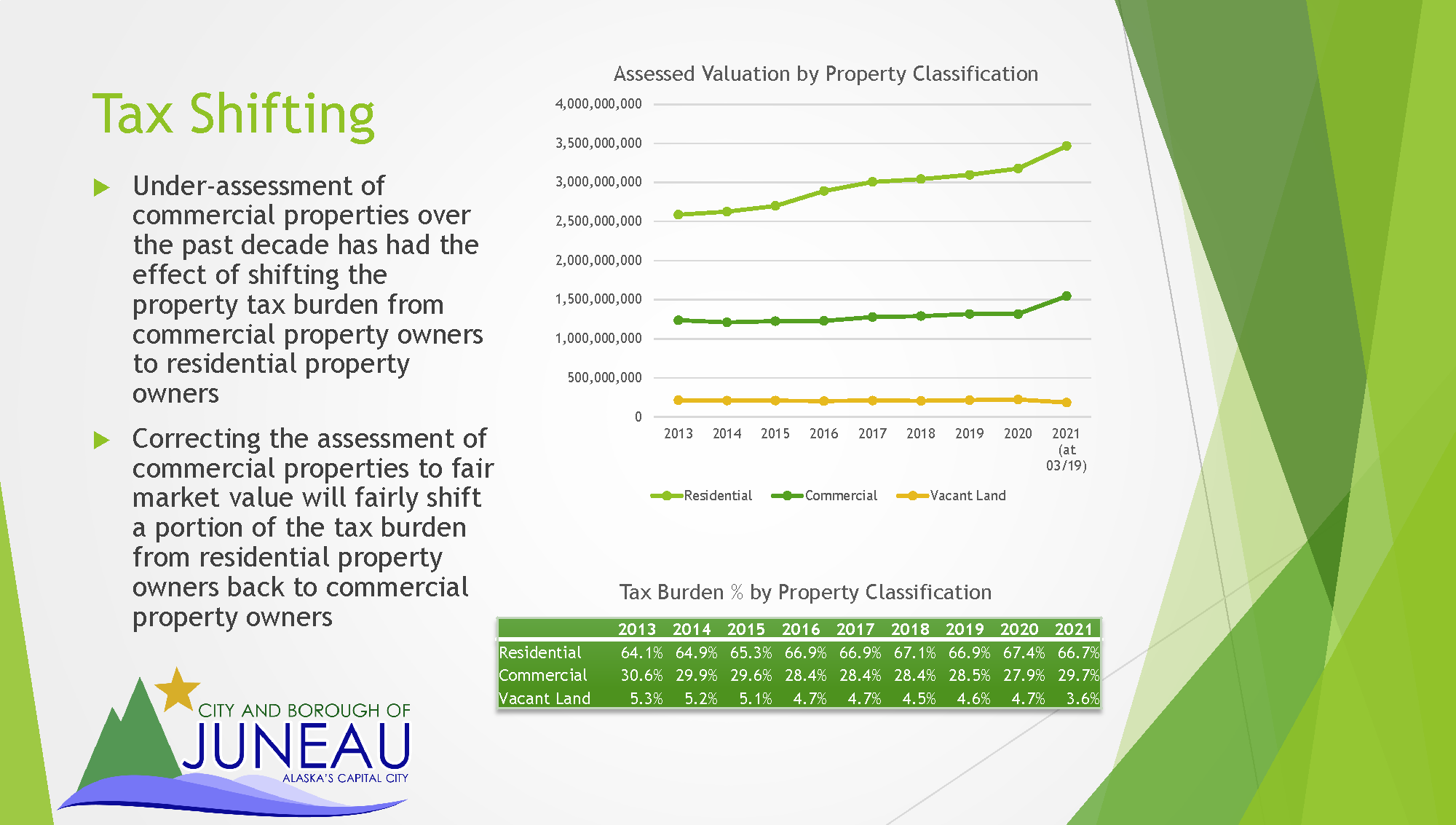
Rogers acknowledged that the abrupt change feels unfair to commercial property owners. But there’s a whole other class of property owners paying more than their fair share, because residential property assessments have been rising more or less in line with actual market values.

“So if you are a residential property owner, and you’ve owned your property over time, you have borne an increasing burden of property tax for the borough for the provision of police and fire and all the other services the city provides, because commercial land has been underassessed,” Rogers said.

This slide from a presentation by CBJ Finance Director Jeff Rogers to a Juneau Assembly committee on April 21, 2021, shows how the property tax burden has shifted over time because of flat assessments of commercial property.

Juneau’s local elected officials have been learning about the issue. At a recent Assembly meeting, Mayor Beth Weldon said they don’t have many options to intervene.

“There is limited things that we can do as the Assembly,” she said. “All the Assembly can do is ask the assessor to reassess. And we can’t tell them how, or who or anything. All we can say is, ‘Assessor, please reassess.'”

Weldon warned that could lead to even higher assessments. Or put this year’s assessment, appeal, and tax cycle further behind schedule.

One action the Assembly did take at that meeting was to give property owners a partial reprieve on their tax bills this fall. Normally, a year’s worth of property taxes are due in full at the end of September. This year, only 80% of the bill will be due. Property owners are still on the hook for the rest, but they’ll have three more months to pay that off.

Those due dates apply even if an appeal is pending. But Rogers pointed out that if a property owner wins their appeal and overpaid their taxes, then a state law requires the city to refund excess taxes plus interest at a generous 8% annualized rate.

The Juneau Assembly is discussing the commercial property assessments in a committee meeting Wednesday evening.

Disclosure: Reporter Jeremy Hsieh worked for Cycle Alaska in the summer of 2012.

This article has been updated to include the assessed value of PeggyAnn McConnochie’s property.

Land acknowledgment coming to Juneau School Board meetings soon

Students head upstairs during a break between classes at Thunder Mountain High School on Monday, August 16, 2021, in Juneau, Alaska. The school district reported about 300 more students on the first day of classes this year than it had last year. (Photo by Rashah McChesney/KTOO)

Juneau Board of Education meetings could begin like this, soon:

“The Juneau School District is on Lingít land and the Board of Education honors the people of this land. For more than 10,000 years, Alaska Native people have been and continue to be integral to the well-being of our community. We are grateful to have been welcomed to this place, to be a part of this community supporting the education of all children, including future elders. We honor the culture, traditions, language and resilience of the Tlingit people. Gunalchéesh!”

Board member Paul Kelly recited the language during a Policy Committee meeting on Wednesday. The committee recommends that the Lingít land acknowledgment be read at the beginning of full board meetings. The full school board is slated to adopt the language at its Sept. 14 meeting.

The board began working on a land acknowledgment back in January.

The acknowledgment doesn’t mention specific clans. Committee members said they wanted to err toward inclusivity, and avoid a misstep the Juneau Assembly made with its initial land acknowledgment language.

There’s been a trend locally and statewide of institutionalizing indigenous land acknowledgments at events and civic meetings.

Site notifications
Update notification options
Subscribe to notifications