
Kavitha George, KTOO

Early data shows Alaska overdose rate increasing, while suicide rate stays constant

Participants in a training rush a dummy into an ambulance as if it were a real patient at Hagevig Fire Training Center in Juneau. (Photo by Annie Bartholomew/KTOO)

The state Section of Epidemiology published preliminary data this week showing that Alaska’s suicide rate hasn’t gone up in the first three quarters of 2020, though unintentional drug overdoses are continuing an upward trend from previous years.

Alaska’s suicide rate remains among the highest in the country — around 30 deaths per 100,000 people. It’s the leading cause of death among Alaska youth over the age of 15. Beverly Schoonover, director of the statewide Suicide Prevention Council, said this has been an issue long before COVID-19 hit.

“Last year, [suicide] attempts, ideation and completions were much higher than we want to see. This has been an ongoing problem, and it’s not just the pandemic that’s contributing to that.”

Schoonover said issues like economic inequity and childhood trauma have largely driven Alaska’s high suicide rates. Officials are still compiling data to see if the pandemic has had an impact on the numbers this year, but anecdotally, she says it has definitely taken a toll on mental health.

“What we have heard from many people and from many communities is that there’s increased anxiety, increased depression for kids [and] for adults.”

She said people with existing mental health concerns have seen those exacerbated, and there are also reports that people who have never had serious concerns are developing anxiety or depression and seeking help.

The Alaska Careline, a crisis hotline, saw a 51 percent increase in the number of callers this year, according to the state’s report. “The increase in Careline call volume may indicate that more people are seeking assistance due to pandemic-associated stress,” the report read.

The state reported that the number of suicidal ideation and attempted suicide cases in emergency rooms has remained relatively consistent over the last few years.

Experts aren’t sure what’s causing the increase in overdose deaths. Schoonover said local police are reporting interruptions in illegal drug traffic during the pandemic. “So to replace that…illegal suppliers have been using more fentanyl in their mixes. And so that partially could be contributing to the overdose rate, because fentanyl is so much more deadly.

Fentanyl is a highly potent opioid, estimated to be 50 to 100 times stronger than morphine.

The department expects to have more information after all the 2020 data is compiled.

If you or someone you know is experiencing suicidal thoughts, the Alaska Careline is open 24 hours a day, every day of the year. The number is 1-877-266-HELP.

Seasonal cannery worker tests positive for COVID-19 in Cordova

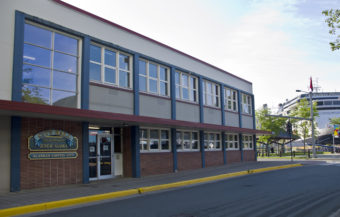
The sun sets over the harbor near downtown Cordova on Sunday, Sept. 8, 2019. (Photo by Nat Herz/Alaska Public Media)

The city of Cordova announced its first positive case of COVID-19 on Wednesday.

The infected individual is an Ocean Beauty cannery worker who had recently traveled through Seattle and Anchorage, according to Mayor Clay Koplin. The individual tested positive during a routine health screening while in a quarantine facility provided by the cannery.
Koplin says the patient is completely asymptomatic, and there’s still a chance the test is a false positive. Koplin said Ocean Beauty did one test prior to arrival and one after.

“So the first test, there was no sign. The second test there did indicate virus. So there’s a follow up test today to, you know, confirm,” he said.

The results of the third test have not been confirmed yet.

City and state officials have begun an investigation to identify a list of people the cannery worker may have come into contact with. Koplin says he doesn’t expect it to be a long list, because the individual went directly to quarantine after arriving in Cordova.

Last month, Cordova residents were divided about whether outside cannery workers should be allowed into the city as the summer fishing season gets started. Koplin says as they’ve received more testing resources and developed a robust plan to handle an outbreak, public opinion has moved to the middle.

“In other words, some of the panic has subsided into a little better understanding of what the city and others are doing to help mitigate an outbreak,” he said. “And then, at the other extreme, those who feel like it’s really nothing to be concerned with have recognized that now there are some real risks, there are some mitigating behaviors.”

Even with more supplies, Cordova’s medical system is not set up to treat a serious COVID-19 case — anyone seriously ill would still need to be flown to Anchorage for treatment. Koplin says while they are still allowing outside workers into the city, they remain open to more aggressive measures if the situation becomes more serious.

Alaska Municipal League predicts up to $250M hit to local government revenues

Juneau City Hall
Juneau City Hall in 2012. In the background, a Holland America Line cruise ship sits at the North Cruise Ship Berth. (Photo by Heather Bryant/KTOO)

The Alaska Municipal League is predicting the COVID-19 pandemic will incur between $200 million and $250 million in expenditures by local governments.

The nonprofit, nonpartisan organization calculated another $200 million to $250 million impact to municipal revenues, with the loss of tourism and other impacted industries.
Federal money from the $2 trillion CARES Act, passed in March, is expected to offset some of that hit to Alaska’s local communities.

Nils Andreassen, executive director of the league, said while the federal aid is expected to be used for emergency response expenses, local governments are able to define what falls under emergency response.

“All your medical emergency management costs, public health costs, payroll costs for anyone working on response or management of the crisis, then anything in response to state health mandates or CDC guidance,” said Andreassen. “And then it also allows for secondary impacts to be covered. Basically any economic support to those suffering from employment or business interruptions that the local government wants to offer.”

Andreassen said community leaders from across the state have been working together to understand how to respond economically to the crisis, and what aid money can and can’t pay for.

“It’s brought people together more closely than I’ve ever seen before,” he said. “Mostly because we have this common challenge that everybody’s trying to overcome. And everyone’s trying to find solutions in the public’s interest.”

Right now, Andreassen said it’s still unclear how communities can use aid money to cover things like school bond debt reimbursement. He said they’re waiting on guidance at the state and federal level.

“I think once we have better guidance from (the Alaska Office of Management and Budget) and from the state as to what are eligible expenditures, then we’ll be able to look at the difference between, you know, what can we make up through CARES Act funding and what’s left for the school bond debt reimbursement.”

Right now, the Alaska Municipal League is working as a go-between for federal officials and local governments, said Andreassen. Last week, U.S. Sen. Lisa Murkowski said that CARES Act funding was intended to benefit businesses, municipalities and organizations that COVID-19 has touched directly.

School bond debt reimbursement is a gray area, said Shirley Marquard, executive director of the Southwest Alaska Municipal Conference.

“I’m sure there’s going to be a lot of discussion about how that money can actually be used,” she said. “And hopefully by the time the Legislature is meeting with the governor, they have really clear direction from a federal administration on that.”


Kodiak Island has its first confirmed case of coronavirus

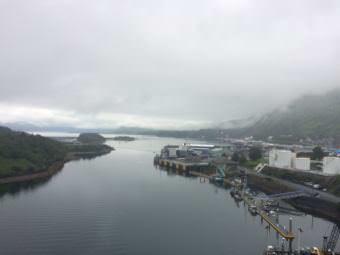
View from the Near Island Bridge. (Photo by Mitch Borden/KMXT)
View of Kodiak from the Near Island Bridge. (Photo by Mitch Borden/KMXT)

The Alaska Department of Health and Social Services announced the first confirmed case of COVID-19 on Kodiak Island Wednesday afternoon.

According to a press release from the Kodiak Area Emergency Services Organization, “The individual is not acutely ill and is staying at home.”

“Public health officials have made contact with the individual, and we’ll continue to monitor the condition to ensure continued self-isolation,” City Manager Mike Tvenge said. “Right now we have no reason to suspect this won’t occur.”

Kodiak Public Health Nurse Elsa DeHart confirmed the case appeared in town, not in one of Kodiak’s six outlying villages. The state COVID-19 database, updated on Thursday, shows the patient is male, between the ages of 20 and 29.

Public health officials are beginning an investigation to identify and reach out to anyone the patient came in contact with. DeHart said they’re trying to narrow down people the patient was within 6 feet of, for more than 10 minutes at a time, in the days before they began showing symptoms.

“Then we work backwards for a couple weeks to try and find out where they might have been in that time when they might have gotten sick.” She said Kodiak Public Health will notify and isolate additional people as necessary.

It’s too soon to know how far the disease will spread in Kodiak, according to DeHart. “We’ll just have to see where this goes,” she said. “There’s a potential that we could get a bunch more cases that are kind of surrounding this. Hopefully, it’ll just be a little isolated thing, but we won’t know that.”

DeHart said the contact investigation highlights why social distancing is crucial to limiting the spread of coronavirus.

“If people are doing what they are supposed to be doing, which is staying home or just going home into one or two places or being in very little contact with people, then it turns out to be a pretty nice investigation,” she said. “But potentially, if people are not doing that, and they’re just out in the community, then it could be dozens. So that’s why it’s so important that people stay home.”

Tvenge also emphasized the importance of practicing the Centers for Disease Control and Prevention’s recommended guidelines for preventing spread of the coronavirus: Wash hands frequently, stay away from others, practice social distancing as much as possible and wear a mask in public. Anyone who is feeling ill should contact their health care provider for advice before coming into a medical facility.

Kodiak Area Native Association and Kodiak Community Health Center are accepting calls from all residents, regardless of if they are patients, to provide screening and, if necessary, test for COVID-19.

With hundreds of rapid-testing kits on the island, KANA’s Dr. Evan Jones said while there aren’t enough supplies to test everyone in Kodiak, they can be more liberal about who they test.

“We’ve become very easygoing about who we test,” he said Wednesday morning, before the positive result was announced. “We would be happy to test people who are concerned about it, especially people who have higher-risk population in their household.”

The person who tested positive was among those tested with the new rapid-testing kits at one of Kodiak’s clinics, said DeHart.

“They weren’t feeling well, so they called their provider, and then the provider authorized them to have a test,” she said. “So they went and got tested. They did exactly what they should have done. It was perfect.”

Kodiak’s positive case was not among the eight new cases reported by the state in its midday count update Wednesday. The Wednesday count included a case from the Nome census area, three from Juneau, one from Kenai and three from Anchorage.


Legal advocates warn about uptick in domestic violence during pandemic

JPD SUV on Sunday, Sept. 11, 2016.
Juneau Police Department vehicle. (Photo by Quinton Chandler/KTOO)

The confined living situations introduced by the pandemic — while necessary for slowing the spread of COVID-19 — can increase the likelihood of domestic violence for some Alaskans.
Kelsey Eggert, a Juneau-based lawyer for Alaska Legal Services Corp., said reports of domestic violence are up.

“We’ve now seen an uptick in Juneau,” Eggert said. “After extended confinement in this very stressful situation in which the whole world has changed, there is an increase in domestic violence. And unfortunately, it’s also a lot harder to get help at the moment.”

“If you’re confined with your abuser, and they’re not leaving, how do you call a resource to get help or information?” she added.

Eggert recommends anyone experiencing domestic violence to call the National Domestic Violence Hotline — that number is 800-799-7233.

Having a safety plan is also a good idea, Eggert said.

“Have a person that you can text a certain word, and they know that you’re in trouble and they can maybe call the police for you,” she said. “Have a person who you can go to and stay on their couch for a bit if you’re really afraid.”

She said she often tells clients: “If you feel really unsafe, call 911.”

For community members who may know someone who has experienced domestic violence, Eggert recommended checking in with them.

“You don’t have to ask them if there’s been domestic violence,” she said, “but check in with them.”

Alaska Legal Services also deals with another area of concern for many Alaskans: a worsening financial situation. With reduced hours or not being able to work from home, paying bills and covering rent or a mortgage are suddenly more difficult.

For renters, a state bill passed to keep people who are struggling to make rent from being evicted. According to Alaska Legal Services Executive Director Nikole Nelson, court hearings for tenants who are behind on rent have also been stalled.

“The idea behind this is that we really don’t want people becoming homeless during a pandemic, because that’s not going to create a healthy situation for any of us,” she said.

That doesn’t mean renters are completely off the hook, however. Ultimately, tenants will have to agree on a repayment plan with their landlords. And Nelson recommends people struggling to pay their mortgage talk to their banks — further protections during the pandemic prevent banks from foreclosing upon homes right now.

Endangered Cook Inlet beluga whales continue to decline, and scientists aren’t sure why

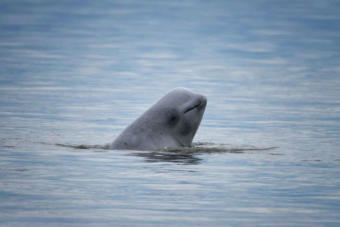
Cook Inlet beluga whale. (Public domain photo by Paul Wade/NOAA Fisheries)

The decline of the white whales in the inlet in view of Anchorage has been going on for decades.

In the 1970s they numbered around 1,400. In 2008, Cook Inlet belugas were listed as endangered, and still the numbers continued to drop. With new analysis methods today, there are even fewer whales than previously thought — less than 300, and steadily declining from there.

Still, the reasons why Cook Inlet belugas are disappearing are still largely a mystery to researchers.

“It’s such a frustration to not be able to really understand why the population is not recovering,” said Paul Wade, a National Oceanic and Atmospheric Administration researcher who has done aerial surveys of Cook Inlet belugas since the 1990s. “So we are just stuck with hypotheses that we really cannot yet prove or disprove.”

Wade and other researchers have a number of theories for why they’re disappearing, from direct human interaction to climate change disrupting their food source.

“I think the reduction in prey is something that we have a little more concern and want more information about, given … declines in salmon in Alaska, including some of the salmon runs in Cook Inlet,” he said.

Cook Inlet is also just really loud. Passenger and cargo jets roar into Anchorage multiple times a day. Container ships deliver food and consumer goods to the busy port. Cruise ships travel through in the summers, and a railroad follows the inlet down the coast.

All of these can interfere with belugas’ echolocation — the clicking, chirping and whistling noises they make to “see” through the murky water.

Wade said sound interference can make it harder for them to find prey and may prevent them from entering certain parts of their habitat. A loud environment can also make it more difficult for a calf to call for its mother, potentially separating a young whale from its mom, he said.

A Cook Inlet beluga whale mother and neonatal calf swim together. (Public domain photo by Hollis Europe and Jacob Barbaro/NOAA Fisheries)

Environmental advocates have blamed some of the sound disturbance on drilling activities in Cook Inlet.

Last fall, the Center for Biological Diversity sued the National Marine Fisheries Service, also known as NOAA Fisheries, for authorizing Hilcorp’s oil and gas activities in the area. The conservation group says that’s in violation of the Endangered Species Act protecting the belugas.

Center for Biological Diversity lawyer Julie Teel Simmonds said seismic surveys and pile driving can reach up to 250 decibels, threatening beluga health.

“What you see is death by a thousand cuts for these kinds of species like belugas,” she said. “It is just a cumulative approval of these projects one by one, with the government and the industry unwilling to look at the picture as a whole and say, ‘This species is not going to make it, and together these activities are killing the Cook Inlet beluga.’”

NOAA Fisheries told KTUU last month that the limitations in place are sufficient, even with the further decline in belugas.

Hilcorp did not respond to a request for comment in time for broadcast.

Part of the reason scientists haven’t been able to narrow down the reasons for the Cook Inlet beluga decline is that they’re very difficult to study. Cook Inlet has silty, opaque water that makes the whales difficult to photograph in the water — much of Cook Inlet beluga research has to be done from the air.

Even studying washed up belugas is tricky. Kathy Burek, a veterinary pathologist based in Anchorage, remembers studying one beluga that died from choking on a flounder, but beyond that she said it’s hard to remember any with a distinct cause of death.

“Whales get rotten really fast. And once they start getting rotten, you can’t do a lot of the testing that you do to see if they died of an infectious disease.” It’s frustrating, Burek said, but “The vast majority of time, I don’t know why they died.”

Cook Inlet belugas are a genetically distinct population, separated from the nearest other cluster of Alaskan belugas — in Bristol Bay — by hundreds of miles. Wade said that if this population were to go extinct, it’s very unlikely that other white whales would swim over to take their place.

NOAA has an ongoing acoustic monitoring effort to study beluga movements in Cook Inlet and try to explain the decline. The next aerial survey is scheduled for this summer.


Site notifications
Update notification options
Subscribe to notifications