KBBI - Homer

KBBI is our partner station in Homer. KTOO collaborates with partners across the state to cover important news and to share stories with our audiences.

Kenai Peninsula invocation lawsuit has roots in New York case

For the past six months, the Kenai Peninsula Borough Assembly has debated whether it should restrict who gives the opening prayer at each Assembly meeting.

They’re not alone; similar disputes are taking place across the country.

Several years ago, a lawsuit over prayer in public meetings consumed a town in upstate New York, eventually making its way to the U.S. Supreme Court.

Linda Stephens and Susan Galloway sued the town of Greece, New York in 2008 over the opening invocation at each town board meeting. The landmark case, Town of Greece v. Galloway, was heard in the U.S. Supreme Court and has set a legal precedent for prayer in public meetings. (Photo courtesy Linda Stephens)
Linda Stephens and Susan Galloway sued the town of Greece, New York, in 2008 over the opening invocation at each town board meeting. The landmark case, Town of Greece v. Galloway, was heard in the U.S. Supreme Court and has set a legal precedent for prayer in public meetings. (Photo courtesy Linda Stephens)

Greece, New York, looks like your typical New England town: quiet tree-lined streets, modest ranch-style homes and a lot of churches.

Nearly a decade ago, Greece made national headlines when two residents sued the city over the prayer that begins each town board meeting. They alleged the invocations, though technically open to all faiths, were almost exclusively Christian.

Linda Stephens was one of the plaintiffs.

The retired school librarian has lived in Greece for more than 40 years, but when she first filed the lawsuit, she says she felt like an outsider in her own community.

“I had a lot of unpleasant things happen to me,” Stephens said. “My house was vandalized a couple times. I was accosted in public a time or two. In fact, my neighbor told me one day that I should move out of town.”

Stephens identifies as an atheist and her co-plaintiff, Susan Galloway, is Jewish.

For years, the Greece Town Board had observed a moment of silence before their monthly meetings. In 1999, the board replaced it with an opening prayer given by local clergy.

Town employees selected the “Chaplains of the Month” by calling congregations within city limits.

Because the churches in Greece are almost entirely Christian, the vast majority of invocations were as well.

Americans United for Separation of Church and State represented the plaintiffs in the case.

Robert Goldstein is the president of the organization’s Rochester chapter.

“We felt it was an important principle (that) had to do with the extent to which a local governing body can engage in activities which encourage one particular religious denomination to the exclusion of others,” Goldstein said. “We felt that was a fundamental violation of the separation of church of state.”

The U.S. Supreme Court ruled in favor of the town, setting a legal precedent for prayer in public meetings.

Brett Harvey serves as senior counsel for Alliance Defending Freedom, the Christian legal organization that represented Greece in the lawsuit.

The Supreme Court ruling states that towns are not obligated to ensure a diversity of religions are represented, if it means looking beyond the boundaries of their communities, he said.

“The question is: Does the government have an obligation to allow anyone and everyone access to their microphones or can they set up common sense regulations to identify who within the community is best-suited to deliver an invocation,” Harvey said.

Fast forward to 2017.

That same question — who can give an invocation — is at the heart of a lawsuit between the Kenai Peninsula Borough and the American Civil Liberties Union of Alaska.

The Borough instituted an invocation policy last summer, after Iris Fontana, a member of the Satanic Temple and one of three plaintiffs in the case, gave an invocation ending with the words “Hail Satan.”

Under the new policy, a religious association that meets regularly in the Borough can nominate a representative to give the invocation.

The policy is similar to the one the town of Greece adopted after the Supreme Court ruling, but the ACLU of Alaska is suing the Borough, saying it violates the right to free speech.

“Legislative invocations do have a long, storied history in America, but the kind of policy that the Kenai Peninsula Borough Assembly has implemented is not of a kind that the Supreme Court has upheld as being constitutionally permissible,” said ACLU attorney Eric Glatt at a news conference in December.

Alliance Defending Freedom, the same organization that represented the town of Greece, is now representing the Borough pro bono.

The Borough has also hired the Anchorage-based law firm Brena, Bell & Clarkson.

Public records show the Borough had spent $18,390 on legal and administrative costs related to the invocation policy as of Feb. 13.

The lawsuit against the Borough has now moved to state court, but a trial date has yet to be scheduled.

Back in the town of Greece, although Stephens lost the case, she says having a written invocation policy in place has created a more inclusive atmosphere in the town board meetings.

“From my point of view, things turned out well because atheists now regularly give invocations at Greece town board meetings,” Stephens said. “We’re becoming a part of the acknowledged community, so I think it had some very good benefits.”

Stephens gave an invocation before the Greece Town Board last February and she says she felt proud. She’s scheduled to give another in July.

Alaska’s gender wage gap among largest in U.S.

Alaska has one of the largest wage gaps between men and women in the country, according to a new report from the U.S. Bureau of Labor Statistics released Tuesday.

Women in Alaska who worked full time in 2015 earned a median weekly pay of $787, while men earned $1,034 per week.

That means female workers in Alaska took home about 76 percent of what their male counterparts earned.

David Kong is a statistician with the U.S. Bureau of Labor Statistics. He said the mix of jobs available in Alaska is one factor contributing to the wage gap.

“In construction and extraction, which is a higher paid industry, it consists of 11.2 percent (of) men and only less than 1 percent (of) women,” Kong said. “So it has something to do in part with the occupational mix in the state.”

Although the ratio of women’s to men’s earnings in Alaska remains low in comparison to the rest of the country, overall earnings for both men and women are comparatively high. Nationwide, women earned $726 per week while men earned $895.

Kenai borough assembly to consider eliminating religious invocation

The Kenai Peninsula Borough Assembly voted to introduce an ordinance on Feb. 14 that would put an end to the invocation that begins each meeting.

South Peninsula representative Willy Dunne introduced the ordinance, which would modify Kenai Peninsula Borough code.
The ordinance cites the “emotional divisions in our community” that the invocation controversy has caused.

It also points to the significant cost to taxpayers that may result if the current policy is maintained. The Kenai Peninsula Borough is currently involved in an ongoing lawsuit with the American Civil Liberties Union of Alaska over the invocation policy.

The ordinance was approved for introduction in a 5-4 vote, with Assembly members Stan Welles, Dale Bagley, Brent Hibbert and Paul Fischer voting against.

A public hearing on the proposed ordinance is scheduled for March 21.

Options dwindle for orphan sea otters

In coastal Alaska, a bacterial infection has caused adult sea otter die-offs in record numbers. Meanwhile, researchers have seen a steep increase in the number of orphaned pups over the past several years.

In North America, the places where rescued pups would normally live out their lives are nearly full, putting volunteers in a tough spot.

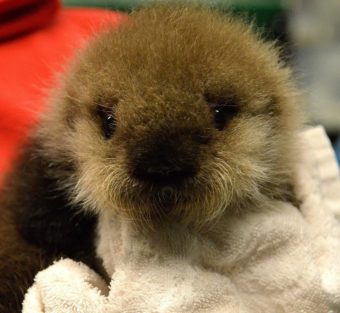
A technician helps groom an orphan otter pup at the Alaska Sealife Center. Maintaining a healthy coat is essential for otter survival. (Photo by Alaska Sealife Center)

Until recently, when an orphan sea otter was found on a beach, volunteers helped get it out of harm’s way and into rehabilitation.

The Alaska SeaLife Center in Seward was the only place that would accept orphan pups.

Animal Husbandry Director Brett Long is in charge of caring for the baby otters. While that might sound like a dream job, don’t be fooled: it’s hard work.

“It’s the screaming child, right? Hey, it’s your turn to take care of it,” said Long.

All four of the otter pups at the SeaLife Center are orphans. Over the last several years, a strain of Streptococcus bacteria has been killing Alaska’s sea otters.

Since 2002, an estimated 328 otters have died statewide from the infection. That means more orphan pups to care for.


Long coordinates a team that cares for the pups round-the-clock. Because of their fast metabolism, sea otters eat about 25 percent of their body weight in seafood every day.

He opens a heavy metal door, revealing a freezer the size of a studio apartment.

“We’ve got smelt, squid, herring, pollock, capelin and mussels,” he said, pointing to cardboard boxes lining the shelves.

It’s not just feeding that’s time-consuming. Because many of the pups are too young to know how to groom themselves, the staff has to do it for them. They use blow dryers, towels and combs to clean the fur and fluff it up.

For Long, the demanding nature of the work feels familiar.

“I had two nephews that were born 3 months early, so the first three months of their life was in a neonatal care ICU. That’s what raising sea otters is like. It’s a little beauty salon mixed with a neonatal ICU,” he said.

As the pups grow older, trainers work with them individually to help prepare them for lives in education centers. In an outdoor enclosure, trainer Juliana Kim teaches Tongit how to roll on his back and accept a fish. The pup arrived at the SeaLife Center last spring, after turning up in a Cordova parking lot.

Total sea otter deaths recorded in Alaska from 2002 to November 11, 2016 (left) and sea otter deaths directly attributed to Streptococcus syndrome during the same time period (right). According to the U.S. Fish and Wildlife Service, the data presented depend in large part on the total number of dead sea otters collected and examined. Because only a fraction of sea otter carcasses are recorded or examined, the data are likely an underestimate of the total number of dead otters and otters who died due to Streptococcus infection. Data courtesy of the U.S. Fish and Wildlife Service. (Graphic by Shahla Farzan/KBBI)

The SeaLife Center isn’t equipped to keep the pups forever. Eventually they’ll be moved to educational facilities or aquaria, either in the U.S. or abroad.

But the options for orphan otters are becoming fewer and fewer.

Only a limited number of facilities meet the strict requirements set by the U.S. Animal Welfare Act, allowing them to accept otters.

According to estimates from the Association of Zoos & Aquariums, there are only 14 facilities licensed in North America.

Debbie Tobin is a biology professor at Kachemak Bay Campus of Kenai Peninsula College in Homer. She also volunteers for the Marine Mammal Stranding Network.

Up until the age of six months, rescued otter pups require 24-hour care for everything from feeding to learning how to groom themselves. (Photo by Alaska Sealife Center)

“You have to have the right aquarium or facility or zoo to house a sea otter. It’s an expensive and difficult task to take on a sea otter if you don’t already have the set-up for that,” Tobin said. “Many of the facilities in the U.S. are essentially full.”

That means rehab facilities are now turning pups away.

Although the four pups at the SeaLife Center since moved to new homes, the facility has no plans to accept more.

Now when volunteers like Tobin find orphan pups, they have to leave them be.

“We’ve had to physically put them back laying on the beach knowing that very likely you come by the next day and they’re either there dead or they’ve been scavenged,” Tobin said. “If you’re lucky they’ve washed out to sea and you don’t know what happened to them. Oftentimes, we go out the next day and they’re dead lying on the beach.”

Leaving pups on the beach is a bitter pill to swallow for Tobin.

“It’s really, really hard to put that actual pup back down on the beach and walk away,” she said.

Several organizations are in the process of applying to become certified to house otters. But if the current pace of adult otter die-offs continues, it’s unlikely there will ever be enough facilities to keep up with the demand.

Plane crash passengers found alive on west side of Cook Inlet

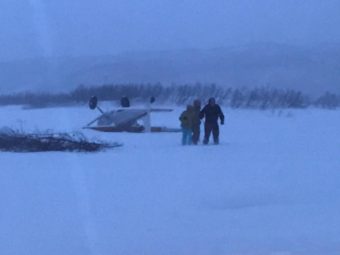
Three people walk away after their Cessna 180 crashed near a ridgeline landing strip in the vicinity of the Chakachatna River in the Kenai Peninsula, Alaska, Jan. 30, 2017. A Coast Guard Air Station Kodiak MH-60T Jayhawk crew transported the three to Anchorage International Airport. (Photo by U.S. Coast Guard)
Three people walk away after their Cessna 180 crashed near a ridgeline landing strip in the vicinity of the Chakachatna River in the Kenai Peninsula, Alaska, Jan. 30, 2017. A Coast Guard Air Station Kodiak MH-60T Jayhawk crew transported the three to Anchorage International Airport. (Photo by U.S. Coast Guard)

Three people aboard a plane that crashed near the Kenai Peninsula on Sunday have been found.

A Coast Guard MH-60 Jayhawk helicopter crew from Air Station Kodiak located the plane about 6 p.m. Monday.
“There were no injuries reported by any of the three people at the site of the crash,” said Chief Petty Officer Shawn Eggert. “Our crew was able to land and pick those people up and transport those people back to Anchorage, where they were picked up by waiting emergency medical personnel.”

The passengers, identified on Facebook by the Alaska District Church of the Nazarene as Josh Smith, his daughter, Danielle, and John White of the Soldotna Nazarene community, were then reunited with their families.

The flight was traveling from Lake Hood to Soldotna on Sunday.

When it didn’t arrive on time, family members reported it overdue.

The Alaska Rescue Coordination Center along with Civil Air Patrol crews searched by air Sunday and Monday, but were not able to locate the crash.

The center asked the Coast Guard for assistance on Monday.

The Jayhawk crew used the Cessna’s emergency locator beacon to trace the flight to the west side of Cook Inlet.

“Someone down on the ground fired a flare up that the pilot of the helicopter was able to see,” Eggert said.

The plane had landed in deep snow on a ridgeline near the Chakachatna River and flipped over.

The passengers spent about 24 hours at the site before they were found and rescuers credit the pilot’s emergency preparedness with their well-being.

“You know, cell phone signals (are) not always the best here. So, having a functioning radio, whether you’re on board a boat or an aircraft of some sort, having signaling devices such as mirrors and flares, even smoke signals, things like that are going to be very important should an emergency occur,” Eggert said.

The cause of the crash has not yet been determined.

Kenai Peninsula permafrost thawing rapidly, researchers say

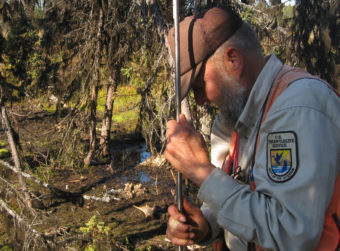
Retired U.S. Fish and Wildlife researcher Ed Berg probes for permafrost on the Kenai Peninsula. (Photo by U.S. Geological Survey)

Permafrost is thawing at a brisk rate across Alaska, and the Kenai Peninsula is no exception.

A recent study estimates permafrost coverage on the peninsula has decreased by 60 percent since 1950.

Permafrost is usually associated with Northern and Interior Alaska, but it also occurs in isolated pockets in wetlands on the Kenai Peninsula.

Benjamin Jones is a research geographer with the U.S. Geological Survey and one of the study co-authors.

“We installed ground temperature loggers connected to a data logger so we were recording ground temperatures on an hourly basis on a two and a half to three year time period,” Jones said. “Based on that data collection we were able to confirm that yes there is permafrost present in some of these wetland complexes on the Kenai Peninsula.”

To be classified as permafrost, the ground must remain below zero degrees Celsius for at least two consecutive years.

The Kenai Peninsula’s warm air temperatures mean these permafrost islands are particularly vulnerable to thaw.

Based on aerial photography, Jones estimates permafrost coverage on the Kenai Peninsula has decreased by 60 percent since 1950.

Warming air temperatures are one of the main reasons for the permafrost thaw, but Jones said there are other contributing factors.

“Fire is a pretty active disturbance mechanism when it comes to permafrost degradation or permafrost thaw,” Jones said. “It basically burns off the forest cover and burns some of the surface peat that’s acting to protect these permafrost deposits on the Kenai Peninsula.”

Permafrost on the Kenai Peninsula is mostly confined to islands of black spruce in wetlands.

Without that insulating layer of spongy peat moss and spruce, permafrost is much more vulnerable to thaw.

Permafrost may be hidden underfoot, but Jones said the effects of extensive thawing are anything but.

“It’s the foundation for which a lot of Alaska is built upon,” Jones said. “Permafrost influences roughly 80 percent of the subsurface of the state, so permafrost thaw can affect infrastructure, including roadways, buildings and pipelines.”

When permafrost thaws, the ground sinks and can lead to the collapse of roadways and buildings, along with coastal erosion.

Moving forward, Jones and his colleagues will be working to better understand the complex drivers of permafrost thaw across Alaska.

Their findings were published in the November issue of Cryosphere.

Site notifications
Update notification options
Subscribe to notifications