KBBI is our partner station in Homer. KTOO collaborates with partners across the state to cover important news and to share stories with our audiences.
A senior on the Soldotna High School hockey team was suspended from play over the weekend after posting racist comments on social media.
The player was a team captain but did not participate in games in Anchorage over the weekend.
Posts on his personal Twitter account, one dated Thursday and one dated Friday, quickly went viral around the state, in which the posts made denigrating remarks about Alaska Natives, the LGBTQ community, and the former first family.
The Kenai Peninsula Borough School District and Soldotna High School posted a statement on their Facebook pages Saturday, saying the matter is being addressed and that the district, school and hockey program are “disappointed and troubled” by the posts.
It reads: “Today, more than ever, we each need to pause and think about what we tweet, post on social media, and say to one another. Hate-filled, racist and disparaging remarks run counter to the mission of the KPBSD, our schools and our athletic programs, and will not be tolerated.”
The post further states that conversations about the appropriate use of social media will continue with students and athletes.
The U.S. Coast Guard rescued a pilot who crashed near Shelikof Strait on Sunday afternoon.
The pilot reportedly crashed his single-engine Super Cub airplane while attempting to land in deep snow on Hallo Glacier Lake, about 75 miles northwest of Kodiak, according to a Jan. 23 news release.
A Kodiak MH-60 Jayhawk helicopter crew received a mayday call from the pilot.
The Jayhawk crew lowered an aviation survival technician to help right the aircraft and transported the uninjured pilot to Kodiak.
Last year was a good year overall for groundfish fisheries in the region.
With a few standout harvests and favorable proposals with the Board of Fisheries, managers are feeling optimistic heading into the new year.
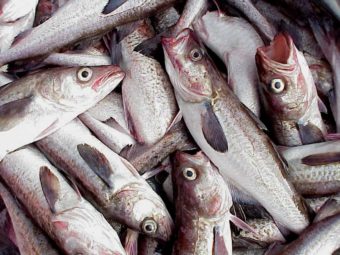
The Alaska Department of Fish and Game oversees several groundfish fisheries within the Cook Inlet Management Area, which extends outside of Kachemak Bay to the north Gulf coast.
“These fisheries include Pacific cod, sablefish, a directed pelagic shelf rockfish fishery, lingcod, and a small commissioner’s permit Pollock fishery,” said Jan Rumble, Fish and Game area groundfish management biologist.
Pacific cod stood out in 2016 as it was open all year long for pot and jig gear in either a parallel or state waters fishery, Rumble said.
Despite the extended opening, the state waters fishery only reached 83 percent of its guideline harvest level, or GHL.
“The markets here in Homer are just really variable so sometimes it’s challenging for the pot fishermen to find markets that are stable,” she said.
In contrast, fishermen reached the GHL for the very first time in the directed pelagic shelf rockfish fishery.
“I think that this year’s salmon season was not very good, so we just had an increased amount of participation and people doing it who hadn’t done it before and trying it out,” she explained. “I really think it was because of other fisheries not performing as well. People need to pay their bills.”
Fishermen came within 800 pounds of the sablefish GHL last year with a total of six vessels and 35 landings. The GHL for that fishery varies with the acceptable biological catch, or ABC, for the Gulf of Alaska, which is based on the National Oceanic and Atmospheric Administration’s National Marine Fisheries Service stock assessment surveys. This year the GHL will go up by 6,000 pounds for a total of 54,000 pounds. The sablefish fishery will open July 15.
Portions of the sablefish and rockfish management plans were on the table at the Board of Fisheries meeting in Homer, which took place Nov. 30-Dec. 3, 2016.
One proposal more clearly defined how long fishermen have to turn in their logbooks after a landing. Another required prior notice of landing, meaning fishermen have to call ahead and let the department know they are coming in.
“Especially with the rockfish fisheries, which are long-lived species, it’s really critical for us to get samples from these rockfish and collect otoliths for age determination,” said Rumble. “Both those proposals were important for our management and we were really happy that those passed.”
Perhaps one of the biggest changes that came out of the meeting was to reduce the groundfish pot closure area. That should allow local Homer fishermen to have more areas to fish that are closer to town, Rumble noted.
The area was initially closed to protect Tanner crab stocks in Kachemak Bay.
“With our recent information that targets Tanner crab, this area of high Tanner crab abundance could be better defined, which is why we reduced the size of it,” she said.
Looking ahead to 2017, Rumble said she‘d be keeping her eye on the rockfish and sablefish fisheries. For Pacific cod, the focus will be on making sure fishermen once again have enough opportunity to reach the GHL. Above all, she said the priority would be once again monitoring stocks as well as they can with the tools they have.
Humans can contract the tapeworm by eating raw or undercooked fish, but researchers say the risk is low.
For years, researchers have suspected the Japanese broad tapeworm was present on the Pacific Coast of North America.
With improved genetic techniques, they can now be sure.
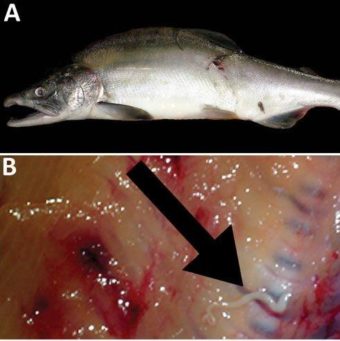
The tapeworm larva, which was about 10 millimeters — or 0.39 inches — long, had burrowed deep into the fish’s muscle near the spinal cord.
Jayde Ferguson, a fish pathologist with the Alaska Department of Fish and Game and one of the study co-authors, said the Japanese species looks remarkably similar to another fish tapeworm already present in North America.
“There’s been growing evidence that it’s been here, it’s just the ability to differentiate it with the similar looking species has now improved with molecular testing,” said Ferguson.
This is the first time larvae in fish have been found in North America, but it’s likely this species has been present here for many years.
That’s why Ferguson says the name Japanese broad tapeworm is somewhat misleading.
“Pacific salmon are on both sides of the Pacific Ocean,” Ferguson said. “They’ve evolved on those sides for thousands and thousands of years as have their parasites.”
“There’s really no increased risk, no need to be alarmed.”
Since it was first identified in 1986, the tapeworm has been found in several salmon species, including sockeye, chum and pinks.
Tapeworm larvae in raw or undercooked fish can infect humans and other carnivores.
An estimated 2,000 people have contracted the tapeworm worldwide, mostly in northeast Asia.
The risk of contracting the parasite in Alaska, either from raw fish in a restaurant or at the store, is low. According to the Alaska Food Code, businesses must freeze all fish prior to serving to kill parasites.
To ensure the safety of personally caught fish, Ferguson said there are simple precautions to take.
“There are FDA guidelines on how to prepare your fish properly to basically avoid any risk of infection,” he said. “That would be freezing your fish in your standard household freezer for one week or cooking it to the standard recommended cooking temperature of 140 degrees Fahrenheit.”
For more information on common fish diseases and parasites in Alaska, consult the Alaska Department of Fish and Game’s illustrated handbook.
A Kenai Peninsula man was arrested Jan. 11 on child pornography charges.
Remy Spring, 27, of Soldotna faces one count of distributing child pornography and six counts of possession of child pornography, according to Alaska State Troopers dispatch.
In June 2016, Louisiana Attorney General’s Cyber Crime Unit was in the midst of undercover operations to find people possessing, making or distributing child pornography in that state, when it contacted the Alaska Bureau of Investigation’s Major Crimes Unit in Soldotna.
Louisiana law enforcement was granted a search warrant for Spring’s old residence there, but officers found he had just returned to Alaska, according to troopers.
On July 1, Spring was then served a search warrant at his home in Soldotna by Alaska officers, who seized electronic storage devices and a computer.
Technical Crimes Unit officials in Anchorage forensically examined the devices and found multiple pictures and videos of children being sexually exploited.
The Kenai court issued an arrest warrant Jan. 11 for Spring, who was picked up the same day at his home.
Spring is being held at the Wildwood Pretrial facility in Kenai.
The Borough Assembly invocation lawsuit moved to federal court this week.
The lawsuit, filed Dec. 14 in Anchorage Superior Court by the ACLU of Alaska, claims the Kenai Peninsula Borough Assembly’s invocation policy is discriminatory.
Borough attorney Kevin Clarkson filed a motion Jan. 9 to move the case from the state court to the U.S. District Court.
Under current Borough Assembly policy, only individuals or religious associations on a pre-approved list are allowed to give the invocation.
The ACLU claims this policy violates constitutional rights to free speech and equal protection under the law.
The Borough Assembly passed a resolution on Jan. 3 authorizing the transfer of $50,000 from Borough Mayor Mike Navarre’s office to defend the invocation policy in court.
Close
Update notification options
Subscribe to notifications
Subscribe
Get notifications about news related to the topics you care about. You can unsubscribe anytime.