KDLG - Dillingham

KDLG is our partner station in Dillingham. KTOO collaborates with partners across the state to cover important news and to share stories with our audiences.

China to slap tariffs on Alaska seafood, among other U.S. products

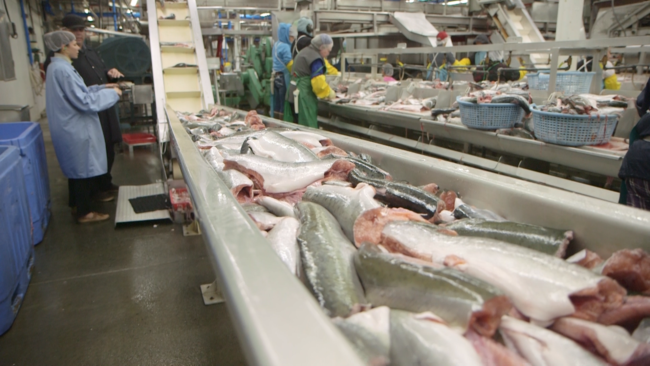
Seafood processors are some of the largest energy consumers in Kodiak, which has generated more than 99 percent of its electricity from renewable sources since 2014. Here, the Ocean Beauty seafood plant. (Photo by Eric Keto/Alaska’s Energy Desk)

The United States released a list of Chinese goods Friday worth $50 billion on which it will place 25 percent tariffs. Shortly afterward, China announced reciprocal tariffs on U.S. goods, including Alaska seafood.

Garett Evridge, an economist with the McDowell Group, who specializes in the seafood industry, explained that the tariff on seafood is likely to be far reaching.

“Our initial review of this is indicates that really all salmon species, pollock, ground fish, herring, really across the board for Alaska seafood products, in addition to lobster and other products used throughout the U.S., it looks like the announcement indicates that tariff would be 25 percent on product, including Alaska seafood products,” said Evridge.

Both U.S. and Chinese tariffs will reportedly take effect July 6. Evridge said it is too early to know what this will mean for the seafood market.

“There’s a whole other side of this with diplomacy and strategy on the side of China and the U.S. that we’re not really aware of,” Evridge said. “But in the event that this actually occurs, it will certainly be a challenge to the industry, and it will impact processors, communities, fishermen just because a 25 percent tariff means an increase in cost.”

One thing is clear, however. China plays a major role Alaska’s seafood industry, so the tariffs would affect a significant portion of the market.

“In 2017, Alaska exported about 1.1 million metric tons of seafood to countries around the globe,” Evridge said. “Of this total, China accounted for a little bit less than half of that. In terms of salmon, exports of Alaska salmon to China account for about 40 percent of our total salmon exports. And over the last five years or so, about one in three salmon that has been exported from Alaska has gone to China.”

These tariffs would be added to already existing tariffs on Alaska seafood entering China which vary from five to 15 percent, depending on species.
Four gubernatorial candidates to debate at Bristol Bay Fish Expo

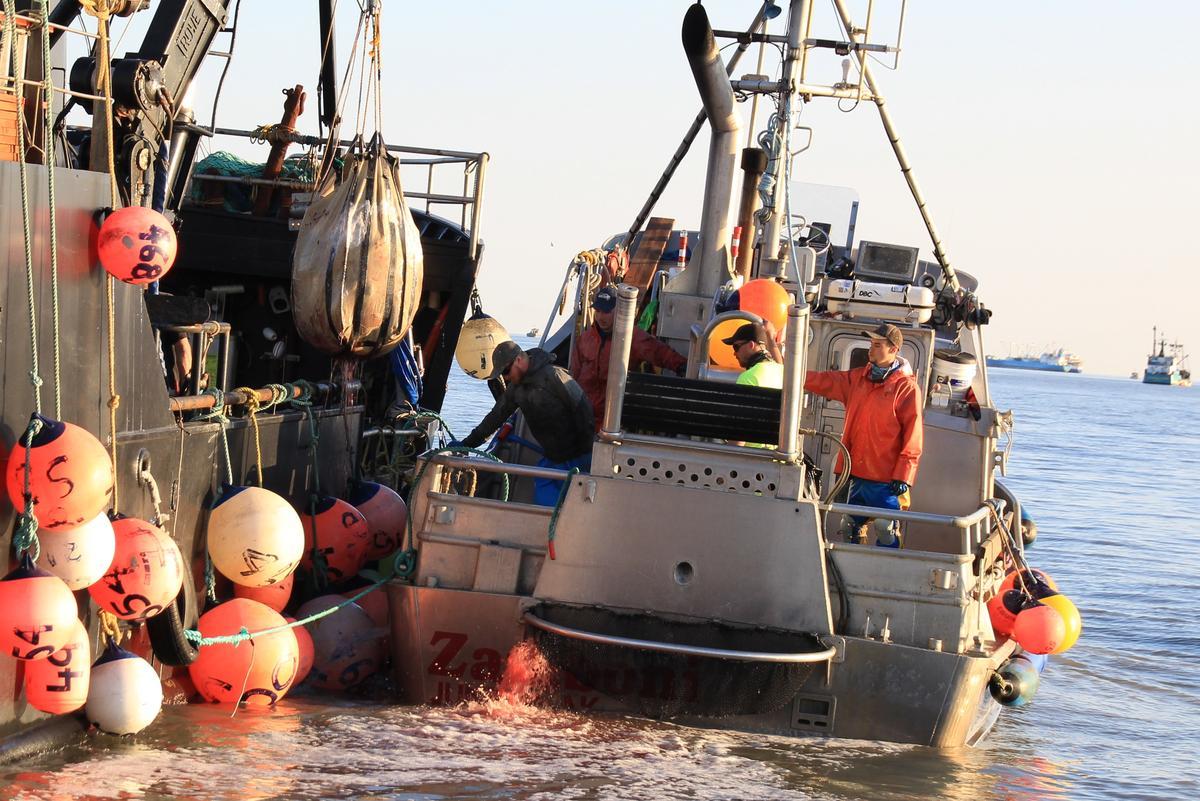
The Bristol Bay Fish Expo aims support commercial fishing in the region, while at the same time fostering community development. The proceeds from the expo will benefit Little Angels Childcare Academy in Naknek. (Photo courtesy Sarah Grace Durrance)

The  second annual Bristol Bay Fish Expo will feature a variety of events aimed at developing Bristol Bay communities and the commercial fishing industry.

One of this year’s highlight will be a debate between gubernatorial candidates.

Four candidates running for state governor in November’s election will participate in the June 9 debate at the Bristol Bay Fish Expo in Naknek.

Incumbent Bill Walker, Mike Dunleavy, Mike Chenault and Scott Hawkins will answer panelist and audience questions related to the theme, “Sustainability in Rural Alaska.”

Rhonda McBride of KTVA will moderate the discussion.

By holding a debate off the road system, event organizers aim to focus attention issues particular to Bush Alaska.

“This debate is more of educating our future governor in what we deal with in rural Alaska and how they want to sustain the heartbeat of Alaska, which is rural Alaska,” said Katie Copps-Wilson, who is running the Fish Expo with Sharon Wlaysewski-Thompson. “If we don’t sustain it, then the culture is potentially lost. And also the out-migration of rural Alaska really affects urban Alaska and the infrastructure.”

In addition to the debate, the expo is bringing back some of the most successful events from last year, including a trade show and live auction.

Another favorite, speed hiring will make a reappearance.

“We framed it after speed dating. Captains and potential crew will come, and they’ll meet,” Copps-Wilson said. “We’ll have them organize where potential crew will have three minutes with each potential captain. It works very well actually, and people are very happy with it. We made some good matches last year.”

While many Bristol Bay fisheries stakeholders attend the Pacific Marine Expo in Seattle in the fall, Copps-Wilson said that the Bristol Bay Fish Expo meets a targeted local need.

“Here it’s a concentrated market, where you’re just looking at Bristol Bay fishermen. It’s the boat builders who are specific to Bristol Bay who are coming up here and launching their new boats and lines,” Copps-Wilson said. “And the businesses that are specific to Bristol Bay now have a venue that they’re not drowned out by all these other places. And it’s also a very affordable event that more local people can participate in and celebrate their businesses.”

About 50 vendors registered, which marks a slight growth from last year’s 44 vendors. Nearly all the tables for the event are sold.

All proceeds from the expo benefit Little Angels Childcare Academy.

Last year, it raised roughly $15,000 for the program.

Katie Ringsmuth will deliver a keynote speech June 8 on the history and legacy of Bristol Bay canneries. The expo concludes June 9.

Participants must register online. Bristol Bay residents can enter their zip code as a discount code. Organizers are also still seeking donations for the live auction, which can be in the form of goods or services.

Anyone interested in suggesting questions for the gubernatorial debate can email info@bristolbayfishexpo.com before June 8.

Pebble Mine loses funding from First Quantum Minerals

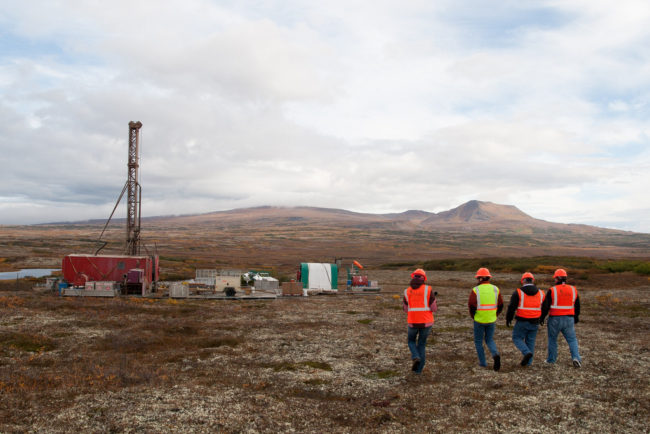
Members of the media walking to an exploratory drill rig. Photo by Jason Sear, KDLG – Dillingham
Members of the media walking to an exploratory drill rig at the Pebble Mine Exploratory site. (Photo by Jason Sear/KDLG)

A major business deal has fallen through for the proposed Pebble Mine. A Canadian mining company, First Quantum Minerals, will no longer back the controversial project.

Northern Dynasty Minerals, the sole owner of the Pebble Limited Partnership, announced in a press release late Thursday night that the two companies could not reach an agreement on First Quantum joining the partnership.

Back in December, Northern Dynasty said that First Quantum would buy into Pebble at $150 million over four years. At the end of those four years, First Quantum was to have the option to become a 50 percent owner of the mine. According to Pebble, the initial $150 million would help fund the permitting phase of the proposed gold, copper and molybdenum mine in Bristol Bay.

However the companies delayed finalizing the agreement in April. Now they’ve scrapped the agreement altogether.

Groups opposed to the mine are celebrating.

Robin Samuelson of Dillingham has been fighting the mine for 14 years. He is president of Bristol Bay Economic Development Corporation, a tribal chief for the Curyung Tribal Council.

“Four major financing companies pull out of the Pebble Mine. Bristol Bay has spoken. Alaska has spoken,” Samuelson said. “The United States has spoken through the EPA process and the Corps process. I don’t think there’s going to be another big finance company in mining that’s going to come in and help these people out. I think the end is very near for them.”

Since the Pebble Limited Partnership was formed, three other companies have pulled out—the Mitsubishi Corporation, Rio Tinto and, most recently in 2013, Anglo American.

First Quantum Minerals and Pebble Limited Partnership did not respond to a request for comment.

Northern Dynasty’s stock dropped sharply this morning. It is down more than 30 percent from yesterday, bringing its stocks to the lowest point since October 2016.

Togiak sac roe herring’s lone gillnetter calls it a season

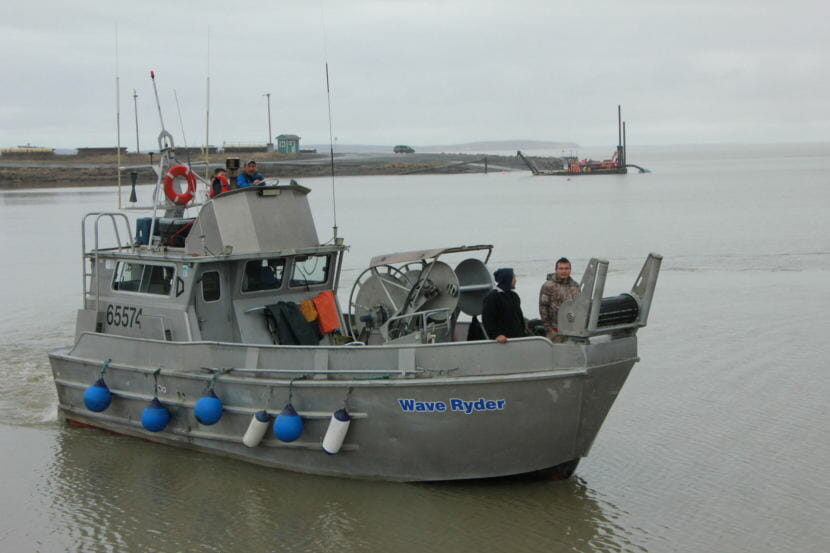
Thirty percent of the Togiak sac roe herring quota is allocated to the gillnet fleet. This year, the F/V Wave Ryder was the fishery’s gillnet fleet of one. (Photo by Avery Lill/KDLG)

Seagulls wheeled under gray skies, and low clouds spit rain as the F/V Wave Ryder motored back into Dillingham after nearly four weeks on the water near Togiak.

The purse seine fleet took its quota by May 2, leaving Frank Woods and his crew on their own to fish for the 7,212 tons of herring allocated to gillnetters. On Thursday, he ended his season.

The mood on the 32-foot aluminum drift boat was celebratory as it was hauled out and put up in the Peter Pan Seafoods boat yard.“It was a phenomenal year. On a good average day, we’d catch 100 tons a day when we were able to fish with good weather, said Woods.

He sat in his wheel house, which was cramped with sleeping berths for himself and his three crew members and a diner-style booth table by the window. Translucent, shimmering herring scales stuck to his baseball cap like sequins.

“The first two weeks was hell for weather. Then it kind of cleared up a little bit. But still, those southerly winds. I’ve never seen the water so murky. There’s been southerly storm after storm after storm for a month. And the temperature, it didn’t get above 38 degrees for two weeks, blizzarding every other day.” Woods chuckled, “Got to just love to be miserable I guess.”

Frank Woods was the only gillnetter in the 2018 Togiak sac roe herring fishery. (Photo by Avery Lill/ KDLG)

Woods grew up in Bristol Bay and has been fishing for Togiak herring his whole life. He has watched the fishery change dramatically over the years.

“At one time, I think there was a peak of close to 600 gillnetters plus 300 or 400 seiners close to 1000 boats on a regular, average basis. I don’t know, the market just started going down. They Americanized the fleet. Herring became less of a commodity in Japan, and we haven’t found much of another market for them other than bait and food fish,” said Woods.

At the peak of sac roe herring fisheries in Alaska in the late 1980s, herring could bring in more than $1000 per ton. In the past eight years, Togiak herring have brought between $50 and $170 a ton. Based on early market indicators, prices are expected to settle in the $50 to $100 this year.

Woods said that the price is high enough to keep him going, but barely.

“The margins are way off, and the profitability is hard to recover. I know what the expense is to operate over there, not only market-wise, but production-wise and tender-wise and crew-wise and all that stuff is really, really costly when the price of herring is almost breakeven or at-loss margins,” Woods explained.

Herring spawn near Togiak (Photo courtesy Alaska Department of Fish and Game staff)

Still, Woods hopes more gillnetters will chose to participate in the fishery. His processor hopes so too.

“The one fishermen in our gillnet fleet, I want to support year after year,” said Warner Lew, Icicle Seafoods’ fleet manager. “We had a couple more [gillnetters] have events come up that couldn’t attend. We’ll maintain this gillnet fleet because I want to see that portion of the quota remain with the gillnetters.”

What will it take to get more gillnetters fishing? Woods and Lew stressed that there are not easy answers, but they both talked about the importance of diversifying the market for herring. Lew has even started a side business, Deckhand Daughter Seafoods, to sell smoked herring.

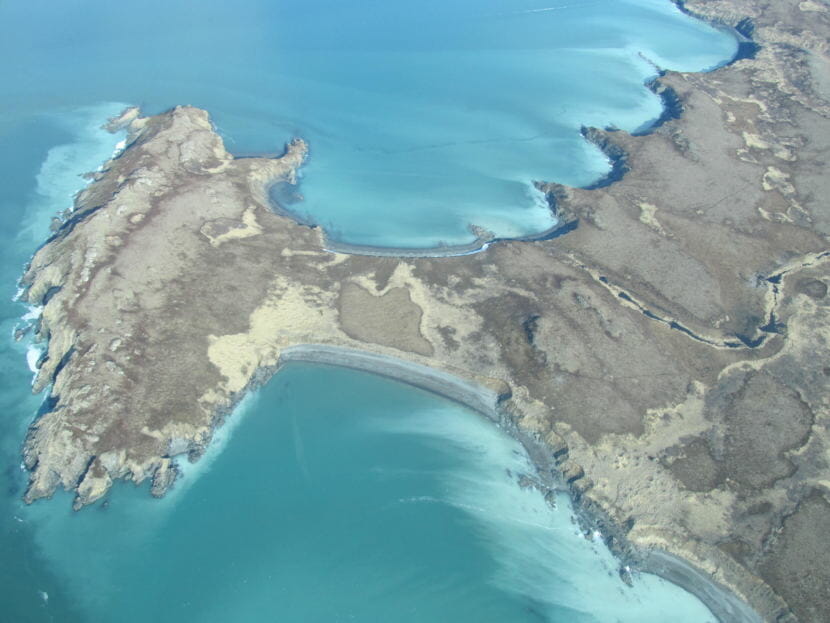
Despite the tough market and bone-chilling weather, Woods plans to be back out in the turquoise waters around Togiak next year hauling in herring.

Walrus haul out near Bristol Bay village

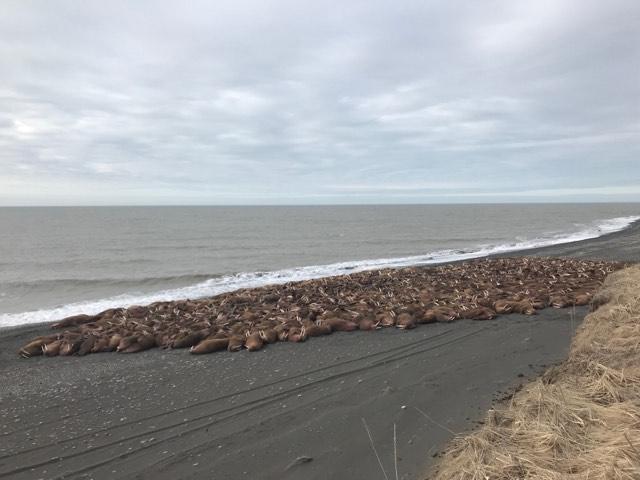
Walrus began showing up on the beaches near Port Heiden in early April. (Photo courtesy John Christensen)

Some unexpected animals are loafing on beaches near Port Heiden this spring, and their numbers seem to be fluctuating.

The Bristol Bay village on the north side of the Alaska Peninsula first reported seeing walrus hauled out in early April.

Village resident John Christensen was riding his four-wheeler when he first spotted them.

“We went for a ride up the beach and ran into a large amount of walrus, a few hundred of them. We’ve never seen anything like this here before,” Christensen said.

Over the course of a month, the residents saw more groups of the ungainly marine mammal resting on the shores from Hook Lagoon to Strogonof Point.

“There has been an increase in the walruses,” Christensen said April 25. “At first there was only a few hundred spotted pods all over the place. Now there’s more. We couldn’t get a good view from the distance we were at, but it looks like there’s over a thousand.”

Alaska Department of Fish and Game area management biologist Bob Murphy flew May 1 the shoreline from Pilot Point to Port Moller.

“We did see 100 animals where I’ve never seen 100 walrus hauled out before,” said Murphy, noting also that the stretch of flat, sandy beach where the walrus lay was atypical topography for a walrus haul out. “Usually walrus like to have a cape behind them.”

Walrus pods are prone to stampeding off a beach and into the water if disturbed, which can result in some animals trampling others.

The Marine Mammal Protection Act protects walrus from harassment to guard against needless death and injury.

Harassment could include noisy fishing boats passing too near to the resting walrus.

In the Ugashik District, for example, Fish and Game changed the line for the commercial salmon fishery in 2016 and 2017 when more than a thousand walrus hauled out at Cape Greig.

The amended boundary allowed the walrus and boats a 1-mile buffer zone.

It is too early to rule out such a measure for the Alaska Peninsula Area, or to know to know whether the walrus will even be there in a few weeks.

“It could just be they’re just staging there for a bit or resting and they’re eventually going to go to their traditional haul out areas,” Murphy said. “We’re just going to keep an eye on it and see if they disappear or if more show up or if they move around. The place that they were in is an area that is closed to commercial salmon fishing, so I think if they stayed there, they would be no obstructions to anything. But, more than likely, I would expect that they may move.”

According to the U.S. Fish and Wildlife Service, walrus have hauled out near Port Heiden before, but it has been about two decades.

As Port Heiden residents wait to see whether their new guests are here for the summer or just making a pit stop, they say that they are keeping their distance to ensure they don’t disturb the animals.

Deadline for Northern Dynasty and First Quantum to finalize Pebble option agreement extended, again

First Quantum Minerals and Northern Dynasty on Tuesday announced another delay in finalizing their option agreement.

Northern Dynasty Minerals is the sole owner of the Pebble Limited Partnership.

In December, the parties announced that First Quantum had agreed to buy into Pebble at $150 million over four years.

At the end of those four years, First Quantum would have the option to become a 50 percent owner of the partnership.

The original framework agreement gave the companies until April 6 to finalize the agreement.

After the December announcement, Pebble Limited Partnership CEO Tom Collier said that the initial $150 million would help fund the permitting phase of the proposed gold, copper and molybdenum mine in Bristol Bay

The companies extended the deadline last month to finalize the agreement to April 30. They’ve extended it a second time:  the new deadline is May 31.

Site notifications
Update notification options
Subscribe to notifications