KDLG is our partner station in Dillingham. KTOO collaborates with partners across the state to cover important news and to share stories with our audiences.
Alaska State Troopers intercepted 56 grams of heroin in Togiak over the weekend.
Patrick Einhellig, 32, of Dillingham arrived Friday at the Togiak airport, when troopers contacted him. They say he was allegedly carrying the heroin on him.
He was indicted Tuesday on a felony charge of drug delivery.
The street value of that amount of heroin in Bristol Bay is at least $56,000.
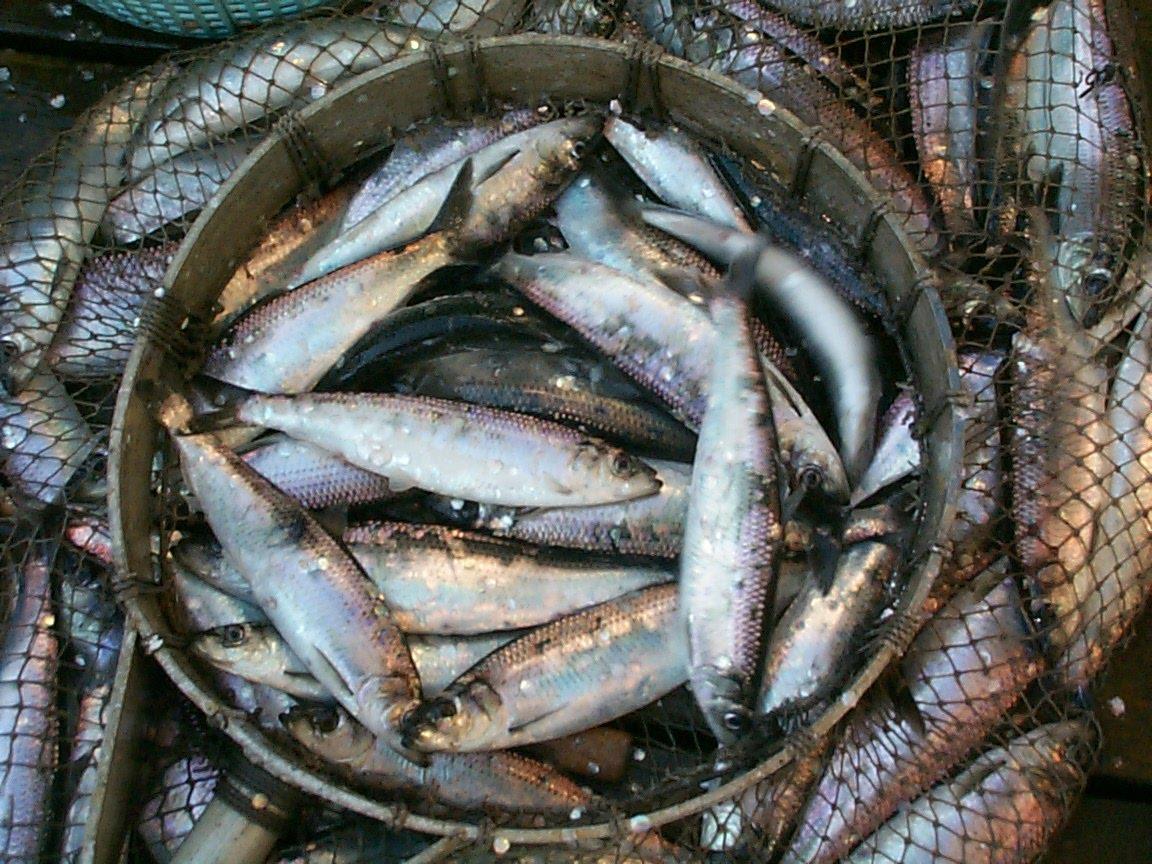
The state’s largest sac roe herring fishery got underway Sunday in the midst of high winds and a NOAA gale warning. (Photo by Tim Sands/Alaska Department of Fish and Game)
The Togiak herring fishery, the state’s largest sac roe herring fishery, opened Sunday morning with a windy start.
More than 30 mph gusts posed a challenge for fishermen, area management biologist Tim Sands said.
“The seine fleet is over there, and it’s pretty tough conditions today because of weather,” he said. “I know some fish is being taken, but I don’t think a lot.”
The Alaska Department of Fish and Game surveyed the district Saturday and concluded the enough herring had arrived to meet the threshold — 35,000 tons — to open the fishery.
The combined purse seine and gillnet quota for the Togiak District sac roe fishery is 24,042 tons, slightly larger than last year’s quota.
Mostly seiners are participating. Fish and Game expects only one gillnetter to be a part of this year’s fishery.
As herring swim into the waters near Togiak, it can take some time for them to mature enough for their spawn to be marketable.
“I’ve heard reports that it’s mixed at this point. Some are mature, but not all of them,” Sands said. “And that’s typically what we see the first couple days of the fishery. There’s not a lot of mature fish around, but it takes them a couple of days to ripen up once they come into the shallow water.”
Herring fishing in Togiak is open until further notice. Fish and Game will close fishing when the fleet takes close to the quota.
A former Anchorage resident was sentenced Thursday in Dillingham for recklessly flying low over a boater several years ago.
Benjamin Hancock, 38, hit the man in the head with the ski of the float plane.
Hancock pleaded guilty to felony assault, and he will pay a fine and restitution, but he will not serve any jail time.
Flying recklessly is illegal and the consequences can be devastating, the central message of victim Travis Finkenbinder’s family and the assistant district attorney, Allison O’Leary, at Benjamin Hancock’s sentencing hearing last week.
In 2014, Hancock and Finkenbinder were working together to move skiffs from one section of the Mulchatna River to another for their employer.
Hancock was providing air support, piloting a de Havilland DHC-2 Beaver float plane. Hancock took off from the river, heading in the same direction as Finkenbinder, who was driving a boat.
Hancock flew low over the boat, and the ski of Hancock’s plane hit Finkenbinder in the head.
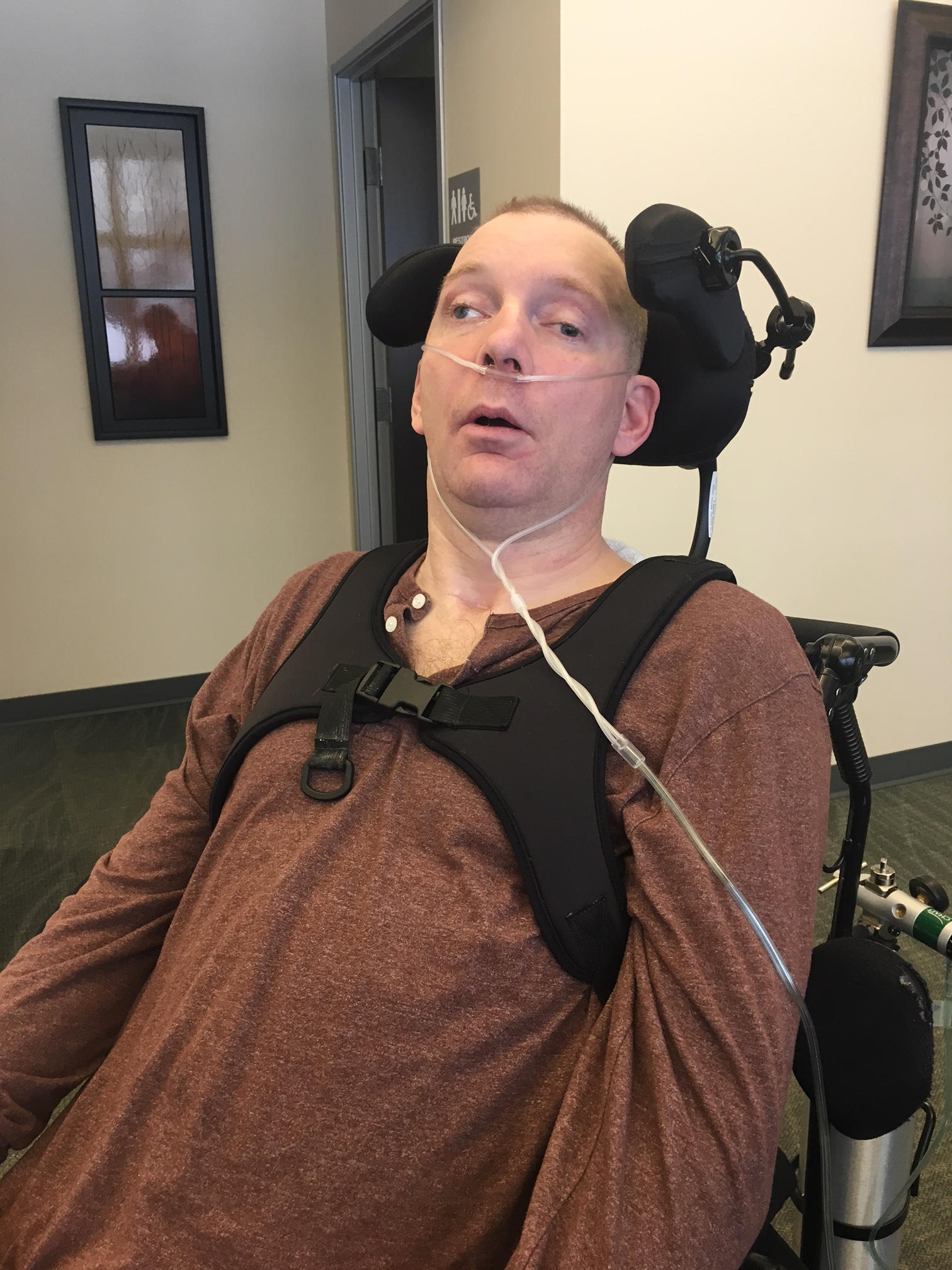
Travis Finkenbinder, pictured here on March 14, 2018, is permanently minimally conscious. A co-worker struck him in the head with his float plane’s ski in 2014. (Photo courtesy Samantha Finkenbinder)
Finkenbinder survived, but suffered extensive, permanent brain damage.
He remains in a minimally conscious state, unable to hold up his head, speak or eat.
He can respond to basic questions inconsistently with a thumbs up. Doctors have said his condition will not improve.
Capt. Scott Quist is an Alaska State Wildlife Trooper and veteran pilot who was stationed in King Salmon when the tragedy occurred,
At the hearing, Quist took the stand as the state’s expert witness and said that he saw “no reasonable explanation” for Hancock not clearing Finkenbinder and his boat by hundreds of feet.
“Based on everything that I read, from interviews, from the performance data (of the aircraft), from the weather conditions, everything I know about it, I think Mr. Hancock intentionally flew the aircraft at extremely low altitude and did a buzz job,” Quist said.
A “buzz job” or “buzzing” is slang in the aviation community for intentionally making a low pass over something or someone.
Travis Finkenbinder’s father, Arthur Finkenbinder, provided a victim impact statement at the sentencing.
“The incident involved the destruction of an extraordinary human being, beloved son, faithful and loving husband, loving father and brother and friend to numerous people,” Arthur Finkenbinder said. “I would say to buzz a person with an airplane is stupid, no matter the height of an airplane. To buzz closely is insane … and to buzz and hit another human being is criminal assault and battery, arrogant, insane and stupid.”
Hancock pleaded guilty to felony third-degree assault and agreed to pay restitution of $6,100 to Travis Finkenbinder’s family.
He also will avoid jail time as a part of a plea deal with the state.
Superior Court Judge Christina Reigh ordered Hancock to pay a fine of $25,000 to the state. However, she expressed doubt that a sentence without jail time will send a strong message to the aviation community. If active jail time were on the table, she said she would have ordered it.
“Buzzing is a problem, and we all know it. And it’s something that can end very badly, which it did in this particular situation,” Reigh said. “I think sending the right message, especially in bush Alaska, where we are all flying all of the time, I think that is really important.”
Hancock was tearful throughout the testimony and victim impact statements of Travis Finkbinder’s wife and father.
During his own statement, he apologized to the victim’s family.
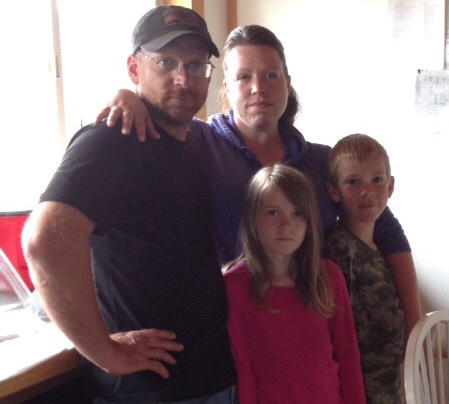
Travis Finkenbinder stands with his wife, Samantha, daughter Alyssa and son Taylor in early June 2014. Finkenbinder later suffered severe head trauma. (Photo courtesy Samantha Finkenbinder)
“I know there’s nothing I can say to take away the pain Samantha, Travis and the family have endured, nor ease the burden moving forward. And for that I am truly sorry,” Hancock said. “I intend to make this lesson guide me in the efforts to become a better person and not to be the person I was on June 25, 2014.”
Hancock, who now lives in Colorado, was given three months of unsupervised supervision and 18 months suspended jail time in addition to the fine and restitution he was ordered to pay.
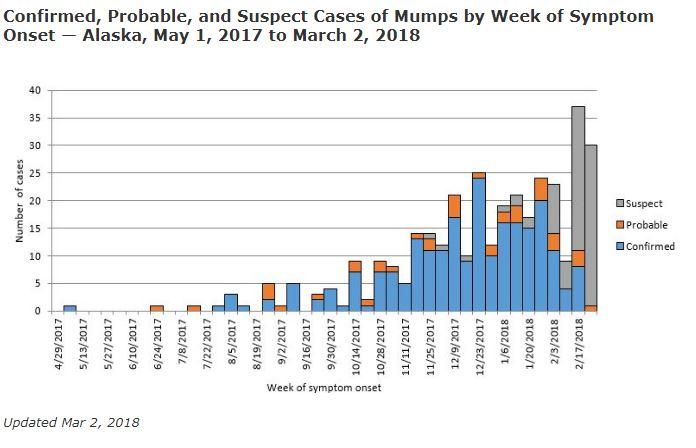
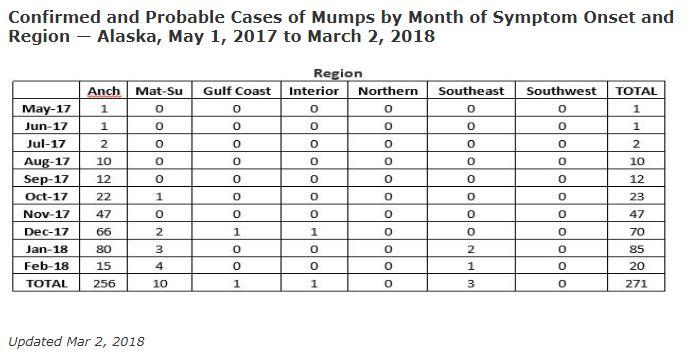
(Alaska Department of Health and Social Services graphic)
The Alaska Department of Health and Social Services now is offering a third dose of measles, mumps and rubella vaccine to Alaska residents looking for additional protection against mumps and who have received their second dose more than five years ago.
In typical cases, Americans receive two doses as children.
Last summer, health providers in Alaska reported an uptick in cases of mumps in Anchorage.
Southwest Alaska has not seen a case of mumps during this outbreak.
However, the Health Department cautioned in a public health advisory it issued at the end of February that the outbreak is not slowing and that cases are appearing in communities outside Anchorage.
“It’s good to remember that Alaska is not the only state in the U.S. experiencing a mumps outbreak,” said Amanda Tiffany, an epidemiologist with the Alaska Division of Public in Health. “Over 4,900 mumps infections were reported to the Centers for Disease Control and Prevention from 48 states and the District of Columbia in 2017. We know that Alaskans are very mobile, traveling within Alaska and from Alaska to the Lower 48 and Hawaii.”
(Alaska Department of Health and Social Services graphic)
Risk of exposure, Tiffany said, is not specifically associated with travel to one place such as Anchorage.
The spread of the mumps is also exacerbated by the illness’s long incubation period, 12 to 25 days.
“Vaccination is the best way to prevent infection with the mumps virus. It’s important to know the signs and symptoms of mumps and to see a doctor if you start experiencing symptoms,” Tiffany said. “The doctor will tell you to self-isolate for five days after symptoms start; this is really important to stop the spread of the virus. This does mean staying at home and away from public places and members of your family – no work, school, church, social activities.”
In order to slow the spread of the virus, a state-supplied third dose of MMR is available to Alaska residents, provided it has been five years since their second MMR dose and they are either covered by Alaska Medicaid, insured by a carrier that participates in Alaska Vaccine Assessment Program or whose medical provider has opted-in to AVAP for uninsured adults.
As Alaskans decide whether to receive a third dose of the vaccine, Tiffany suggested they consider a couple of factors.
“One, how long has it been since your last MMR? We know that immunity to mumps wanes over time, the more time that has passed since your second dose of MMR the less immunity you may have if you’re exposed to the virus,” Tiffany said. “Two, are you at risk for exposure to the virus?”
In addition to vaccination, Tiffany said hand washing is with warm and soapy water is a simple tool for helping prevent the spread of disease, including mumps.
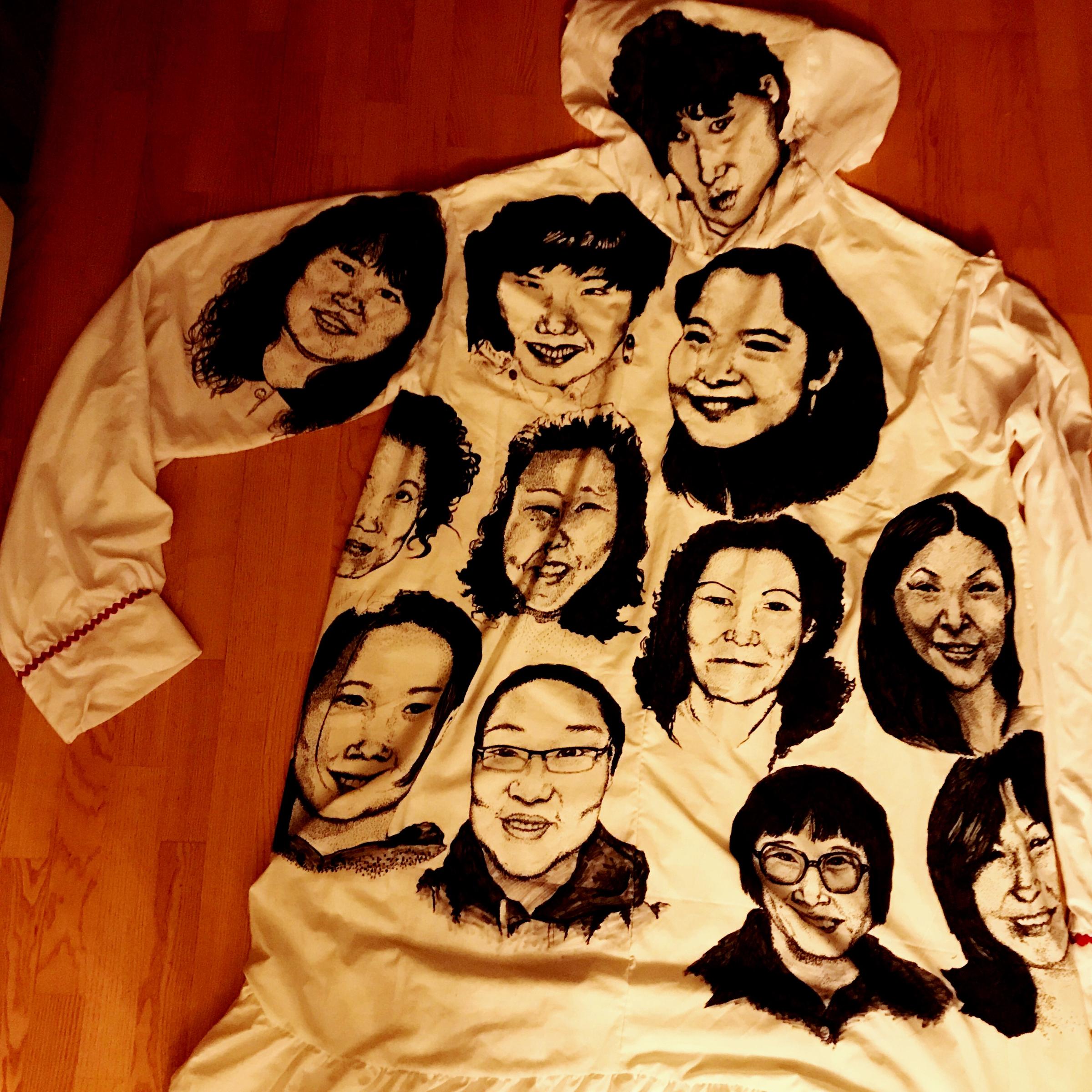
The kuspuk, made from recycled cotton sheets, is seven feet tall. The portraits are drawn in permanent marker. (Photo courtesy Amber Webb)
Alaska Native artist Amber Webb hand stitched an oversized kuspuk from white, cotton sheets she bought at a thrift store.
In permanent marker, she drew the faces of more than a dozen Alaska Native women who have been murdered or are missing.
Six of those women are from Bristol Bay — four from Dillingham, one from Aleknagik and one from Manokotak.
Homicide is a leading cause of death of American women younger than 44, according to the Centers for Disease Control and Prevention.
This is especially true for Native American and Alaska Native women, who experience the second highest rate of homicide of any race or ethnicity.
Webb lives in Anchorage, but is originally from Dillingham. She said that the plight of several missing women in particular inspired her to create her work of art.
“Valerie Sifsof, she’s still missing. I know her family is still looking for answers about her disappearance. And then LoriDee Wilson as well. Val and LoriDee, they were a big part of doing the project for me,” Webb said. “When I was young, my family spent a lot of time with Val’s aunts. As a kid, I can remember seeing her at family functions and thinking she was so cool. Seeing her family try to come to terms with having lost her that way has had a pretty profound impact on my life.”
Valerie Sifsof has been missing since 2012. LoriDee Wilson has been missing since 2016. Both Sifsof and Wilson are from Dillingham.
Her art piece, Webb hopes, will serve both as a way of honoring women who have been lost and of encouraging people to join a broader conversation about preventing violence against Native women.
“It’s opening a conversation that has be had by families, by law enforcement, by the academic community and legislators,” Webb said. “I think all of Alaska has to think about it.”
Webb is making arrangements for a traveling exhibit, which she hopes to display in Dillingham and Anchorage.
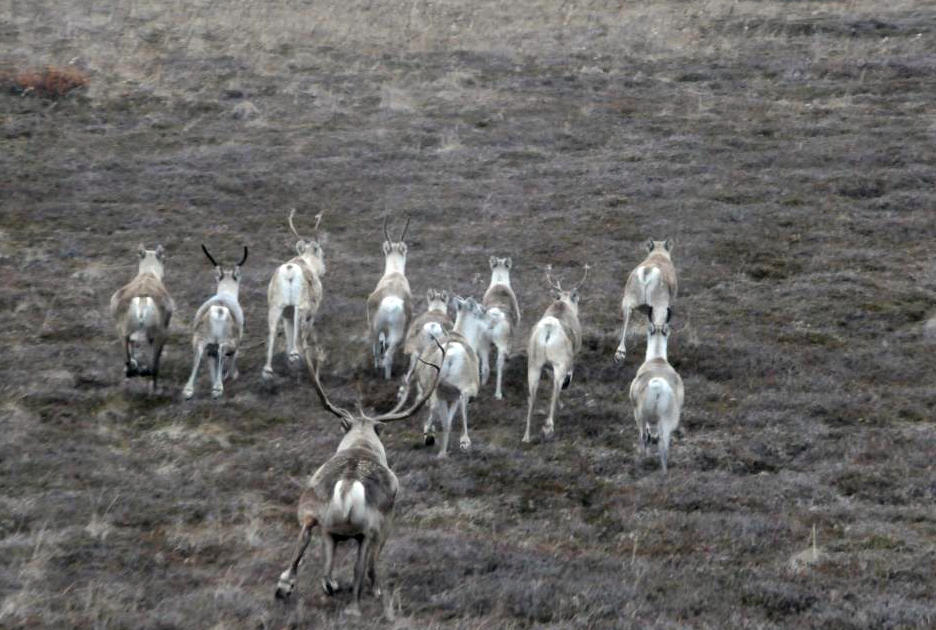
Togiak National Wildlife Refuge announced that refuge managers and wildlife biologists have determined that the herd cannot sustain a harvest of greater than 218 caribou.
Refuge biologist Andy Aderman said that the refuge made the determination by analyzing the summer caribou survey data and estimating the herd size.
“(The Nushagak Peninsula Caribou Management Plan) said we could harvest anything above 750 caribou and our estimate was 968,” Aderman said. “That would suggest 218 would be the appropriate amount to harvest from that herd. We just kind of re-looked at that 300 number and said, ‘That might be just a bit much.’”
The goal of the Nushagak Peninsula Caribou Management Plan is to keep the herd size large enough for hunting and small enough to avoid overgrazing the peninsula or a boom-bust population cycle.
Currently, only 23 Nushagak Peninsula caribou have been reported harvested.
If the limit of 218 caribou were taken, then it would be the second largest harvest of the herd.
Last year’s harvest of 378 caribou set the record. The next largest harvest was in 2001, when hunters took 127 caribou.
The federal hunt remains open to qualified subsistence users until March 31 or until the harvest limit is taken.
The bag limit per hunter is three caribou.
Close
Update notification options
Subscribe to notifications
Subscribe
Get notifications about news related to the topics you care about. You can unsubscribe anytime.