KDLG - Dillingham

KDLG is our partner station in Dillingham. KTOO collaborates with partners across the state to cover important news and to share stories with our audiences.

Naknek family has fostered over two dozen children

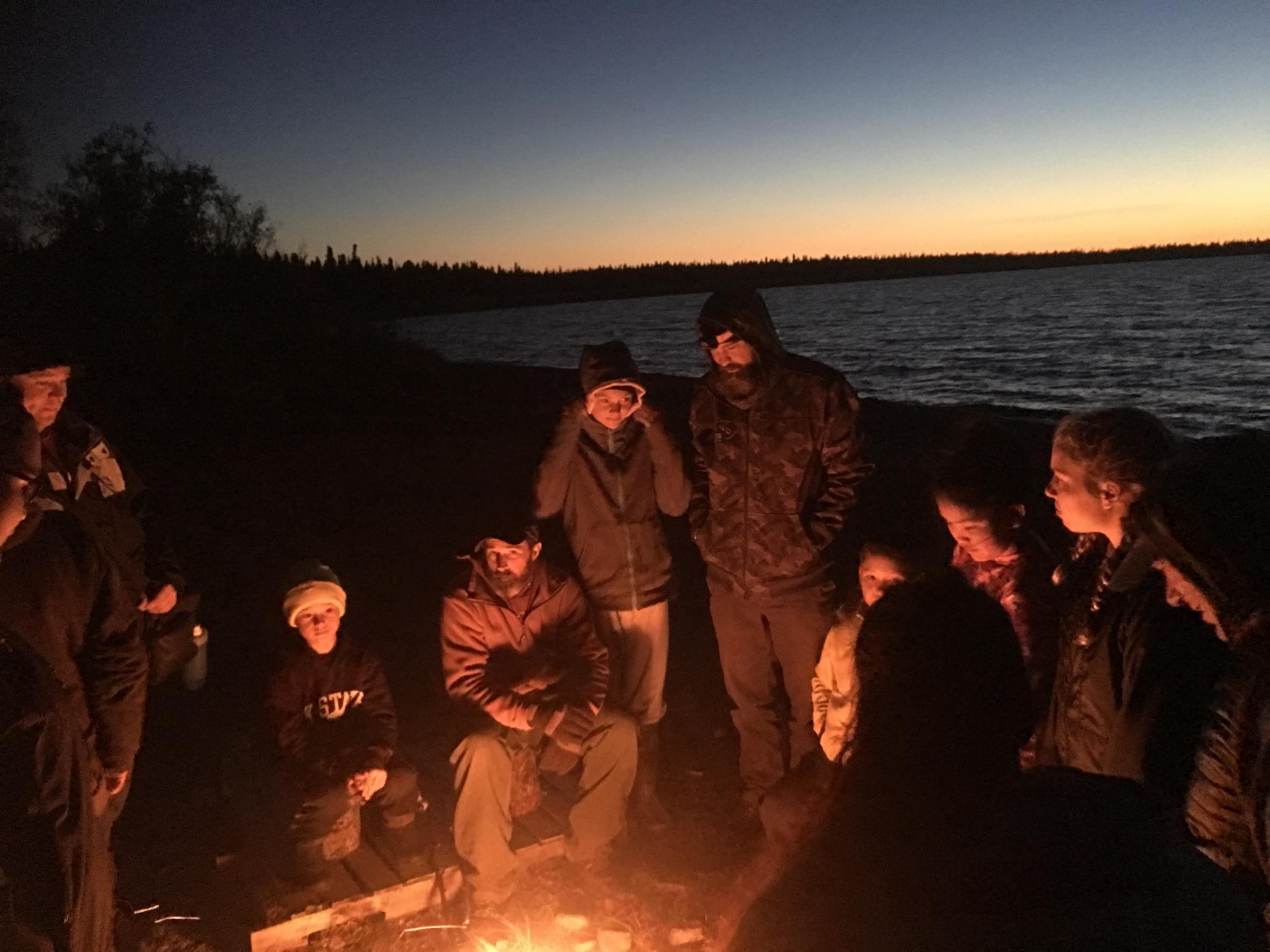
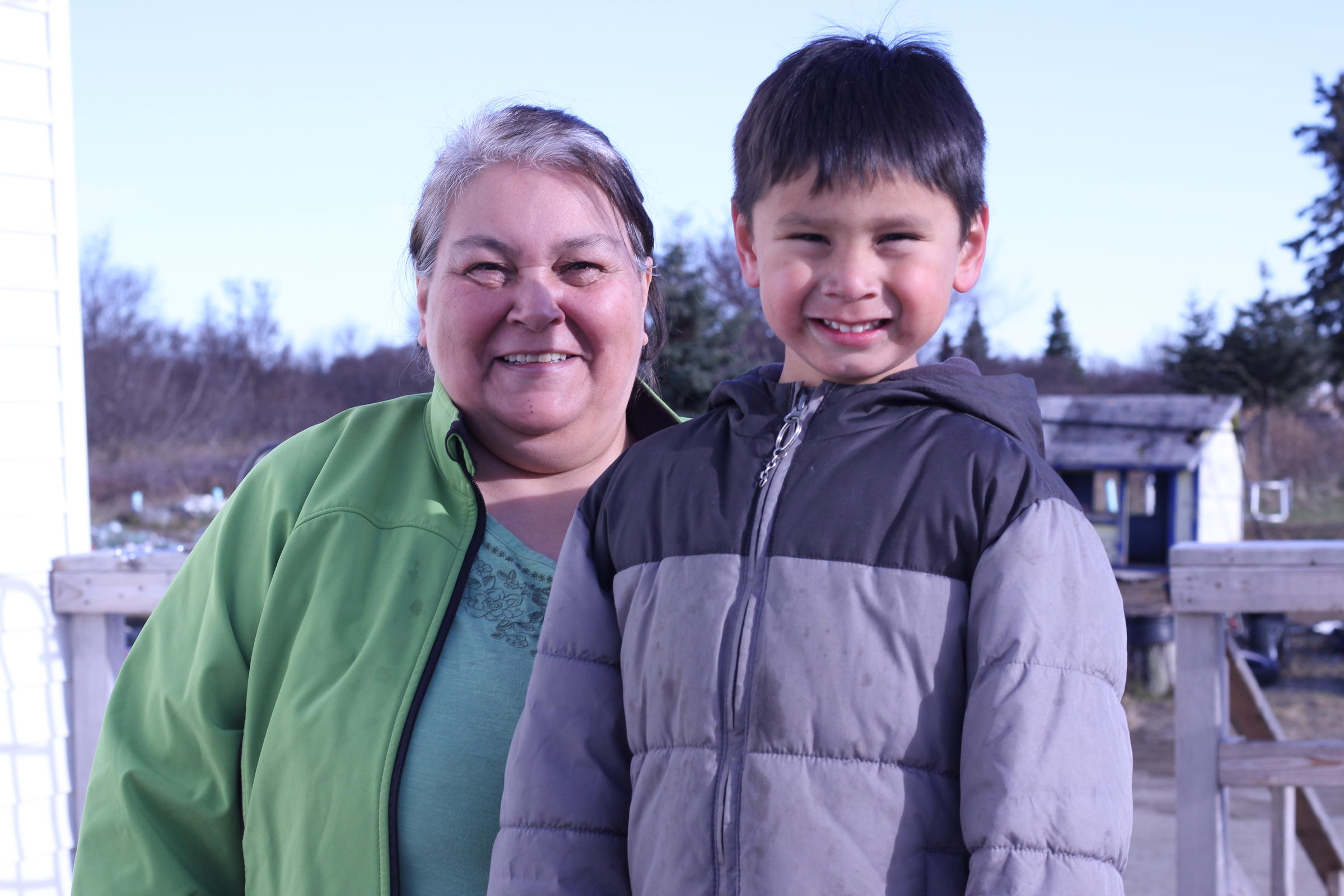
Nola Angasan posed with her adopted grandson, 4-year-old Fischer Angasan. (Photo by Avery Lill/KDLG)

The Angasan yard is packed with kids, some they have adopted, some they are fostering and some their biological grandchildren.

Inside Nola Angasan braids her granddaughter’s wet hair.

A group of the kids at the house just got back from the borough pool.

Nola’s husband, Steve Angasan, is at the beach with several more kids. They are setting a net for smelt.

The Angasan family has opened its doors to children who needed a place to stay for decades.

Steve Angasan grew up in South Naknek, flying across the Naknek River every day to go to go to school. When he and Nola married and settled in Naknek in the 1970s, they opened their house as a bad weather and sports home.

If students from South Naknek could not get back home after school because of weather or sports schedules, they could stay with the Steve and Nola.

In the early years, they often hosted six or seven kids for a night, and occasionally they hosted as many as 18.

Over the years, the population of South Naknek has dwindled to 71 people, and the Angasans found themselves hosting fewer students.

“When all those kids grew up and were gone, and I think there’s now only one more relative in South Naknek going to school, we decided to do foster care,” Nola Angasan said.

They got involved with foster care eight years ago when a local Office of Children’s Services worker came to the family with a request.

“She said ‘Nola, you always have kids wherever you go. There’s always a whole trail of kids behind you when you got to the school or to the pool. I need someone for this little boy, do you think you could be a foster parent?’’ Angasan said. “I said, ‘Well, if you need a place for the boy, I’ll surely take him.’”

Since then, as the number of foster families in the Bristol Bay Borough fluctuates, the Angasans have been a constant.

At times they have been the only foster care family in the borough.

“If I don’t, who’s going to do it, and where are they going to go? Our Native children need to be here with Native homes,” Nola Angasan said. “They have culture, and they have subsistence foods. They need to be safe. They need to be loved. They need to grow up knowing that someone cared for them.”

The Angasan yard is full of bikes and toys to keep kids active and entertained. (Photo by Avery Lill/KDLG)

School administration see the positive impact of the Angasan’s stable home.

“Nola and Steve Angasan are some of the most amazing individuals in our community,” said Bill Hill, superintendent of the Bristol Bay Borough School District. “They are taking in foster children from up and down the (Alaska) Peninsula and making a huge difference in their lives. The kids come to school, and they are happy. The kids have structure in their lives. Nola and Steve make sure that they are well fed and cared for in both the physical and the mental sense.”

Right now, Nola and Steve are fostering six children and have adopted two.

They have fostered more than 28 children altogether, some for only a few days, some for many months.

Additionally, they assist their daughter, Dorena Angasan, who is fostering seven children and has adopted one.

Nola can tell a plethora of stories of difficult situations she has dealt with as a foster parent.

Children that come into their home often carry with them emotional, behavioral and even physical challenges.

In each situation, however, she emphasized that the relationships built with children have more than made up for taxing circumstances.

She recalled with a chuckle that when she and Steve married more than 40 years ago, she told him she wanted to open an orphanage.

Several months ago, he stood in their living room full of kids and asked, “Are you happy that you got your way?”

“What did I get my way with?” Nola asked. He

reminded her she wanted an orphanage. “I guess this is the closest I’m going to get, so yes I am happy,” she said, still laughing.
As king runs lag, fishers consider cause and prevention

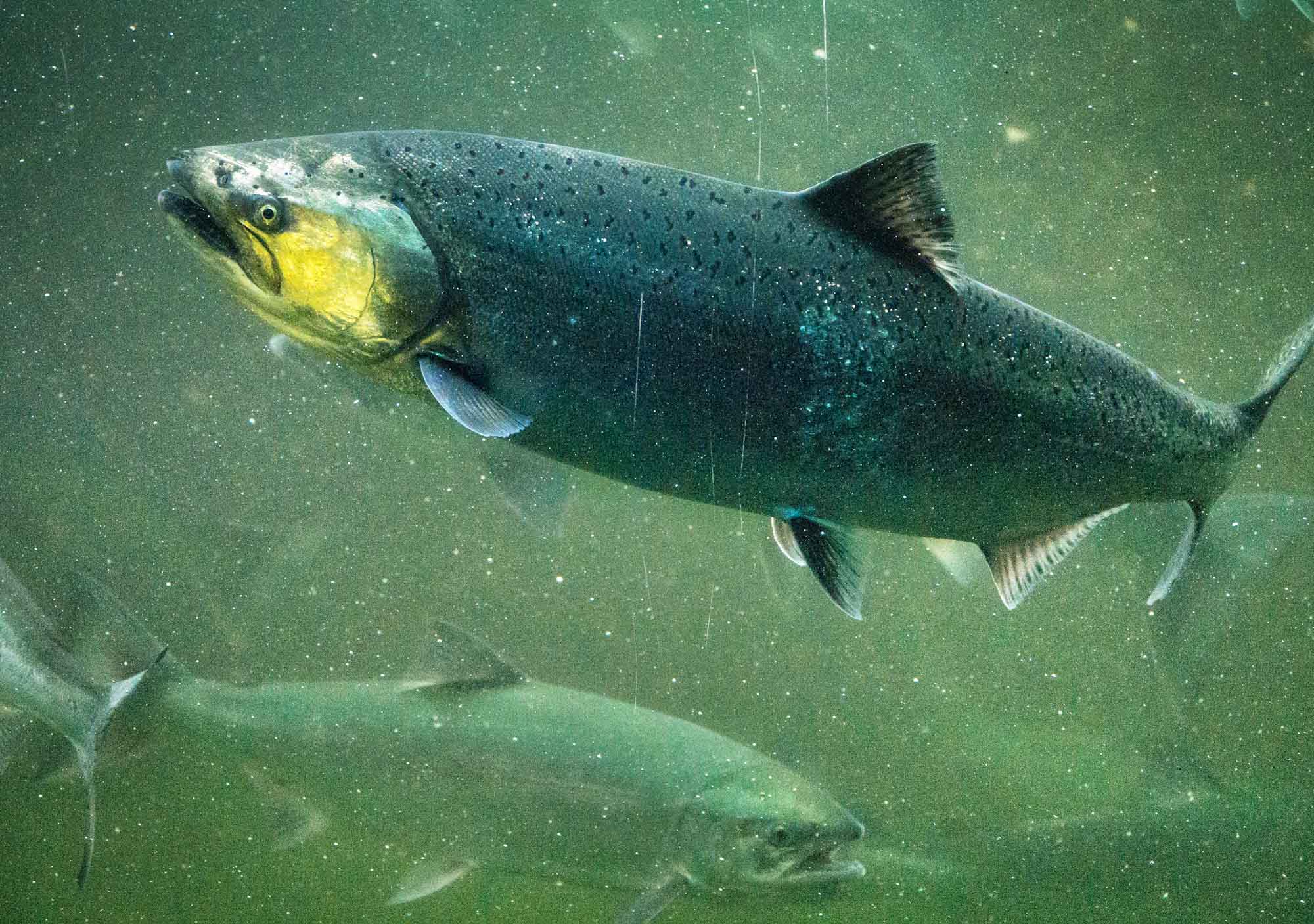
The intersection of the Sockeye run and the Chinook run. (Creative Commons photo by Ingrid Taylar/Flickr)

Concern over poor king salmon runs across the state drew a panel of fisheries experts together at a recent meeting in Anchorage.

The event focused mainly on a better understanding of the science behind population declines.

Panelists addressed the elements that play into ocean survivability, like fishing, predation and warming waters.

National conservation nonprofit, Trout Unlimited, hosted the panel.

Austin Williams, the group’s legal and policy director in Alaska, said there are still a lot of gaps in knowledge.

There’s a real need for continued research to address some of the reasons king runs are weaker, Williams said.

“It’s an issue not just confined to Cook Inlet or the Anchorage area,” Williams said. “The Southeast Alaska chinook runs have decreased dramatically and were entirely shut down this year and then some of the runs in Western Alaska have also been declining at alarming rates.”

Williams said the state has successfully managed its fisheries overall.

“We need to continue to do that and we need to continue to recognize that in the lean years when we don’t have as many fish returning as we’d like, we need to curtail back fishing and when we have years of abundance, we need to make sure that we go fishing and enjoy that,” Williams said.

There’s an overlay of politics and policy when managing the fisheries, Williams said, but the panel looked at the things people have more control over, like how ensure that the fisheries remain productive and sustainable.

Panel moderator Dave Atcheson called the event “a start.”

“We’re hoping that this will spawn a whole lot more action and maybe to have a whole full day symposium in the future and also to get groups like Trout Unlimited and other organizations to see what we might do to help support studies that might be needed and that sort of thing to keep our fisheries healthy,” said Atcheson, , a sport fisher and journalist.

Other speakers touched on the importance of freshwater habitat in conserving fish stocks and public involvement in protecting natural resources.

Pebble opponents hammer EPA for changed course at Dillingham meeting

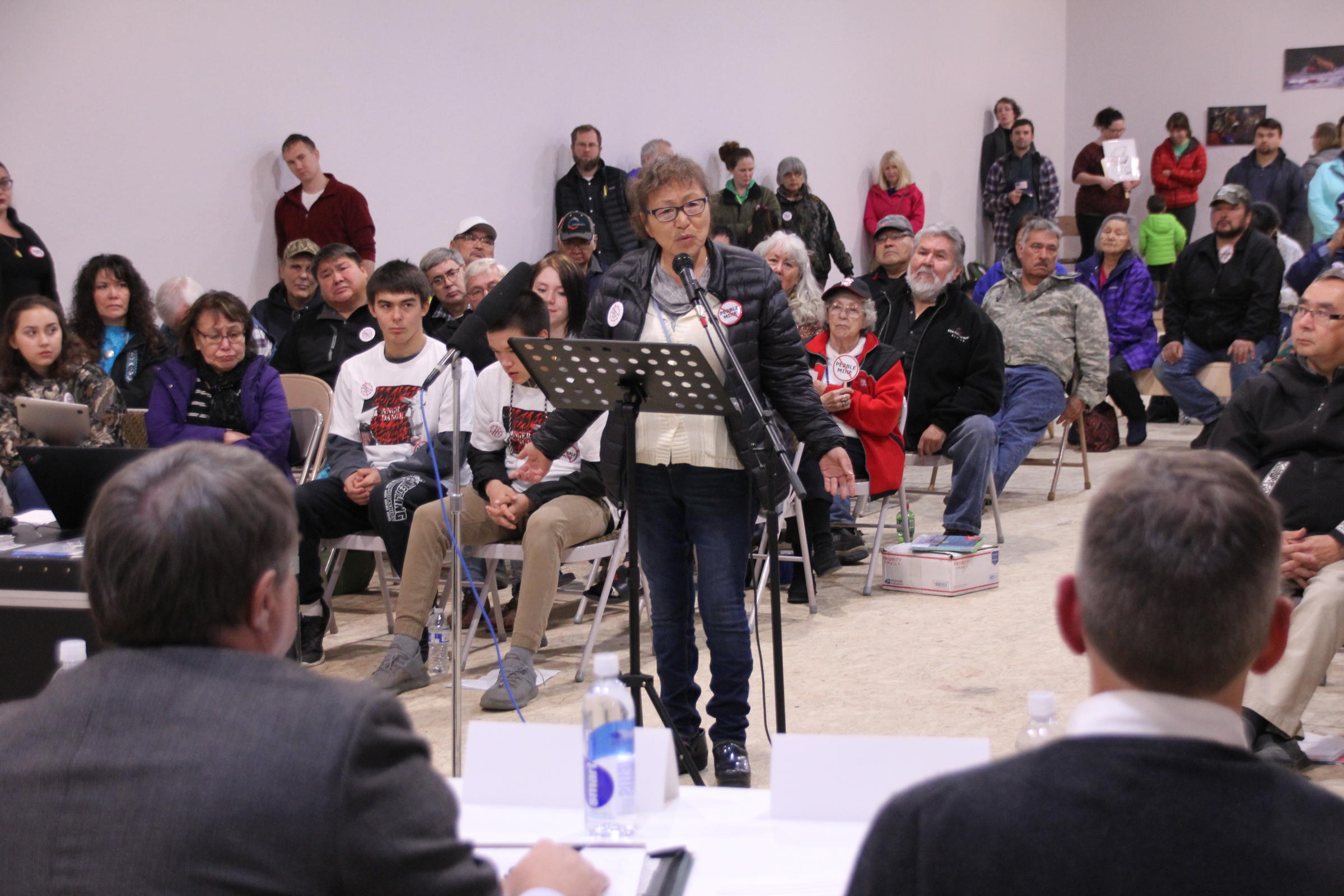
Anuska Wysoki from Koliganek told EPA its withdrawal of proposed Clean Water Act restrictions "is a threat to me and my people and our very existence as a people of this land." (Photo by KDLG)
Anuska Wysoki from Koliganek told EPA its withdrawal of proposed Clean Water Act restrictions “is a threat to me and my people and our very existence as a people of this land.”
(Photo by KDLG)

The Environmental Protection Agency is backing away from the use of preemptive Clean Water Act restrictions against large-scale mining in the Bristol Bay watershed. That comes as part of a settlement with the Pebble Limited Partnership, and the company now says it is preparing to file for permits.

EPA is taking public comment on its proposed withdrawl, and is holding two meetings in Bristol Bay to hear from residents directly.

The EPA staff ran into the palpable disappointment of well over a hundred residents Wednesday afternoon.

(KDLG has since learned that local police and state troopers were contacted by EPA criminal investigators asking about the “mood” in town and whether security was necessary to protect the bureaucrats.)

Dozens testified over three and a half hours, most speaking from the heart about their love for the region and their existential fear of a large mine.

Bristol Bay’s largest hub sits downstream of and more than a hundred miles as the crow flies from one of the largest copper and gold deposits in North America.

It is home to some of Pebble’s most ardent opponents.

All who spoke Wednesday, including Peter Christopher from New Stuyahok, called for their one-time ally EPA to reverse its current course.

“I would appreciate if you guys would pass that on to Scott Pruitt, to consider not withdrawing from the Clean Water Act.”

The EPA staff on hand spoke at length about the Trump administration’s approach.

Palmer Hough, from EPA’s Wetlands Division, reminded the audience that the agency had never finalized the pre-emptive restrictions, and is in no way limited from still blocking mining with Section 404(c) of the Clean Water Act.

But if that authority is used, it will now likely happen within the normal permitting process, after an Environmental Impact Statement has been completed.

Dan Dunaway from Dillingham told the EPA he’s not sure the Obama administration was following a just course, but he doesn’t necessarily like the alternative either.

“I get a sense that the process for mining permits, there’s not really a clear avenue to get to a ‘no mine’ versus ‘a mine’. I think the process for mining permits in that sense is somewhat flawed and stacked against those of us who do not want to see a mine,” he said.

The Pebble deposit is located on state lands set aside for mineral development.

Sensing the state was not up to the task of protecting the ecosystem and downstream fishery, Bristol Bay tribes asked for federal intervention back in 2010.

That triggered the EPA’s Bristol Bay Watershed Assessment, which led to the proposed mining restrictions.

This was an outcome Katherine Carscallen, a commercial fisherman from Dillingham, wants to see upheld.

“Our state permitting process is not equipped to consider the long term impact of Pebble’s ‘phase one’ plan, which is what I consider it, but the domino effect of the mining district this would bring. That’s why 404(c) allows for proactive decision, and there’s no better place to apply this than Bristol Bay.”

Alaska state House Speaker Bryce Edgmon, who hails from Dillingham and represents the region, blasted the EPA for backing down, and also agreed Alaska doesn’t do enough to protect its salmon habitat.

“That’s been the history of our state that all major development projects get the benefit of the doubt. That’s just been a fact of life in Alaska,” Edgmon said. “It’s time to change that now. EPA can play a large role in that. Please don’t defy the wishes of the people of the region, the people of the great state of Alaska, and our country as whole.”

Most of those who lined up to speak to EPA Wednesday have done so many times over the past seven years.

The opposition that focused on the federal side felt they had won the battle under President Barack Obama, but the rug was pulled out from under them after the 2016 election.

Robin Samuelson from Dillingham told EPA again, and probably not for the last time, that the world’s greatest sockeye salmon fishery and its intact ecosystem deserve unique protection.

“My people here rely on this resource and be damned if we’re going to see that mine happen,” he thundered, before wrapping up with a catchy new zinger. “You guys better stay the ‘Environmental Protection Agency’ and not ‘empty promises to America.'”

The EPA planned to be in Iliamna for a second listening session Thursday. The public comment period closes Oct. 17.

Alaska says flu season is here, vaccinations recommended

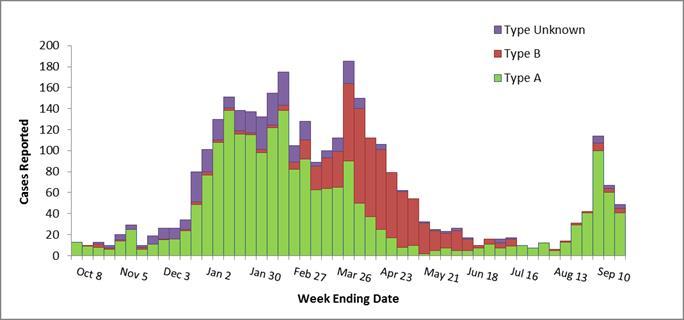
Though September saw another small spike in infection rates, the typical peak of the season is just around the corner. (Graphic courtesy Alaska Department of Health and Social Services)
Though September saw another small spike in infection rates, the typical peak of the season is just around the corner.
(Graphic courtesy Alaska Department of Health and Social Services)

Alaska has seen a spike of reported cases of flu since the beginning of September, reports the State of Alaska Section of Epidemiology.

Health officials up through the U.S. Centers for Disease Control are urging Americans to get a flu shot to prevent contracting and spreading the troublesome virus.

“A public health alert was already posted in September by the State of Alaska because we had an increase in flu disease,” said Dillingham-based state public health nurse Gina Carpenter. “We were seeing it more up north, in the Fairbanks area, but we’ve had hospitalizations and people have gotten quite sick from flu. So as soon as the vaccine is available, people should get their flu shot.”

Getting vaccinated is important for everybody, she said, but especially young children, the elderly, pregnant women, people with a history of heart disease, and those with chronic conditions such as asthma or diabetes.

People living with higher risk individuals should consider vaccinations a priority, too.

Public Health will also be collaborating with the City of Dillingham in November to hold a mock disaster drill. During the drill Nov. 30, the clinic will be offering free flu vaccinations, with the added purpose of testing the city’s ability to respond in the event of a real epidemic.

Adult doses of the flu vaccine may not be available at the Public Health center through the entire season, said Carpenter. Until the mock disaster drill, vaccines are available for people between the ages of 6 months and 30 years on a sliding fee scale, and she said nobody will be turned down for inability to pay.

Kanakanak Hospital should also have flu vaccines available this fall, Carpenter said.

Igiugig hikes to Big Mountain as a part of their local food challenge

Backpackers from Igiugig hiked the 23 miles to Big Mountain in four days. (Photo courtesy Tatyana Zackar)

Igiugig is more than half way through their local foods challenge.

The village decided to try eating only locally produced food for six weeks when the students read about a similar project in Australia.

They also incorporated a traditional hike into the experiment.

Big Mountain, 23 miles east of Igiugig, is a customary meeting place between people from Igiugig and Kokhanok.

Fifteen adults and students from elementary to high school braved the four-day hike in the wind and rain.

No dehydrated camping food lightened their packs. Since the walk was a part of the food challenge, their menu included moose, dry fish and fresh produce.

“It was tough because some of us had to carry apples and heads of lettuce and stuff like that instead of just packing Mountain House (freeze dried food),” eighth-grader Kaylee Hill said.

All seemed to agree that one part of the trip was most difficult — swimming Belinda Creek.

“That was our biggest obstacle,” said Tate Gooden, one of the adults leading the trip. “After walking most of the day along the beach that was flooded due to the wind, so we were walking through waves, we were already wet. Then at the end of the day, we had to swim across a frigid creek. It was a little daunting, but everybody rose to the occasion.”

The first group that swam across got a fire going so everyone could dry out quickly. It provided an opportunity for the adults leading the hike to talk with the students about preventing hypothermia.

The sun came out on Saturday for the final stretch of the hike.

The hikers celebrated with a traditional foods feast at Big Mountain.

People who stayed behind in the village brought the meal by skiff.

After the meal, because there is a runway at Big Mountain, everyone was able to fly home.

“Part of the goal was to connect to the landscape that we inhabit and then also connect more to our bodies, and I think we did that. I think at the end everyone was empowered by the fact that we made it,” Gooden said.

Back in Igiugig the local food challenge continues.

Moose meat dipped in seal oil, bone soup, dry fish and berries are just some of the foods Igugig has been dining on for the last few weeks.

Many have made accommodations, participating in the challenge with differing degrees of rigor. Some have decided to eat only foods produced in Alaska.

Some have resolved to stick with minimally processed whole foods.

Hill has made eating whole foods her goals. Pizza is the food she misses most. But almost four weeks, into the challenge she feels the benefit of eating well.

“I feel like I’m getting a lot more sleep than I used to get,” Hill said.

Her father, Karl Hill, is the only one in Igiugig sticking to the most rigorous version of the challenge, eating only foods produced within a 100 mile radius of the village. He too has noticed that he is getting better sleep.

“One of the main things I’ve taken away is that it just takes a lot of preparation to be able to eat this way,” Karl Hill said.

Overall, he noted that the communal nature of the project has kept people motivated.

“I think doing it as a whole community is key to having more people stick with it at one level or another. We have different levels of participation, but I think everybody is having a positive experience of it,” said Karl Hill, adding with a laugh, “We do talk about food a lot.”

The six-week project wraps up Oct. 28. Residents of Igiugig have been taking their weight, blood sugar and heart rate every month during 2017.

When they finish the food challenge they will compare the results to see what affect their participation had on their health.

Pebble shows first glance at its new mine plans

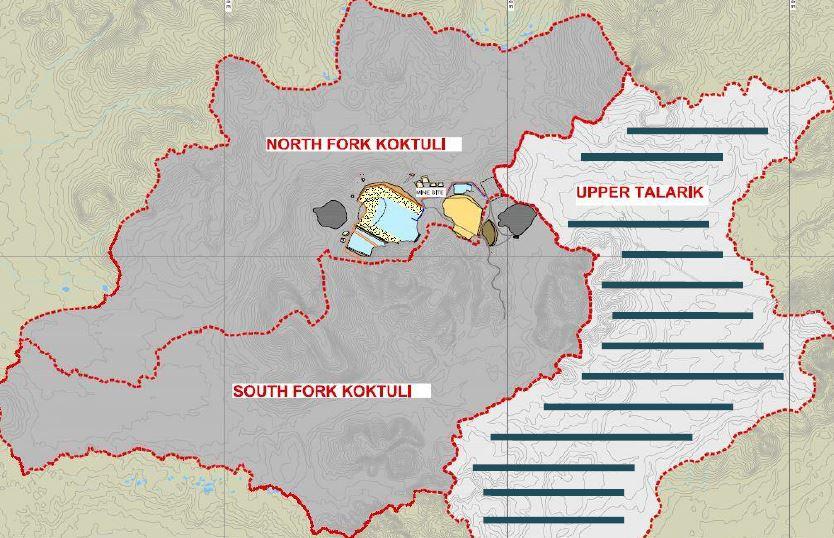
A visual depiction of where Pebble will file a permit for 20 year mining permit to operate. This slide is one of more than 100 that Pebble is using to present an overview of their new plans. (Photo courtesy Pebble Limited Partnership)

Pebble CEO Tom Collier began the roll out of Pebble mine’s new design early Thursday morning in Anchorage.

The company is focusing on a much smaller footprint in the Pebble West deposit only.

“We set as a goal trying to get into the ballpark of what the Obama EPA would have allowed to have been built in the region, and we’ve done that,” Collier said. “The Bristol Bay Watershed Assessment said that something 4.7 square mile footprint could be built, and we’re at 5.4 square miles as we go forward with this project.”

A footprint includes the pit, tailings facilities and waste rock, the latter of which the company said will be used in construction of the tailings dams and not left in open piles.

Environmental Protection Agency estimated Pebble’s footprint would be at least 13.5 square miles, Collier said, more than double what the company is now planning.

Including all other facilities and construction, Pebble now said the entire project footprint has been reduced to 12.7 square miles, less than half what it used to be, and now smaller than the proposed Donlin Gold Mine on the Kuskokwim River.

Collier said these and other changes are in direct response to the concerns and criticisms raised over the past decade.

“We’ve decided that we’re not going to do secondary gold recovery in this project, so there’ll be no cyanide in the region,” Collier said. “Tailings facilities will be much smaller. We’ll separate out those that might generate acid if they’re not treated in a special way, and make that facility lined and even more buttressed so it’ll be safe. By making the mine smaller, we’ll only be in two drainages, the North and South Fork Koktuli, and not in the Upper Talarik drainage which was part of the original plan.”

The current design of a Pebble mine, during normal operations, will disturb or damage a “negligible, as in, not measurable” amount of sockeye salmon spawning habitat, Collier said.

To measure what could happen to sockeye in the event of a catastrophic failure of a tailings facility, similar to the 2014 Mount Polley disaster in British Columbia, the company is using the Bristol Bay Watershed Assessment developed under President Obama’s EPA. That study suggested that with no remediation or cleanup, some 10 miles of the Koktuli’s salmon habitat would be damaged for 10 years.

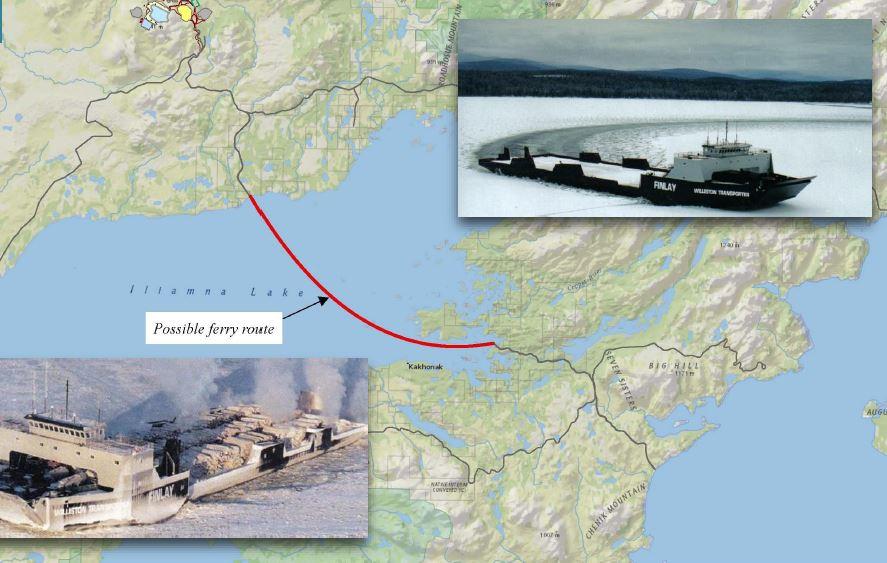
Pebble is now looking at using a large ferry to haul ore across Iliamna Lake, rather than construct northern or southern route roads from the mine site to a new port in Cook Inlet. (Image courtesy Pebble Limited Partnership)

“When we look at what that looks like in terms of sockeye production, it would literally be two one hundredths of one percent of the sockeye production in the region,” Collier said. “That’s a risk that we don’t want to run, and we believe we’ve protected against that risk, but that’s the worst case. And those that think we would or could destroy all the salmon in Bristol Bay just don’t have the facts before them.”

To move the ore to Cook Inlet, Pebble’s new plan uses an ice-breaking ferry to cross Iliamna Lake to a shorter new road east of Kokhanok. Not building a northern or southern route road around the lake will significantly cut down Pebble’s overall impact on wetlands, Collier said.

Those routes are still being explored as alternatives for an environmental impact statement.

Pebble is looking to form a revenue sharing corporation to pay out dividends to local residents and village corporations during the project, since the deposit is not on Bristol Bay Native Corporation lands.

The individual checks may be $500, and the corporations may see $500,000 annually.

Collier wants to find new ways to help local fishermen, and produce enough power to offer low cost electricity for the region. That power could come from a new natural gas plant across Cook Inlet or be generated closer to the site.

The project has been scaled back from an estimated annual operating budget of $1 billion to $400 million.

Pebble believes annual royalties to the Lake and Peninsula Borough will still be around $20 million, that local residents will have access to some 1,000 news jobs, and village corporations will have access to ample new contracts.

Pebble does not have a new partner yet, Collier said, but he is still planning to file a permit application before the end of the year.

Site notifications
Update notification options
Subscribe to notifications