KDLG - Dillingham

KDLG is our partner station in Dillingham. KTOO collaborates with partners across the state to cover important news and to share stories with our audiences.

At Katmai’s Brooks Camp, tourists and bears mingle mostly carefree

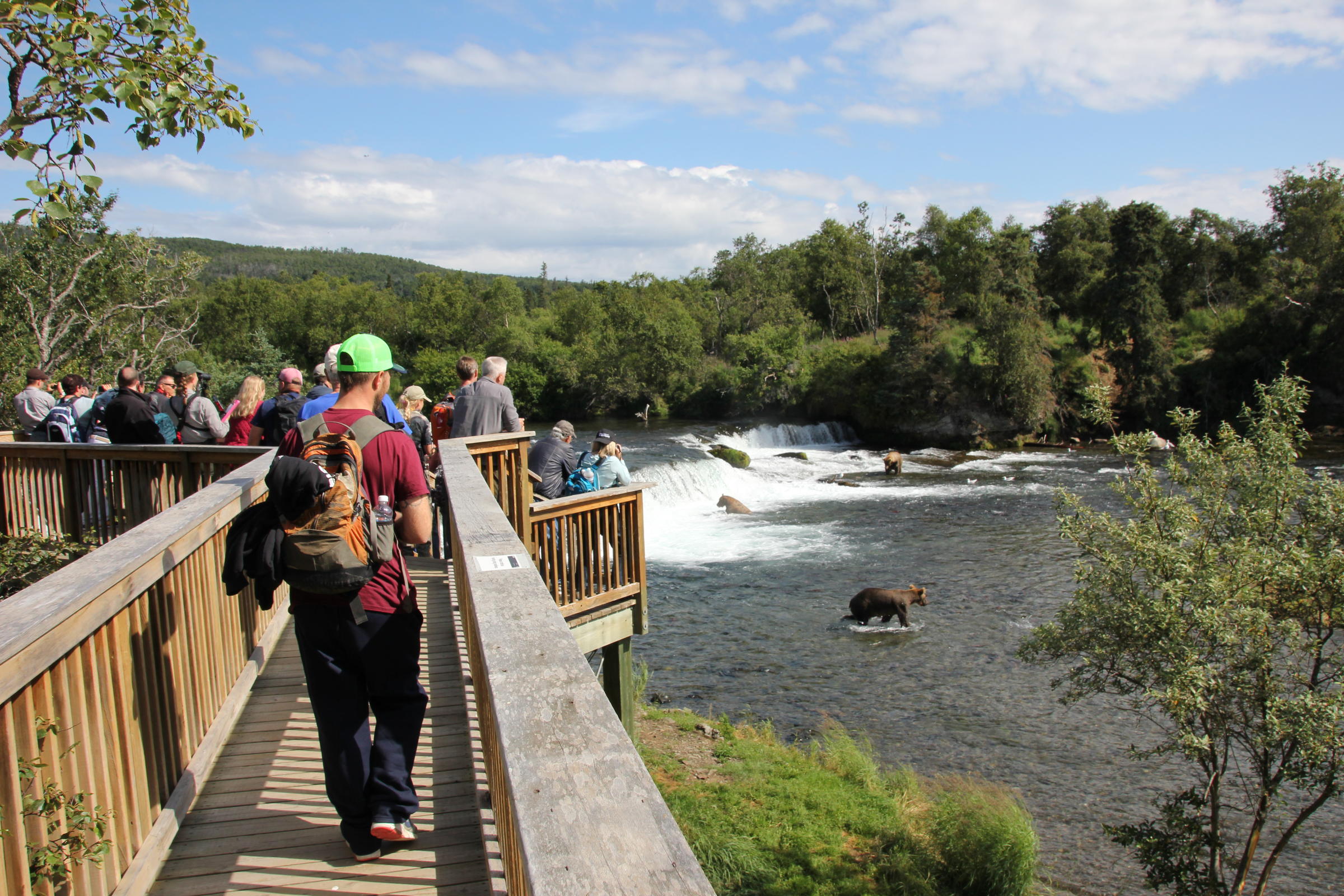
Bears barely seem to notice the 40 people watching them from the Brooks Falls platform. (Photo by KDLG)

Stepping off a float plane onto the beach at Brooks Camp can be disorienting.

“Where are the falls? Where are all these bears? Do we just walk there now?” one wonders.

The answers to these questions – and plenty of others – are answered at a brief orientation film shown to nearly every visitor before they make the short hike up to Brooks Falls, one of Alaska’s most iconic outdoor spots.

“Brooks belongs first of all to the bears and other wildlife. As visitors we need to let them be wild, and watch out for our safety,” the authoritative, almost ominous voice narrating the enjoyably dated video explains.

The video, which is available in English, Japanese and other languages common to the hundreds of visitors who will pass through each day in July, then covers the ground rules.

“Keep 50 yards away from any bear, and 100 yards away from a sow with cubs.” Stay alert at all times, and make noise with your group. Give the bear the right-of-way, and don’t make eye contact. Keep children close, gear in hand, and leave all food and scraps back in the designated cache behind the electric fence,” the narrator said.

“Overall, we’ve had very few incidents here at Brooks Camp, and I think that is largely attributable to the fact that we have very strict food control, and we’re able to educate every single visitor that comes through here reasonably well,” said ranger Michael Saxton, the lead wildlife technician at Brooks.

Katmai National Park & Preserve rangers estimated they had 40 individual bears at Brooks in July, not including cubs, being observed by 300 to 400 visitors each day.

Some humans camp overnight, some fish the river, but most step off the plane and head for a few hours at the viewing platforms.

Dating to 1950, Saxton said National Park Service has only recorded three “incidents” of bears tangling with people around Brooks, and none were fatal.

  • In 1966, a fisherman cooked his catch at his campsite and woke up to a bear dragging him away before another person scared the bear off.
  • In 1991, a ranger walking down the old trail — improved with a new boardwalk in 2000 — got too close to a sow and cubs and was charged. She wrapped herself around a tree while the sow roughed her up, and afterwards it was discovered she had a bite mark on her arm.
  • Saxton said the third is a “story” that no one has been able to verify actually happened, but supposedly involved a family who knew to step into the woods if bears came down the trail. When a bear happened along, mom is said to have jumped one way, dad jumped the other, and junior, left in the middle, was barreled over by the bear and sustained scrapes and bruises.

Brooks has a lodge, a restaurant with cold beer on tap, campsites, and a number of other facilities that seem a bit out of place in the middle of southwest Alaska’s wilderness.

Rangers know these comforts can put visitors in a less defensive mode than perhaps they we ought to be, so there is a large contingent of staff to keep an eye on things.

During the summer peak, About a dozen interpretative rangers, five bear management technicians, 10 law enforcement and maintenance staff, plus a handful of volunteers are on hand at Brooks, according to Cathy Bell, Katmai’s chief of interpretation.

One of those rangers is Tandi Stephens, who directed our small, ad hoc group to a mound of grass not far past the lodge.

“I’ll just bring you up here. Right now we have some bears right off the trail, so we’re just sort of holding here,” Stephens explained in hushed voice.

Another ranger approached with an update, and a third, nearer to the bridge, called information to Stephens on the radio.

“Copy, you have a bear at the upriver end of the marsh, near Big Island, and then bears are now at the river between Corner and Point,” the ranger said as the group waited.

“This is where we earn our bear pins, and this a trust. You trust me and I trust you, so we’ll go as a group, that’s always safer, and please listen,” Stephens explained to the visitors, none of whom appeared alarmed.

She asked this reporter to spit his gum out in a trash can behind an electric fence a few hundred yards away, but swallowing it was faster.

Katmai’s rangers keep a close watch on the bear activity near the bridge, intending not to leave people stuck mid-river or, worse, on the bridge with a bear.

The traffic delays can last a few minutes to an hour or more, and it’s all up to the bears who barely seem to notice the humans.

Nearby, fly fishermen wade the river mouth, and visitors question among themselves whether they’ll be shouted at for wading across should the delay go on too long.

On the other side of the lovely Brooks River and up the trail, visitors reach the first of two viewing platforms.

“If you’ve just arrived and are hoping to add your name to the wait list, we have our little pager system here. I’ll write down the name of your party, the number of people with you and when there’s space available that pager will buzz continuously,” ranger Rebecca Nourot explained to one group after the next.

She politely smiled off the “can we get some appetizers while we wait” for the umpteenth time of the day as she handed out the pagers, which are the same as those used in chain restaurants.

National Park Service has determined that only 40 people should be on the Falls Platform at once, and there is a one hour time limit there.

The lower Riffles Platform provided ample bear-eating-salmon viewing while groups waited their turn.

When the buzzer beckons, visitors are asked to ignore bear cubs rolling in the soft grass below as they are hurried across an elevated boardwalk between two “Jurassic Park-sized doors.

Cathy Snyder from North Carolina was among the 40 mesmerized visitors on the Falls Platform, each a little starstruck to stand so near to a few of Brooks’ biggest internet stars.

The hefty bruins moved little from their earned spots in the “Jacuzzi,” grabbing sockeye as they passed underneath or leaped over the falls.

“It’s my first time out, it’s been great, and the bears have been hungry,” Snyder said gleefully.

Being near to the bears, mainly while walking the trails, did not frighten her. Nor did she mind the presence or directions of the rangers, or getting held up for a while at the bridge while two cubs played in the water.

The experience felt balanced and well-managed, she said.

“Lots of fun, and they’ve done very well,” Snyder said. “They’ve kept a good eye on it, and I’m not worried about my safety at all.”

Of course, as National Park Service wildlife biologist Leslie Skora points out, nature plays a big, obvious role in keeping bears and humans apart, too.

“The tremendous salmon resource helps everybody seem to get along a little better,” Skora said.

The number of bears at Brooks Falls has been growing, as have the number of people coming to see them each year.

The rules have changed a few times, as has the infrastructure and the number of onsite rangers.

It may be too tightly supervised now for the liking of some, as a few King Salmon-based lodges have grumbled lately, but ranger Saxton said it’s part of the Brooks Camp trade-off.

“When you have this many people and this many bears, we don’t like to use the word ‘safe’ out here, you can’t promise anything,” Saxton said. “But we do the best that we can, and part of that is having a slightly more controlled environment.”
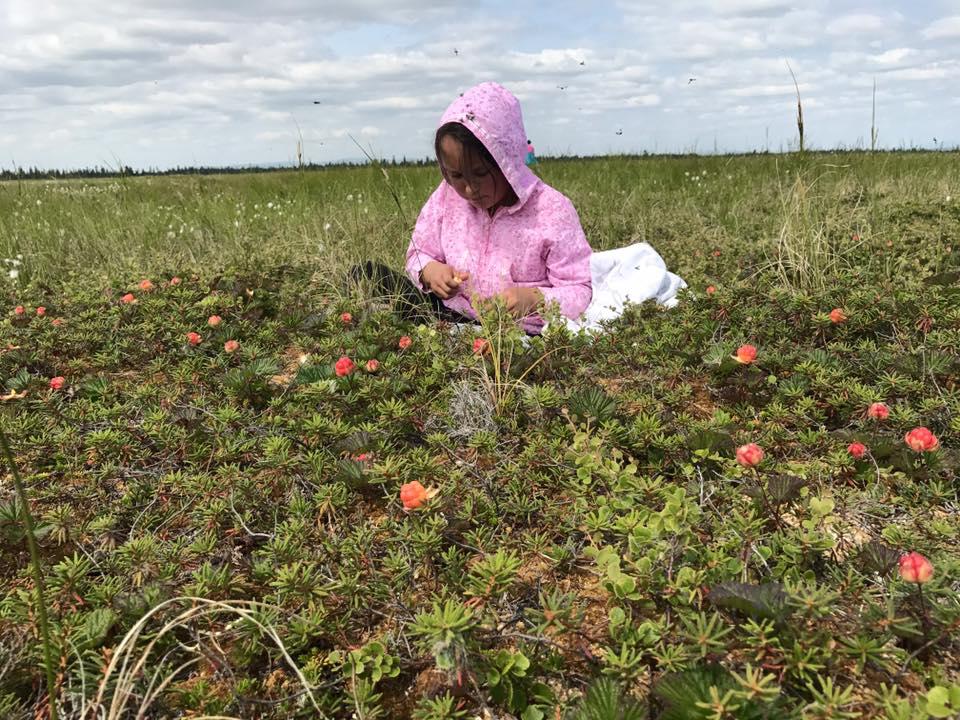
Igiugig is set to embark on its Native foods challenge

Dannika Wassillie harvests salmonberries. (Photo by Jeff Bringhurst)

Nutrition-related health concerns plague the U.S. as a whole, and rural Alaska is no exception.

People in village of Igiugig are aiming to improve their health this fall with a Native foods challenge.

Igiugig’s high school literature class read “In Defense of Food” by Michael Pollan last school year.

In the book, Pollan details a seven-week project in which a group of Aboriginal Australians who lived in the city and ate a Western diet moved to the outback and ate traditional food for seven weeks.

At the end of that period, all saw health improvements.

“The kids in the class thought that’d be a great idea if we were to do this,” said Tate Gooden, Igiugig School’s head teacher. “We pitched it to the community as a community idea, and the community members were very excited about it. Now here we are, we’ve been preparing for eight months now.”

For six weeks, starting Sept. 17, the adults and children in the village are challenging themselves to eat only traditional foods, locally raised foods and oatmeal.

The village has been putting away fish, berries, greens and game for the past eight months.

“It’s gotten people a lot closer together and talking about food and subsistence,” Gooden said. “I think a lot of people harvesting things they’ve never harvested before. We have people putting up sour dock and different greens. We’ve got people boiling down caribou bones and making fat cake.” 

The project is a health experiment, so residents have already begun regular health screenings.

Every month in 2017 they have taken their weight, blood pressure, blood sugar and heart rate. They will compare the results from before and after the challenge.

The final component of the challenge is a trek to Big Mountain, which lies 23 miles east of Igiugig. For four days in the last week of September, the village will hike to the mountain, which is a traditional meeting place between Igiugig and the village of Kokhanok.

At Big Mountain they will have a Native foods potluck, and then they will fly home.

The project’s focus is much broader than watching weight or blood sugar or even honing subsistence skills.

“This project focuses on the relationships and interdependence of food, culture, identity, community, subsistence and health,” said Gooden.

The challenge concludes Oct. 28.

New Stuyahok teen learns Yup’ik, Inupiaq, Russian and Tagalog fluently by high school graduation

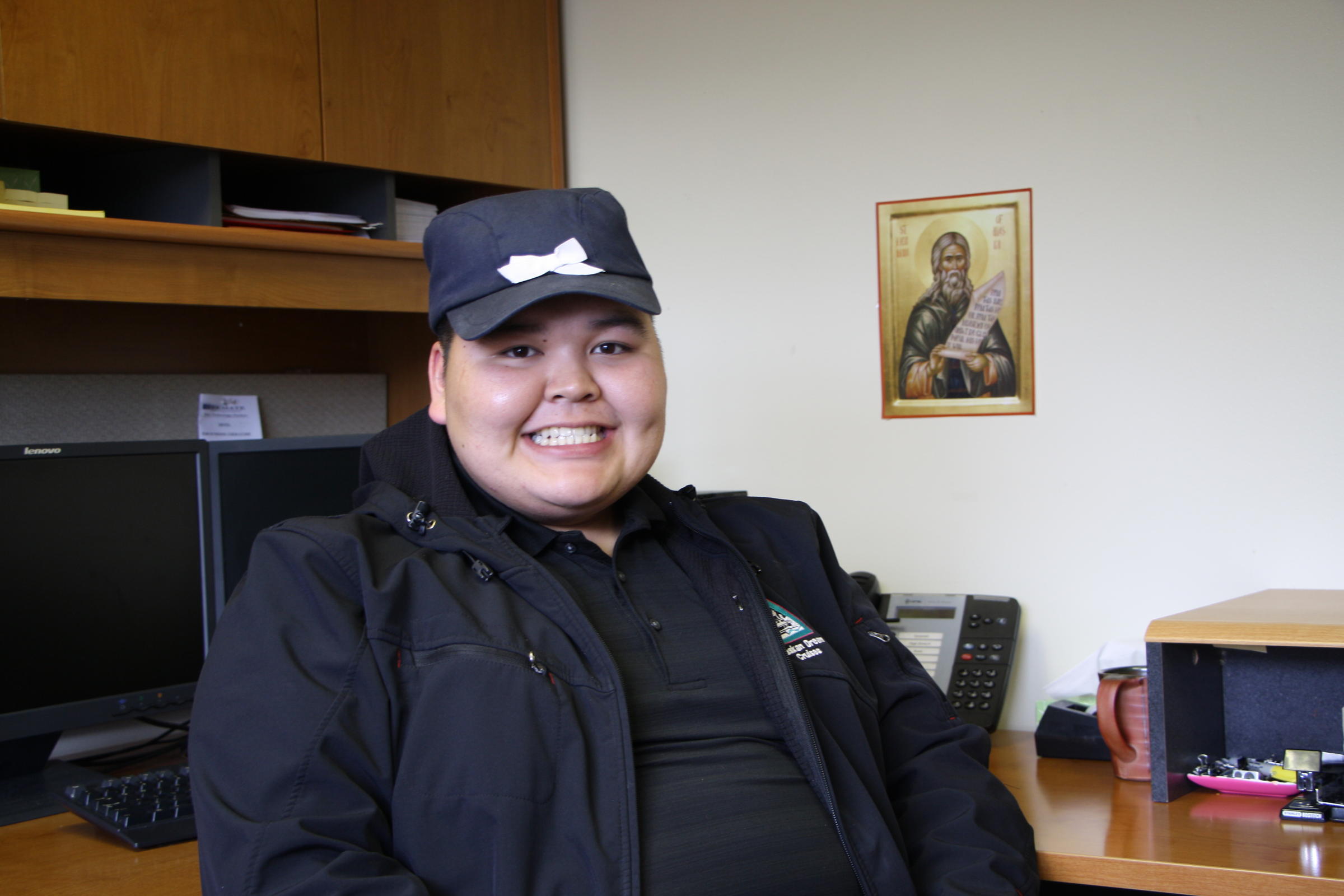
Jalen Konukpeok, 18, learned four languages fluently before graduating Mount Edgecomb High School in May. (Photo by Avery Lill/KDLG)

Most students take classes in a second language during high school, but one Bristol Bay polyglot took it to another level.

Jalen Konukpeok, an 18-year-old from New Stuyahok learned four languages fluently before graduating from Mount Edgecomb High School in May.

Konukpeok is Russian Orthodox, and his faith is a key factor behind his drive to learn languages.

“I’ve always been inspired by St. Innocent, apostle to America. He was one of the first missionaries to come to Alaska. He was also a constructor,” Konukpeok said. “He provided a written language for most of the people in Alaska.”

English is his first language.

Yup’ik is his second, which his grandmother taught him when he was 4-years-old.

At 8-years-old he began to learn Russian to better understand the Russian Orthodox liturgy and teachings.

By a mix of school classes, conversation with friends and practice with the computer program Rosetta Stone, Konukpeok has become fluent in Yup’ik, Russian, Inupiaq and Tagalog.

He has also learned some Mandarin, Tligit, Alutiiq, Unangam, Romanian and Greek.

While Konukpeok mostly puts these languages to use at church and among friends and family, he has also utilized them more publically.

Konukpeok was the Bristol Bay area youth representative for the First Alaskans Institute in 2015. That year he had the chance to use the Alaska Native languages he is learning at the Elders and Youth Conference.

Over the years, Konukpeok has developed daily habits to help him maintain vocabulary and fluency.

“I try to speak it every day. I have different friends of different nationalities,” Konukpeok said. “I speak to them through text every day. It keeps the language there.”

He is attending the University of Alaska Anchorage this fall to study either small business administration or accounting.

For him, learning languages is a way of connecting. As he meets more people of diverse backgrounds in his new community, Konukpeok is looking forward to putting the language skills he has cultivated to work.

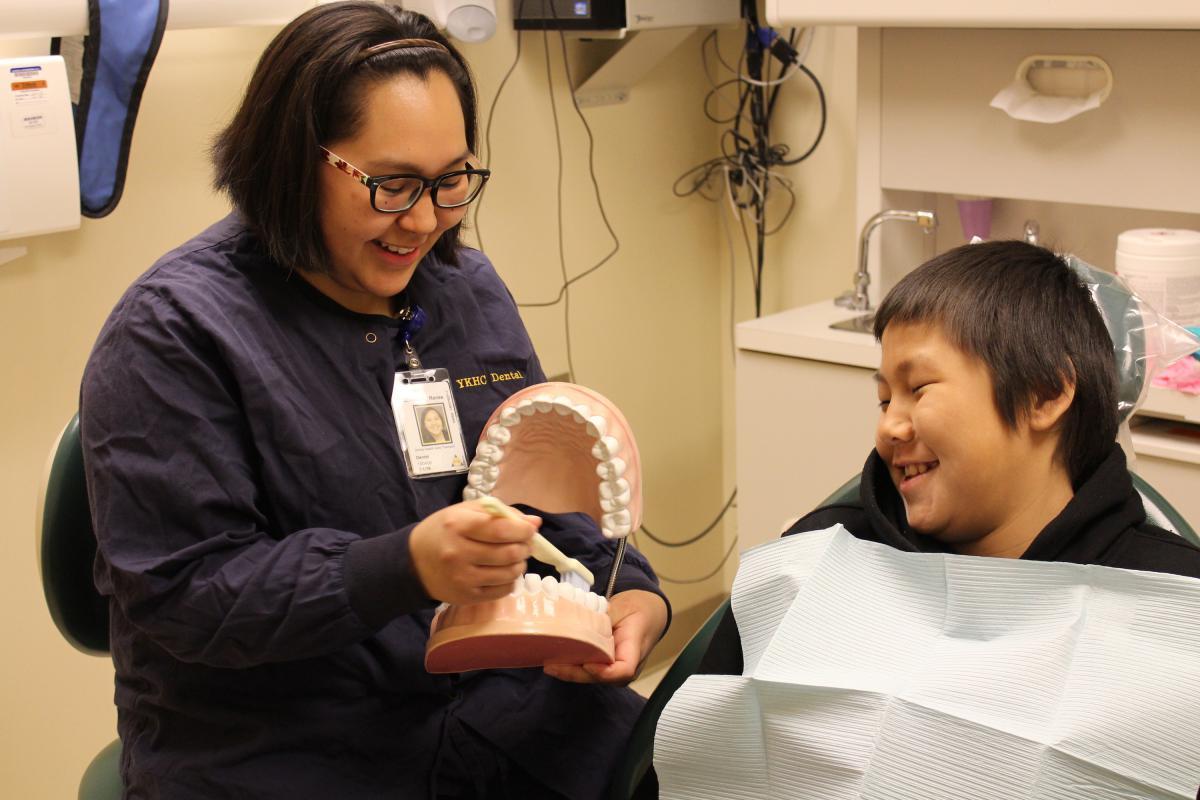
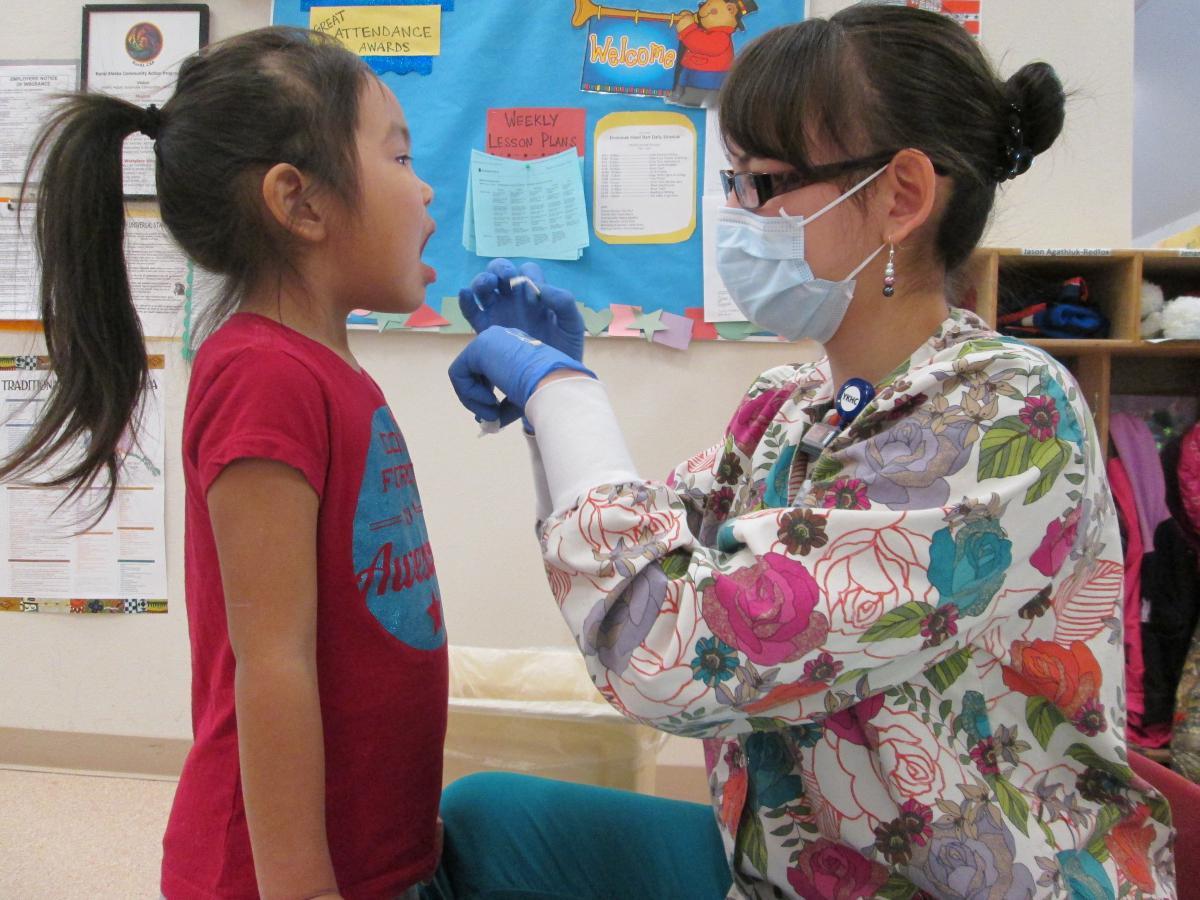
New study suggests dental therapists improving oral health in YK Delta

Rural health aides have a long, successful history of improving access to health care in Alaska.

Now, dental a program based on that model is improving oral care in the Yukon-Kuskokwim Delta.

The Dental Health Aide Therapist program was controversial when it started a decade ago, but a new study suggests that smiles have gotten healthier, cleaner, and toothier in villages where it’s appeared.

Phylicia Wilde grew up in Mountain Village on the Yukon River.

When she was 12, she got a toothache. It started small, but soon she couldn’t sleep.

With the pain, she began missing school. Then, a dentist arrived for the village’s yearly dental visit.

“I was entered into that list to get seen, but the list was so long. It was four or five pages of patients,” Wilde said.

Wilde didn’t make the cut and had to fly to Bethel for treatment. By then, the tooth had abscessed, or become infected.

“It was on a permanent tooth that had a huge cavity, and I needed a root canal.”

If Wilde had had a dental provider in her village, she said that the problem may never have occurred.

Now, Wilde herself is a provider, certified as a dental health aide therapist for the Yukon-Kuskokwim Health Corporation.

After training for two years, she offers many of the same services that dentists do such as X-rays, fillings and extractions.

This program was started by the state’s tribal health organizations because nothing else was working.

Dentists were willing to travel to rural areas and donate services, but it was never enough.

National dental groups sued to stop the program, saying that it wouldn’t be safe.

They lost, and the program began turning out trained health aides capable of doing dental therapy.

“Dental therapists seem to be making a difference in terms of providing the type of care that you and I would want for ourselves and maybe family members,” said Donald Chi, an associate professor of Dentistry at University of Washington and a pediatric dentist who’s practiced in the YK Delta.

Recently, he published a study evaluating the impact of dental therapists on Delta communities. The findings are significant.

The study is the first long-term review of health impacts by dental therapists, and Chi says that the results could change the way dental care is provided in rural areas across the U.S.

“The more number of dental therapist treatment days communities got, the more preventive care people got, and fewer people were getting extractions,” Chi said.

Dentist Judith Burks, who coordinates YKHC’s 10 dental therapists, has seen the transformation.

“I go out to villages and instead of the main focus being on emergencies, we get to focus on things like prevention and higher level care for the patients,” Burks said.

In other words, dental therapists can now educate communities on how to live healthier lifestyles for a healthier mouth, like not using tobacco and avoiding sugar.

Wilde knows her efforts mean that villagers are having fewer of the painful, sleepless nights and missed school days like she experienced growing up.

“It’s been awesome, just seeing the patients and their gratitude,” Wilde said. “That feeling is just amazing.”

YKHC hopes to nearly double the number of dental therapists serving the region over the next two years.

They’re offering full scholarships, and applications will be available on the YKHC website in February.

Nearly half of structures on dock affected by fire, says processing plant fire witness

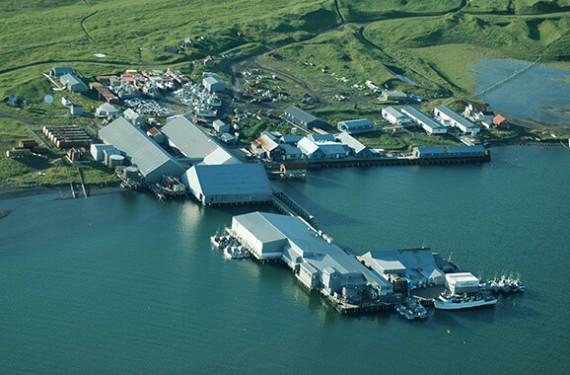
The Peter Pan Seafoods processing plant in Port Moller, which suffered heavy damage during a fire that continued to burn into Wednesday, Aug. 16. (Photo courtesy of Peter Pan Seafoods)
The Peter Pan Seafoods processing plant in Port Moller, which suffered heavy damage during a fire that continued to burn into Wednesday, Aug. 16. (Photo courtesy of Peter Pan Seafoods)

Details are emerging slowly on the fire at the Peter Pan Seafoods processing plant in Port Moller.

The 100-year-old plant caught fire late Tuesday night, and the blaze continued to burn Wednesday.

The full scope of the damage is still unclear, but witnesses say it is extensive.

“The main processing facility is located on the dock. About 40 percent of the structures on the dock were affected by the fire,” said Precision Air’s Theo Chesley, who flew an aerial survey over the smoldering buildings Wednesday morning. “It looked like it could have been much worse, but the main generator systems, the cold storage, the refrigeration plant, the holding area and office all were devastated by the fire. About 60 percent of the other structures there on the dock did not burn. However, they could have been affected by the heat.”

Limited power and water have been restored to the plant.

Chesley estimated Thursday morning that there were more than 100 employees at plant employees still in Port Moller.

A winter generator, which is powering the cafeteria but little beyond that, survived the fire, he said.

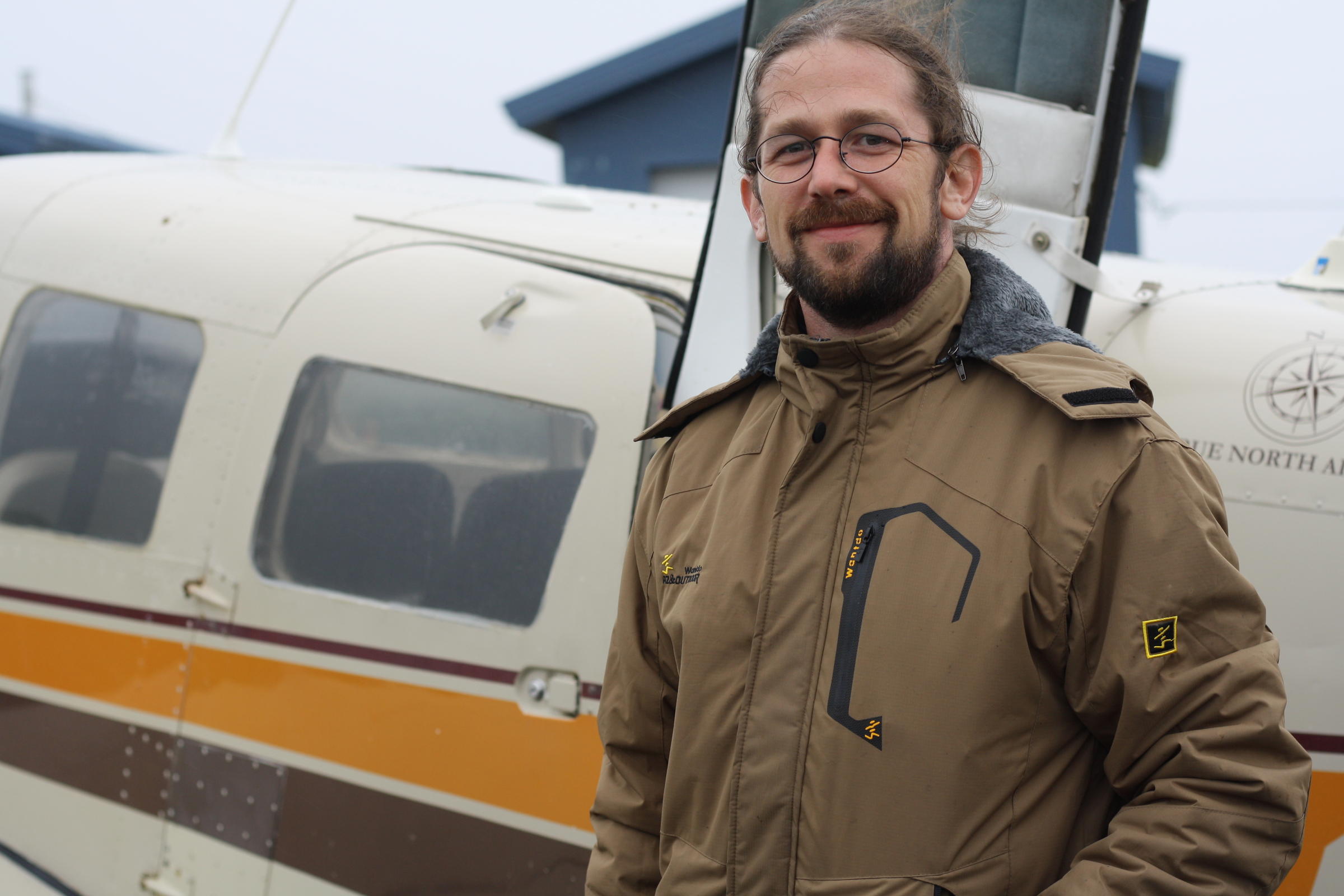
“Anybody with a pulse and air taxi is trying to help these guys out right now,” Chesley said, describing the effort he and other pilots are making to fly workers out of Port Moller. “The wind is blowing about 35 miles per hour and visibility is not that great, so everybody’s just trying to do what we can and help these people out because they’re in a pretty tough situation.”

Fisherman Jared Danielson fought the blaze early Wednesday morning with a group on the beach while boats tackled it from the water.

They worked hard for about two hours to contain the blaze until building where the fire began collapsed.

“After it collapsed in that small area, we couldn’t get to that section that was still blazing,” Danielson said. “Basically once the wind got to it again, it just spread. We had to basically give up and let it run its course.”

No deaths or serious injuries have been reported, and the cause of the fire is still not clear.

Peter Pan Seafoods had not provided comment as of Thursday afternoon. However, Danielson said a representative from the company spoke to the Port Moller area over VHF radio Wednesday.

Danielson also spoke with that representative personally.

“We’re going to rebuild with new state-of-the-art technology is the plan. That’s what I was told,” Danielson said. “This fishery has been around a long time, so would only hope that they would do that. I’m third-generation fisherman in Port Moller. It would be devastating if they were just to let this cannery go away and never rebuild.”

For this year, Danielson said that for most fishing out of Port Moller, this signals an abrupt end to the season.

The fire also poses a complication for hauling boats out of the water.

A portion of the dock was cut away to contain the fire.

Danielson said that some boats that planned on hauling out for the winter at Port Moller may have to go elsewhere.

Clark’s Point drawing families back to the village by reopening its school

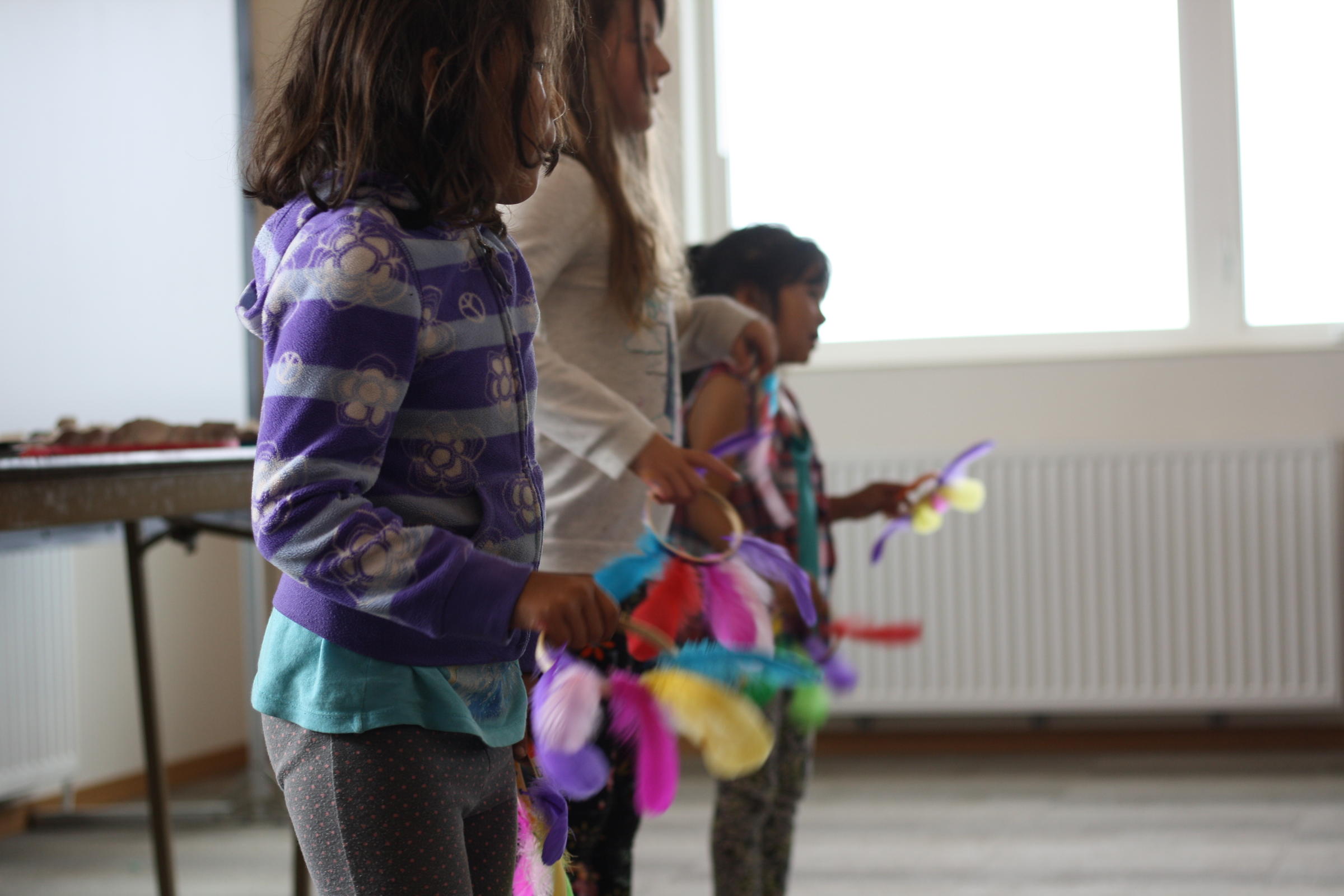
Clark's Point kids practice a traditional dance at summer culture camp. On August 21, they will be students at the village school. (Photo by Avery Lill/KDLG)
Clark’s Point kids practice a traditional dance at summer culture camp. On August 21, they will be students at the village school. (Photo by Avery Lill/KDLG)

When a school closes in rural Alaska, families who stay face tough choices.

They can send their children away to school in another village or city, or they can home school their kids.

Clark’s Point fought for a third option, to reopen their school. The school, which closed in 2012, will be back in session next week.

Clark’s Point is one of two schools in the Southwest Region School District that was closed because it did not meet the 10-student minimum enrollment set by the state.

Portage Creek is the other. The school at Portage Creek has been closed since 2005. That village now largely is a summer fishing community with an official year-round population of two.

Clark’s Point saw its population decline as well after its school closed.

“It was kind of sad. A lot of kids left, a lot of families left,” said Clark’s Point resident George Ramondos.

This year, however, the village saw a brief window of opportunity.

The village council heard from residents that they wanted to see the school reopened.

As the council explored the option, enough families committed to bringing their children back to Clark’s Point to meet the minimum enrollment.

“I’d hear that people wanted back, but they would say, ‘There aren’t jobs; there isn’t a school; if there was housing,’” said village administrator Danielle Aikins. “Suddenly, these things are opening up, and apparently they really meant what they said — ‘If these things existed, this is the place in the world we’d want to be.’”

Thirteen students are registered for this school year.

Aikins said it is unlikely the village could have met the minimum enrollment if the process had been put off another year.

At least two families, a significant number in a village of 63 people, told the council that they would move if no school opened in the fall.

“We assumed that if we didn’t get the school this year that our village couldn’t sustain itself. That is the impact of not having a school,” Aikins said. “You don’t get new people wanting to move in because there’s not a school for their children, and you have people having to leave.”

With the headcount in place, the village initiated a conversation with Southwest Region School District. They needed to hire staff and find a new building.

Using the old school building was not an option because it needs to be renovated to meet current building code.

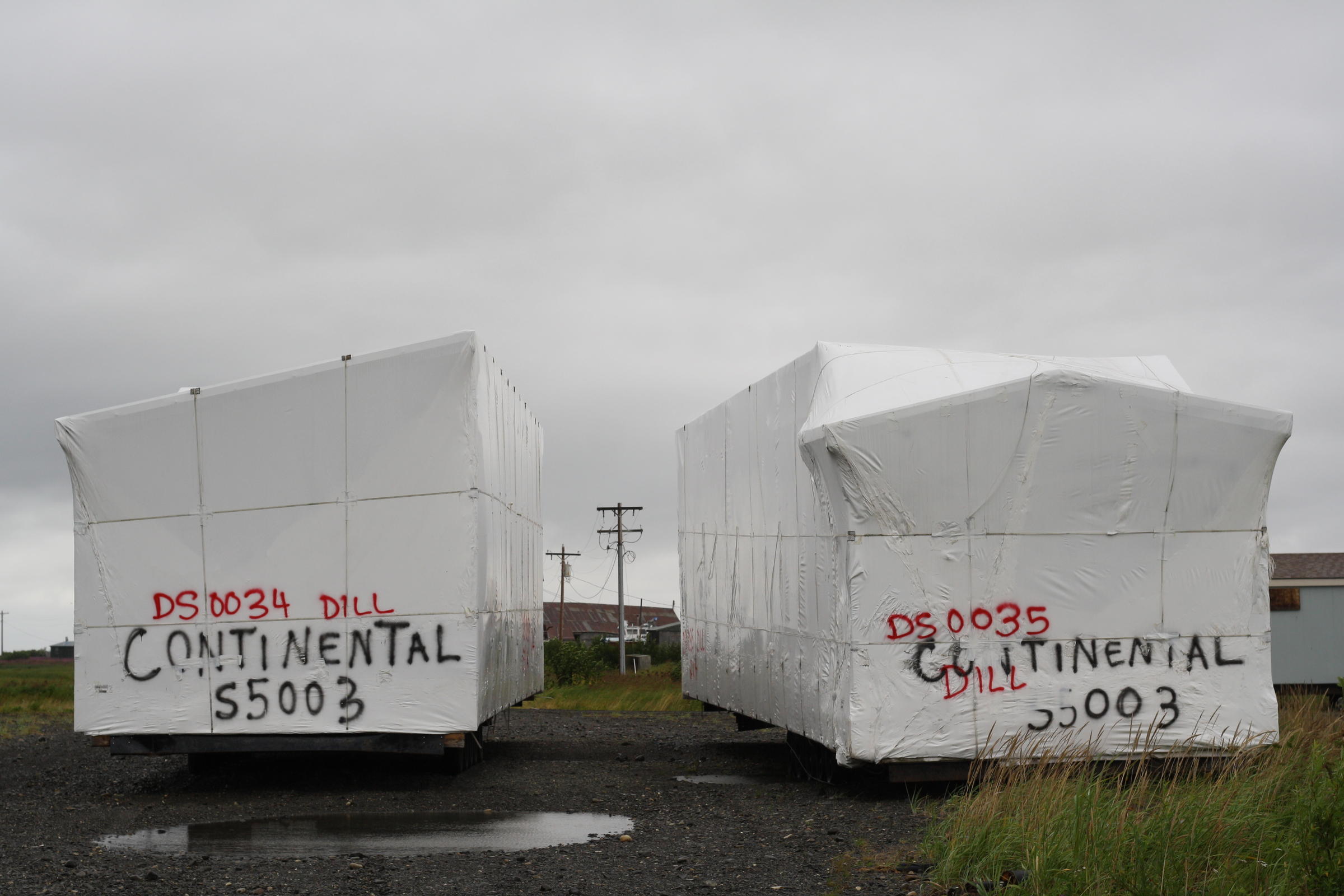
Clark's Point School's modular building arrived in two pieces. (Photo by Avery Lill/KDLG)
Clark’s Point School’s modular building arrived in two pieces. (Photo by Avery Lill/KDLG)

“It’s the heart of the community,” said Steve Noonkesser, the associate superintendent of the Southwest Region School District. “When they came to us and said they came to us and told us they had students and that it was possible to reopen based on the numbers, I think it was more a question of how fast we can do this and how to put the pieces together.”

After a year of working with the school district and other area agencies, the school is set to open Aug. 21.

Clark’s Point received a block grant from the Bristol Bay Economic Development Corporation for a modular school building. It was delivered to the village in two pieces.

The goal is to have it assembled and utilities connected in time for the first day of school.

Classes will be held initially in the village council building if construction is delayed.

The teacher and principal, Shannon Harvilla, arrived from Florida in July.

The residents’ enthusiasm and effort were obvious to him even as they communicated with him before his arrival about plans for the school year.

Shannon Harvilla is the new principal and teacher at Clark's Point School. (Photo by Avery Lill/KDLG)
Shannon Harvilla is the new principal and teacher at Clark’s Point School. (Photo by Avery Lill/KDLG)

“The kids are excited. The parents are excited. They’ve missed the school tremendously, and it’s just a giant accomplishment to see the hard work of the village come together,” Harvilla said. “They say it takes a village to raise a kid. It took the village to raise a school and bring it back.”

Members of the community describe the school’s reopening as a dream come true.

One said that she and her grandson were packing to leave the village so that he could start school elsewhere when word came that the Clark’s Point School would reopen.

Josephine Ingram’s children were living in Anchorage, but she moved them to Clark’s Point last week.

“I’m glad for my kids to be able to come experience picking the berries and looking forward to the moose hunt coming up and the skiff rides, all of that. They’re going to be learning about their culture also,” Ingram said.

She would have kept her kids in school in Anchorage had Clark’s Point School not opened.

In speaking with Clark’s Point residents, it becomes clear that the school is more than an institution of learning; it is a lifeline for a small community.

It has given families with children more incentive to stay, and jobs at the school doubled the number of regular, full-time positions available in the village.

Clark’s Point has cleared many hurdles to reopen their school, and they are certain to face more as the school year kicks off.

Parents and community members describe many reasons why they want to stay in Clark’s Point and raise their children there – subsistence opportunities, quiet atmosphere and close proximity to family.

“This is home,” said longtime resident Diane Tennyson.

Site notifications
Update notification options
Subscribe to notifications