KDLG is our partner station in Dillingham. KTOO collaborates with partners across the state to cover important news and to share stories with our audiences.
The Peter Pan Seafoods processing plant in Port Moller has been devastated by a massive fire that burned through the night and into Wednesday morning.
No one has been reported injured, but power, running water and most phone and internet connections are down in remote community.
“The fire started kind of in the production end of things, kind of the freezing warehouse at Peter Pan Seafoods last night. And consumed most of the production facilities that we can tell,” said Bob Murphy, the Alaska Department of Fish and Game area management biologist based in Port Moller.
Murphy was reached a little before 8 a.m. Wednesday.
“Nobody’s been able to get down there because the fire’s still going. There’s obviously very, very extensive damage to the main production facility and office for Peter Pan, [it] is definitely consumed in fire. We can’t see some of the facilities on the other dock because the smoke is so heavy, so we don’t know what the status of those are … obviously still there’s a fire going on at this time. The main warehouses and all the living quarters are OK, and everybody’s safe, is the main thing.”
Murphy had just gone into work to try and restore the state services.
“I’m literally on my knees in the office right now trying to plug stuff in,” Murphy said. “We’ve got emergency generators here so we can get a functioning office right now, because all the power is out in Port Moller.”
A fisherman who watched the fire from his vessel reported that he saw flames shooting 150 feet high.
“The dock was cut to prevent the fire from basically coming towards more buildings,” Murphy confirmed, who said it was burning past the point of being able to contain it.
The cause of the fire has not been given.
Port Moller is “Peter Pan’s most remote facility,” according to the company website. The PPSF corporate office in Seattle had not offered comment by 9 a.m.
Murphy offered his best perspective on the firefighting efforts that were still ongoing.
“They have fire suppression systems here, and they’ve got water lines and hoses and such, and those were all used early on trying to keep the fire at bay, but it’s a 100-plus-year-old building, buildings, and lots of old timber and dry timber, and once it got going it was really hard, couldn’t stop it,” he said. “It went on for several hours, probably at least two hours I think, maybe two and a half, before it just got so intense. And now you’re down to where there’s fuel and there’s ammonia tanks and lines, and gets to the point where it starts being very dangerous to be around, and there was no way to keep fighting it.”
Murphy said he will continue to publish catch and escapement numbers for the Area M North Peninsula fisheries, and will likely make management decisions today as well, but he’s not sure if the fleet will be able to fish without their buyer able to take the catch.
“I have no what’s going to happen, but they will not be processing fish at the Port Moller plant, that’s for sure,” Murphy said.
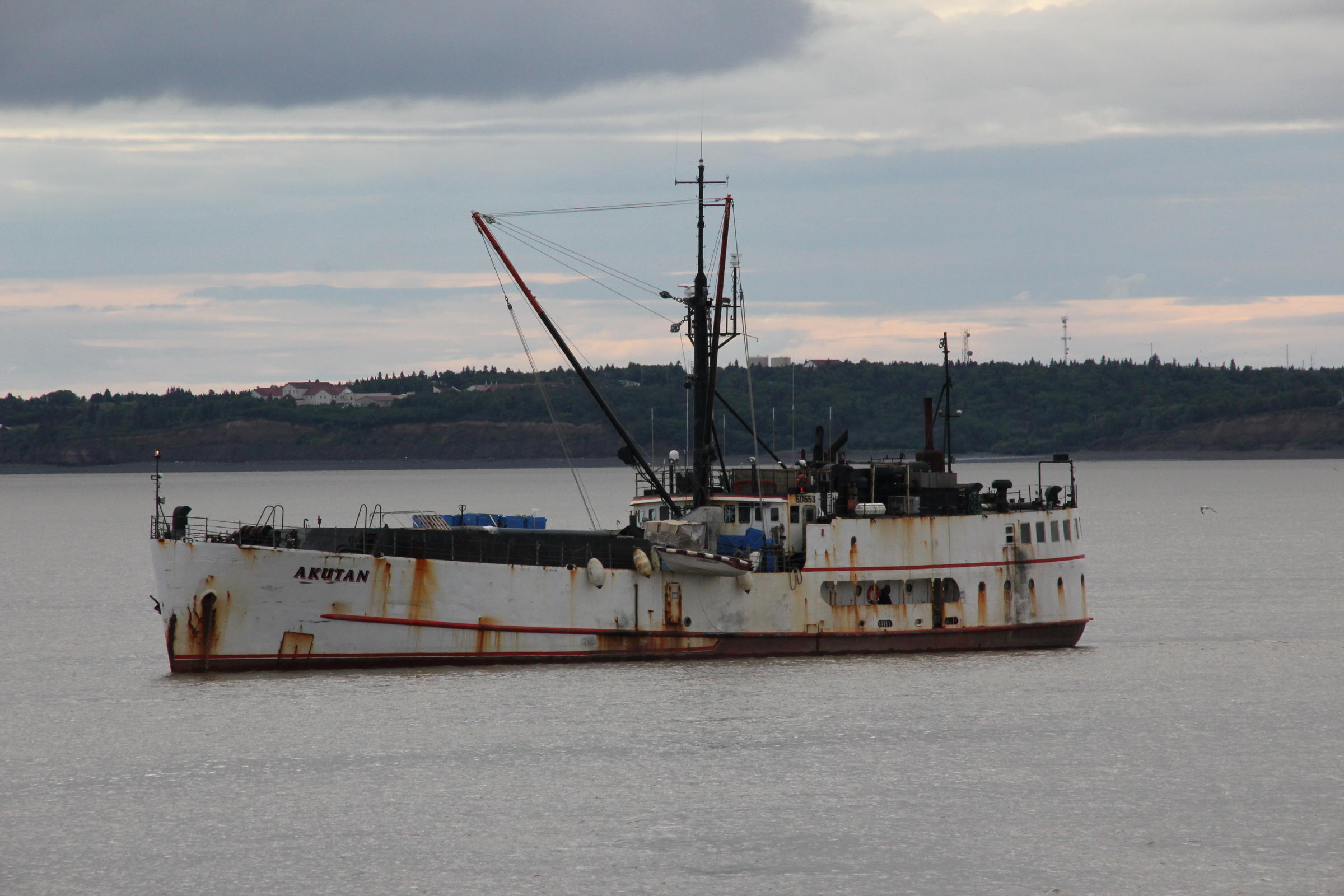
The 180-foot Akutan anchored is anchored August 5, 2017, in the Nushagak Bay not far from the Dillingham dock. (Photo by Dave Bendinger/KDLG)
Fiasco. Disaster. Nightmare.
These are words used by those involved with the floating processor Akutan to describe a fishing season gone terribly wrong.
The Akutan, owned by Klawock Oceanside, Inc., was supposed to custom process up to 100,000 pounds of Bristol Bay salmon a day for a small fleet of fishermen under the banner Bristol Bay Seafoods.
After July 25, it was bound for the Kuskokwim to give local fishermen their only salmon market.
Nothing went right.
The owners, the fishing fleet, the lender, and the crew have gone unpaid or lost big sums of money.
Onboard the vessel sits 130,000 pounds of headed-and-gutted sockeye salmon, the only bounty other than the vessel itself that may eventually compensate the parties involved.
The owners, fishermen, and other parties filed liens against that fish as the 180-foot floating processor Akutanand a skeleton crew limped out of the silty, shallow Nushagak Bay Sunday to seek repairs at a blue water port.
“We’re in peril,” Captain Steve Lecklitner said Saturday. “We know we cannot stay in this river. It’s breaking down our systems. The owners have basically abandoned the vessel. The mortgage holders and the lenders have not established contact. I’m trying to get parts for our generator, and as soon as that’s done, it’s our intention to move the vessel to Dutch Harbor.”
Best laid plans
After last season a group of about 15 Bristol Bay drift boat fishermen decided to again pursue their own market. These fishing families are members of an Old Believer community in Homer and are commonly, and not pejoratively, referred to as the “Russians” in Bristol Bay’s fleet.
Skipper Kiril Basargin, a leader of this group, has been vocal about his frustration with the “mega corporate seafood buyers” that process 99 percent of Bristol Bay’s catch, faulting them for catch limits and low prices. In 2015 he brought his concerns to the state’s board of fisheries, telling them that Bristol Bay’s seafood companies promise “every year that they are going to keep up, and not holding there [sic] promises. Holding on, the commercial fisherman loses money every minute while they sit. We finally got tired of sitting and losing our seasons. The huge corporations control the markets and commercial fisherman. Finally in Bristol Bay in 2014 Wild Legacy Seafoods was born,” he wrote.
What happened to Wild Legacy Seafoods is unclear. But ahead of the 2017 season, Basargin and others formed a new company, Bristol Bay Seafoods LLC, to be their own “buyer”. They hired Klawock Oceanside to be their processor.
“And really they’ve lost their whole season to mismanagement and mis-operation of the F/V Akutan,” said William Earnhart, an attorney for the Bristol Bay Seafoods fishermen.
Klawock Oceanside is owned by Larry Lang, who says his career in Alaska fish processing began with a job shoveling shrimp out of shrimp boats in Seward in 1963. From there, Lang worked in Ketchikan, then ran the Sitka Cold Storage Company till its 1973 fire, and went on to operate fish companies in Kodiak, Klawock, and floating processors at sea.
“The only thing I haven’t processed is pollock,” the 75-year-old says with a laugh.
Lang, who lives in Poulsbo, Washington, also ran tenders for a numbers of years, too.
“I lost so darn much money being a cash buyer in Bristol Bay, and I started to raise a big family, and I just had to get something that was a little more secure. So I tendered, and we did real well with that. And then uh, we decided tendering was boring,” Lang says, neglecting to mention a July 2001 fire that sank his 72-foot vessel Excursion near Port Moller. He and three others were rescued at sea by the Coast Guard.
Lang says he leased a fish plant in Klawock for eight years before purchasing the 180-foot vessel Akutan four years ago. Built in 1944, the Akutan processed fish and crab in Alaska waters for many years, but Lang says had been “tied up” in Seattle for two decades before he got ahold of this one “heck of a boat.” He sent the Akutan to buy salmon in Norton Sound for three years, then tried getting into cod in 2016. That did not go well.
“We lost our butt on codfish at Dutch Harbor. We just … I never lost money like that in my life.”
Lang says he sold some property to help finance the Akutan’s 2017 operations, but money was running low. His primary lender, Alaska Growth Capital, was tightening the purse strings, too.
Earnhart, the attorney for the fishermen, says his clients had by January firmed up their agreement with Lang, who was also planning to buy Kuskokwim salmon after Bristol Bay.
According to their contract, Klawock Oceanside would have the Akutan ready process 100,000 pounds of sockeye per day in Bristol Bay by June 15, and the season would end on July 25. Bristol Bay Seafoods would pay Klawock $16,000 per day for those 40 days, plus the same rate for four additional days for travel time from Seattle. That would total a little over $700,000 Lang would raise to run the boat, pay the crew, and turn a profit before heading to the Kuskokwim.
The fleet loaned $100,000 to Lang upfront last spring, which the contract stipulated would be paid back first. They purchased $70,000 in packaging, scales, and other supplies, and loaded them on the boat. Bristol Bay Seafoods loaned a further $230,000, according to their attorney, as it became clear the Akutan was in need some of important last minute capital.
In early June the fishermen told Icicle Seafoods they had their own market this year and would not be fishing for the company. Lang hired a captain and crew to run the vessel and crew members to process the fish, all of whom began trickling into Seattle before June 15. Fishing was already underway in Bristol Bay, and an unexpectedly large season was about to break wide open.
A really late start
As per the contract signed on May 30, the Akutan was to be on the fishing grounds by June 15. Unbeknownst to the crew arriving in Seattle, and perhaps unbeknownst to the fishing fleet, it was pretty clear that deadline was not going to happen.
According to Lang, his bank Alaska Growth Capital, a wholly-owned subsidiary of Arctic Slope Regional Corporation, had seized the boat for his failure to make payments on the principal loan.
“They had the boat for two weeks,” said Lang. “We couldn’t even get on it to work. We tried, but it took another week to get everything moving, so we were basically three weeks behind by the time we got everything in flux again.”
AGC did not confirm the details of the arresting of the Akutan prior to the season, but did confirm that it did not have ownership post-season. Lang says the bank figured out it probably could not auction the Akutan for what he still owed on it.
“It was a bad decision to seize the boat,” he said. “They came to us and wanted to give it back.”
“We had a lot of problems getting off with the boat running,” said Curtis Bischer, a 55-year-old from New Orleans, Louisiana, who signed on as the cook. Bischer said he got his kitchen prepped and food loaded while he watched the captain and crew clear remaining problems with the Coast Guard. Then they set out from Seattle.
“Little did we know a nightmare was coming,” said Bischer, who says he has been working offshore since 1990, mostly in the Gulf of Mexico.
Just outside of the Strait of San Juan de Fuca, the Akutan lost a main engine, and Captain Lecklitner turned her around for repairs. What happened over the next two weeks is unclear, but the Akutan finally made it to Bristol Bay either July 7 or July 9, depending on differing accounts. The vessel took its first fish over the rail late on July 9.
By then, according to state Fish and Game records, the total run to Bristol Bay was already 38 million strong, and set and drift net fishermen had already hauled in more than 24 million sockeye. The Bristol Bay Seafoods fleet had thus far sat mostly idle as their fellow fishermen were having their best ever seasons, especially in the Nushagak where the run shattered all expectations and set previously unthinkable records.
“The season was pretty much over,” said Lang, who stayed in Washington but posted his son Carson Lang onboard as the processing manager. “It was over. There was a little bit of fish left in Egegik, and a little bit of fish left in Ugashik. So we didn’t have much of a season for these guys.”
That the season was over is not quite accurate. From July 10 till July 30, the state went on to tally another 13 million sockeye harvested, and the total run climbed past 56 million, the fourth largest in Bristol Bay’s history.
The run was so unexpectedly big that most of Bristol Bay’s processors “plugged up” and put their fleet on catch limits or closures, just as Basargin complained they often do. The last thing any company struggling with the catch volume wanted was anymore fish or anymore fishermen. Icicle Seafoods did not take the Bristol Bay Seafoods fleet back mid-season, despite the urgent pleas from the fishermen for a market. The boats were able to sell some catch to Copper River Seafoods, but according to their attorney, this didn’t amount of much.
The Akutan took its last delivery of fish on July 19, amounting to nine or 10 days’ of fishing. Earnhart claims the Akutan was never able to live up to its contract with his clients to process 100,000 pounds per day.
“The Akutan did not appear in Bristol Bay until three weeks late, missing the heart of the season. When it did get there, it could only process about 20,000 pounds in 24 hours, and that never got appreciably better,” he said. He attributed some of the shortcomings to problems with freezing and processing equipment.
“While we were in the middle of processing, the contractor of the vessel and the owner of the vessel started litigation against each for breach of contract,” said Lecklitner, the captain of the boat. “And in the interim, the mortgage holder of Klawock decided to call the mortgage and all the financing dried up. Work stopped.”
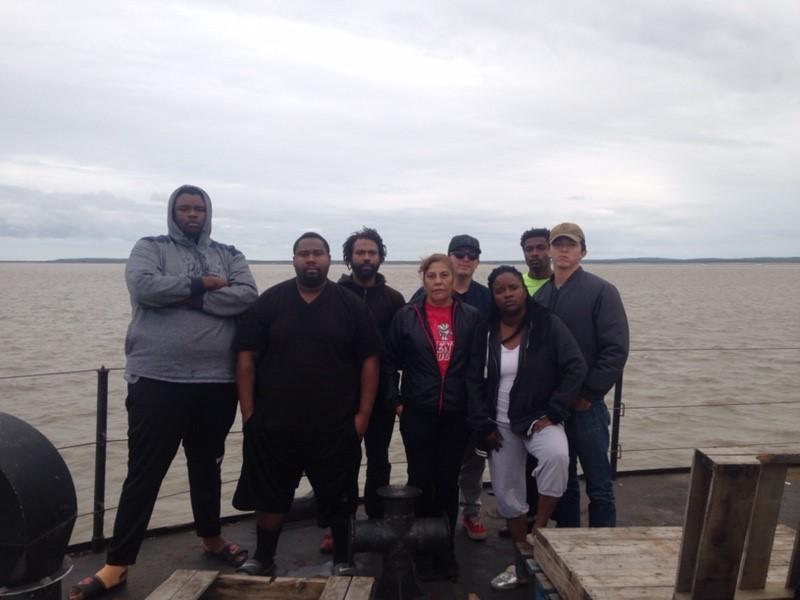
Some of the unpaid crewmembers of the F/V Akutan. Pictured here in late July outside Dillingham as they waited to get ashore and get home. (Photo courtesy Darlene Drummer)
The unpaid crew and a vessel in peril
“As this trip went through, I kept checking my bank account,” said Curtis Bischer, the chef, saying he never saw a deposit. “I was on 42 days, and I’m wondering, where’s my pay? I’m supposed to be getting paid $125 a day, with a bonus on top of $125 a day upon finalization of the trip. Well, they breached their contract for non-payment. They were not paying me. I was working virtually for free, which the whole crew was also.”
Most of the rest of the crew on the Akutan were working their first job at sea, and most had been out of cell phone and internet range for weeks by the time they realized no deposits had been made. For those hired to process fish, they had earned nowhere near the hours they expected, and as Bristol Bay’s season wrapped up, were still not aware that the follow on work in the Kuskokwim was falling apart, too.
On July 23 the Akutan anchored up outside of the Dillingham harbor, presumably waiting for instructions on what to do with 130,000 pounds of frozen sockeye onboard. Darlene Drummer from Rosharon, Texas, says two days passed and the crew began to get restless. She said Carson Lang, Larry Lang’s son who was onboard as the processing manager, still relayed optimism of more work in the Kuskokwim.
“He calls a group meeting and says, ‘When we get over there, we’re going to start processing fish, and it’s going to be a lot of work. We’re going to do at least a hundred hours per week, it’s going to be continuous.’ So we’re happy because we know we’re going to start clocking those hours we need to earn that income,” Drummer said.
As the days went by, the crew grew more anxious. They were not privy to the specifics of the negotiations between the parties. Drummer says they heard the fishermen had backed out of the deal, the bank would probably seize the boat, and that there might not be more work in the Kuskokwim.
“But we’re just processors, we don’t know what’s going on, and we don’t even know that language,” she said. “This is our first year doing it. All we know is we were contracted to do a job, we worked, we met our obligations, and we just want to get paid and go home.”
To add to the misery, the boat was having an increasingly difficult time staying on anchor near Dillingham. An engine went down, as did a generator. Food was running low, and the water became undrinkable. Captain Lecklitner decided to move to Clark’s Point where there is fresh saltwater available to make potable water and clean out the vessel’s clogged up filters.
When he did so, the crew lost their cell phone service. That is when frustrations began to boil over, says Drummer.
“We’re there for like three days and we’re like, ‘you need to take us back to Dillingham where we can have phone access and talk to our people. Because we’re not getting no answers, you’re holding us out here, and you know what we can’t talk to anybody. And we can’t get off this durn vessel!’”
These crew members say they had been promised a 90 day contract with unlimited overtime and were planning to make at least $15,000, hopefully more. Instead, the crew were learning of mounting financial woes back home.
“People have lost their homes, they can’t pay their bills, I’m getting ready to lose my health insurance. Their losses are just devastating,” said Captain Lecklitner, who had also not been paid when he spoke with KDLG on August 5.
“The story is what it is,” said Drummer. “These people are stuck on this vessel, they want to go home, but it’s like being held captive. No one is holding a gun to our head, but basically you’re being held because you don’t have the resources to go home.”
A temporary solution
Negotiations between Klawock Oceanside, Bristol Bay Seafoods, and Alaska Growth Capital broke down while the Akutan sat anchored outside of Dillingham between July 23 and August 6.
“We just flat ran out of money,” Lang said, pointing out that the parties could not agree on what if anything should be paid to Klawock, who owns the fish onboard, and whether or not the bank holds title to the mess alongside the mortgage.
“I guess this will all be sorted out in court, sad to say,” said Lang, pledging that he will pay the crew first if any money is raised from the processing, sale of the fish, or the sale of the Akutan.
By August 3, the satellite phone was turned off, and the captain heard no more from Lang, the fleet, or AGC after the bank stepped in to get most of the crew off the boat and on their way home.
Ty Hardt, senior communications director for ASRC, said AGC bought tickets for 11 crewmembers and gave them $500 each as they passed through Anchorage.
“Because we had heard what had happened with these folks, and they would be stuck in Bristol Bay if that wasn’t the case,” Hardt said of why AGC intervened. “As I understand these employees have been very appreciative. We were glad to do it, and I think it was the right thing to do.”
Ten left the Akutan and flew out of Dillingham on a rainy Wednesday, August 2. Curtis Bischer, the chef, did not take the ticket to go home, saying he really had no home to go to without his season’s pay.
“Here I am, I was dropped off in Dillingham on the side of the road, in the mud. I’m scared for what’s happened to me. I’ve been traumatized here. I’ve never experienced anything like this my life,” he said.
Cameron Adams, a 35-year-old from Missouri City, Texas, chose not to get off the Akutan. He worked as hard as he could for two months, calling this summer of work a great opportunity to help get his life back on track.
“I gave up a job for this. I have to nowhere to go back to. All I ever did was work for him,” he said, speaking of Larry Lang. “I didn’t quit, never, and I still didn’t quit. I’m still working for him, as you can see, still on this boat, in hopes on maybe getting paid when I get back to wherever this boat stops.”
Adams and Drummer say they have no hard feelings towards Alaska’s fishing industry, and would come back to try it again.
“I would love the opportunity to go with the same expectations of making that type of money in the short period of time,” said Drummer. “We’re working people, that’s what we do. And I’m not even mad at anybody. But I want my money.”
Captain Lecklitner steamed out of Bristol Bay jaded and worn, feeling terrible for the crew who had left the boat without their wages. Lecklitner has been a captain for 15 years, running boats in various industries both in the U.S. and abroad. He said he has never seen anything quite like the 2017 voyage of the fishing vessel Akutan.
“Never, and I’ve been in the middle of African nations fighting over boats, and it hasn’t been this complicated. The graft and corruption and everything that goes on with these African countries is pretty incredible, but I have never been in a situation that this was stressful and difficult to manage.”
He reached safer port at Dutch Harbor, and said on Monday, August 14, that he believes all parties have abandoned responsibility for the vessel and the fish on board. There is no money to keep the Akutan safely moored or powered, and the captain has notified authorities of his peril. He hopes to find someone to purchase the sockeye before he shuts down the freezers. This ship’s captain from Texas does not know what will then happen to the 180-foot fishing vessel Akutan.
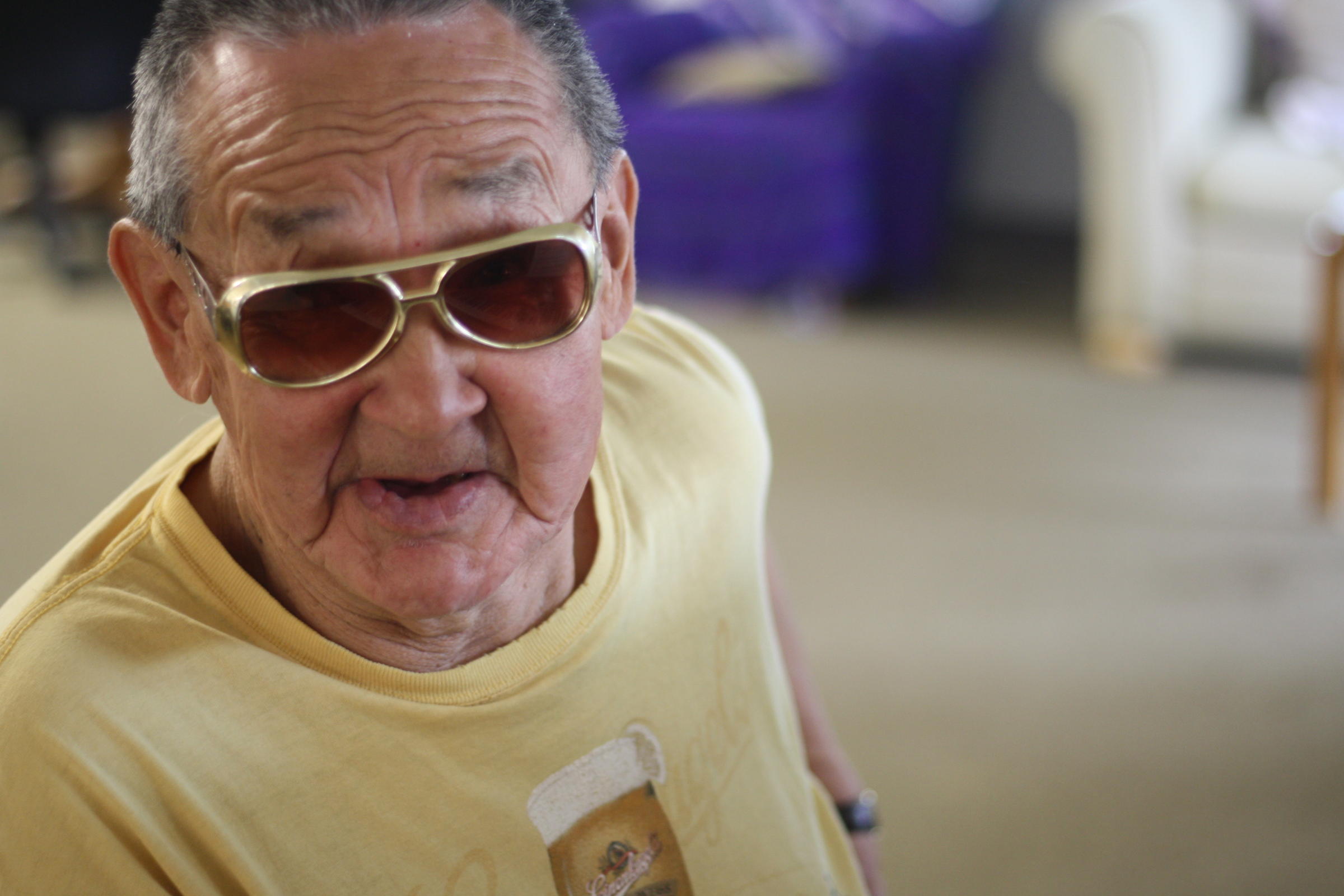
Paul “Elvis” Chythlook dons a pair of gold chrome shades at the piano bench. He plays for the community in the Dillingham Senior Center regularly, gospel and traditional tunes he knows by heart. (Photo by Zoey Laird/KDLG)
In downtown Dillingham, both the senior center and the Christian youth center are places to find food and fellowship with others.
Paul Chythlook plays gospel piano at the Dillingham Senior Center, and afterwards I feel like I’ve been to church.
People call Chythlook “Elvis” for his baritone impersonation of the King.
Blind in one eye and arthritic, the 71-years-old plays by ear from a mental catalog of classics, barreling from Presley’s “Don’t Leave Me Now” to the hymn “Crying in the Chapel.” I request to hear the latter again.
Chythlook’s audience leans in, listening to the lyrics, all about coming together in fellowship.
“Elvis” rocks a pair of gold chrome shades and pounds out songs he’s played all his life. Across the keyboard, I make eye contact with a man I don’t know. We can’t help but smile.
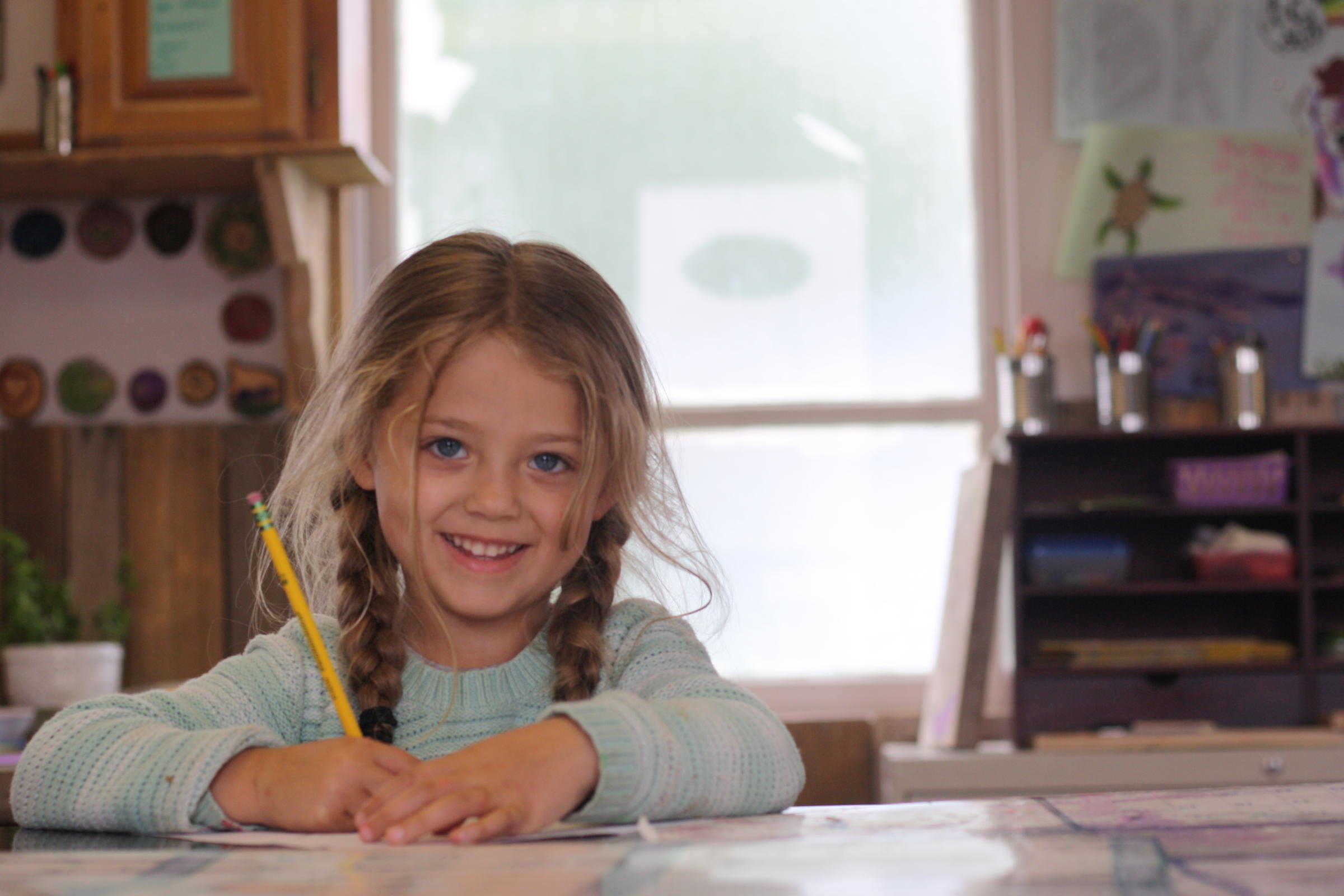
Mischaell Romo, 4, lives in the same building as the Dillingham Christian Youth Center. She’s familiar with many of the youth who spend time there, and she’s always looking for someone to draw, paint, or color with. (Photo by Zoey Laird/KDLG)
High school night at the Dillingham Christian Youth Center looks like a roomful of siblings relaxing at home.
“We’re closer to being a family at the youth center than my own family is sometimes,” Noah Theurer, 17, said. The Theurers moved to Dillingham this summer, and Noah’s a regular at the youth center now. “We all pray together, we eat together, laugh together, you know it’s the whole nine yards of being a family.”
Jasmine and Tyler Romo run the non-profit organization and raise their kids in the same building.
Tonight, they work in the kitchen, while a game of foosball, music and young voices fill the center.
Their children, Mischaell, 4, and Giuseppe, 1, are doted on like everyone’s little brother and sister.
“My brothers and sisters, I haven’t seen them in a couple years,” Frank Nicholson said, shuffling cards and waiting for the lunch bell.
He visits with folks at the senior center more than some members of his family.
Philip Andrew joins us at the card table. “Old timer,” Nicholson said, “tell your life story.” Andrew guffaws, clearly used to the teasing, and takes a seat.
The two men are neighbors and good friends. I comment on a hole in Andrew’s shirt that’s comically positioned right over his belly button. He pats his stomach and grins.
“Every time I go over to his house he’s feeding his face,” Nicholson jabs. “Take a steam, feeding his face again.” Nicholson and I burst into laughter. “Typical day around here,” he says.
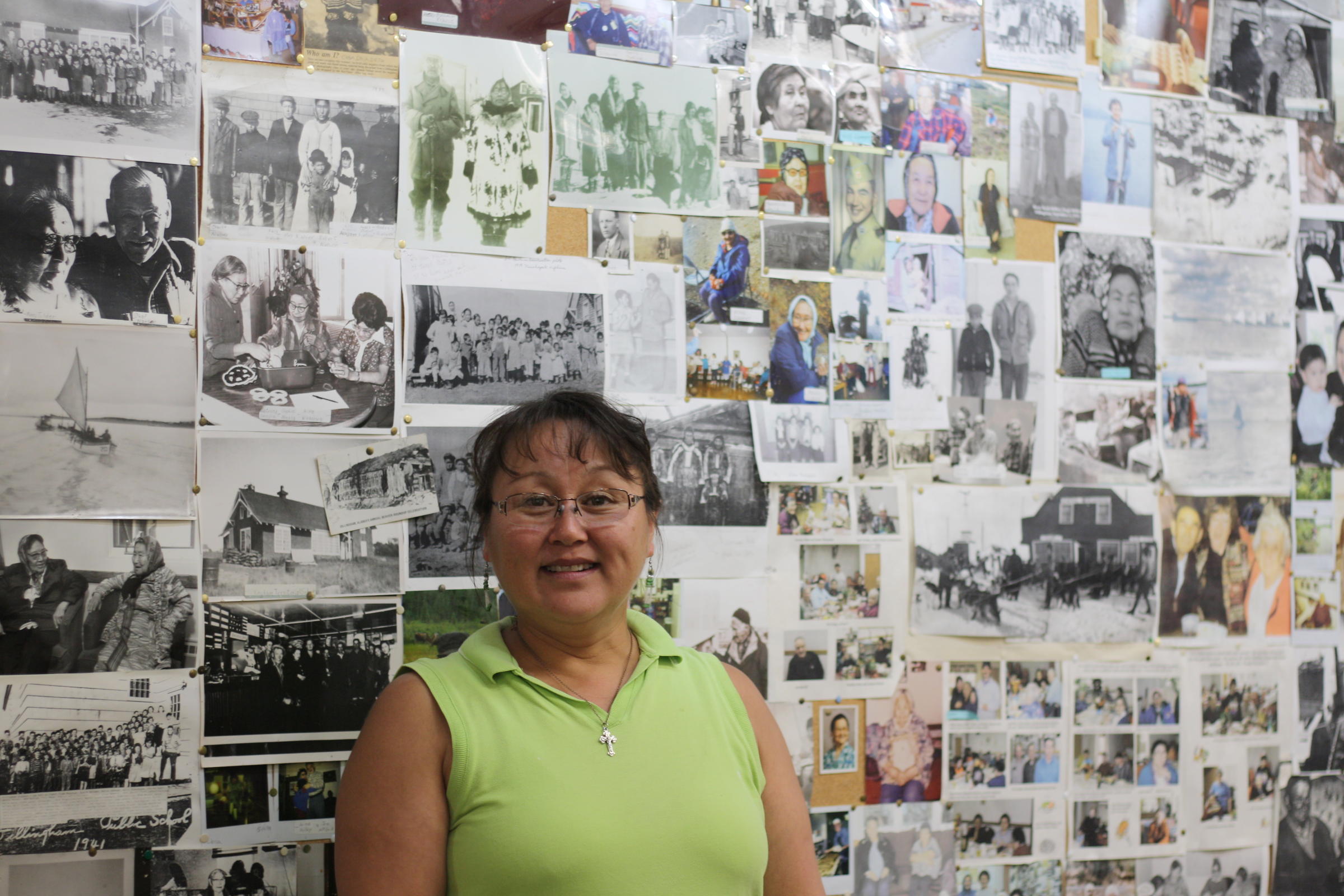
An elder told Ida Noonkesser “that if you treat people the way you want to be treated … you’ll have a bigger family.”
She didn’t understand at first, but now she’s the director of the Dillingham Senior Center, and has “a big whole family” aside from her biological one.
Noonkesser’s worked here for 17 years and she says, “It gives me joy to come to work Monday through Friday, because I get to spend time with the elders.”
She takes comfort in their friendship when she doesn’t see her parents or her 97-year-old grandmother as frequently.
“I can always feel the love from them,” Noonkesser said.
Many of the elders speak Yup’ik, Noonkesser’s first language, and “they have wisdom and give out advice.”
She likes to imagine they are all her adopted grandparents, and enjoys feeding them every day.
In the morning she cooks a meal with her staff, and when the lunch bell sounds at noon, she communes with her makeshift family of elders in the cafeteria.
Dillingham Senior Center director Ida Noonkesser stands before a board of memories. Photos of community elders are displayed from years past. Noonkesser was recently recognized for 17 years of service at the center. (Photo by Zoey Laird/KDLG)
Similarly, at the Dillingham Christian Youth Center, the “ideal result of coming together is sharing joy,” Jasmine Romo said.
Kids ages 10 to 18 are hosted on a foundation of faith, of “God’s love” and “bearing each other’s burdens.”
Young people like Sara Fuller, 17, assist the Romos at the center’s coffee corner, which serves beverages to the wider community for donations.
Behind the customer counter, Fuller refers to her cross necklace, saying she believes in “good lattes and God.” More seriously, she says “this youth center has changed lives.”
I ask her how, and she tells me about friends, who instead of sitting around at home, are finally eager to be somewhere after school.
“They’re getting out there and getting to know new people and having fun,” Fuller says, and I suspect she’ll be spending lots of time here in the coming school year.
Anastasia Heyano is in Fuller’s graduating class at the Dillingham High School, and she’s usually the youngest in the senior center at any given time.
She corrects me when I ask her what she likes about working with old people. “Elders,” she says, “have stories to tell and they’re really smart. Some of them have been everywhere.”
Heyano didn’t plan to work at the senior center this summer, but now she says, “I like it a lot … they’re funny, they’re chill, I mean, there’s no drama around them or anything.”
Her uncle “John John” Heyano is a regular, and he fist bumps her on his way to the cafeteria.
After lunch, I catch him chatting at the card table. When I ask him what he thinks of the senior center, he reminiscences about a time when more people got together to “just enjoy each other,” like the elders do here.
John John is right. Simple, present minded togetherness like this doesn’t exist in most places and for most people. Maybe that’s why it feels so rare and wonderful.
Little Mischaell Romo hands me a brush and invites me to paint.
The youth center is quiet before the usual rush of kids at 3 p.m.
I sit alongside Mischaell and we paint a princess who wears shorts, a T-shirt and a crown. When she’s finished, I suggest that our princess needs a mantra.
Mischaell asks me what a mantra is, and I explain it’s something you say over and over because you believe it.
She decides I should choose one. I pull a lyric from “You Gotta Be” by Des’ree.
The song came into my mind all week, walking between the two centers and meeting kind Dillingham people, old and young. I paint the words and speak them as they appear on the page.
“Love will save the day,” I say. Mischaell follows the line of my brush with her eyes and repeats our mantra aloud. “Love will save the day.”
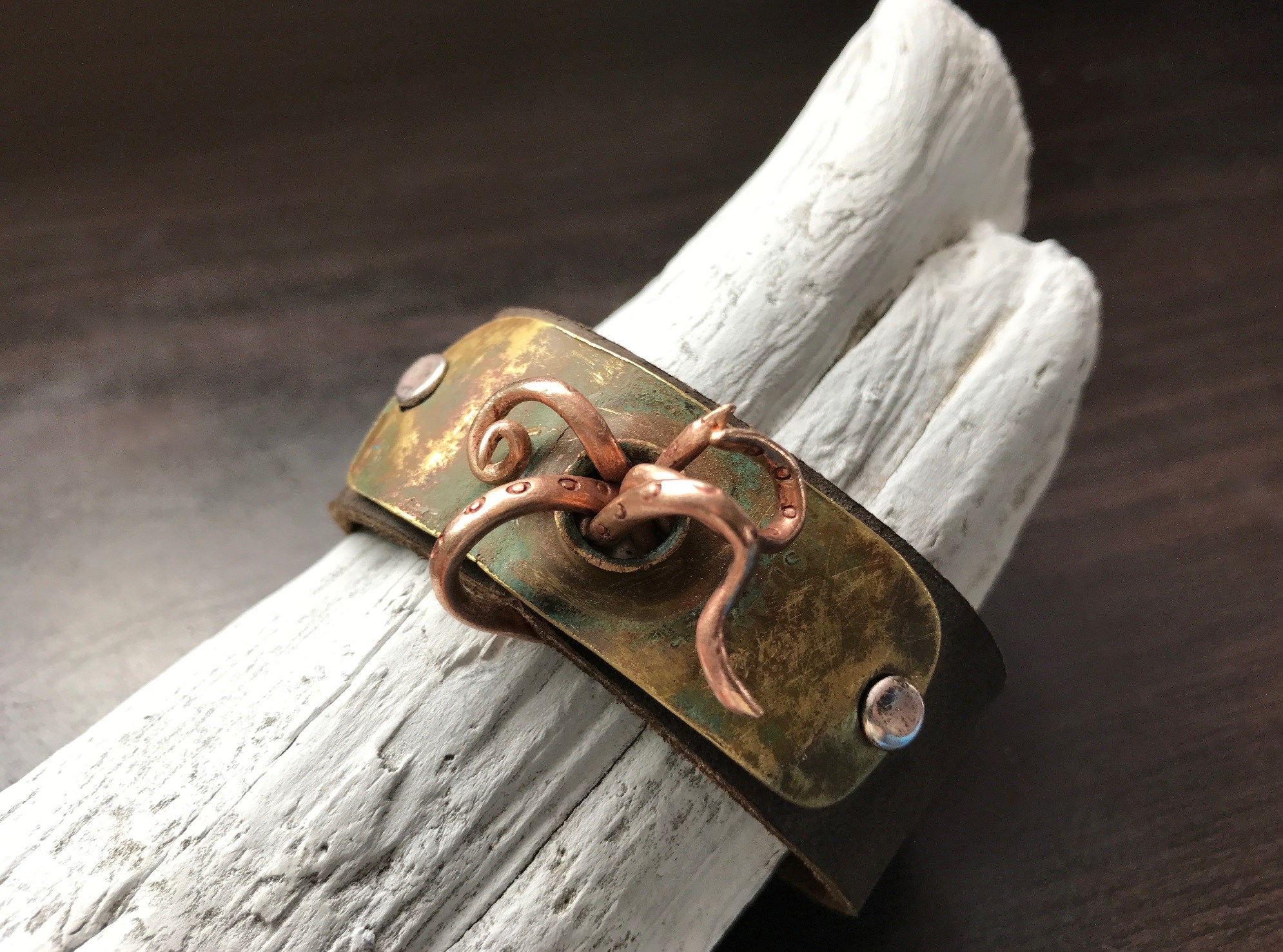
Design by Nannette Foster. (Photo courtesy of Nannette Foster)
On the First Friday Art Walk this week, the Alutiiq Museum will feature a local artist who uses the Kodiak environment as inspiration for crafting jewelry.
One of Nannette Foster’s most recent items is an octopus pendant hanging from a chain and clinging onto green beach glass.
Another is a cuff bracelet where tentacles appear to burst from distressed brass.
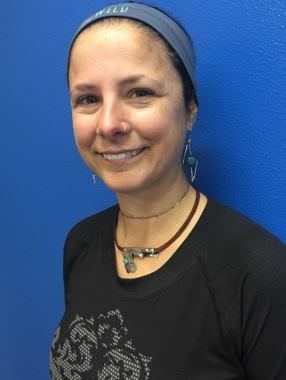
Nannette Foster
Both pieces are part of Foster’s Kodiak-themed Be Wild collection. She crafts the jewelry out of things she finds on beaches, like junk metal.
“Even though there are beautiful greens, there are also just like blah brown things, so I happen to know what it’ll look like after I clean it up,” she said. “I’ll clean it up and it’ll look bright again. I can do what’s called annealing, which is heating it to the point where it’s flexible, and then I can actually imprint designs and change the shape and things like that.”
Foster is trying to work more with silver and copper. She said she includes those metals – and focuses on her Cherokee roots – in her Sedona collection.
“In there you’re gonna see things with maybe a little more of a southwestern feel. Some feathers,” she said. “Almost what you would think of as being kind of typical traditional looks, but with a modern twist when it comes to Native American craftsmanship.”
Foster has gotten a lot of support from people in town, but is thinking about marketing her jewelry nationally too.
The Alutiiq Museum will display her art 5-7 p.m. Friday.
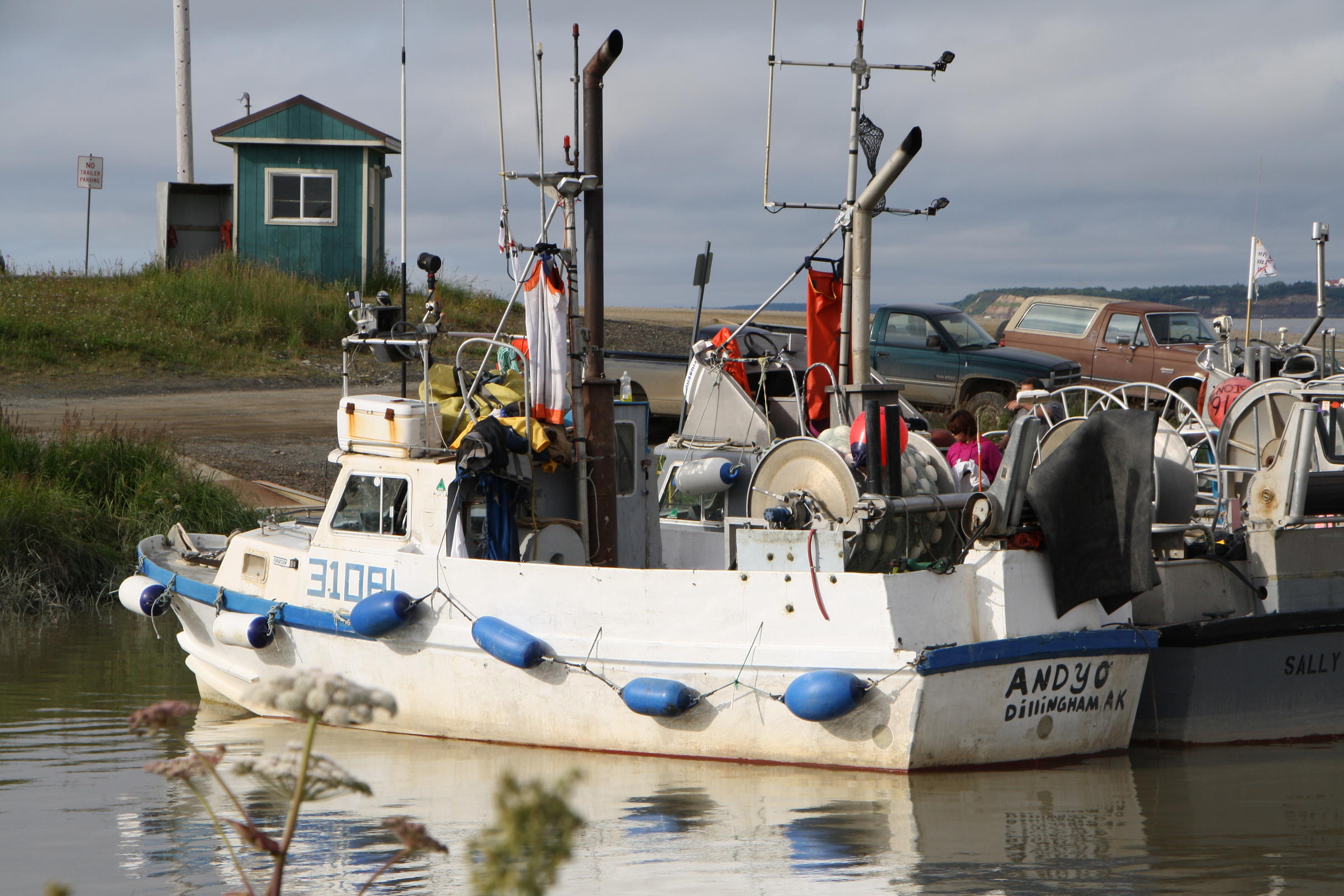
Police allege heroin was being trafficked from the Andy O, a Bristol Bay drifter tied up in the Dillingham Harbor. The vessel is pictured here Monday, after police boarded and arrested operator Andrew Olsen. (Photo by Avery Lill/KDLG)
Dillingham police arrested a man Saturday night who was allegedly dealing heroin from a boat in the harbor.
Andrew “Weebee” Olsen, 29, was charged with one count of felony drug possession and one count of felony drug trafficking.
Police say they received a tip last week that there was a suspicious number of people coming and going from the fishing vessel Andy O.
Officers monitored the activity before they were granted a search warrant.
Five officers boarded and found numerous people onboard.
During a search they turned up 6 grams of heroin, more than 100 new syringes, a digital scale, burnt foil and other paraphernalia consistent with using and dealing heroin.
Police say the 6 grams of heroin would have provided an estimated 60 doses. Olsen had $275 cash on his person.
Olsen was listed as the operator of the boat and was arrested. He was ordered held on $10,000 bail at arraignment on the two charges.
Mary Tilden, 39, of Dillingham, also was onboard the Andy O, and had one dose of heroin on her person at the time of the search, according to police.
Tilden is on probation following a series of drug-related burglary and theft charges she pleaded to last fall.
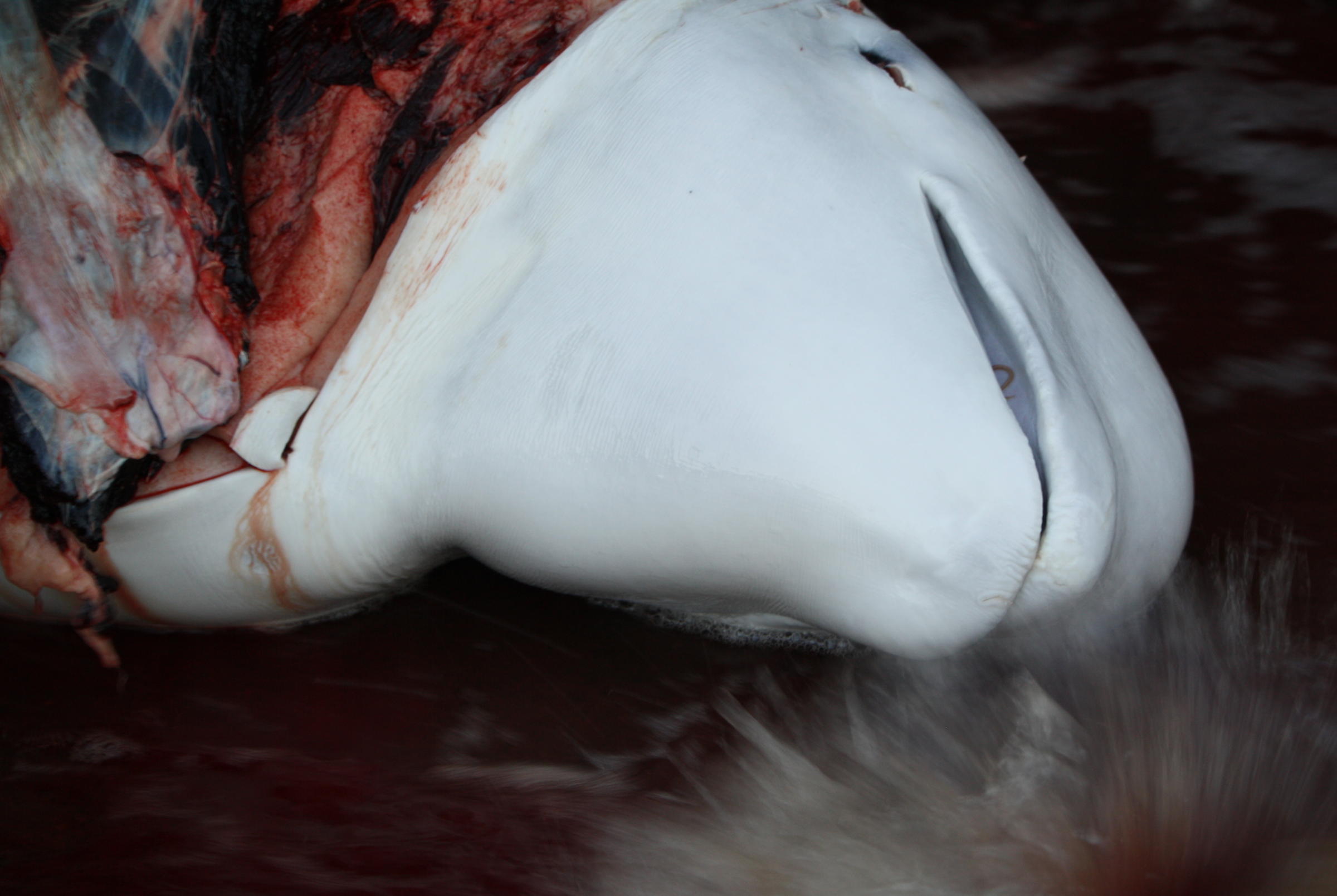
A beluga whale is processed. (Photo by Avery Lill/KDLG)
A beluga whale was harvested Sunday evening near Dillingham.
The community showed up in force.
Lines of cars brought people with their totes and trash bags.
The successful hunters shared meat with everyone who came. Processing the animal took about two hours.
It was the whole hunting party’s first time to take a beluga. The three were commercial fishing for silver salmon when they saw a pod of belugas.
“We noticed one was nosing up to the beach and trying to get salmon, so we went up right to it and fired one shot, missed and got it with the next one,” Cade Woods said.
In Little Diomede, more than 500 miles away, Rebecca Ozenna’s family celebrated the catch with a traditional dance.
“Right after we landed the beluga, I called home,” Ozenna said. “I asked them to announce it so they could celebrate for us because usually when they land whales they have a really big Eskimo dance celebration and other people from different villages come in and Eskimo dance and celebrate and feast.”
In Bristol Bay, an average of 23 belugas are reported harvested each year.
According to the Alaska Department of Fish and Game, the population of belugas in the bay is stable and that number is well within a sustainable harvest size.
Close
Update notification options
Subscribe to notifications
Subscribe
Get notifications about news related to the topics you care about. You can unsubscribe anytime.