KDLG - Dillingham

KDLG is our partner station in Dillingham. KTOO collaborates with partners across the state to cover important news and to share stories with our audiences.
Silver Bay Seafoods Naknek target of state OSHA investigation

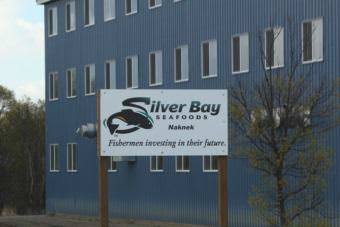
A state Occupational Safety and Health Administration investigator is looking into claims of workplace health and safety issues at the Silver Bay Seafoods processing plant in Naknek.

While many of Bristol Bay’s salmon processing companies had issues with their workforce during this record-setting season, only Silver Bay has drawn the state’s attention so far.

The company also is on the receiving end of some particularly bad press in Puerto Rico, where a number of its seasonal workers came from this summer.

Processing Bristol Bay’s annual salmon harvest takes the blistering effort of thousands of employees working at about a dozen major companies. Seafood processing is an “emphasis industry” for the Labor Standards and Safety Division of the state Department of Labor and Workforce Development, division director Deborah Kelly said.

“Because of the hazardous nature of the work, the short seasons, long working hours, and transient workforce, we do try to emphasize our enforcement inspections, and also our consultation services to assist employers to keep their workers safe and healthy,” she said.

Most of Bristol Bay’s processing companies had workforce problems at their plants this summer. The

run came in much larger than expected, and as the fleet hauled in huge catches day after day, the demands on the processors to keep up were high, and the labor force was stretched thin.

Still, only one company has so far caught the state’s attention.

“We sent an investigator out to inspect the complaint items, inspect the workforce, and look for hazards to employees there at Silver Bay Seafoods in Naknek,” Kelly said.

Who made the complaints and what they alleged has so far not been made public.

Naknek residents and Silver Bay fishermen who spoke with KDLG throughout the season described an unusually high washout rate from the processing plant, which was new to Bristol Bay as of 2014.

Complaints of poor food, poor treatment, high numbers of injuries, and large walk-offs circulated around the Bay.

Alaska Gov. Bill Walker was personally made aware that employees from Puerto Rico had gone home from Silver Bay with some serious complaints and allegations.

Puerto Rico Gov. Ricardo Rossello Nevares delivered a letter with his concerns to Walker at a governor’s conference in Rhode Island earlier this month.

Puerto Rico’s largest newspaper, El Nuevo Dia, published an exclusive accounting of three Puerto Rico employees who returned from Naknek saying they had been mentally terrorized and physically abused. Some of their allegations tend towards the outrageous, suggesting the company housed employees in ghettos based on ethnicity and had armed guards monitoring their movements.

The three unnamed former workers interviewed by El Nuevo Dia also say the long hours, poor food and cramped quarters were not what they were expecting.

Roy White from Naknek agrees with these latter complaints.

He worked at Silver Bay Seafoods Naknek for a few weeks this season.

“Working conditions are horrible,” he said. “I mean they’re 16 hours straight, seven days a week … they gave us just five minutes, a five minute break, and then you’re right back in there putting your rain gear on.”

White said the food served to employees was much worse than he had eaten at other processing plants he has worked at.

The whole short summer work program was not what he was expecting.

“No, because they’re description on the computer was way different than what was actually how it is.”

White and his girlfriend said they both sought treatment for minor work-related injuries, then quit their jobs.

He said he will not be reapplying anytime soon.

“People are the lowest thing on that list in that whole business. We are expendable,” he said.

According to El Nuevo Dia, the matter has been brought to the attention of authorities in both the U.S. and Puerto Rican governments.

It’s unclear what other investigations may be underway, but Kelly said the state’s OSHA investigation could take between a few weeks to six months to wrap up.

“Once the investigation is complete, we will inform the complainant of course of what we have found,” she said. “At the time everything is final, the case and all the information within becomes public record.”

If the state finds that Silver Bay Seafoods violated safety and health standards in the workplace, Kelly said they could face fines of tens of thousands per violation.

Kelly said she could not yet comment on the merit of the complaints being investigated.

Silver Bay Seafoods CEO Rich Riggs declined numerous requests for comment this week.

Caterpillars spike around lakes and rivers near Aleknagik and Dillingham for second year

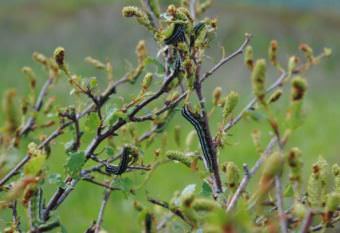
Noctuid caterpillars munch on plants in Wood Tikchik State Park. (Photo courtesy Daniel Schindler/University of Washington)
Noctuid caterpillars munch on plants in Wood-Tikchik State Park.
(Photo courtesy Daniel Schindler/University of Washington)

Visitors to Wood-Tikchick State Park were greeted by an unusual sight this summer.

Alders that are normally dense, green and leafy were bare.
“It looks almost like fall came early, so everything’s kind of brown and without any leaves on it,” said Daniel Schindler, a professor from the University of Washington. Schindler is an aquatic and fisheries science researcher in the park.

It is the second year in a row that people around Dillingham, Aleknagik, Wood-Tikchik State Park and the Togiak National Wildlife Refuge are reporting a massive outbreak of caterpillars.

Schindler is seeing at least two species, one bright green and one brown with dark stripes. They likely belong to the family Noctuidea.

In the state park, the caterpillars’ appetites left their mark along the entire chain of five lakes.

Up to the second lake, Schindler said the alders were completely defoliated up to 1,000 feet in elevation.

It is the most damage to alders and willows from caterpillars he has seen in roughly 20 years working in the region.

As the summer draws to a close, caterpillars are dropping off plants to burrow into the soil where they will winter over in their pupa form.

In the spring they will emerge as moths.

Before the caterpillars hunkered down for winter, gulls, fish and bears had a heyday.

“Usually just before the salmon show up, the rainbow trout are pretty skinny, and this year they have big extended bellies on them,” Schindler said. “When we sample what they’re eating, it’s mostly caterpillars. Even the bears are eating them. The bear scat is full of caterpillar remains.”

Now that the very hungry caterpillars are disappearing, the alders are quickly regrowing their leaves.

That’s something Schindler notes that they did last year as well.

“By middle of September when most of the vegetation was starting to go yellow and brown,” he said. “The stuff that resprouted was still going gangbusters and was bright green. It’s pretty clear that the plants have some sort of evolutionary history with them. My wonder is whether the plants can handle two, three years of this in a row. That’s where there may be some long-term damage to the vegetation.”

Still, it is unlikely that this huge caterpillar population will remain at its current size in the years ahead.

Noctuid moths tend to go through a boom-bust cycle.

“In Scandinavia where people have studied them a long time, it’s often a decade between major outbreaks,” Schindler said. “They’ll explode for a year or two and then disappear for a long time,” says Schindler.

When the population will hit its peak and decline is unclear, but it does seem that the area will see another spring full of moths.

Aircraft downed on north side of Lake Clark, recovery efforts underway

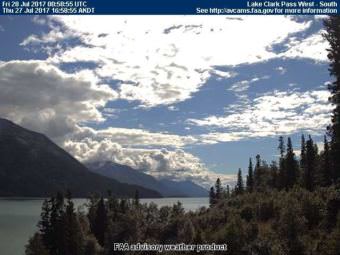
Conditions Thursday afternoon from a Federal Aviation Administration webcam looking south from Lake Clark Pass, towards the vicinity of where Miller Creek drains into Lake Clark. (Photo courtesy Federal Aviation Administration)

Update | Friday 3:45 p.m.

Pilot recovered from wreckage of Regal Air Cessna 206 north of Lake Clark

The body of a pilot was recovered Thursday night after his plane crashed yesterday in Lake Clark National Park. Joel Black of Pemberville, OH was flying a Cessna 206 Thursday morning when the plane crashed.

Megan Richotte is a spokesperson for Lake Clark National Park. She explained the recovery.

“Last night the Alaska State Troopers and National Park Rangers were able to take a state trooper helicopter to the site of the crash and recover the pilot’s body,” Richotte said.

Black was the only occupant of the plane, according to Regal Aviation. The National Transportation Safety Board will investigate the incident to try and find the cause of the crash. The flight path has also not been determined.
— Allison Mollenkamp, KDLG-Dillingham

Original story | 5:28 p.m. Thursday

Recovery efforts are underway Thursday evening for what is believed to be a fatal aircraft accident in Lake Clark National Park and Preserve.

The preserve is about 88 miles west of Kenai, Alaska.

Spokesperson Megan Richotte said that an NPS aircraft with rangers was launched to search after an emergency locator beacon signal that was picked up about 9:30 a.m. Thursday.

“They did locate the ELT and found a downed and still burning aircraft in Miller Creek which is on the north side of Lake Clark itself,” she said.

According to Richotte, Regal Air out of Anchorage reported that the pilot, whose name has not been released, was the only occupant onboard the Cessna 206.

“Alaska State Troopers are enroute to Port Alsworth with a helicopter, and park rangers and state troopers will be going to the site of the crash for recovery operations this evening,” Richotte said.

She did not know Thursday what the Regal Cessna 206’s flight plan had been.

The National Transportation Safety Board will be investigating the accident.

Dave Bendinger, KDLG-Dillingham

Ekwok recovery program teaches subsistence skills to fight addiction

The Ekwok community arrives for a wellness camp graduation ceremony Friday. Ekwok Lodge, hosted the 30-day camp, where participants fought alcohol and drug addition with fishing and berry picking. (Photo by Avery Lill/KDLG)

Behind the Ekwok Lodge, the smell of soured salmon and pig muck hang in the air.

Despite the odor, Ben smiles shyly as he points out the nails in wooden boards that surround the pen, which stick out to deter bears.

“We feed them fish and other leftover foods. You hear their squeals because they’re being picked on,” he said as one pig lets out a shrill squeak when a bigger pig muscles it out of the way.

For the past month, this 22-year-old who grew up between Ekwok, Dillingham, Togiak and Anchorage participated in a substance use disorder recovery program.

The vision of the program was to teach subsistence skills as a part of the regimen. All the graduates are Alaska Native, and the idea is that cultural activities can be integral to recovery.

While raising pigs might not be a traditional subsistence activity in rural Alaska, these nine smelly animals gave the clients ample opportunity to practice one that is — fishing.

The program participants set nets every day to bring in enough fish to feed the pigs.

For two men, including Ben, this was their first time to be involved in subsistence fishing.

The three men graduating from the program helped daily with construction and maintenance on the lodge, which has been out of use.

They chopped wood and carried water up to the lodge from the river. They fished for salmon to feed to the pigs and to cut and smoke for themselves. They took a maqii every night, cleaning themselves in the steam bath.

“It’s fun picking berries, making akutaq from the berries that you picked, and taking a load off with cutting up fish. It was nice labor,” Ben said. “I’m slowly, slowly getting used to being clean and sober and looking forward to keeping it that way.”

The men in the program caught and smoked fish to take home with them after graduation. (Photo by Avery Lill/KDLG)

Friday was graduation day.

More than two dozen people, family members, the local priest and members of the Ekwok community gathered to celebrate the month the graduates have spent in recovery.

The mood was relaxed and celebratory in the main building of Ekwok Lodge.

It is a big room with large windows and wooden walls decorated with trophy fish. Children ran along the sides and between couches and wooden chairs as the graduates stood up to receive their diplomas.

The program’s leaders and community members congratulated and affirmed each one individually.

Several coordinators spoke of their own recovery from addiction. The graduates themselves spoke warmly about the program and about their commitment to sobriety.

Ekwok Natives Limited masterminded the program and put up the funds, which were substantial. ENL board president Jimmy Hurley Sr. estimates that the village corporation spent about $100,000 to cover the costs for all participants and to bring in Tutan Recovery Services, a private business from Anchorage, to run the program.

“Everybody used to put up fish, but the subsistence part, it brings pride in the people,” said Hurley, explaining ENL’s investment in the program. “If you’re a Native and you don’t know how to put away salmon, I think there’s a lot of embarrassment. That should be a part of every recovery, bringing culture into it.”

Getting this program off the ground was not without obstacles.

The power and water both went out to the lodge at points during the camp, and at least one person enrolled did not complete the program.

Overall, however, word from coordinators and the graduates was positive.

“At the end, they’re able to take some of their product home with them, and this will help sustain them when they’re looking for jobs,” Hurley said. “They’ll remember the camp, the sobriety they had here. They’ve got enough confidence in themselves right now that they could really go and take on a feat.”

This is Tutan Recovery Service’s first time operating outside Anchorage or incorporating subsistence as a component of their recovery program.

At a time when the governor has declared the epidemic of opioid use in Alaska a crisis, many are looking for more effective means of combating addiction. Relapse always is a concern in programs that address substance use disorder.

Tutan Recover Service program director Eydie Flygare anticipates that the subsistence component will be a help as the clients return home.

“When you find out where you came from and then you start doing some things you did when you were a kid. You’re just like, ‘Okay, yeah! I got it!’ The fact that a few of them are going back to do subsistence again, and that includes the spiritual aspect, I think absolutely it helps,” Flygare said.

As for Ekwok Natives Limited, Hurley said that the corporation board has been supportive of this year’s pilot run of the program.

However, the price tag is too large to continue without grants or outside funding. In the coming months, they will explore their options for continuing the wellness camp.

The graduates have all flown back to their homes in Anchorage and in Bristol Bay hopefully to continue their journey with sobriety.

They left with smoked fish in their bags for this winter and the skills to do it again next summer.

Russian adventurers honor history during Dillingham visit

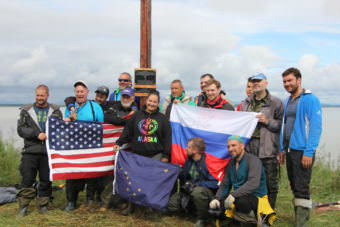
The Russian team and the Dillingham residents who helped to place the monument at Nushagak pose with the American, Russian, and Alaskan flags. (Photo by Allison Mollenkam/KDLG)
The Russian team and the Dillingham residents who helped to place the monument at Nushagak pose with the American, Russian, and Alaskan flags. (Photo by Allison Mollenkam/KDLG)

An expedition of Russian adventurers arrived Tuesday in Dillingham for their trip to retrace a route taken by historic Russian explorers.

The Russian visitors were greeted in Dillingham by that most American of rituals, a potluck dinner.

A packed house with more than 30 Dillingham residents came to meet the expedition of 12 Russians and one American.

Dillingham Mayor Alice Ruby highlighted the historical significance of the visit happening this year.

“We’re especially honored that in this year when we commemorate the sale of Alaska from Russia to the U.S. that you’ve chosen Bristol Bay for your 2017 expedition,” Ruby said.

Dr. Mikhail Malakhov, an explorer and physician, led the expedition. He led one other expedition to Bristol Bay six years ago.

This is his 10th trip to Alaska to retrace the routes taken by Russian explorers in the age of Russian America and he said planning the trips takes months.

“I am reading quite a lot,” he said. “Archives and books of professional historical people and actually it’s usually it takes many months to prepare any type of expedition.”

That research will allow Malakhov and his team to follow the exact route taken by Ivan Yakovlevich Vasiliev in 1830.

Tim Troll has helped Malakhov organize logistics while the team is in Dillingham.

He explained this year’s trip up the Wood River, through the lakes to the Kuskokwim.

“They’ll be taking off, I think probably from Snag Point, and putting their kayaks together and starting their paddle up the Wood River. Then it will take them at least three weeks to get to Aniak. So it’s a long, long… It’s a long trip and a lot of it is upriver and over the tundra.”

A trip that long requires lots of supplies. Malakhov’s younger son, Alexi Malahov told the crowd what the group will eat.

“We will catch some fish, but also in our food stuff, we have canned meat, canned chicken, and rice, noodles, and also use some different kinds of like, pilot bread yes and different delicious stuff like Nutella.”

The next morning, however they simply brought a picnic of leftovers from the reception.

Members of the Russian expedition and Dillingham locals work to erect the monument at Nushagak. (Photo by Allison Mollenkam/KDLG)

With the help of a few locals and their set net skiffs, they went across the bay to Nushagak to erect a monument to Fedor Kolmakov and John W. Clark.

There was a similar monument to Kolmakov at the Russian trading post and orthodox church at Nushagak in the 19th century.

Local artist Pat Walsh designed the new one.

Reverends Michael Nicolai and John Nicori blessed the monument before it was taken across the bay.

At Tuesday night’s reception, Robin Samuelsen, member chief of the Curyung Tribal Council, explained John W. Clark’s significance.

“My great-great-grandfather was John W. Clark, who ran the commercial trading company over in Nushagak,” Samuelsen said. “John was the starter of the fishery here in Bristol Bay.”

Clark worked closely with the Russians in Bristol Bay then.

Malakhov hopes his trips can foster similar people to people collaboration.

“Doesn’t matter what’s going there on the political level, yeah. But between people, our relations is getting much more open and we are glad to be here again.”

During their time in Dillingham the Russian adventurers worked to create positive relationships with their American neighbors. However, that time had to draw to a close Thursday night as they launched from Snag Point.

Ivan Korobov is the youngest member of the group at just 14. As the other members of the group finished last minute packing, he was already ready, standing by his kayak in the water. He says he’s excited for the trip.

“It’s quite cool. I think it will be very difficult and we’ll, I hope we’ll not have a lot of problems, but I think it will be very cool and very fascinating, you know.”

Despite the difficulty of the trip, he appreciates the beauty of Alaska.

“Here is very peaceful and a lot of good places, very good fish that here is everywhere and we’ll always see this here.”

He’s not alone in his love of Alaskan salmon. Dr. Malakhov enjoys it too.

“Believe me, this is delicious. You can’t find such salmon, smoked salmon in middle part of Russia. Probably far east, but we live in middle part of Russia. Thank you very much Alaska for nice salmon.”

Dillingham man sentenced to 5 years after sixth DUI conviction

Basil Backford, 44, of Dillingham was sentenced to five years in prison Thursday for his repeated drinking and driving violations. (Photo courtesy Dillingham Police Department)
Basil Backford, 44, of Dillingham was convicted of his sixth DUI and sentenced to five years in prison. (Photo courtesy Dillingham Police Department)

A Dillingham man was sentenced to five years in prison Thursday for his repeated drinking and driving violations.

Basil Backford, 44, was ordered to begin serving his time immediately after the hearing at the Dillingham courthouse.

After a jury trial in March, Backford was found guilty of a DUI from September 2015 at Ekuk.  This was his sixth DUI conviction, three of which have been felonies for repeat offenses.

Anchorage District Attorney Clint Campion, who represented the state at the sentencing Thursday morning, emphasized the seriousness of the crime of DUI and the danger it presents to the community.

“I would note that Mr. Backford has not, as far as we have before us, has not hurt anyone but himself through his conduct,” he said. “It’s really lucky for him and for the communities that he’s lived in that he hasn’t hurt someone more severely.”

Campion used the risk posed by Backford’s repeated offenses as justification for his recommendation of a sentence of five years.

Defense attorney Duke Circle, formerly an ADA in the Dillingham office, represented Backford in the case.

He requested a sentence of three to four years based on his client’s improvement since the previous DUI convictions, the last of which was in 2004.

“He has maintained sobriety during periods of time. And as the state noted, as he’s gotten older: those periods of time have grown greater and greater,” Circle said. “His last offense before the one he is being sentenced on today was 11 years prior. Prior to that, within an eight year period, all the other offenses occurred.”

After hearing the arguments, Judge Tina Reigh sentenced Backford to five years flat and recommended that he be enrolled in the substance abuse treatment program while in prison. She also designated Backford as a “worst offender.”

In making her decision she said she considered the defendant’s past and whether or not probation was likely to help.

“There have been many many opportunities for treatment and rehabilitation,” Reigh said. “As far as I can tell, four of which, you successfully completed treatment, which is a really big deal, which is something to be commended. Maybe that’s one of the reasons you went so long, but we’re in the situation that we’re in right now.”

Reigh went on to say the sentence is meant to support isolation, deterrence, and community condemnation.

Backford was arrested in September 2015 after he drove recklessly and crashed his truck into a ditch in Ekuk.

After the wreck, he told a state trooper that he had had “seven or eight or maybe 12 Pabst Blue Ribbon beers” before driving and crashing the truck.

He was tried and convicted in March of this year.

Backford was in violation of probation when he committed the most recent offense and his driver’s license had been permanently revoked.

Earlier this summer, after his conviction but prior to sentencing, Reigh granted Backford release from custody so he could fish the season.

He violated the conditions of his release less than a week later by skipping out on his third-party custodian.

Site notifications
Update notification options
Subscribe to notifications