KFSK - Petersburg

KFSK is our partner station in Petersburg. KTOO collaborates with partners across the state to cover important news and to share stories with our audiences.
Petersburg needs 300 houses in the next decade, survey shows

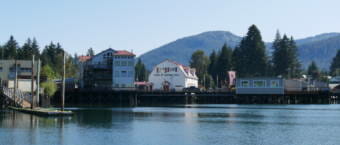
Petersburg’s waterfront in 2019 (Joe Viechnicki/KFSK)

Petersburg has a new fourth grade teacher this fall — Sharon Paulson. She moved to Petersburg this summer. The floor of her home is strewn with musical instruments played proudly by her son, five-year-old Glenn. Maracas, ukuleles and tambourines. In the middle of the room, he was playing a steel drum marked with the first seven letters of the alphabet.

Paulson signed her contract in March. She broke the news to her husband and her son, and then she started house-hunting in Petersburg.

“I looked on Zillow, which was laughable,” said Paulson. “Someone said, check on Facebook and I saw that there really wasn’t very much there. I looked with the realtor companies, both of them. I had my administrators putting the word out for people. We had a list of AirBnBs to ask if maybe they would rent to us.”

After nearly two months of searching, Paulson spotted a classified ad in the local paper.

“That was the last hope that I had for being able to find housing,” said Paulson. “It really was like, if we can’t find housing, we can’t make this move. So when we finally did find a house and our offer was accepted, like I could visibly see the stress fall off of my husband’s face.”

Stories like hers are common around Petersburg. So last fall, the Borough Assembly set up a housing task force. Assembly Member Dave Kensinger chairs the task force.

“I think we need to figure out a way to start building more housing,” said Kensinger. “It’s pretty simple. If we don’t deal with it, we won’t have as many people in town.”

Kessinger says that’s the easy bit. The hard part? What type of housing. To answer that question, the task force launched a community housing needs survey. It ran for a month in the summer, and it was all overseen by Anchorage-based Agnew Beck Consulting. Now, the results are in. Katie Scovic is the senior manager at Agnew Beck.

“We had 366 responses to the Community Housing Survey in Petersburg, which is awesome,” said Scovic. “That’s about 10% of the population and a really great rate for this kind of survey.”

The survey was ten pages long with 39 questions, but here some of the headline results: a quarter of respondents aren’t happy with their housing, and most of those who aren’t happy are under 45 years old, working and still renting. Most of them want to move into family homes, but apartments and duplexes are popular too. 80% of all respondents want to see more land with utilities opened up for housing.

The survey shows that a lack of skilled labor and the cost of repair is holding people back from renovating their homes. However, Scovic says that even those who don’t fall under any of those categories still care about this issue.

“The majority of Petersburg residents are satisfied with their own housing,” said Scovic. “But also the majority of residents say that housing is a community issue. And so to see both of those things, at the same time, is encouraging.”

Now, the team at Agnew Beck have been sifting through all that data to calculate what housing they think Petersburg needs.

“So according to our housing need forecasts over the next ten years, there’s a need for roughly 316 housing units in Petersburg,” said Scovic. “We’re really looking at about six new units a year and 18 rehab or renovation units each year for the next ten years.”

So, once the consultants submit their final report at the end of September, Dave Kensinger says there’s no time to waste.

“The time to done something was ten years ago,” said Kensinger. “And if we want to keep a vibrant community and we just don’t want a community of a bunch of retirees, we need to address the housing problem now — not next year.”

But that’s easier said than done, between land, labor and logistics. And many folks in Petersburg will have big concerns that need to be addressed first. Back at the Paulson family’s home, Sharon has shifted her focus to a different challenge altogether — the first day of school. Perhaps she can whip up a quick housing plan while she’s at it.

Kake breaks ground on Alaska’s first modern clam garden

Kake’s northern shore, close to where volunteers laid the foundation of the community clam garden. (Shelby Herbert/KFSK)

The Organized Village of Kake laid the foundation for Alaska’s first modern clam garden in early August. The community hopes the project will preserve an important food source and keep traditional knowledge alive.

A group of eight Kake community members got up at the crack of dawn to beat the tide. They needed to pile a line of stones 60 feet long on the village’s shoreline. They’ll slowly add to it over the course of the summer until it’s about two feet high. That wall, they hope, will eventually house thousands of clams and cockles.

Aiden Clark is a junior at Kake High School, and a member of the Alaska Youth Steward Program. He was all in to spend a morning out of his summer vacation hauling around big rocks for the clam garden.

“It’s a lot of rock to move, but it’ll do good for the community,” said Clark. “The clam population is starting to go down a lot…”

Clark is right — the clam population is starting to go down — by a lot. The EPA projects that shellfish harvests across the U.S. could fall by nearly a half by the end of the century. The administration said human-caused climate change is the culprit: warming waters are inviting predators into bivalve habitat, and that ocean acidification is dissolving their delicate shells.

Simon Friday is the natural resources coordinator for the Organized Village of Kake, the village’s tribal government. Friday said the garden will help make local shellfish more resilient to climate change in three ways. The first: by helping them weather the storms that tend to tear up the coastline.

“So, shellfish gardens provide protection to the beach from erosion due to storms,” said Friday. “That’s something that’s likely to occur [more frequently] with climate change.”

The second reason: clam gardens increase the number of shell fragments in the area, boosting the minerals baby clams need to create their shells.

“We’re hoping that will help out with the ocean acidification, due to the calcium in the shells,” said Friday.

And the third reason: the rock fortress could help trap food for the clams.

“The gardens change the drainage of the beach, which allows more phytoplankton to be readily available,” said Friday. “So they have more food to eat, which allows them to grow faster and stronger and bigger — and all that good stuff.”

However, Friday said Kake’s clam garden isn’t just for the benefit of local marine life. During the COVID-19 pandemic, shipments of food weren’t coming in on time, and the shelves of the village’s only grocery store were laid bare. Now that things have settled down, Kake is preparing for the next crisis.

“We also realized that with climate change that we needed some sort of localized protective measures, to ensure that we continue to have the foods that we enjoy,” said Friday. “One of those being: clams.”

They’re also hoping it’ll help fix the limited and expensive food options available to them right now. Eloise Peabbles manages the Alaska Youth Steward Program in Kake, and she’s helping rally youth volunteers to move boulders for the garden. Supporting local food security is a huge priority for her.

“[And that’s] particularly because of the fact that we are already limited in our food — by having a small grocery store, and then having those prices be extremely expensive,” said Peabbles. “In order to have a healthy diet, we need to rely on the land and water around us.”

For thousands of years, many Indigenous communities up and down the Pacific Coast gardened shellfish. Over time, their practices not only increased shellfish production, but also expanded their habitat and improved species diversity according to a study of ancient clam gardens from Simon Fraser University.

The Swinomish Indian Tribal Community of Washington State built the very first modern clam garden in the United States last year. Friday visited it a few times to learn from the garden-builders and help with some construction tasks. Now, he’s thrilled to see his community invested in building a shellfish garden of their own.

“You’re literally just moving heavy rocks,” said Friday. “You need as many hands on deck as possible. So when it comes to constructing these gardens, it’s a community event. It just requires a lot of work — and a lot, a lot of people to move rock.”

With the foundation laid out, the last thing left for them to do is stack it all the way up to two feet. Friday said the main point of the exercise is education. So the bivalves that do take up root in the garden are just a bonus.

2 swimmers cross Frederick Sound for the first time in living memory

Simmonds’ friend and boat captain, Josef Quitslund, intermittently fed him chocolate chip cookies on his seven-mile journey across Frederick Sound. (Shelby Herbert/KFSK)

There were icebergs on the horizon, and the surface temperature hovers in the low 50s. The waters of the Frederick Sound were cold — like knives in your skin, cold. That’s how it felt when I go to grab a “diver down” flag that fell overboard.

When you’re completely immersed, it feels like the breath is being sucked out of your lungs. That’s why Andrew Simmonds was wearing wearing a wetsuit so thick, it takes him half an hour to put it on. The suit protects him from the worst of the chill — but he’ll spend the rest of the day in that freezing water.

Simmonds, age 61, is the first person in living memory to try to swim across the sound. Last summer, he got close, but didn’t quite make it. He wanted to make it all the way this time, in what he says will be his last try.

But things have changed — now, he’s going for silver. Simmonds was beaten to the punch when another swimmer made it across just three days earlier. His name: Scott May.

“It was actually the shortest tide swing of the month, and the weather was looking beautiful,” said May.

May, age 59, is a retired teacher from Juneau. He saw the opportunity in a good weather window and pounced.

“I talked to my wife, Bridget, and my good friend, Tommy Thompson, and said, ‘Hey, let’s go out on the boat Wednesday morning,’” said May. “Then we went over there and jumped in the water, and the rest is history, I guess.”

Scott May may have been the first to cross, but he took the shortest route. Simmonds is gunning for the longest way across: seven miles.

However, there’s camaraderie between the two swimmers  — even from a distance. They didn’t meet in person until after Simmonds’ second attempt. On the day of Simmonds’ swim, May is watching him from his house through a pair of binoculars. May also passed along some advice — for him, the hardest part was enduring the extreme temperature. He says the cold was almost unbearable at the halfway point.

“I was getting discouraged because it was getting colder, and Frederick Point wasn’t getting any closer,” said May. “I didn’t want to quit — I’m not somebody who gives up easily. When I saw the rocks and the seaweed, I just pushed through that last stop and didn’t even stop and just literally crawled out and sat down. That was the greatest part of the whole thing.”

Terrified of encountering sea life on his swim, Simmonds was blissfully unaware of the curious seal (pictured right) that followed him along for about ten minutes. (Shelby Herbert/KFSK)

Last year, Simmonds had to fight a strong current just before he reached the end. It burned him out, and he had to get back on the boat. Gearing up for this trip, he admitted he’s worried his “old bones” won’t make it. But he’s laughing through the nerves — like those surrounding his deep fear of bumping into the marine life lurking below.

“I thought I would have a heart attack if as I looked down into the water and there were eyeballs looking up at me,” said Simmonds. “It would’ve really freaked me out. But that was part of it — facing one’s fears.”

Simmonds is three quarters of the way across the sound when the discomfort really sets in. He’s feeling the cold – his exposed face is pale and bloodless.

Simmonds is on Petersburg’s Search and Rescue team, and he hurt his left shoulder a few weeks ago hauling equipment for firefighters who were putting out a blaze that consumed the local catholic church.

Josef Quitslund is piloting the rescue boat. He periodically stops to check in with the man in the water; sometimes, offering him food – chocolate chip cookies and milk, per his request.

Andrew Simmonds gets close to touching down on the opposite side of the Frederick Sound. (Shelby Herbert/KFSK)

Simmonds is flagging a bit. And he’s fighting the current – just like last year. From the captain’s seat, Quitslund points out how it’s strong enough to move his boat. But Simmonds’ arms and legs never stop churning.

Seven hours after he left the shore of Sandy Beach, Andrew Simmonds touches the face of the cliff on the other side. He lands just a few yards away from a waterfall, tumbling into the ocean.

Last year, Simmonds said he was crossing the sound for “no good reason.” But now, he says he has several.

Scott May (right) and Andrew Simmonds (left) met for drinks at Petersburg’s Harbor Bar after Simmonds completed his swim to talk shop. (Shelby Herbert/KFSK)

“It’s about the imagination and it’s about seeing how far I can push these old bones,” said Simmonds. “It’s about the wonderful support I received last year.”

What’s next for the two swimmers? They don’t know — but they’re thinking about starting a club. For now, it’s a just club of two  — at least, until others gather the courage to swim across the unforgiving waters of the Frederick Sound.

Audubon Alaska launches virtual birdwatching trail for Southeast Alaska

The Southeast Alaska Birding Trail flags Petersburg’s Sandy Beach Park as a birdwatching hotspot.(Photo by Shelby Herbert/KFSK)

Birdwatching is one of the fastest-growing nature-based tourism sectors in the world — and the hobby is soaring in popularity in Alaska. That’s according to a 2022 study from the University of Alaska Fairbanks.

In 2016, nearly 300,000 birdwatchers visited Alaska and spent $378 million, supporting thousands of jobs. Now, Audubon Alaska is swooping in on the virtual bird boom. The organization partnered with the U.S. Forest Service and the Alaska Department of Fish and Game to create the Southeast Alaska Birding Trail — a free virtual guide to 18 communities across the bird-rich region.

Lauren Cusimano is a spokesperson for Audubon Alaska. She says Southeast’s unique biodiversity is what put the region on her organization’s radar.

“It’s just a distinct area of the country, and of the world,” Cusimano said. “It has the largest gathering of bald eagles in the world. It’s home to the largest national forest in the country. It just kind of calls for this kind of attention.”

Southeast hosts nearly 400 bird species, many of which are in decline. The region is a global destination for migratory birds. It’s also a global destination for a certain category of migratory eco-tourists: the kind with binoculars.

So, how does the app work? It helps users keep track of the species they’re spotting. And it shares a bit about regional geography and cultural history. Cusimano said it can even tell you about the trail under your boots.

“Things like amenity details,” said Cusimano. “Like, are there restrooms? Is there parking available? What’s the accessibility situation? Are there entry fees?”

Petersburg is a major destination on the birding trail. The app highlights 18 distinct birding sites nearby.

“Mitkof Island is obviously huge, as far as birding in the Inside Passage,” said Cusimano. “So, we’re talking Petersburg Creek, Sandy Beach — I feel like every community in Southeast has a Sandy Beach — Little Dry Island…places like that.”

Cusimano said Audubon Alaska plans to ride the new eco-tourism wave. The project’s mission is to support industries that rely on healthy, intact ecosystems.

“We want to help contribute to the growth of these local economies by bringing attention to the birding opportunities that are in the area,” said Cusimano. “This is a way to generate economic needs away from maybe, like, timber sales and development.”

With the goal of inspiring environmentally-conscious economic growth, Audubon Alaska’s next step is to flock together with small outdoor recreation businesses to promote the app in Southeast’s heavy tourism stopovers.

Correction: This story has been updated to correct the spelling of Lauren Cusimano’s name.

Alaska’s volunteer firefighting force halved over the last decade

Aaron Hankins pictured in front of the Petersburg Volunteer Fire Department. (Thomas Copeland/KFSK)

The number of volunteer firefighters in Alaska has nearly halved since 2014, according to State Fire Marshal data. And it could be putting communities at risk.

The Petersburg Volunteer Fire Department is about a mile out of town. Aaron Hankins is the Director of Fire, EMS, and Search and Rescue. He is one of just three employees at the station. The rest are volunteers.

Hankins was doing a routine vehicle inspection after a fire that engulfed Petersburg’s Catholic Church earlier this month. When there aren’t enough volunteers available, that can hold back the rest from doing their jobs.

“We shift from an offensive, go in, fight fire where it’s at, to a more defensive posture,” said Hankins. “We call it surround-and-drowned, and [we’re] trying to fight the fire that may be burning inside from the outside of the building.”

This situation will sound very familiar to Alaska fire chiefs. The number of volunteer firefighters across the state has plummeted by 45% since 2014. That’s more than double the decline seen nationwide. Justin Boddy is the president of the Alaska State Firefighters Association. He says the huge drop in volunteers is particularly stark when he thinks back to volunteer training sessions a decade ago.

“You would have a packed house,” said Boddy. “You would have every vehicle, every apparatus in the fleet staffed for that night on that dedicated training night. And now you are lucky if you can staff one or two vehicles.”

And while volunteers are clearing out, the phone lines are getting busier. Calls to U.S. fire departments have more than tripled since the 80s. And the type of emergencies are totally different these days too.

“Everybody calls 911 now, if they have a problem,” said Boddy. “So now, we’re not just going to medical emergencies and cars or structure fires. And now we are going to all rescue scenarios, hazardous materials, service calls, downed power line utility calls, and much, much more. So that has really expanded what we are required to train on and what we are depended on in our communities for.”

Alaska faces another pretty unique problem. Among first responders, there’s this thing called mutual aid. Basically, if there is a big fire in a town, fire engines from the next town over can race down the road to help out. But Alaska has a lot of hard-to-reach communities, like Petersburg, on an island — or Nome, which is off the highway system.

“There is no comparison of resource availability from the Lower 48 compared to Alaska,” said Boddy. “[The] Lower 48 can keep requesting resources from miles and miles and miles away where we do not have that luxury here in Alaska because of the lack of resources or our isolation of our communities.”

This isn’t just a problem for fire departments. Volunteering in general has declined in America over the last 15 years, said Dr. Nathan Dietz, research director of the Do Good Institute at the University of Maryland. He said that income, community bonds, faith groups and time could all be factors. Right now, however, nobody can say for sure why volunteering is down.

“These are questions I think that people who study civil society should all be trying to address,” said Dietz.

But Dietz is positive about one thing. The pandemic made everything worse. Data from AmeriCorps show that volunteering in this country has fallen by 7% since 2019. That drop even took Dietz by surprise.

“That’s four or five percentage points more than any drop that I’ve ever seen in the past,” said Dietz.

He says the pandemic impacted volunteering in two ways. First: it broke our habits.

“People were first unable to do what they always had done,” said Dietz. “And when they were able to do it, then they kind of did a top to bottom re-think of all the things that they had been committed to doing.”

The second way: people got used to being online.

“The part of their routine was to go over to the place where they did volunteering and go do volunteer work,” said Hankins. “But when they couldn’t do that, then they start doing other things online. Now that they can go back to the organization, I would think many probably haven’t.”

But you can’t battle a burning building in front of your laptop. So back at the Petersburg Fire Department, Aaron Hankins said he needs to find new ways of attracting volunteers. There is at least one thing that seems to work — seeing firefighters in action.

“Since the fire last week, we’ve had about five people sign up using our online website,” said Hankins. “[We’re] very happy to have those folks be interested. We do have those instances of major fire, and the town realizes, oh, there’s only a couple guys walking outside.”

If Alaska fire departments want to keep functioning, they’ll need a more sustainable recruitment strategy than simply waiting for the next big blaze. All the while, folks like Hankins have to keep their departments up to code.

State of Alaska issues first air quality alert of 2023 as Canada wildfires rage

A satellite image of wildfire smoke arriving in Southeast Alaska from British Columbia taken at 12:40 p.m. AK. (Photo courtesy of the Office of Information and Regulatory Affairs and Colorado State University.)

The Alaska Division of Air Quality issued its first smoke alert of the year for Southeast Alaska at 9 a.m. Thursday. The region will be impacted by smoke from wildfires raging just over the Canadian border.

As of Friday, traces of smoke became visible across Alaska. Now, the winds have shifted and the fires have gotten worse. The division expects this will push a lot more smoke into the state over the course of the week.

The smoke alert shows the air quality level for the entire panhandle — from Skagway to Ketchikan — dropped from “good” to “moderate.” It could even fall to “unhealthy” before the weekend.

That means the concentration of smoke could affect public health. Sensitive groups — like children, the elderly, and people with heart or lung diseases — could experience health consequences from the smoky air. The state says people belonging to any of those groups should reduce prolonged or heavy exercise outdoors.

The most recent weather observations show large amounts of smoke being carried into Alaska on southeasterly winds from British Columbia.

Conditions in Canada support more wildfires and smoke for at least the next week. The state Division will issue its next report by Saturday, July 15th if the air does not improve.

As of Thursday, July 13th, the state’s weather models show upper-level smoke plumes creeping into the southern half of Southeast Alaska in the morning. The most obvious impact will be haze during the day. Then the smoke will settle in the mountains and drain into coastal communities in the late evening hours.

Site notifications
Update notification options
Subscribe to notifications