KRBD - Ketchikan

KRBD is our partner station in Ketchikan. KTOO collaborates with partners across the state to cover important news and to share stories with our audiences.

Ketchikan man shares experience as Republican convention delegate

Trevor Shaw at the Republican National Convention in Cleveland. (Photo by Liz Ruskin/APRN)District 36 Republican Chairman Trevor Shaw was one of 28 Alaska delegates to the Republican National Convention. Shaw spoke to KRBD recently about his experience at the convention and opinion of Republican presidential nominee Donald Trump.

The Ketchikan resident was one of two Southeast Republican delegates to the convention. The other is former District 36 Representative Peggy Wilson of Wrangell.  Shaw says he arrived in Cleveland, Ohio, a few days early and met with other members of the Alaska delegation. He says he was impressed with the host city.

“Cleveland was really a great host. Everybody was really friendly. The city was very clean. It was well prepared. Very hospitable.  It was good to be able to spend some of that extra time exploring Cleveland,” Shaw said.

Shaw says more than 50,000 people attended, and the room was filled with energy. He says being at the convention is a very different experience than watching it on TV, and much more entertaining.

“When you’re able to be there and be a part of the experience, it’s a lot more invigorating. You’re a lot more actively involved instead of sometimes, maybe, just passively participating,” Shaw said.

He says he met former Republican presidential candidate Dr. Ben Carson at the convention and spoke with him for about 20 minutes. Shaw says about 5 minutes of their discussion was spent on politics and the rest, talking about Alaska.

“It was funny because he said one of his big regrets was not to be able to come up here during the campaign, and that he would really like to be able to come up on his own, Shaw said. “Of course, I invited him up and said we’d love to have him come to Ketchikan. Mitt Romney came and went fishing on Prince of Wales Island a couple years back. Ben Carson recalled that and he said, ‘Well I might have to come up and come fishing.’ That would be interesting. That would be exciting.”

Shaw says he met a number of current and former senators and governors, and also interacted with other young Republicans, discussing their experiences and goals for the party.

“Something that’s so exciting about that is everyone that’s there kind of shares the same fundamental, foundational, political beliefs that you have. Being able to talk to those people, understand where they’re coming from, talk about the various walks of life that they’ve gone through and why they are a Republican, and why they’re involved and want to be involved at the national level. It was a really exciting experience and making those connections was the best part of the whole thing,” Shaw explained.

Shaw says he strongly supported Marco Rubio and went to the convention as a Trump sceptic. He says he met a lot of people who knew Donald Trump personally, and talking to them made him change his mind.

“The big thing that a lot of them told me is, ‘How do you gauge a lot of people?’ Well, by how their kids turned out and how their children were raised. Being able to talk to them, talk about their experience knowing Donald Trump personally as a friend or a colleague was kind of enlightening to me, and kind of eased my concerns that I had for supporting Donald Trump,” Shaw said.

Shaw feels the election comes down to ideology and who the president will bring to the administration. He says he believes Hillary Clinton is a flawed candidate.

“In many ways, I believe she is corrupt. You don’t necessarily know if she’s going to tell you the truth or if she’s going to tell one of us one thing and one of us the next or one rally one thing and then going to change it over her. It was 15,000 emails. No, it was 30,000 emails. It was classified. It wasn’t. At least I know Donald Trump is going to be blunt and I know he’s bringing good people with him,” Shaw said.

In the last presidential election, Shaw, now 21, wasn’t old enough to vote. He says being part of the process of electing a major party nominee was exciting, and he’s looking forward to voting in this year’s presidential race.

Truck stolen in Ketchikan recovered on North Tongass Highway

A truck that was stolen Wednesday morning from Water Street in Ketchikan was recovered a few hours later on North Tongass Highway.

The white Ford F-150 was found at around Mile 18.5 North Tongass Highway at about 3:30 p.m., according to the online Alaska State Troopers dispatch.

The vehicle was returned to the owner and the case is under investigation.

Anyone with any information regarding this case or any other criminal activity in the Ketchikan area is asked to contact Alaska State Troopers at 225-5118.

Alcohol suspected in crash involving 17-year-old Ketchikan resident

Three 17-year-old Ketchikan residents were taken to the hospital Wednesday night following a single-vehicle crash on D-1 Loop.  Troopers report that alcohol is suspected to be a factor.

According to the Alaska State Troopers online dispatch, troopers received a report of the crash at about 8:30 p.m. Wednesday.

The 17-year-old female driver was northbound on D1 Loop when she drove off the road and struck a tree.

She and two 17-year-old passengers were transported to Ketchikan Medical Center by the North Tongass Fire Department for injuries from the crash.

This case is under investigation.

Museum building renovation on Ketchikan City Council agenda

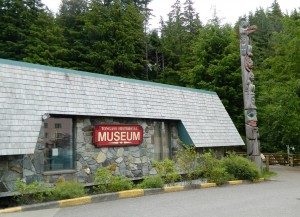
Ketchikan City Council will vote on hiring Dawson Construction as the contractor for renovating Centennial Building, which houses the Tongass Historical Museum. (KRBD file photo)

During its regular meeting Thursday, the Ketchikan City Council will consider a couple items related to the Centennial Building renovation.

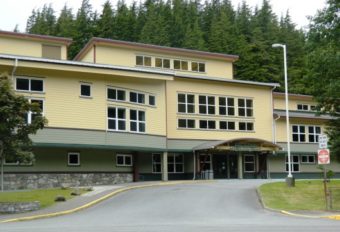
Renovation designs are complete for the city-owned building, which houses the Tongass Historical Museum and city Museum Department offices, and the council will vote on hiring Dawson Construction as the contractor for the project.
The appropriated budget for the project was $979,000, but Dawson’s bid came in at just over a million. The only other bidder was BAM LLC, with a bid of $1.45 million.

With the traditional contingency for unexpected expenses, the suggested contract with Dawson would be $1.25 million. City Manager Karl Amylon suggests that the balance be made up through the Public Works Sales Tax reserve fund.

Also on the agenda is a motion to appropriate $7,000 to buy museum shelving and packing supplies to store exhibits during construction. The shelving would be kept and used in the renovated museum space.

Two executive sessions are on Thursday’s agenda. The first is for the council to discuss legal strategies related to the city’s demolition of the Bawden Street Apartments building; the second is to discuss the city’s lawsuit against Joseph Machini, who owned a building next to the downtown tunnel that burned and was demolished by the city.

Thursday’s city council meeting starts at 7 p.m. in city council chambers. Public comment will be heard at the start of the meeting.

Lifelong dancer, 76, teaches encourages movement, healthy activities

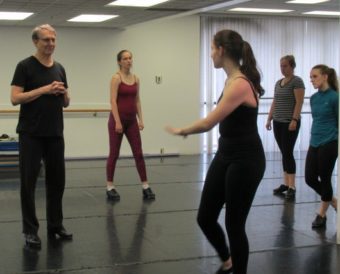
Teacher, choreographer and performer Bill Evans is in Ketchikan for a two-week dance intensive at Ketchikan Theatre Ballet. Classes in modern dance and tap began Aug. 15, and Evans also choreographed a piece for the Gigglefeet Dance Festival.

Evans, 76, has been dancing since the age of 3 and continues to dance, perform and teach.

Evans began as a tap dancer, then became a professional ballet and modern dancer, and founded his own company in 1975.

In 1988, he became a university professor. He retired from two university dance programs, and is currently a professor emeritus at Brockport State University in New York.

When he started dancing as a young child, it wasn’t a conscious decision, he said. It happened when his aunt took him to a movie, the first film he had ever seen.

“This is before TV of course. We saw a film, and there was Fred Astaire tap dancing,” Evans said. “So this little 3-year-old guy went home and started tap dancing. It seemed like the most natural thing in the world for anybody to do. From ages 3 to 8-and-a-half, when my parents finally let me take lessons, I made up my own tap dances.”

Evans says he would perform for anyone who visited, and says he didn’t choose dance, dance chose him.

“I’m very happy that I was introduced to my life’s passion so early, and it’s been good to me.”

More than 40 years ago, Evans formed the Bill Evans Dance Company. He says for a number of years, it was the most booked dance company in the United States under the National Endowment for the Arts Dance Touring Program.

While he loves performing and touring, his true passion is teaching, he said. He developed his own technique, which he feels is his greatest contribution to the dance community. Evans is interested in helping young people develop a healthy relationship with their bodies.

“There are patterns of dance training that can be damaging to young bodies,” he said. “I’ve studied anatomy, kinesiology, and movement analysis deeply for many, many years; and I try to incorporate this body knowledge into the way I teach dance, so that young people can develop happy, healthy relationships with their bodies whether they decide to pursue dance as a career or not.”

He enjoys helping people develop body awareness and body wisdom, and he has been sharing his knowledge with Ketchikan dancers, and held a teachers seminar. He says he developed his technique after suffering chronic injuries dancing professionally in his late 20s.

“I had to go see a sports medicine doctor and get a cortisone injection in my neck in order to get through the performances. After he gave me the cortisone injection, he gave me this little sheet of paper with the possible side effects which included blindness and deafness and I thought, ‘What am I doing to myself?,’ so I stopped taking technique classes from anybody else.”

He went into the dance studio by himself, and worked on moving in a way that seemed healthful and regenerative, he said. He studied and is certified in Laban movement analysis, or the method and language for interpreting human movement. Over the years all his chronic injury patterns disappeared, and he is less injured now in his 70s than when he was a young man, Evans said. But he is not the only teacher approaching dance in this way.

“As we’ve gained more knowledge about the human body and how we can move in harmony with the body’s needs, lots and lots of dance teachers throughout the world are now embracing this kind of approach. But I’m happy to say that I was a pioneer in this movement.”

Physical activity is important in everyone’s life, he said. Movement wires the brain, but we have become a sedentary society.

“And now children are given these wonderful digital devices and they can be entertained for hours and hours and hours without moving at all. Wonderful as technology is – and it is marvelous and wonderful – it’s not enough. People need to move to be fully alive, to be healthy, and to develop their potential as human beings.”

Evans says not everyone will choose dance, but should choose some type of movement. He says yoga, Zumba and other activities are good options for becoming fuller, happier people.

Mallott discusses transboundary mine negotiations, budget gap

Lt. Gov. Byron Mallott visited the Unuk River to brainstorm ideas to better protect Alaska waters from upriver Canadian mines. (KRBD file photo)

Lt. Gov. Byron Mallott visited the Unuk River south of Ketchikan on Friday, part of his ongoing work with British Columbia officials to come up with a way to better protect Alaska’s waters from upriver Canadian mines.

Following his trip to the Unuk, and to the small boundary community of Hyder, Mallott came by KRBD to talk about how transboundary mine negotiations are progressing.

A whole group of state and federal officials flew over the Unuk. The lieutenant governor was accompanied by Alaska Department of Fish and Game Commissioner Sam Cotten, as well as U.S. Forest Service regional forester Beth Pendleton and Tongass Forest supervisor Earl Stewart.

Mallott said it was important for him to see the Unuk, one of the transboundary rivers that flows from British Columbia into Alaska. Those rivers are a subject of concern because of Canadian mining activity.

“And the Unuk River is the one transboundary river that I had not been on and Commissioner Cotten had not visited before,” he said. “We think it’s important to see those places, to have a sense of the reality.”

Another reason to visit the Unuk was to strengthen the state’s relationship with the U.S. Forest Service, and – Cotten said — to underscore Alaska’s continued interest in the health of its rivers and ocean.

“Lt. Gov. Mallott has taken the lead on this initiative to address the many concerns we hear about what would happen if something went wrong with a Canadian mine on a river that dumps into Alaska,” he said. “One of the primary fears we hear from folks is what would that mean to fishing and fish. So, we’re very interested in that.”

The Kerr-Sulpherets-Mitchell, or KSM, gold mine on the Unuk has not started production yet, but there has been exploratory work.

There was a change in the national government of Canada since Alaska started transboundary talks with British Columbia, but Mallott said that hasn’t really affected Alaska’s negotiations with the provincial government. At least not yet.

Mallott said he talked with Canada’s national environment and climate change minister, and she told him that, “The national government of Canada was going to be looking at their national environmental processes, with an eye toward strengthening them.”

That could affect how proposed mines are handled in the future. Mallott said officials in Prime Minister Justin Trudeau’s administration also have indicated they want to work more cooperatively with Canada’s First Nations.

That could go either way with mines, because some tribes support mining ventures for the economic benefits; others oppose them out of concern for the environmental impacts.

As the national Canadian government figures that out, though, Alaska and British Columbia are continuing work on their Statement of Cooperation. Mallott said they’re exchanging drafts, and are close to finalizing and signing the document.

It doesn’t give Alaska any veto power over mines – that would require a treaty between the two federal governments. But, he said, it creates a framework to meet regularly and talk about concerns.

“It’s us engaging with them in a structured way as they move ahead with their various mine permitting processes,” he said. “This agreement will spell out how that working relationship takes place, it will identify areas of particular interest on our part.”

And, he said, it will emphasize the need for transparency.

Mallott said he enjoyed his visit to Hyder, a small community on the mainland, just a short drive from the Canadian border. It’s also the home of the Forest Service-run Fish Creek bear viewing facility.News Tile

“I had never been to Hyder. And, born and raised in Alaska – it’s a Southeastern community; I’m Southeastern. So, to be able to check that box – although it was more than checking a box. It’s a beautiful little place, an incredibly beautiful area,” he said.

Mallott took some time to address Alaska’s fiscal woes. He said it was disappointing that the Legislature did not come up with a way to create more revenue for the state, choosing instead to pay for government through savings. Mallot said that’s why Gov. Bill Walker vetoed more than a billion dollars.

“He was forced to do what he did because there was no fiscal plan to even get us to the next session of the Legislature and the next budget without burning through more savings – several billions,” he said.

Mallott responded to lawmakers who have said Alaska still has a “spending problem,” even after significant cuts to the state budget over the past two years.

“I think they’re wrong,” he said. “I think they’re tragically wrong, because the level of services that Alaska provides to its residents across the state have been significantly reduced.”

Mallott pointed to cuts to education, public safety and infrastructure – all areas he said the state needs to maintain in order to attract new business to Alaska.

Cotten noted cuts to his own department, and said if his budget drops much more, they’ll have to reduce, for example, aerial surveys for fisheries. That would force more conservative estimates in order to ensure healthy stocks.

“We’re getting to where it’s going to hurt the fishing businesses,” he said. “And it’s not just the fishermen, it’s all the associated support industries and local economies. It’s not something we’re taking lightly; it’s a very serious situation. The Legislature, yeah they have a tough job, but they have to step up and accept their responsibility.”

Cotten, of Eagle River, is a former speaker of the State House.

The Legislature doesn’t have any additional special session scheduled before the upcoming election. The next session starts Jan. 17.

Site notifications
Update notification options
Subscribe to notifications