KRBD - Ketchikan

KRBD is our partner station in Ketchikan. KTOO collaborates with partners across the state to cover important news and to share stories with our audiences.
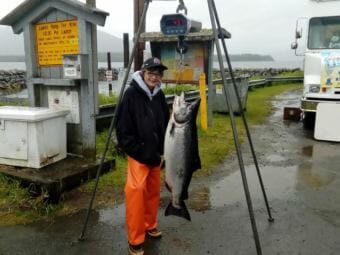
Big change announced for Ketchikan salmon derby

Chase Hanis poses with his 2017 winning king salmon. (Photo courtesy Ketchikan CHARR King Salmon Derby)

Citing concerns of declining chinook salmon stocks throughout Southeast, the Ketchikan CHARR King Salmon Derby Committee decided to skip the derby that traditionally starts on the Memorial Day weekend.

They’ll hold a silver salmon contest later in the summer, instead.

“Even going back to last year, we were anticipating some stricter regulations coming into this year, so we sort of weighed options even a year ago,” derby coordinator Michael Briggs said. “The general consensus of the committee was to go ahead and move it to a silver salmon derby rather than put the pressure on the king salmon as we do each year.”

Kelly Reppert is the Alaska Department of Fish and Game sport fish management biologist for the Ketchikan area.

King salmon stocks in Southeast are in a period of low production, she said, and fish returning to the Unuk River near Ketchikan is a stock of concern.

“The Unuk River king salmon escapement goals were met for the last 35 consecutive years, but since 2012 the lower bound of the escapement goal has been missed in five out the past six consecutive years.”

In January, the Board of Fisheries adopted a plan identifying specific management actions to conserve Unuk River salmon.

For the Ketchikan area sport fishery, Reppert said that includes closures in certain areas.

Where king salmon fishing is allowed, she said the bag limit is one king for all anglers, with a non-resident annual limit of three kings.

Reppert said those rules may change if it’s determined more restrictions are necessary.

Other Southeast communities have canceled or modified their 2018 king salmon derbies, including Juneau, Petersburg and Wrangell.

Briggs says the Ketchikan salmon derby committee considered several options, including changing the dates of the derby, before making a final decision.

“This is a resource that we obviously rely on for our recreation, but king salmon fishing is also a very important resource for us commercially, and so we thought it was a good idea to kind of lay off the fish for a year or two,” Briggs said. “Hopefully the stocks will replenish and before you know it, we’ll be doing a king salmon derby again.”

This year’s silver salmon derby will maintain the same format as the king derby, taking place over three consecutive weekends, including one three-day weekend. The derby will open Aug. 18 and conclude on Labor Day.

Briggs said prize packages for the 30 ladder spots will be finalized within the next few months, but the top prize of $10,000 for the largest salmon will remain.

He said ticket prices will likely remain the same, as well.

Proceeds from ticket sales benefit the Ketchikan CHARR Education Fund.

According to a CHARR news release, since taking over the derby in 2006, more than $120,000 has been awarded to local students.

Hydaburg man faces felony assault charge in stabbing

A 20-year-old Hydaburg man was arrested and charged Friday afternoon in the stabbing of another man.

Justice Raven Peele stabbed the adult victim with a knife multiple times, troopers said. Peele is facing a charge of felony first-degree assault.
According to Alaska State Troopers online dispatch, troopers received a report about 4:30 p.m. Friday of a stabbing in Hydaburg.

The victim was medevaced to Seattle for treatment of serious injuries.

Online records show he is in jail at Craig Police Department. Public defender Katrina Larsen is listed as Peele’s attorney.

A preliminary hearing is scheduled for Friday at Prince of Wales Courthouse.

Humans are main source of bacteria in tested Ketchikan water, report says

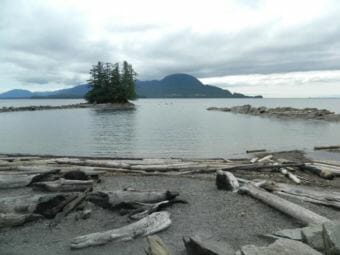
Rotary Beach south of Saxman is also called Bugge’s Beach. (File photo by KRBD)

A final report from last summer’s coastal bacteria monitoring program was released last week, showing that human waste was the biggest source of high bacteria levels along Ketchikan’s coastlines.
The report also states that cruise ships are an unlikely culprit.

The BEACH, or Beaches Environmental Assessment and Coastal Health, monitoring program is federally funded, and is meant to promote public health at recreational beach sites.

Alaska administers monitoring efforts of the national program in various communities.

“Communities that have participated in the BEACH program include Anchor Point, Anchorage, Dillingham, Douglas Island, Haines, Homer, Juneau, Kasilof, Kenai, Ketchikan, King Salmon, Naknek, Nome, Petersburg and Wrangell,” said Gretchen Pikul from the state Division of Water.

Last year was the first time Ketchikan water has been tested regularly for potentially harmful bacteria.

Samples were collected by trained Ketchikan Indian Community employees.

“The program objective is to assess the potential fecal waste contamination during the recreational season,” she said. “If the levels are elevated, then to determine if they are human sources that are contributing factors, and also to inform the public if there are elevated levels.”

Ocean water samples were collected nearly every week July through September from nine popular beach sites.

All the sites regularly showed high levels of enterococci bacteria, which can cause stomach upset and infections. Fecal coliform levels also were high.

Pikul said precautionary measures are recommended when bacteria reach those levels.

“Some of those are to avoid swimming, to avoid exposure to the water, if you have had contact, to wash afterwards, and to rinse your fish with clean water if you’ve harvested in those areas, and to always cook your fish to a minimum of 145 degrees Fahrenheit to destroy the pathogens that are in there,” she said.

The Alaska Department of Environmental Conservation sent samples of the collected bacteria for source analysis.

According to the report, human markers were found in samples from all nine sites.

Two sites also showed dog and seagull markers.

The report states that potential human sources of bacteria include private and public sewage outfalls, sewer line breaks, septic tanks, wildlife, pet waste and discharge from various boats, from small personal watercraft up to ferries and cruise ships.

But, the report includes a footnote stating that “cruise ships and ferries are an unlikely source of bacteria pollution during the 2017 investigation period.”

Pikul explained why those are not likely sources.

“Many of the ships that are in there cannot release in the Ketchikan waters,” she said. “Their permit does not authorize them to. During that time period, they did not have any exceedances of their discharge. That’s why that footnote is in there.”

Pikul said there are many potential human sources in Ketchikan, and it’s likely that the water has had elevated bacteria levels in prior years; it just wasn’t tested before.

She said through this program, local residents will have information about where elevated bacteria levels are located.

The community then can decide what to do about it.

“It’ll give the city and borough and the community some good information to say, ‘Hmm, maybe these are the locations we need to look at and see if we can improve on our treatment of these different sources, wherever they are,’” she said. “If it is a discharge point or an individual septic system, or the city treatment facility or people not picking up after their dogs.”

The tested areas were Seaport Beach in Saxman, Rotary Beach – which also is called Bugge’s Beach — Thomas Basin, Beacon Hill, south Refuge Cove, Knudson Cove, South Point Higgins, Sunset Drive beach and Shull Road beach.

Pikul said when testing resumes this summer, they’ll add Mountain Point and Herring Cove to the list of beaches that will be monitored.

The federal grant paying for this program requires that the monitoring occur during a recreational season.

Pikul said that’s why the testing is only taking place during the summer months.

Rare metals mining company plans to build processing plant in Ketchikan

A Canadian mining company that specializes in rare earth mineral extraction announced Tuesday it plans to build a processing facility in Ketchikan.

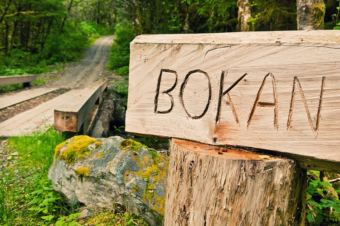
Ucore Rare Metals, Inc., based in Nova Scotia, has been exploring the Bokan-Dotson Ridge site on Prince of Wales Island as a possible new mine.

That potential mine is not anywhere near production yet , but Mike Schrider, vice president of operations and engineering, said the plant will be built whether or not the mine is developed.

“We would actually initially process feedstocks from other sites throughout the world, get the processing plant up and running and established, and eventually, when the timing is right with the market, we would ultimately try to get Bokan on line and then also process the Bokan ore concentrate at this particular facility,” he said.

Schrider said a specific site for the processing plant has not been chosen. The first step was deciding on Ketchikan as the right location.

“We looked at a variety of factors, including the proximity to Bokan mine, the existing relationship we have with AIDEA, the access to international shipping corridors, the available workforce in Ketchikan,” he said. “So it’s a good fit for us and we felt it would also be a good fit for Ketchikan.”

AIDEA is the Alaska Industrial Development and Export Authority. That state agency provides financial assistance for economic development projects. The Legislature in 2014 approved an AIDEA financing package of $145 million to develop Bokan mine and related processing facilities.

The prices for rare earth elements dropped a few years ago.  Schrider said work at the mine is on hold.

“We’re waiting for signs of recovery in that particular sector,” he said. “Once we see those signs, that will lead us to the next step in that project.”

Schrider said there is not yet a timeline for development of the processing plant.

“Now that we made the determination to locate the plant in Ketchikan, we need to go through our next phase of due diligence, which will yield a detailed plan for us, and then we’ll come out with what our anticipated schedule is,” he said.

Schrider said the plant, once built, will initially employ about a dozen people. Eventually, he said, it will employ about 30.

Rare earth elements are used in high-tech products such as cellular telephones and electric vehicles. Most of the rare earth elements in the market come from China.

Man and woman from Ketchikan face federal drug charges

A Ketchikan man and woman have been indicted on federal drug trafficking charges, according to an announcement Friday from the U.S. Attorney’s office in Anchorage.

Michael Anthony Welker, 54, and Mandy Elaine Bacus, 35, were charged with drug conspiracy. Bacus also is known as Mandy Elaine Peters.

The two allegedly sold methamphetamine, LSD, cocaine and heroin multiple times to a Ketchikan informant. The sales allegedly happened in their home.

They were arrested Jan. 23, and arraigned Thursday in Juneau federal court.

They’re scheduled for trial in early April.

University of Alaska Southeast program trains students for mining careers

Employment opportunities mining was one of several topics discussed during last week’s Ketchikan Chamber of Commerce luncheon.

An ore sample from Niblack mine exploration. Bills before Congress would speed construction of a road linking it to the Prince of Wales Island system. (Photo courtesy Healtherdale Resources.)

The Alaska Miners Association chapter chair Graham Neale also is director of the University of Alaska Southeast’s Center for Mine Training in Juneau.

Neale said mining is an important industry.

“You look around this room, and pretty much everything that’s in this room has either come out of the ground or on top of the ground. And everything that we’re eating has come from agriculture,” he said. “Everything that’s made out of wood came from the timber industry which is obviously a huge economic driver in this region during the ‘70s and ‘80s. And everything else comes out of the ground. And so that’s why we mine. We’ve built ourselves a society around it, and we’ve come to depend on these things in our natural life.”

Casey Bain works at the Center for Mine Training coordinating programs and recruiting new students.

“My mission is to get out there and get high school seniors interested and involved in mining,” Bain said. “To know these jobs are here, and to know what kind of training opportunities they need to become a successful employee in the industry.”

Bain showed a map of Alaska illustrating where the mining workforce comes from.

“They come from all over. And these mining companies, they don’t want to have to go down to the Lower 48 to get their miners,” Bain said. “They want their miners right here in Alaska. And that’s my job. I need to put more dots on that map.”

Bain said the average annual salary in the mining industry in Alaska is $108,000.

“With these opportunities at home for these homegrown kids, I think it’s imperative that we let them know these opportunities are here.”

Bain said different types of workers are needed in the mining industry, from entry level to professional and technical.

“These camps, they’re out in the middle of the woods,” Bain said. “They need people to cook. They need people to scrape. They need people to test water. I let folks know that there’s a lot more than getting there and blowing stuff up.”

Neale and Bain were in Ketchikan, in part, to introduce the Southeast mining program to students.

“We went to Kayhi and Revilla just before we came here,” Neale said. “We’ve had 250 students go through that class since the program’s inception. The whole point is to act as a catchall into our mine mechanics programs. We have a one-year occupational endorsement, two-year associated applied science, and from there, hopefully, into employment.”

The program began in 2011. The next introductory training session begins Jan. 29.

Site notifications
Update notification options
Subscribe to notifications