KSTK - Wrangell

KSTK is our partner station in Wrangell. KTOO collaborates with partners across the state to cover important news and to share stories with our audiences.
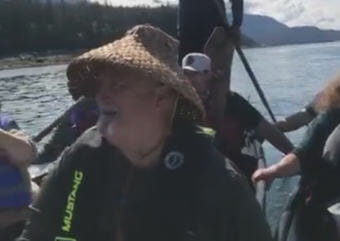
Audio postcard: Wrangell paddlers begin trek as support to Celebration

The video above is from the raven canoe and veteran’s canoe Sunday.

More than a hundred paddlers navigate about a dozen canoes toward Juneau for this year’s Celebration.

Those with the One People Canoe Society paddle from their Southeast Alaska towns to Juneau.

To keep everyone safe, support vessels run alongside these canoes to provide emergency care or just shelter from the storm.

KSTK’s June Leffler spoke with Alicia Armstrong and Steve Johnson, long time paddlers who are supporting Kake’s canoe paddlers.

That was Steve Johnson, Trevor Grant and Alicia Armstrong. They departed Wrangell in late May heading toward Kake.

They are scheduled to arrive in Juneau on Tuesday afternoon for Celebration.

Wrangell, other rural hospitals still receiving Medicaid payments for now

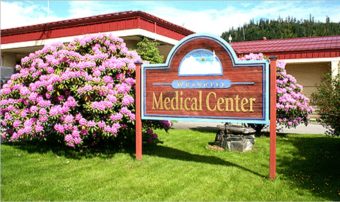
Wrangell Medical Center. (Photo courtesy of Wrangell Chamber of Commerce)

The state is running short on money for Medicaid.

Until the next fiscal year starts in July, hospitals and other health care providers won’t get paid for treating much of Alaska’s low-income population.

But the state is trying to funnel what money is left to hospitals that could otherwise shut down.

The state is $20 million short of what it needs to make Medicaid payments until July 1. Some health care providers are getting paid, some aren’t.

“We’re prioritizing those smaller providers, people that are the sole providers in their community, that heavily rely on Medicaid,” said Shawnda O’Brien of the Department of Health and Social Services. “We know that if we aren’t able to pay them they would have to shut their doors, and we certainly don’t want that to happen.”

The only hospital in the island town, Wrangell Medical Center checks off those boxes.

Most of its revenue comes from Medicaid.

It already has a hard time paying its own bills.

“We have less than 30-days cash on hand and that’s being very generous,” the hospital’s development coordinator Aaron Angerman said. “Usually the numbers are floating around nine to 15 days of cash at hand, meaning if all the money stopped coming in, and we still had to pay payroll and pay the expenses, benefits, things like that just to keep the lights on, that’s how long we could survive without getting more payments coming in.”

Other rural hospitals like Petersburg Medical Center, PeaceHealth Ketchikan Medical Center, Sitka Community Hospital are being prioritized as well.

The state will assess every week where it can and cannot pay, based on need. This can keep small, struggling hospitals afloat for the next month. But the money is still going to run out, most likely in mid-June.

Once July hits, everyone will take a breather. But the folks at Wrangell Medical Center know the struggle doesn’t end in July.

“As you can see at last year’s numbers we didn’t have enough. Come next year we’re going to have the same issue,” Angerman said.

Claims filed in June will be paid from next year’s budget, which is already funded $30 million less than the governor requested.

“That’s the scary part to me is it’s going to look the same next year, if not worse,” Angerman said.

SEARHC looking to pay between $25 to $40 million for new Wrangell hospital

Wrangell Medical Center. (Photo courtesy of Wrangell Chamber of Commerce)

Southeast Alaska Regional Health Consortium is continuing forward in acquiring Wrangell’s hospital. The Native nonprofit plans to build and operate a new hospital in the island town within the next three years.

A contract isn’t set in stone between SEARHC and the City of Wrangell. But both parties are eager to strike a deal.

Last month, SEARHC made the offer to build and operate a new hospital. And SEARHC would take over the liability and operation of current Wrangell Medical Center until the new hospital is finished.

Since that announcement, SEARHC scoped out the liabilities of the current hospital. It’s falling apart, a number of electrical, sewage and foundation issues are at the brink of failure. If everything went out all at once, it could cost up to $24 million. But SEARHC’s Vice President Dan Neumeister says that isn’t scaring them off.

“What we anticipate might fail over the next couple of years is fairly small compared to that $20 million,” Neumeister said.

SEARHC says it is looking to pay between $25 to $40 million to build the new hospital, which will connect to the current search clinic in town. It would span 44,500 square feet, and incorporate all the services Wrangell is used to, like emergency, primary and long-term care. The property could also provide more space for other services down the road.

City officials and assembly members support the acquisition, saying it is a life boat for the city-owned hospital that is financially struggling to meet operation costs, let alone paying for a new facility that is desperately needed.

Neumeister believes it’s a win-win situation. Small, city owned hospitals are struggling across the nation. Merging with larger organizations spreads more resources around.

“Small hospitals that are independent, standalone facilities just don’t have the critical mass to sustain either reimbursement challenges or facility needs,” Neumeister said. “So the idea of becoming part of a larger system spreads that risk, and also allows the system to move their monies around to make sure that these small communities are successful and thrive.

The next steps include a formal buy-in from the city, which could happen mid-June from the assembly. Then SEARHC’s board would need to do the same, and then spend three to four months drafting building designs and management plans. SEARHC could take over the current hospital in October of this year. A new hospital could be built by the beginning of 2021.

A victory for Wrangell tribe: State says no dumping near Pat’s Creek

Pat’s Lake is a popular fishing area near Wrangell that could be the site of a restoration project under the Southeast Alaska Mitigation Fund. (Photo by Katarina Sostaric/KSTK)

Wrangell’s tribe and city have won a year-long fight to protect a fishing stream and popular recreation site.

The state had planned to dispose of tons of lead-contaminated soil at a rock pit near Pat’s Creek as soon as possible. But many in the community spoke out against dumping at the contentious site.  Legislators took note of those concerns and allocated $5 million to ship the waste entirely off the island.

The Wrangell Cooperative Association never budged from its original position: no disposal near Pat’s Creek. The tribe looked for alternative sites, extra federal funding and outside scientific opinion. All options were on the table, but most did not pan out.
Then, the tribe reached out to elected officials and met with Lt. Gov. Byron Mallott. And Gov. Bill Walker went to bat for the concerned citizens of Wrangell. He requested $5 million to ship the soil off Wrangell Island. Then, the Senate and House just passed that appropriation in its capital budget.

“I told my children and my daughter Natalia was so happy she said, ‘Mom this means we can go ice skating on Pat’s Lake this winter,’” WCA tribal administrator Esther Ashton said.

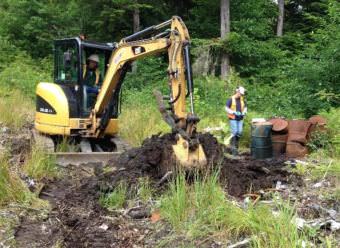
The contaminated soil comes from the old Byford Junkyard, where residents dumped dead cars for decades. The lead came from their batteries. The Alaska Department of Environmental Conservation cleaned up much of the junk and treated the soil with a stabilizing agent.

The state agency proposed placing the soil at the rock pit 1,000 feet from the creek, and still says it is a more-than-safe option for hundreds of years to come. But DEC’s director Jeff Rogers understands the public’s concern.

“When you have a contaminated site in your backyard it is a passionate local issue. We believe the site at Pat’s Creek to be environmentally viable. But people don’t want it in their backyard and there is a higher cost option and the governor supports that option,” Rogers said.

The city also contacted politicians in support of the off-island option. Wrangell’s Rep. Dan Ortiz voted in favor of the funding during House Finance Committee meetings.

“I felt like I was advocating for what I felt to be the majority opinion in Wrangell,” Ortiz said.

Not everyone in the Southeast city wanted this option.

Local contractor Brett Woodbury has been working with the Department of Environmental Conservation on the cleanup. He’s prepared tons material for the rock pit that he might not be paid for.

And work for him and his employees has shut down at times, when he could be pursuing other contracts in town.

The state is in the early stages of shifting gears for off-island disposal. Officials are unsure exactly where the waste will go. And it may have to find additional funding later. But the state says one thing is for sure: no disposal near Pat’s Creek.

Clarification: Some references in the headline and story to “Pat’s Lake” and “dumping” have been changed to “Pat’s Creek” and “disposal” to be more precise.

Despite governor’s request, legislators question pricier option for Wrangell cleanup

A backhoe digs up part of the old Byford Junkyard in Wrangell in 2014. After removing old cars, oil drums and other trash, the state is treating and moving contaminated soil to a rock quarry south of town. (Photo courtesy Department of Environmental Conservation)

The small town of Wrangell is making a big ask for the soon-to-be-finalized state budget.

The city and local tribe are asking for an additional $5 million to clean up tons of lead-contaminated soil.

A state environmental agency already has the money and plans to take care of the waste.

The only problem the community strongly opposes the proposed dumping site. And the town is looking for any extra funds to ship the waste off the island and down to the Lower 48.

Gov. Bill Walker went to bat for concerned citizens in Wrangell.

He asked for millions of dollars to help ship 18,000 cubic yards of lead-contaminated soil off the island.

Senate Finance Committee responded Monday by allocating $2.5 million dollars in its amended budget to the cleanup.

House Finance Committee heard testimony Tuesday from Wrangell residents, who asked asking them to add another $2.5 million.

“The $5 million in capital budget for this project would allow for our state and city to ship the remaining hazardous waste safely off island to be remediated and dealt with in a matter that does not threaten the public and ecological health of our community,” Wrangell resident Angie Flickinger said.

But the Alaska Department of Environmental Conservation already has enough money to take care of the problem.

Wrangell residents just want to see more precautions taken.

Rep. Tammie Wilson of North Pole was reluctant to fund the extra payout.

“Just wanting to know whether we are starting a precedence here where you have a safe site, you have money to use to finish the project, but yet were looking for unrestricted general funds instead,” Wilson said.

The state allocated $14 million for the cleanup, and $8.3 million has been spent so far. Enough is left to finish the project on island.

The state cleaned up the Byford Junkyard, where Wrangell residents had dumped old cars for decades.

A contractor treated the soil and contained it.

The state’s plan had been to put the soil in a rock pit on the island.

But the public was outraged by this plan, because the proposed site is about a thousand feet away from a fishing stream and recreation area.

Rep. Lance Pruitt of Anchorage said now is too late to try to appease public concern.

“If we’ve spent over $8 million and we’re now addressing community concerns why weren’t the community concerns addressed before we spent $8 million?” Pruitt asked.

The state wasn’t legally obligated to involve the public, it claims. But it’s clear the state wishes it would have.

Jeff Rogers of the DEC says he understands why Wrangell is asking for another option.

“When you have a contaminated site in your backyard it is a passionate local issue,” Rogers said. “We believe the site at Pat’s Creek to be environmentally viable. But people don’t want it in their backyard and there is a higher cost option and the governor supports that option.”

Senate and House Finance Committee meetings continue week. The legislature plans to end its session and pass a budget next week.

Committee proposes $2.5M for contentious cleanup in Wrangell

The Senate Finance Committee allocated $2.5 million in its amended state budget to ship tons of lead-contaminated soil off of Wrangell Island.

Gov. Bill Walker requested funds for the cleanup project.

The state is responsible for cleaning up the old Byford Junkyard, where  18,000 cubic yards of lead-contaminated soil sit.

The Alaska Department of Environmental Conservation has planned to dump the soil in a rockpit near Pat’s Creek.

Many in the community of Wrangell spoke out about the proposed dumpsite less than a quarter-mile away from a recreation area and fishing stream.

If approved, the funds allocated by the legislature would go toward shipping the waste down south rather than on the island.

The Senate needs to approve that proposed allocation, and the House would need to pass a matching $2.5 million to make a complete off-island option feasible, according to ADEC officials.

The City of Wrangell’s lobbyist is advocating for this money.

Final decisions on the matter should wrap up by the end of the legislative session next week.

Site notifications
Update notification options
Subscribe to notifications