KSTK - Wrangell

KSTK is our partner station in Wrangell. KTOO collaborates with partners across the state to cover important news and to share stories with our audiences.
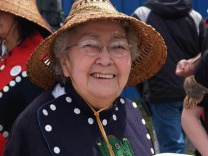
Wrangell Cooperative designing five-year plan to curb outward migration

The local tribe in Wrangell received a $100,000 grant, in part, to curb outward migration.

The tribe will create a five-year plan to bolster industry and community services that could keep people from moving out of town.

“We have experienced in the last 10 years a decrease in tribal membership, because people are leaving Wrangell and they’re not coming back,” said Annya Ritchie, a project director for the Wrangell Cooperative Association, a Native organization represents about 550 members in town.

The tribe hired Ritchie with funds from the Association of Native Americans grant.

Ritchie is responsible for designing a five-year plan that addresses the long-term needs of the Native community in Wrangell.

“I always found it interesting that we focus on scholarships for our youth but we have no industry for them to come home to,” Ritchie said. “We invest in their education but we can’t invest further for them.”

The tribe set their priorities for the grant in 2015, which were to bolster economic, housing and healthcare development.

“We’re taking these three parts and we got to look at what our need is today versus two years ago,” Ritchie said. “What the community is already doing to grow some of these things and how are we going to contribute to that growth.”

She said the plan could target the tourism industry and set a goal of making a gift shop. Or it might build more senior housing. Right now it’s too early to tell.

Ritchie is just now getting community members involved to steer the goals of the plan.

“I’m looking at people that have a historical knowledge of the community, people that may have interest or knowledge about tourism and fishing or even the forestry,” Ritchie said.

Ritchie hopes that having set goals will streamline getting even more grants.

The tribal administrator Ester Ashton also encourages tribal members to join other planning committees regarding transportation, tourism and veteran affairs.

She also wants members to update their information with the WCA office. In other tribal news, board member elections will be held next Thursday, March 15.

Citizen scientists help biologists discover unique bat behavior

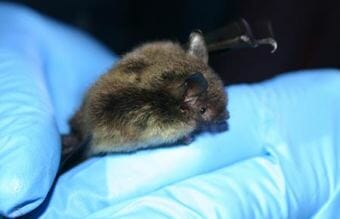
Myotis lucifugus is better known as the little brown bat. It is the only bat that resides in both Southeast and Interior Alaska.
Myotis lucifugus is better known as the little brown bat. It is the only bat that resides in both Southeast and Interior Alaska. (Photo courtesy Alaska Department of Fish and Game)

White nose syndrome is a fungal disease that is killing off bats on the U.S. East Coast. While it hasn’t hit Alaska yet, it is one of the main reasons bat research has revved up in the past decade.

With that newfound interest, new discoveries are being made in Alaska. Last summer, the state recorded the first documentation of swarming behavior outside of a cave or mine.
“Completely by accident got footage of this, which is a behavior that’s this circling outside of known roosts that’s believed to be associated with mating and showing juveniles to the hibernation spot,” said wildlife biologist Tory Rhoads witth the Alaska Department of Fish and Game.

Learning more about bats hibernation locales and patterns is Rhoads’ top interest. And volunteer scientists in Southeast can add to biologists’ research. Since 2014, the state has recruited citizen scientists to monitor bats in Southeast Alaska. Volunteers use recording devices to pick up bats’ high-pitched sounds, used for echolocation.

“We got so much enthusiasm the first couple of years that what was initially going to be a short-term study has just changed over time. And now we’re been able to pursue other unquestioned answers out of it.”

The state operates stationary monitors that collect bat sounds daily. Wrangell has one at its golf course. But volunteers are tasked with something totally different.

They strap a recording device to their car, then drive along the highways and dirt roads picking up bat sounds.

“In the passive monitors you can have one bat just circling, calling all night and so you’ll get a thousand calls but have no idea how many bats there were.”

But volunteers gather data that can tell the number of flying mammals.

“Because we’re driving at a set speed, it’s easy to say, ‘Well the bats don’t fly faster than 20 mph,’ so the bat they heard at this time is different than the bat they heard 30 seconds later.”

The data also tells biologists the different species and their locations. Biologists can use this to figure out which habitats bats prefer.

“Whether it’s weather, moonlight, or productive old growth forest, or open muskeg, or proximity to fresh water, elevation — you name it.”

Having a better understanding of those habitats means biologists know where to go to collect even more data. They set up cameras and thermal detectors in areas of interest, which led to the swarming discovery.

Rhoads wants volunteers out in certain times to figure out where resident bats are hibernating. For a four-week period in the spring, bats are emerging from their dens. In the fall, they go back to them.

Wrangell will receive one device for volunteers to check out on a weekly basis.

Southeast has more bat diversity compared to the interior. Six species have been detected in Wrangell and seven in Ketchikan. While only one, the ubiquitous little brown bat, resides up north.

Fish and Game started researching bats in 2011. The University of Alaska Anchorage also conducts a bat monitoring program.

Southeast Alaska Native key figure, Marge Byrd, dies at 81

Marge Byrd (Shady Grove Oliver, KSTK News)
Marge Byrd died on July 24. Byrd was deeply involved with Wrangell’s Native community. (Shady Grove Oliver, KSTK News)

The Southeast Alaska Native community is mourning the loss of a key figure.

Marge Byrd, 81, died on July 24. Services were held Saturday at St. Phillip’s Episcopal Church.

Byrd was deeply involved in Wrangell’s Native community. Long-time friend, Tis Peterman, credits Byrd with helping to bring back Tlingit culture.

“She celebrated her culture very proudly, and when I was growing up in Wrangell, I remember her in the ‘60s on the Fourth of July parade being the only one in regalia,” Peterman said. “And, it wasn’t very cool to be Native back then. She brought up all of her kids that way too. They all drum and sing. They all know the songs, even the little ones.”

Byrd was instrumental in the renovation of Wrangell’s Chief Shakes Tribal House, which re-opened in 2012.

The Wrangell non-profit, Alaska Native Sisterhood, spearheaded that project. Byrd was one of the founding members.

“It was a project we were all very proud of. I think she was very proud to show it off, especially during rededication. Her handprint is one of the ones on the four corner posts,” Peterman said.

She also was heavily involved in the Alaska Native Sisterhood, Wrangell Cooperative Association, and was the matriarch of Stikine Kiks.adi Clan and led Wrangell’s Shx’ at’ Kwa’an dancers.

Byrd’s mother, Louise Bradley, a Tlingit song leader and dancer passed down those traditions to her.

Byrd was the youngest of eight children.

Byrd is survived by her sister, Hankie Hoyt and her five children, Lee, Louise and Sandra Byrd, Katherine George and Ethel Lane. She is also survived by several grandchildren, nieces and nephews. Her parents were Louise and James Bradley.

Editor’s note: A reference to the “Alaska Native Sisterhood Association” has been corrected to say “Alaska Native Sisterhood.”

Sewer mainline breaks, allowing 20,000 gallons of raw sewage into harbor

A sewer mainline broke early Monday morning near Zimovia Highway, spilling 20,000 gallons of raw sewage into Wrangell’s inner harbor.

The break happened near the Zimovia Highway and Case Avenue intersection. The Public Works department was notified about 6:30 a.m.

Crews repaired the break by 11 a.m. Public Works director Amber Al-Haddad said. Spokesman Mark MacIntyre says the Environmental Protection Agency won’t take any immediate action.

“At this point, what we’re really doing is gathering as much of the facts of the case as we can, and then we will be reviewing the case for possible further action including things like enforcement,” MacIntyre said. “At this point, we’re still looking at the facts.”

MacIntntyre says it’s generally best to let the waste dissipate over time.

“A lot of times any attempts to fix the problem, in other words address the sewage in the bay, almost creates more problems than just naturally letting it dissipate.”

Al-Haddad said the EPA told the department today that no further action is required, due to the likelihood of the tide flushing out the wastewater.

She said Public Works will file a report with the EPA.

The 24-hour recreational water advisory for the inner harbor was lifted 11 a.m. Tuesday.

The overflow was a result of two sewage pumps being shut down during repairs. One pump near City Park didn’t overflow. The other pump, which handles all of downtown Wrangell’s sewage, did.

This comes on the heels of Wrangell’s water crisis. The borough assembly declared a local emergency disaster in July as the water plant struggles to keep up with demand for treated water.

Wrangell school offers Tlingit language and culture in classroom

Wrangell high school and middle school students will be offered a new language and cultural class this coming school year.

Students will be able to learn Tlingit, a language and culture belonging to one of Southeast Alaska’s predominant Native tribes.

Wrangell Johnson O’Malley Director Virginia Oliver and Wrangell schools Indian Education Director Luella Knapp developed the classes.

Oliver is one of the few fluent speakers in the Wrangell area. She says the class will help give students a well-rounded representation of Southeast history.

“And, we took Alaska history, we learned about the Russian history,” said Oliver about her experience in school. “We didn’t hear too much about our own history, the Tlingit language. The only language that we’re going to center on is Tlingit language. That’s what we know about and our culture.”

With the language dwindling over the years due to assimilation to western culture, Oliver said the need to teach Wrangell’s next generation the language and culture is strong.”

“My grandson went to UAS last year. He graduated from Wrangell High School and he said that the kids kind of glom up together. There are certain areas up north and around,” said Oliver referring to other tribes with strong cultural ties.

Tlingit is an oral language passed down the generations, but linguists began creating written works in the ‘70s in an effort to preserve it, Oliver said.

“It’s been being written since the ‘70s and we kind of are using the orthography that was produced then to this day.”

The Tlingit noun and verb dictionaries were some of those first publications. Wrangell started to see a resurgence in 2013 when Oliver launched Tlingit Phrase of the Week, an audio project teaching small phrases, she said.

Oliver and Knapp hope to build on that resurgence with these classes.

“And seeing what a beginning and then an advanced beginner, lower intermediate, higher intermediate, all the way up into conversational Tlingit,” said Oliver. “We’re going to teach the basic language and go from there. It’s very exciting.”

Wrangell School Superintendent Patrick Mayer says the district is exploring the possibility of the class meeting the foreign language requirement.

The district currently only offers Spanish.

Formline allows children to express themselves with traditional artform

Ron Fairbanks teaching kids how to paint formline. (Aaron Bolton, KSTK)

The Alaska Native Sisterhood Association – or ANSA – wrapped up a three-day Native art class for Wrangell children Aug. 3. About 20 kids gathered to learn the traditional artform known as formline, the art of the Tlingit, Haida and Tsimshian tribes of Southeast Alaska.

“They’re fun to work with,” said Ron Fairbanks, an art teacher in Craig, who taught the class. “I just had a little guy come up to me now and say ‘this has been the funnest three days of my life.’ I just thought that was awesome. So it’s been really good.”

They used formline’s shapes known as ovoids and trigons, arranged in spatially conscious ways to depict salmon heads, bears, eagles and other wildlife.

Aleah, 14, used thick red and black painted lines depicting an eagle hovering above a bear to make her piece.

“I did an eagle and a bear head and added other stuff onto it,” Aleah said.

Traditionally formline would be painted on a canoe paddle or clothing. But, this time it’s on a skateboard.

“I really enjoyed that medium of putting artwork on something you could ride, something contemporary, something new and can engage the kids with it,” said Fairbanks. “It really seems to hook them as a fun way to put formline on something you can use.”

Tis Peterman of ANSA said the goal of these grant-funded classes is to engage kids in Native art and culture.

“In fact, one of our students went to the dentist this morning and they wanted to buy his skateboard, and it’s not even finished yet,” Peterman said.

ANSA has put on other classes such as skin-sewing and beading, Peterman said. The association has one more month of funding to put on another class for kids and are still looking for ideas.

Site notifications
Update notification options
Subscribe to notifications