KUAC - Fairbanks

KUAC is our partner station in Fairbanks. KTOO collaborates with partners across the state to cover important news and to share stories with our audiences.

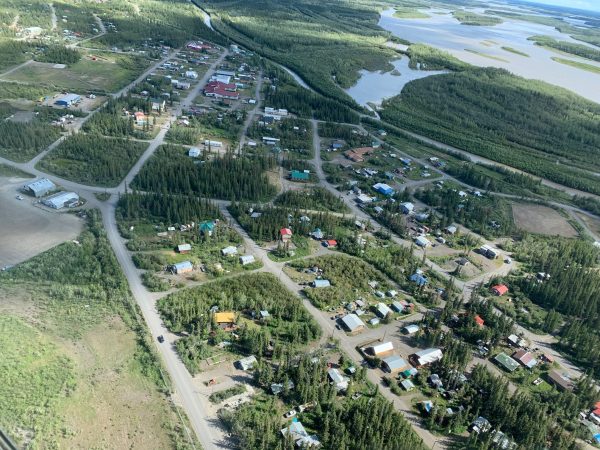
Despite months of aggressive measures, Fort Yukon reports 21 cases of COVID-19

Fort Yukon in June 2020 (Photo courtesy of Elliott Hinz)

The Fairbanks Daily News-Miner is reporting the first COVID-19 death from Fort Yukon.

Locals in the Yukon River community of Fort Yukon are dealing with a significant outbreak of COVID-19 despite aggressive measures taken to keep the virus out of the community.

Dacho Alexander of the Gwichyaa Zhee tribal council says 21 people have tested positive so far, with four seriously ill.

“We’ve had a few medevacs recently of people who have come down with more severe symptoms. And so those folks have been sent to Fairbanks for additional medical help,” he said.

That’s despite a village-wide lockdown that’s been in effect since March. While travel restrictions slowly eased, including a ten-day period in late June where people from outside the village could come in if they had a local sponsor, the village has been vigilant about letting people in.

Alexander says the community is manning a 24-hour river watch to keep outsiders from entering and has restricted store access to just two people at a time. It also has an enforced curfew, and Alexander says the streets are mostly quiet without kids playing outside.

How the virus got into the village is still unclear. Alexander says the first person to test positive had been medevaced to Fairbanks for a different reason. They tested positive there, resulting in widespread testing in the village – 180 tests since the first positive out of the village of about 500, according to Alexander. Those resulted in the other positives, but meanwhile, the Fairbanks patient had a second test that came back negative.

“We never would have knew that there was widespread community outbreak without that first positive Fairbanks, which it turns out was a false positive,” he said.
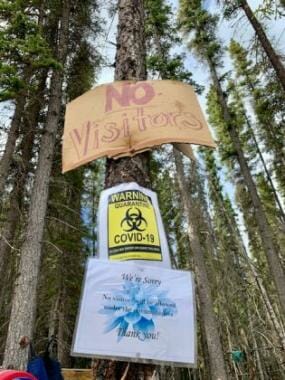
Signs on a tree at a fish camp saying no visitors are allowed due to COVID-19.
Signs at a fish camp (Photo courtesy of Melinda Peter)

Alexander said that staying on top of additional cases is a challenge due to testing limitations. He said they’re relying on rapid testing in the village as well more accurate state-provided tests that must be sent out for processing.

“Getting those tests processed is becoming more difficult, and those tests are becoming less available,” he said.

Alexander says the village had to wait about two weeks for the last test results to come back from the state, but Thursday evening those tests came back negative. He says the situation is concerning because, like most bush villages, local health care is very limited — and so far, the state hasn’t stepped in to provide reassurance or support.

“The leadership of Fort Yukon has been pretty much going it alone. We’ve requested assistance a few times. But we’ve kind of been met with crickets,” he said.

Still, the village has received two rapid testing machines, one from the Alaska Native Tribal Health Consortium and the other from the nearby tribal government of Venetie. That allows for quick testing, but it is less accurate than the state-run PCR testing.

Alexander said the situation is further complicated by the cooperative and labor-intensive subsistence lifestyle.

“You know, when you’re going out setting a fish wheel — it requires, you know, a lot of hands and so you may be around people out of necessity,” he said.

Alexander said village residents are relying even more on subsistence because the pandemic caused a reduction of cargo flight bringing in fresh food.

And the village is banding together. Alexander says village leaders and the broader community have responded by trying to shield elders and others vulnerable to illness. He says that includes doing grocery shopping, laundry and other errands for people quarantined at home.

“Quarantine, it’s a very difficult thing because a lot of these folks live in multi-generational households. There’s a lot of people in the same house and when we have one positive case it means the entire household has to be quarantined,” he said.

The school district has offered up a dormitory in case the town needs more sites for isolation, which so far hasn’t become necessary.

And residents have also taken to mask-wearing.

“We were asking people to wear masks back in March, long before it was even a suggestion by the state, so most people have been very good,” he said, and estimated that compliance was at about 95%.

For now, the community is waiting for the rest of the results and is hoping no others are infected. Alexander said that despite all the mitigation measures taken early on, residents are still committed to doing their best to keep neighbors safe.

“The community is keeping things in perspective. You know, there’s definitely a renewed vigilance in protecting our both of our community,” he said.

With additional reporting by Alaska Public Media’s Lex Treinen
University regents decide to put the brakes on campus merger plan for UAS

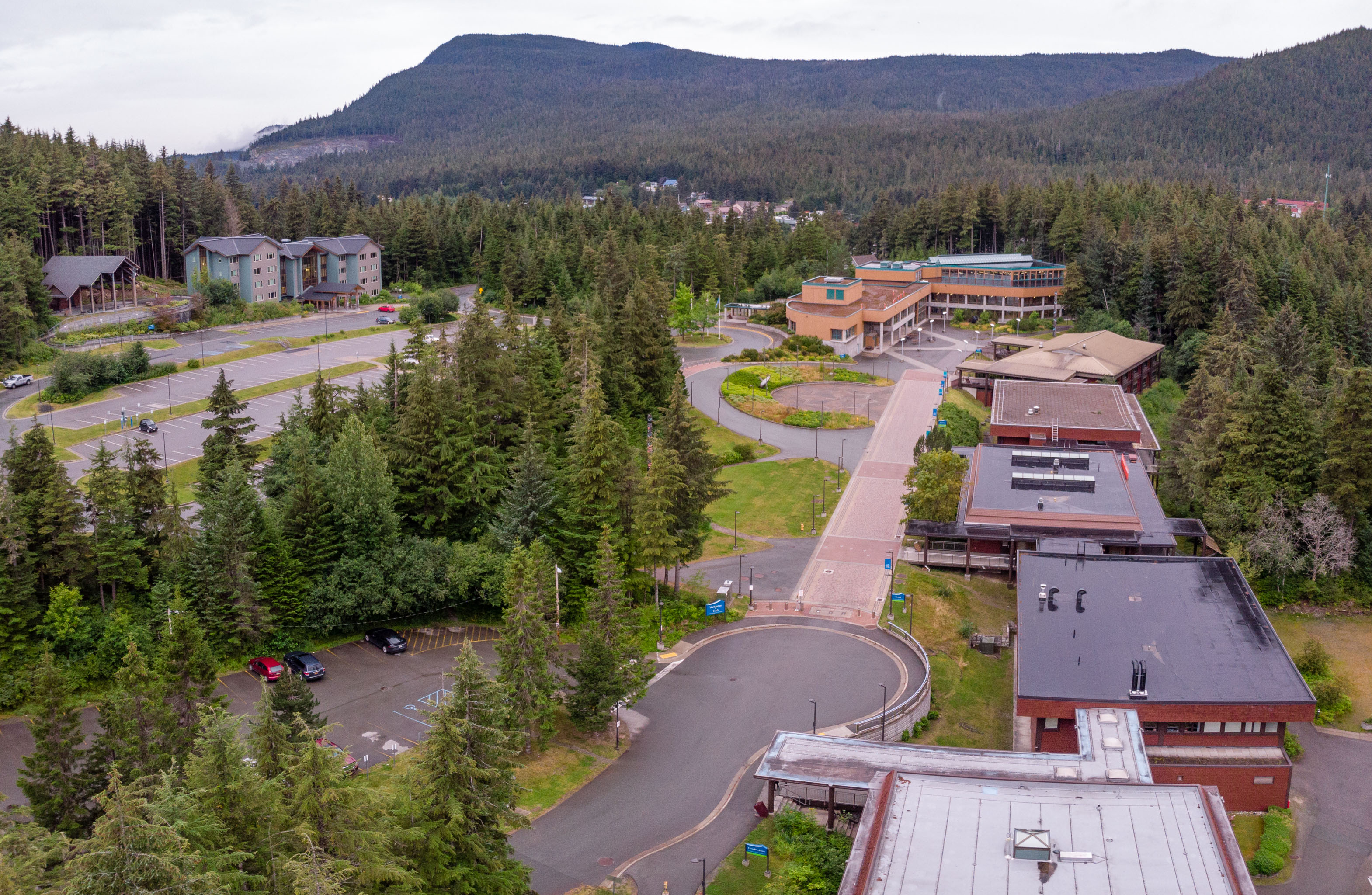
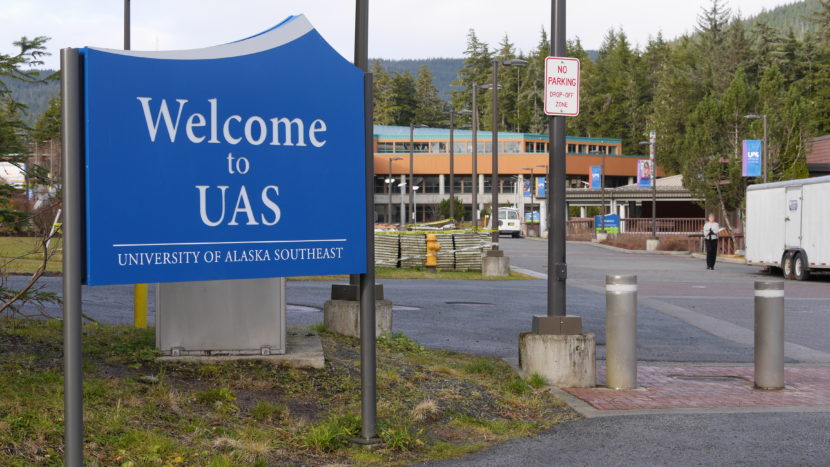
University of Alaska Southeast's Juneau campus on Tuesday, Nov. 15, 2016. (Photo by Quinton Chandler/KTOO)
University of Alaska Southeast’s Juneau campus on Tuesday, Nov. 15, 2016. (Photo by Quinton Chandler/KTOO)

University of Alaska regents have put the brakes on a plan to merge University of Alaska Southeast programs in Juneau, Ketchikan and Sitka into either the Anchorage or Fairbanks operations.

The cost saving proposal has drawn major criticism since being introduced by President Jim Johnsen last week. University of Alaska spokesperson Robbie Graham says during a meeting Thursday regents voted to delay action, in favor of a motion by regent Dale Anderson of Juneau to instead conduct an in-depth analysis of merging UAS and University of Alaska Fairbanks programs, while “maintaining the unique identity and environment of each institution.”

Graham said that investigation will include looking at the proposals they’ve received from organizations, most notably an idea from the Sealaska Corporation to transfer the University of Alaska Southeast to a regional tribal college.

Graham says the review, which will take place over the next 4 to 6 months, will involve input from a wide range of on and off campus stakeholders.

Regents also approved a budget for the upcoming new fiscal year, a spending plan which includes staff layoffs, and executive furloughs, suspends pay increases, and eliminates 50 academic programs.

Graham says the $832 million budget is $25 million less than the current year, the same amount state funding is being reduced, under a compact between regents and Governor Mike Dunleavy. The budget also includes $24 million in COVID-19 related costs, a hit Graham says is being covered with a draw from savings.

Graham says regents spent two hours of Thursday’s meeting in executive session to talk about the possible departure of President Jim Johnsen, who is the sole finalist to become president of the University of Wisconsin.

Regents meet again Friday, and Graham says one of the agenda items is the 50 academic programs slated for elimination. She says regents will be going over motions made by the academic and student affairs committee and could rescind some of the deletions.

National Park Service rule change ends bans on controversial bear and wolf hunts

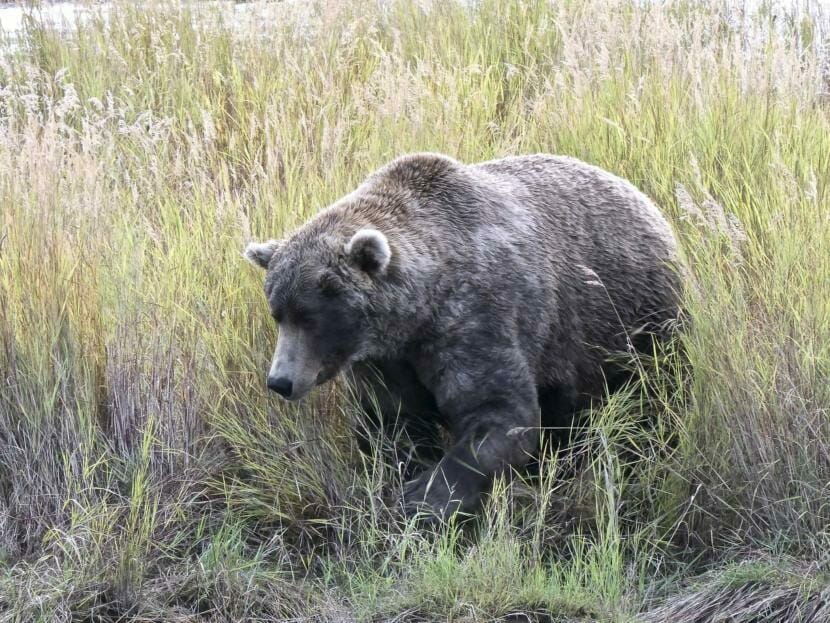
Otis, a bear in the Katmai National Park and Preserve.  (Public domain photo by Naomi Boak/Katmai National Park and Preserve)

The National Park Service is rescinding a ban within Alaska’s national preserves on some controversial state-sanctioned predator harvests of bears and wolves.

Park service Alaska spokesperson Pete Christian said although practices like killing bears and wolves in dens run counter to the Park Service’s mission, the Alaska National Interest Lands Conservation Act, which created or expanded many of Alaska’s national preserves, grants the state management authority.

“It supersedes, to some extent, the [National Park Service] Organic Act and some of our regular management policies, and so the parks up here were designed to have preserve units in them which allow for hunting and trapping as per state law,” Christian said.

The Park Service decision to defer to the state is the latest move in a legal conflict that dates back to when the previous federal administration initially banned certain state-permitted predator harvests on Alaska’s preserve lands.

“Which, to be honest, was offensive in my view,” said Sen. Dan Sullivan, R-Alaska, who pushed for the rule change.

Sullivan highlights a diverse group of stakeholders who back the Park Service decision to abide by state regulations.

It’s everybody from the state to hunting groups, to tribes, to subsistence hunters,” he said.

Pat Lavin with the Defenders of Wildlife in Anchorage, which opposes the rule change, acknowledged that the number of hunters is probably small, but said allowing the controversial practices, like killing bear cubs and wolf pups in dens, is extreme and inconsistent with the purpose of national preserves.

“It’s just a clash of management objectives that aren’t compatible and that’s where federal agencies have long drawn the line, and this Department of Interior is trying to erase that line,” he said.

Lavin would not speculate on the possibility of a suit be filed to challenge the Park Service decision. Christian said that the Park Service retains authority to block state sanctioned harvests in some circumstances.

“If there was a particular concern over animal species or public safety issues related to this particular new ruling, the Park Service would have the ability to close those,” he said.

Christian says the park service does not expect population-level effects on the predator species, noting that the state has only authorized the predator hunts in limited areas, where the practices have been customary and traditional.

UAF research vessel will be the first to leave port since the National Science Foundation halted sailings

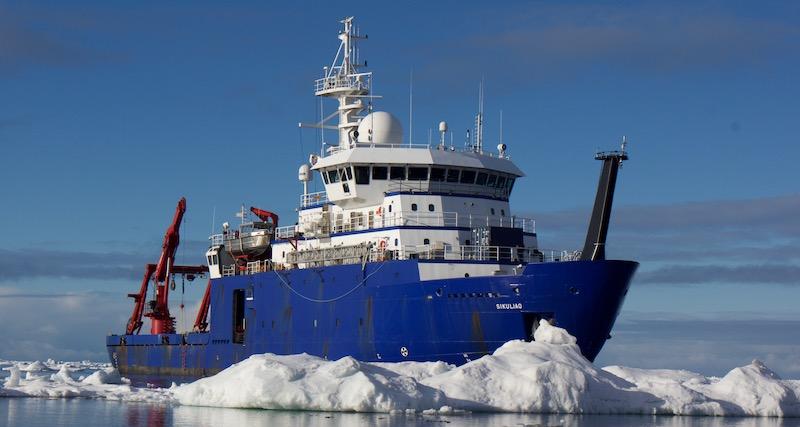
(Photo courtesy Mark Teckenbrock/University of Alaska)

The University of Alaska operated research vessel Sikuliaq is headed out on a cruise on May 4 to collect water and plankton samples in the northern Gulf of Alaska, as part of a long running ecological survey.

According to the university, it’s the first time a National Science Foundation academic research ship is being allowed to leave port since the NSF halted sailings due to the coronavirus pandemic.  UAF College of Fisheries and Ocean Sciences Dean Brad Moran said the Sikuliaq cruise has been granted an exception for several reasons, including the sampling project’s longevity.

“It’s a point-to-point cruise out of Seward, Alaska, where Sikuliaq is home-ported. So it’s not going to go from Point A to Point B. And the cruise length was shortened to seven days, and it’ll never be more than one day’s steam back to land, should there be health concerns,” he said.

Moran says UAF also developed a detailed plan to minimize chances of COVID-19 cases among Sikuliaq crew and research team members.

“All of the scientific staff members, three of them, are home-quarantined here in Fairbanks,” he said. “There’s nobody from out-of-state going on this cruise. So we feel like we have a pretty robust plan.”

Moran said other NSF funded research cruises planned for this summer, hinge in part on the success of next week’s trip.

“We are certainly hopeful that we are able to host more science. And this plan has been shared with all the ship operators in the nation, so all eyes are on this cruise,” Moran said.

Moran said that the pandemic has thrown NSF-funded research projects into a state of flux, and that cancelled sailings have made the already complicated business of vessel scheduling even more challenging.

University of Alaska to furlough top leaders, including president, chancellors and deans

The University of Alaska Southeast campus in Juneau, shown on July 25, 2019. (Photo by David Purdy/KTOO)

The University of Alaska announced Wednesday that it will furlough all senior administrators across the system during the upcoming fiscal year, including the UA president, chancellors and deans.

It’s one of the ways the university system is slashing spending as it wrestles with a three-year, $70 million state funding cut, including a $25 million cut in the fiscal year that starts July 1. That’s on top of new costs and reduced revenues caused by the coronavirus pandemic.

“I’m trying as hard as possible to minimize the impact of the budget reductions on our line faculty and staff across the university system,” said UA President Jim Johnsen.

UA says the furloughs, put in place by Johnsen, will impact 166 employees and are expected to save the university system $554,000.

The length of furloughs will be based on employees’ positions: Johnsen, university chancellors, provosts and chief officers will each lose a total of 10 days pay. Senior administrators, including faculty administrative leaders, will be furloughed eight days. Johnsen said the employee groups were selected because of their pay scale.

UA has also furloughed 120 lower-level employees whose jobs can’t be done from home during pandemic-related campus closures.

“Everybody is going to be contributing in one way or another to meeting these budget reduction requirements,” Johnsen said.

UA Faculty Alliance chair and UAA professor Maria Williams said the executive and administrative furloughs do not go far enough. She suggested a 10% salary reduction for those groups as a way to a avert broader cuts, including the deletion of academic programs.

“If we sunset these programs, we’re also cutting ourselves off at the knees, because we’re also going to lose future student tuition revenue,” Williams said.

But Johnsen is skeptical that salary reductions would have a large enough impact.

“The notion that if a few executives take some pay cuts we’re going to save the day is not realistic in this climate,” he said.

UA regents are expected to consider future cost-reduction measures at their meeting in June, including decisions on program cuts. UA last implemented executive furloughs in 2016.


More Pogo mine workers test positive for COVID-19; company won’t say how many

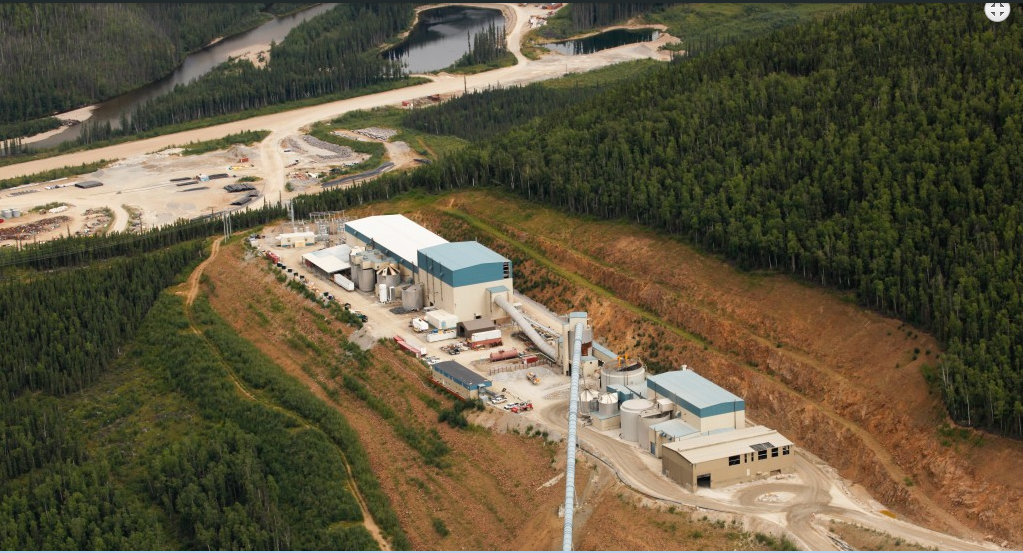
The Pogo mine and mill complex includes facilities for administrative offices, housing, meal service and emergency services. (Photo courtesy of the Pogo mine)

Officials with the company that owns the Pogo gold mine in Interior Alaska say more workers have tested positive for COVID-19.

But Northern Star Resources would not say how many workers at the mine have tested positive. A company spokesperson said Tuesday that it’s “a small number.”

The spokesperson said in an email that all other mine workers who have been in close contact with the infected workers have all been quarantined away from the mine. The spokesperson wouldn’t say how many have been isolated or quarantined — only that it’s “a limited number.” She said those employees are being monitored by the company’s medical team or other consultants.

The spokesperson declined to say where those workers live.

Northern Star announced last week that a Pogo worker had tested positive for COVID-19, and that the worker was being treated at his home in Fairbanks. The company said that 14 other workers who were suspected of having been exposed to the virus would all remain in isolation for 14 days and under observation and treatment if needed.

The news release said, in response to the COVID-19 case, the company would continue social-distancing policies and stringent hygiene and cleaning standards at the mine. The company spokesperson said Tuesday those measures would remain in place and that no additional response was under consideration.

The Pogo gold mine employs about 300 workers at its facility, located 38 miles northeast of Delta Junction. The town has had only one case of COVID-19 reported — a person who lives in Delta and works as a U.S. Department of the Army civilian worker on Fort Greely.

Site notifications
Update notification options
Subscribe to notifications