KUAC - Fairbanks

KUAC is our partner station in Fairbanks. KTOO collaborates with partners across the state to cover important news and to share stories with our audiences.

Scientists suspect ‘Alaskapox’ rash could spread from small animals

Squirrel
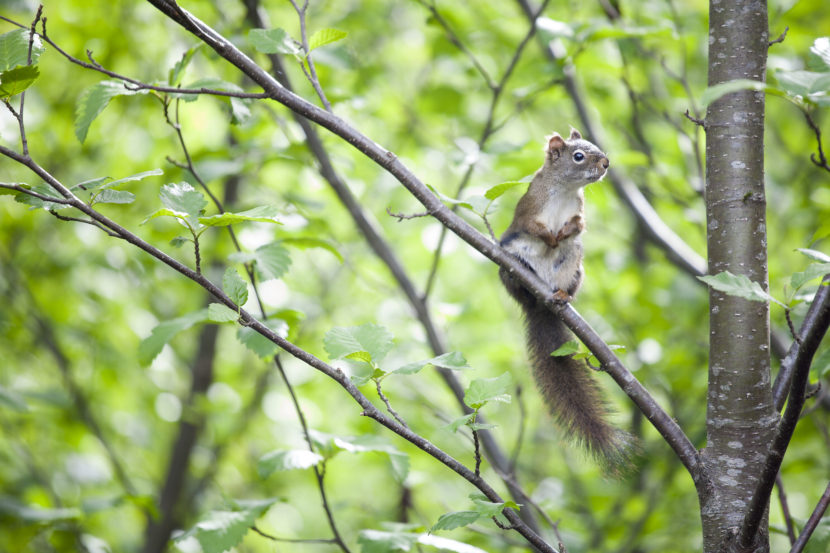
A squirrel explores near Duck Creek as it flows past the Nancy Street wetland in the Mendenhall Valley on May 20, 2016, in Juneau, Alaska. Scientists say one of the people who contracted Alaskapox had children who hunted squirrels. (Photo by Rashah McChesney/KTOO)

A recently discovered virus that is only known to have infected two humans — both in Fairbanks — is suspected to be caused by contact with small animals.

The virus is known as “Alaskapox.”

Anchorage-based CDC disease detective Eric Mooring said the Alaskapox was first identified after a Fairbanks woman sought medical attention for a small skin lesion, pained fever and fatigue in July 2015.

A sample of the lesion was tested, and a surprising result came back, Mooring said.

“It was a type of orthopoxvirus, but it wasn’t a specific species of orthopoxvirus that they already knew about,” he said. “So they sent the sample to the Centers for Disease Control and Prevention in Atlanta for further study and, at that point, they found a new virus.”

Mooring said a second Fairbanks woman with no known connection to the first was found to have the virus this past August. Scientists suspect both women may have gotten the virus from contact with small wild animals.

“The first patient reported seeing various small animals around her home, seeing animal droppings, and her children hunted squirrels,” he said. “For the second patient, she did report that one of her cats captured and killed small mammals on her property. So we certainly know that they were around.”

Mooring is working with scientists at the University of Alaska Museum of the North in Fairbanks to trap and test small animals for Alaskapox.

He said that the discovery of a new virus is rare.

“Within this group of viruses called orthopoxviruses, this is one of at least three that have been identified in the past decade. So it does happen, but it’s very rare,” he said. “Estimates of the number of new viral diseases of humans that are identified each year are on the order of two to four.”

Luckily, Mooring said, there is no need for public concern.

“I want to emphasize that we have no evidence that it spreads from person to person,” he said. “Common sense measures around hygiene and avoiding touching wildlife will hopefully hold people in good stead.”

Mooring said the initial discovery of the new virus, following its identification in the Fairbanks patient in 2015, was published in a scientific paper, but he’s not sure how much public awareness there was at the time.
‘Biggest spike thus far’: After 5 new COVID-19 cases, Denali Borough closes schools

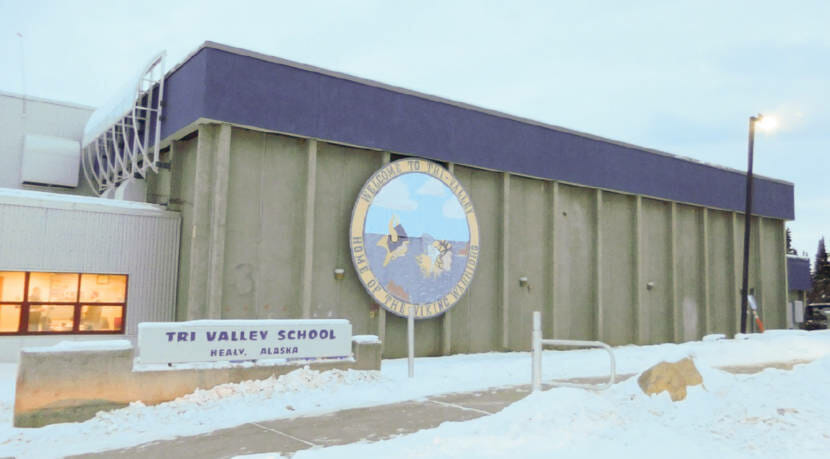
Denali Borough School District officials have halted in-classroom instruction for at least one week. (courtesy Denali Borough School District)

The Denali Borough closed its offices to walk-in business and its classrooms to in-school instruction Monday after five cases of COVID-19 were reported in the borough last week.

Mayor Clay Walker says local officials decided to restrict public access to Denali Borough and school district offices and classrooms for at least one week after an uptick in cases last week nearly doubled the number of reported cases in the borough — from six to 11.

“That was the biggest spike that had seen thus far in the seven months that we have been dealing with, reacting to and trying to minimize the spread of COVID here,” he said Monday.

The test results prompted school district officials to transition to high risk-level precautions — mainly reverting to teaching students online instead of in the classroom. Walker says borough offices remain open, but he says residents will have to pick up the phone or go online to get help.

“Folks can call,” he said. “Folks can e-mail. Folks can set up an appointment for service.”

Meanwhile, the borough and school district will maintain such precautions as social distancing, wearing facemasks and frequent handwashing and home- and workplace cleaning. The mayor said Monday the Denali Borough has been lucky so far with the coronavirus. And he says it remains one of the least impacted areas in Alaska.

“We were one of the last counties in the entire country to not have both a confirmed case and to not have any community transmission at this point or as of last week,” he said. “It’s pretty incredible, actually.”

Walker says the borough has stepped up testing since getting last week’s results that four residents and one nonresident visitor had tested positive. He says local public health officials are closely tracking the test results, in part to determine whether they reveal any cases of community spread. Those are cases for which efforts like contact tracing are unable to establish where or from whom someone contracted the disease.

“It’s possible through contact tracing that it could be determined that community transmission still isn’t happening here,” Walker said. “That these cases maybe did originate from outside the borough, and we can still safely say that we’ve had no community transmission here.”

Borough officials believe many if not most local cases come from people who are from elsewhere, outside of the borough.

Walker says if further testing and other analysis indicate community spread isn’t occurring locally — and if last week’s uptick flattens out — the borough Health Level Advisory Committee may consider reverting to lower-risk precautions during its next weekly meeting.

Yukon River communities ask governor to declare fishery disaster

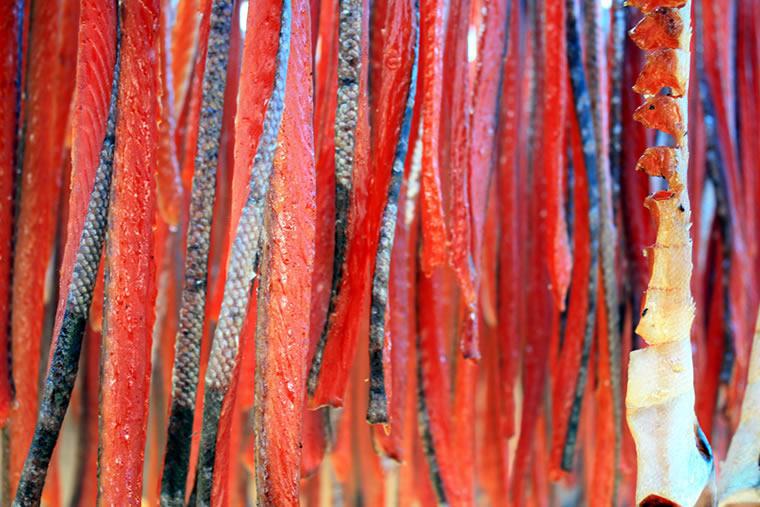
Yukon River salmon strips. (Courtesy of ADF&G)

Organizations representing Yukon River communities are drafting a letter to Gov. Mike Dunleavy seeking a fishery disaster declaration for this summer’s salmon season.

Yukon River Drainage Fisheries Association Executive Director Serena Fitka says it’s been an especially tough year, with high water impeding fishing for much of the summer and runs coming in weak, particularly the fall chums many were counting on to save the season.

“The numbers are so low after the mixed stock analysis at the Pilot Station sonar,” Fitka said. “The numbers are below 200,000. So that’s a record low number of return fall chum.”

Fitka said that disaster status would bring funding that could be used for a variety of purposes.

“There’s a lot of suggestions out there. We’ve heard it should go to the people, but does that really help figure out what’s going on and why the fish aren’t returning? That’s the main question that’s being asked on the river,” Fitka said.

Fitka emphasized that a fishery disaster declaration will not provide quick relief, as the process can take one to two years before funding becomes available. She said the Yukon River Drainage Fisheries Association will hold a series of off-season teleconferences to discuss fishery issues with village residents, beginning with a session on the disaster declaration Oct. 20.

‘Into The Wild’ bus back in Fairbanks

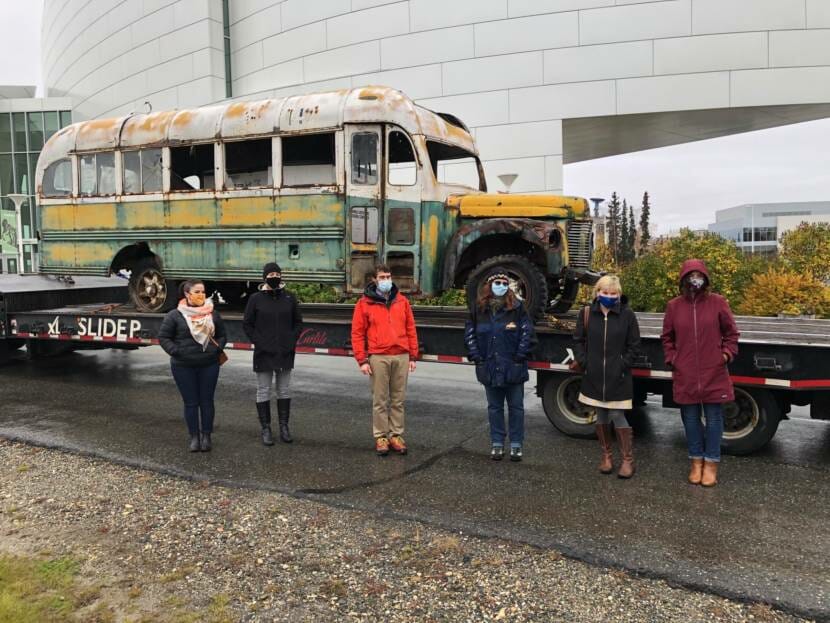
University of Alaska Fairbanks and state officials pose during a media event in front of the bus at the UA Museum of the North. (Dan Bross/KUAC)

The 1940s-era Fairbanks public transit bus made famous by the book and movie “Into the Wild” is back in Fairbanks.

Under an arrangement announced in June when the state had the bus airlifted from the Stampede Trail north of Denali National Park, the University of Alaska Museum of the North will develop an exhibit about the bus.

UA Museum director Pat Druckenmiller explained the future exhibit idea.

“The UA Museum of the North will be the long-term stewards of the bus so that we can allow people to see it, to see it for free, in an outdoor exhibition,” Druckenmiller said. “And tell the whole story of the bus, not — you know, there’s the famous part of the story with Chris McCandless — but there’s also a lot of other interesting aspects that we want to share with the public.”

UA Museum curator Angela Linn says a historic automobile conservator will be brought in to assess any safety issues with the bus — along with how the museum can improve its interpretive value for visitors.

Linn says the next step will be developing an actual exhibit.

“That’s really gonna be a challenging part,” she said. “Obviously there’s lots of divergent opinions about the stories that are associated with the bus, most dramatically with the Chris McCandless story, and so we want to be sure that we represent all those voices.”

Over the last 20-plus years, the bus regularly attracted visitors, including two who died trying to cross the Teklanika River. There have also been injuries and numerous search-and-rescue operations.

State Department of Natural Resources land manager Diana Lineberger says removing the bus from the wilderness has two benefits.

“Hopefully save lives and reduce the number of rescues that are required,” Lineberger said. “But I really think the other part of this is the museum having it and telling that story and making it available for some many more people to see.”

Originally towed out the Stampede Trail as a work crew camp, the bus later became a temporary shelter for hunters and other backcountry travelers. In the summer of 1992, Christopher McCandless used the bus as shelter when he tried to live off the land alone.

Developing the bus exhibit is expected to take 2 years of work, including significant fundraising. The plan calls for an outdoor exhibit site in the woods north of the museum parking lot. In the meantime, the bus will be stored at an undisclosed university facility.

Christopher McCandless’s sister, Carine McCandless, is working with the museum on the exhibit.

“You can look at the bus as, well, as just a bus,” she said. “But it’s also a symbol, for a lot of people, of kind of breaking free of societal norms.”

McCandless says the bus can be a powerful educational tool, including about the mistakes her brother made that led to his starvation in the wilderness.

“He wasn’t prepared,” she said. “And I don’t want people to gloss over that fact.”


Man fatally mauled by grizzly bear in Wrangell-St. Elias was 22-year-old Ohio moose hunter

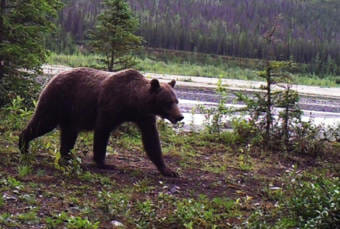
A grizzly bear roams through Nugget Creek in the Wrangell-St. Elias National Park. (Photo courtesy National Park Service)

The National Park Service has released additional information about a fatal grizzly bear attack in Wrangell-St. Elias National Park & Preserve Sunday. NPS identified the victim as 22-year-old Austin Pfeiffer of Ohio.

An NPS release says Pfeiffer and a partner were on an unguided moose hunt in the remote Cottonwood Creek drainage within the preserve, where permitted sport hunting is allowed. The attack site is about 50 air miles from the eastern Interior village of Northway. Park spokesperson Janice Maslan says the hunters had killed a moose Saturday and were butchering and packing the meat out to camp Sunday when they split up.

“The partner returned to camp with a load while Pfeiffer prepared the next load, and when Pfeiffer’s partner returned to within about 50 yards of the harvest site, he was charged by a bear. And in self-defense, he did shoot in the direction of the bear several times with his sidearm, and when the bear came within about 20 feet of him, it did flinch as if shot and it then veered and ran off,” said Maslan.

Maslan says the partner went to the moose kill site and found Pfeiffer dead from what appeared to have been a surprise attack.

“There was no evidence that he was carrying a firearm or deterrence with him at the time, so he was unable to defend himself,” she said.

Maslan says it is the first known fatal bear attack in the park and preserve since it was created in 1980.  She says the partner called the air service that had flown the men in for the hunt and reported what happened.

The partner was flown out, and the NPS and state wildlife troopers traveled to the site Monday and recovered Pfeiffer’s body, which was taken to the State Medical Examiner in Anchorage for autopsy.  NPS says there was no evidence that the bear was still in the area, and that no visitors are known to be in the vicinity.

Uptick in Russian aircraft flying near Alaska shows ‘probing’ for weakness, Sullivan says

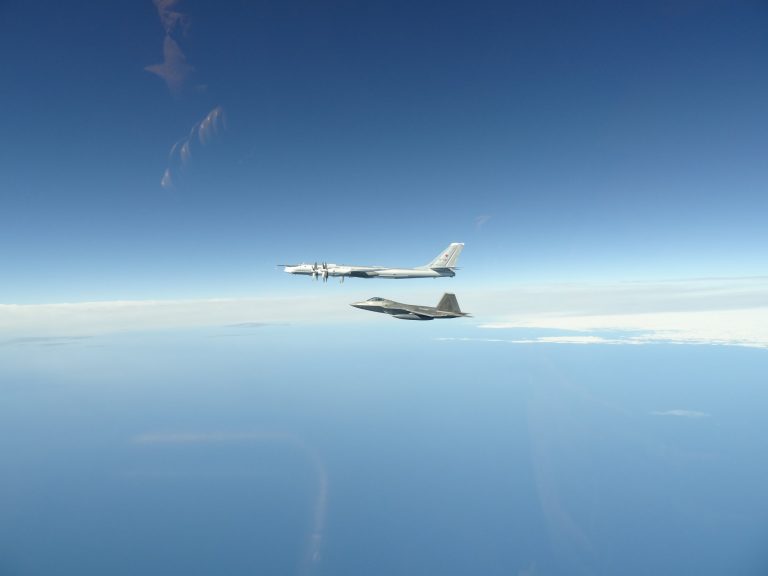
North American Aerospace Defense Command F-22 Raptors, supported by KC-135 Stratotankers and an E-3 Airborne Warning and Control System, completed two intercepts of Russian bomber aircraft formations entering the Alaskan Air Defense Identification Zone on June 16. (NORAD Photo)

U.S. jet fighters have scrambled at least a dozen times so far this year to intercept Russian military aircraft that fly into airspace off Alaska’s coasts. The North American Aerospace Defense Command says that’s the highest number of intercepts that NORAD has responded to in recent years. And Sen. Dan Sullivan says it’s part of Russia’s policy of expanding its influence and military presence in the Arctic.

The U.S. Air Force has for decades played an aerial game of cat-and-mouse with Russian pilots flying military aircraft near Alaska’s coasts. But NORAD Commander Gen. Glen VanHerck says the increased number of Russian aircraft interceptions this year following years of military buildup on their side of the Bering Sea suggests they’re trying to probe for weakness in U.S. defenses.

Sen. Dan Sullivan says last month’s interception of three aircraft formations all approaching Alaska from three directions at once proves the general’s point.

“I think it’s a ratcheting-up that we might see more regularly,” he said, “and we need to be able to confront it, and protect our interests here.”

Sullivan says a large Russian naval exercise that was going on in the western Bering Sea at the same time as the triple aircraft intercept demonstrates that the Arctic has become a flashpoint where two major military powers bump up against each other.

“The Russians are very open and transparent about what they see as this sphere of influence for them, how they see it (as) critical not only to their national security but also their economic security,” he said Monday in an online forum sponsored by the Wilson Center’s Polar Institute.

The senator said the Pentagon’s most recent National Defense Strategy, issued in 2018, foresaw the rivalry in the Arctic as part of what it called the rise of so-called “great power competition” between the United States and its so-called “near-peer rivals.” Namely Russia, but also China, which calls itself a “near-Arctic state” because it wants access to the region’s natural resources and trans-polar shipping routes that have become increasingly free of sea ice due to the warming climate.

“There’s no doubt in my mind that the great-power competition that is predicted has arrived in the Arctic,” Sullivan said.

He says the U.S. military is beefing up its presence in Alaska in response to the Russian buildup with, among other things, two new squadrons of advanced F-35 stealth fighters at Eielson Air Force Base. He says the F-35s, along with other so-called “fifth-generation” F-22 fighters at Joint Base Elmendorf Richardson, will enable the U.S. to project power far beyond the Arctic.

“With the F-35s coming to Eielson and the F-22s at J-BER … we’ll have over a hundred fifth-generation fighters located in Alaska,” he said.

Sullivan says the buildup in Alaska’s defenses also includes more Coast Guard personnel and equipment, including the construction of the service’s first heavy icebreaker in more than 40 years. He says he hopes that icebreaker or one of the five others that have been proposed will be based out of an Alaska port – perhaps the new deep-water port that’s been proposed for the Bering Sea.

Site notifications
Update notification options
Subscribe to notifications