KUAC - Fairbanks

KUAC is our partner station in Fairbanks. KTOO collaborates with partners across the state to cover important news and to share stories with our audiences.

Mary Jane Fate, Athabascan leader and former AFN chair, dies

Athabascan leader Mary Jane Fate has died.

She was known for her advocacy for the Alaska Native Claims Settlement Act, and her leadership of the Alaska Federation of Natives and the Fairbanks Native Association. Fate had many “firsts” at a formative time in Alaska’s history.

Fate, born Mary Jane Evans, was born in the Interior Alaska village of Rampart in 1933.

“She babysat, I think, about half of the village of Rampart,” said family friend Georgiana Lincoln, who grew up with Fate.

Fate graduated from Mount Edgecumbe High School, a boarding school in Sitka, in 1952, then became one of the first Native women to attend the University of Alaska Fairbanks, where she studied accounting. She worked at Wien Air Alaska to pay her way through school.

In 1954, she married Hugh “Bud” Fate Jr., a Korean War veteran. Their relationship lasted 65 years.

“At all times, you never saw Bud without Mary Jane or Mary Jane without Bud,” said Lincoln.

Hugh Fate later went to dental school, and Mary Jane Fate trained as a dental hygienist. In the 1960s, the young couple flew to many Alaska villages to provide dental care.

“All their lives, when he was dentist, she was a dental assistant. When they went to fish camp, they went to camp together,” said Lincoln.

In Fairbanks, the Fates raised three daughters: Janine, Jennifer and Julie, as well as Mary Jane Fate’s cousin, Alfred Woods.

They also were friends with activists in Fairbanks who fought discrimination in housing and public access, and helped form the Fairbanks Native Association in 1963. Mary Jane Fate served as president of the organization.

Lincoln says Fate’s leadership touched Native and political organizations across the state, who are calling in with condolences.

“She was the voice of the people,” said Lincoln.

Fate served for many years on the board of the Rampart village corporation, the Baan O Yeel Kon Corp., from the time it was formed in 1972. Her daughter is now on that board.

She helped found the North American Indian Women’s Association, and in 1975 she was its third national president. She directed a national research project for Congress about the treatment and care of Native American children and women.

Fate worked with Nancy Murkowski and other Fairbanks women to open the nonprofit Breast Cancer Detection Center of Alaska in 1976. The center provides education and mammograms to Interior Alaska women regardless of their ability to pay.

She was the first woman on the Alaska Airlines board of directors, where she served 25 years. She was the first woman and first Alaska Native to serve on the Alaska Judicial Council from 1981 to 1987.

In the 1980s, Lincoln and Fate were active in the Alaska Federation of Natives. Neither saw gender as a limitation to becoming co-chair of the organization.

“In fact I nominated her. And she was the first woman co-chair of the AFN,” said Lincoln.

Fate served as co-chair with Henry Ivanoff between 1988 and 1989.

Fate served as a regent for the University of Alaska from 1993 through 2001.

She was active in the Republican Party, especially after her husband was elected to the Alaska House of Representatives in 2000. Lincoln, who served in the Alaska House and Senate as a Democrat, said partisanship was never a barrier.

“We got along so well. I’m a staunch Democrat, and I’m sure she was a staunch Republican. We never talked about that. We talked about the issues, and Republican/Democrat never came up,” said Lincoln.

Mary Jane Fate died just after 1 a.m. last Friday morning, April 10. Her husband is 90 years old and was named by his son-in-law, Republican U.S. Sen. Dan Sullivan, as “Alaskan of the Week” in the Senate chambers last December. The Fates have three daughters and 11 grandchildren.

Fate is survived by two sisters, Lily and Alice, and three daughters.
Pogo mine worker tests positive for COVID-19 after 12-day shift

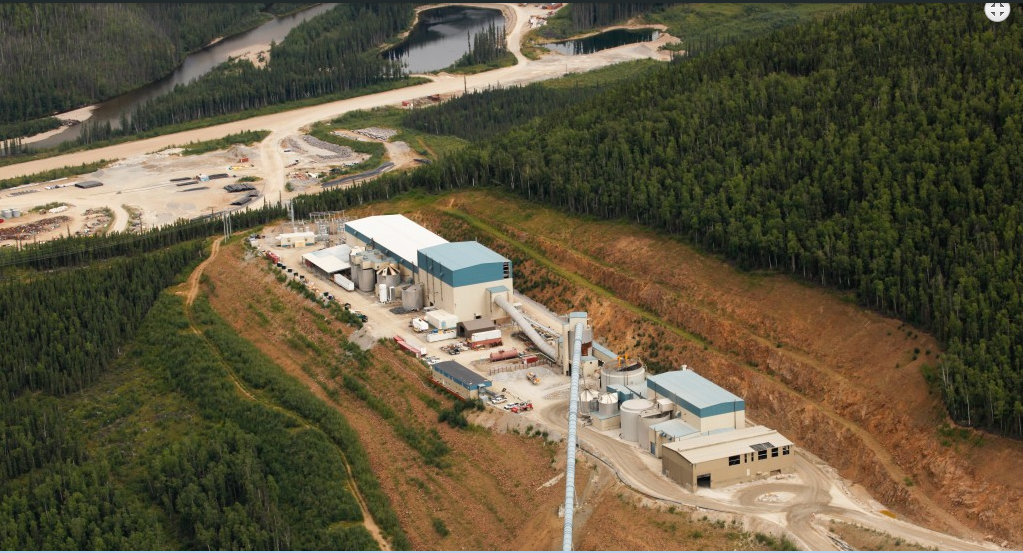
The Pogo mine and mill complex includes facilities for administrative offices, housing, meal service and emergency services. (Photo courtesy of the Pogo mine)

Update (April 16)Tim Ellis, KUAC – Fairbanks

Officials with the company that owns the Pogo gold mine in Interior Alaska say more workers have tested positive for COVID-19. (Read more)

Original story

A worker at the Pogo gold mine has tested positive for COVID-19. And he may have come in contact with up to 14 others at the mine that’s located 38 miles northeast of Delta Junction.

Pogo owner Northern Star Resources issued a news release Monday that said the worker tested positive after coming off a 12-day shift at the gold mine. The worker lives in Fairbanks and is with family and getting medical care. He hasn’t developed serious symptoms or complications, and he’ll be under observation and isolation for 14 days.

The company said eight other employees at Pogo who may have been exposed to the coronavirus were also in isolation Sunday at the mine while they were waiting for transportation from the site.

Those employees, and six others who were on leave but may also have been exposed to the virus, will all remain in isolation for 14 days and under observation and treatment if needed.

The Northern Star news release said work at Pogo mine will continue. The company said it will continue its social-distancing policies and stringent hygiene and cleaning standards. And it said “comprehensive sanitation on site” is under way.

Tammie Wilson resigns from Alaska Legislature to take state job

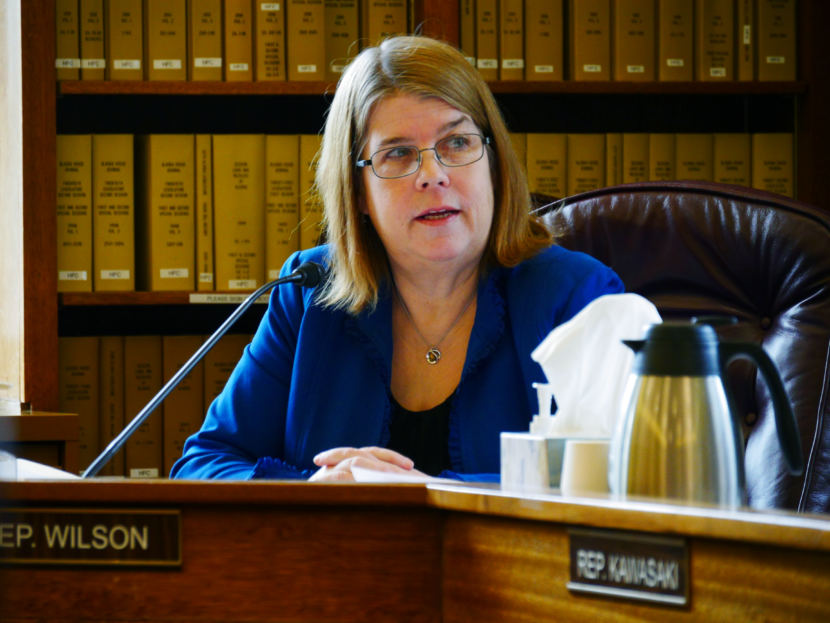
Rep. Tammie Wilson, R-North Pole, comments on a state operating budget amendment in the House Finance Committee in the Alaska State Capitol on March 6, 2018. (Photo by Skip Gray/360 North)

North Pole Republican Rep. Tammie Wilson surprised fellow lawmakers on Friday, when she announced she’s quitting the Alaska Legislature to take a job with a state agency that she’s often fought against during her 10 years in the state House.

Wilson’s announcement came at the end of the first week of the legislative session.

“Today I am formally tendering my letter of resignation from House District 3,” Wilson said.

Wilson is quitting to take a job with the state Office of Children’s Services. That’s the agency she’s tangled with many times, mainly over child-welfare cases.

“As many of you know, I have fought cases through the Office of Children’s Services, advocating for families, helping them through it,” she said.

That’s what Wilson was doing in 2016 when she asked for a grand jury investigation of the Office of Children’s Services, over her concern that the agency was increasingly removing children from troubled homes. She said she had reviewed records that showed the agency was in some cases violating the law by removing kids and placing them in foster care.

“They have rules and regulations that they had put in place. They had training. What we have found out is that they’re just not following (the law). And what happens is parents and children are being ripped apart from each other, and have no chance of being reunited,” she said.

On Friday, Wilson told lawmakers that she’ll be working at the office in Fairbanks, which will enable her to monitor those child welfare cases.

“There are times (when) the Office of Children’s Services needs to step in. But most of the time, we just need to surround our families with the resources that they truly need. And that’s the opportunity that I’ve been given,” she said.

A state Department of Health and Social Services news release issued Friday evening stated that Gov. Mike Dunleavy and department Commissioner Adam Crum had created a policy adviser role in the commissioner’s office, and named Wilson to the new post. The release says Wilson will, “act as a parent resource and help support family resiliency, by helping families navigate the child-welfare system and by working with (the Office of Children’s Services) on positive reform.”

“My biggest goal here is not just to help parents through the system, but try to get it so they’re not in the system,” Wilson said.

House members followed Wilson’s announcement with bipartisan bonhomie, regaling her with tributes, like House Speaker Bryce Edgmon, an independent, who singled-out her work ethic and called her “perhaps one of the hardest working – if not the hardest working – legislator.”

Others, like Juneau Democrat Sara Hannan, praised the conservative Republican’s willingness to work with members of the other party on some issues.

“I represent a district that’s very different from House District 3. And I did not expect to find a mentor in her,” Hannan said.

Still others, like Bethel Democrat Tiffany Zulkosky, praised her dedication to children’s issues and her support for legislation that protects the rights of Alaska Native families, like the Indian Child Welfare Act (ICWA).

“I always really loved how much you championed the work of the Tribal Child Welfare Compact, and really believe in ICWA,” she told Wilson.

Wilson didn’t return calls Saturday to comment on how much she’ll be paid and when she’ll begin the new job. There’s already concern among some legal observers over whether state law allows an ex-legislator to fill a newly created job in the executive branch within a year of leaving the Legislature.

As for her vacant seat, state law requires the governor to appoint a person of the same political affiliation within 30 days of a lawmaker’s departure. The state GOP requires local party officials to send a list of prospective replacements to the governor.

Editor’s Note: This story has been updated to reflect that the legal concerns are specifically about an ex-legislator filling a newly created job in the executive branch within a year of leaving the Legislature.

Denali Park road could be closed due to sloughing roadway

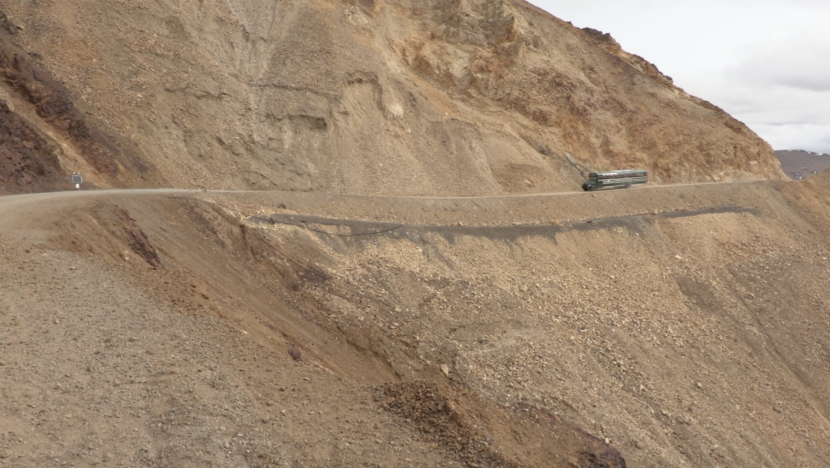
A tour bus drives past the site of the Pretty Rocks landslide at Polychrome Pass, in Denali National Park and Preserve. The old road bed can be seen below. (Photo by Joey Mendolia / Alaska’s Energy Desk)

The road into Denali National Park could be closed next summer at mile 43, the National Park Service said this week. That’s just east of a where portion of the road traversing a slope, is sloughing.

The long problematic section is in the Polychrome Bluffs, at a spot known as “Pretty Rocks,” where warmer temperatures and heavy summer rains have increased melting of permafrost, and caused landslides.

Denali National Park spokesperson G.W. Hitchcock said the 300 foot section of road had slumped 7 feet from grade as of early November.

Hitchcock said the park is looking at getting a road crew to the area in February to begin repairs, while soils are more frozen. Backfilling with gravel has been employed to restore the road grade in past years, but Hitchcock said that’s challenged by the increasing depth of the slump.

Hitchcock said extent of next summer’s road closures will be unclear until crews begin work at Pretty Rocks. It’s just one of numerous places where unstable soils threaten Park Road. He said longer term solutions, including building bridges, or re-routing the road, are being evaluated.

According to a Park Service press release mile 43 is a good closure point because there’s room to turn around traffic, including shuttle and tour buses. Road closures at that milepost would cut off vehicle access to points west along the 92 mile Park Road, including the Eielson Visitor center at mile 66, and Kantishna and Wonder Lake at miles 85 and beyond.

Hitchcock said the park service is working with people who own property along the road west of the potential closure point, as well as the park bus contractor Doyon Aramark.

Citing executive order, Fort Wainwright evicts public employee union

(Photo courtesy of U.S. Army)

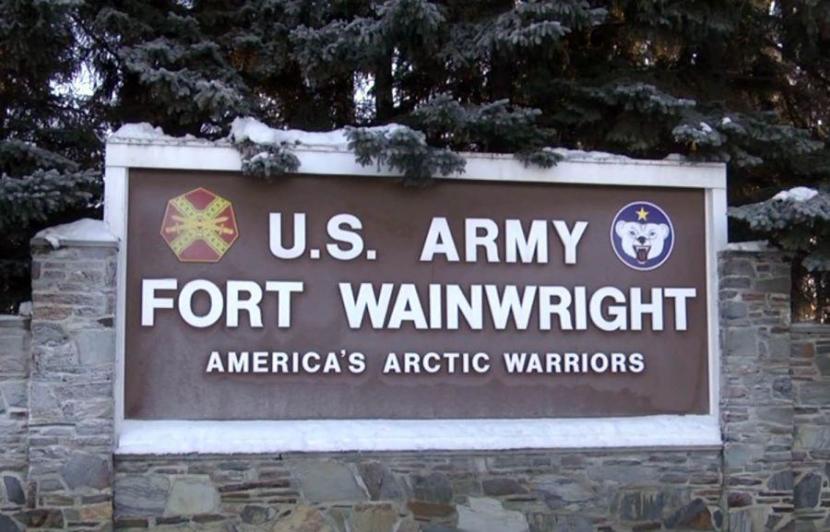
Fort Wainwright officials are evicting the union that represents federal employees from its office on post.

The head of the American Federation of Government Employees Local 1834, which represents 1,000 or so federal workers on Fort Wainwright, said the union and post officials have for decades maintained good relations — until recently.

“It’s been within the last year that the relationship has completely soured,” said Local 1834 President Bill Ward.

He said that’s when Wainwright officials told him that a new federal policy requires the union to pay rent for office space on post at fair market value. Ward refused and was told the union will have to rent space off-post.

“We got the notice that we’re evicted from the offices that we’ve been in since 1972, and that we’ve got 30 days to get out,” he said in an interview last week.

Ward said post officials also cut the amount of on-duty time he can spend working on union issues by 75%. He said Army officials cite executive orders issued last year by President Donald Trump to justify their actions.

“The stance that we’ve been given was that, ‘It’s an executive order, and we have to follow it,’” he said.

Ward said more than two dozen AFGE officials use the Wainwright office for training and other official business.

Fort Wainwright officials declined interview requests to talk about the dispute, citing ongoing collective bargaining. But they emailed a statement that said they’re evicting the Local 1834 “in accordance with Executive Order 13837, which prohibits government agencies from providing free or discounted office space to labor organizations.”

“They want to destroy the union,” said Dave Owens, the national representative for AFGE’s Alaska office. “Their goal is to get rid of us, so we’re actually no longer a hindrance.”

Owens works with all the AFGE locals in the state, which represent about 10,500 federal employees in Alaska. He said it’s important for the union to have a presence on post, because it’s much easier for civilian workers to stop by during lunchtime or before or after work.

“It’s convenient to the employees,” he said in an interview Tuesday.

Owens said Fort Wainwright’s local has accepted offers from the Laborers Union and the International Brotherhood of Electrical Workers to use their offices in Fairbanks. And he said that’s probably what the AFGE Local 1101 representing workers at Joint Base Elmendorf-Richardson in Anchorage will do when base officials order them to pay rent or move.

“They’re going to kick us off the base,” he said. “That’s on JBER. That will happen within the next two months.”

JBER officials said Wednesday they’re negotiating with the Local 1101, but they haven’t issued an eviction notice.

AFGE anticipates it will have to leave offices at JBER, as well as at the Department of Veterans Affairs regional office in Anchorage, sometime around December or January. Those two installations have around 2,100 employees currently served by the union, according to Owens, ranging from tradesmen to office workers and nurses. The union said it’s looking for offices off-base.

Owens said AFGE has successfully fought many of the executive order’s provisions in court and will continue to do so.

Alaska Public Media reporter Zachariah Hughes contributed reporting in Anchorage.

Denali wolf sightings hit record low

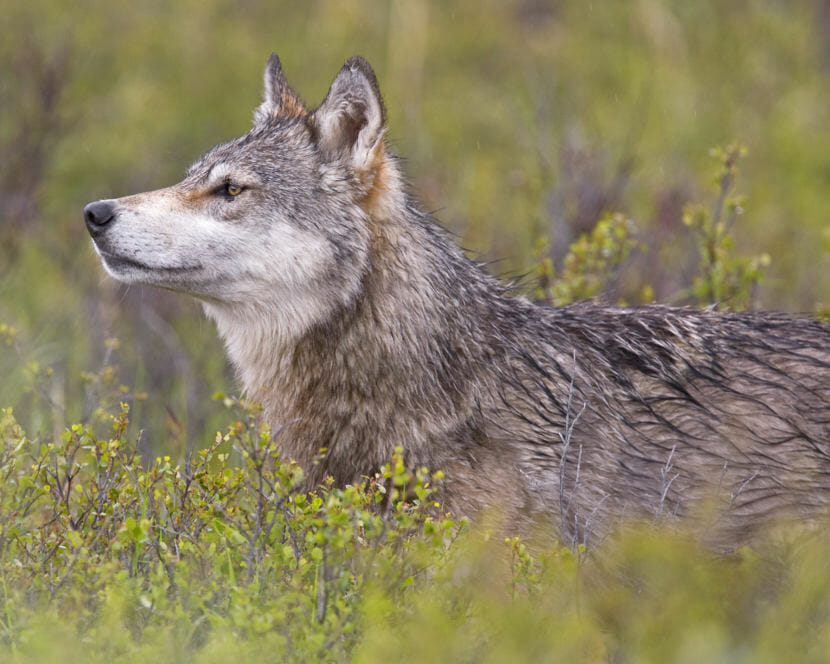
A wolf in Denali National Park and Preserve in June 2010.
A wolf in Denali National Park and Preserve in June 2010. (Public domain photo by Ken Conger/National Park Service)

Wolf sightings hit a record low along the road into Denali National Park and Preserve this summer, and that’s driving wildlife advocates to push for a halt of wolf hunting and trapping on state lands along Denali’s northeastern boundary, where park road area wolves often roam, and are sometimes killed.

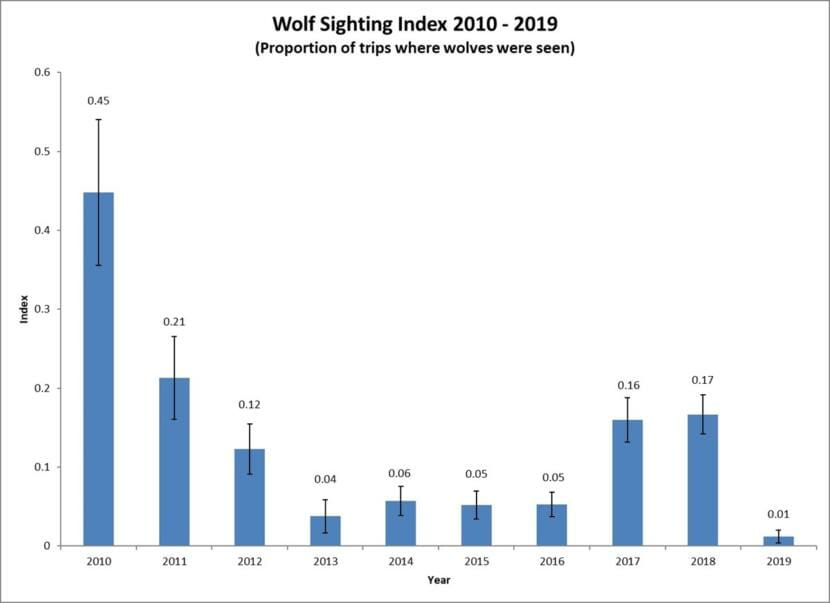
A report recently issued by the National Park Service shows only 1% of agency wildlife survey trips along the road into Denali National Park this summer recorded wolf sightings.

NPS biologist Bridget Borg said that’s the worst number since trained park observers began officially tracking wildlife sightings along the road into Denali in the mid-1990s. Viewing percentages previously ranged from as low as 3% and as high as 45%.

Borg said the currently poor wolf sighting percentage is likely primarily representative of natural factors.

“Just there being a lot of variability in where wolves den, and the size of packs over the years,” she said. “Not to say there aren’t the potential for other things to influence that outside of the park.”

Biologist and wildlife advocate Rick Steiner has been trying unsuccessfully for years to get the state to close wolf hunting and trapping on state lands along Denali’s northeastern boundary. Steiner points to the damaging impact that the loss of an alpha wolf can have on a pack, and he makes an economic argument for why the state should care, correlating recent poor wolf viewing opportunity with dips in Denali visitor numbers and spending.

“This is kind of the goose that laid the golden egg for Alaska — if we protect it and help restore it,” he said.

A graph showing the number of wolf sightings each year from 2010 to 2019.
(Graphic by National Park Service)

More than 600,000 people visit Denali annually, but there’s state resistance to curtailing boundary area wolf harvest by a few hunters and trappers. Closure requests from Steiner and other Alaskans have been regularly turned down.

Alaska Department of Fish and Game Commissioner Doug Vincent-Lang recently rejected the second of two such petitions submitted since July. The commissioner’s spokesperson Rick Green explained why.

“Data from the Park Service isn’t a very specified area, and when we manage more of a habitat area — much larger scale — and haven’t seen the evidence to constitute an emergency on the wolf population,” he said.

Green said that means it’s an allocation issue and up to the state’s Board of Game, which consistently hasn’t granted requests to re-establish a no-wolf-kill area, scrapped by the board in 2010. In a July interview, game board chair Ted Spraker pointed to wolves’ resilience and the potential for wolf viewing to rebound.

“It could all change next year if one of these eastern packs dens close to the road,” he said.

But halting wolf hunting and trapping in the nearby northeast boundary area could also help, according to the Park Service’s Borg. She points to better wolf viewing during a decade-long span when boundary area wolf harvest was closed.

“When the area adjacent to the park was closed to hunting and trapping, it was correlated with higher sightings. So we think that bears replication to see if there’s a similar effect,” she said.

NPS and wildlife advocates have submitted separate northeast park boundary no-wolf-kill buffer proposals to the state’s game board for consideration at a March 2020 meeting. But any change would take place after the wolf trapping season.

Steiner is pushing for an emergency game board meeting prior to the Nov. 1 start of trapping season.

Site notifications
Update notification options
Subscribe to notifications