A sold sign stands outside a home in Wyndmoor, Pa., on June 22, 2022. Two recent studies suggest that prospective homeowners will have to earn more than $100,000 annually to afford a typical home in much of the U.S. (Matt Rourke/AP)
You’ve heard that it’s a tough time to buy a house, but exactly how tough is it?
A pair of recent studies predicts that you’d need to earn more than $100,000 per year to comfortably afford a typical home in much of the U.S. right now.
That’s a major jump from just four years ago, and it comes at a time when fewer homes are on the market and mortgage rates and housing prices have been high. House hunters, meanwhile, haven’t seen their wages increase at the same pace.
“Housing costs have soared over the past four years as drastic hikes in home prices, mortgage rates and rent growth far outpaced wage gains,” Zillow senior economist Orphe Divounguy said in a statement.
The six-figure threshold
A Zillow analysis released in February found that prospective homeowners would have to earn more than $106,000 annually to be able to buy a typical home in the U.S.
That’s an 80% increase from the $59,000 yearly income the website predicted a household would need to comfortably afford a home in 2020.
In a separate study released Monday, the financial website Bankrate suggested Americans would have to rake in $110,871 per year to afford a median-priced home, which the outlet says costs $402,343. That income level surged nearly 50% from its 2020 estimate.
“Home values are near record highs, and if you want a house, you have little choice but to pay a high price,” Bankrate housing market analyst Jeff Ostrowski said.
The national median household income, according to data from the U.S. Census Bureau, is around $74,500.
Location, location, location
Of course, those figures are based on national data, and home prices vary depending on where you want to live.
Bankrate found that aspiring homeowners in 22 states and Washington, D.C., should earn at least $100,000 per year to afford a typical home. Buyers in the South and Midwest require less to pay for new digs than those in the West and Northeast.
Still, the 22 states requiring a six-figure income is an increase from the only six states (and D.C.) where that much money would have been necessary to buy a typical house in 2020.
The states that saw the largest increase in the annual income necessary to buy a typical home were Montana, Utah, Tennessee, South Carolina and Arizona.
In Seattle, New York City, Boston and four major metro areas in California — San Jose, San Francisco, Los Angeles and San Diego — prospective households would have to earn more than $200,000 per year to afford a typical home, according to Zillow.
Memphis, Cleveland, New Orleans and Birmingham were among the most affordable cities.
But Zillow found only three major metro areas in the U.S. where homebuyers making the median income could afford a typically priced home: Pittsburgh, St. Louis and Detroit.
Copyright 2024 NPR. To see more, visit https://www.npr.org.
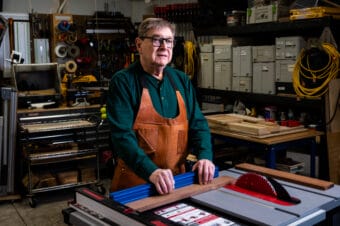
Tom Noffsinger stands in his garage workshop, where he uses a SawStop table saw for woodworking at his home in Raleigh, North Carolina. About 20 years ago, Noffsinger had a table saw accident and almost lost his thumb. (Cornell Watson for NPR)
One day about 20 years ago, Tom Noffsinger experienced every woodworker’s worst nightmare: One final cut on his table saw before knocking off for the day turned into a trip to the emergency room. It was afternoon, and he’d been in his shop since morning.
“I was a little tired. I should’ve quit,” Noffsinger says. “I ran my hand right into the blade and nearly cut my thumb off.”
Table saws are widely considered the most dangerous power tool, and approximately 30,000 blade-contact injuries require medical treatment each year in the United States. About 4,000 result in amputations that can be career-ending for some professional carpenters and contractors. The Consumer Product Safety Commission says that when a person is hospitalized, the societal cost per table saw injury exceeds $500,000 when you also factor in loss of income and pain and suffering.
Noffsinger was lucky by comparison. Although he needed 14 stitches, doctors at a hospital near his home in Raleigh, N.C., were able to save his thumb. Reconstructive surgery followed. Even so, all these years later, he says he still has recurring pain.
Noffsinger opens a wooden box that he made using a SawStop table saw, which uses technology to prevent serious injury. (Cornell Watson for NPR)
Woodworking has been a nearly lifelong passion for Noffsinger, and he was no stranger to power tools. Back before his accident, he’d seen a demonstration of a new and much safer type of table saw at a local woodworking store. Marketed under the name SawStop, it was designed to stop and retract the spinning blade within a few milliseconds of making contact with flesh — fast enough to turn a potentially life-changing injury into little more than a scratch. Noffsinger’s table saw wasn’t equipped with the high-tech safety feature because manufacturers aren’t required to include it.
But that may be about to change. The federal Consumer Product Safety Commission (CPSC) appears poised to mandate a SawStop-type safety brake on all new table saws sold in the United States. The move would follow years of failed efforts and false starts by the agency to impose such a standard.
Manufacturers have consistently fought a new rule, saying it would raise the price of table saws for consumers. Safety advocates liken it to air bags in cars and argue that the benefits outweigh the costs.
Over the years, Republicans on the commission have sided with the power tool industry in opposing further regulations. But with new Biden administration appointees, proponents on the commission appear to have a majority. In October, the CPSC voted to move forward on the mandate, which is expected to get approval later this year.
“We’ve got a [proposed] rule that is designed to prevent tens of thousands of medically treated table saw injuries per year,” says CPSC Commissioner Richard Trumka Jr. “That’s something that I very much support.”
Proponents say a new standard is long overdue
Former acting CPSC Chairman Robert Adler says a standard requiring a blade brake “is long, long overdue.” An average of more than 10 people per day in the U.S. suffer amputations on these types of saws, and “that is staggering when you think about it,” he says. “I’m so thrilled to see it’s very likely to occur now.”
Adler, who was appointed by President Barack Obama in 2009 and served on the commission for 12 years, is a veteran of the fight for a new table saw safety standard. He calls the failure to require this type of feature on saws “the greatest single frustration I felt” while on the commission. He says that’s because table saws are far and away the most dangerous tool that most Americans ever buy.
SawStop’s competitors are represented by the Power Tool Institute, the trade group that includes big power-tool makers such as Bosch, DeWalt and Milwaukee, as well as lesser-known brands. The group maintains that the new safety rule would be an overreach.
“Small manufacturers may go out of business,” Susan Orenga, the Power Tool Institute’s executive manager, said at a public hearing on the new rule in February. Requiring the safety brake would raise the cost of table saws too much, she said. “Sales of table saws will decrease, resulting in unemployment, and the government could be creating a monopoly.”
The industry has long maintained that since SawStop owns patents surrounding the safety technology, the company would unduly benefit from such a government-imposed standard. But at the same hearing where Orenga spoke, SawStop pledged to allow manufacturers to produce safer saws regardless of those patents.
Table saw safety comes at a price
Exactly how much the safety brake would add to the price of a saw is unclear. An entry-level SawStop retails for $899. A comparable saw without the safety technology goes for several hundred dollars less.
But with the economies of scale enjoyed by larger competitors, the price difference could be narrower down the road.
SawStops retail for hundreds of dollars more than the competition, depending on the manufacturer and the type of table saw. Unlike less expensive brands sold in big-box stores, SawStops are at the premium end of the market. (Cornell Watson for NPR)
Since SawStop came onto the market in 2004, tens of thousands of the company’s table saws have been sold in the U.S., and the company estimates that this has saved tens of thousands of professional and hobbyist woodworkers from injury.
The key to the SawStop is its active injury mitigation (AIM) system, which sends a small electrical charge through the saw blade, and because skin is conductive, the system senses whether the blade is touched. Basically, wood doesn’t conduct electricity, but people do. When a hand comes in contact with the blade on a SawStop, this triggers a brake to stop the blade from spinning. This occurs so quickly that there’s not enough time for a serious injury.
Sally Greenberg, executive director of the National Consumers League, has been interested in table saw safety since first hearing about the SawStop technology on NPR in 2004. Like Adler, she has been frustrated by the slow progress on a new safety standard.
“This is a category of product that could be made in this case 100% safe, but because of industry foot-dragging and resistance and lobbying power in Congress and with agencies, you have a situation of two steps forward, one step back,” she says.
Until recently, SawStop competitors were largely prevented from developing AIM-type technology by a web of patents now owned by German-based TTS Tooltechnic Systems, which bought SawStop in 2017. But 20 years after the first SawStop was sold, most of those patents have now expired.
SawStop vows to free up a key patent for rivals
However, one key patent — the “840” patent — is not set to expire until 2033. To stave off potential competitors, it describes the AIM technology very broadly. In a surprise move at February’s CPSC hearing, TTS Tooltechnic Systems North America CEO Matt Howard announced that the company would “dedicate the 840 patent to the public” if a new safety standard were adopted. Howard says that this would free up rivals to pursue their own safety devices or simply copy SawStop’s. At the hearing, he challenged them “to get in the game.”
Howard’s concession follows years of bad blood between SawStop and the larger power tool companies. Before starting SawStop, the inventor of its technology, Steve Gass — himself a patent attorney — tried to interest manufacturers in licensing his idea. He got no takers. And years later, when Bosch Power Tools began selling a saw with its own version of an injury-mitigation system, SawStop won a patent-infringement suit against the company. TTS subsequently agreed to let Bosch sell the saw, but Bosch never reintroduced it to the U.S. market.
That lawsuit, however, has been cited by the industry to buttress its claim that any move to develop similar safety features would be aggressively met by SawStop and TTS.
There are other industry objections as well. Orenga notes that manufacturers already comply with a voluntary standard requiring blade guards and anti-kickback features designed to prevent a blade from catching a piece of wood and throwing it violently back at the operator.
“Flimsy, poorly functioning guards” don’t help
But according to the CPSC, it’s common for table saw users to “remove modular blade guards,” often for reasons of “improved visibility” — in other words, because they can’t easily see the cut they are trying to make.
As a result, the CPSC says, it has seen no discernible change in the number of blade-contact injuries since the industry adopted a voluntary requirement for improved blade guards and other safety features in 2010. In short, the voluntary standard “doesn’t adequately reduce the risk of injury,” Trumka says, which is why the commission is pursuing a mandatory standard.
Jim Hamilton, who hosts a popular woodworking channel on YouTube, says most table saw injuries could be prevented if woodworkers consistently used a blade guard. “Sadly, a culture has developed around many power tools, including table saws, that suggests safety devices are unnecessary or obstructive,” he says, noting that even “veteran workers, including those who have worked at the highest levels of their trade, are seriously injured every day.”
The situation is made worse, Hamilton says, by manufacturers including “flimsy, poorly functioning guards” that actually encourage users to remove them.
Table saws cause a “vaporizing” type of injury
Richard Bodor, a San Diego-based plastic surgeon, is all too familiar with the kind of catastrophic hand injuries that saw blades can cause.
The one he remembers most vividly occurred about 25 years ago, before SawStops were on the market. While he was operating one night to replant an amputated finger, the emergency room called about another “four-finger replant” being referred from Bodor’s colleague — a senior surgeon and mentor. At first, Bodor thought his colleague was simply inquiring about another patient. He soon realized it was the surgeon himself who was injured.
That surgeon had been operating a table saw when his glove caught the saw blade and pulled in his hand. Bodor says the injured surgeon was surprisingly calm during pre-op, as the two discussed the complicated procedure to reconstruct the man’s mangled hand.
Referring to each of his shredded fingers, the injured surgeon applied his own expertise to the reconstruction. “‘I think this finger is going to make it. Now, I’m a little worried about this guy. However, I think this small one might be toast,'” Bodor said, recalling their conversation.
After a long recovery, Bodor said, the man eventually was able to resume surgeries. But these types of saw injuries are especially challenging and difficult to repair, he says. Unlike a clean amputation from a sharp cooking knife, he explains, a table saw blade actually obliterates the tissue. “It’s a vaporizing type of injury,” he says, adding that replantation typically requires hours of meticulous microsurgery.
But not everyone is convinced that a new safety standard alone will prevent such devastating injuries. Dale Juntunen owns a contracting firm in Deer River, Minn., that has been building homes for more than 40 years. “In all the years I’ve been in business, we’ve never had anybody get hurt” on a table saw, he says.
“If it’s mandated, you’re going to have people hanging on to their old saws forever,” Juntunen says. “And, you know, that’s when I’d say there will be more injuries on an old saw.”
Noffsinger purchased a SawStop when he returned from the hospital after his table saw injury, and he has been using it ever since. (Cornell Watson for NPR)
Noffsinger, the North Carolina hobbyist woodworker, says even though he was injured, he’s not sure mandating new safety technology on all saws is the best idea.
Still, when he returned home from the emergency room after nearly severing his thumb on a saw blade, he was met by his wife, “hands on her hips,” he says. “She said, ‘You will buy that SawStop thing.’ So that’s what I did.”
Copyright 2024 NPR. To see more, visit https://www.npr.org.
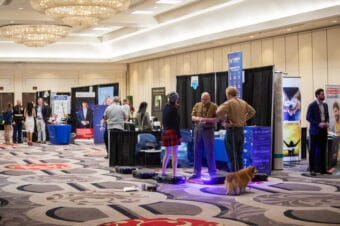
Attendees visit booths at the RePlatform conference in Las Vegas in March. The conference crowd was a hybrid of anti-vaccine activists, supporters of former President Donald Trump and Christian conservatives. (Krystal Ramirez for NPR)
Entrepreneurs and influencers from across a spectrum of conspiracist and religious communities gathered in Las Vegas in March to discuss building an “uncancellable” future together.
But the conference almost didn’t happen. A few weeks before the RePlatform conference was scheduled to begin, the event organizers lost access to their money from ticket sales. Their payment processor, Stripe, had frozen their account.
“Stripe just said, well, we’re going to hold 70%. And what they do is they say, we’ll give it back to you after the show,” speaker Dan Eddy told the audience from the Vegas stage.
Conveniently for everyone involved, Eddy is the chief operating officer of an alternative payment processor, GabPay. It’s a third-party company that works with the social media platform Gab.
“We’ll process for you. No problems, no questions asked. We’ll do it,” Eddy described telling the event organizers.
Dan Eddy (left), the chief operating officer of alternative payment processor GabPay, and Lonnie Passoff, who runs a payment processing company that works with the social media platform Gab, speak at the RePlatform conference in Las Vegas last month. (Krystal Ramirez for NPR)
For people in the business of opposing vaccination or unwelcome election results, mistrust of big financial institutions and tech companies is common. Increasingly, they can find alternatives being built by a community with a head start in developing the tools of the so-called freedom economy: the far right.
“Leave all these woke corporations behind”
At RePlatform in Las Vegas, GabPay got to be the hero. But it’s also possible that the company was part of why Stripe froze the conference’s money in the first place. A few weeks earlier, a news story by Mother Jones about the event highlighted a promotional appearance that GabPay’s executives had made on far-right conspiracy theorist Stew Peters’ streaming show.
GabPay founder Lonnie Passoff’s interview with Peters included an exchange where the two sarcastically dismissed the idea that antisemitic conspiracy theories are hate speech.
The company also recently began processing payments for the prominent white nationalist website VDARE. But the audience at the RePlatform event in Vegas didn’t hear any of this from the GabPay speakers. The crowd was a hybrid of anti-vaccine activists, supporters of former President Donald Trump and Christian conservatives. Most were entrepreneurs in these movements, looking for ways to build what they call the “freedom economy.”
Chris Widener, founder of the Red Referral Network, speaks at the RePlatform conference. (Krystal Ramirez for NPR)
“We are here together because we are people who have either been canceled or we really understand what is going on in America today as it relates to cancelization,” conference emcee Chris Widener told the crowd.
While many of the event’s panels delivered familiar complaints about “woke” culture and media, speakers from businesses sponsoring the event leaned into pitches aimed at drawing the audience away from the conveniences offered by large banks, financial institutions and tech providers.
“Leave Amazon, leave GoDaddy, leave all these woke corporations behind and start spending money with organizations that have your best interests in mind,” said Megan Greene of Patmos, a web-hosting company named after the Greek island that the Christian apostle John is said to have been exiled to.
It’s hard to say just how large the market of conservative-focused businesses is. One recent report from a conservative shopping app estimated that there are at least 80,000 American small businesses in what it calls the “freedom economy,” from coffee sellers and razor companies to dating apps and plumbers. Some of these businesses aren’t small: At one point, pillow salesman turned pro-Trump conspiracy theorist Mike Lindell’s MyPillow company had almost $300 million in revenue.
A matter of survival
In some religious communities, building a parallel society is an old idea, according to Amarnath Amarasingam, a professor of religion at Queen’s University in Ontario. One example is fundamentalist Christians after the Scopes Monkey Trial in 1925.
“They got destroyed in kind of the media sphere. They were depicted as this kind of backwater, Bible-thumping dummies,” he said. “They retreated from the public, and they created a kind of network, a kind of parallel society, their own publishing houses, their own media, their own magazines, newsletters and so on.”
A woman sits at the Christian Chamber of Commerce booth at the RePlatform conference. (Krystal Ramirez for NPR)
But the entrepreneurs gathered in Vegas represent a broader fusion of communities reacting to years of COVID-19, stolen election narratives and transgender visibility, he said. A shared, embattled subculture.
“They feel like they’re on the outs,” said Amarasingam. “They believe that the governments are against them, intellectuals are against them, that science is moving in the opposite direction, that science education is moving in the opposite direction. So they just see a lot of trends that they feel are against traditional Christian values, family values.”
And adding in a spoonful of current-day conspiracism helps to frame the building of a separate, untainted economy as a matter of survival.
“Tragedy in the real world”
The situation that the conference itself faced with Stripe was a fitting, if muddy, illustration of a concern often referred to as “debanking.” The power that financial organizations have to freeze or shut down accounts is real. And while figures on the right have often framed debanking as political persecution, it’s nearly impossible to know how often it happens. That’s because banks and payment processors rarely spell out their reasons, according to Jessica Davis, who runs Insight Threat Intelligence.
Stripe, for instance, did not comment on what happened with the conference, citing customer privacy.
In many cases, Davis said, people are cut off over mundane, technical violations, such as someone using their account the wrong way.
“But there is social capital to be gained by a lot of these people who are claiming that they have their accounts closed,” she added.
On the other hand, there is another category of very high-profile examples, in which extremists have lost access to payment services or social media accounts after violent events.
“The bulk of it happens as a response to some tragedy in the real world,” said Megan Squire, a computer and data scientist tracking extremism with the Southern Poverty Law Center.
White nationalists, neo-Nazis and members of the alt-right clashed with counterprotesters during the Unite the Right rally in 2017. One aftermath of that event was that some far-right groups lost access to financial and technology platforms. (Chip Somodevilla/Getty Images)
She said waves of debanking and deplatforming have followed violent episodes like the deadly Unite the Right white nationalist rally in Charlottesville, Va., in 2017 and a number of mass shootings explicitly motivated by hate. Another big wave came after the Jan. 6, 2021, Capitol riot. Squire said that for years, she has watched some far-right extremists experiment with building infrastructure to get around these bans.
“They’ll talk about how we need this payment [platform]. … We need to make our own web-hosting companies. We need to make our own social media. We need to make our own domain registrars. We need to make our own computers,” she said.
Building those tools is a huge challenge, requiring planning, technical skill, money and, crucially, finding a sustainable customer base. Squire says GabPay is one of many such experiments, born out of necessity. It’s part of a dream that the founder of Gab has been promoting for years.
Attendees visit booths at the RePlatform conference in Las Vegas in March. The conference crowd was a hybrid of anti-vaccine activists, supporters of former President Donald Trump and Christian conservatives. (Krystal Ramirez for NPR)
“The broadest audience possible”
Gab is a glitch-prone alternative to X, formerly Twitter, that launched in 2016 in response to perceived anti-conservative censorship at major social media companies. It bans pornography but otherwise brands itself as a free-speech absolutist space by explicitly allowing hate speech that other mainstream platforms prohibit.
One of Gab’s most notable active users was the man who shot and killed 11 people and wounded six at a Pittsburgh synagogue in 2018. The platform’s founder, Andrew Torba, has said he doesn’t hate Jews but has also said they have no place in what he calls his conservative Christian movement.
“And it’s really thanks to the folks on Gab that I became aware of these issues: issues like [the] Jewish Question, issues like Zionist power and Zionist Occupied Government,” Torba said on an episode of his podcast in November 2023.
“‘The Jewish Question’ is literally a Nazi term,” said religion professor Amarasingam, “about what to do with the Jewish population in areas controlled by the Third Reich.”
Asked for comment, Torba responded, “Christ is King” to NPR in a post on X. The phrase is a common, uncontroversial expression of faith for many Christians, but in recent years it has also become popular among the far right and conspiracists. Torba says he uses it as a regular signoff on his emails after learning that his doing so offended Jonathan Greenblatt at the Anti-Defamation League.
Onstage at the RePlatform event in Las Vegas, GabPay’s Eddy described Gab and Torba as “all about being First Amendment. And, yes, they have a Christian slant because the guy that built it is a Christian. So he goes out and says, ‘I’m a Christian. I think you should have Christian values.'” He added, “Whether you agree with that or not is inconsequential to the fact that he can say it and so can you.”
NPR spoke with several banks and other organizations at the conference about Gab and GabPay’s background. But as brands there to promote free speech absolutism, none wanted to be seen as unwilling to engage or do business with them.
Eric Ohlhausen, chief strategy officer at Old Glory Bank, stands in front of his company’s sign at the RePlatform conference. (Krystal Ramirez for NPR)
Eric Ohlhausen, with the conservative Old Glory Bank, said his company will do business with anyone operating legally.
“Our whole premise is one to not censor, and there might be organizations who promote policies that maybe, personally, I don’t adhere to, but we really welcome all as customers,” said Ohlhausen.
Ashton Cohen is the creative manager of the conservative media nonprofit PragerU. (Krystal Ramirez for NPR)
“My mother was pushed out of her country because she was Jewish, because she was persecuted for being a Jew in Iran. And the very people who support that regime today and that mindset today are on the left,” said Cohen.
Anti-vaccine activist Steve Kirsch helped organize the RePlatform conference. (Krystal Ramirez for NPR)
Wealthy anti-vaccine activist Steve Kirsch, who helped organize the RePlatform conference, said in a written statement: “I don’t support racism and never have. People are dying, and lives are on the line. We want to reach the broadest audience possible.”
Within each of these movements, the benefits of supporting each other appear to outweigh any reputational risks. There was a clear message at RePlatform: So long as you’re not breaking laws, let’s do business.
Copyright 2024 NPR. To see more, visit https://www.npr.org.
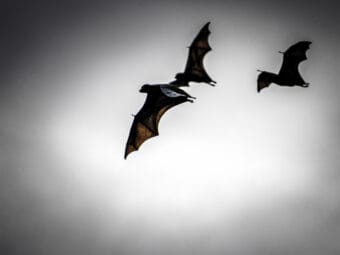
When Australia’s black flying foxes are well-fed, they tend to be healthy. A lack of food stresses the bats — and stress causes them to shed, or release, viruses into the environment. (Ko Konno/Getty Images/iStockphoto)
Almost every pandemic we’ve seen over the last century has come from a virus that’s spilled over into humans from an animal. “Generally, pandemics are seen as a biomedical problem,” says Raina Plowright, an infectious disease ecologist at Cornell University. “Certainly, once the pandemic is underway, it is a biomedical problem because you need to have vaccines, you need therapeutics, you need testing,” she says.
“But the genesis of the pandemic is actually an ecological problem,” says Plowright. That is, it’s due to the complex interactions between wildlife, habitat, climate and people.
But there’s been relatively little discussion about a spillover’s ecological origins and how to stop it from happening in the first place. Plowright found only four publications on how the coronavirus circulates in natural bat populations. That’s compared to the tens of thousands of research articles she’s pulled up on the coronavirus spike protein, which has been the focus of vaccines and efforts to understand how the virus enters and infects our cells.
Now, in a new perspective paper in Nature Communications, Plowright and a team of 24 ecologists, infectious disease scientists and policy experts have distilled their collective observations into three recommendations to prevent spillovers and halt epidemics and pandemics before they even start.
José Chies, an immuno-geneticist at Federal University of Rio Grande do Sul in Brazil who wasn’t involved in the research, says the paper demonstrates the importance of proposing solutions based on the whole ecosystem at once. It’s something public health researchers call the One Health approach.
Human health is not something that should be considered in isolation, says Chies. “You should consider animals, microorganisms and environment altogether. It’s ecology in a broad approach.”
How flowers can stop spillovers
For Plowright, these ideas grew out of her work on black flying foxes in eastern Australia, which she’s studied for over two decades. These bats are a sight to behold.
“They have a wingspan of a bald eagle,” says Plowright, “and they have these big beady eyes to see in the dark. Little pointy noses.”
Black flying foxes feed on nectar. And they’ll fly hundreds of miles to find it. “They plunge their heads into the flowers and become covered in pollen,” she says. “And then they move that pollen from forest to forest, so they’re actually really important pollinators in the Australian forest system.”
When black flying foxes are well-fed, they tend to be healthy. “But over time,” says Plowright, “the trees that produce flowers in winter were selectively cleared” for agriculture and property development. “And when this happened, the bats then had to move into human-dominated environments — so farmlands and cities — to find alternative food.”
A lack of food stressed the bats — and stress causes them to shed, or release, viruses into the environment. In eastern Australia, this included the deadly Hendra virus, which the flying foxes shed in their urine and feces.
When horses have become infected with Hendra from bat excretions, the virus has a fatality rate of 80%. Only seven people have fallen ill from infected horses, but Hendra killed four of them.
“It’s a very scary virus,” says Plowright. It’s especially concerning because each time the virus finds its way into humans, it gets another opportunity to evolve and become more infectious.
(Hendra and a variety of other pathogens don’t harm bats, however. The prevailing explanation, Plowright says, is that bats “are very good at controlling viral replication while limiting the inflammation that would usually be associated with feeling sick.”)
When hungry and stressed bats roam into human settlements, it creates the perfect storm for a Hendra spillover from bat into horse and occasionally from horse into human.
But here was the crucial observation: Whenever the remaining trees that hadn’t been cut down produced a big pulse of nectar in the winter, “we found the bats actually emptied out of these human areas and went back to native forests and started feeding back in these trees,” says Plowright. “And when that happened, the spillover stopped.”
In other words — the ecological problem of spillover had an ecological solution. “And if spillover doesn’t happen,” she says, “then a biomedical intervention isn’t needed.”
Easier to reach the bat cave
Plowright’s work with the flying foxes suggested the tantalizing possibility that spillovers could be brought to a standstill simply by restoring these forests. And she figured this approach was likely to work elsewhere in the world. When she spoke with other researchers during a series of workshops and meetings she convened in 2022, she heard echoes of the flying fox story playing out all over the world — all pointing to a planet in which humans and wildlife are bumping into each other more often as natural habitats are being destroyed.
A virologist at Rocky Mountain Laboratories who’s studied bats in the Congo for a decade explained the trek to their field site used to take days and involve motorbikes and dugout canoes. Now it’s a short few-hour drive down a two-lane highway. A researcher from the Pasteur Institute in Cambodia described how they once had to machete their way through the jungle to study a particular bat cave. Now they can drive there. A colleague from Uganda said they used to research bats in the forest, but now the bats live in the cities. That’s because as habitat is cleared and native food disappears, the bats seek alternatives like “mango trees in backyards, fig trees for shade, flowering trees for ornamentation,” says Plowright.
“And so what I saw was this picture of this environmental degradation happening worldwide at a really rapid pace,” she recalls. “So of course, spillover must be becoming more likely.”
It was this set of collective observations, gathered over decades of research, that formed the basis for the three recommendations in the new paper. These strategies, the authors argue, should work for any animal harboring viruses with spillover potential, including bats, birds, rodents and primates.
The three recommendations
First, they suggest protecting where and what animals eat.
“If animals have enough to eat,” explains Plowright, then they don’t have to move to new environments “to find food, which often is what brings them into higher encounter rates with humans and domestic animals.”
In addition, sufficient amounts of food mean less stress, which means “they’re more likely to be able to maintain a strong immune system and keep viruses in check.”
Second, the authors of the paper advise protecting where animals aggregate — where they “sleep, shelter, mate, socialize and raise their young,” as they write in the paper. Bats, for instance, can roost by the tens of thousands. By safeguarding the caves and canopies and other habitats where animals congregate — or introducing buffers around those spots to further minimize human disturbance — that reduces stress considerably too.
Finally, they propose keeping people at risk safe, which they admit isn’t an ecological solution but is just as crucial. “There are many communities who have contact with wild animals as part of their vocation or part of their culture,” says Plowright. And so the idea is to protect these individuals by providing adequate gear, like masks to guard against aerosolized viruses and PPE to prevent contact with animal fluids and excretions. Plowright says this effort also involves education and training, since some of her colleagues found that “when communities were aware of bat ecology and how important bats are to pollination, seed dispersal and insect consumption, they were less likely to harm or harass the bats, creating conditions where the bats were less stressed.”
The proposed solutions are simple enough to articulate. But Plowright acknowledges that implementing them won’t be easy.
“Land is extremely valuable,” she says. “It’s valuable for agriculture. It’s valuable for mining, for development, and nature doesn’t generate dollars.”
Still, for Plowright, the answer is clear. “Nature doesn’t stand up and say you have to fight,” she says. “It’s up to us to figure out a mechanism whereby we are protecting our future and the common interest of all.”
Copyright 2024 NPR. To see more, visit https://www.npr.org.
Transcript :
AILSA CHANG, HOST:
Humans have spent a lot of time and money trying to stop outbreaks of serious viruses like COVID and Ebola, viruses that originated in animals. Now a group of scientists say the key to preventing animal viruses from infecting humans is to protect animal habitats. Science reporter Ari Daniel has more.
ARI DANIEL, BYLINE: There’s a kind of fruit bat in eastern Australia that Raina Plowright has worked with for more than two decades, the black flying fox. When these bats have enough nectar to eat, they tend to be healthy. But over the years, people have cleared the trees that produce the nectar-rich flowers they depend on.
RAINA PLOWRIGHT: And when this happened, the bats then had to move into human-dominated environments – so farmlands and cities – to find alternative food.
DANIEL: Plowright is an infectious disease ecologist at Cornell University. She says bats carry numerous viruses that don’t make them sick. But when bats don’t have enough food, the stress causes them to release viruses into the environment through their urine and feces. In eastern Australia, that includes the deadly Hendra virus, which can spill over from bats into horses and occasionally humans.
PLOWRIGHT: It’s a very scary virus. It kills 80% of horses and 60% of people who are infected.
DANIEL: Hungry and stressed bats roaming into human settlements. It’s the perfect storm for a Hendra spillover. But here’s the interesting thing. Whenever the remaining trees that hadn’t been cut down produced nectar…
PLOWRIGHT: The bats actually emptied out of these human areas and went back to native forests and started feeding back in these trees. And when that happened, the spillover stopped.
DANIEL: That is, the Hendra virus stopped showing up in horses and people. Plowright’s work with the flying foxes suggested this tantalizing possibility – that spillovers could be brought to a standstill simply by restoring these forests. And she figured this approach was likely to work elsewhere. When she spoke with other researchers, she heard fragments of the flying fox story playing out all over the world, all pointing to a planet in which humans and wildlife are bumping into each other more often as natural habitats are being destroyed.
PLOWRIGHT: One person said, I’ve been studying these bats in the Congo for a decade, and we used to have to go in on motorbikes and dugout canoes. And it took us days, but now we can drive to our field site in a few hours.
DANIEL: A researcher from Cambodia said something similar. A colleague from Uganda said they used to research bats in the forest. Now the bats live in the cities.
PLOWRIGHT: And so what I saw was this picture of this environmental degradation happening worldwide at a really rapid pace. So of course spillover must be becoming more likely.
DANIEL: All this led Plowright and a team of ecologists, infectious disease scientists and policy experts to propose a set of recommendations to help prevent spillovers. First, protect where animals eat so they don’t come into contact with humans in their search for food. And second, protect where animals congregate.
PLOWRIGHT: Means they’re less likely to be stressed and therefore more likely to be able to maintain a strong immune system and keep viruses in check.
DANIEL: These recommendations are published in the journal Nature Communications. Jose Chies wasn’t involved in the research. He’s an immuno-geneticist at Federal University of Rio Grande do Sul in Brazil, and he says the paper demonstrates the importance of solutions based on the whole ecosystem.
JOSE CHIES: The human health – you should not consider this alone. You should consider animals, microorganisms and the environment altogether.
DANIEL: It’s such a complicated problem, says Raina Plowright.
PLOWRIGHT: Protecting nature isn’t always easy.
DANIEL: But, she says, it’s up to us to figure out how to do so. For NPR News, I’m Ari Daniel.
(SOUNDBITE OF ADRIAN YOUNGE SONG, “LA BALLADE”) Transcript provided by NPR, Copyright NPR.
The case is widely seen as a threat not just to the increased accessibility of abortion pills, but to the FDA’s entire structure of regulating pharmaceuticals.
More than half the women in this country who choose to terminate a pregnancy use a combination of pills approved by the FDA, one of which is mifepristone, marketed by Danco Laboratories as Mifeprex.
The FDA first approved the pill regimen 24 years ago, and over the last eight years, the agency has eliminated some restrictions that it found to be unnecessary. For instance, the pills can now be prescribed during the first 10 weeks of pregnancy, instead of the original seven weeks, and prescriptions can be filled by mail or at pharmacies, instead of, as before, only at a doctor’s office.
Who has standing?
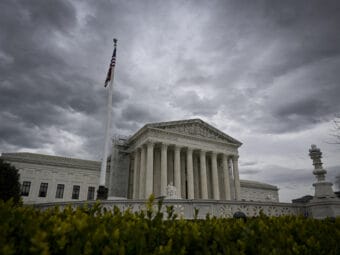
A group of anti-abortion doctors called the Alliance for Hippocratic Medicine challenged the FDA’s decisions providing for increased accessibility. But in the Supreme Court Tuesday, the justices focused less on the FDA’s actions and more on whether the anti-abortion group had legal standing to be in court at all.
To have standing to sue, the group would have to show that its members had suffered a concrete harm, even though they don’t prescribe mifepristone.
Lawyer Erin Hawley, representing the anti-abortion group, contended that particularly at hospitals, doctors opposed to abortion might well be drafted into finishing incomplete abortions. But she was unable to cite any example of that happening.
Instead, she pointed to affidavits filed by two Alliance doctors, examples that Justice Amy Coney Barrett found unpersuasive. “The fact that she performed a D&C does not necessarily mean that there was a living embryo or a fetus because you can have a D&C after a miscarriage,” she said, referring to the procedure known as dilation and curettage.
Barrett, a mother of seven, who herself suffered miscarriages, wasn’t the only justice to ask medical questions. Indeed, all four of the female justices asked detailed questions that likely would not have been asked at the Supreme Court prior to the appointment of the first woman in 1981.
Among the questions were inquiries about ultrasound tests and why they are not required prior to getting the pill and about the FDA’s findings that prescriptions after telemedicine or phone appointments produced no uptick in emergency room visits.
Criticism of a lower court order
Barrett and Justice Brett Kavanaugh also asked Solicitor General Elizabeth Prelogar whether there is a conscience exception that protects doctors from being required to perform abortions.
“Just to confirm on the standing issue, under federal law, no doctors can be forced against their consciences to perform or assist an abortion, correct?” Kavanaugh asked.
“Yes,” confirmed Prelogar.
Justice Neil Gorsuch pointed to this case as typical of what he called “a rash” of recent orders from individual federal judges, orders that apply nationwide—in this case, the original decision from federal Judge Matthew Kacsmaryk in Texas sought to bar the abortion pill entirely.
Gorsuch referred to the decision as “a prime example of turning what could be a small lawsuit into a nationwide legislative assembly on an FDA rule or any other federal government action.”
There was, of course, in Tuesday’s case, a larger question, which got short shrift. And Justice Samuel Alito, author of the decision overturning Roe v. Wade, seemed to despair that his colleagues did not seem interested in using this case to directly address the powers of the FDA.
“Is there anybody who could challenge in court the lawfulness of what the FDA did here?” he asked. “Do you think the FDA is infallible?”
Justice Ketanji Brown Jackson asked about what she called “the flip side of that question. Which is, do you think that courts have specialized scientific knowledge…do you have concerns about judges parsing medical and scientific studies?”
Yes, replied Danco lawyer Jessica Ellsworth, pointing to the first decision in this case from Judge Kacsmaryk–a decision which she said “relied in part on an analysis of anonymous blog posts,” as well as studies that were subsequently withdrawn as flawed by the journals that had printed them.
This story has been updated.
Copyright 2024 NPR. To see more, visit https://www.npr.org.
A post-reproductive toothed whale mother and her son. (David Ellifrit/Center for Whale Research)
Across the animal kingdom, menopause is something of an evolutionary blip. We humans are one of the few animals to experience it.
Sam Ellis, an animal behavior researcher at the University of Exeter, says that this fact isn’t so surprising.
“The best way to propagate your genes is to get as many offspring as possible into the next generation,” says Ellis. “The best way to do that is almost always to reproduce your whole life.”
So perhaps it’s more surprising that a handful of animals ever evolved this trait.
Ellis and his team at the University of Exeter have recently published a study in the journal Nature that sheds light on how this trait may have evolved in toothed whales. There are five species of toothed whales that undergo menopause — short-finned pilot whales, false killer whales, killer whales, narwhals and belugas — making it the type of animal that is known to have evolved menopause most frequently.
A winning intergenerational survival strategy
The rare nature of menopause across animals doesn’t mean, however, that it’s a bad strategy.
Ellis and his team, in partnership with the Center for Whale Research, looked at the welfare and longevity of menopausal toothed whales versus non-menopausal toothed whales. They found that not only do the menopausal female whales live, on average, 40 years longer than females of other species — these females also live longer than the males of their own species.
Researchers think that reason for this could be tied to reproductive competition.
Generally, if a mother and her daughter are both reproducing and living in the same group at the same time, they’re competing for the same resources. “There’s a limited amount of food around and you’ve got to choose who you give it to,” says Ellis. “And so there’s competition.”
According to the grandmother hypothesis, menopause could help avoid that competition. Older females can better protect their offspring — and better ensure their genes are passed on — by instead helping to protect and provide for their children and grandchildren.
Why toothed-whales?
For menopause to evolve, very specific circumstances are needed.
First, females must spend their lives in close contact with both their immediate offspring and their grand-offspring in order to create this reproductive competition. In menopausal toothed whales, not only do the lifespans of females overlap with their direct kin and grand-kin, they can continue to interact with these generations throughout their lives — as observed in killer whales, for example.
Second, the females must have an opportunity to help their families after they can no longer reproduce. There are various ways that older female toothed whales can provide intergenerational help. They might share food with relatives, share their knowledge of the ecosystem and lurking dangers, or even help babysit their grand-calves.
All of this behavior has been documented in toothed whales. While much of whales’ social structures are still unknown, beluga whales and narwhals are usually called “matrifocal,” meaning the oldest female takes charge.
Essentially, menopause helps create a social role of the whale grandmother. She sticks close to her descendants, helps them in times of need and shares her wisdom.
Ellis says that while scientists can’t say for sure, humans likely evolved menopause for similar reasons. “It looks like there’s only one pathway for the evolution of menopause.”
He and his team plan to dive deeper into intergenerational help – instances they see in these whales and other menopausal species.
But for now, this research reveals some of the similarities we humans share with creatures that at first glance seem quite different from us. Not only are both animals menopausal, we’re also long-lived — with grandmothers that play a large role in our social structures.
Curious about other animal behavior mysteries? Email us at shortwave@npr.org.
Listen to every episode of Short Wave sponsor-free and support our work at NPR by signing up for Short Wave+ at plus.npr.org/shortwave.
Today’s episode was produced by Rebecca Ramirez and Gus Contreras. It was edited by Rebecca, Viet Le and Christopher Intagliata. Rebecca also fact-checked it, alongside Rachel Carlson. Kwesi Lee and Ko Takasugi-Czernowin were the audio engineers.
Copyright 2024 NPR. To see more, visit https://www.npr.org.
Close
Update notification options
Subscribe to notifications
Subscribe
Get notifications about news related to the topics you care about. You can unsubscribe anytime.