NPR News

KTOO is the NPR member station in Juneau. NPR offers its members radio and digital stories.

Suicides make up majority of gun deaths, but remain overlooked in gun violence debate

Maura Condon Umble and her son, Alex Patrick Umble. (Maura Umble)

It was an early summer morning in 2018, and Alex Patrick Umble’s family hadn’t heard from him. His mother, Maura Condon Umble, thought his absence was strange, but she didn’t panic.

“I had this important meeting that I needed to go to, I thought, and so I went to work,” Maura said.

While Maura was at work, her boss was on the phone with the Director of Public Safety at a nearby college, who reported that a young man had shot himself on the school’s athletic field.

“My boss came running down the hall, but my boss didn’t tell me,” Maura said. “He just said, ‘Maura, you need to go home right now. You need to go home. Rob needs you at home.’ And my boss kissed me on my forehead, which was very bizarre.”

Once she made it home, Maura learned that the reports were about her son. Twenty-four year old Alex had shot and killed himself days after purchasing a gun.

When gun violence in America is discussed, people typically think about mass shootings, homicides or even domestic violence. But, in fact, the majority of gun-related deaths in the United States are suicides.

In 2023, more than 42,967 people died from gun related injuries. Over half of those deaths were suicides.

Alex is one of the tens of thousands of Americans who lose their lives to suicide every year.

A photo of Maura Condon Umble, her son Alex Patrick Umble and their family. (Maura Umble)

Adam Garber, executive director of CeaseFirePA, a research group that advocates for stricter gun laws, says big cities have typically had the highest gun death rates. But that trend has started to shift. Last year, York, a small city in Pennsylvania, had a higher per capita gun death rate than Philadelphia, Garber said.

“It is really everywhere right now,” Garber said.

Every year, more than 900 people in Pennsylvania die by gun suicides and 48 are wounded by gun suicide attempts. Suicides make up the majority of gun deaths in Pennsylvania.

“Most people who make a suicide attempt are anyone of us,” Garber said. “They’re in a moment of crisis, they got laid off from a job, they go through a divorce or a bad breakup.”

Paul Nestadt, a psychiatrist and professor at Johns Hopkins University, is one of the country’s leading researchers in suicide and what leads to it. He says most people don’t know how prevalent suicide is because we shy away from the topic in our personal relationships and in the media.

“When there’s a mass shooting or homicides, there’s a lot more coverage, and of course, those are very tragic, but suicides kind of kind of slip under the radar a little bit,” Nestadt said. “There’s not as much willingness to talk about them. I think that’s changing. It becomes hard to ignore as the rates climb.”

Easy access to guns in America has also worsened the issue, Nestadt said.

More than 900 people in Pennsylvania die by gun suicides every year and 48 are wounded by gun suicide attempts. (HJ Mai/NPR)

Pills are more often used in suicide attempts—though most attempts involving pills are not fatal. Yet, the smaller fraction of people who use guns to try to take their lives almost never survive.

“Most suicide attempts in the U.S. are by overdose or poisoning things like sleeping pills or Tylenol or opiates,” Nestadt said. “And yet those are usually non-fatal. Only about 2% of people that make an attempt by overdose die. But firearms, which are only used in about five or 6% of attempts, are so lethal that if you happen to have access to a firearm, when that impulse comes and you use that firearm, the chance of death is 90%.”

Nestadt says the time between the impulse and act to take one’s own life is short.

“There’s a study that finds 87% of people make that decision and act on it in the same day, about a quarter of people within 5 minutes.” Nestadt said. “And so what happens in those impulsive moments is people use what they have available to them. It comes on very quickly. If there’s nothing available, the impulse can pass.”

There is another fallacy Nestadt wants to dispel.

“There’s this myth that if someone is suicidal and is thwarted in some way or is able to survive the attempt, that they’ll just keep trying, that they’ll just find some other way. But that’s not what the data shows,” Nestadt said. “In fact, the majority of people, about 94% of people who survive a serious suicide attempt continue to survive.”

As with other forms of gun violence, raising awareness around suicide means having conversations about the very sensitive and often uncomfortable topic.

And Maura is committed to talking openly about how her son’s suicide has affected herself and her family.

This past February, Pennsylvania Lieutenant Governor Austin Davis announced plans to fund a state gun violence prevention office. (HJ Mai/NPR)

Maura and her family decided to disclose Alex’s struggles with depression in his obituary. She is disappointed that suicide is a taboo topic. However, she wants to hold her local government officials accountable for having these conversations, too. So, when Pennsylvania’s Democratic Lt. Gov. Austin Davis announced plans to fund a state gun violence prevention office, she realized the proposal was missing a component.

“He did not mention gun suicide as part of the issue. I was really disappointed,” Maura said.

She thinks about what she could have done and what the state could’ve done to prevent Alex’s death. And she struggles to come up with an answer.

“I have to really give myself a pep talk that, slowly but surely, we can make some progress,” Maura said. “Maybe it will help others, even if it wouldn’t have helped Alex.”

If you or someone you know may be considering suicide or is in crisis, call or text 9-8-8 to reach the Suicide & Crisis Lifeline.

Copyright 2024 NPR. To see more, visit https://www.npr.org.

What biologists see from the shores of the drying Great Salt Lake

Scientists Carly Biedul, Bonnie Baxter and Heidi Hoven look for migratory birds on the eerily dry south shore of the Great Salt Lake in Utah. (Lindsay D’Addato for NPR)

SALT LAKE CITY, Utah — Drive west of this sprawling high desert city, past its newly built international airport, through a series of locked gates into the Audubon’s Gillmor Sanctuary and it’s like entering another world.

Or maybe better put, an other worldly landscape: the vast, and drying wetlands along the Great Salt Lake, the largest saline lake left in the western hemisphere, some fifty miles long and thirty wide.

“It’s quite an adventure to get out here,” says Carly Biedul, a wildlife biologist at nearby Westminster University. She’s part of a team of scientists who have been tracking the lake’s decline amid the West’s record megadrought made worse by climate change. They’ve been conducting weekly trips to various sampling and study sites for the last several years at the remote lake that only recently started making international headlines due to its sharp decline.

Even since its water levels peaked in the 1980s, the Great Salt Lake has always had this mysterious vibe. It’s shallow and boggy. It can stink, especially in the heat of summer.

But zero in right here at this private sanctuary – where steady water still flows in due to a complex web of agreements – and it soon becomes clear how alive this ecosystem can be and how hugely important of a stopover it is for migratory birds.

Wetlands ecologist Heidi Hoven looks for shorebirds at the Gillmor Sanctuary, which she helps manage. (Lindsay D’Addato for NPR)
Water diversions by farmers and Utah’s booming population are seen as some of the biggest culprits behind the Great Salt Lake’s decline. (Lindsay D’Addato for NPR)

Despite recent moisture, the lake is still shrinking

2023 brought record snow to Utah, and a healthy spillover of runoff into the imperiled lake. Scientists warn the lake has already shrunk nearly in half from its historical average.

“It’s because of so many years of drought and climate change and water diversions, and we can’t keep going like that,” says Bonnie Baxter, director of the Great Salt Lake Institute.

But she says there’s still time to reverse its decline. The last two years has bought the state some time. Researchers here are already detecting sharp declines in shorebird populations such as burrowing owls and snowy plovers. As the lake and its wetlands dry, the brine shrimp the birds feed on are dying out.

“For these birds that queue into these saline habitats, there are fewer places for them to go,” says Heidi Hoven, a wetlands ecologist who helps manage the Gillmor. “All the saline lakes here in the West, and many in the world, are experiencing this loss of water and in essence that relates to a loss in habitat.”

There are plenty of culprits behind the lake drying up

Scientists say the West is believed to be as dry as it’s been in 1200 years. The megadrought made worse by climate change has been contributing to the Great Salt Lake’s decline. But agriculture usually bears the bulk of the blame. Upstream water diversions for expanding alfalfa farms and dairies has meant less and less flows into the lake. Utah’s population is also booming. Hoven says development is now running right up to the sanctuary.

“You can actually see it over your shoulder,” she gestures. “It’s this advancement of large, distribution warehouses that are within a mile from the sanctuary now where it used to be open land.”

A short, bumpy ride later along a rutted out dirt track, Hoven pulls to a stop at a favorite vista. The setting sun is casting an eerie orange glow over the distant mountains that ring the dry lake bed. It stretches for miles with just a few pools of water here or there.

Scientists Heidi Hoven, Senior Manager at the Gillmor Sanctuary and Audubon Rockies and Bonnie Baxter, Director at The Great Salt Lake Institute, look for small flies at a bird sanctuary where many species of birds are affected by the recession of The Great Salt Lake. (Lindsay D’Addato for NPR)
Wetlands ecologist Heidi Hoven looks for small flies at a bird sanctuary where many species are in decline due to the alarming drying of the Great Salt Lake. (Lindsay D’Addato for NPR)

It’s beautiful but also eerie, even for the trained eye of wildlife biologists like Biedul, who make weekly research trips to the lake.

“Otherworldly is a great word,” she says. “It’s crazy. We’re at Great Salt Lake right now but there’s no water. The other places where I go and sample there’s water there at least. But here we’re still at the lake and it’s dry.”

Hoven chimes in, solemnly.

“It’s just so shocking, and you know, it’s a shock to me every time I see it,” she says. “But to see someone view it for the first time. You can really see them taking it in. You never thought you could see this dryness.”

The state is being galvanized into action

But all this shock and alarm, the scientists say, may be good. It’s pressuring state leaders into action. Utah Governor Spencer Cox has pledged the lake won’t dry up on his watch. The state legislature has put upwards of a billion dollars lately into water conservation programs, most geared to farmers.

“For generations the lake was seen as kind of this dead thing that just happens to be there and will always be there,” Cox told NPR recently. “And now that people are realizing there’s a potential that it might not always be here, that’s gotten people’s attention in a positive way.”

Wildlife biologist Carly Biedul of the Great Salt Lake Institute closes the last of many gates to the protected Gillmor Sanctuary along the south shores of the Great Salt Lake. (Lindsay D’Addato for NPR)

Everything from lake effect snow for the lucrative ski industry, to mining, to air quality depends on the lake’s survival. Recent publicity around the crisis has raised public awareness but also started to bring more money which could lead to more comprehensive research that could inform everything from strategic action plans to save the lake to just understanding how the remaining migratory birds are coping.

Heidi Hoven, the wetlands ecologist, sees the shorebirds as a key indicator species.

“We have so much more to understand about what their needs are,” she says. “In these changing times, it’s really highlighting the need to understand these things quickly.”

The scientists say the last two winters may have bought Utah a little time, but no one in the West is counting on another good snow year next year.

Copyright 2024 NPR. To see more, visit https://www.npr.org.

Transcript :

SCOTT SIMON, HOST:

Trip now out to Utah’s Great Salt Lake, where water levels are up 3 feet after a couple of especially wet winters. That’s actually good news because the lake has been drying up fast. It is now about half of its historical size. NPR’s Kirk Siegler recently took a trip to a private wildlife sanctuary there, with scientists who’ve been warning about a looming ecological disaster.

KIRK SIEGLER, BYLINE: Just west of Salt Lake City and its newly built international airport, we drive through a series of locked gates, heading for the Audubon’s Gillmor Sanctuary.

(SOUNDBITE OF GATE LOCK OPENING)

SIEGLER: It’s like entering into another world – or maybe otherworldly – landscape, the vast wetlands along the Great Salt Lake, 50 miles long and 30 wide.

CARLY BIEDUL: Yeah, it’s quite an adventure to get out here.

SIEGLER: It’s always had this mysterious vibe. It’s shallow. It’s boggy. It stinks. But zero in right here, and you realize how alive it can be, how hugely important of a stopover it is for migratory birds.

(SOUNDBITE OF BIRDS SINGING)

SIEGLER: Sadly, sounds like these, archived by the University of Utah back in 2011, are becoming more and more rare out here. As the lake and its wetlands dry, the brine shrimp the birds feed on are dying. Heidi Hoven, a wetlands ecologist who helps manage the sanctuary, is leading our expedition.

HEIDI HOVEN: There’s less and less places for these birds that do queue in to these saline habitats. There’s fewer places for them to go.

SIEGLER: Hoven and her team are tracking a sharp decline, particularly in burrowing owls and snowy plovers, white-breasted with their tiny black beaks.

(SOUNDBITE OF BIRD SINGING)

SIEGLER: There are plenty of culprits behind the lake drying up. Farmers are diverting a lot of water upstream from here that used to flow into it. Utah’s population is also booming, and that development is running right up to us.

HOVEN: You can actually see it over your shoulder. We have – it’s this advancement of large distribution warehouses that are within a mile from the sanctuary now, when it used to be just open land.

SIEGLER: Back in her pickup, Hoven steers expertly through a series of huge, muddy puddles that look like they could swallow us.

(SOUNDBITE OF TRUCK DRIVING THROUGH MUD)

HOVEN: So there’s a little bit of road base left under all that.

SIEGLER: For the scientists, the mud is an encouraging sign. Utah is coming off two snowy winters.

HOVEN: So we can park here. This is a good get-out place.

SIEGLER: We stopped for a beat to take it all in, just shy of the lake bed. Bonnie Baxter, who runs the Great Salt Lake Institute at nearby Westminster University, chimes in.

BONNIE BAXTER: You know, I think we’ve bought ourselves a couple of years, and that’s great. But you look at this dry lake bed in front of you, and you can see, even after all of that snow from last year and a decent year this year, we’re still struggling.

SIEGLER: A short, bumpy ride later, we reached the actual shore, if you could call it that. The setting sun is casting an eerie orange glow over the distant mountains surrounding us on all sides. We feel tiny.

(SOUNDBITE OF TRUCK DOOR CLOSING)

SIEGLER: The dried lake bed stretches out for miles. It’s beautiful, but it’s eerie, even for the trained eye of wildlife biologist Carly Biedul.

BIEDUL: Otherworldly is a great word. It is – well, it’s crazy. We’re at Great Salt Lake right now, but there’s no water.

BAXTER: Yeah.

BIEDUL: Like, I feel like the other places – at least where I go and sample – there’s water there. At least you can see it. But here we’re still at the lake, and it’s dry.

SIEGLER: Heidi Hoven says she’s never not shocked looking out across the dry sand and dust.

HOVEN: It never ends to really strike people with awe in a way that – something that you never thought you could see, this dryness.

SIEGLER: But all this alarm, they say, is maybe good. It’s pressuring the state into action. Utah’s governor, Spencer Cox, is pledging the lake won’t dry up on his watch. The state has put a billion dollars so far toward conservation, mainly for farmers.

SPENCER COX: For generations, the lake was seen as just kind of this dead thing that just happens to be there and will always be there. And now that people are realizing there’s a potential that it might not always be here, that’s gotten people’s attention in a positive way.

SIEGLER: Everything from lake effect snow for the ski industry to mining to air quality depends on the lake’s survival.

BIEDUL: Is that coyote scat?

SIEGLER: But Cox has also called predictions by local scientists that the lake could dry up in five years alarmist. Bonnie Baxter from the institute helped write that 2022 study.

BAXTER: You know, scientists aren’t really known for being dramatic (laughter).

SIEGLER: What will be more dramatic, these scientists say, is if we let the lake dry up. Heidi Hoven sees the shorebirds as one of the indicator species.

HOVEN: And we have probably so much more to understand about what their needs are. And in these changing times, it’s really highlighting the need to understand these things quickly.

SIEGLER: Because no one in the West is counting on another good snow year next year.

Kirk Siegler, NPR News, Salt Lake City. Transcript provided by NPR, Copyright NPR.

How to file your tax returns: 6 things you should know this year

Cropped shot of Asian woman sitting at dining table, handling personal finance with laptop. She is making financial plan and planning budget as she go through her financial bills, tax and expenses at home. Wealth management, banking and finance concept
(d3sign/Getty Images)
Updated April 11, 2024 at 11:17 AM ET

For something that’s legally required, taxes can be tough to figure out. The U.S. system is complicated — and unfortunately, most of us never learned how to do our taxes in school.

The deadline to file your taxes this year is April 15. But it helps to get started as soon as possible.

In this guide from Life Kit, we share 6 expert tips you should know about filing your taxes — from what steps to take as the deadline approaches to whether hiring a tax preparer is worth it.

1. You don’t have to pay to file your taxes.

One free option: Download your tax forms from the IRS website, read the instructions, fill everything out and submit by mail or online. That’s easier if someone like a parent has walked you through it before, or if you have a simple tax situation like one job in one state for the entire year.

If your tax situation is more complex, there’s free online software you can use. If your adjusted gross income is $79,000 or less, you qualify for a program called IRS Free File. Find out more at the IRS website.

If you don’t qualify, you can still get deals on online tax software, says Akeiva Ellis, a certified financial planner and the cofounder of The Bemused. She uses a service called Free Tax USA; it charges $14.99 per state, and the federal return is free.

2. Consider tagging in a professional.

Another option is to go to an accountant or tax preparer. That might make sense if you’re doing your taxes for the first time or if you’ve had a major life change — like getting married or starting a new business. It may also make sense if you want to do some tax planning for the year ahead, says Andrea Parness, a CPA and certified tax coach.

If you’re looking for a pro, start by asking friends and family for referrals, she says. And then interview the person. Prepare questions for them: Will they be giving you tax advice or just filling out the forms and submitting them? Will you have an appointment? And what happens if they make a mistake?

3. Gather your documents.

The IRS has a list of documents you might need. Tax preparers can give you one too. Some common examples: W2 forms, which your employers send you by mail; student loan interest forms; bank interest forms; and any receipts for things you’re planning to take as a tax credit or deduction, like medical expenses or charitable donations.

4. Look into tax credits and deductions.

Both are benefits that save you money on taxes. A tax credit lowers your final tax bill; it comes off the top of what you owe. A tax deduction, on the other hand, “reduces the amount of income you have to pay tax on,” Ellis says.

To figure out which credits and deductions you’re eligible for, look at the IRS website. If you use software, it’ll prompt you with questions to help figure this out. So will tax preparers.

But do your research. “You certainly always want to be able to educate yourself and not just depend on someone else asking you, ‘Hey, did you buy a new car? Did you do this? Did you put your kid in daycare?’ … Everybody runs their practice differently and not everybody asks those questions,” Parness says.

5. You can file an extension — but you still have to pay.

If you think you won’t make the April 15 deadline this year, file an extension with the IRS online. Then you’ll have until mid-October to file the forms. But if you owe money, you still need to estimate how much and pay it now, or you might get hit with penalties later.

6. Plan ahead for next year.

Think about what went wrong on your tax return this year. For instance, did you end up owing a ton of money? Did you get a huge refund? That often means you gave the federal government an interest-free loan. You can make changes now so that doesn’t happen next year. For instance, “ask your employer for a W-4 form so you can properly tell them how much taxes to take out of your check,” Ellis says.

Also, look out for tax credits, deductions or rebates that you’re newly eligible for. A little planning and research now could lower your next tax bill.


The audio portion of this episode was produced by Mia Venkat, with engineering support from Carleigh Strange, Patrick Murray, and Neil Tevault. It was edited by Meghan Keane. The digital story was edited by Danielle Nett. Our visuals editor is Beck Harlan. We’d love to hear from you. Leave us a voicemail at 202-216-9823, or email us at LifeKit@npr.org.

Listen to Life Kit on Apple Podcasts and Spotify, or sign up for our newsletter.

Copyright 2024 NPR. To see more, visit https://www.npr.org.

EPA puts limits on ‘forever chemicals’ in drinking water

The Environmental Protection Agency announced new drinking water standards Wednesday to limit exposure to a class of chemicals called PFAS.

“There’s no doubt that these chemicals have been important for certain industries and consumer uses, but there’s also no doubt that many of these chemicals can be harmful to our health and our environment,” said EPA administrator Michael Regan in a call with reporters.

This is the first time the agency has set enforceable limits on PFAS in drinking water.

PFAS stands for perfluoroalkyl and polyfluoroalkyl substances – a large group of man-made chemicals that have been used since the 1940s to waterproof and stainproof products from clothing, makeup and furniture to firefighting foam and semiconductors.

Manufactured by several large companies including Dupont and 3M, PFAS have strong molecular bonds that don’t break down for a long time, which is why they’re known as “forever chemicals.”

PFAS from the 1940s “are still in our environment today,” says Anna Reade, lead scientist on PFAS for the Natural Resources Defense Council. “The levels of these chemicals keep building up in our water and our food and our air.”

Evidence for their harmful effects on human health have also accumulated. “Long term exposure to certain types of PFAS have been linked to serious illnesses, including cancer, liver damage and high cholesterol,” the EPA’s Regan said.

The EPA also noted PFAS exposure has been linked to immune and developmental damage to infants and children.

That’s why the EPA has finalized a rule restricting six PFAS chemicals in the water – individually, or in combination with each other or both – meaning water systems are required to monitor for these chemicals and remove them if they’re found above allowable levels. While some states have instituted their own PFAS limits, this is the first time it’s happening on the federal level.

Public water systems will have five years to address their PFAS problems – three years to sample their systems and establish the existing levels of PFAS, and an additional two years to install water treatment technologies if their levels are too high, senior government officials told reporters.

The EPA expects that excess PFAS levels will be found in around 6-10% of water systems, affecting some 100 million people in the U.S.

“This is historic and monumental,” says Emily Donovan, co-founder of Clean Cape Fear, an advocacy group working to protect communities from PFAS contamination. “I didn’t think [the EPA] would ever do it.” Donovan lives in an area of North Carolina which has been contaminated with PFAS from the Chemours chemical manufacturing plant.

She says seeing the EPA set limits is “validating.” Six years ago when her group first raised the issue of PFAS, she says they were told that the water met or exceeded state and federal guidelines. “And that’s because there weren’t any,” she says. “It really broke public trust for so many people in our community.”

“The final rule is a breakthrough for public health,” says Erik Olson, a senior director with NRDC. “We believe it’s going to save thousands of lives as a result of reduced exposure of tens of millions of people to these toxic chemicals in the tap water.”

There are more than 12,000 known PFAS chemicals. The six that the EPA is restricting “have had many animal and, in many cases, human studies, so [the EPA] feels confident that they have estimated the safe levels of these chemicals,” says Elizabeth Southerland, a former EPA official in the Office of Water, who left the agency in 2017.

Southerland says the new limits are a bold first step towards addressing the PFAS problem. And while the EPA has focused on only six chemicals, the treatments that water utilities use to remove these chemicals will also remove other chemicals of concern from drinking water.

In addition to other PFAS, “they will also be taking out all kinds of pesticides, pharmaceuticals and personal care products that are unregulated now under the Safe Drinking Water Act, but [which] we know have serious health effects,” Southerland says.

The agency estimates that it will cost $1.5 billion a year for water companies to comply with the regulation – for as long as PFAS continues to show up in the drinking water. “The costs are not just for a one time sampling and then putting in the treatment,” Southerland says. They include ongoing monitoring and maintaining equipment, for instance replacing carbon filters on a regular schedule.

The EPA says the benefits will equal, if not exceed the cost, in terms of less cancer, and fewer heart attacks, strokes and birth complications in the affected population.

The announcement comes with $1 billion in grants to help water systems and private well owners conduct initial testing and treatment. It’s part of a $9 billion funding package for PFAS removal in the Bipartisan Infrastructure Law. Companies that made these chemicals are also on the hook for more than $10 billion from a class action lawsuit – money which will go to public water systems to remove PFAS.

If water systems can’t access those funds, or if the funds run out, some of those costs may eventually get passed on to consumers, says the NRDC’s Olson.

Copyright 2024 NPR. To see more, visit https://www.npr.org.

Transcript :

STEVE INSKEEP, HOST:

For the first time, the Environmental Protection Agency is putting limits on chemicals called PFAS in drinking water.

MICHEL MARTIN, HOST:

They’re known as forever chemicals because of how long they last. They’re useful. They’re often used to waterproof and stain-proof products, but that comes at a cost to human health.

INSKEEP: NPR’s science correspondent Pien Huang is covering the story. Good morning.

PIEN HUANG, BYLINE: Good morning, Steve.

INSKEEP: OK. Why set limits on these chemicals now?

HUANG: The EPA is acting to end what has seemed like a forever debate over forever chemicals. Here’s EPA administrator Michael Regan.

(SOUNDBITE OF ARCHIVED RECORDING)

MICHAEL REGAN: There’s no doubt that these chemicals have been important for certain industries and consumer uses. But there’s also no doubt that many of these chemicals can be harmful to our health and our environment.

HUANG: Now, this follows what some states, including New Jersey and Washington, have already been doing, but it’s the first time that it’s happening on the federal level. The EPA is now putting limits on six of these chemicals in the drinking water, saying that every water system now needs to look for them. And if they’re found over a certain amount, they have to be taken out.

INSKEEP: What are these chemicals, and where do they come from?

HUANG: PFAS is a group of man-made chemicals – a rather large group that have now been around since the 1940s. They were manufactured by companies like DuPont and 3M, and they’re used to make things resistant to stains, to water and to grease – you know, everything from clothing, furniture to firefighting foam and electronics and semiconductors.

INSKEEP: Wait a minute. I’ve sometimes had pants – that the water rolls off the pants. They might have those chemicals in them. Is that right?

HUANG: Probably. Although there are a few brands now that have committed to not using PFAS in their clothing, but probably, Steve.

INSKEEP: What makes these so effective?

HUANG: Yeah. Well, the thing about them is that they have these really strong molecular bonds, which means that they really don’t break down for a long, long time. You know, PFAS from the 1940s – it’s still around today. And that’s where they get the name forever chemicals. But as they’ve accumulated, so has evidence for how they can harm human health. You know, there are now links between PFAS and certain cancers, liver damage, high cholesterol, immune problems. And now there are more than 12,000 PFAS chemicals out there. And the EPA is putting limits on six of them in the drinking water.

INSKEEP: When you say 12,000 chemicals and six of them are to be limited, that doesn’t sound like much.

HUANG: But experts like Elizabeth Southerland, who’s a former EPA official, says that it is a strong first step.

ELIZABETH SOUTHERLAND: The six that they have here have had many, many both animal and human studies in many cases so that they feel confident that they have estimated the safe level of these chemicals.

HUANG: The limits are set around four to 10 parts per trillion depending on the chemicals. And she also says that the filters or chemical treatments that water utilities are going to have to use to deal with these six chemicals are also going to remove a lot of other chemicals that people are concerned about.

INSKEEP: How much does it cost to install the better filters and take the other steps that water systems will need to take?

HUANG: Well, in total, the EPA estimates that this will cost around $1.5 billion a year for water companies to comply. And, Steve, that’s $1.5 billion every year until these chemicals stop showing up in the drinking water. The EPA does say that the benefits will exceed that cost. They say about a hundred million people are affected. And in that population, there will be less cancer, fewer heart attacks and fewer birth complications.

INSKEEP: Does my water bill go up?

HUANG: Well, maybe eventually, but there is funding that the government intends as a first resort. So the Bipartisan Infrastructure Law includes billions of dollars for PFAS removal. And companies that made these chemicals are also on the hook for more than $10 billion from a class-action lawsuit. But if water systems can’t access those funds or if those funds run out, then some of those costs might eventually get passed on to consumers.

INSKEEP: NPR’s Pien Huang. Thanks so much.

HUANG: You’re welcome. Transcript provided by NPR, Copyright NPR.

You asked, we answered: Your questions about electric vehicles

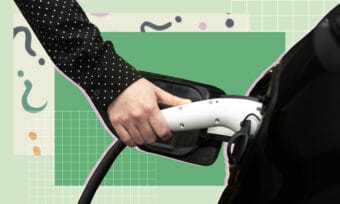
(Photo Illustration by Becky Harlan/NPR)

If you’re thinking about getting an electric vehicle, you’re not alone.

People in the U.S. buy more than a million new cars every month, and as of March, less than 10% of those are electric vehicles. But more than half of car shoppers are at least considering battery-powered cars and SUVs, according to multiple studies.

And shoppers have lots of questions. In January, The Sunday Story, an NPR podcast, asked listeners for their EV questions. More than 60 listeners sent in queries, and The Sunday Story and Life Kit teamed up to answer them. The listener questions have been edited for length and clarity.

Are EVs truly better for the planet, even with mining for batteries and fossil-fuel-based electricity to charge them? (This was the No. 1 question asked by our listeners.)

The answer is yes. Many researchers have confirmed it, and online tools let you compare the impacts for yourself. One of the most recent analyses comes from Corey Cantor with the energy research company BloombergNEF, who headlined his report last month: “No Doubt About It: EVs Really Are Cleaner Than Gas Cars.”

“Big picture, moving away from spewing more CO2 into the atmosphere is a good thing for the climate,” he says. And the environmental benefits of EVs are getting bigger over time as grids get cleaner.

Is it better from an environmental standpoint to buy an electric vehicle now, or keep driving the gas car you have until you need a new car? –Ali Mercural, Portland, Ore.

For the climate, there’s a strong case for switching now.

Yes, creating that new EV — getting the materials to build it from scratch — is resource-intensive. But the climate impact of a gas-powered car increases every single day you drive it.

To be precise, more than 85% of a gas-powered vehicle’s lifetime emissions come from using the car, not from building the car. That’s according to researchers at Argonne National Laboratory. And that means the new EV, despite its manufacturing costs, will be cleaner over time.

Jessika Trancik, a professor at the Institute for Data, Systems and Society at Massachusetts Institute of Technology, suggests taking the long view on decisions like these. Think not just about emissions right now but over the entire time you’ll own a vehicle.

“Generally speaking, switching to that electric vehicle is going to provide a benefit over the lifetime of the car,” she says.

I’m not proud, but I’ve run out of gas twice in my life. Luckily, I had friends nearby to bring me a gallon of gas. What would happen if I ran out of charge in an EV? Would a tow truck come to charge me up? How long would that take? And how embarrassing would that be?–Robin Rzechula, Chicago

We can’t promise it won’t be embarrassing, but a tow truck could tow you to a charger. In some cities, AAA will bring a mobile charger to you.

Overall, charging is a different experience than fueling up. With a combustion engine, you have to regularly make a stop at a gas station to fill up. With an EV, for daily driving, most people charge at home overnight – which drivers frequently cite as a major perk of EV ownership. (This does require the ability to charge at home).

For road trips, on the other hand, many parts of the country still have limited availability of fast chargers, which are high-speed chargers designed for use in the middle of a trip. Charger speeds and reliability at public charging stations vary, and charging takes much longer than filling up at a gas station.

So charging takes less work day-to-day, but more planning on long trips. Map out chargers on your route so you won’t find yourself calling AAA.

Does leasing an electric car come with the same perks (like tax rebates) as buying an electric car? –Hallie Andrews, Washington, D.C.

The same or better.

There’s a federal $7,500 tax credit for purchasing an EV, now available as an up-front credit toward the cost of the car. But the list of vehicles that qualify is short because of requirements meant to support U.S. jobs and supply chains. Buyers also have to be under an income cap.

Leased electric vehicles all qualify for a $7,500 credit – no matter where they’re built, with no income cap. Check your lease paperwork to confirm that the credit is being fully passed along to you.

Wouldn’t it be better to design cities around mass transit and use mass transit than get everyone to convert to electric vehicles? –Thomas Guffey, Los Angeles

Yes, designing cities to encourage mass transit – and to make them more walkable and bikeable – has a lower carbon footprint than relying on electric vehicles, in addition to other benefits. Electric bikes also have a fraction of the environmental footprint of EVs.

Switching to EVs is an important part of fighting climate change, but far from the only change that needs to happen.


The digital story was edited by Malaka Gharib. The visual editor is Beck Harlan. We’d love to hear from you. Leave us a voicemail at 202-216-9823, or email us at LifeKit@npr.org.

Listen to Life Kit on Apple Podcasts and Spotify, and sign up for our newsletter.

Copyright 2024 NPR. To see more, visit https://www.npr.org.

This year, colleges must choose between fast financial aid offers, or accurate ones

Annelise Capossela for NPR

Countless prospective college students are eager to commit to colleges, acceptances in hand, but are stuck waiting for one last piece of the puzzle: their college financial aid package. Those offers are coming later than normal this year, due to the troubled launch of the U.S. Education Department’s new federal student aid form, or FAFSA.

Some institutions are doing anything they can to get those offers out as soon as possible — even if it means they aren’t a guarantee. For example, Cal Poly Pomona has decided to send “provisional” aid offers for now, with final offers coming by the time students officially start classes.

“The goal is to have these done, you know, for sure before school starts,” says Jeanette Phillips, head of financial aid there. Phillips says other financial aid administrators in the California State University system, the largest in the country, have decided to do the same thing.

With students and families eagerly awaiting the results of their FAFSA applications, college financial aid offices are in a tough position: They need to send aid offers out as soon as possible to give students time to weigh their options, but they also don’t yet trust the FAFSA data the Education Department is sending them.

That’s because the data has been “riddled with errors or incompletions,” says Justin Draeger, the president and CEO of the National Association of Student Financial Aid Administrators.

To navigate this dilemma, Draeger says, “different schools are trying different tactics.”

“Some schools are going to send out provisional or estimated aid offers as soon as they can. Other schools aren’t able to sort through the data. They feel like they are stuck until they get more information.”

At Oregon State University, the financial aid office is taking its time. Keith Raab, the head of financial aid at OSU, tells NPR they’ve had the conversation about provisional offers, but ultimately decided against it.

“Our experience has been that those mostly add to confusion instead of making things more clear,” he says. “Students and families don’t understand why things change and we don’t want to add to their stress.”

Instead, they’re trying to be transparent about timelines, and sending frequent updates to students and parents who have already submitted their forms.

Towson University, outside Baltimore, is taking a similar approach. Boyd Bradshaw, who runs the admissions and financial aid offices there, says he wants families to know the school will be flexible.

“We’re going to work individually with each student to make sure that their financial aid package doesn’t deter their attendance,” he says.

Compounding FAFSA delays have forced colleges to act

The revamped FAFSA got off to a slow start last year, debuting three months late, and pushing back the timeline for colleges to start processing student financial aid offers. Those offers were further delayed while the department worked to fix a FAFSA math error that failed to take inflation into account. The department said it would start sending financial aid data to schools in the first half of March, just weeks before the traditional college commitment deadline of May 1.

Schools did start to receive student data in March, but in many cases, it was only by the handful: single-digit numbers of student files to start, then a few hundred, then a few thousand. The department finally cleared the backlog of applications last Friday, but shortly after, it announced that about 20% of the data was impacted by other errors.

The department said it “recognizes how important it is that schools and states have the information they need to extend financial aid offers and that families have the information they need to make critical education decisions.”

In an email to NPR, a department spokesperson said they are working to make it easier for students to apply for and receive financial aid.

The compounding delays have pushed many schools — including George Mason University in Northern Virginia and Colorado State University — to shift their commitment deadlines to mid-May or June.

And while the department is working to fix many of the errors, one is still causing difficulty for some mixed-status families, or families where the students are citizens, but the parents or guardians are not. For a while it wasn’t possible for parents without a social security number, which many non-citizens don’t have, to fill out the new form. In mid-March the department said they had fixed the problem, but was aware of continued difficulties for some students.

Some students are still locked out

Georgina García Mejía, a senior at Bethesda-Chevy Chase High School in the Maryland suburbs outside Washington, D.C., has been trying to submit her FAFSA since the beginning of February.

“I try like, four times a week,” she says. She submits the form over and over hoping for a different response. García Mejía has citizenship, but her mom does not, so she falls into that bucket of students from mixed-status families who are still locked out.

García Mejía hopes to go to Towson University, where she’s already been accepted, to stay close to her family and work toward a nursing degree. Towson’s commitment deadline is May 15.

“I’m scared that the deadline is coming really soon,” she says. “And I won’t be able to get the help that I want.”

The only guidance her counselors can give her is to call the FAFSA helpline and see if someone picks up. She says she hasn’t been calling every day, but definitely most days. “I’m never able to get to someone.”

Boyd Bradshaw, at Towson, says he’s been hearing from a lot of mixed-status students like García Mejía.

“We’ve heard the same story,” he says. “And there’s no real answer to why it works for some and not for others.”

His advice for mixed-status applicants is to try the FAFSA helpline first, and if that doesn’t work, reach out to Towson’s financial aid office.

“We’re not going to shut our doors, particularly with students who are having these challenges.”

His office is hoping to get aid offers out to students by the end of April. Towson has already extended its commitment deadline once, and Bradshaw says he’s not opposed to extending it again, if the errors continue.

“What I can tell families: 110% we will be flexible after May 15,” he says.

This year, everyone is flexible, whether they want to be or not.

Copyright 2024 NPR. To see more, visit https://www.npr.org.
Site notifications
Update notification options
Subscribe to notifications