Rashah McChesney

Daily News Editor

I help the newsroom establish daily news priorities and do hands-on editing to ensure a steady stream of breaking and enterprise news for a local and regional audience.
Oil company sues over Alaska’s beleaguered cash-for-credits program

Cook Inlet oil platforms are visible from shore near Kenai, Alaska. Cook Inlet Energy and its parent company, Miller Energy Resources, have sued the state after emerging from bankruptcy. (Photo by Rashah McChesney/Alaska’s Energy Desk)

An oil and gas company is suing the state over $5.3 million dollars in unpaid cash credits. Miller Energy Resources wants anything that happened before it went bankrupt in 2015 to be off-limits to state tax auditors, according to the lawsuit and the company’s bankruptcy filings.

And, until the lawsuit is resolved, it wants the state to set aside a chunk of the cash credit payments it’s owed — so it won’t be paid to other companies in the meantime.

The lawsuit is a new snarl in the complicated knot of the state’s controversial — and now disappearing — cashable oil and gas tax credits program.

At its core, it’s a fight over just how fresh of a start a company gets when it goes through bankruptcy.

But, according to Glacier Oil & Gas Chief Executive Officer Carl Giesler, it’s not really a fight.

“What the suit is about is not so much about oil and gas tax policy or even about the wisdom or not of cash tax credits,” Giesler said. “It’s really about the picayune and frankly often tedious but still important aspects of bankruptcy law.”

To understand the bankruptcy law the state and the companies are quibbling over requires a jump back to 2015, when Geisler was the CEO of a company called Miller Energy Resources.

Miller Energy Resources was a publicly traded parent company to two other companies in Alaska: Cook Inlet Energy and Savant Alaska, LLC. One operated in Cook Inlet, the other on the North slope. All three companies were working and applying for exploration and production credits from the state. Then each redeemed some of those credits with the state, for cash.

When oil prices crashed and some lending fell through, Miller Energy slid into bankruptcy. And when it emerged, it had new owners and a new name, Glacier Oil & Gas.

The reorganization and the new name are a sticking point, because the state’s tax division is just now getting around to auditing tax credits that were paid to companies back in 2010 — when Glacier Oil & Gas was still Miller Energy.

State auditors want to examine tax credit payments the Department of Revenue made to Cook Inlet Energy, one of Miller Energy’s subsidiaries. And so far, the company is resisting.

Ken Alper is the director of the state’s tax division. State law prohibits his division from talking specifically about companies that the state owes credits to, but he can talk generally about the auditing process.

Every year, the auditors sit down and go through records of old tax returns or tax credits the state’s issued.

“And if we find an error or an overpayment or an invoice that shouldn’t have been paid on or something like that we’ll make an adjustment to a past tax credit and say ‘you owe us the difference’ essentially,” Alper said.

Each year, the Department of Revenue puts out an audit assessment memo tallying up how much money in back taxes and interest, is owed to the state. Those adjustments typically bring in more than a $100 million a year.

If the state finds that a company owes back taxes, and the state happens to owe that company money — like the $5 million it owes to Miller Energy — Alper says the tax division will just subtract what it’s owed from the balance and then pay out the rest.

But, Giesler said, all of the credits that were paid pre-bankruptcy should be out of bounds.

“What we think is that one of the key tenants of bankruptcies is (that they are) meant to create a clean start for the new entity,” Giesler said.

A fresh start for Giesler means that the state shouldn’t take pre-bankruptcy debt from the millions it owes his company now.

“That defeats the whole point,” he said.

Until that’s resolved, the company wants the state to put aside a chunk of the $5 million it’s still owed into an escrow account. That way, if the judge rules in Miller Energy’s favor, there will still be money left to pay it.

And it’s not an unfounded concern, because the state isn’t paying off the cashable credits it owes to these companies immediately.  Two years ago, the governor and then the legislature decided to pull back and just make minimum payments.

The state will owe an estimated $1 billion in unpaid cash credits this year and the legislature appropriated $77 million.

Alper said that means companies will get about .16 cents for every dollar they’re owed.

And, in Miller Energy’s case, the state is actually refusing to pay any of the $5.3 million it owes to the company, until the case is resolved, according to bankruptcy filings.

“What we don’t want to do is risk having a Pyrrhic victory where the judge rules in our favor and then we turn to the Department of Revenue and they say, ‘Sorry, we’ve already paid out all the money that was appropriated by the state legislature and governor there’s none left for you’,” Giesler said.

Ken Alper can’t say how much money is being paid to companies and which are getting paid this year, but he did say that when the money is disputed, the tax division holds onto it.

“Their share is being set aside,” Alper said. “So we’re not going to give it to anybody else.”

The company and the state will meet in court on August 22, in Anchorage.

BlueCrest is latest company to stop work, citing state’s defunct cash-for-credits scheme

A state corporation agreed to modify the terms of a $30 million loan to BlueCrest Energy Inc.'s operation, shown here in southern Cook Inlet, on Dec. 1, 2016. The company blamed construction delays and a delay in tax credit payments from the state for its request to modify the loan. (Photo Courtesy/Alaska Industrial Development and Export Authority)
BlueCrest Energy Inc.’s operation in southern Cook Inlet. The company announced that it will be putting a temporary hold on drilling new wells while it seeks financing. It says the state owes the company more than $75 million in unpaid tax credits. (Photo Courtesy Alaska Industrial Development and Export Authority)

Last week, BlueCrest Energy Inc. announced that it is going to pause its drilling operation in Cook Inlet. The company blamed Alaska’s controversial cashable tax credit program, saying the state still owes them nearly $100 million. Without that money, BlueCrest said it cannot afford to keep drilling.

Alaska has a nearly $1 billion bill hanging over its head. The tab comes from a program that the state used to entice smaller, independent companies to explore new fields and, hopefully, develop them into producing oil and gas.

But when oil prices crashed, first the governor, then the legislature said that the state could no longer afford the program. And so in this year’s marathon budget negotiations, it got cut.

Companies waiting to get reimbursed for cash credits they’d already earned — they’re going to be waiting for awhile.

“The state’s reluctance, failure, to confront the hundreds of millions of dollars it owes, I think it has done more to freeze investment by the smaller companies in Alaska than any debate over the actual tax rate itself,” said Kenai Peninsula Borough Chief of Staff Larry Persily, a longtime oil and gas analyst.

Now as lawmakers struggle to balance the budget, Persily said the state has left a “Dear John” letter of sorts to its small and independent companies.

“Gee, I’m sorry we can’t pay you,” Persily said. “I understand you can’t keep working if you don’t get paid. Hopefully we can figure this out soon. Let’s keep in touch.”

In response companies have one-by-one announced that work has to slow.

First, Caelus Energy, an independent North Slope operator, cut about a quarter of its workforce in 2016.  Then, the company announced that it wouldn’t drill an appraisal well at a potentially massive new find at Smith Bay.

Cook Inlet Energy also delayed drilling a well in West Cook Inlet in 2017. The company said it wouldn’t make the investment citing uncertainty with the state’s tax credit system.

BlueCrest is the latest of these smaller companies to fall victim to the now-defunct cashable credit program. It announced on August 1 that it couldn’t afford to keep drilling on the Kenai Peninsula and that it would be laying off about 150 people.
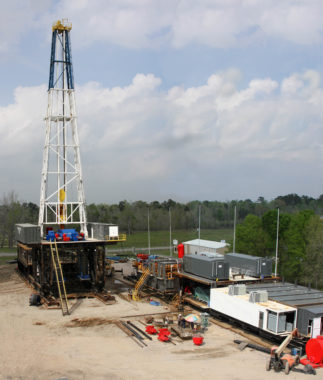
The Texas-based company has been developing the Cosmopolitan field in Cook Inlet since 2012.

Its founder and CEO Benjamin “Benji” Johnson said he chose to do business in Alaska in part because the state’s tax regime was friendly and offered an irresistible lure for the risk of exploration and development — cash.

“Now what those credits were was basically a co-investment with the independent companies,” Johnson said.

And with the state as an investment partner of sorts, Johnson said BlueCrest calculated that it could spend about $525 million to develop the Cosmopolitan Unit, drill several wells and produce thousands of barrels of oil a day.

He said the company expected $125 million in cash rebates from the state and raised the other $400 million it needed. Then, it spent that money.

But now, Johnson said the state’s paid back just $27 million and owes the company another $75 million.

And so far, state records show the company is only producing about 200 barrels of oil a day: not nearly enough to cover its operating costs, much less pay for new drilling.

Johnson says they have two more wells to bring online; those should start producing in September. But after that?

“We can’t continue spending the enormous amounts to drill new wells right now,” Johnson said.

He said the company is actively seeking out investors to raise the money it needs to keep drilling.

But while it searches, the slowdown is resonating in other parts of the economy.

 Jimmy Doyle, Vice President of Weaver Brothers Inc., said BlueCrest’s decision to stop drilling is a kick to the already struggling oil and gas economy on the Kenai Peninsula.

When business is booming, the company’s cornflower blue rigs haul everything from oilfield construction equipment to petroleum products to asphalt throughout the Interior and Southcentral Alaska.

But when oil prices fell and the economy contracted, Weaver had to let a few people go to help cope with the loss of business.

He said, it still hasn’t fully recovered.

“Not to as busy as we were from, you know, 2012 – 2014 as far as having the amount of manpower dedicated to that piece of the business, we haven’t recovered,” he said.

And the layoffs will have a ripple effect.

“One company hires 2 or 3 or 4 or 5 or 10 or 20 or 30 people and then that causes other businesses to hire people to supply them. So the trickle-down effect is huge and especially at a time when, because of the oil prices, other companies are already pulling in their horns a little bit,” Doyle said.

He understands the argument that the state can’t afford to pay subsidies to oil companies like it did in the past. But, he doesn’t think that program or others like it are going to substantially change the state’s economy.

He said that all depends on the price of oil.

Feds seek comments on Alaska’s in-state natural gas pipeline

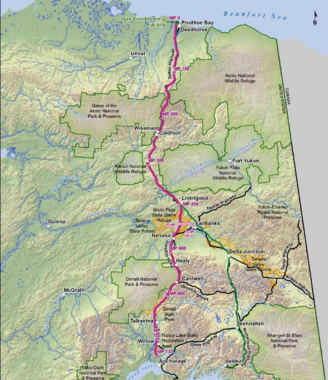
The current route planned for the Alaska Standalone Pipeline -- an in-state natural gas pipeline designed to bring gas from the North Slope to Alaska communities. (Map courtesy of the Alaska Gasline Development Corporation)
The current route planned for the Alaska Standalone Pipeline — an in-state natural gas pipeline designed to bring gas from the North Slope to Alaska communities. (Map courtesy of the Alaska Gasline Development Corporation)

A federal agency is asking for input on an in-state natural gas pipeline.

The Alaska Standalone Pipeline would bring gas from the North Slope to Wasilla.  It’s designed to deliver  gas to communities like Fairbanks and throughout Southcentral Alaska.

The Army Corps of Engineers is the lead agency working on an Environmental Impact Statement for the gasline project — a requirement for the National Environmental Policy Act.

The current version of the statement — released in June — is updated from a 2012 version. It covers things like environmental consequences of the project footprint, transporting the gas, new access roads and the 13 construction camps needed to build it.

The Corps is focused on the parts of the project that could impact people.

“In case of social economics, you have job growth opportunities. You have employment. On the flip side, you have more stress for government support facilities or at local clinics, at hospitals, etc,” said Sandy Gibson, the gas pipeline project manager for the Army Corps in Alaska.

The project is managed by the Alaska Gasline Development Corporation which is also tasked with developing a similar, but larger gas pipeline that would bring gas from the North Slope into Cook Inlet and then sell it overseas. The corporation calls the in-state pipeline, a backup project if it doesn’t get the larger pipeline built.

Gibson said people sometimes confuse the two projects.

“It seems that, in the last couple of decades there’s been some type of a pipeline project that has evolved into another revised project,” Gibson said. “So I think that a lot of people here in Alaska have a history with pipeline projects in general.”

This summer, a team from the Corps has traveled around the state holding meetings in places like Utqiaġvik, Nuiqsut, Wiseman and Anchorage, updating people on the environmental review process.

So far, Gibson said they’ve heard a lot of concern about its potential effects on subsistence.

“One of the comments made that there was concern about caribou migration and that it wasn’t necessarily due to the pipeline being elevated, but it had more so to do with helicopters flying the length of the pipeline,” she said.

This could be problematic during peak season, when hunters have a short window to bag a caribou and the noise could spook the herd.

The comment deadline is August 14.

Gibson said the goal is to publish a final impact statement at the end of 2018.

But there’s still a long road ahead for Alaska’s in-state gas pipeline.

After it gets an impact statement, the project still needs to get permit decisions from federal agencies like the Corps, to be built.

Gibson said the environmental review and permitting process ideally go hand-in-hand.  But finishing the review doesn’t necessarily mean an agency will grant a permit.

State’s cruise ship monitoring program shielded from budget cuts by tourists

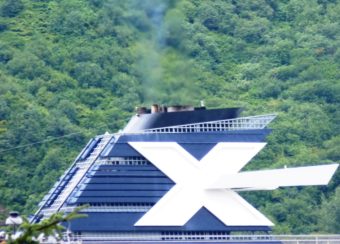
A Celebrity Cruise Line ship sails into Juneau in 2012 with emissions coming out of its stack. Ed White with the Alaska Department of Environmental Conservation monitors cruise ship emissions. (Ed Schoenfeld/CoastAlaska News)

Over a million cruise ship visitors are projected to land in Juneau this year. And the summer cruising season is a big boost for coastal retailers. But, it also brings all of the noisy traffic, haze and water quality issues of big cities — to small towns in Alaska.  

On a rainy weekday Ed White, and a team from the Alaska Department of Environmental Conservation (DEC), walk down a busy sidewalk in Juneau.  

They dodge tourists who stop to photograph ravens against a panoramic foggy, mountain backdrop or dip into one of dozens of retailers downtown.

“Sometimes .. often we try to get out earlier in the morning when traffic’s not as bad,” White says. “We can also start closer up on a hill there near where some of the stairways and apartments are and do our air readings there.”

White works for the state’s cruise ship monitoring program.

And money collected from the cruise ship passengers is the reason he can do his job. Each passenger pays a small fee to the state. It pays for things like air and water quality monitoring. It’s just a few dollars a ticket, but that money adds up. The state has collected more than $5 million this year.
White’s cruise ship monitoring team is one of the only bright spots in the DEC’s budget.

“Looking at the bigger long term picture. That’s probably, you know, the most reliable funding source that we have — those fees that fund that program,” said DEC Budget Manager Ruth Kostik.

Alaska has been struggling with a multi-billion dollar budget deficit, brought on by low oil prices. And most departments have taken big budget hits as the state tries to bring its spending down and its revenue up.

As lawmakers decide how to divvy up the state’s general fund money — state departments have seen deeper and deeper cuts.

In the last four years, DEC has seen a drop of more than one-third of the unrestricted money it usually gets from the general fund.

And those cuts mean state monitors aren’t able to keep an eye on a lot of things.  Find bedbugs in your hotel room? Too bad, the state doesn’t do hotel sanitation inspections anymore. Rusty shears at your local salon? They don’t inspect barbers or hairdressers either. Even some small drinking water systems don’t get monitored anymore.

Kostik says DEC has lost 60 positions in the last few years.

But for now, the cruise ship monitoring program is shielded from those cuts as Alaska’s cruising industry is booming.

Back in downtown Juneau, Ed White heads down to the dock.  Someone called his office to complain that the MV Noordam was belching smoke in the air as it motored into Juneau.

Now tied up. The Noordam towers over downtown.  It has 11 decks and is about the same height as the tallest building in town.

White’s office gets these calls pretty regularly.  He says they average about one a week during the cruising season.

“A lot of people here in Juneau grew up with ships. They’ve been here for years so people know what ships generally look like when they’re maneuvering…and often we get calls when something’s… out of the ordinary,” White said.

Clean air, clean water, responsible ships — it’s important for a lot of Alaskans. The state was the first to require a Coast Guard licensed marine engineer to ride along with the cruise ships. They’re independent observers — put there by a 2006 voter referendum that created the Ocean Ranger program. It’s paid for by a $4 fee levied against passengers.

In 2016, Rangers reported more than 170 separate incidents — alleging oil pollution, wastewater and air pollution violations and potential safety hazards.

The ships will call too, often self-reporting a problem as they’re fixing it.

And for now, that monitoring will continue.  Shielded from the state’s shredded budget by out-of-state visitors.

Facing global gas glut, ConocoPhillips to mothball Kenai LNG plant

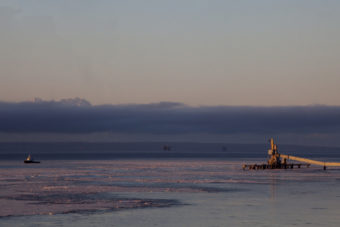
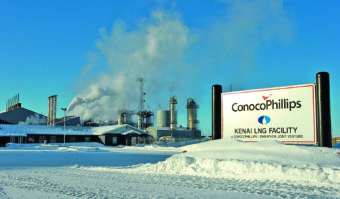
The Feb. 2, 2008 file photo shows the ConocoPhillips LNG facility in Nikiski. The company plans to mothball the facility in the fall of 2017. (Photo courtesy of the Peninsula Clarion)

Last year, ConocoPhillips announced that it wanted to sell its liquefied natural gas plant on the Kenai Peninsula. The company hasn’t yet found a buyer. Now, a company spokesperson said it’s going to save expenses by mothballing the facility this fall.

It’s the last piece of infrastructure that ConocoPhillips owns in Cook Inlet. And they’re getting closer to shutting it down.

The Kenai LNG facility is up against a world market that’s awash in natural gas. 

“Most people are fairly aware of the fact that worldwide the price of oil and gas has been low,” said ConocoPhillips Senior Communications Specialist Amy Burnett.

Generally, ConocoPhillips is doing well in the oil business in Alaska. The company announced earlier this year a new discovery that could yield up to 100,000 barrels a day in Prudhoe Bay.

But it has struggled to make money in the LNG export market.  

“Over the last few years, more facilities have come online to export LNG,” Burnett said. “So there are more sources available for the product which makes competition more difficult.”

And the plant has been on hold for awhile.

“Our last export was actually…in the fall of 2015 and since that time the plant has been in a cold shutdown mode,” she said.

That cold shutdown mode means the plant isn’t exporting any LNG, but could restart shipments relatively quickly.  But keeping the tanks cold costs money, because they have to buy the gas they need to keep them full.

The plan is to let those tanks warm up by leaving them empty.  And that means ConocoPhillips will save some money.  But it also means that it will take longer — and cost more — to bring the plant back online.  

And some people may lose their jobs.

“It’s too soon to say actually what that’s going to look like. There are about 18 ConocoPhillips employees who may be impacted by the change,” Burnett said.

That’s just over half of the employees currently working at the facility.

Larry Persily, Chief of Staff for the Kenai Peninsula Borough, said if the company does scale back its operations it will have an impact beyond the potential loss of 18 jobs in the Peninsula communities.

“It’s also a hard reminder to Alaskans that no matter how much we want to sell our oil and gas, if the market doesn’t want it, doesn’t need it or isn’t willing to pay a price to make it profitable — we can’t sell our oil and gas,” Persily said.  

Prices have tumbled from $15-$18 per million btu, to just over $5.

“You can’t buy gas out of Cook Inlet, pay to liquify it, burn up some of it while you’re liquefying it, put it in a tanker and deliver it for $5.50 per million btu and make money,” he said. “It is a[n] inhospitable market and will be for the near future.”

The glut in the global LNG market is a roadblock in the state’s efforts to market and build a pipeline to get Prudhoe Bay’s enormous reserves to market.

And the financial future of that project — the Alaska LNG project — has been in question for awhile.

The legislature briefly considered cutting $50 million in funding from the state corporation tasked with developing that project.

Rep. Mike Chenault, R-Nikiski, said lawmakers ultimately decided to leave the funding in the budget in part because the glut won’t last forever.

“I don’t know if [Alaska LNG would] ever be viable in the current market. But markets change. And sometimes they change drastically as we well know with the price of a barrel of oil or the price of a cubic foot of gas,” Chenault said. 

Burnett said the company is still negotiating with potential buyers. But, she wouldn’t say who those buyers were or how those negotiations were going– she said they’re confidential.

In January, the state’s gasline corporation disclosed that it was considering the purchase.

But any new buyer would need to get a federal export license if it wanted to sell gas to foreign markets — the company’s current license expires in February of 2018.

From Anchorage, Walker tells lawmakers to get back to Juneau

Reporters hear from Gov. Bill Walker on a variety of issues during a Monday press conference in Anchorage. (Photo by Casey Grove/Alaska Public Media)

Lawmakers have been meeting in Juneau for nearly half a year, but Gov. Bill Walker told reporters on Monday in Anchorage that he doesn’t think they’re done yet.

He wants lawmakers to fix the state’s beleaguered budget this year rather than waiting until next session to find new sources of revenue.

They barely avoided a state government shutdown by passing an operating budget eight days before the deadline. But it pulls $2.5 billion from state savings — a move Walker said is unsustainable.

This is the third year lawmakers have relied on savings to cover multi-billion dollar budget gaps.  And Walker said he wants the legislature to keep working.

“They have made great strides, they really have. And that’s why I said, since you’ve done the hard work to make those difficult votes, and potentially unpopular,” Walker said. “There’s no popular votes that are out there when you’re fixing a fiscal plan. They’ve done that. You might as well get the product from it, I guess is what I’m saying.”

Lawmakers have not agreed on a capital budget and that has delayed projects all over the state.

Currently, lawmakers are in a special session with just one issue on the agenda — oil and gas taxes. That session ends on Saturday. But, the Senate and the House have been at a standstill. And lawmakers said they don’t plan to get back to work on oil taxes in Juneau until Wednesday.

Walker is responsible for putting issues on the agenda of a special session. But, he wouldn’t said if he intended to call lawmakers back to Juneau for another session or.. What he would put on an agenda if he did.

“You know, we’re going to let this week play out,” he said. “I’m very encouraged, they’re working together. I like to see that momentum of working together, and that’s exactly what they’re doing.”

Meanwhile Walker has continued to push a state-led gasline project to a national and international audience. Last week, he met with Pres. Donald Trump and three other state governors to discuss national energy issues.

He also met with South Korean President Moon Jae-in while he was in Washington, D.C. The state corporation tasked with developing the gasline project signed a non-binding preliminary agreement with a large South Korean buyer.

Last week, a missile test in North Korea revealed that the country could potentially reach Alaska with an intercontinental weapon. Walker said it spotlights the importance of Alaska’s military bases.

“As a result of that, even before those coming out, I have had a number of briefings as far as the severity of the situation,” Walker said. “Here we are again talking about our strategic location and doing what we need to be on the trajectory of getting additional military presence in Alaska.”

The state is also grappling with a request for voter data from a voter fraud commission created by the Trump administration.

But that request has gotten push back from other states and the ACLU filed a lawsuit against the commission on Monday.

Lt. Gov. Byron Mallott told reporters the state is responsible for protecting voter privacy.  He said the administration is keeping an eye on the lawsuit and what information is should turn over and what it shouldn’t.

Site notifications
Update notification options
Subscribe to notifications