Theresa Soley

Wilderness therapy could battle addiction, is lacking in Alaska

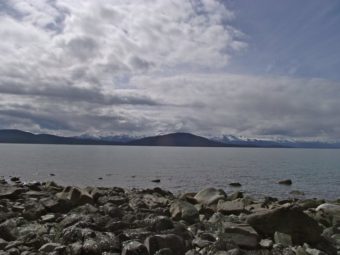
Southeast ocean (Photo by Theresa Soley/KTOO)
One approach to battling addiction and other behavioral health issues lies just outside our front doors. (Photo by Theresa Soley/KTOO)

Police reports, the press and social media are flooded with stories of substance abuse, heroin overdoses and deaths in Alaska’s capital.

One approach for battling addiction and other behavioral health issues lies just outside our front doors.

“Across the world people seek solitude or wilderness experiences because there is a healing process,” said Jerrie Dee, clinical director at Alaska Crossings.

Alaska Crossings is a wilderness therapy program for youth with behavioral issues, including those with a history of drug abuse. The program takes adolescents, ages 12-18, on 64-day canoe trips into wild Southeast from Wrangell.

The program uses wilderness as a catalyst for healing, Dee said. Natural challenges, silence and a sacred process emerge when immersed in the outdoors. Dee said these things can redirect someone’s life.

Dee said wilderness immersion gives recovering drug users an opportunity to reset because external triggers and temptations are not present in the outdoors.

“Often times substance use is more an emotional process than it is physical,” she said.

Using surveys before, during and after immersion, Alaska Crossings has documented a substantial decline in participants’ negative symptoms. Long term effects after leaving the wilderness are harder to measure.

Dee said the process works for adults, too, but as far as she knows, there aren’t any wilderness therapy programs for people over 18 in Alaska.

Larry Olson, a licensed master addiction counselor in Juneau, said that many of the patients he sees started using prescription drugs in high school. With time, the habits spiraled into full addictions. He said there is no formula; some of his patients come from rough homes, but many come from loving families.

Most of the six people who died of heroin overdoses in Juneau since February were under the age of 30, according to Alaska Dispatch News. And Olson said a large portion of his patients are under 30.

Alaska Crossings admits youth who have struggled with addiction, but it is not a drug treatment program. Dee said that in the wilderness, guides can’t monitor for health issues, including withdrawal.

When substance abuse is an applicant’s primary issue, it must be treated before admittance to Alaska Crossings and entering the wilderness, Dee said.

This two-tier theory, detox then therapy, is common for wilderness addiction treatment programs.

Olson, the addiction counselor, said that many adults who are battling addiction have weak, deteriorated bodies. High levels of activity may not be an option.

But Olson said less rigorous wilderness experiences could provide opportunities for healing. He said that many of his patients speak of the importance of nature in their personal spirituality. Rekindling the human relationship with the natural world can be very healing, he said.

“If people can redevelop a sense of awe and wonder at just life, that is really very, very good,” he said.

The program follows a three-step process. The first is to develop discipline and routine, next is a focus on the participant’s unique treatment ambitions and third is learning to apply new skills to everyday life at home, said Alaska Crossings Director Stephen Helgeson.

Helgeson said that paying for wilderness therapy programs, both as an organization and for participants, is the greatest challenge. Lack of funding makes it difficult to provide help to those who need it most.

He hopes that as Medicaid expansion develops, more funding will become available for low-income adults.

New program tests for harmful algae blooms, toxicity in Southeast waters

West coast algae bloom
Average chlorophyll concentrations in milligrams per cubic meter of water in July 2015. The darkest green areas have the highest surface chlorophyll concentrations and the largest amounts of phytoplankton, both toxic and harmless species. (Image courtesy NOAA)

During the summer, toxic algae whip through marine currents in Southeast and are consumed by filter-feeding bivalves, like mussels. One such algae is an armored dinoflagellate called Alexandrium.

Alexandrium was common only in summer months previously, but now may be present in the winter, too.

“Blue mussels are kind of like the pigs of the sea. They never stop feeding,” said Chris Whitehead, environmental program manager of the Southeast Alaska Tribal Toxins partnership.

Blue mussels are one entry point for Alexandrium to work its way up the food chain. The algae cause paralytic shellfish poisoning, affecting animals that eat blue mussels, like Dungeness crabs and humans.

And another harmful algae, Pseudo-nitzschia, is circulating in the Pacific too.

From California to Washington, commercial Dungeness crab fisheries were closed or delayed this fall because of the Pseudo-nitzschia bloom. Some species of the algae produce domoic acid, a neurotoxin.

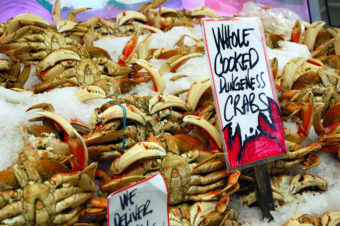
Dungeness crab at Pike Place Market
Dungeness crab at Pike Place Market in Seattle, October 2011. (Creative Commons photo by jpellgen)

The Southeast Alaska Tribal Toxins partnership and University of Alaska Fairbanks oceanographer Liz Tobin have created a program to test for blooms and toxicity in Southeast.

September SEATT data from Juneau indicates Pseudo-nitzschia was present at Amalga Harbor, Auke Bay, Eagle Beach and Point Louisa. According to Tobin, the presence of Pseudo-nitzschia has been documented in Southeast but there is no evidence of the harmful domoic acid.

Whitehead, with the tribal partnership, said the Pseudo-nitzschia found in Southeast could be a different, nontoxic species than the one documented down south.

Moving up the coast, “somewhere in Canada everything changed,” he said. “As soon as it left the West Coast of Washington and moved into British Columbia something switched.”

At the Juneau testing sites monitored this September, Alexandrium was present at all locations except Eagle Beach, although there was no bloom.

In the past, it was considered safe in Southeast to consume bivalves harvested from September through April, because Alexandrium was uncommon. But there was a case of PSP documented last December in Juneau, according to Whitehead.

While the monitoring project for toxic algae is in its infancy, researchers believe future studies will detect blooms before they become harmful to people. Monitoring plans include testing bivalves and dungees for the toxins.

A recent study from Haines found the guts of Dungeness crab tested higher for PSP than Food and Drug Administration limits for human consumption. While most people don’t eat the guts, the results may be worrisome for crab consumers.

Christine Woll fishes for dungees by kayak from North Douglas. She drops a collapsible pot each spring and paddles to it weekly throughout the summer to retrieve her catch. She guts each crab and keeps the meat only.

Woll used to make crab stock out of the leftover carapace, but she has stopped.

“If there are extra parts of the crab left there on the shell that might be toxic, that would be a place that I might get in trouble,” she said.

According to oceanographer Tobin, as far as research can tell, only consumption of infected dungee guts, not the meat, is toxic for human consumption when it comes to PSP.

But domoic acid accumulates in crab meat.

Tobin said a few environmental factors are responsible for prolific algae blooms.

“Temperature seems to be a driving factor, but considering that this year we had anonymously high sea surface temperatures in the Juneau area, and we didn’t see a bloom (of Alexandria), that indicates that it’s not the only contributing factor,” she said.

Wind speeds, freshwater runoff and nutrient loading could also affect the blooms.

An unusual mortality event of 18 endangered whales near Kodiak has raised concerns toxic algae could be harming whales, too.

All of these questions call for further monitoring by the tribal partnership.

The group’s new biotoxin lab in Sitka will take a leap forward in early detection of harmful blooms. The monitoring program could allow documentation of toxins before they work through the food chain from mussels to crabs and humans.

Dive fishermen and sea otters face complex competition

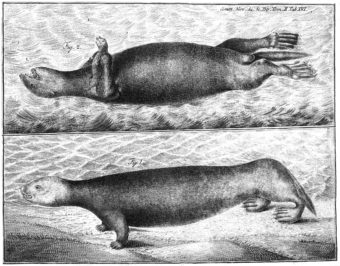
Sea otter illustration by Naturalist Steller (Wikipedia commons photo)
Sea otter illustration by Naturalist Georg Wilhelm Steller (Wikipedia commons photo)

What many Americans consider to be a cute, back-floating mammal is a pest, even a thief, to some Southeast Alaskan fishermen.

Humans and sea otters enjoy consuming the same bottom-dwelling seafood: Dungeness crabs, clams, sea cucumbers and urchins.

But in some areas these organisms have completely disappeared, according to Phil Doherty, director of the Southeast Alaska Regional Dive Fisheries Association (SARDFA).

This has increased competition between dive fishermen and sea otters.

Harriet Wadley has been a commercial sea cucumber diver for 27 years. She dove for abalone until the dive fishery closed in 1996.

“We had an abalone fishery here until the otters ate us out of it,” she said. “And then I switched about the time that the abalone fishery was dying, the sea cucumbers started up.”

A paper published by the U.S. Fish & Wildlife Service in 2014 says the sea otter population is growing by 12 to 14 percent a year, which equates to 3,000 more animals in 2015 than 2014. And more otters mean an expansion of their range.

Before reintroduced in the 1960s sea otters were absent in Southeast for over a century, driven to extinction by the Russian fur trade.

But now they seem to have the leading edge on humans.

In 2011, a study by SARDFA documented $22.4 million dollar losses to commercial fisheries as a direct result of predation by otters.

“We harvest at a very, very low rate: 2-4% of the population of the species per year.  And in areas where sea otters have expanded into they eat just about everything,” Doherty said.

Many sea cucumber, clam and urchin dive fishing areas have been closed to commercial fishing because sea otters have eaten the areas bare, he said.

It wasn’t easy starting out as a female fisherman, Wadley said. She was inexperienced — green but eager. A diver with a good reputation eventually agreed to take her out for abalone.

“I ended up getting more poundage than the rest of the divers put together,” she said.

Now Wadley owns her own 45-foot boat named “Vulcan.” She has a sea cucumber quota and manages her own personal dive fishing operation. Wadley and one other person take her boat out for seven-hour fishery openings.

She swims to the ocean bottom with four empty bags and a tank of oxygen on her back. Her partner waits on the boat. He will pull up the heavy bags packed with cucumbers.

“Boy, once you get underwater, I mean, it’s beautiful down there,” Wadley said.

But the last few times she went out, cucumbers were pretty “skinny.”

“When you get into an area where there are sea otters it looks like a World War II bombed out zone,” she said. “There’s dust everywhere. They do a lot of damage to the bottom.”

A sea otter floats on its back. (Photo by Theresa Soley/KTOO)

Wadley said sea otters like abalone best, so that fishery closed first. Next it was urchins, and then cucumbers. Geoduck clams are next, she said.

“They’re totally eating us out of house and home.”

The Southeast Alaska Regional Dive Fisheries Association (SARDFA) supports legislation to reduce sea otter numbers by incentivizing harvests by Alaska Natives.

But in 2014 another fishing group, the Southeast Herring Conservation Alliance (SHCA), wrote in a public comment that the herring fishery benefited from a greater abundance of sea otters.

SHCA wrote that an increase in sea otter harvest by Natives could trickle down to a reduction in herring spawning habitat, in turn reducing herring abundance.

Federal law prohibits hunting of marine mammals in American waters; Alaska Native subsistence hunters are exempt from the law.

According to U.S. Fish and Wildlife documents, 1,137 sea otters were harvested statewide this year.

177 sea otters were reportedly taken in Sitka, down from 349 animals in 2014 and 550 in 2013. In the past, Sitka has documented more harvested otters than any other city in the state. Over the last 25 years, Hoonah reported less than a third of the harvest by Sitka, and Ketchikan a sixth.

But this year, Hoonah’s reported harvest more than tripled from 49 sea otters in 2014 to 180 animals so far in 2015.

Nathan Soboleff is a contracted sea otter tagger for Fish and Wildlife in Juneau.  He is also a Tlingit-Haida marine mammal hunter of the Raven-Dog Salmon clan.

Soboleff said that after a hunt, Natives have 30 days to bring the otter’s hide and skull to an office for tagging. To legally document the animal, he places a tag through the nose of the hide.  He also removes a pre-molar tooth from the skull and keeps it for research.

“It’s like a growth ring on a tree. So they will sand down the tooth and read the growth rings on them,” Soboleff said.

In 2011 and 2013, bills were introduced by federal and state lawmakers to create incentives for Natives to hunt more sea otters. The proposed bills were supporting the declining commercial Dungeness crab and dive fisheries.

In 2013, state Sen. Bert Stedman, (R-Sitka), introduced a bill proposing a $100 bounty for each sea otter harvested by an Alaska Native.

The bill did not pass.

Mike Miller, chair of the Indigenous People’s Council for Marine Mammals (IPCoMM), said that Natives were mostly opposed to the bounty bill.

Miller, who lives in Sitka, said his group supports legislation that encourages economic opportunity for Native communities, but “the one thing we didn’t want to do was inadvertently to change from that goal to a predator control issue which is more just about getting rid of the animal.”

But Phil Doherty, SARDFA, said that Native subsistence and commercial fishing interests aligned.

“It is a win-win,” he said.

According to Doherty, the bill proposal was about “trying to help the Native hunters pay for some of their expenses.”

But Miller said that the enacted bill could have caused a flood in the market of sea otter pelts, which would drive their value down and ultimately harm Native communities.

During state legislative session last February, minutes report Senator Stedman said, “Otters continue to proliferate and they are more invasive than humans.”

He did not respond to requests for comment.

According to Doherty, the fate of Southeast dive fisheries lies in the hands of politicians in Washington, tied up in the federal Marine Mammal Protection Act.

Harriet Wadley said she doesn’t understand why the government prohibits hunting of sea otters by non-Natives.

“We control every other population: deer, bear, wolves. We keep every population in control and under balance,” she said. “Why is it because this creature is cute that we can’t maintain a balance and open up a hunting season on them?”

Wadley estimates the sea cucumber fishery has six years of life left if nothing is done about otters.

After that, she says she’ll be done diving.

Wadley said she doesn’t know what will come next. Maybe winter kings, or perhaps vacation.

A Southeast timber company waits in limbo

Recently, the U.S. Forest Service released a plan that gives loggers a timeline for the transition to second-growth harvesting. The plan is currently open for public comment. A proposal to end clearcutting of old-growth trees in the Tongass National Forest has some Southeast logging companies concerned about the future.
Susan Tyler runs Icy Straits Lumber & Milling in Hoonah with her husband Wes. It’s a family business and one of the few surviving timber companies in the region

Wes has been harvesting trees in Alaska since 1967. For the past 34 years, he’s packed his truck with power saws, axes and wedges to drive along winding roads on Chichagof Island. Once in the woods, he searches for a tree the U.S. Forest Service has marked with paint, indicating it can be removed from the old-growth forest and processed into lumber.

“Typically we are harvesting in the summertime, although we have been out in knee-deep snow harvesting too,” Wes said. “We put in a good eight-hour day out there normally, you know, working in the woods.”

Following selective logging regulations managed by the Forest Service, the company has downsized from 200 employees in the 1980s to only 10 today. New proposed restrictions that would eliminate harvest of old-growth trees are troubling for the Tylers. In a phone call from Hoonah, Wes said the company is bracing for big changes.

“The timber industry today is barely existing,” Wes said. “So you know what’s available to us here is what we’re trying to create jobs with and keep our local people working to the best of our ability.”

Wes could talk about trees for hours.

He said that the company harvests four different tree species on the island: Sitka spruce, western hemlock, alder and yellow cedar.

“Yellow cedar is a lot smaller tree than either hemlock or spruce typically,” Wes said. “It just doesn’t grow that fast. And it doesn’t grow real straight so you have sweeps and curves and kinks and there’s a lot of defect in it, so it takes a lot of work to extract all the goodies that are in it. Which we do. We take everything in that yellow cedar tree right down to a very small size.”

Lately, Susan has been spending much of her time in Juneau — a 20-minute flight east of Hoonah. She has a showroom in the capital city that is typically closed. But with the flip of a switch the room becomes aglow with woodwork. The space resembles an upscale flea market featuring only wood. Pieces range from dollhouse-sized model cabins to full kitchen counters.

She manages the showroom herself because it would be too costly to employ someone else. Susan said Icy Straits Lumber & Milling is up against big corporations like Home Depot for business. Timber sales available in the Hoonah area only allow selective logging, making profits that much harder to come by.

Bidders on timber sales are told how much wood can be harvested from each plot, but they don’t know how much of the wood is actually valuable, Susan said.

“Right now we have a lot of very expensive equipment and it’s hard to go after another timber sale because you don’t know what’s in that timber sale,” Susan said.

The new proposed restrictions could reduce the supply of trees available for harvest.

“There is a lot up in the air because … they want to stop all old-growth harvesting. Of course, that would eliminate us from harvesting any,” she said.

According to the Forest Service, the supply of second-growth forest, regrown from past clear cuts, is large enough to allow a smooth transition into the new policy.

Icy Straits Lumber & Milling is considering a switch to harvesting regrown trees, but Susan worries the Hoonah area may not have enough second-growth forest to sustain her company in the future.

“We don’t know, and you don’t want to keep investing in equipment if you don’t know what the future holds,” she said.

To supplement what standing trees they can harvest, Susan says her company also collects trees that wash up on the beach, dead standing wood, danger trees, blow downs and trees that have a dead top but are mostly usable. All of this is also managed by the Forest Service.

Some of that wood ends up in the hands of Juneau woodworker Reid Harris.The young entrepreneur started a wood furnishing business called Northern Edge Craftworks. His tables are made from vertical woodcuts that keep the natural, rough edge of the tree.

Most of the logging company’s business comes from locals like Harris. His basement and garage workshops are lined with tree slabs ranging from the length of a baseball bat to that of a kayak.

Harris exemplifies optimism for an industry with an unknown future.

He wants to connect the people who purchase his pieces to the life of the tree, so he marks each table he makes with the coordinates of where the tree was taken.

Furniture from Northern Edge Craftworks is marked with the GPS coordinates of the tree it came from. (Photo by David Purdy/KTOO)


“We had this idea because we kind of wanted our pieces of wood to tell a story and each piece comes from a unique part of Alaska,” Harris said.

So now Wes carries a GPS into the forest with him.

The Tongass transition plan is open for public comment until February 22, 2016.


Citizen scientists contribute to jellyfish research

Jellywatch worldwide (Image courtesy of Steven Haddock)

Crystal. Lion’s mane. Sea nettle. Moon. Comb. The Big Red. These are some of the species of jellyfish that live in Southeast’s waters.

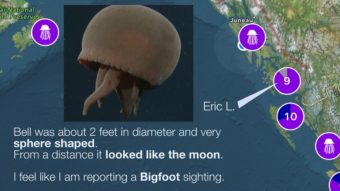
Eric Lunde, a scuba diver in Ketchikan, describes one he encountered:

“It was this gelatinous moon-like greyish orb with just a little bit of a translucent skirt. It was just very still, drifting in the water.”

A California researcher is incorporating public observations like these, posted on jellywatch.org, into his research.

Dr. Steven Haddock from the University of California, Santa Cruz said jellyfish can survive, even thrive through cold and dark Alaska winters. He said a common perception people have of jellyfish is that they “like warmer water for some reason. But in Alaska, the species like the lion’s mane, are really restricted to colder water.”

Haddock researches marine bioluminescence, zooplankton and jellyfish in the deep sea, off the California coast. But he typically doesn’t study nearshore jellies.

He hopes citizen science data will help paint the big picture of jellyfish blooms across the planet.

“We can actually get a lot of insight into what’s happening on a large scale with regard to jellyfish abundances,” Haddock said.

His citizen science project has two main objectives. One goal is to document a wider ocean range than he, the scientist, can observe on his own.

“Citizen science in general is valuable because it is multiplied with such large numbers,” he said.

Haddock said that his research boat charters are expensive and he can only be out on the water for a limited period of time.

Meanwhile people worldwide experience the ocean every day, and make valuable observations.

“To tap into that pool of citizen scientists has huge advantages for the data set,” he said.

While some hypotheses contend that a warmer climate has increased jelly blooms, Haddock said more widespread data are needed to determine if these theories are accurate.

Citizen science research also has educational benefits. Haddock hopes it will help combat a misconception that jellyfish are evil invaders of the ocean.

He said that posts to his website that include a photo are useful, but documenting an observation without a photograph is better than no posting at all.

Haddock described the value of one posting by a Ketchikan diver:

“He gave a perfect description. So he didn’t have a photo, but he gave a description of this jelly that sounds like a deep-sea species that we discovered here in Monterey, and a colleague of mine just described it recently,”Haddock said. “It’s called Tiburonia. We call it ‘The Big Red’ because it’s like the size of a beach ball. So this guy diving said ‘I feel like I’m reporting a big-foot sighting.’”

The Big Red (Image courtesy of Steven Haddock)

He added: “I think it actually could be a sighting of this relatively newly discovered deep-sea species that he saw just while scuba diving off Ketchikan.”

Haddock only knows this citizen scientist by Jellywatch username, yet he reported a valuable observation to the scientific community.

What Haddock really needs are observations of “no jellyfish sighted,” posted on his website. He said “clean seas reports” give documented sightings greater research validity. Haddock wants to know whether a lack of postings means an actual deficit of jellyfish, or just a lack of human observations. Seeing no jellyfish is just as significant as seeing many.

Some halibut may successfully adapt to warmer seas, others may not

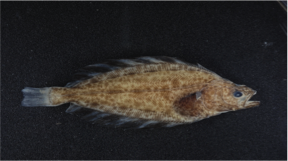
Juvenile Greenland halibut. ( Photo by Dongwha Sohn/CEOAS)
Juvenile Greenland halibut. ( Photo by Dongwha Sohn/CEOAS Oregon State)

While their average size is decreasing and 500-pounders are rare today, new research suggests Pacific halibut may adapt favorably to increased ocean temperatures.

Greenland halibut may not be so lucky.

Dr. Cathleen Vestfals, Oregon State University, presented her Ph.D. research at the UAF School of Fisheries and Ocean Sciences Juneau Fisheries Seminar recently.

Vestfals researched the life cycles of two different halibut species that reside in the Eastern Bering Sea: Pacific halibut and Greenland halibut. Both are large flatfish, have big mouths lined with sharp teeth and inhabit some of the same areas.

Pacific halibut get much larger than Greenland halibut do: 8 feet long compared to 4 feet. Pacific halibut are mottled green on top and white on their bottom-facing side. Greenland halibut are blackish purple on top, iridescent yellow-green on their underside.

And they may respond differently to climate change.

Juvenile Pacific halibut (Photo by Morgan Busby/NOAA)

For her research, Vestfals compared the success of the two flatfish species in past warm and cold years.

Pacific halibut live from California, north through the Bering Sea and across the Pacific to Japan. Due to the extent of their southern range, Pacific halibut may continue to breed and disperse successfully if the ocean becomes a few degrees warmer.

“We would expect that they would do really well under warming conditions. Their habitat is likely going to expand under warming scenarios,” Vestfals said.

Greenland halibut, on the other hand, occupy only circumpolar waters. If the ocean warms by a few degrees, their cold water habitat may contract northward.  According to Vestfals, fisheries scientists already “have noticed a northward shift in species and changes in species assemblages in response to warming.”

So global warming could mean fewer Greenland halibut.

According to Vestfals, Pacific halibut “have a better chance than Greenland halibut would to make it.”

To follow flatfish, visit the Flatfish Fan Club Facebook page Vestfals made.

Site notifications
Update notification options
Subscribe to notifications