"Through my reporting and series Tongass Voices and Lingít Word of the Week, I tell stories about people who have shaped -- and continue to shape -- the landscape of this place we live."
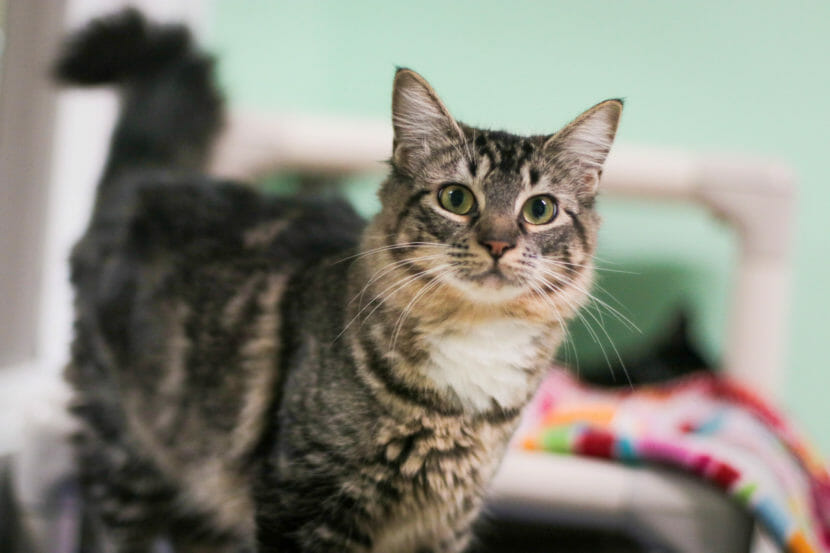
A tabby cat photographed at Juneau Animal Rescue on July 21 2022, Juneau Alaska (Photo by Paige Sparks/KTOO)
Juneau Animal Rescue is resuming spay and neuter services for cats and dogs. The services are in-house at the rescue for the first time since 2014.
Samantha Blankenship is the executive director of Juneau Animal Rescue. She said they are offering a variety of price ranges depending on income. Cats and smaller dogs can get fixed for prices as low as $55 for male cats and $130 for male dogs, if pet ownersqualify.
“But we also are offering spaying and neutering for full price to people as well, because we know the veterinary shortage in town is real,” Blankenship said. “The money from that goes back in to help the animals here at the shelter.”
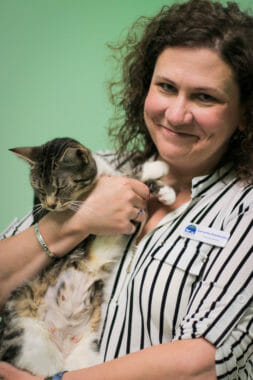
Samantha Blankenship holds a recently fixed cat at the Juneau Animal Rescue Center on July 21, 2022. (Photo by Paige Sparks/KTOO)
Blankenship said that nationally, nearly 3 million fewer pets than expected were spayed or neutered over the course of the pandemic, according to a recent study.
In Juneau, the impacts were clear. Juneau Animal Rescue had been offering low-cost services at Southeast Alaska Animal Medical Center until they closed in April. This summer, Juneau Animal Rescue had its highest number of cats in need of homes in two decades.
The spay and neuter services are limited to healthy animals that aren’t considered senior in age. The clinic won’t be doing blood work on animals to determine their health before spaying or neutering them.
“Right now, we’re getting people in pretty quickly,” Blankenship said. “So now is a good time to book your appointment.”
Blankenship said pet owners should bring paperwork with them that shows they qualify as low-income, along with any vaccine paperwork.
A few days after dozens of Juneau Public Market vendors packed up their booths and tallied their earnings, the ballroom at Centennial Hall stood empty, save for a few people pulling out cables.
In the bright lighting, the space looked bigger and emptier than it did when it was full of music lovers for the Alaska Folk Festival in April, or when dancers filled the aisles for Celebration in June.
Events like those won’t grace the ballroom again until late next summer. Centennial Hall is closing for major renovations in its ballroom — and the closure leaves local organizations shuffling their schedules and looking for alternate venues.
Kathleen Harper is Centennial Hall’s house manager. She said people should expect to see big changes, but not everything will change.
“It is all just going to be concentrated on the ballroom,” she said. “So if people walk in next year and are wondering why the carpet in the lobby isn’t different, it’s because that was not part of the plan.”
Some of the improvements will include dimmable LEDs, easier-to-move partitions and a floor that should be more comfortable and more durable.
Harper said the renovations have been a long time coming.
“There’s a lot of equipment that’s in here that was really good in the 80s,” she said. “But it’s definitely reaching the end of its lifespan and is starting to fail.”
The city awarded $6.4 million to Carver Construction to complete the renovation. Juneau voters approved funding the renovations in a 2019 ballot proposition. The work will keep Centennial Hall out of commission for about nine months.
Joshua Warren runs Platypus-Con, a local board game convention, which will be held next September instead of its usual January weekend. Warren said rescheduling worked better than moving.
“We’ve grown to the size where I just don’t know there’s a space that we felt fit us,” he said. “We didn’t really want to shrink to make it happen in January.”
But the Alaska Folk Festival will have to move. Andrew Heist, with Folk Fest, issued a statement this week saying the event will still take place in April, and they’ll say where soon.
The big reshuffle is even affecting events that don’t use Centennial Hall.
Pat Race, the owner of Alaska Robotics, organizes a comic convention every May. The Alaska Robotics Mini-Con usually happens at the Juneau Arts and Culture Center, but the spillover from events moving out of Centennial Hall means the comic convention will have to move.
“Oh, it’s very much up in the air,” Race said. “I don’t know what the answer is. But we’ll figure something out.”
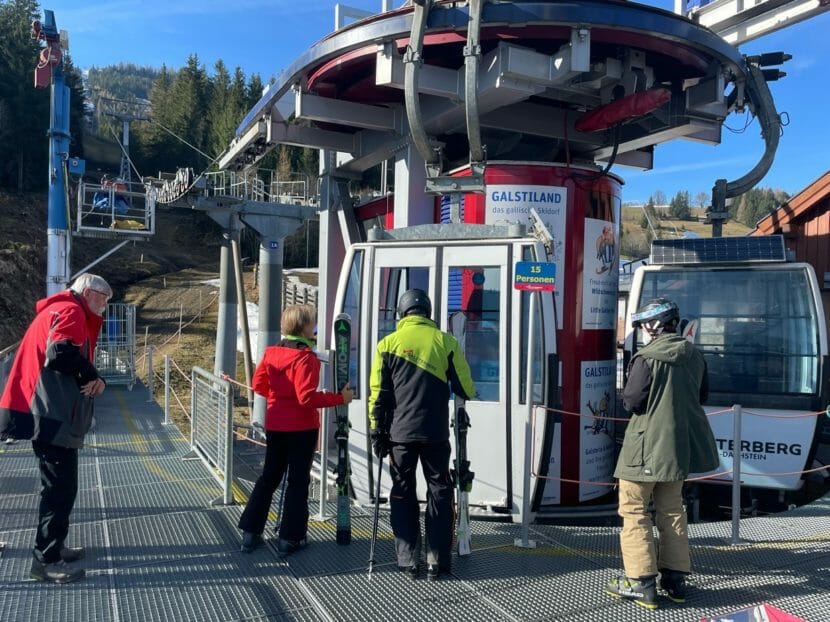
Eaglecrest Ski Area General Manager Dave Scanlan was at a ski area called Galsterberg in Austria in April 2022 to inspect this gondola system. Eaglecrest is buying the system and having it shipped to Juneau. (Photo courtesy of Dave Scanlan/Eaglecrest Ski Area)
What they’re working on is a revenue sharing agreement. The city has spent over $2 million so far. Goldbelt will contribute $10 million to the project and would get between 10-25% of gross revenue the gondola makes.
The deal lasts 25 years, and Goldbelt will take a share of the profits of ticket sales over that time, with a goal of getting $20 million back from their investment. If that takes longer than 25 years, the city and Goldbelt can extend the agreement.
The agreement says the opening day for the gondola will be May 31, 2027. If that doesn’t happen, Goldbelt can back out.
The proposal aims to have 75,000 visitors to the gondola in the first year. That’s about 750 tourists a day during the summer months. Juneau city manager Rorie Watt said he thinks having a partnership with Goldbelt would help reach that number.
“If it was CBJ going it alone, I would not be very comfortable,” he said. He referenced Goldbelt’s experience operating the tram and said, “I think [it’s] quite plausible, and small, really, in the context of the number of visitors that come.”
McHugh Pierre, Goldbelt’s president and CEO, said the gondola at Eaglecrest offers future visitors something the current Mt. Roberts tram does not: more access to outdoor sports.
“We’re not going to have mountain bikes on Mount Roberts. Goldbelt Tram is never going to authorize that,” Pierre said. “But we could see in the future where you might be riding a mountain bike down Eaglecrest. And so those are some of the things that we’re excited about.”
Pierre said he believes this partnership will pan out.
“We think this is a really great opportunity to participate,” he said. “And we believe 75,000 visitors in the first year is acceptable and doable.”
Pierre predicts tickets will cost around $100.
The next step on the gondola project is to formally introduce an ordinance to the assembly on Dec. 12, followed by public commentary in January.
Police tape across the Brotherhood Bridge Trail on Sept. 23, 2022. The body of Juneau resident Faith Rogers was found about 200 yards from the trailhead on Sept. 21. (Photo by Paige Sparks/KTOO)
Juneau police gave very few details last week when they announced that they arrested Anthony Michael Migliaccio in connection with the killing of Faith Rogers in September. But court documents tell the story of how he ended up in police custody for a separate incident.
Back in June, Migliaccio was accused of harassment by a barista at Heritage Coffee on Mendenhall Mall Road. The barista said Migliaccio threw a cup of feces at her, according to court documents.
Eighty minutes later, a Juneau police officer made contact with Migliaccio, who denied throwing the cup of feces at the barista.
Two days later, the police obtained footage of the incident. The case was forwarded to the city attorney’s office, according to the Juneau police.
Nothing in the court documents explains what happened with the case for the next three months. The Juneau Police Department couldn’t say what happened after the hand-off to the city attorney, and the city attorney’s office did not respond to requests for more information on Monday.
But on Sept. 21, Faith Rogers’ body was found near the trailhead to the Kaxdigoowu Héen Dei, or Brotherhood Bridge Trail. Charging documents for the murder charge show that Migliaccio was detained and questioned that day and then presumably released.
Nine days later, on Sept. 30, the harassment charges related to the incident with the barista were filed for Migliaccio’s arrest, according to court documents.
The harassment charges were considered a Class A Misdemeanor. He wasn’t sentenced until Nov. 23, the day before he was arrested for murder in connection to the killing of Faith Rogers. That arrest took place at an address consistent with Lemon Creek Correctional Center.
The state declined to comment on any questions that pertain to the murder charge, according to the Juneau District Attorney’s office.
Migliaccio is being held at Lemon Creek Correctional Center on $500,000 bail. He pleaded not guilty to the murder charge.
This story has been updated to reflect that the incident at Heritage Coffee took place on Mendenhall Mall Road.
Elizabeth Peratrovich depicted in the episode “Molly and Elizabeth” of “Molly of Denali”.
The PBS Kids television show “Molly of Denali” has been nominated for Children’s & Family Emmy Awards in two categories: Outstanding Preschool Animated Series and Outstanding Writing for a Preschool Animated Program.
Vera Starbard is one of the show’s writers who lives in Alaska. She now also writes for the ABC show “Alaska Daily.”
But “Molly of Denali” is special to her because of its role informing young people about what it means to be Alaska Native.
“We’re dealing with racism, we’re dealing with identity, we’re dealing with really serious Alaska Native issues,” Starbard said. “But in the context of educating small children, there’s just an inherently fun thing about that.”
Starbard is Lingít and Dena’ina. She said she often thought of “Molly of Denali” as a show about Alaska for Alaskans, but the Emmy nomination makes her think more about how people outside the state value the show.
“Alaskans in general kind of do that to themselves,” Starbard said. “You know, we love what we put out there to the world. But we don’t think anyone else will take it seriously or care about it. And this shows people ‘Oh, people do.’”
Juneau resident Frank Henry Kaash Katasse is a Lingít writer who is listed on the Emmy nomination. He thinks about people in the Lower 48 watching “Molly of Denali” often, because his family does.
“You know, this is something that my nephews can watch in Minneapolis, and my brother can go ‘This is our home,’ and they get a glimpse of what it’s like to grow up here,” Katasse said. “And that’s their connection to the place that my nephews’ ancestors have been since time immemorial.”
For Katasse, writing for a children’s show means he can help create representation that he didn’t have as a kid.
“When I was little, I thought the Ultimate Warrior, the professional wrestler, was a Native guy, because I just didn’t have any representation that I knew of in the media,” he said. “Turns out he’s like, Italian from New Jersey. I was like, ‘he’s a Lingít.’ He wasn’t. But you know, we were grasping at straws at that point.”
Now, Katasse points to shows like “Spirit Rangers” and “Reservation Dogs” that give young Indigenous people a view of themselves on television.
When television creators submit shows to the National Academy of Television Arts and Sciences for Emmy review, they send in a few episodes in a package.
Molly of Denali (Image courtesy of PBS Kids)
In one of the submitted episodes, called “Molly and Elizabeth,” Molly and her friend Tooey encounter uninformed white tourists who tell them they don’t “look Native” because they’re not wearing regalia.
Molly and Tooey then learn about Elizabeth Peratrovich and the work she did to advocate for Lingít people in Juneau in the 1940s. The kids then use this inspiration to educate the tourists about the harm they caused.
“Molly and Elizabeth is such an impactful episode,” said Yatibaey Evans, the show’s creative producer.
“Molly of Denali” has between seven and 10 Alaska Native writers on any given episode, according to Evans, who is Ahtna Athabascan.
“I just leapt for joy and happy tears came down,” Evans said. “I’m so grateful to be recognized along with our incredible team of people that have been working tirelessly on the show since about 2016.”
The nominations were announced in early November. This is the first year of the Children’s & Family Emmys, which will be presented on Dec. 11.
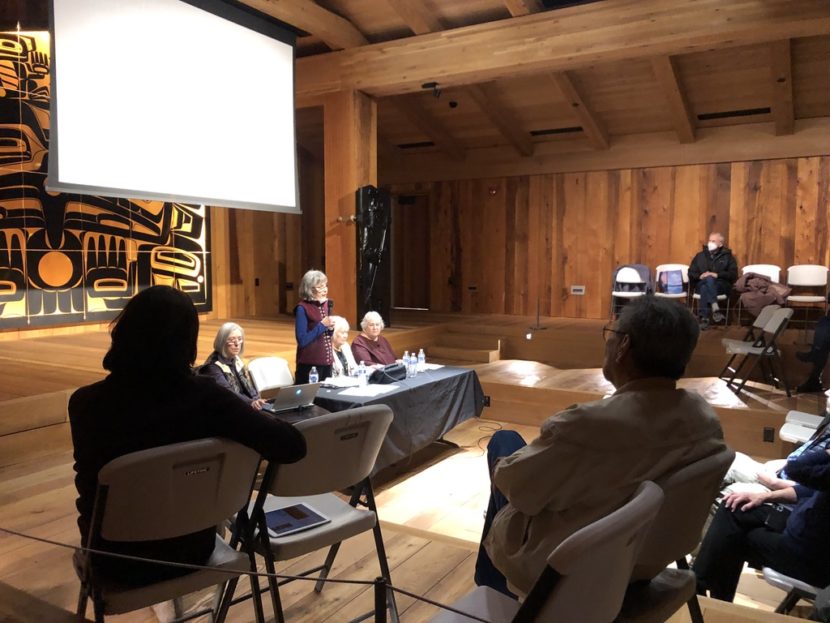
Lillian Petershoare speaks on panel about the closure of Memorial Presbyterian Church at Sealaska Heritage Institute in Juneau on Nov. 14, 2022. (Photo by Yvonne Krumrey/KTOO)
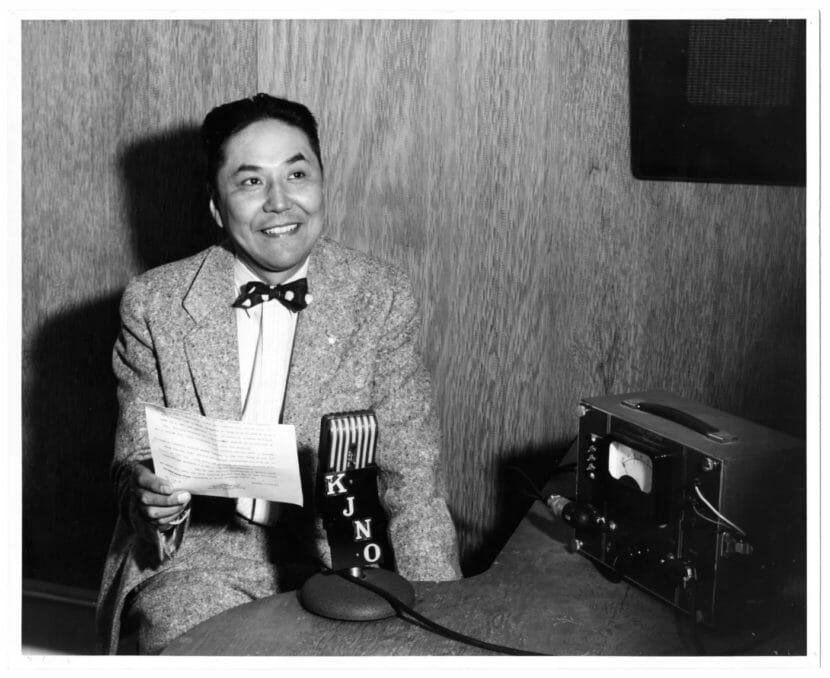
Monday was Walter Soboleff Day in Alaska. Soboleff, who lived to be 102, was a longtime advocate for Lingít people through his religious ministries and work to support Juneau’s youth.
The national Presbyterian Church now recognizes its decision to close the church as a racist “act of spiritual abuse.” When the organization closed the church in 1963, it also gave the separate, white-led Northern Light church a loan of $200,000 for a new building.
Some of Soboleff’s children were at Monday’s panel discussion, along with former members of Memorial Presbyterian Church. Roy DeAsis attended the church with his mother when he was a teenager.
“Various members of the church now in Juneau have expressed to me what’s been going on with this effort,” DeAsis said. “And sitting here, right now, this is pretty emotional for me.”
DeAsis joined the Navy and left Juneau the year the church closed. He said he has good memories about the church and Soboleff, and he was grateful now to learn more about what happened.
“One of the things I remember about Walter, when he spoke to me years ago — but it was the last time since I’ve been away so long — is he said, ‘Roy, you remind me of a tree.’ And I’m so sorry that I didn’t ask him what he meant,” DeAsis said.
Rev. Walter Soboleff preparing to go on the radio. (Photo courtesy of the Presbyterian Historical Society)
During the panel discussion, members of Ḵunéix̱ Hídi Northern Light United Church committee — which was formed to research this closure and ask for an apology — told the story of Memorial’s closure and what they’ve done to repair that harm today. Myra Munson said the closure was an example of racism and its consequences, but telling the story could have a different kind of power.
“It can and has emboldened others to tell their story and shine a light on history that lives in the shadows of denial and pretends that the past is the past,” she said. “It can help those who suffered harm to recognize it for what it is and to begin to heal.”
Together, the Presbyterian Church USA, Northwest Coast Presbytery, and Ḵunéix̱ Hídi Northern Light United Church committed to pay nearly a million dollars in reparations for the harm and pain the closure caused. About a third of that amount comes from each.
National church leadership says the reparation payments will be used to develop ministries in Native languages and Alaska Native leadership in the church.
Close
Update notification options
Subscribe to notifications
Subscribe
Get notifications about news related to the topics you care about. You can unsubscribe anytime.