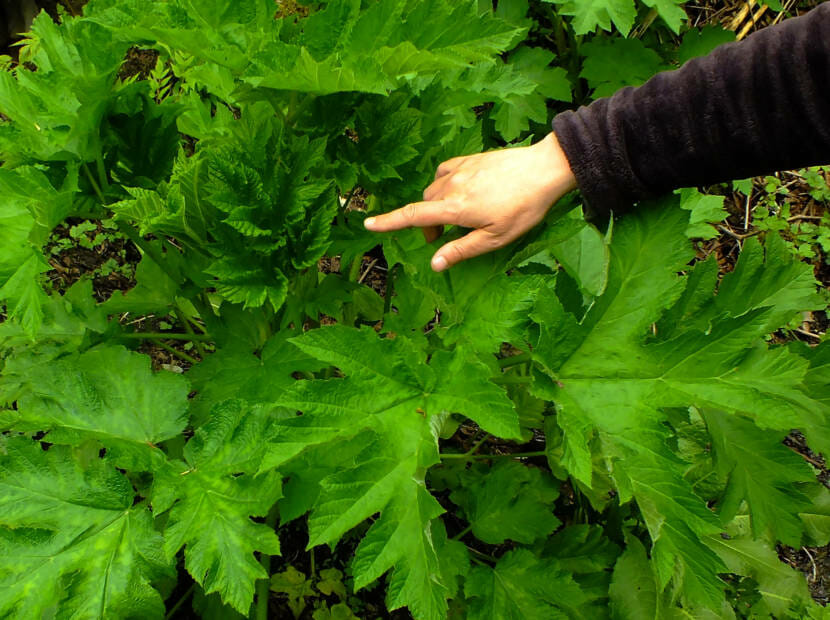
Yéilk’ Vivian Mork points to a wild celery plant’s new leaves, which along with the stalks, are edible. She says the plant usually tastes best when new, young growth develops in the early spring. She recommends picking wild celery – sometimes known as cow parsnip – during cloudy, cool days to avoid an allergic skin reaction to the photosensitive chemical furanocoumarins that are part of the plant’s sap or found on the hairs. (Photo by Matt Miller/KTOO)
This is Lingít Word of the Week. Each week, we feature a Lingít word voiced by master speakers. Lingít has been spoken throughout present-day Southeast Alaska and parts of Canada for over 10,000 years.
Gunalchéesh to X̱’unei Lance Twitchell, Goldbelt Heritage Foundation and the University of Alaska Southeast for sharing the recorded audio for this series.
This week’s word is yaana.eit, or wild celery. Listen to the audio below to learn how to say yaana.eit.
The following transcript is meant to help illustrate the words and sentences.
Kooshdáakʼu Bill Fawcett: yaana.eit.
That means wild celery.
Here are some sentences:
Kooshdáakʼu Bill Fawcett: Ḵúnáx̱ áwé yak’éi wé yaana.eit.
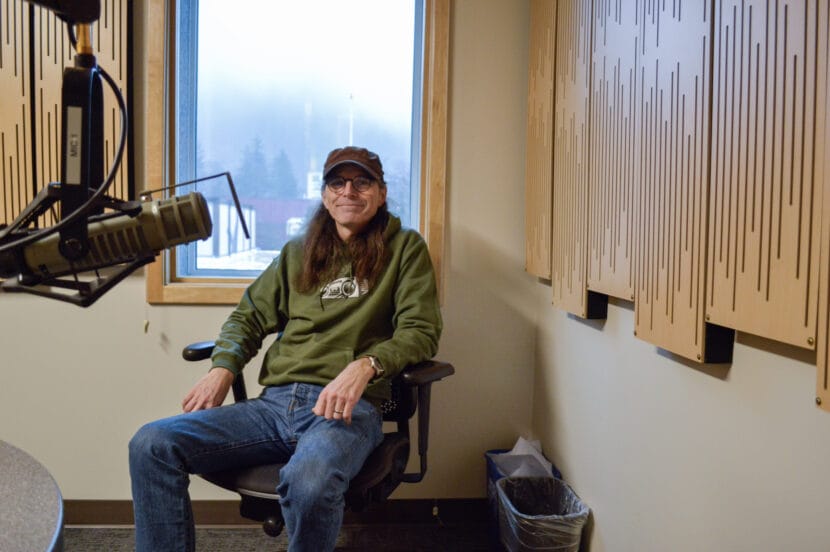
Justin Smith is an independent music producer in Gustavus who has produced albums for Alaska artists like Annie Bartholomew, Blackwater Railroad Company and Josh Fortenbery. Pictured in the KTOO studio on Jan. 24, 2025. (Photo by Yvonne Krumrey/KTOO)
This is Tongass Voices, a series from KTOO sharing weekly perspectives from the homelands of the Áak’w Kwáan and beyond.
Justin Smith of Gustavus has produced albums for Alaska artists like Annie Bartholomew, Blackwater Railroad Company and Josh Fortenbery.
He’s performed at festivals with blues legends like B.B. King, James Brown, Son Seals and Taj Mahal, but Smith says he loves playing and producing for Alaskans more than anything.
The following transcript has been lightly edited for clarity.
Justin Smith: There’s this whole sort of instrumental bridge section in a tune called “Happy Tune” on the Blackwater Railroad record where it’s just musically so exciting. And I was just sitting there hearing them play it, you know, and looking over at the computer and seeing, like, “Yes, it’s recording. We’re getting this, yeah!” You know?
Dec. 1 of 93, I spent my last dollar at Heritage Coffee. Got off the ferry. We were like, pulling change out from under the seat, you know, of the car, trying to get enough money together for our ferry tickets.
And I had $1 left when I got to Juneau. Walked around, it was First Friday in December. We walked out of the galleries eating all the cookies because we didn’t have any food. That was my start in Juneau. And I got here, and everybody told me I needed to go to the Alaskan (Hotel) on Thursday night for the open mic. So I did that on my first Thursday.
And I was always the guy in the high school bands and stuff that would set up the PA and figured those things out, and I would mess around with a four-track recorder, things like that. So I had kind of an inclination towards the gear side of things, but eventually I wanted to record myself.
I got a little bit of gear, and then I just kind of branched out from there, because I heard somebody singing once at open mic and invited them over to record their stuff. And I just, I just love it, you know? I just love it.
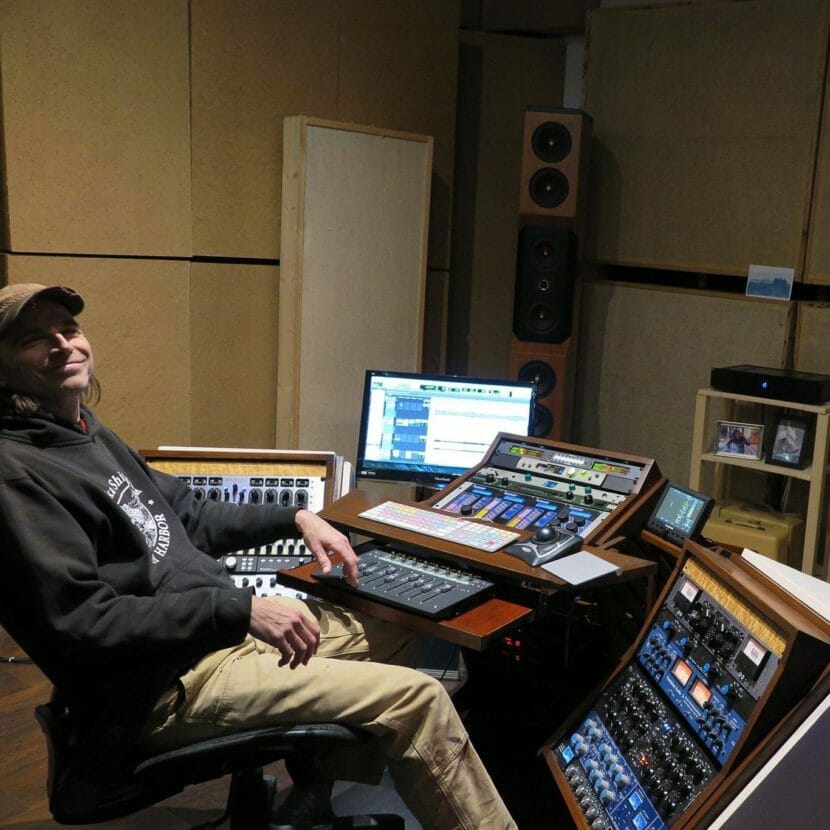
Justin Smith’s studio, Rusty Recordings, in Gustavus. (Photo courtesy of Justin Smith)
And I tried to acquire nice gear and learn the best methods, because I didn’t want anything to sound amateur, and I didn’t want to put a lot of blood, sweat and tears into getting a performance, and then feel like if I ever wanted to put it out on a record, I’d have to re record it in a real studio, you know, because it’s just so hard to get that performance and get that thing that you want, and to think that you’re only doing it temporarily, until you can do it for real in a real music studio. So I tried to start with nice equipment and doing it the right way.
When we did Annie’s record, when we did Sisters of White Chapel, we did that in a cabin at the Methodist camp. One of my favorite things on that was, at the end of “Last Confession,” there’s this long piano outro, and we recorded the band with Kat (Moore) playing bass, and then we came up with this arrangement idea to like, give it to the piano to reprise the melody at the end of it.
Kat sat at the piano and was trying to pick out the melody, and she played a few wrong notes while she was trying to figure out the melody. She’s okay, “I think I got it. Let’s do this.” And we recorded it once, and I was like, “Could you play it the way that you did, like a few minutes ago, and you’re still trying to figure out the melody, and it wasn’t quite exactly right?” And she sort of got back to that space, and that’s what’s on there. And it’s just so beautiful.
Because the concept of it is like, there aren’t — of the record, you know — there weren’t concert musicians in the Yukon, you know, in the 1860s right? And so it was meant to seem a little ragged and a little sort of amateur. And it’s just such a beautiful moment when we all put that together and listen back to it, we were all so floored. It was so great.
What I love about music, and what I love about Alaska, it’s all the same. It’s beauty, you know. And there’s so much beauty in these things. And I want it around me. I want music around me all the time, and I want Alaska around me, and wildlife and just the beauty of the environment here and the beautiful, amazing people. I want all of that around me all the time in my life. So that’s why I want to be here, you know?
And there’s so much support for music here and all of the arts. And Alaskan artists, I found with these productions that I’ve done, are passionate about doing their work in Alaska. They often see it as like a little bit of a cop-out to go down to Seattle or LA or something and buy some studio time to record their music that they’ve come up with up here. They want to do it in Alaska with Alaskans and that’s so cool, because we have it all here.
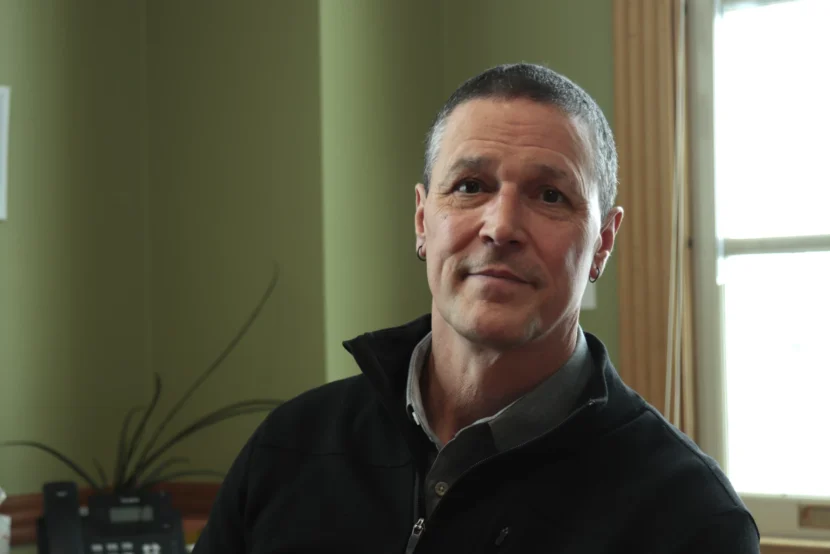
Kameron Perez-Verdia is president and CEO of the Alaska Humanities Forum. (Wesley Early/Alaska Public Media)
The Alaska Humanities Forum faces a massive cut to its budget after the Trump administration’s slashing of the National Endowment for the Humanities.
The more-than-50-year-old organization uses federal money, combined with matching dollars from local grants and donations, to fund programs around the state aimed at bringing communities together.
Kameron Perez-Verdia is president and CEO of the Alaska Humanities Forum.
“Youth programs that are happening around the state,” Perez-Verdia said. “It’s programs that are doing language preservation. It’s grants that are doing historical projects.”
The forum received a letter April 2 from the National Endowment for the Humanities that its federal grant — totalling about $900,000 — was terminated, effective April 1.
Alaska isn’t alone. Last week, humanities programs in all 50 states that rely on the national endowment received notice that the White House’s Department of Government Efficiency aims to cancel roughly $175 million in grant funding that had not yet been disbursed.
The short notice is troubling, Perez-Verdia said, and his organization is exploring legal options to get its funding restored.
“We believe that this is an illegal action,” he said. “It’s funding that was already granted. Our organization, and all of these councils, are in charter. So these are in our U.S. law that our organization exists and gets funded.”
If the funding isn’t restored, it would be very difficult to raise local funds to make up the loss, Perez-Verdia said.
“To be able to raise this kind of money is going to be really challenging,” he said. “We as an organization would have to restructure significantly, and we would lose a lot.”
Representatives from the offices of Sens. Lisa Murkowski and Dan Sullivan and Congressman Nick Begich did not immediately respond to a request for comment. However, Perez-Verdia said the state’s congressional delegation has expressed support for the Alaska Humanities Forum.
““We believe we will ultimately win this fight. We have strong support from Alaska’s congressional delegation and from national partners,” Perez-Verdia said. “But it’s going to take time.”
Middle school athletes stand on the podium at the annual Traditional Games in Juneau on Saturday, April 5, 2025. (Photo by Clarise Larson/KTOO)
The eighth annual Traditional Games was held in Juneau this weekend at Juneau-Douglas High School: Yadaa.at Kalé.
More than 250 athletes from 30 teams from across the state, the Lower 48 and Canada competed in a dozen different events rooted in Alaska Native values.
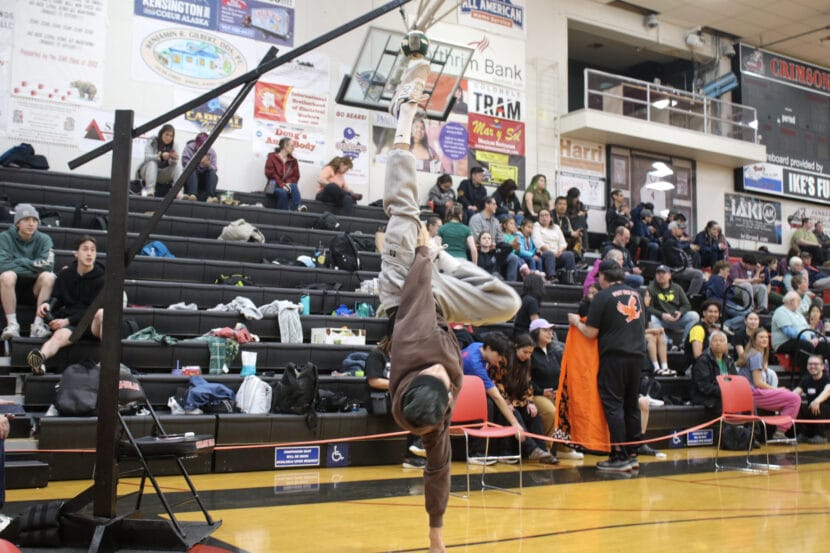
Matthew Chagluak of Anchorage sat low on the gym floor at Juneau-Douglas High School: Yadaa.at Kalé Saturday morning. His neck was craned upward and his eyes were laser-focused on a ball hanging on a piece of string above him.
Suddenly, in one fluid motion, he kicked a leg up to touch the ball while balancing on one hand, successfully executing an Alaskan High Kick.
Matthew Chagluak of Anchorage competes in the Alaskan High Kick at the annual Traditional Games in Juneau on Saturday, April 5, 2025. (Photo by Clarise Larson/KTOO)
“By showing grace in your events, its showing respect for not only the event, but yourself too,” he said.
Chagluak is Yupik, and he’s one of more than 250 athletes who came to Juneau to compete in the eighth annual Traditional Games. Many of them are Indigenous, but the games are open to participants from any background.
“It’s all about family and people who I care about, showing my support and having fun at the same time,” he said.
Throughout the three-day event, the athletes from 30 different teams competed in a dozen different games. Each requires a unique skill set, a lot of training and focus. They’re all rooted in Indigenous hunting and survival skills.
“The history goes back hundreds maybe 1000s of years, so let’s see it continue hundreds or 1000s of more years,” said Kyle Worl, a coach who leads the program in Juneau.
Athletes do archery at the annual Traditional Games in Juneau on Saturday, April 5, 2025. (Photo by Clarise Larson/KTOO)
He said the games had a profound impact on him when he began participating as a high schooler. Now, as an adult and coach, he wants to make sure other young people can experience them too.
“It’s a way to celebrate our culture and carry on these games and introduce them to youth throughout the Southeast region and beyond,” he said.
Nathan Blake is a high school senior in Juneau. Not only did he compete, but he was also in charge of getting the crowd of family, friends and spectators excited.
He said the inclusiveness of the games is one of the biggest reasons he’s drawn to them.
“All of us have really our own reasons to love this and appreciate the values that it brings to each home,” he said. “This is an event that teaches everyone that this isn’t just a game for one culture and one only. This is a game for everyone to come together and just be one with one another, regardless of how you look or what you do.”
Ricardo Worl, Kyle’s uncle, was a coach for the games in Juneau back in the 1980s and was honored on Saturday. During a speech to the athletes, he called on them to continue to uplift their culture and diversity amid the political turmoil happening in the country.
“We have grown-ups who don’t believe that being diverse, being inclusive, is something that should be supported,” he said. “Your added responsibility for this weekend is to be exactly who you are as athletes, Alaska Natives, proud, respectful.”
This year, athletes broke 12 records in different categories and age groups. Organizers say this year’s Traditional Games were one of the biggest held since they began in 2018.
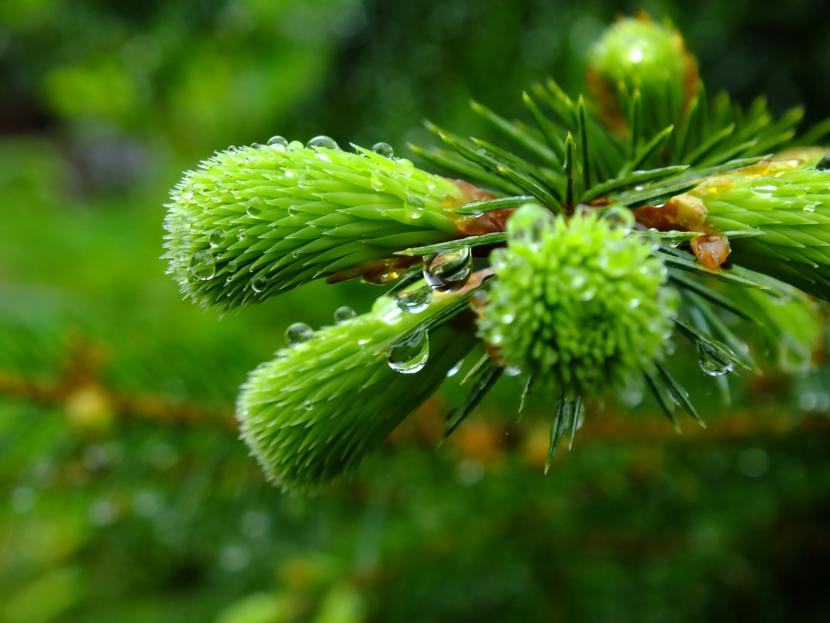
Spruce tips wait to be plucked in the morning dew in May 2017. (Photo courtesy Matt Miller)
This is Lingít Word of the Week. Each week, we feature a Lingít word voiced by master speakers. Lingít has been spoken throughout present-day Southeast Alaska and parts of Canada for over 10,000 years.
Gunalchéesh to X̱’unei Lance Twitchell, Goldbelt Heritage Foundation and the University of Alaska Southeast for sharing the recorded audio for this series.
This week’s word is shéiyi, or spruce. Listen to the audio below to learn how to say shéiyi.
The following transcript is meant to help illustrate the words and sentences.
Kaxwaan Éesh George Davis: Shéiyi.
That means spruce.
Here are some sentences:
Kaxwaan Éesh George Davis: Shéiyi da dax̱ káax’ has awliyéx̱.
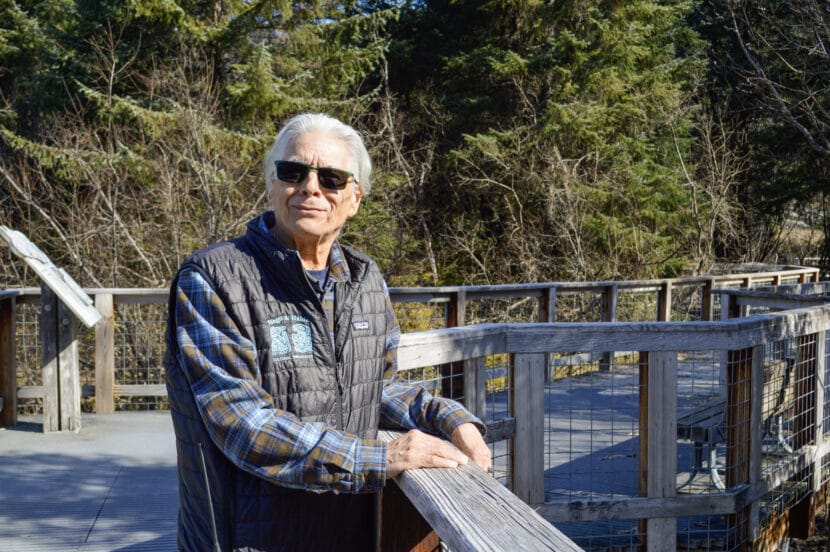
Lee Miller is a Cultural ambassador at Mendenhall Glacier Visitor Center on April 2, 2025. The Central Council of the Tlingit & Haida Indian Tribes of Alaska program started in 2024 to teach tourists about Lingít stewardship of the land. (Photo by Yvonne Krumrey/KTOO)
At Mendenhall Glacier Visitor Center earlier this week, cultural ambassadors were learning how to best represent Lingít stewardship and connection to the glacier to the roughly one million tourists slated to visit this summer.
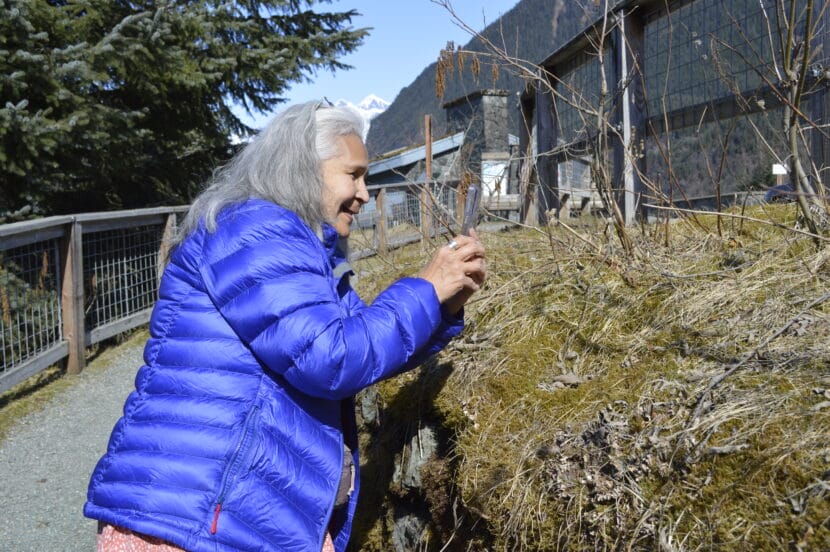
Saaní Liana Wallace set off down the walkway toward Steep Creek. For this training, her supervisor sent her and her fellow ambassadors out to study the plants along nearby trails and take photos of the ones they don’t know.
“Join the crowd,” she said. “We’re talking about plants, so Lee [Miller], who’s been here a while, is going to show me a plant that he wants us to work on.”
While U.S. Forest Service staffing at Mendenhall Glacier Visitor Center remains uncertain, there will be eight people working at the glacier in a different role – as cultural ambassadors. They’re employed by the local tribe and they teach visitors about Lingít history, culture, and its connections to the land.
The Central Council of the Tlingit & Haida Indian Tribes of Alaska program started last year, as part of a co-stewardship agreement the tribe formed with the Forest Service.
It will allow people like Shaaḵ’indax̱ Jonah Johnson to teach visitors about things like Devil’s Club – or as it’s called in Lingít, s’axt. He likes it because there’s more to it than meets the eye.
“It looks like it’s just a harmful plant, but it’s really our medicine plant,” Johnson said.
In February, a wave of federal firings left one remaining Forest Service staff member at the visitor center. In a typical summer, there are about a dozen on site.
Some of the fired staff have been rehired, but there are rumors they may lose their jobs again, or accept a deferred leave offer. Forest Service officials say they aren’t able to share any plans for staffing for the summer.
But while that’s up in the air, the cultural ambassadors are moving forward with their plan to staff Mendenhall Glacier Recreation Area.
Góos’k’ Ralph Wolfe directs Indigenous stewardship programs for the tribe.
“We’re still out there, we’re still going to be there,” he said. “And we’re just trying to figure out where we can help the Forest Service kind of fill in.”
He said he’s been thinking of how the ambassadors may be stepping in to do work the Forest Service rangers would be doing – like managing visitor safety.
But he said the program’s mission is still focused on highlighting Indigenous stewardship.
“We’re trying to be flexible while also making sure our mission is to make sure that the culture is passed on,” Wolfe said.
Cultural ambassador Saaní Liana Wallace takes a photo of a plant to identify on April 2, 2025. (Photo by Yvonne Krumrey/KTOO)
Cultural Ambassador Lee Miller is returning for his second season. He said he thinks all of the staff at the glacier will be spread thin this year.
“But it’s exciting,” he said. “I mean, every day is different, every person is different.”
Miller said he loves representing the Áak’w Ḵwaan, and bringing the joy of the natural world to visitors.
“You can pass it on to them. You’re, you know, you’re coming in and you say, ‘Okay, I just saw a porcupine out on the meadow there,’ or an eagle or a heron, and, you know, just point it out to them, and they’ll ask you questions,” he said.
Miller’s family has been here for thousands of years, but he’ll be greeting people who are seeing the glacier for the first time.
“Just interacting with them and watching them,” he said. “You know it just — that made the whole season.”
And the 2025 season begins April 14, when the first cruise ship arrives in Juneau.
Close
Update notification options
Subscribe to notifications
Subscribe
Get notifications about news related to the topics you care about. You can unsubscribe anytime.