Arts & Culture

Formal groundbreaking for SLAM project

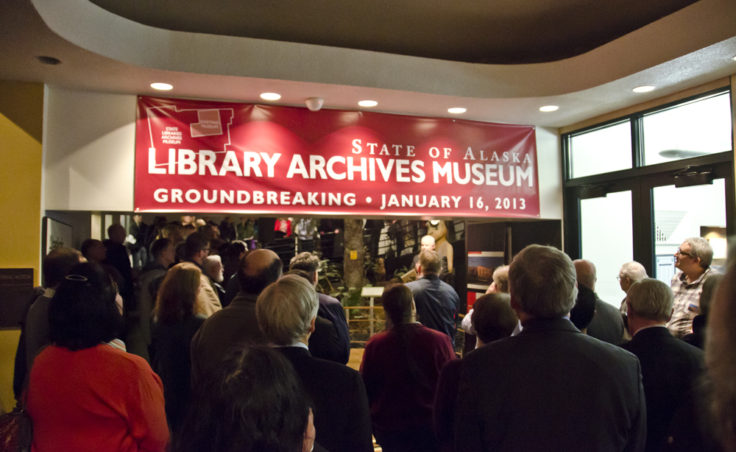
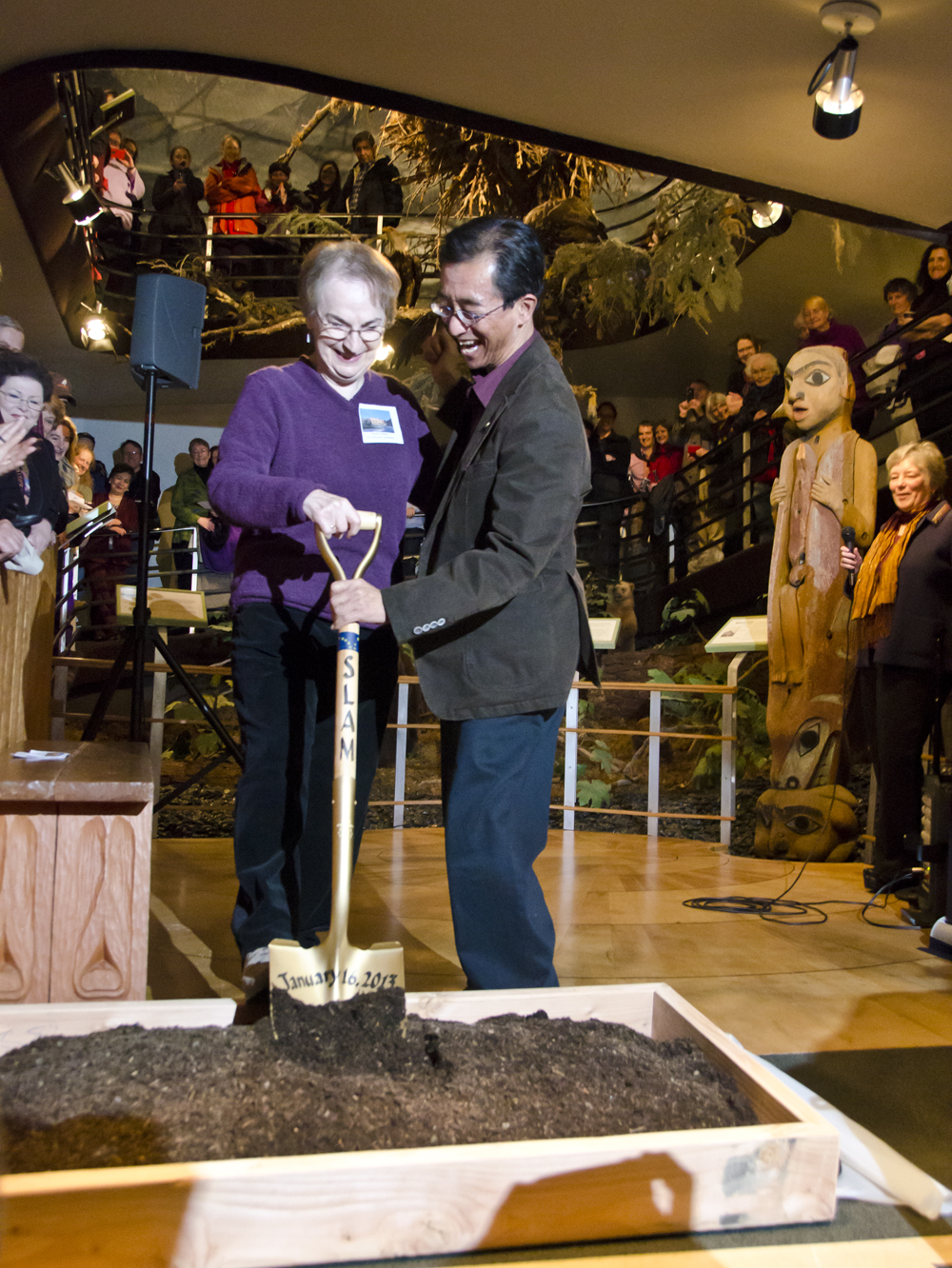
Phyllis DeMuth, member of the 1967 Alaska State Museum Committee, and Ron Inouye, representative of the Alaska Historical Society break ground.
Phyllis DeMuth, member of the 1967 Alaska State Museum Committee, and Ron Inouye, representative of the Alaska Historical Society break ground. (Photo by Heather Bryant/KTOO)

Dirt has been turned for the new State Libraries, Archives and Museum in the capital city. The project to hold Alaska’s treasures in one building is already underway, as contractor PCL Construction prepares the ground behind the current Alaska State Museum.

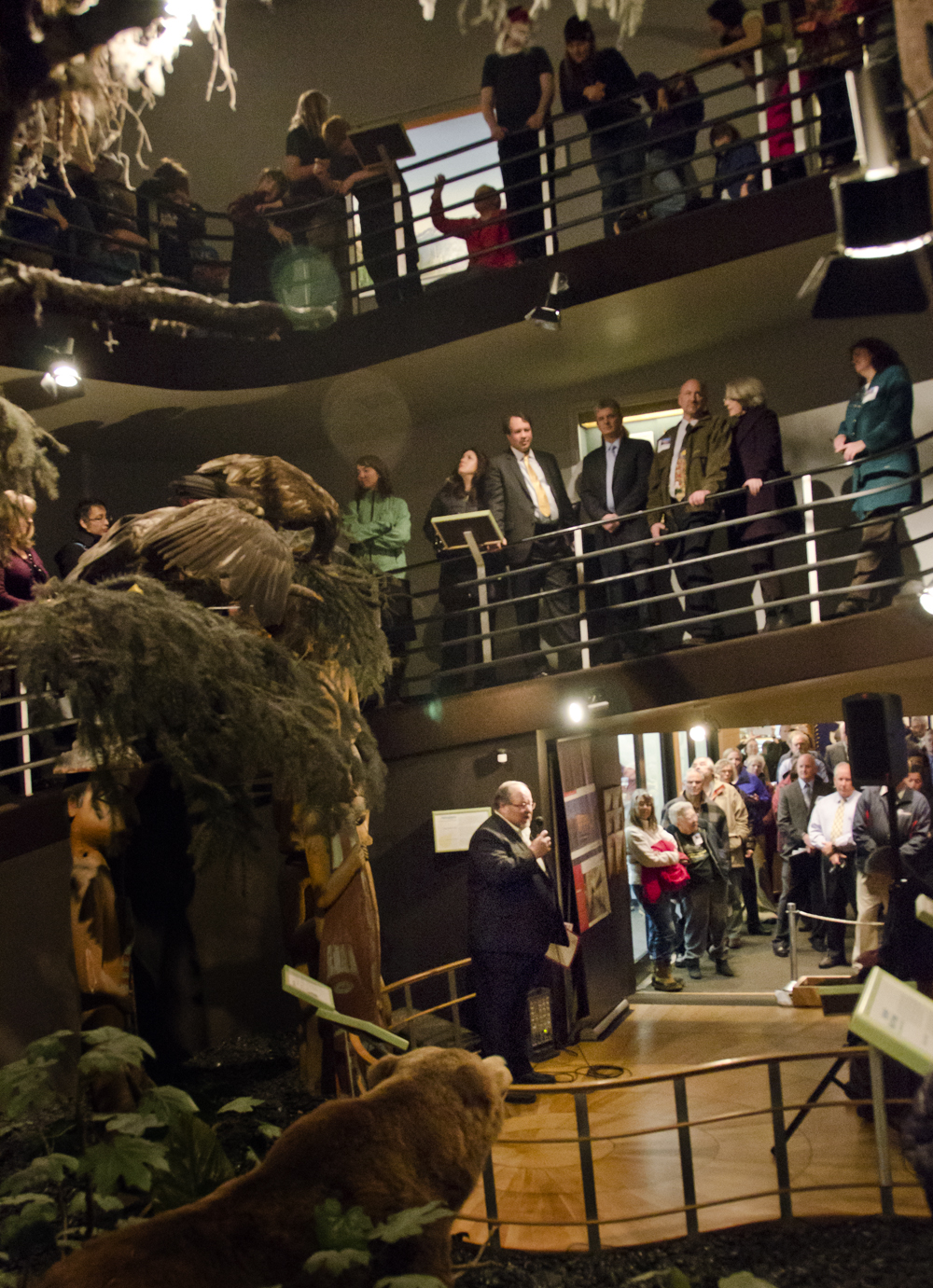
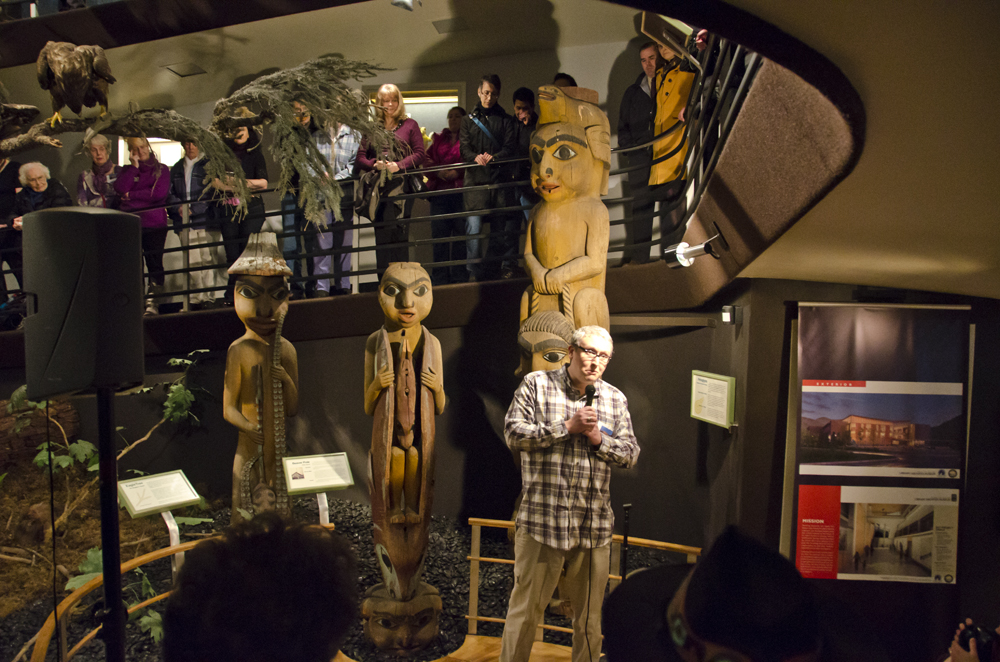
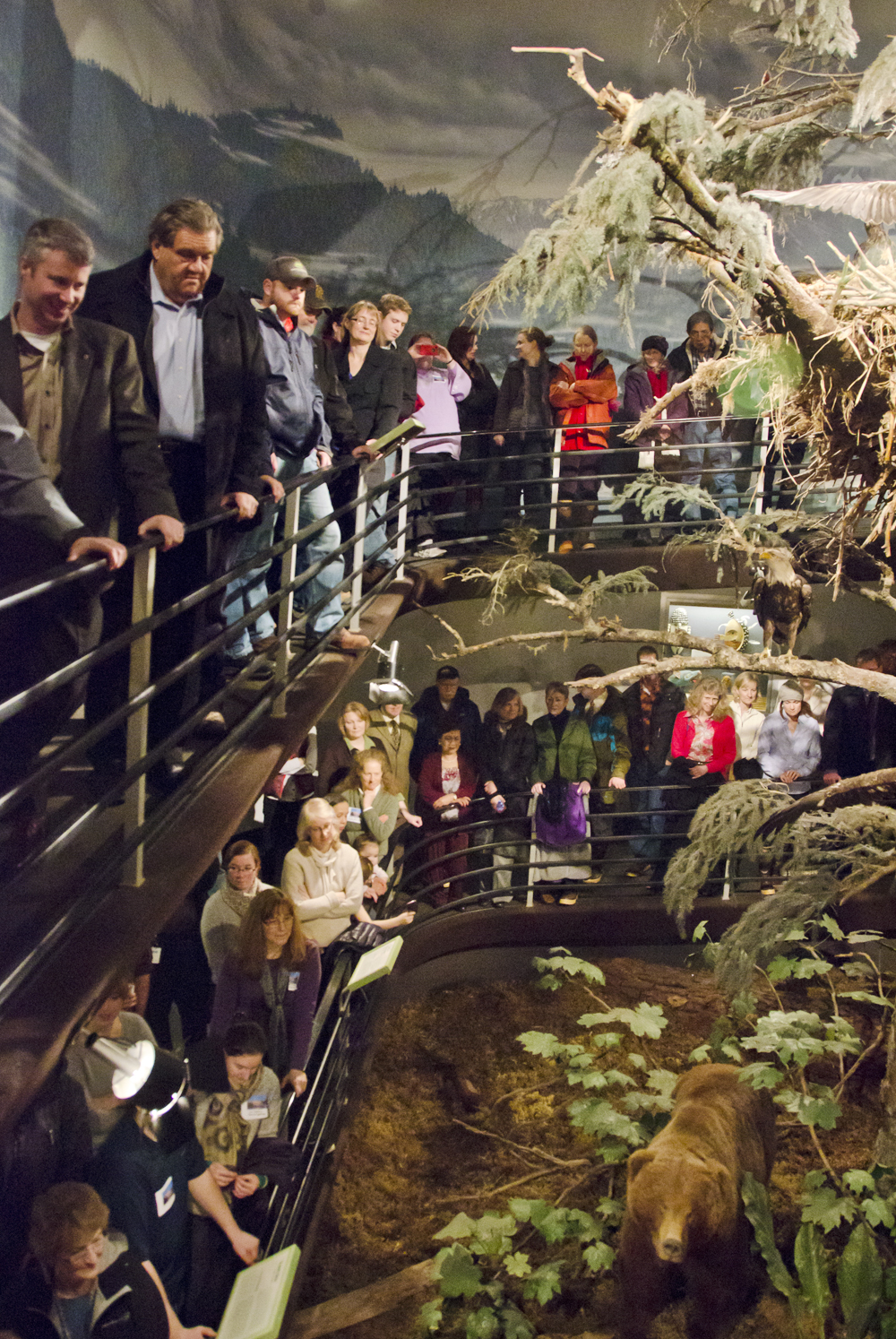
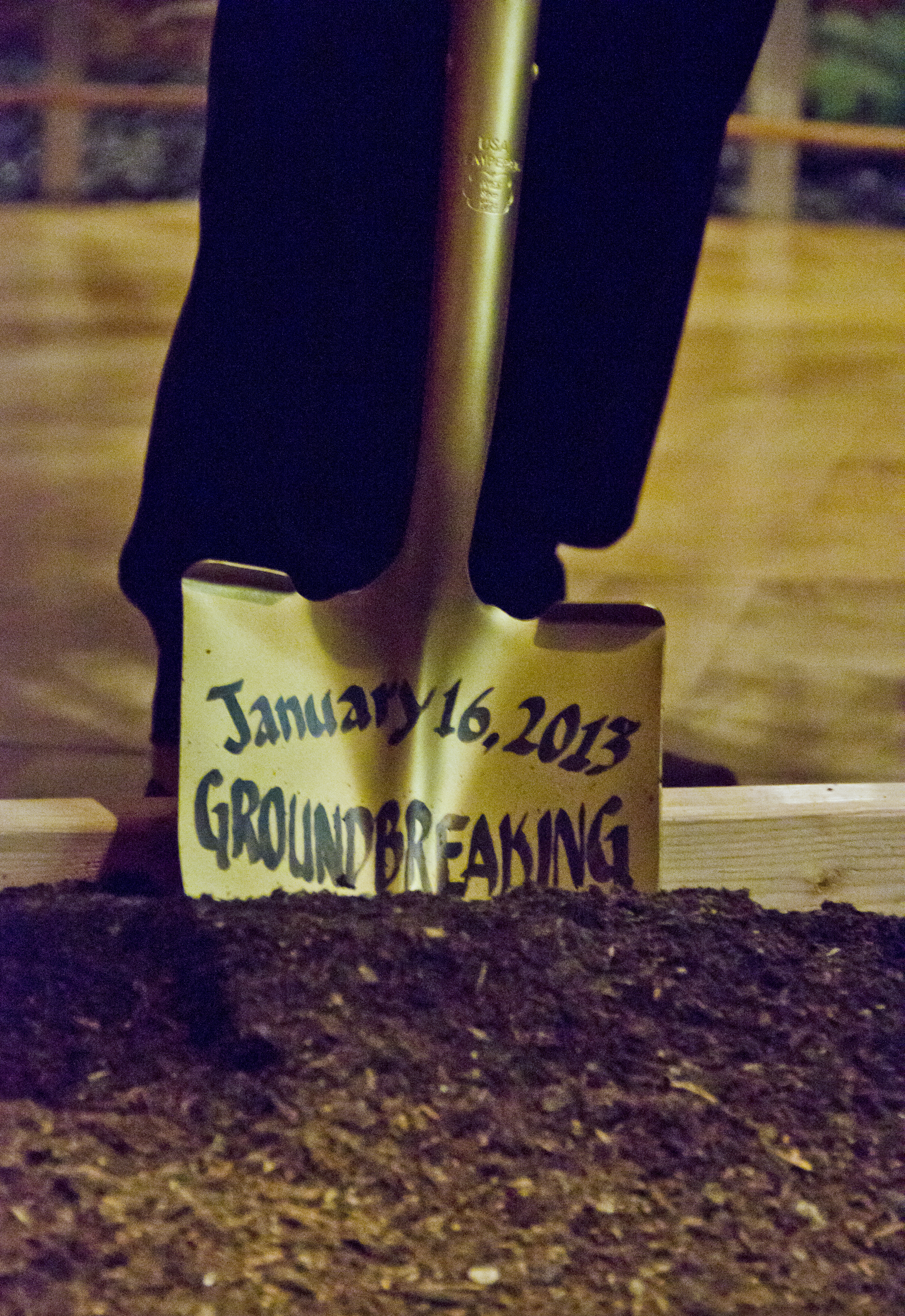
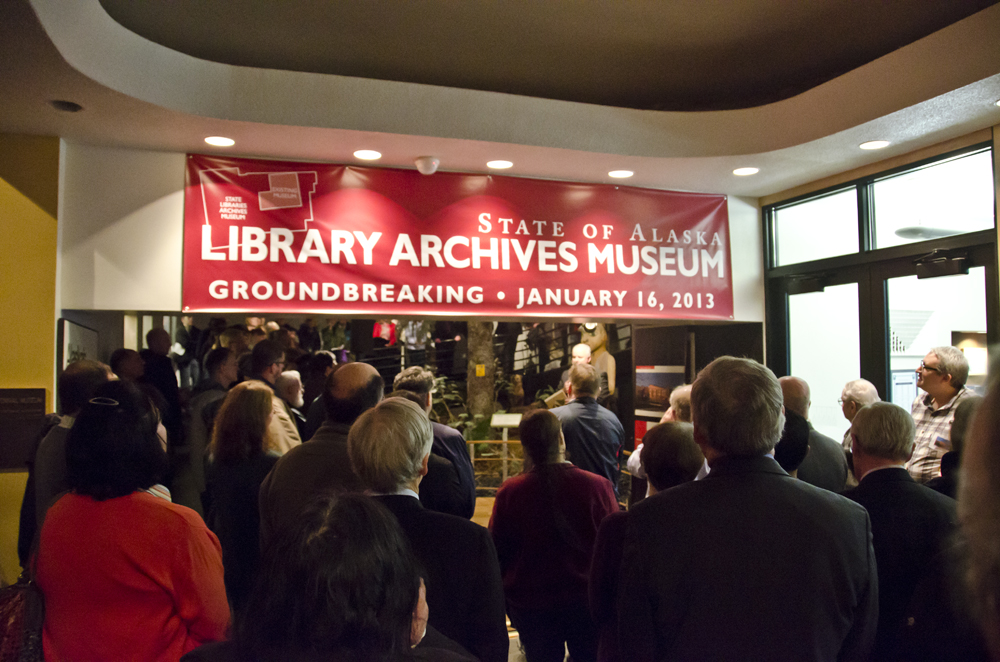
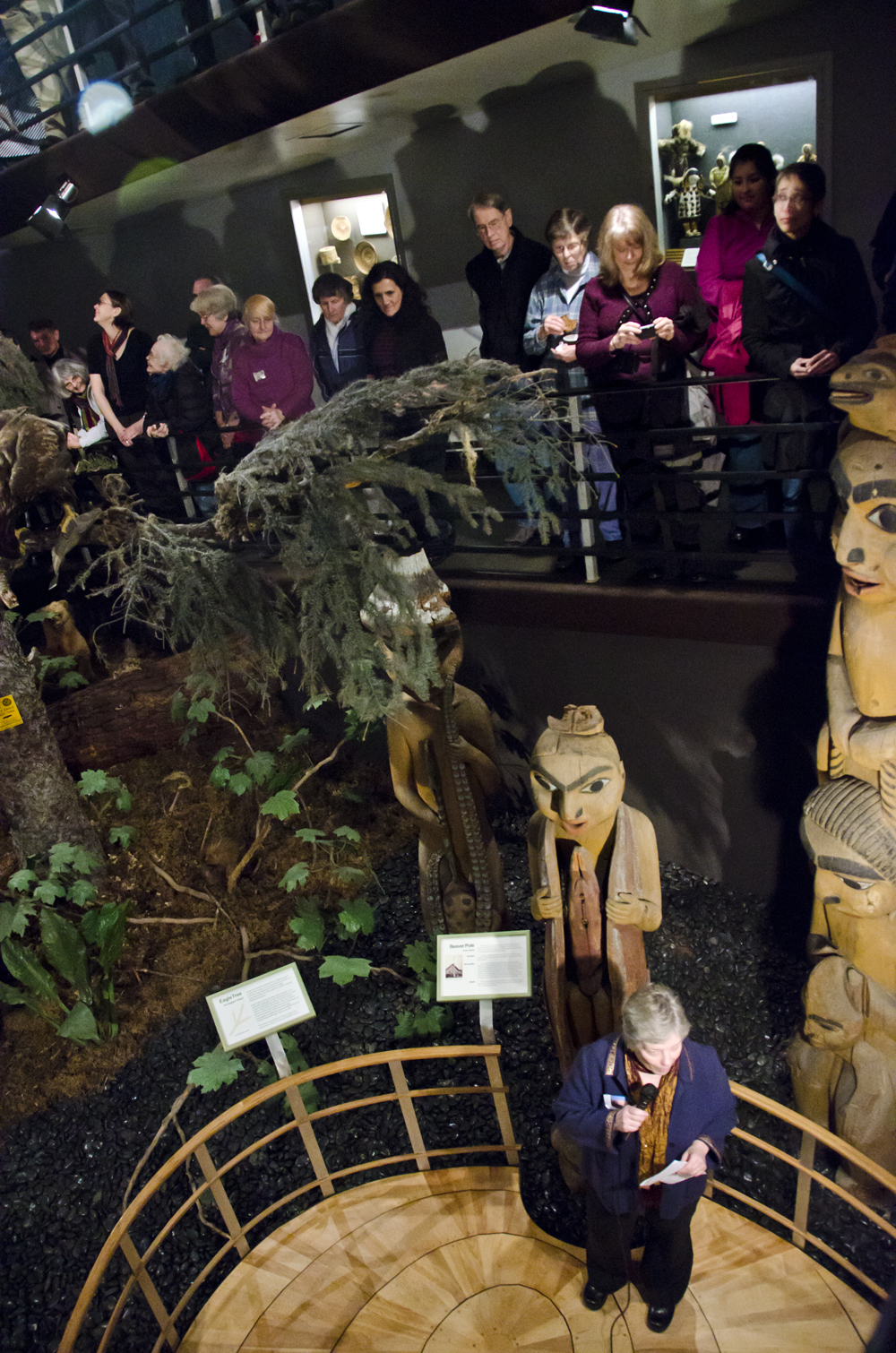
Wednesday’s cold rain in Juneau moved the groundbreaking inside. The museum was packed with state and local officials, including legislators and Juneau Assembly members, some who had their pictures taken with the special shovel in a trough of dirt near the museum’s landmark eagle tree.

Linda Thibodeau is director of the SLAM project.

“I wish we could have had a beautiful sunny day and we could have gone outside and dug in the back lot, but we don’t.  It’s winter time in Juneau and we have a lovely pile of, as our commissioner said, fertile earth here, ready to go.  This is a day we’ve been waiting for, for a long, long time,”  Thibodeau said.

So far, the Alaska Legislature has approved about $81 million toward the $131 million project.  Gov. Sean Parnell has included $20-million in his proposed state capital budget.

As Juneau Mayor Merrill Sanford thanked the many people who have worked on the project, he reminded lawmakers in the audience that another $50 million is needed to complete construction.

“And in fact your work is not done yet.  We’re going to be banging on your door – I see a chairman of a finance committee here  – for a little bit more money to get this new facility completed all together,” Sanford said.

At 118,000 square feet, SLAM will have twice the space currently allocated to the state libraries, archives and museum in Juneau, according to Department of Education and Early Development Commissioner Mike Hanley.

“The new SLAM building will double the exhibit size and triple our storage space above what we have here.  When we look at the operating costs it will do it for the same operating costs that we have now, because of a focus on energy and because of the work we’ve done with our architects.  It’s tremendous.  A huge building that will be able to be operated for the same cost that we’re operating this one now,” Hanley said.

He also said that structures used in construction called “unified curtain walls”  can be built in Alaska.

“At one point we thought our only option was to have these constructed overseas and brought back. We recently found out that we have been able to move that contract to Bucher Glass in Fairbanks, into a new factory that will employ an additional 16 to 20 individuals.  And it’s been said that this project, the SLAM project, was the spark that allowed them to get their feet under them and get that project rolling,” Hanley said. 

The SLAM project is to be complete in 2016.  Education officials say it will allow the state to improve its technical and program support for archives, libraries and museums statewide.
Alaskans join Idle No More movement

Alaskans are joining the Canadian First Nations’ Idle No More movement.

Often compared to the “Occupy” protests, the grassroots movement has moved across Canada and is gaining traction among Native groups in the U.S.

Canadian First Nations are protesting legislation that removes environmental protections on tribal lands. As several First Nations’ chiefs were meeting with Canadian Prime Minister Stephen Harper on Friday, they got support in Juneau and Anchorage.

About a hundred people turned out for a noon rally in Anchorage, compared to about ten in Juneau, but the message and the signs were the same: Sustainability now; sovereignty for indigenous people.

At the Anchorage rally, Allison Warden, of Kaktovik, called the issues emotional.

“I hope something is awakened within you. Something inside your DNA, like this is where I’m supposed to be, this is what I’m supposed to do, this is how I stand up for my people,” Warden said.

Vi Waghiyi, of St. Lawrence Island, said the military bases built there during the 1950s have contaminated the land and waters where the Siberian Yupik residents of the island gather food:”

“We have 10 times more PCB levels in the blood of our people than the average American in the Lower 48. But we’re also some of the most highly contaminated population on the planet because of our reliance on our subsistence foods,” Waghiyi said. “Our very foods that have sustained our people for many, many generations are killing our people.” 

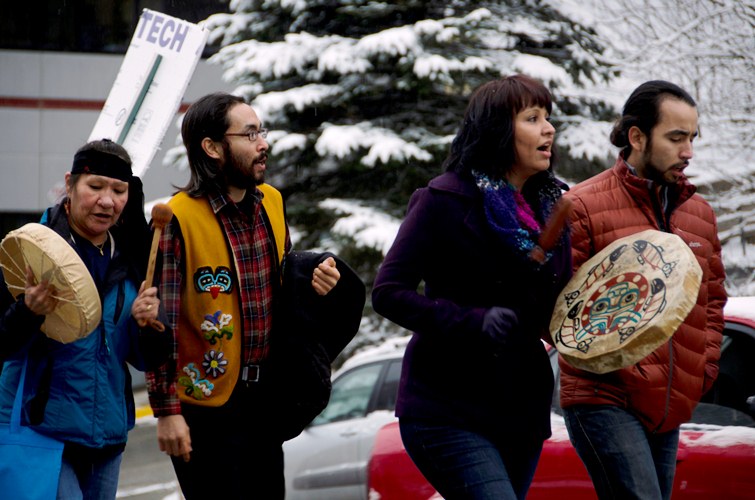
A rally that started at Juneau’s Marine Park on Friday finished at the Alaska State Capitol. Rallies were held in Juneau and Anchorage in support of the Canadian First Nations’ movement Idle No More. Photo by Annie Bartholomew/KTOO.

In Juneau, Ishmael Hope called the Idle No More movement wholesome, simple and healing. Of Tlingit and Inupiat descent, Hope said the local rallies are not meant to antagonize.

“What we’re here to do is show who we are and that can translate into the politics of our time, and that can translate into the big issues of our time,” Hope said. “We could see how the clan, the language, our culture, our identity can connect with political issues, with ideas of sovereignty. “

Hope said the border between Alaska and Canada is invisible for Native people. And when it comes to major industrial development – like that proposed in the British Columbia wilderness – it could impact all Alaskans.

Guy Archibald is Mining and Clean Water Coordinator for the Southeast Alaska Conservation Council, which supports the Idle No More Movement.

“Up the Unik River, the Stikine River, the Sacred Headwaters, there’s huge open pit mines proposed mines proposed for up there,” he said. “The environmental review process of the Canadian federal government has been deregulated and defunded. It’s scary what could happen, and so much of our economy here in Southeast is dependent on these rivers. It’s a billion dollar fishing industry.”

While conservation groups share many of the values expressed in the Idle No More movement, Archibald said the cause should not be “co-opted by conservation groups.” He said Idle No More needs to remain an indigenous movement.

Related stories: Skiing the Sacred Headwaters; BC  powerline spurs transboundary development  

Another groundbreaking for SLAM

SLAM image
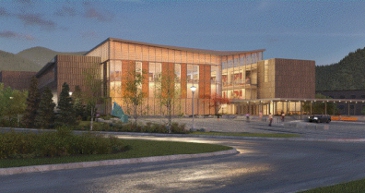
An artists rendering of the proposed SLAM project in Juneau. Image courtesy State of Alaska Library, Archives, Museums.

Another groundbreaking ceremony will be held next Wednesday in Juneau for the state Library, Archives and Museums project, also known as SLAM.

Contractor PCL Construction began work on the project about a month ago. When it’s complete in 2016, the $131 million state of the art building will house the division of Libraries, Archives and Museums under one roof. Currently, those workers are spread out at three separate locations in the Capital City.

At a recent meeting with the Juneau Assembly, SLAM Director Linda Thibodeau said the project is important to communities statewide.

“There are over a hundred museums, a hundred public libraries, 80 archives and an unknown number, but around 300 school libraries,” Thibodeau said. “So there are a lot of facilities that we work with.”

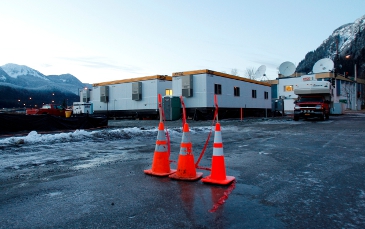
Juneau residents may have noticed the recent arrival of construction trailers in the Subport parking lot across from where the SLAM project is underway.

PCL Project Manager Joel Kinman said eventually there will be as many as 15 trailers for various subcontractors. In addition, he said parking in the nearby Coast Guard lot will be reserved for construction workers.

SLAM trailers
PCL Construction set up shop at the Subport Parking Lot last month for the SLAM building construction currently underway across the street. Photo by Annie Bartholomew/KTOO.

“During peak times we could potentially have as many as 250 people,” Kinman said. “Of course, not all of those people are going to be driving their own car. But we anticipate that at certain times that parking area will be quite full.”

To date the legislature has funded the project to the tune of more than $81 million. Another $50 million is needed to complete construction. Governor Sean Parnell included $20 million of that in his proposed state capital budget.

The current phase of the project is construction of an underground vault to be completed in February 2014. Building construction is scheduled to get underway in March of that year and wrap up in early 2016.

State officials held a preliminary groundbreaking for the project in October 2011.

The official groundbreaking will be next Wednesday at noon in front of the State Museum. A reception will be held inside the museum following the ceremony.

Idle No More in Juneau

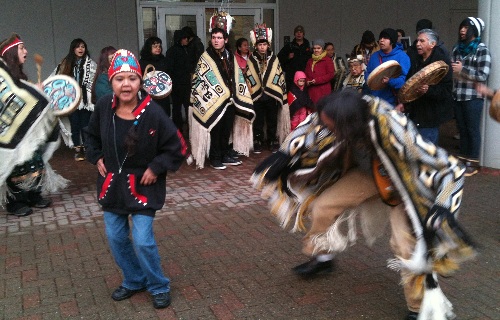
Local drummers and dancers perform during an Idle No More rally in Juneau on Jan 4. at the Sealaska Plaza. Photo by Matt Miller/KTOO News

About two-dozen Native dancers and drummers performed at the Sealaska Plaza as nearly an equal amount of spectators watched on Friday afternoon.

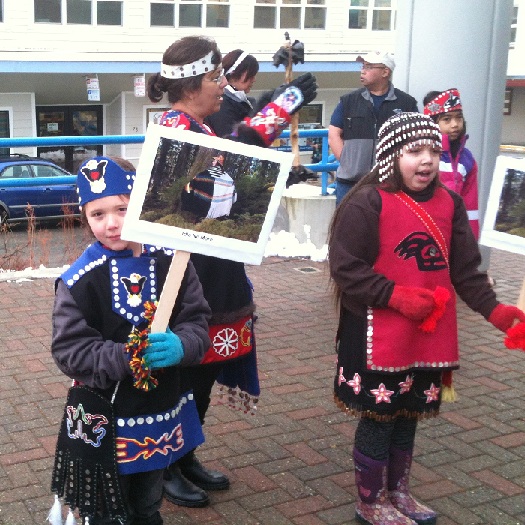
Most of the dancers were in their regalia and a few held up signs that read: Idle No More.

Similar events are underway in Canada where First Nations people are protesting their treatment by the federal government. Attawapiskat Chief Theresa Spence is now in the fourth week of a hunger strike in her effort to meet with Prime Minister Stephen Harper over aboriginal equality and treaty rights.

Large and small signs like these read “Idle No More” for the First Nations movement that’s now underway in Canada. Photo by Matt Miller/KTOO News

Ishmael Hope of Juneau calls it a powerful and positive movement.

“It started with us being supportive of our inland relatives,” said Hope. “It’s been happening all over now, all over the world. We’re not going to sit back and take the injustices that come at us.”

Hope says this was the third event organized for Juneau and more are planned. He credited Harold Jacobs for organizing the recent events.

Idle No More was planned for the State Office Building atrium during the noon hour on Friday. But the event was moved to the Sealaska Plaza because it conflicted with the weekly performance of the Kimball pipe organ.

Juneau Afternoon 1-2-13

Listen Here!

Happy New Year! Andy Kline was the host and we concentrated on the Arts and the January First Friday on this edition of Juneau Afternoon, including:

Pat Race of Alaska Robotics on their show concentrating on student art inspired by comic books.

Artist Rob Roys and Kimberly Naylor of the City Museum on Rob’s solo exhibit.

And from up on the mountain, we talked to Jeffra Clough and got this week’s Eaglecrest Report, where January is Learn to Ski and Snowboard month.

Glacier Valley Elementary violinists play for special guests

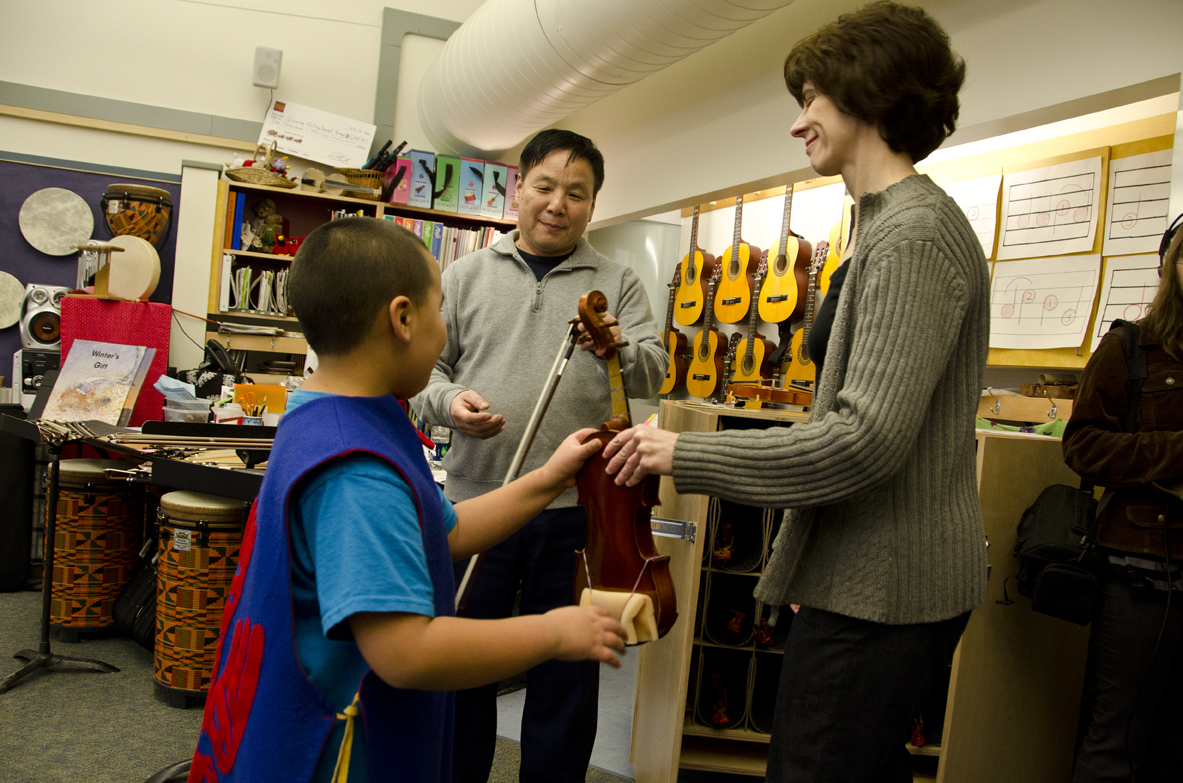
Glacier Valley Elementary music teacher Lorrie Heagy hands a student a violin as violin instructor Guo Hua Xia picks out a bow.
Glacier Valley Elementary music teacher Lorrie Heagy hands a student a violin as violin instructor Guo Hua Xia picks out a bow. (Photo by Heather Bryant/KTOO)

Eight-year-old violinists and arts in Juneau schools have drawn the John F. Kennedy Center to the capital city. Representatives from the nation’s performing arts center are scoping out Juneau as a finalist for the Any Given Child program.

Nearly 300 students are in the Juneau, Alaska Music Matters program that started at Glacier Valley and has also expanded to Riverbend and Auke Bay elementary schools.  JAMM has recently garnered national attention. Last month, PBS filmed JAMM for a music education documentary due out in 2014.

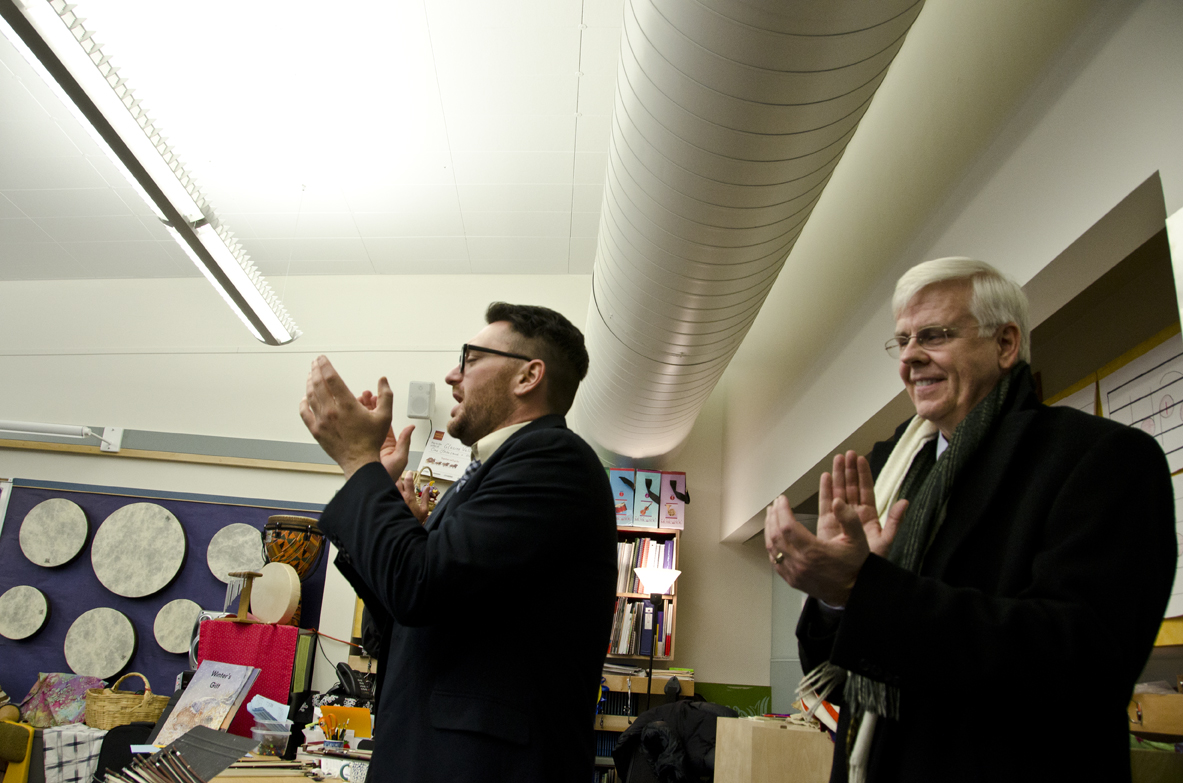
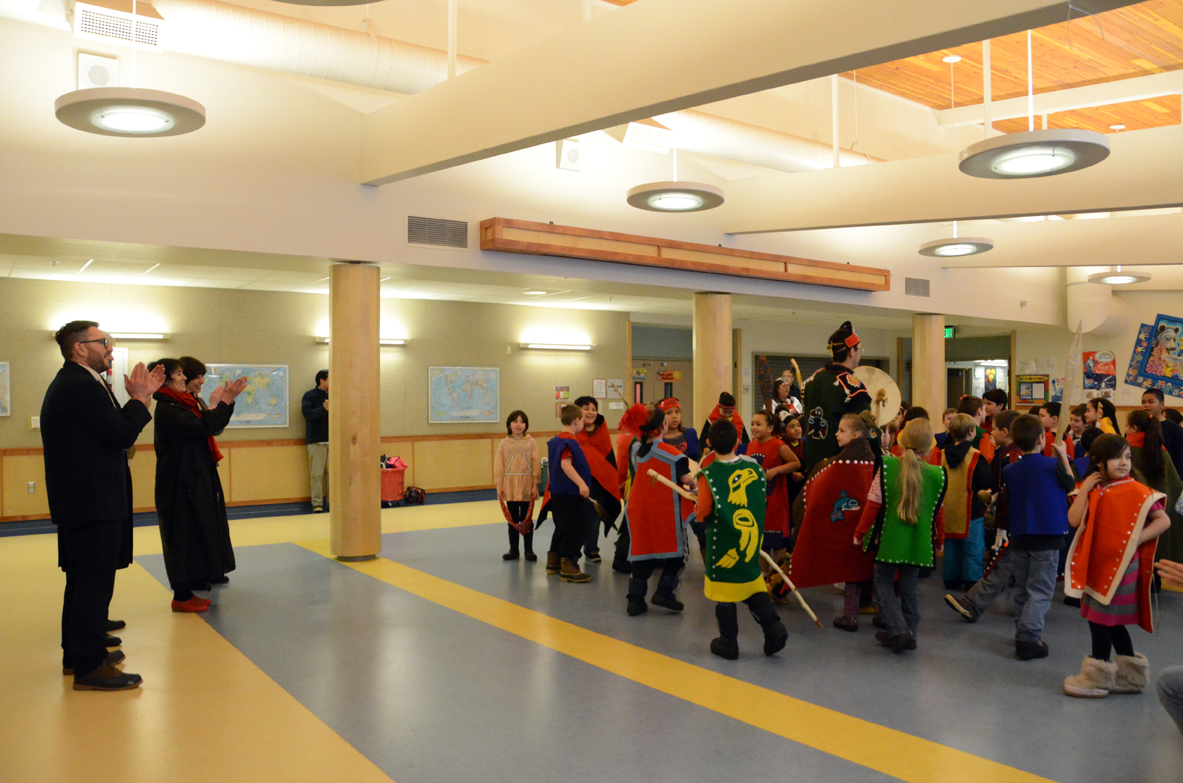
Last week, Glacier Valley second graders in colorful Tlingit regalia, picked up their pint-size violins and bow to play the “Can-Can” for two representatives from the John F. Kennedy Center for the Performing Arts in Washington, D.C, who clap and one takes photos with his cell phone.

On this day, 8-year-old violinist Amira Andrews is among the two dozen violinists and six cellists performing at Glacier Valley Elementary School.

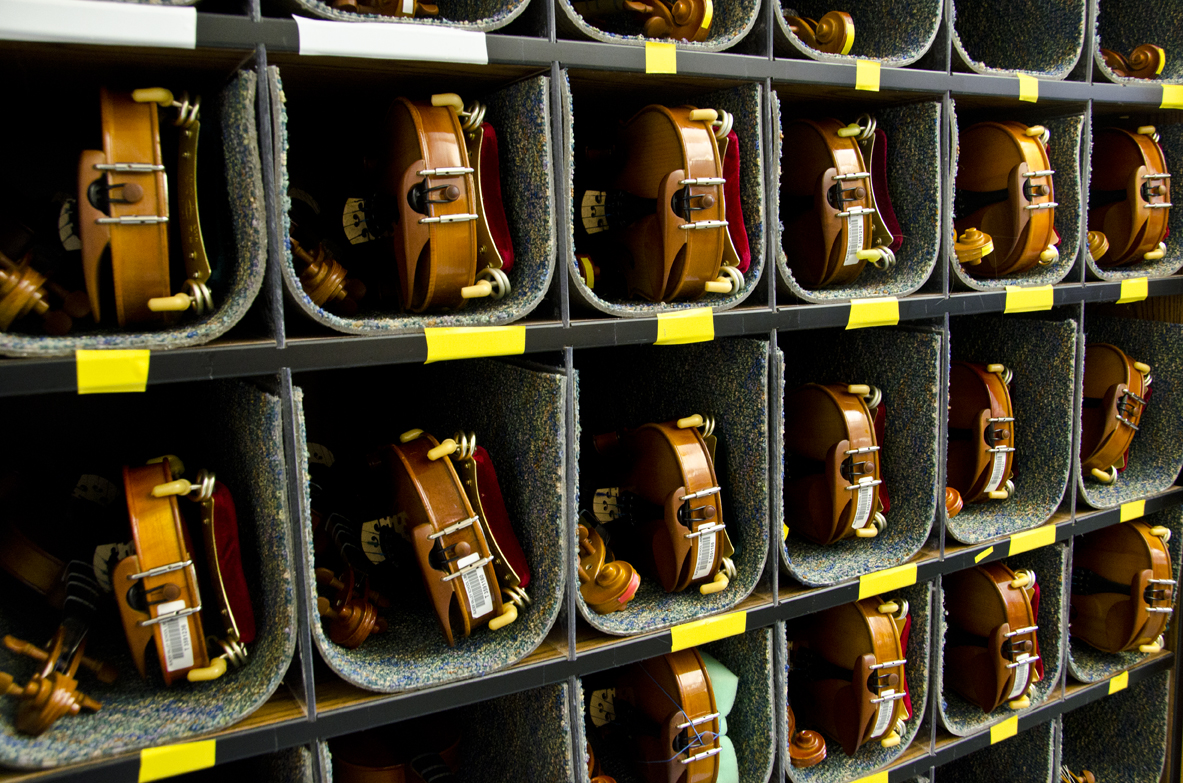
A cabinet of violins in the music classroom.
A cabinet of violins in the music classroom. (Photo by Heather Bryant/KTOO)

“We have this thing called JAMM after school and we practice and we warm up and we practice songs and usually Ms. Heagy tells us who’s coming so we can get ready,” Amira says.

Glacier Valley Elementary began the Juneau, Alaska Music Matters program three years ago. JAMM is one reason Juneau is a finalist in the Kennedy Center’s national Any Given Child program.  Former Juneau Arts and Humanities Council president Annie Calkins wrote Juneau’s application.

 “The Any Given Child Program was initiated by the Kennedy Center as a way to increase equity and access to arts education for students across this country in grades kindergarten through eight,” Calkins says.

The Kennedy Center representatives were in Juneau last week to review and fact check the application, making sure city and arts organizations are working with schools to offer a diverse selection of arts programs.  They said they would not comment on their visit, which they called “unofficial.”

This is not the first time the Kennedy Center has been interested in Glacier Valley Elementary. In 2007, the school was one of five National Schools of Distinction winners.

Now Juneau is looking to expand its arts education. That’s where Any Given Child comes in.

Calkins says city government officials, businesses, arts organizations, artists, and the school district organized a community arts team. If Juneau wins, Calkins says the community will join ten other cities across America recognized by Any Given Child.  No prize money comes with the distinction.

Visitors from the Kennedy Center applaud after the end of a song.
Visitors from the Kennedy Center applaud after the end of a song. (Photo by Heather Bryant/KTOO)

“What we get from the Kennedy Center is up to five years of technical assistance and training and engagement with figuring out ways that Juneau can increase equity and access across all of our schools,” Calkins says.

While JAMM has expanded to two other elementary schools, Calkins says some Juneau schools have higher quality arts programs than others and the objective is to give more students access to these programs.

Glacier Valley Elementary music teacher Lorrie Heagy started JAMM.

“I think what makes our application so strong for the Kennedy Center is the fact that they were astounded by how much a community of just over 30,000 can support a symphony, three opera companies, just the amount of arts organizations that are here and how we support them.” Heagy says. As well as the rich cultural heritage that we have here and how we celebrate that here in Juneau.”

JAMM is inspired by El Sistema, a Venezuelan model that incorporates music into schools.

 “What I learned from that is music is used as a vehicle, for, in Venezuela it’s for social change. Here, music is an intervention for school readiness skills,” Heagy says.

Heagy says the children build their skills in confidence, teamwork, focus and memory.

Guo Hua Xia has been a private violin instructor for two decades. Heagy asked Xia to teach students in the JAMM program. Xia says students started when they were five years old, without their parents in the room to coax them along. They learned how to navigate their first musical experience on their own.

 “When I first saw them, they just, can’t believe how little they are. Very small size.” Xia says. “Now they grows, and also they can play better, that I’m happy to see.”

Students also got the chance to show off their dancing and regalia.
Students also got the chance to show off their dancing and regalia. (Photo by Heather Bryant/KTOO)

Now the students are in second grade. Eight-year-olds Garrett Strickler and Kitty Sweet are used to performing before an audience.

“In JAMM we practice all of our songs just in case there’s an assembly or like a concert,” Garrett says.

“I like when I play sounds and I can hear what I play. It makes beautiful sounds,” Kitty says.

JAMM students this week have formed quartets and are performing seasonal songs in Glacier Valley classrooms.

 “They are just so eager to absorb what they’re learning, the pace at which they are accomplishing their musical skills on the violin is astounding,” Heagy says.

The Kennedy Center is expected to announce a winning community for Any Given Child in the next couple of weeks.

Site notifications
Update notification options
Subscribe to notifications