Arts & Culture

UPDATED: Road north, library-museum project in budget

A 2010 drawing of one floor of the State Library, Archives and Museum Project in Juneau. It’s one of the projects listed in Gov. Seal Parnell’s capital budget. Photo courtesy of alaskalamp.blogspot.com

Governor Sean Parnell’s capital budget proposes spending about $195 million on Southeast projects.

That’s a little more than 10 percent of the statewide total of $1.8 billion.

The spending plan, released today, is for the fiscal year beginning July 1st. The budget will undergo many changes before it’s passed by the Legislature in the spring. (Read the budget.)

The budget would allocate $10 million toward construction of the Juneau Access Project, a road north out of the capital city to a ferry terminal close to Haines.

The largest Southeast project would rebuild about 22 miles of the Haines Highway, which links the northern Southeast city to the Alaska Highway. The budget proposes spending $31 million on that work.

Another large project is at the southern end of the region. Metlakatla Elementary School would undergo an almost $15 million renovation.

Juneau Representative Bert Kerttula says the budget includes many good projects – just not enough.

“I can see the Petersburg police station, which badly needs replacing, isn’t in at the moment. There is some room for capital [projects] in the budget, but not a lot. So, I’m sure it’s a work in progress,” Kerttula says. But I can see that the direction we’re heading isn’t really the one I would be going in right at this moment.”

Another large project in the budget is the new State Library, Archives and Museum building. The structure, in Juneau, would see $20 million, pushing its funding total above $100 million. About another $30 million is needed.

Parnell’s capital budget would also put $10 million toward construction of a road north out of Juneau, toward Haines and Skagway.

There are also a number of ferry projects. One would repower the fast ferries Fairweather and Chenega.

Marine highways chief Mike Neussl says the $9 million, plus money appropriated last year, would allow replacement of all eight engines.

The state is suing to make the builders pay for that. But it needs an appropriation in case the court case fails.

Neussl says replacements would be the same design as those now in use – and failing.

“There’s not any real good alternative beside that engine in terms of producing the same power, fitting into the same space and being compatible with the systems that are in there. A change of engines would require a fairly substantial redesign of a lot of systems,” Nuessal says.

Skagway’s ferry terminal is also in the budget. Neussl says $4.5 million would be spent modifying its loading area.

“It’s basically a floating concrete structure and the top surface of it is in a fairly poor state of repair. It tends to leak water into it. We have an ongoing project to determine whether it can be repaired or needs to be replaced,” Nuessal says.

He says the structure may need to be modified to accommodate a new Alaska Class Ferry design.

The capital budget also includes $3 million for improving Ketchikan’s ferry terminal. And the city would also receive about $5 million for water and sewer system work. Sitka would get about $1.4 million for much of the same.

Wrangell and Petersburg would each see $3 million for airport apron and taxiway work.

The governor released his operating and capital budget together. They total $12.8 billion. Parnell says total spending is more than a billion dollars leaner than the previous year.

Kerttula, House minority leader, questions his revenue projections.

“I’m fine having a conservative budget going in. But this, coupled with the governor’s forecast with the new methodology out of revenue, and with the upcoming oil bill, which I’m sure will happen, has me concerned about how we’re going into the future,” Kerttula says.

The region gets a little more than 10 percent of the $1.8 billion statewide capital budget. The overall amount is about a third less than last year’s final public-works spending plan, which was about a billion dollars more.

The budget is for the fiscal year beginning July 1st. It will undergo many changes before its final legislative vote this spring.
Alaska’s moon rocks return to State Museum in Juneau

Alaska moon rocks
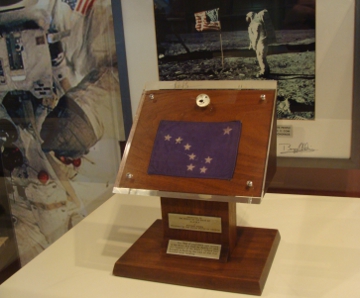
Alaska’s moon rocks on display at the State Museum in Juneau. Photo by Casey Kelly/KTOO.

Alaska’s long lost moon rocks are back in Juneau and on display at the State Museum through at least the end of the month.

The rocks actually are tiny fragments of moon dust collected by Apollo 11 astronauts in July 1969, and later presented to Governor Keith Miller by President Richard Nixon.

In 1973, the rocks and the plaque to which they’re mounted went missing after the Alaska Transportation Museum in Anchorage was destroyed by arson. They fell into the possession of Coleman Anderson, the foster son of that museum’s curator. He held them until 2011, when he sued the state seeking permanent ownership by claiming they had been abandoned. After some negotiations, Anderson finally agreed earlier this year to give the moon rocks back.

State Museum Curator of Collections Steve Henrickson is delighted to have them back.

“I’ve always dreamed about someday getting these back,” Henrickson says. “In fact, my first week of work in 1988, I was handed a file of the moon rock information and I was told ‘Pay attention to this. This is going to come back, and we need to be ready when it does.'”

Henrickson says the plaque suffered some damage when Anderson tried to clean it. But for the most part it’s in pretty good shape.

The plan is to put it on permanent display at the new State Library Archives and Museum facility scheduled to open in early 2016. He says its disappearance and return to state ownership will be part of the exhibit.

“It really has taken on a life of its own,” Henrickson says. “After it left the moon a new chapter of its history was written and we do want to talk about that.”

The moon rocks are on display at the State Museum through at least December.

Henrickson says he’s received several requests from other facilities in the state to temporarily host the moon rocks in the future.

Juneau Assembly hears about capital project funding schedule

When Juneau voters approved an extension of the city’s temporary one-percent sales tax and a $25 million bond proposition earlier this year, it created a dilemma members of the CBJ Assembly are probably happy to have: When to fund the nearly 20 projects identified in both ballot measures?

Eaglecrest Learning Center rendering
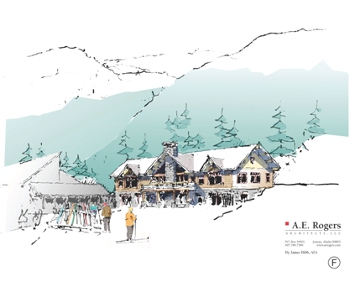
An artist’s rendering of what the new Eaglecrest Ski Area Learning Center will look like. The $3.5 million project will be funding with part of a $25 million bond package approved by voters this fall. Initial work will begin early next year. Image provided by Eaglecrest Ski Area.

Engineering Director Rorie Watt presented a preliminary funding schedule for the sales tax and bond projects to the Juneau Assembly Finance Committee this week.

The bond package contained six projects, including renovation of the old terminal at Juneau Airport, a new Learning Center at Eaglecrest Ski Area, and deferred maintenance at Centennial Hall. The plan is to do an initial $2.4 million bond sale in February to get those projects underway, and sell the rest of the bonds at a later date.

Watt says the sales tax funding schedule is a little more complicated.

“You can’t do it all in year one,” he told the Finance Committee.

The tax extension doesn’t take effect until October 2013. It’s expected to bring in about $44.5 million over five years. Ten million of that will be used to pay down debt on the bonds.

Of the remaining $34.5 million, Watt proposed funding three projects in the first year – the Juneau Airport’s snow removal equipment facility, a new Dimond Park Library and Sealaska Heritage Institute’s Walter Soboleff Center.

“All three of them, I think it’s fair to say are most advanced,” Watt said.

The library project is estimated at $14 million, and has secured all funding except sales tax. Watt says it’s ready to go to bid next winter.

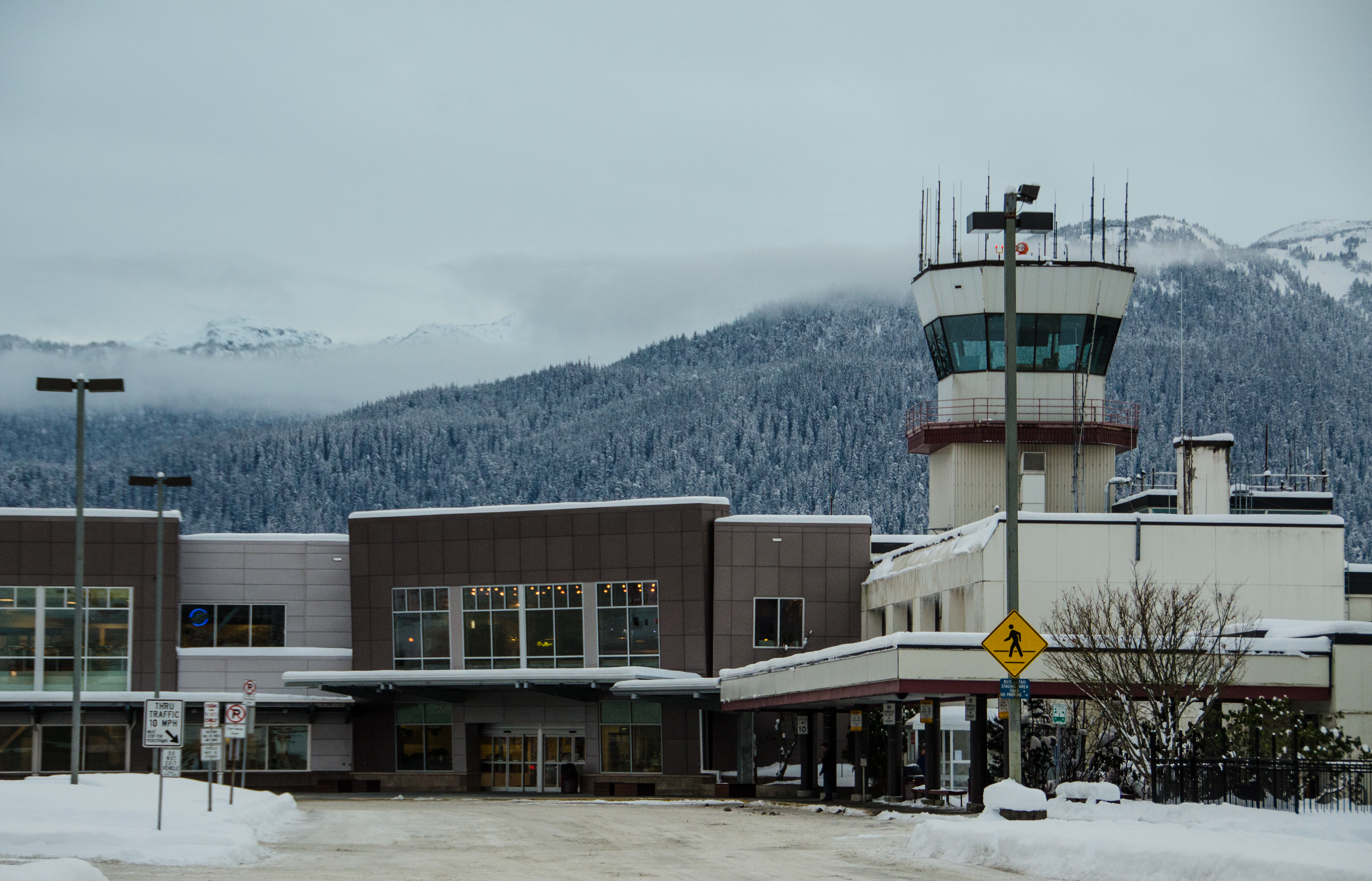
The Juneau International Airport. (Photo by Heather Bryant/KTOO)

Airport Manager Jeannie Johnson says she’s working with the Federal Aviation Administration to get $17 million for the snow removal facility. Ten million is available this year. But Johnson says if the Airport waits a year, when the sales tax dollars become available, she thinks she can get the full amount.

[quote]”The reason that they’re asking me to do this and I’m trying to make it work is that they’ve come up with other projects in the state of Alaska that they want to spend that $10 million on right now,” Johnson said.[/quote]

Of the three projects Watt proposes appropriating money to right away, Sealaska Heritage Institute has the most aggressive building schedule. SHI Chief Operating Officer Lee Kadinger told the Finance Committee the Soboleff Center will hopefully be ready to go to bid in early 2013.

“We have expectations of other gifts to come in in the next probably six to eight months,” Kadinger said. “We’ve been working a lot of these relationships with foundations for some time that are very interested in the project. It’s just more or less a formal public decision.”

Kadinger says the goal is to have the facility built by June 2014 in time for the heritage institute’s biennial Celebration festival.

Two other items from the sales tax initiative would get funding next year, under Watt’s proposed timeline. About a million dollars would go toward both deferred maintenance and the city’s rainy day reserve fund, with additional sales tax revenue set aside for those items in future years.

The rest of the individual projects, including a water filtration system for the Salmon Creek Reservoir and borough wide parks and trail improvements would be funded over the five-year extension.

The Assembly is expected to adopt the funding schedule as part of its Capital Improvement Projects list next year.

What’s next for longtime lawmaker Albert Kookesh?

Angoon Democratic Sen. Albert Kookesh talks about Southeast politics during a 2011 start-of-session interview. Now, he’s ending his legislative career after losing a tough election to Sitka Republican Bert Stedman. Photo by Ed Schoenfeld.

Most Decembers, Albert Kookesh is making plans to move to Juneau for the legislative session.

But this year, he’s spending more time at his Angoon home, enjoying the view.

“I see really calm waters because it’s high tide right now. And all of the beaches and all of the woods are covered with snow. And so is my dock right in front of my little house here,” he says.

Democrat Kookesh lost his Senate seat to fellow incumbent and Sitka Republican Bert Stedman in the November general election. The two became opponents when parts of their separate Southeast districts were combined.

The new district has less than a third of Kookesh’s old constituents, dropping communities in the Interior and Prince William Sound. Stedman kept more than two-thirds of his old district, including two of the region’s three largest communities.

Sen. Albert Kookesh, right, and Rep. Woodie Salmon discuss rural education issues in March of 2004. Photo courtesy of Kookesh’s office.

“I wasn’t surprised. I thought if we worked very hard we could pull a little bit of an upset here, but that wasn’t to be. People knew Stedman in his old district and they voted for him,” Kookesh says.

Out of office, 64-year-old will remain busy. He’s chairman of the Sealaska regional Native corporation’s board of directors. He also co-chairs the Alaska Federation of Natives board.

“So I’m not going to be sitting around not doing anything. I’m going to be pretty busy, in fact. I’m even contemplating getting back into commercial fishing,” he says.

Kookesh, once a seiner and a store- and lodge-owner, spent two terms – or eight years – in the Senate. That came after four terms – another eight years – in the House. Before that, he spent two years in the Capitol as Governor Tony Knowles’ special assistant for rural affairs. (View photos from Kookesh’s legislative career.)

“Albert’s going to be a definite loss,” says Kim Metcalfe of Juneau, a Democratic Party leader who has been active in the Alaska Native Sisterhood.

“He’s a very powerful guy with the positions he holds with both Sealaska and AFN. So, he’s not going to go away. He’s going to be around for a long time and use his speaking skills.
He’s a powerful speaker and I think we’re going to hear a lot more from him,” Metcalfe says.

She says Kookesh has been a strong advocate for education — statewide and in the villages he represented. She also says he used his leadership and oratory skills to urge young Natives, as well as others, to attend college.

Kookesh and Sitka’s Stedman worked together in the Senate’s bipartisan majority. Their race was largely respectful, and Kookesh continues speaking in positive terms.

“I think he’s going to do a good job for our district. I’m just a little disappointed that they weren’t able to put the coalition back together where he could have been the co-chairman of Finance again, or something more,” he says.

Sen. Albert Kookesh, right, cooks salmon for a session traditional foods dinner in March of 2004. Photo courtesy of Kookesh’s office.

Kookesh headed up the Transportation Committee, while Stedman assembled the capital budget as co-chairman of the Finance Committee. But this election’s Republican gains broke up the bipartisan majority. And the new leadership shut him out of budgeting.

Instead, Stedman was offered chairmanship of the Health, Education and Social Services Committee. He accepted, saying he looked forward to an opportunity to broaden his horizons.

Kookesh isn’t so sure.

“I don’t really think he’s cut out for HESS. But maybe we’ll see something different out of him. I think he’s more of a numbers man. He’s very powerful in that area and he has a very good background in it. Finance is right up his alley,” he says.

Kookesh has been active in the Alaska Native Brotherhood, serving as regional president and secretary. He played Gold Medal basketball, a major Southeast competition, for three decades.

But it hasn’t always been a smooth ride.

He’s a regular target of Sealaska shareholders critical of the corporation. And he earned an ethics violation for comments some took as threatening the city of Craig to gain support of the corporation’s land-claims legislation.

He was also among those cited for overfishing subsistence sockeyes near Angoon. His case was dismissed.

Despite all that, he says he still has a role to play.

“My name is well-enough known that I can still be a little bit of a force in Alaska. If it’s through the Native community, that’s fine. If it’s through some other venue, I’d be glad to look at whatever comes down the pike. Maybe we’ll have a Democratic governor in the next election and I could be involved in that somehow,” he says.

Technically, the Angoon Democrat remains a senator until the next Legislature gavels in January 15th. But there’s little to do before then.

Read and hear earlier reports about Albert Kookesh:

Journey to Attu

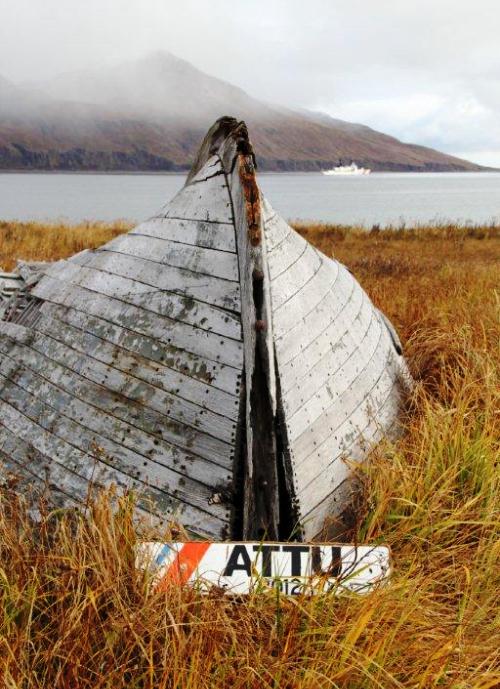
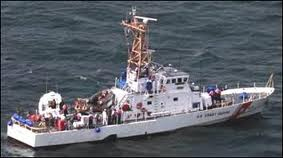
An old boat of bygone days on Attu Island. In the background, the Cutter Sherman is anchored in Massacre Bay. Photo by Capt. Joe Hester.

Alaska’s westernmost point is actually in the Eastern Hemisphere.  Attu Island is the last in the Aleutian Chain, and closer to Russia than Alaska’s mainland.

The fog enshrouded island doesn’t get many visitors, but earlier this month the U.S. Coast Guard Cutter Sherman and some of her crew called, each with their own unique tie to Attu.

The Japanese invaded Attu as well as Kiska Island in June 1942.  Both were highly contested in World War II because of their location.

The U.S. military feared Attu would become a staging ground for attacks on North America. In 1943, American soldiers recaptured the island, turning it into a staging ground for attacks on Japan.

2012 visit

Seventy years later, the 378-foot Sherman glided into Massacre Bay as dawn was slowly breaking through the fog and gloom.

Attu Island has a number of grim-sounding places. Massacre Bay most likely gets its name from the murder of 15 Aleuts in 1745 by Russians.

For Sherman Commanding Officer, Capt. Joe Hester, the trip to Attu was a link to his first years in the Coast Guard, when he was assigned to the Cutter Attu, 20 years ago.

“It was a patrol boat of the Island Class, 110 feet long, crew of 17,” he said.

Hester served twice on the Cutter Attu, in Puerto Rico, where the cutter “chased a great many drug smugglers and illegal migrant smugglers.”

“When I got assigned to the Attu it had occurred to me to do some studying and figure out what the heck she was named after,” he said.  “I’d never heard of Attu Island.”

Attu and San Juan are more that 5,200 nautical miles apart.  Hester did that study “and I thought, wow, wouldn’t it be interesting someday serving done here in the southeast corner of our country in Puerto Rico aboard the Cutter Attu to someday get to the northwestern corner of our country and see this desolate island named Attu.”

U.S. Coast Guard Cutter Attu.  Sherman Commanding Officer, Capt. Joe Hester, served on the Cutter Attu 20 years ago.

Four others on the Sherman had personal connections to the Island.  Two had worked at the LORAN station before the Coast Guard shut it down.

The abandoned Long Range Aids to Navigation Station sits white atop a wide brown bluff, with Mount Terrible in the background.

When the men stepped ashore, Hester said, the two who had served at Attu LORSTA told him they’d never thought they’d see the place again.

“On that desolate island, there’s really only the Coast Guard LORAN station, with 22 people on it, which for those six weeks included these two and they didn’t remember each other,” he said, laughing.  “But that probably speaks a lot to the mindset of the people who serve out there, especially if they’re near the end of their tour. You know, it’s just be focused on the next day … ‘only got six more weeks’ …  just focused on getting out of there.”

One of the five Sherman crew to visit Attu had worked at several remote LORAN stations and always wanted to go to the one on Attu.  The Coast Guard closed the station in 2010, before he got a chance.

As the five were on the island, a Coast Guard C-130 aircraft circled overhead to drop parts to the Sherman.  When the LORAN station was open, the plane was among the few connections to the outside world.  Weather permitting, it came once every other week.

Weather often did not permit.   That was not lost on Boatswain’s Mate Chief (BMC) Shane Melott – a retired Navy man turned Coast Guard.   The day of the Attu visit was cold and so was he, despite the high tech Gore-Tex, thick boots, and other modern gear he wore.

“I was just thinking about how cold we are in the gear that we’ve got today and I know that those guys went out without the type of gear that we’re using,” he said.  “So I’m sure they were just freezing all the time and trying to do what they had to do before getting back in to try and warm up a little bit.”

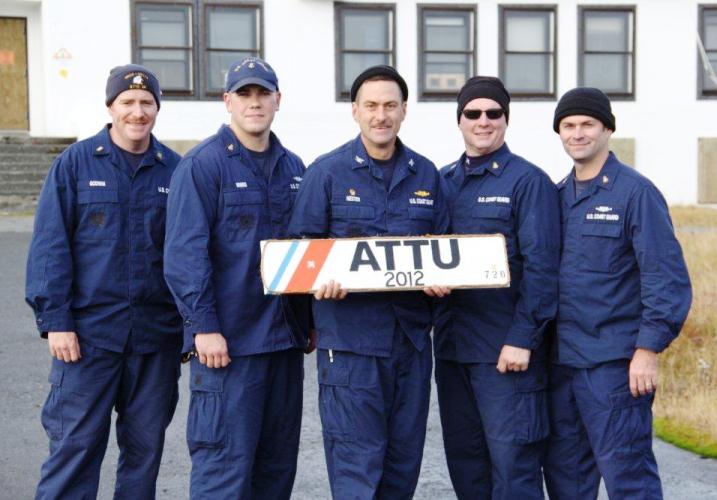
Five guys with interesting connections to Attu, from left to right: CWO Bryan Godwin served at USCG Long Range Aids to Navigation Station (LORSTA) Attu before closing; DCC Nick Mimms, also a LORSTA Attu veteran; Cutter Sherman Commanding Officer, Capt. Joe Hester; ETC Dale Piersol, previously stationed at several remote LORSTAs. He hoped to get LORSTA Attu before it closed in 2010; and BMC Shane Melott, whose grandfather served on Attu and Kiska Islands in WWII as a civilian engineer driving heavy machinery. Photo by Capt. Joe Hester.

Melott’s grandfather, from Oklahoma, was a heavy equipment operator on Attu Island during the war. He  didn’t talk much about the experience until his grandson announced he had joined the Navy, (before the Coast Guard).

“My grandfather said that when he was in the Corp of Engineers in World War II he was up here building bases.  And basically he and his team got invited along to go run the Japs out of the Aleutian Islands. And while I don’t think he was in the primary wave to hit Attu, I know he was on Attu.  And he also went to Kiska,” Melott said.

BMC Mellott called  Attu Island desolate but gorgeous.  He said it now has special significance to him.

It was Capt. Hester’s idea to visit Attu during the Sherman’s fall Bering Sea patrol.  He described trenches, abandoned fuel tanks, and a few memorials as standing “in silent witness to the courage and sacrifice” of those who fought to reclaim the island for the U.S.

He watched the five crewmen’s reaction, including BMC Melott.

[quote]“And he walked the beaches and he saw the piers and saw the places where his grandpa had served about 70 years ago.  It meant something to me and I think it meant a lot to the chief,” Hester said.[/quote]

As the men departed the island, a snowy owl “landed atop a cement door frame, standing alone amidst the rubble of a World War II building in the tundra,” the captain said.

[quote]“The giant bird never deigned to even  look at us, only over its shoulder, possibly contemplating the large white Coast Guard cutter in the bay from which we’d come and would soon return, leaving this barren, quiet place to the owl and the geese, to the abandoned wreckage of war and fishermen long gone, and to the ghosts and memories that haunt” Attu.[/quote]


Juneau public contributes to One Million Bones Project

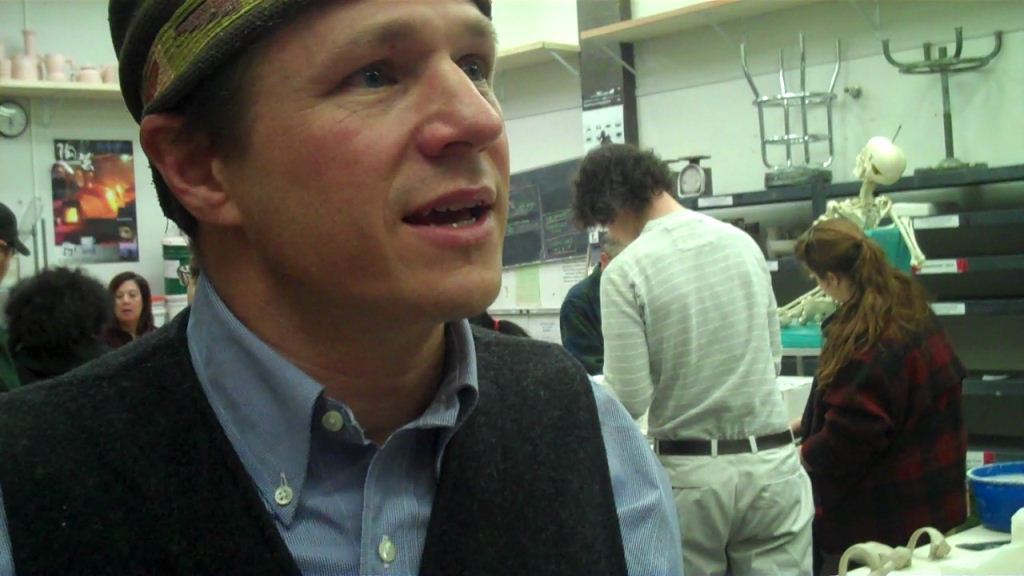
The blindfolds taken off revealed the creations Keith Cox and his competitor made. (Photo by Danny Peterson/ KTOO)

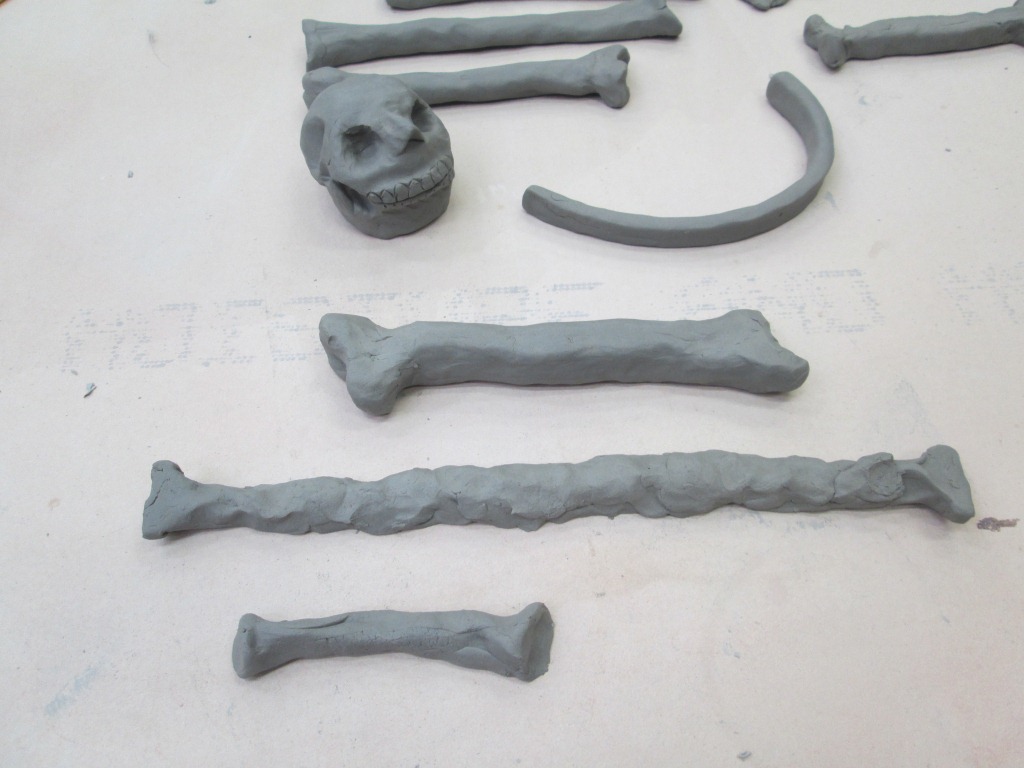
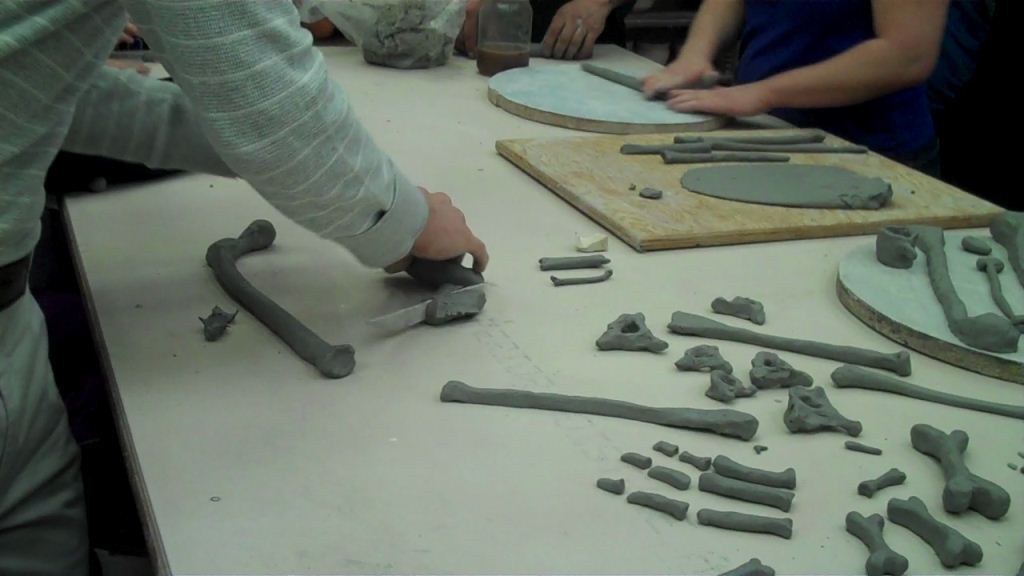
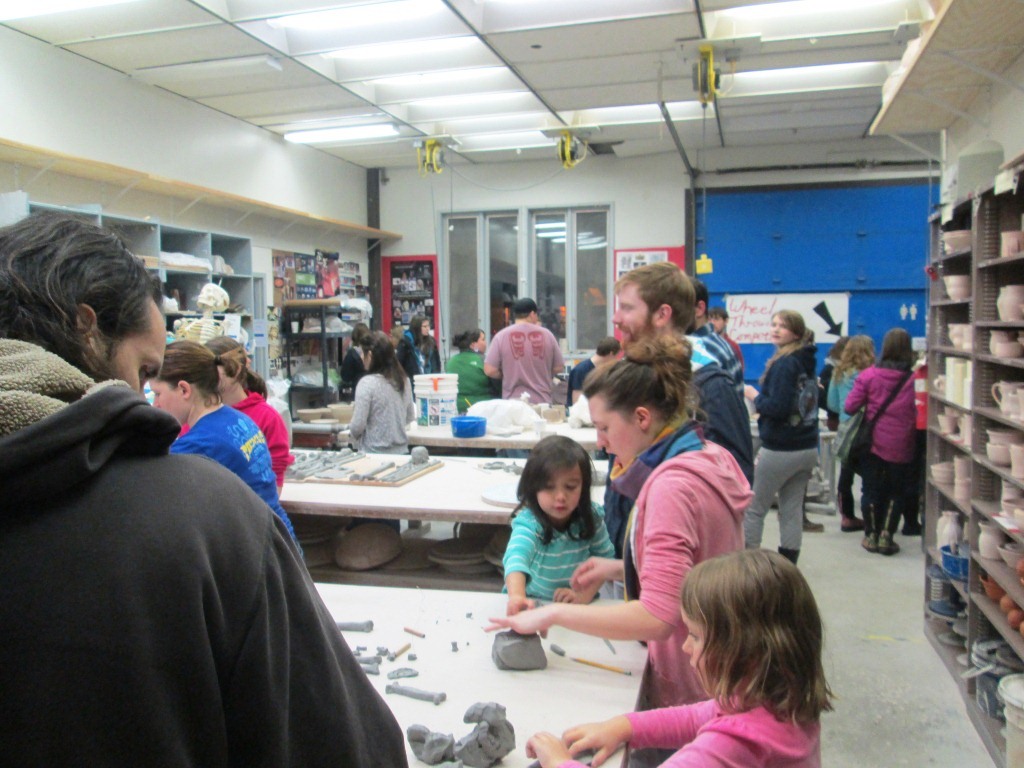
About 1,000 ceramic bones were created at a recent UAS Art Open House, where roughly 300 visitors came to make a difference with their artwork.

For every bone made, $1 will be donated to help genocide victims in places like the Democratic Republic of Congo, Burma and Somalia as part of the One Million Bones project. The bone collection is part of an international effort. The bones are to be installed in the spring on the Washington, D.C. National Mall.

Local artist MK McNaughton introduced UAS Art Professor Pedar Dalthorp to the idea.  Dalthorp uses ceramic for the bones because that medium holds up best for installation.

“Some bones in the past, like for some of the initial bone making attempts were, some of them used paper mache or some other materials that aren’t quite as weather proof as ceramics,” Dalthorp said.

Dalthorp organized the UAS event, converting studio spaces in the Soboleff building to accommodate the large crowds of people that for an evening became personally involved in UAS art projects.

Teacher Assistant Kate Laster helped set up. She said events like this can generate important dialogue in Juneau about genocide in other parts of the world.

[quote]“It’s a really great project because it’s a community based thing where we can discuss kind of these unseen people. You know, we’re talking about something that’s very, very much happening now,” said Laster.[/quote]

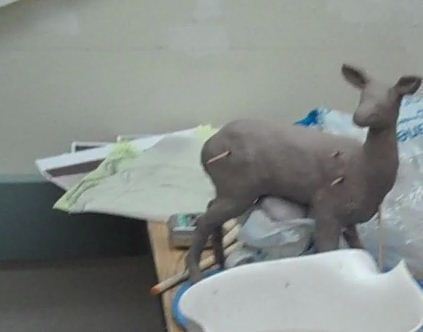
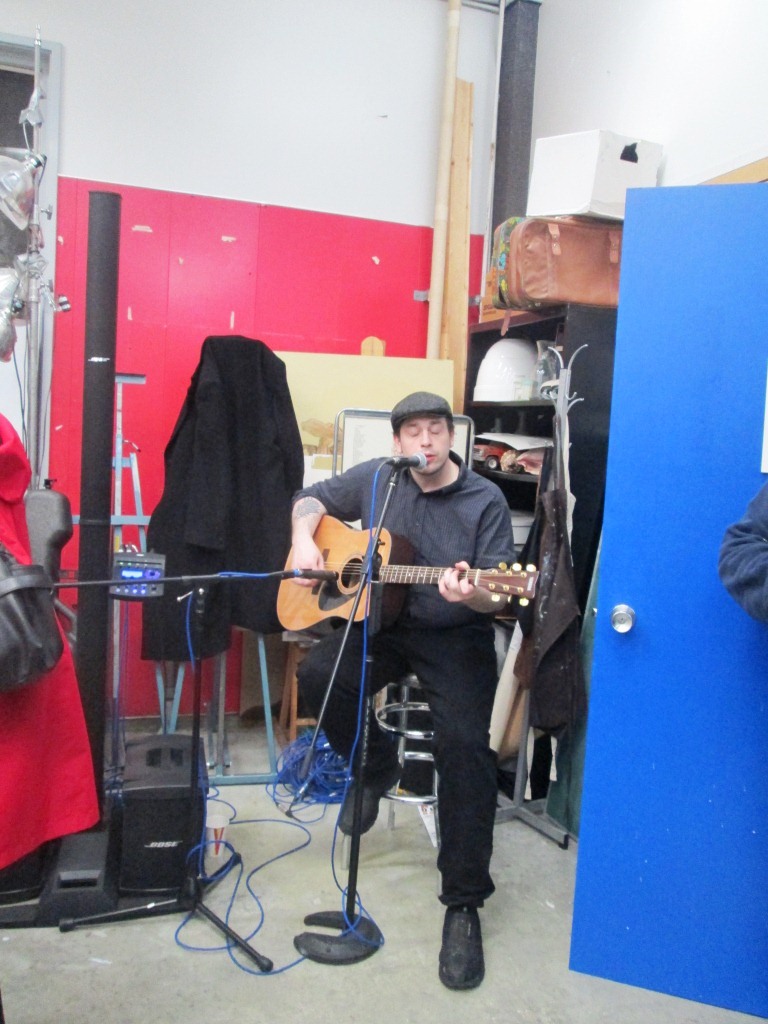
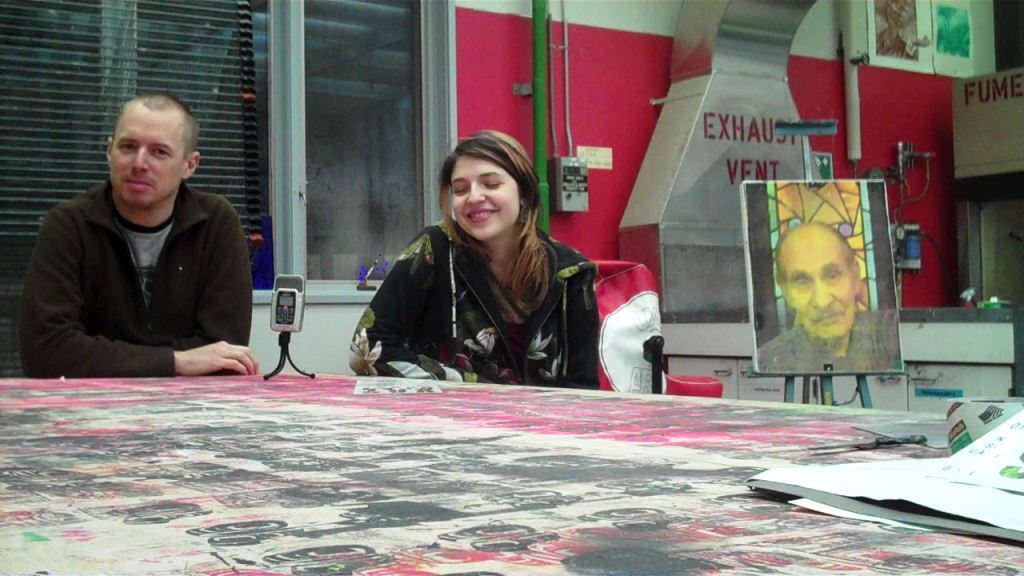
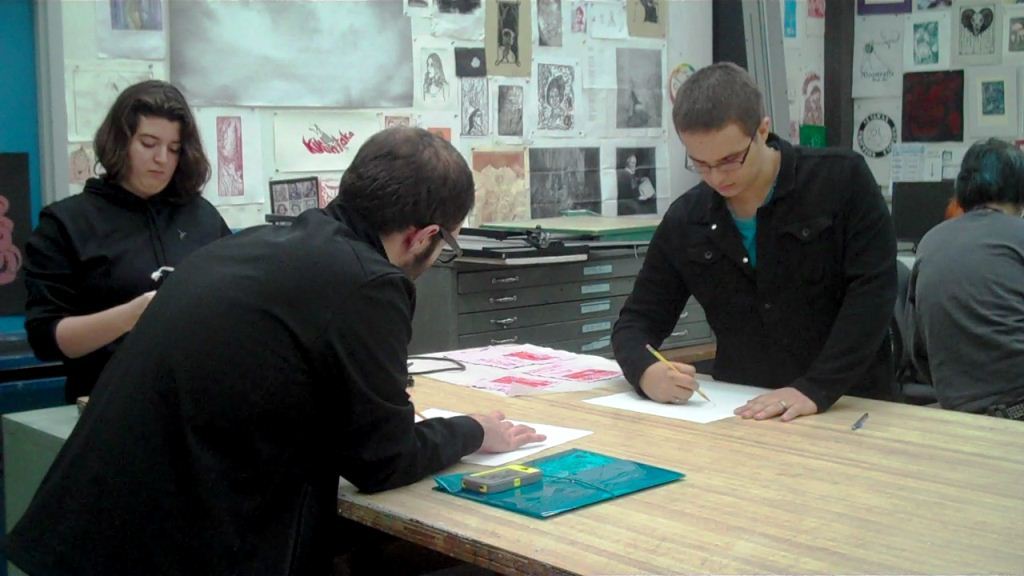
In addition to building bones, the department also had drawing demonstrations, screen printing, a large-scale deer sculpture, pottery making, and live music by Sammy Burrous.  He played a solo set on acoustic guitar in the oil painting studio that brought a vibrant dimension to the event. His music could be heard throughout the Soboleff building as he crooned his blues standards to the visitors.

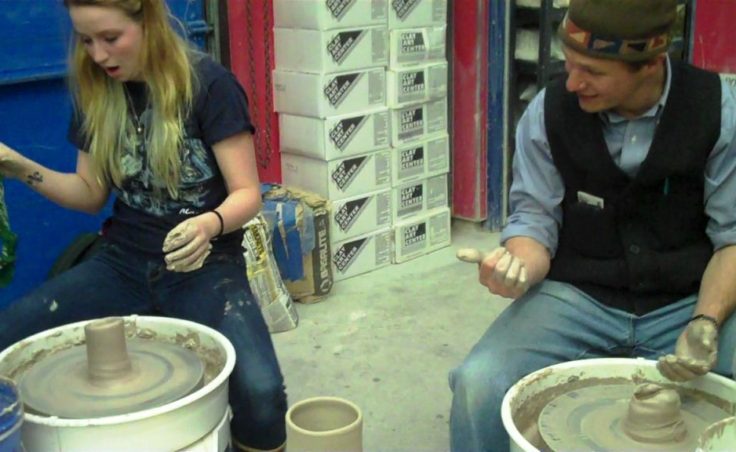
Over in the ceramics studio, Keith Cox was blind-folded and had just a couple of minutes to shape a creation out of clay on a pottery wheel using his hands, water, and a sponge during the wheel throw competition. A faculty member judged the pieces on artistic merit.  Though Cox lost the competition, and the sponge, he didn’t walk away empty handed.

[quote]“It was stiff, it was a stiff competition. I went in with a high spirit and a lot of confidence that I was really going to successfully make a, like a vase or something, and I came out with something that my son can still eat cereal out of,” said Cox.[/quote]

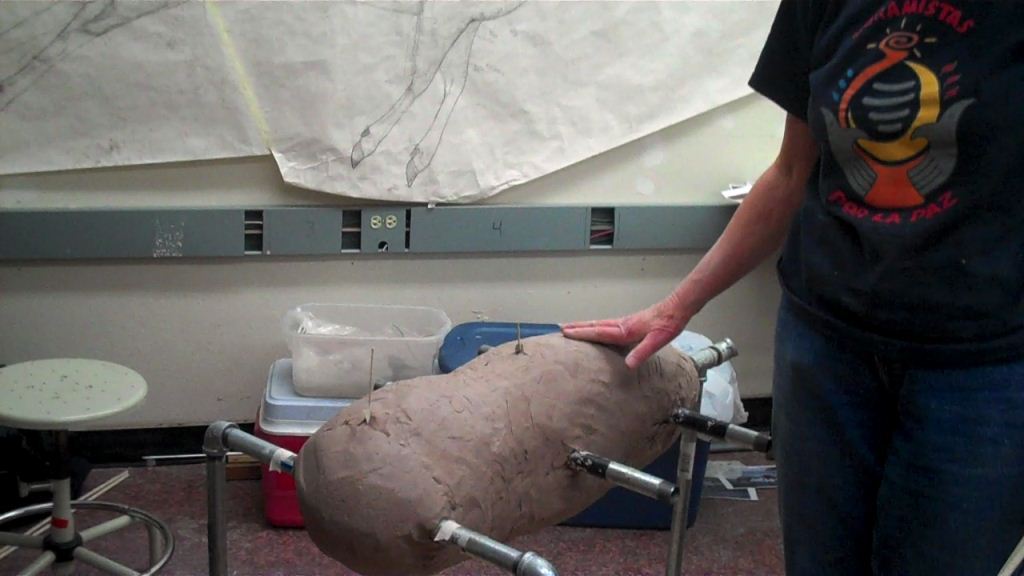
Over at the Whitehead building, art student Doris Alcorn was sculpting an impressive life-size deer – out of 500 pounds of clay on a metal frame.  The sculpture will be hollowed out before it’s put into the gas kiln for firing.  Because the piece is so large, the deer is crouching so it fits into the kiln.

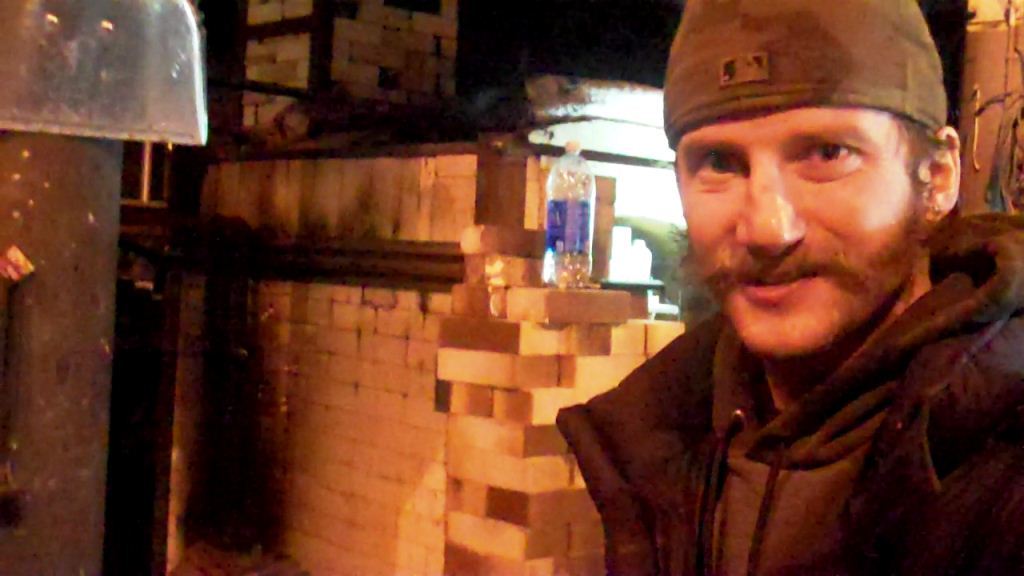
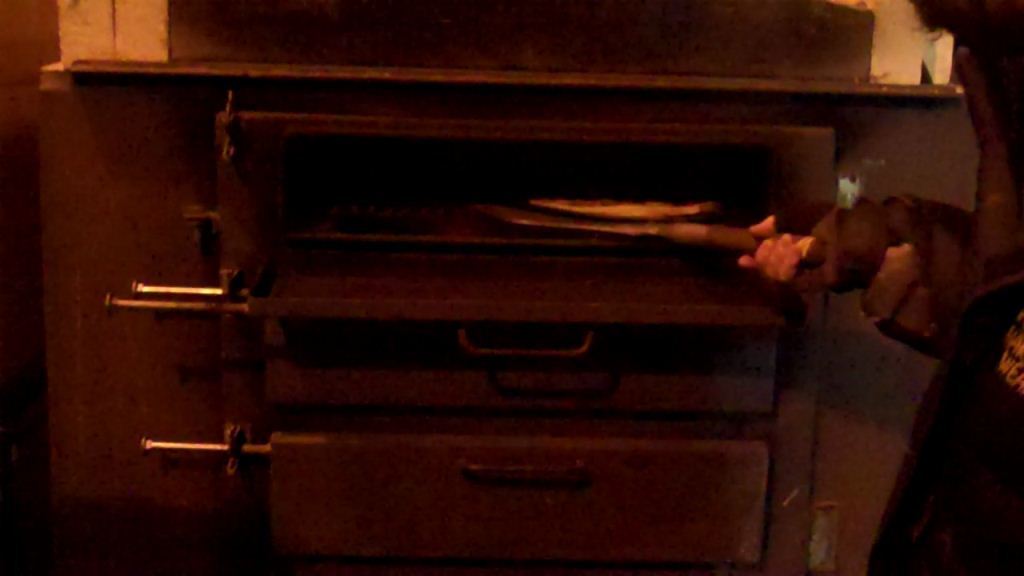
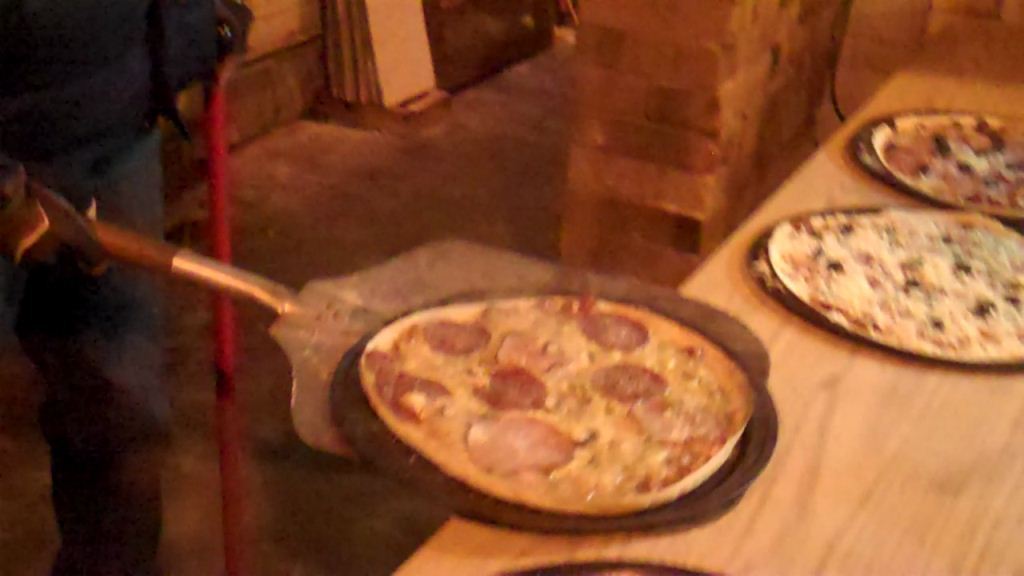
Ceramics aren’t the only thing popping out of ovens at the UAS Art Department. A wood-fired pizza kiln provided fresh pizzas throughout the evening. What comes out of that oven is always a student favorite.

“It’s built as a pizza oven and it’s wood-fired so it imparts a little bit of uh, a little extra flavor that you don’t normally get out of a conventional oven,” Dalthorp said.

To keep up with demand, Chef Josh Reder pumped out the pies as quickly as possible.

“These are homemade dough, homemade sauce, then fired over wood.  Not much new technology in the last two-thousand years,”  Reder said.

Laster said the event shows the public a lot of what goes on in the busy UAS Art Department.

[quote]“What I love about the open house is it’s basically bringing in people who don’t know we have a pizza oven, bringing in people who’ve not really come down to Soboleff to actually see the art department and what we do and how much fun we have,”  Laster said.[/quote]

Dalthorp hopes the open house will bring in more students and in turn help them realize their creative and professional potential.

To get involved with the One Million Bones project here in Juneau, contact MK MacNaughton at mk@canvasarts.org. Or visit www.onemillionbones.org.

Site notifications
Update notification options
Subscribe to notifications