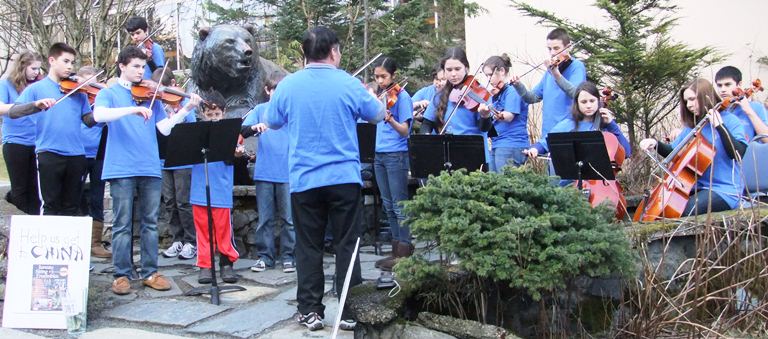
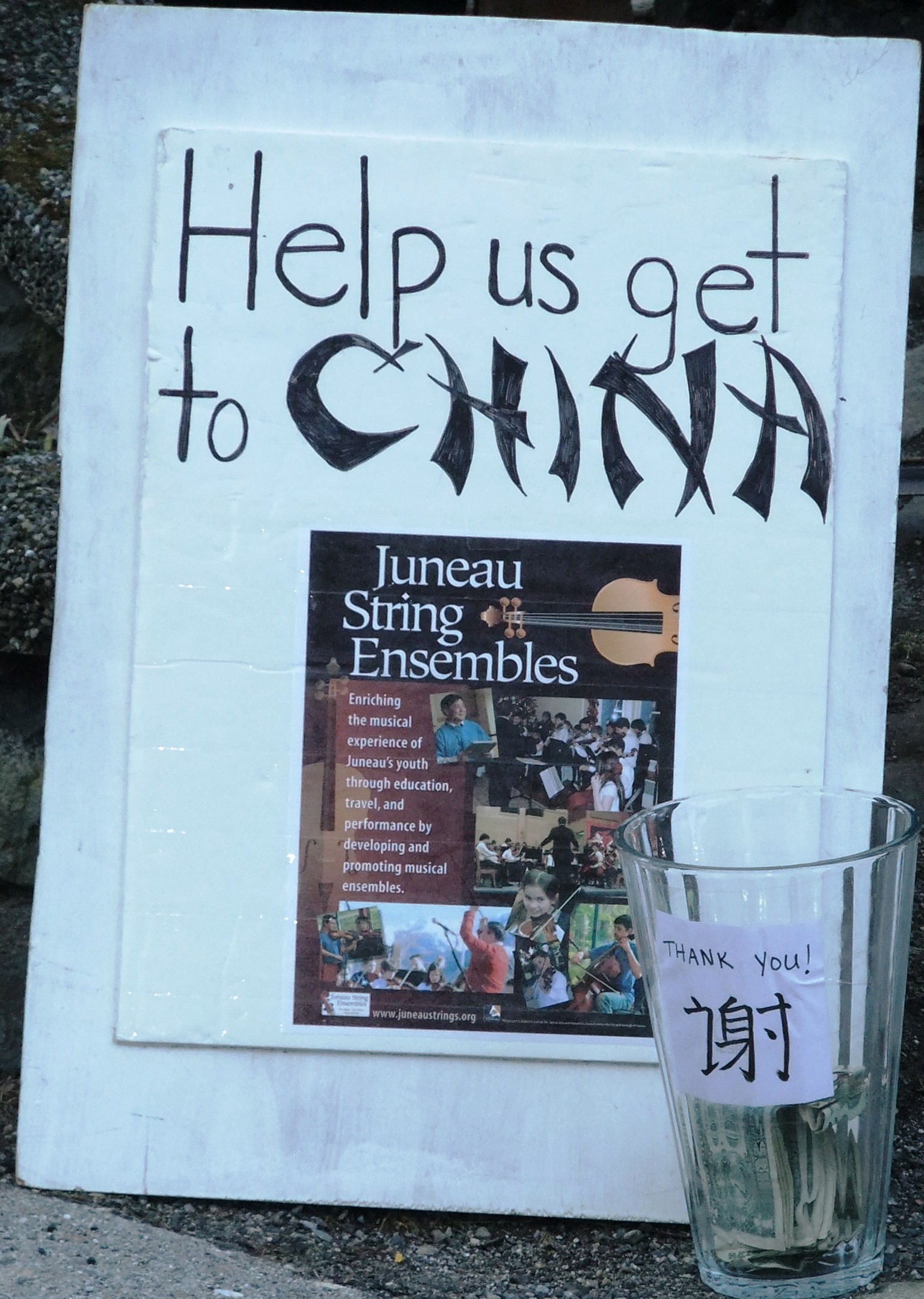
Juneau String Ensemble musicians play a late afternoon concert near the capitol building to raise funds for their upcoming trip to China.
About 20 Juneau student musicians have raised $19,000 through street performances for an upcoming trip to China.
Members of Juneau String Ensembles logged 700 hours last year as downtown buskers. Taking advantage of Monday’s sunshine, they opened their instrument cases, set out the money jar and performed in front of the bronze bear in the Dimond Courthouse plaza. Though the crowd wasn’t big, even a legislator or two came out to listen.
Diane Antaya acted as spokeswoman. Her 15-year-old son plays first violin and is practicing for a duet with a student in China. She says the young musicians, ranging in age from 9 to 16, will visit four major cities, and perform in Beijing and Shanghai. The students’ instructor, Guo Hua Xia, is from China.
“The students will be playing on the Great Wall of China, they’ll be playing with a student symphony in Beijing, playing in some of the local schools, and interacting and playing soccer with the kids in China. They’ll be doing a shared concert as well,” she said. “Kids who can’t really talk to each other, they’re practicing the same music to get ready for this shared concert in June.”
A parent must accompany their child on the 14-day trip, which begins May 28th. While parents are responsible for their own airfare, each student needs to raise $3,000. Antaya says some of their funds have come from the Permanent Fund Dividend program known as Pick. Click. Give. She says that’s one reason the students chose the capitol area to perform this week.
“We’re trying to raise $75,000, we have about $40,000 raised right now and Pick. Click. Give. is one of many options to help us get to China,” she said.
Program Manager Heather Beaty says this is the first year Juneau String Ensembles have been part of the check-off program, which now has 451 organizations on the list. Donations made through the PFD are unrestricted.
The Association of Village Council Presidents would like its tribes to be able to prosecute non-tribal members in their local courts.
The Violence Against Women’s Act that is making its way through Congress has the support of AVCP for the most part. However, the Native non-profit organization which represents 56 tribes in the Yukon-Kuskokwim Delta is opposing part of the legislation, the part that doesn’t allow Alaskan tribes to prosecute non-tribal members.
That’s a sticking point for AVCP President Myron Naneng.
“Why do they always have to have an exclusion for non-tribal members?” Naneng said. “The tribal court should be able to deal with all people who live in the village,” Naneng says.
Reauthorizing VAWA has passed the Senate and will be considered by the House next. It does allow tribes on reservations to prosecute non-tribal members for domestic violence that occurs within their boundaries. However, in Alaska, there is only one reservation–Metlakatla in South East– so other tribes in the state would not have that right.
Senator Lisa Murkowski voted for the bill, saying she made sure Metlakatla was treated no different than other reservations in the country. She said for the state’s other tribes, she focused on language that confirms that they have the power to issue domestic violence protective orders against their own members.
“So, what this does is simply maintain the status quo,” Murkowski said.
Murkowski also included language to re-establish the Alaska Rural Justice and Law Enforcement Commission, which has the tribes, state, and federal governments working together on rural safety issues.
In the Y-K Delta, there are about 20 tribal courts, but the state court still deals with most crimes region-wide. Naneng says access to state courts is difficult for some villages because they are so remote, sometimes hundreds of miles away.
“How much does it cost to go from one of the villages to Bethel to go to court, especially from Lower Yukon?” Naneng said. “It’s probably over $1,000 round trip.”
Giving tribal courts more leverage to deal with crimes would help, he says.
Tribal courts can use traditional forms of resolution such as peace circles or banishment, a form of punishment for people who consistently cause problems in a community. Naneng says tribes should be able to exercise that with non-tribal members as well.
“I think that the village should have the ability to ban these people from their communities which has been done and is still going on today,” Naneng said.
Naneng says AVCP would like to see changes made to the VAWA legislation in the House and they plan to work with other tribes in Alaska to lobby for that.
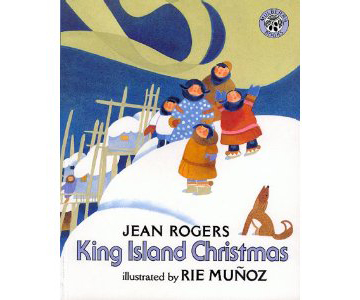
The cover of King Island Christmas, one of Rogers’ most well known stories.
Long-time Juneau resident Jean Rogers is being remembered as a loving mother, beloved children’s book author, and patron of the arts.
Rogers died Wednesday due to heart failure. She was 93.
Rogers said she always wanted to be a writer.
“I like to make up things and to use my imagination and to make a story,” she told KTOO in 1988. “For me the story is it.”
Her most famous book, King Island Christmas, is about a village’s struggle to overcome a winter storm and bring a priest ashore to celebrate the holiday. It’s based on the experiences of Rogers’ longtime friend, Juneau artist Rie Munoz, who lived on King Island in the Bering Sea in 1952. Munoz illustrated the book, which was later adapted into a musical.
Rogers talked about how the collaboration came to be.
“From hearing her talk and seeing her pictures, gradually I got the idea that it would make a good story to tell about their leaving the island,” she said. “That’s kind of universal refugee story. You have to leave your homeland and go someplace else, and I thought it would make a very poignant story to tell.”
Born Jean Clark in Idaho on October 1st, 1919, she attended Teachers College and taught in her home state until she saved enough money to go to the University of California at Berkeley. There she earned a Bachelor’s degree in English and met George Rogers.
They were married in 1942, and moved to Juneau three years later aboard the Princess Nora steamship. Throughout their nearly 69 years of marriage, they remained very much in love. George passed away in 2010.
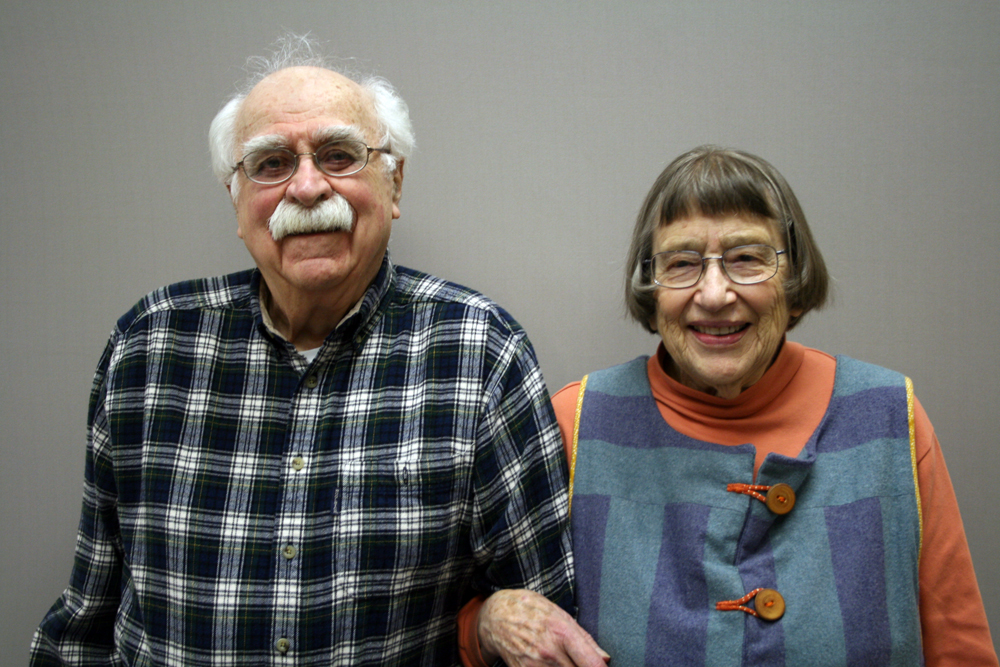
George and Jean Rogers
In a 2009 Story Corp segment for KTOO, George and Jean remembered the first time they met.
“I can still remember the day you first came within my sights at Berkeley,” George said. “I was the treasurer of a student co-op and you were a transfer student from Idaho, and you walked in and I said to myself, ‘This is the girl I’m going to marry.'”
Jean replied, tongue in cheek, “That’s what he tells me, but he didn’t tell me that for quite a while.”
George Rogers was a consultant to the state Constitutional Convention, and is considered Alaska’s first economist.
Together they adopted and raised six children. Daughter Sidney Fadaoff says her mother worked quietly behind the scenes, volunteering at local schools and non-profits, serving on boards and commissions, and still finding time to mother a house full of kids.
“She was a mom to not just the six kids she adopted but all of our friends as well,” Fadaoff said with a laugh. “Mom and dad loved kids and they didn’t care whose they were, and their door was always open to everybody.”
The Secret Mooose
Jean always found time to write. Children’s book author Susi Gregg Fowler was part of a Juneau writer’s group with Rogers for many years. Fowler’s husband Jim illustrated Rogers’ book The Secret Moose.
“Jean encouraged all kinds of people in wherever their heart was taking them,” Susi Fowler said.
When an early draft of Fowler’s book Albertina, the Animals and Me was rejected by a publisher, she reworked it, and brought it to the writers group. Fowler says members encouraged her to resubmit it to the same publisher.
“Jean was perhaps the most adamant of them, because she knew the editors to whom I was going to send it,” said Fowler. “She said, ‘You need to send it back in. It’s different! They’ll love it! Do it!'”
When the book was published Fowler dedicated it to the writers group.
In another KTOO interview, Rogers talked about the difficulty of getting published.
“It’s difficult to find a story good enough, to do it well enough to have somebody take it,” Rogers said. “And it’s a great big fat joy when you do.”
One of Fadaoff’s favorite stories happened in her parents’ later years. Jean was driving George home after knee surgery and stopped at a bakery to pick up some bread. When they got home, she helped George into the house and left the car door open. When she returned, a bear was after the bread.
“Mom stood there and yelled at that bear to leave her bread alone and get out of that car, just like she was talking to a child,” Fadaoff said. “And the bear looked at her, and picked up the bread, and left.”
In 2001, the Rogers’ house burned down while they were on vacation. Though they were both in their 80s, Fadaoff says her parents did not hesitate to pick up the pieces, especially Jean.
“Your dad’s going to design me another house and we’re going to rebuild.” Fadaoff recalled her mother saying.
The couple moved into their new home on the same Evergreen Avenue lot just before Christmas 2002.
In the Story Corp segment they recorded, Jean and George talked about their rich lives and growing old together.
“The terrible thing about interviewing old people, George, is that so much has happened that you just can’t… You know, we’ve lived nearly a hundred years apiece, and there’s so much to talk about,” she said. “We could rattle on for a year.”
Jean Rogers passed away Wednesday, surrounded by family. She’s survived by five children, three of whom live in Juneau, as well as numerous grandchildren, great-grandchildren, and a large extended family. She was preceded in death by her husband and a son.
A small service will be held soon, to be followed by a larger community celebration.
Original Story:
Alaska children’s author and long-time Juneau resident Jean Rogers has died. She was 93.
Jean Rogers came to Juneau by steamship in 1945 with her husband George, who was considered Alaska’s first economist.
The Rogers met in an English class at the University of California at Berkley, when they were students. They were married in 1942, and adopted and raised six children. They were just a month short of their 69th wedding anniversary when George passed away in 2010.
Rogers was a well-known author of children’s books, including the popular holiday tale King Island Christmas; now a musical performed nearly every season. The book was based on the experience of artist Rie Munoz, who had lived on King Island in 1952. Munoz illustrated the book, and several others written by Rogers.
Rogers served on the Alaska Public Broadcasting and Alaska Public Offices commissions. She was given an Honorary Doctorate in Humane Letters by the University of Alaska for her published work.
This is an ongoing story. Check back for more on the life of Jean Rogers.
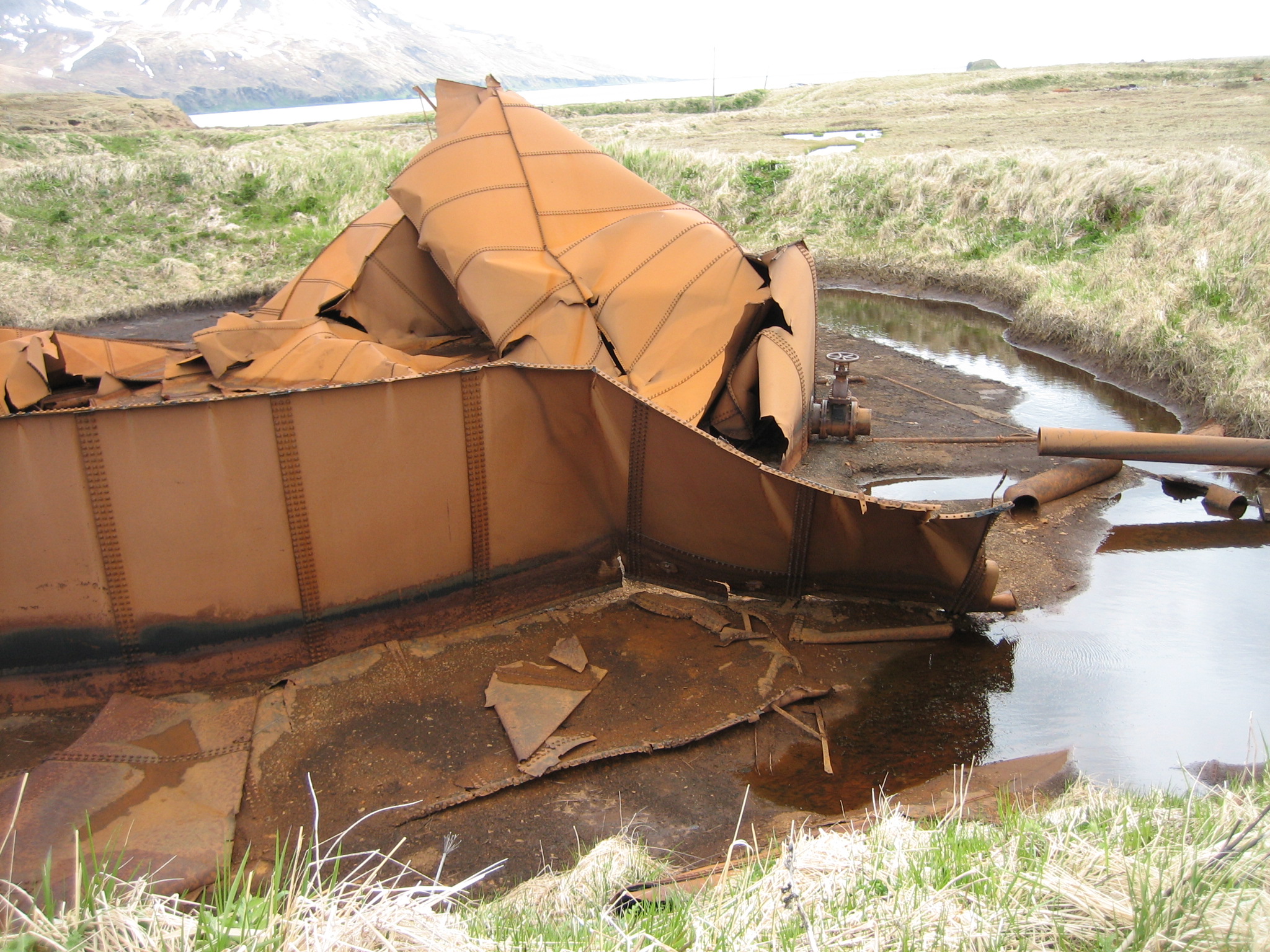
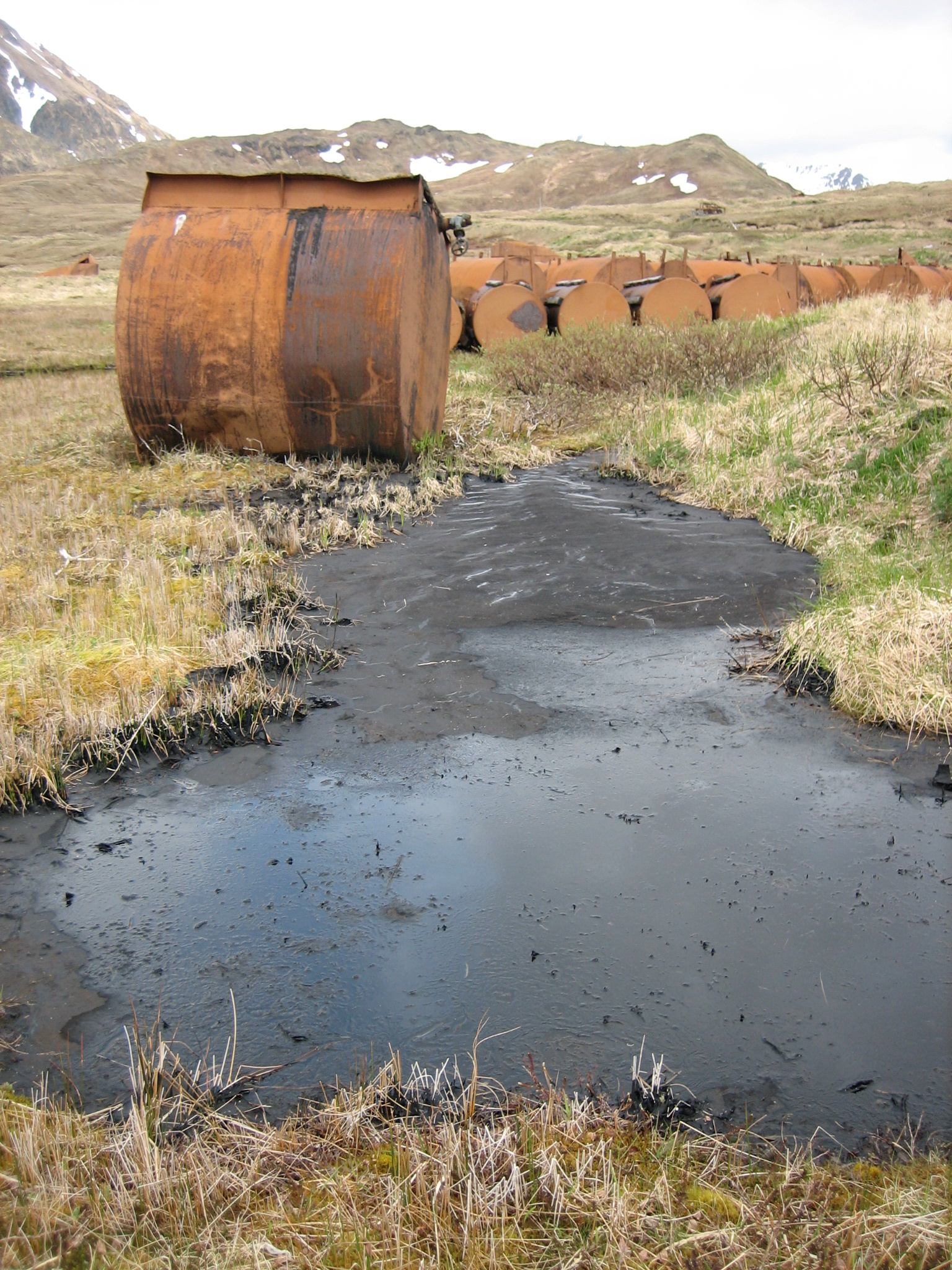
A large fuel tank on Attu. (Photos by Deborah Rudis, courtesy U.S. Fish and Wildlife Service)
Attu Island is overdue for some spring cleaning. Seventy years after World War II, the island is still littered with shards of old Coke bottles, lead-based batteries, leaking fuel drums and unexploded artillery.
This summer, the U.S. Fish and Wildlife Service, which manages the remote island as a refuge, will survey the extent of World War II debris and contamination. As KTOO’s Kelsey Gobroski reports, the entire ecosystem could be affected by the decades of pollution.
Attu gave biologist Deborah Rudis goosebumps. Until her first visit to the island in 2007, Rudis had only seen Attu’s past while sifting through decades of documents for her job at Juneau’s U.S. Fish and Wildlife Service office. She plans to return this summer with a team of other scientists to catalog the clean-up work that needs to be done.
Rudis says evidence of military occupation sticks around on Attu.
“It’s such a wet environment that all the surface water continues to flow and meet the creeks and go downstream,” Rudis says. “In a few places you just sort of kick into the edge of the stream bank and you could release some product coming out into the water and you could see the oil slick just move downstream.”
During her 2007 visit, Rudis shared the island with a few Coast Guardsmen and two other biologists. Now the Coast Guard station is closed.
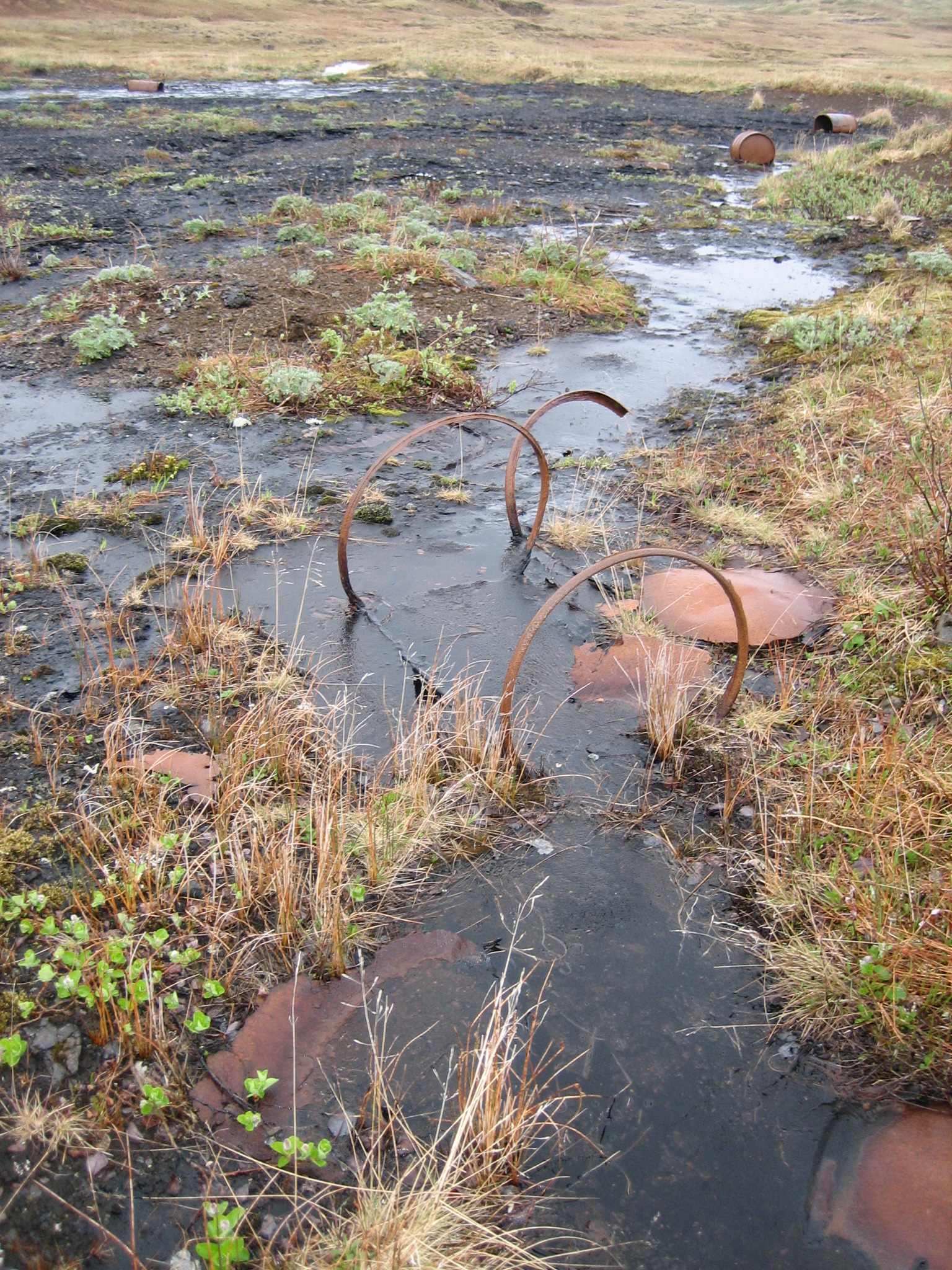
Asphalt barrel dump in the Attu tundra. (Photos by Deborah Rudis, courtesy U.S. Fish and Wildlife Service)
She is a contaminants biologist and was on Attu to survey the pollution. She calls the hydrocarbon pollutants “product” because there’s more than just oil.
“There’s bunker C and there’s lubricants and there’s different oils and there’s diesel fuels,” says says.
World War II’s Aleutian campaign is sometimes called the “Thousand Mile War.” The U.S. military built a base on Attu and deployed 15,000 U.S. troops there. Rudis says about 2,000 Japanese soldiers dug into the ground or navigated caves for shelter. Cliffs and mountains separated the two bases.
The U.S. retook Attu from the Japanese in 1943 in the only World War II battle on American soil.
Rudis followed the trail of troop supplies while surveying Attu.She counted thousands of fuel barrels; many so rusted only the skeletal rings remained. Their contents had pooled and solidified, creating an asphalt lot in the middle of the Aleutian tundra, an example of the pollution of war.
“When WWII was over they just left it, and even in the 70s and the 80s when the Navy or other military entities left other places in the Aleutians, they left it behind. They left their buildings, they left the coffee cups on the table, they left their papers. It’s amazing when you go in there and you see this stuff. Now, on Attu most of it’s pretty well gone and decayed, but the contaminants were not considered an issue and of course they wouldn’t have been back then because it was a war situation.”
Unexploded ordnances also litter the island, but are marked sporadically. Rudis says a Naval Disposal Unit tried to minimize the risk of explosive accidents, but the plan backfired.
“They thought they could blow them up and it would neutralize them so-to-speak, but a lot of things don’t totally blow up, or they’re buried in the bottom of the pile,” Rudis says.
Attu is one of about 10,000 Formerly Used Defense Sites nationwide. The Department of Defense has about $250 million each year to whittle away at some of the 2,700 sites that need cleaning up.
An Attu clean up could cost tens of millions of dollars and stretch out more than a decade.
Kenneth Andraschko is the manager of Formerly Used Defense Sites in Alaska. He says it could be two to five years before an Attu clean up would get underway.
A fuel tank spill. (Photos by Deborah Rudis, courtesy U.S. Fish and Wildlife Service)
The Fish and Wildlife Service will fund this summer’s survey.
“We don’t own that land, we don’t manage that land, we being Department of Defense,” Andraschko says. “Fish and Wildlife might have to look at some of the areas to determine what they want to keep, what is culturally significant to them, what areas they want disturbed, not disturbed, before the Corps of Engineers on behalf of DOD goes in and does a remediation.”
Fish and Wildlife Service historian Debbie Corbett will join Rudis and the other scientists this summer to survey old Attu battlefields for the first time. She has been to Attu before to study Aleut artifacts.
“It’s sort of like a World War II version of Gettysburg, where you’ve got the troop movements and the actual battle. You can see where the battle was fought,” she says.
Corbett says World War II artifacts weren’t seen as old or special enough to preserve until recently. She aims to leave things where they’re found whenever possible; where she finds an object helps her understand how it was used and what was around it.
“I’m trying to get people to think of this as a landscape. Not just as isolated objects on the ground or a cluster of buildings or a runway, but the whole thing as a unified picture,” she says.
This summer the Fish and Wildlife team will get to Attu by sea. The Coast Guard station’s abandoned runway needs a safety check before planes can land; the Corps of Engineers is making it a priority to clean up Attu before the runway decays – eventually reclaimed by the tundra.
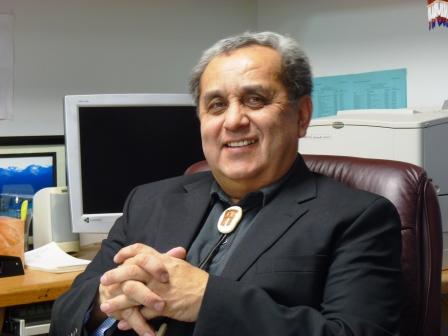
Albert Kookesh. Photo by Ed Schoenfeld/Coastalaska.
Former state Senator Albert Kookesh was medevaced to Anchorage Monday morning after suffering a heart attack.
His daughter Elaine says the 64-year old Kookesh was in Juneau preparing for a trip out of state, when he called his wife saying he was having chest pains and was going to the hospital. His wife also was in Juneau and was able to fly with him.
He was stabilized and flown to Providence Hospital and Medical Center.
“They’re currently now at Providence. They’re going to go in with a catheter and see where the blockage is,” she said Monday morning.
The eldest daughter of Mr. Kookesh’s five children, Elaine Kookesh says she will travel to Anchorage this evening to be with her dad.
“My sister and I are heading up tonight and then our other sister will head up as soon as she can,” she said. “Just keep us all in your thoughts and prayers. He’s a tough guy and never sits even when he’s sick.”
A Democrat from Angoon, Kookesh served 16 years in total, eight as a representative and eight more as a senator. He was defeated by Sitka Republican Bert Stedman after parts of their Southeast districts were combined during redistricting.
Kookesh is the current chairman of Sealaska’s board of directors and co-chair of the Alaska Federation of Natives board.
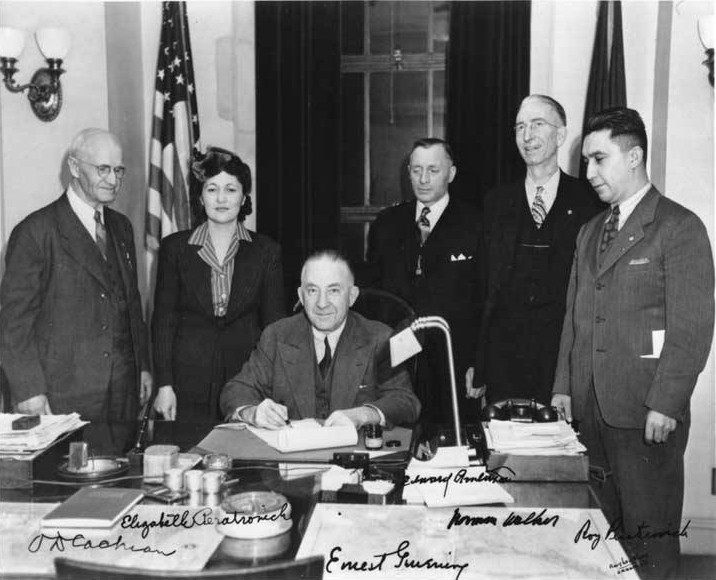
Territorial Governor Ernest Gruening signs the Alaska Anti-Discrimination Act of 1945, surrounded by Elizabeth and Roy Peratrovich and members of the Alaska Territorial Legislature. Photo courtesy Alaska State Library Archives.
Alaskans marked Elizabeth Peratrovich Day on Saturday, in honor of the Tlingit woman whose testimony to the territorial legislature helped pass an Anti-Discrimination Act in 1945.
A small crowd gathered at the Alaska State Museum in Juneau to hear a talk from Barbara Cadiente-Nelson, a board member of Sealaska Native Corporation and the Douglas Indian Association, as well as a member of the Alaska Native Sisterhood.
“Mrs. Peratrovich’s testimony exemplifies a Tlingit value that our words have spirit and life,” Cadiente-Nelson said. “They tear down, or they build up. Choose them wisely.”
Peratrovich and her husband Roy were leaders of the Alaska Native Sisterhood and Brotherhood in the early 1940s, a time when Native people faced discrimination in housing and from many businesses in Juneau.
Since ANB and ANS were the leading civil rights organizations of the day, the couple petitioned territorial Governor Ernest Gruening to introduce the Anti-Discrimination Act. Elizabeth Peratrovich was the last to testify before the territorial Senate voted on the bill in 1945.
In 1988, the Alaska Legislature made February 16th Elizabeth Peratrovich Day, to mark the anniversary of the date Gruening signed the act into law.
Cadiente-Nelson acknowledged progress in the nearly 70 years since the act passed, but said there remains work to do to eliminate racism against Native people.
“When I was a teacher at Juneau-Douglas High School during a painful time, the acronym KAN was written on my white board and on my desk boards – it was Kill All Natives,” Cadiente-Nelson said. “That’s just one glimpse as to the presence of this evil that sometimes knocks on our door.”
After Cadiente-Nelson’s speech, the State Museum held a special screening of the documentary “For the Rights of All: Ending Jim Crow in Alaska.” The museum currently has an exhibit honoring Peratrovich titled “Alaskan. Native. Woman. Activist.” It’s on display through March 16th.
The Juneau-Douglas City Museum also has a special exhibit this month honoring Peratrovich.
Close
Update notification options
Subscribe to notifications
Subscribe
Get notifications about news related to the topics you care about. You can unsubscribe anytime.

 “We’re trying to raise $75,000, we have about $40,000 raised right now and Pick. Click. Give. is one of many options to help us get to China,” she said.