An unpainted Boeing 737-8 MAX parked at Renton Municipal Airport adjacent to Boeing’s factory in Renton, Washington on January 25, 2024. Alaska Airlines said Thursday it expects a $150 million hit from the Boeing 737 MAX grounding, which will limit its capacity growth in 2024. (Photo by Jason Redmond/AFP via Getty Images)
“We are not issuing financial outlook for 2024 today. Now is not the time for that,” chief executive Dave Calhoun said during an earnings call.
Instead, Calhoun focused much of the call seeking to reassure analysts — and the flying public — that the plane maker is taking the incident seriously.
“We will simply focus on every next airplane, and ensuring we meet all the standards that we have, all the standards that our regulator has and that our customers demand,” he said.
Boeing said Wednesday it lost $30 million in the fourth quarter of 2023. That’s a better performance than the final quarter of 2022, when the company lost more than $600 million. Overall, Boeing lost $2.2 billion last year — its best result in 5 years.
But any improvement in the company’s financials has been overshadowed by the latest safety incident.
The Federal Aviation Administration is allowing Boeing 737 Max 9 planes to fly again after an inspection and maintenance. Calhoun said airlines have now returned 129 Max 9 planes to service, out of a total of 171 that were grounded by the FAA.
Earlier this week, Boeing formally withdrew its request for an exemption from federal safety rules in order to speed up certification of its new Boeing Max 7 jet to start flying. The company had been hoping to begin delivering those smaller planes to airlines this year, despite a design flaw with the Max’s engine de-icing system that could be potentially catastrophic.
Boeing wanted to use the same workaround that’s already in use on its Max 8 and Max 9 jets. Now the company says it will focus on a permanent engineering fix instead.
Calhoun told analysts on Wednesday that process is expected to take about nine months, likely pushing certification of the Max 7 back into 2025.
The FAA has also taken the unusual step of ordering production caps at Boeing’s factories. Calhoun said the company will continue producing 737s at the rate of 38 per month until the FAA agrees to lift that limit. And Calhoun told analysts that slowing down production at the behest of regulators would help the company fix problems in its factory and supply chain.
“I’m sort of glad they called out a pause. That’s an excuse to take our time, and do it right,” Calhoun said. “This is what we do, and how we get better.”
The NTSB is expected to release preliminary findings from its investigations of the Alaska Airlines incident in the coming days.
Copyright 2024 NPR. To see more, visit https://www.npr.org.
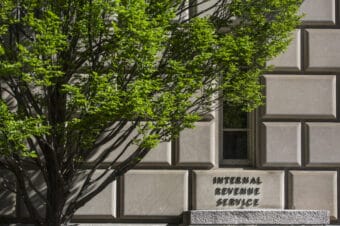
The Internal Revenue Service building is seen on April 15, 2019, in Washington, D.C. (Zach Gibson/Getty Images)
The Internal Revenue Service is piloting a new program this year that aims to help Americans file their taxes directly to the government for free.
Known as Direct File, the service will be open to certain filers in select states at the start so the IRS can test the program with a smaller group of users and make tweaks before opening it up to a larger group of taxpayers in the future.
This year’s tax season begins today, when the IRS begins accepting and processing tax returns.
Last year, the IRS began developing a free tax filing service months after receiving an influx of $80 billion from the Inflation Reduction Act, which was signed into law by President Joe Biden.
The free service has gotten pushback from Republicans and TurboTax maker Intuit, which called it a “solution in search of a problem.” But the IRS has maintained that Direct File will make what can be a complex and costly endeavor simpler and free.
The IRS previously partnered with private companies to create another free tax filing program called Free File, but only about 2% of eligible taxpayers use it.
Who is eligible to use the IRS’ new tax filing service?
At the outset, only federal and state employees in certain tax situations will be eligible to participate in the Direct File pilot program, CNN reported.
Additionally, the pilot will only be open to people who lived in these states in 2023: Arizona, California, Florida, Massachusetts, Nevada, New Hampshire, New York, South Dakota, Tennessee, Texas, Washington, and Wyoming.
The pilot is further limited by a user’s tax situation. People who itemize their deductions, earn gig or business income, or claim certain tax credits aren’t eligible to participate right now.
The service is available in both English and Spanish.
The IRS said it’s starting with a limited number of users to follow software launch best practices and that it expects to gradually open up the program to more people and will provide updates about that process on its website.
How does Direct File work?
Direct File will be available to users on a computer, tablet or smartphone. You don’t have to download any software.
The IRS is also offering live chat support — with an option for a follow-up phone call — to people who need help using Direct File.
There’s one major caveat to the pilot program: it only helps users prepare federal tax returns.
The IRS said most states without an income tax as well as states that have the ability to develop a state-run tax filing service (or already have one) are participating in the pilot.
Users living in Arizona, California, Massachusetts and New York will be directed to a state-support tax filing tool to prepare their state returns.
Copyright 2024 NPR. To see more, visit https://www.npr.org.
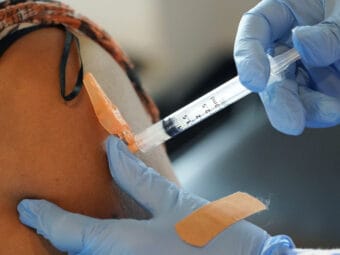
The Centers for Disease Control and Prevention estimates that up to 86% of new COVID-19 cases stem from the latest mutation, JN.1. The most recent COVID vaccines are expected to help lower chances of serious illness or hospitalization from JN.1. (Rogelio V. Solis/AP)
A new, fast-spreading variant of COVID-19 is sweeping across the nation, making it the most widely circulating iteration of the virus in the U.S. and around the world, according to the Centers for Disease Control and Prevention.
The mutation, called JN.1, is a subvariant of Omicron that was first detected by the World Health Organization in late August. At the time it appeared to be spreading slowly but as temperatures have dipped, JN.1 has spiked.
In mid-October, CDC data shows JN.1 made up about 0.1% of all COVID-19 cases around the country. As of Jan. 20, the CDC estimates that’s now up to approximately 86%.
“Most likely, if you’re getting COVID right now, you’re getting this particular variant mutation,” Eyal Oren, a director and professor of epidemiology at the School of Public Health at San Diego State University, told NPR.
Oren added that one of the reasons for the latest surge is that the virus continues to evolve so rapidly that “our immune systems have not been able to keep up.”
Another reason is that “not enough Americans are vaccinated,” according to the CDC. Earlier this month, only 11% of children and 21% of adults were reported to have received the updated COVID-19 vaccine. Meanwhile, only 40% of adults age 65 and older, which are the highest risk group, have gotten the updated vaccine in the last year.
The CDC says COVID-19 vaccines can reduce severe illness and hospitalizations.
The low rates for COVD-19 vaccinations, along with those against influenza and respiratory syncytial virus (RSV), are of such great concern that the CDC issued an alert to health care workers last month. The combination of rising flu, RSV and COVID cases “could lead to more severe disease and increased healthcare capacity strain in the coming weeks,” the agency predicted.
People may be wrongly assuming that the current COVID booster won’t protect them from JN.1 or other new strains, Oren said. But the most recent vaccines from Pfizer-BioNTech, Moderna and Novavax are all expected to help lower chances of serious illness or hospitalization from JN.1.
What are the symptoms of JN.1?
CDC data indicates that this strain is no more severe than previous iterations, and the list of symptoms remains consistent with what they have been for COVID-19 in recent years: fever, chills, coughing, muscle aches, shortness of breath, sore throat, congestion, headaches, fatigue, and losing one’s taste or smell.
Oren noted that most of the list consists of ailments that could be confused with those caused by other viruses common during winter months, including the flu, RSV or the common cold.
“That’s why it’s so important to get vaccinated and to get tested [for COVID], particularly if someone is at higher risk of severe outcomes,” he said.
How to stay safe
Oren urged all people, but especially those in high-risk categories, to take precautions by wearing masks, avoiding crowded places, and washing their hands. “And if you’re sick stay home,” he said.
The federal government offers free rapid COVID-19 tests through the mail. Four free tests can be ordered at COVIDTests.gov and will be delivered by the U.S. Postal Service.
Copyright 2024 NPR. To see more, visit https://www.npr.org.
A new Harvard University report finds that housing was unaffordable for a record half of renters in 2022. And a softening rental market might not help those who struggle most. (Matt Rourke/AP)
Over the past two years, Genuine Campbell was shocked at how rent for her two-bedroom apartment in Philadelphia just kept going up — from $1,300 a month to $1,600. She’s a single mom of four, and right as her rent was rising, her hours as a hotel valet were getting cut.
Add in utility costs plus inflation, and every month brought a wrenching decision.
“Do you want to pay the bills and then give half the rent, or do you want to try to do the whole rent and then be back on bills?” she says.
Campbell says the area isn’t even safe enough for her kids to play outside, but the rents are still way out of line with what she can make. “You have to work in, like, maybe a hospital or [as a] police officer … just to keep up with the rent,” she says.
In fact, more such households and many others also now struggle to pay rent, according to a newly released report from the Joint Center for Housing Studies of Harvard University. It finds that in 2022, as rents spiked during the COVID-19 pandemic, a record half of U.S. renters paid more than 30% of their income for rent and utilities. Nearly half of those people were severely cost-burdened, paying more than 50% of their income.
“We actually saw increases across every single income category that we look at, which sort of surprised us,” says Whitney Airgood-Obrycki, a senior research associate with the center and the report’s lead author.
Since 2019, the biggest jump in unaffordability was for households making $30,000 to $74,999 a year. Even among those working full time, a third of all renters were still cost-burdened.
For renters making under $30,000 — who already faced the most severe struggle to afford housing — Airgood-Obrycki “didn’t think it could possibly get that much higher.” But the report found it did nudge up, to an all-time high of 83% who are cost-burdened. She says the amount of money they have left over for all other household expenses has plummeted by nearly half, to just $310 a month.
And she says the compromises people traditionally make to get cheaper rent aren’t guaranteed these days.
“So you might not be living in as good of a neighborhood. You might be commuting farther. You might be sacrificing the quality of your school system,” Airgood-Obrycki says. “And often what we’re seeing is that even when people are attempting to make these trade-offs, they still end up paying too much for housing.”
As the Harvard report notes, U.S. homelessness rates hit a record high last year. The Biden administration and housing experts link that squarely to a severe housing shortage that has helped drive up prices.

“We simply don’t have enough homes that people can afford,” says Jeff Olivet, executive director of the U.S. Interagency Council on Homelessness. “And when you combine rapidly rising rent — that it just costs more per month for people to get into a place and keep a place — you get this vicious game of musical chairs.”
A cooling housing market isn’t likely to help those struggling the most
The double-digit rent hikes of the past few years are finally easing, and rents have even come down in some cities that saw the biggest jumps. A record number of apartments are also under construction, and as they come online, tight vacancy rates will loosen.
Still, prices for many people are still higher than before the pandemic, and the building boom is not likely to change that.
“What we are building is at the high end, because of the increased cost of construction and because we have a lot of demand from higher-income renters,” says Airgood-Obrycki. Most new apartments over the last decade have gone for $1,400 a month or higher, “and that’s not affordable to the majority of renters.”
At the same time, she says the market has lost millions of low-rent units for $600 a month or less. And these trends are continuing a long-term, growing gap in what people can afford. Since 2001, the Harvard report notes, median rents have risen by 21% while the median annual income for renters has risen just 2%.
The upshot is that millions more people qualify for federal housing subsidies. But those have been chronically underfunded, and the amount available has fallen further behind the need.
In Philadelphia, Campbell moved her family out of their unaffordable apartment and in with friends this month. She’s making a bit more working as a driver with Lyft, and also does people’s hair on the side.
Her plan is to stay until she gets her tax refund to help with a fresh start. She has already started looking around for a cheaper place, and hopes to find something for $1,000 or $1,100 a month.
“It’s like you’re dreaming of a fairy tale,” Campbell says. “But I’m going to try to find something that I can handle.”
Copyright 2024 NPR. To see more, visit https://www.npr.org.
Alaska Airlines N704AL, a Boeing 737 Max 9, which made an emergency landing at Portland International Airport on January 5 is parked at a maintenance hanger in Portland, Ore. on January 23, 2024. One of two door plugs on the emergency exit door blew out shortly after the plane took off from Portland. (Patrick T. Fallon/AFP via Getty Images)
WASHINGTON — Concerns about quality control at Boeing are mounting, as new revelations from an alleged whistleblower suggest mistakes at the company’s factory led to a fuselage panel blowing off an Alaska Airlines jet in midair earlier this month.
No one was seriously injured when the panel known as a door plug blew off at 16,000 feet. But the dramatic incident has renewed questions about Boeing’s manufacturing processes, and whether the company is prioritizing speed and profit over safety.
Now a self-described Boeing employee claims to have details about how the door plug on that Boeing 737 Max 9 was improperly installed. Those new details, which were first reported by the Seattle Times, were published in a post on an aviation website last week.
“The reason the door blew off is stated in black and white in Boeing’s own records,” wrote the whistleblower, who appears to have access to the company’s manufacturing records. “It is also very, very stupid and speaks volumes about the quality culture at certain portions of the business.”
According to the whistleblower’s account, four bolts that are supposed to hold the door plug in place “were not installed when Boeing delivered the plane, our own records reflect this.”
Investigators at the National Transportation Safety Board have already raised the possibility that the bolts were not installed. The NTSB is still investigating the incident. If the whistleblower’s description is accurate, investigators may be able to confirm it by looking at Boeing’s records.
Boeing declined to comment on the whistleblower allegations, citing the ongoing investigation.
Boeing CEO Dave Calhoun speaks with reporters as he arrives at the office of Sen. Mark Warner on Capitol Hill January 24, 2024 in Washington, DC. Calhoun is meeting with senators after Boeing was forced to ground the 737 Max 9 aircraft fleet after an accident earlier this month. (Drew Angerer/Getty Images)
Those allegations came to light just as Boeing CEO Dave Calhoun was visiting Capitol Hill Wednesday, where he is seeking to reassure lawmakers and the public.
“We believe in our airplanes,” Calhoun told reporters. “We have confidence in the safety of our airplanes. And that’s what all of this is about. We fully understand the gravity.”
NPR has not verified the identity of the whistleblower.
But this person’s explanation of problems in the manufacturing process that led to the door plug blowout seem credible to Ed Pierson, a former senior manager at Boeing’s 737 factory in Renton, Wash.
“It definitely seemed accurate to me,” said Pierson, who now directs the non-profit Foundation for Aviation Safety. “And it doesn’t surprise me, because this is the kind of stuff that we had seen, I had seen in the past.”
“This is symptomatic of what happens when you rush production,” Pierson said. “People are put under this kind of pressure, and they’re forced to take shortcuts. And that’s where these mistakes are made.”
The Alaska Airlines incident is another major setback for Boeing, which was still working to rebuild public trust after the crashes of two Boeing 737 Max 8 jets in 2018 and 2019 that killed 346 people.
Alaska and United Airlines have canceled thousands of flights as they wait for final inspection instructions from regulators. The CEOs of both airlines criticized Boeing in separate interviews on Tuesday.
“I’m more than frustrated and disappointed,” Alaska Airlines CEO Ben Minicucci told NBC News. “I am angry.”
“It’s clear to me that we received an airplane from Boeing with a faulty door,” he said.
That is exactly what the Boeing whistleblower alleges. Their post describes in detail how the door plug was removed for repairs and then replaced at the Boeing factory. The four bolts that hold the door plug in place should have been reattached, the whistleblower writes.
But they were not, the whistleblower says, because of communication problems between employees who work for Boeing and those who work for Spirit AeroSystems, the company that built the fuselage and door panel.
The whistleblower describes the safety inspection process at Boeing’s 737 factory in Renton as “a rambling, shambling, disaster waiting to happen.”
Boeing’s 737 factory teams in Renton are scheduled to hold what the company is calling a “Quality Stand Down” on Thursday, allowing production to pause for a day so employees can take part in special training sessions.
But it’s clear the company will have to do more than that to rebuild its reputation.
Senator Maria Cantwell (D-Wash.), the chair of the Senate Committee on Commerce, Science and Transportation, met with Calhoun on Wednesday.
“I made it clear that quality engineering and a commitment to safety always have to be the top priority,” Cantwell said in a statement.
Cantwell says she plans to hold hearings to investigate the root causes of the door plug blowout.
“The American flying public and Boeing line workers deserve a culture of leadership at Boeing that puts safety ahead of profits,” she said.
Copyright 2024 NPR. To see more, visit https://www.npr.org.
Myrna Aguilar and her son, David Thornton, at their home in Southern California. Thornton received a federal Pell Grant for his first year at Cal Poly Pomona but isn’t sure why the FAFSA, the application for federal student aid, says he doesn’t qualify for one next year. (Gabriella Angotti-Jones for NPR)
Families have a lot of questions right now about how much help they’ll get paying for college — questions that financial aid offices can’t yet answer.
That’s because this year’s Free Application for Federal Student Aid (FAFSA) is months behind schedule. And to make things really complicated, it includes a mistake that would have cost students $1.8 billion in federal student aid.
We covered the mistake in detail here. In a nutshell: The U.S. Education Department’s FAFSA math, for deciding how much aid a student should get, is wrong.
In practice, this mistake would make some students and families appear to have more income than they really do, and that means they would get less aid than they should. And not just federal financial aid but also all sorts of state and school-based aid.
On Tuesday, a department spokesperson confirmed to NPR that the department will fix this mistake in time for the 2024-2025 award year, though the spokesperson could not provide details on how or how quickly the fix will be made. For the first time, the department also gave a sense of just how much federal student aid is at stake: $1.8 billion.
“The Biden-Harris Administration is committed to making higher education possible for more students, including through ensuring students qualify for as much financial aid as possible,” the spokesperson said in a statement.
The FAFSA mistake had college financial aid offices worried
“The polite way to say it is, wow. I mean, I was shocked.”
That’s how Brad Barnett, the financial aid director at James Madison University in Virginia, describes learning about the mistake.
“I get that there’s complexities in building and programming a new system. OK. But forgetting to put the right numbers into a table that now has created all this consternation and delays really surprised me.”
The FAFSA is new this year because Congress passed a law ordering the Education Department to make sweeping changes. The idea was to make it easier to fill out and to give more lower-income families access to federal aid. Families like Myrna Aguilar’s.
“I am a single parent. In addition to my son, my mom lives with us, so we’re a multigenerational family, which is awesome,” Aguilar told NPR.
Aguilar’s son, David Thornton, is studying mechanical engineering at Cal Poly Pomona in Southern California, where he just finished his first semester.
“It was fun,” Thornton says, wearing a hooded sweatshirt emblazoned with “Cal Poly Pomona College of Engineering.” “There were a lot of events that I really enjoyed. My classes were very interesting. Stressful, but interesting.”
Thornton got lots of help paying for college, including a $1,500 Pell Grant from the U.S. government. Pell Grants are for lower-income students and don’t need to be paid back. That’s important because after Thornton filled out the new FAFSA a couple of weeks ago, the Education Department sent him an email with a surprise: Next year, it says, he’s going to lose that $1,500 Pell Grant, though it’s unclear why.
“That actually is equivalent to an extra mortgage payment,” Aguilar says. “That’s, you know, inconvenient.”
She insists this won’t keep her son from returning to Cal Poly, which he loves. She’ll save and fill the gap, if that’s what it takes. But she wants to know: Why did this happen?
It could be because of the department’s FAFSA mistake. Financial aid experts tell NPR it’s difficult at this point to know for certain.
“We’re in a situation where we really can’t help students or their families,” says Charles Conn, a top aid administrator at Thornton’s university, Cal Poly Pomona. “They’re getting some information from the Department of Ed. We’re not.”
Because of this year’s big FAFSA overhaul, Conn says, the Education Department is really behind, and it’s telling colleges they won’t be getting any financial aid data for students like Thornton until the end of this month, at the earliest.
“[That] really cripples our office and our ability to fulfill our role, which is to help students and their families make sense of all of this,” Conn says. That includes helping Thornton and Aguilar understand what happened to his Pell Grant.
With no details on the fix, financial aid timelines are still in the air
The Education Department says it will fix the FAFSA mistake this year, but it did not clarify how or when. And it’s unclear what impact any fix would have on universities’ financial aid timelines.
Before the department shared its decision, NPR spoke with a dozen financial aid experts and administrators across the U.S. — at colleges big and small, public and private — to hear how they think the department should manage a potential fix.
“I don’t know what the best option is. None of them are good,” says Karen Krause, the executive director of financial aid for the University of Texas at Arlington.
Option 1: The Education Department can try to fix this quickly, before it sends any student FAFSA data on to colleges.
The problem with that option is that even a quick fix will take time, further delaying the student data that universities need. Without that data, colleges can’t even begin to come up with financial aid offers to send to families.
“It’s nausea-inducing,” says Christina Tangalakis, who manages student aid for Glendale Community College, in Glendale, California.
There’s also an Option 2, she says, where the fix takes long enough that the department has to go ahead and send colleges data it knows is wrong, with a promise to update the data as soon as it can. That way, colleges can at least give families something, a kind of starting point. But Tangalakis worries that for many lower-income students, those preliminary award letters would be too low.
“How many students will be discouraged by what they see on paper and not even attend?” Tangalakis says.
We heard this fear a lot.
“Our students absolutely are relying on this,” says Scott Skaro, the financial aid director at United Tribes Technical College, in North Dakota.
He says tribal colleges will be hit especially hard by this uncertainty because more than 80% of their students qualify for a federal Pell Grant.
“[Students] may just go find some low-paying job that’s gonna pay the bills now, and they’ll just give up on school,” Skaro worries.
Robert Muhammad, director of financial aid at Howard University, shares that concern.
“Some students may truly feel defeated and decide not to pursue their education at this time.”
Most of the financial aid experts told NPR that they want the department to hurry up and make this fix now, before any award letters go out.
Is that realistic? Tangalakis, of Glendale Community College, says that shouldn’t matter.
“When we were headed to space, Kennedy said we do things because they’re hard. This is something hard, but it’s necessary.”
Many students have just over three months left before they’re expected to commit to a college. But colleges say that in the best case, it will still be weeks before they can begin sending out financial aid offers.
At this point, for families, universities and the Education Department, the clock isn’t just ticking. It’s roaring.
Copyright 2024 NPR. To see more, visit https://www.npr.org.
Transcript :
MARY LOUISE KELLY, HOST:
Families have a lot of questions right now about how much help they’ll get paying for college. These are questions that school financial aid offices cannot answer. That is because this year’s Free Application for Federal Student Aid, FAFSA – it’s months behind. And to make things worse, the U.S. Education Department made a $1.8 billion mistake that would have especially hurt lower-income students. The Ed Department now tells NPR in an exclusive it will fix this mistake soon. NPR’s Cory Turner has the latest on that fix and why it matters.
CORY TURNER, BYLINE: The FAFSA is brand-new this year because Congress passed a law telling the Education Department to redo it. The idea was to make it easier to fill out and to give more families access to federal student aid – families like Myrna Aguilar’s.
MYRNA AGUILAR: I am a single parent. In addition to my son, my mom lives with us. So we’re a multigenerational family, which is awesome.
TURNER: Myrna’s son, David Thornton, is studying mechanical engineering at Cal Poly Pomona in Southern California, where he just finished his first semester.
DAVID THORNTON: It was fun. There were a lot of events that I really enjoyed. My classes were very interesting – stressful but interesting.
TURNER: And he got lots of help paying for school, including a $1,500 Pell Grant from the U.S. government. Pell grants are for lower-income students and don’t need to be paid back. And that’s important because after David filled out the FAFSA this year…
THORNTON: It was on January 7.
TURNER: …The Education Department sent him an email with a surprise.
THORNTON: Based on the eligibility criteria, you don’t appear to be eligible for a federal Pell Grant.
TURNER: It said he’s going to lose his $1,500 Pell Grant next year.
AGUILAR: That actually is the equivalent to an extra mortgage payment. That’s, you know, inconvenient (laughter).
TURNER: Myrna says it won’t keep David from returning to Cal Poly, but she’d love to know why it happened. And so would David’s school.
CHARLES CONN: We’re in a situation where we really can’t help students or their families. They’re getting some information from the Department of Ed. We’re not.
TURNER: I called Cal Poly Pomona’s financial aid office for David. And I talked with Charles Conn, one of the school’s top administrators. And he said because of all of these big FAFSA changes, the Ed Department’s really behind this year. And it’s saying schools won’t be getting financial aid data for students like David until the end of this month at the earliest.
CONN: And it really cripples our office and our ability to fulfill our role, which is to help students and their families make sense of all of this.
TURNER: Looming over all of this is the mistake we mentioned in the intro. The Education Department’s FAFSA math for deciding how much aid a student like David should get is wrong. The department didn’t take into account the high inflation of the past few years.
BRAD BARNETT: The polite way to say it is, wow. I mean, I was shocked.
TURNER: Brad Barnett is financial aid director at James Madison University in Virginia. And why does this mistake matter? Well, it may explain David’s disappearing Pell Grant. For several months now, experts have voiced concerns about this mistake, making some students and families appear like they have more income than they really do, and that could mean they get less financial aid than they’re entitled to by law. Again, Brad Barnett.
BARNETT: I get that there’s complexities in building and programming a new system. OK. But forgetting to put the right numbers into a table that now has created all of this consternation and delays really surprised me.
TURNER: Just a few hours ago, as this story was being finalized, the department confirmed to NPR that it will make this fix this year, though it could not provide details on how or how quickly the fix would be made. If left unfixed, the department said the mistake would have cost students $1.8 billion in federal student aid. Before this confirmation, I spoke with a dozen financial aid experts and administrators across the country at schools big and small, public and private, to hear how they think the department should go about this fix. And Karen Krause, the director of financial aid for the University of Texas Arlington, summed it up this way.
KAREN KRAUSE: I don’t know what the best option is. None of them are good.
TURNER: Option one – the Ed Department can try to fix it quickly before it sends any student FAFSA data on to colleges. The problem with that option is even a quick fix will probably take time. And without that data, schools can’t even begin to come up with financial aid offers to finally send to families.
CHRISTINA TANGALAKIS: It’s nausea-inducing, actually.
TURNER: Christina Tangalakis manages student aid for Glendale Community College in Glendale, Calif. She says option two is the department’s fix takes long enough that it has to go ahead and send colleges FAFSA data it knows is wrong but promises to update it as soon as it can. That way, colleges can at least give families something, a kind of starting point. But Tangalakis worries for some lower-income students, those preliminary award letters would be too low.
TANGALAKIS: Well, how many students will be discouraged by what they see on paper and not even attend?
TURNER: I heard this fear a lot.
SCOTT SKARO: Our students absolutely are relying on this.
TURNER: Scott Skaro is financial aid director at United Tribes Technical College in North Dakota. And he says tribal colleges will be hit especially hard by this uncertainty because more than 80% of their students are eligible for a federal Pell Grant.
SKARO: They may just go find some low-paying job that’s going to pay the bills now, and they’ll just give up on school.
TURNER: I heard the same from Robert Muhammad, director of financial aid at Howard University.
ROBERT MUHAMMAD: Some students may truly feel defeated and decide not to pursue their education at this time.
TURNER: And while the Education Department tells NPR it will fix this mistake this year, it did not clarify which of these options it might use. As for financial aid folks, most told me they want the department to hurry up and make this fix now before any award letters go out. Is that realistic? Christina Tangalakis at Glendale Community College says realistic shouldn’t really matter now.
TANGALAKIS: You know, when we were headed to space, Kennedy said, we do things because they’re hard. This is something hard, but it’s necessary.
TURNER: Many students have just over three months left before they’re expected to commit to a college, but colleges say best case, it will still be weeks before they can begin sending out financial aid offers. At this point, for families, schools and the education department, the clock is ticking. Cory Turner, NPR News.
(SOUNDBITE OF ELMIENE SONG, “MARKING MY TIME”) Transcript provided by NPR, Copyright NPR.
Close
Update notification options
Subscribe to notifications
Subscribe
Get notifications about news related to the topics you care about. You can unsubscribe anytime.