National News

The FAA says airlines should check the door plugs on another model of Boeing plane

A United Airlines Boeing 737-900ER arrives at Los Angeles International Airport in 2019. (Mario Tama/Getty Images)

The Federal Aviation Administration is recommending that airlines visually inspect the door plugs of more Boeing planes after a similar panel blew off a jet in midair earlier this month.

The safety alert issued late Sunday recommends that airlines operating Boeing’s 737-900ER jets inspect the door plugs “as soon as possible” to make sure they’re properly secured after some airlines reported unspecified issues with the bolts.

The 737-900ER is not part of Boeing’s newer Max series, but it has the same optional door plug design as the Boeing 737 Max 9, according to the FAA.

More than 170 of the newer jets have been grounded since Jan. 5, when a door plug blew off a 737 Max 9 plane operated by Alaska Airlines. That plane had only been flying for a few months, according to investigators at the National Transportation Safety Board.

The Boeing 737-900ER model has over 11 million hours of operation and about four million flight cycles, according to the FAA.

Boeing delivered roughly 500 of the 737-900ER planes between 2007 and 2019. None have experienced significant problems with their door plugs, according to the FAA.

The FAA’s safety alert says some airlines have “noted findings with bolts during the maintenance inspections” of their 737-900ER planes but doesn’t elaborate on what the findings were. The agency says it continues to evaluate data involving the mid-cabin door plug, and may order additional actions if necessary.

Alaska Airlines, United Airlines and Delta Air Lines all said they have begun checking the door plugs on their fleets of 737-900ER planes. None of the carriers said they expect any disruption to their operations.

Regulators are still studying the data from initial inspections of 40 Max 9 jets while they work to develop final inspection instructions for the planes. The FAA says safety, not speed, will determine when the Max 9 can fly again.

Copyright 2024 NPR. To see more, visit https://www.npr.org.

Case brought to Supreme Court by herring fishermen may gut federal rulemaking power

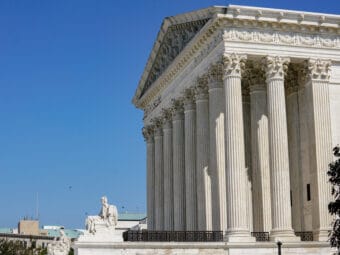
The U.S. Supreme Court will hear arguments Wednesday in a case that could imperil the ability of federal agencies to make rules. (Catie Dull/NPR)

The U.S. Supreme Court will hear a case Wednesday that could eviscerate the way the federal government regulates, well, everything. A system in place for decades has governed how judges review curbs on air and water pollution, gun safety measures and workplace protections.

But all of it could be upended by a conservative supermajority on the court at the request of an unlikely set of plaintiffs: a group of herring fishermen based in Cape May, N.J.

One of them is Bill Bright, a first-generation fisherman whose family has followed him to the sea.

My boys are working on the boats,” Bright said. “And my daughters, we have a shoreside business and they run that. So we’re all, the whole family is, in the seafood business 100%.”

Bright said he welcomes regulations to keep the herring population strong in the Northeastern United States. But he said the fisheries service went too far when the government mandated that vessel owners like him had to pay for observers on the boats to make sure they’re following the rules.

“We have this hanging over our head and we’re not under any illusion,” Bright said. “Once they start charging us for the monitor, that’s never going away.”

A case with broad implications

The case has implications far beyond the fishing industry and has attracted support from conservative legal foundations, the Gun Owners of America, and a trade group for electronic cigarette-makers, among others.

David Doniger, a senior attorney at the Natural Resources Defense Council, a nonprofit advocacy group, said those organizations have a specific goal in mind.

“The real purpose of it is to enfeeble the federal government so that we don’t have the capacity to deal with modern problems, and the billionaires and big companies can just do what they want and not be checked,” Doniger said.

In 1984, Doniger argued — and lost — an environmental law case involving the energy giant Chevron and the Environmental Protection Agency at the Supreme Court. Then, the court upheld a move by the Reagan-era EPA.

But the facts of that case are overshadowed by a system it enshrined, about the way judges evaluate federal regulations under legal challenge. It’s come to be known as the Chevron doctrine.

Judges are supposed to follow a two-step procedure. First, they’re supposed to ask whether the law is clear when someone challenges a federal rule. Then, if the law is not clear, if there’s an ambiguity, the court is supposed to defer to the agency interpretation if it’s reasonable.

In practice, that’s meant that courts often defer to people inside federal agencies who are experts on things like pollution, banking and food safety.

Whom to defer to?

Paul Clement, a former solicitor general in the George W. Bush administration, has argued more than 100 times before the Supreme Court. He represents the herring fishermen.

“Can’t think of a better way to mark the 40th anniversary of the Chevron decision than with an overruling,” Clement said. “In our view, this really has gotten out of control.”

He said the current system means Congress never has to weigh in and reach a compromise on the toughest policy questions, because one side or the other can just wait for a change in the executive branch every four or eight years, and the rules will swing back and forth based on the views of the political party in power.

“I think it’s really as simple as this: which is when the statute is ambiguous, and the tie has to go to someone, we think the tie should go to the citizen and not the government,” Clement added. “And one of the many problems with the Chevron rule is it basically says that when the statutory question is close, the tie goes to the government, and that just doesn’t make any sense to us.”

Conservatives on the Supreme Court, including Justices Clarence Thomas and Neil Gorsuch, have been critical of the Chevron approach for years now. Gorsuch even wrote that Chevron deserves a “tombstone.”

Don McGahn, the White House counsel for former President Donald Trump, made deregulation a top priority.

McGahn told a conservative audience during the Trump years that Gorsuch’s writings on the administrative state drew the attention of the White House —and that Trump nominated other judges who shared that outlook.

“There is a coherent plan here, where actually the judicial selection and the deregulatory effort are really the flip side of the same coin,” McGahn said.

An integral part of the law

The Biden administration is defending the fishing regulation and the Chevron doctrine as a “deeply ingrained” part of administrative law — one that people rely on for crucial health and safety regulations.

The current solicitor general, Elizabeth Prelogar, said in court papers that the monitoring program for the herring fishermen is not operating due to a lack of funds and that vessels that already paid for monitors have been reimbursed by the federal government, so the actual stakes for the herring fishermen may be low.

Overruling that 1984 case would represent a “convulsive shock to the legal system,” she added.

Doniger, the environmental advocate, said this case is about far more than fishing regulation. The hidden agenda, he argued, is protecting big oil, big gas, and big financial industries.

“The herring boats are just, you know, they’re just a front,” he said. “I mean, they’re kind of a red herring.”

A decision by the Supreme Court is expected this summer.

Copyright 2024 NPR. To see more, visit https://www.npr.org.

Martin Luther King Jr. was once considered ‘radical.’ Here’s how he came to be lauded

During his lifetime, the Rev. Martin Luther King Jr.’s views were considered radical by much of the white establishment, including the government. King was the subject of several FBI surveillance investigations, designed to collect subversive material on him. (Chick Harrity/AP)

Martin Luther King Jr. Day is approaching quickly – Monday, Jan. 15 — and this year, the federal holiday falls on the actual birthday of the celebrated civil rights leader who was assassinated more than a half a century ago.

As the United States commemorates the Rev. Martin Luther King Jr.’s legacy, here are a few things to know about the holiday honoring the slain activist and his fight against inequality and racial injustice.
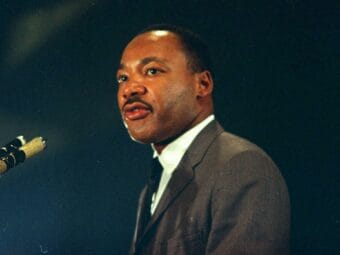
The Rev. Martin Luther King Jr., accompanied by Rev. Ralph D. Abernathy (center), is booked by city police Lt. D.H. Lackey in Montgomery, Ala., on Feb. 23, 1956. (Gene Herrick/AP)

From subversive to hero

This year marks 56 years since the activist was assassinated.

Today, King is widely lauded as a hero who led a nonviolent crusade against racist segregation policies and horrendous brutality against Black people. But at the time, his views were considered quite radical by much of white America, including the government. (He was the subject of several FBI surveillance operations, designed to collect subversive material on King.)

The Pew Research Center found that by 1966 — two years after he’d received the Nobel Peace Prize — 63% of Americans had an unfavorable opinion of King, “including 44% who viewed him highly unfavorably.” Today, 81% of American adults say he had a positive impact on the country.

Jonathan Eig, author of King: A Life, told NPR in 2023 that King, a pastor who followed in his father’s footsteps, was a protest leader who did not like conflict.

Even as he sat at the helm of anti-segregation protests, including the Montgomery bus boycott and the march from Selma, Ala., to the state capitol, Eig said King “is always going out of his way to avoid conflict with people who are his elders. … And he really doesn’t like conflict.”

Eig added: “He has to push himself really out of his comfort zone to argue, to debate, to really challenge some of the leaders of this country.”

The rising full moon passes behind the Martin Luther King Memorial and the Washington Monument. MLK Day is the only federal holiday dedicated to volunteer service. (J. David Ake/AP)

The road to a federal holiday

The fight to declare MLK Day a federally recognized holiday was a long slog for its champions, who began the campaign almost immediately after King’s assassination on the balcony of a hotel in Memphis, Tenn., on April 4, 1968.

It was President Ronald Reagan who eventually signed a bill in 1983 that added Martin Luther King Jr. Day to the list of federal holidays, commemorating King’s contribution to the civil rights movement. Still, it wasn’t officially observed until 1986.

But there were still several holdouts who refused to recognize the holiday at the state level. Most notably, Arizona opposed it until a referendum was passed in 1992, after the state lost an estimated $500 million in revenue when the NFL moved the 1993 Super Bowl game to California in protest.

Why January and why Mondays?

The holiday always lands on the third Monday of the month, roughly around the time of King’s actual birthday, Jan. 15. The timing is also in line with the Uniform Holiday Act of 1968, which ensures a long weekend for workers.

In 1994, under then-President Bill Clinton, it became the only federal holiday dedicated to volunteerism, after Congress passed the King Holiday and Service Act. Americans are encouraged to observe the day “with acts of civic work and community service” in honor of King’s legacy.

Copyright 2024 NPR. To see more, visit https://www.npr.org.

Popular myths about sleep, debunked

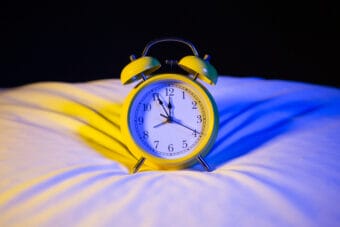
Does it matter what time you go to bed? Sleep scientist Rebecca Robbins identifies commonly held beliefs about sleep — and debunks misconceptions. (Photo Illustration by Becky Harlan/NPR)

Sleep has a huge impact on our health. It helps our brains function, protects against heart disease and supports our immune system. And without it we would die.

Although for something so important, we aren’t formally taught how to do it right, says Rebecca Robbins, a sleep scientist at the Brigham and Women’s Hospital and an assistant professor of medicine at Harvard Medical School. “In America, you learn about nutrition or sex ed in school, but never about sleep.”

It may be why only a third of Americans get the recommended amount of sleep each night, according to the U.S. Centers for Disease Control and Prevention.
To help educate the public about healthy sleep, she and her colleagues identified popular myths about sleep and debunked them in a 2019 paper published in the journal Sleep Health. They looked at statements such as “many adults need only 5 or less hours of sleep” and “it does not matter what time of day you sleep.” And they found that these claims had “a limited or questionable evidence base.”

Robbins walks through some of these myths with Life Kit — and shares some much-needed tips on how to get better sleep.

MYTH 1: It doesn’t matter what time of day you sleep

“Unfortunately, the time of day does matter,” says Robbin. Our circadian rhythm — the internal circuitry that guides the secretion of the essential sleep hormone melatonin — is “significantly influenced by natural sunlight in our environment.”

When the sun comes up and we go outside, that sunshine “stops the floodgates of melatonin and switches the ‘on’ phase of our circadian rhythm,” she says.

“Conversely, going into a dark environment is what allows for the secretion of melatonin,” she adds.

Because of the importance of light, individuals who commonly work on overnight schedules or outside the typical 9 to 5 p.m. window can experience health issues, says Robbins. One study published in the journal Occupational Medicine in 2011 found that physicians and nurses who worked during these shifts were more likely to experience an increase in negative health outcomes such as diabetes and breast cancer.

They may be able to get good sleep that supports their health if they are “very diligent about the exposure they get to natural sunlight,” she says. For example, avoiding sunlight in their work environment as they approach the end of their shift, wearing sunglasses on the drive home to protect their eyes from the sunrise and sleeping in a room with very thick blackout curtains.

MYTH 2: One night of sleep deprivation will have lasting effects

If you had a bad night of sleep, don’t stress — just get back to your normal sleep routine as soon as possible, says Robbins. (Photo Illustration by Becky Harlan/NPR)

Your sleep isn’t going to be perfect every night, says Robbins. “Every now and then we might struggle. If we experience some stress during the day, our sleep suffers that night.”

Sleep deprivation, or lack of sleep for at least 24 hours, can lead to short-term adverse effects such as a lapse in attention or an increase in resting blood pressure, write Robbins and her colleagues in their research paper.

But they likely resolve with recovery sleep. So if you have an off night, don’t beat yourself up about it, says Robbins. Instead, try to get back on track with your normal sleep schedule as soon as possible.

MYTH 3: Being able to fall asleep anytime, anywhere is a good thing

Being able to fall asleep in random places … like your desk … isn’t a good thing. It takes a well-rested, healthy person about 15 to 20 minutes to fall asleep, says Robbins. (Photo Illustration by Becky Harlan/NPR)

“It’s a myth that a good sleeper would be able to hit the pillow and fall asleep right away,” says Robbins. “This is because sleep is a process.”

It takes a well-rested, healthy person about 15 to 20 minutes or maybe a little bit longer to fall asleep, she adds.

If you’re able to fall asleep immediately, it may be a sign of a chronically sleep-deprived state, write Robbins and her colleagues in their study. “If you were starved for food and sat down at any opportunity to eat a huge meal and ate voraciously, that would probably be a sign you’re not getting enough nutrition. It’s the same thing with sleep.”

MYTH 4: You can survive on less than 5 hours of sleep

Not getting a full night’s sleep — about 7 to 9 hours — can result in weight gain, obesity, diabetes and hypertension. (Photo Illustration by Becky Harlan/NPR)

Some people brag about needing only a few hours of sleep at night. That may come from the notion in our high-performing society that “well-rested people are lazy,” says Robbins — “which is a myth.”

The reality is that adults need about 7 to 9 hours of sleep a night, she says. “That’s where we see the most optimal health [outcomes]: improved heart health, longevity and brain health into our older years.”

Sleeping less than 7 hours a night can result in weight gain, obesity, diabetes and hypertension, according to a statement from the American Academy of Sleep Medicine and Sleep Research Society. It’s also associated with impaired immune function, impaired performance and increased errors — like “sending an email to the wrong person or entering incorrect numbers in a spreadsheet,” says Robbins.

So if you can, try to hit that goal of sleeping 7 to 9 hours as many nights of the week as possible, she adds. You’ll know that you’ve hit your sweet spot when you “wake up feeling refreshed, have energy throughout the day and are not reaching for coffee or energy drinks in the afternoon.”

MYTH 5: Watching TV is a good way to relax before bedtime

Watching a show on a device that emits heat, like a laptop positioned on your stomach, can deter your ability to fall asleep, says Robbins. (Photo Illustration by Becky Harlan/NPR)

Some people like to wind down before bed by watching TV. But that’s not a good idea, says Robbins. “You’re starting to associate your bed with things other than sleep.”

Watching a show on a device that emits heat, like a laptop positioned on your stomach, can also deter your ability to fall asleep. “Keep the body cool as you approach bedtime,” she says. Your bedroom should ideally be under 70 degrees. Hotter temperatures can lead to “tossing and turning, sleep disruption and more nightmares.”

In addition, watching upsetting programs like the nightly news could cause the stress hormone cortisol to spike in your body and “hinder your ability to power down,” she says.

But if watching 20 or 30 minutes of a comforting TV show like Friends or Seinfeld is a big part of your sleep routine and helps you relax before bed, then “carry on,” she adds. If your sleep routine “isn’t broken, don’t worry about fixing it.”

MYTH 6: Exercising within 4 hours of bedtime will disturb your sleep

If you want to exercise before bedtime, go for it — it can reduce stress and may help you fall asleep, says Robbins. (Photo Illustration by Becky Harlan/NPR)

For many years, sleep experts told people to “avoid exercise close to bedtime,” says Robbins, because it can raise body temperature, heart rate and adrenaline levels, leading to poor sleep. “But we actually don’t have any good data to back that up.”

What the research does show is that exercise and sleep appear “mutually beneficial,” write Robbins and her colleagues in their paper. One analysis of several research papers found that people who consistently exercised saw “small to moderate improvements in sleep.”

“Exercise releases endorphins which are mood elevators that can help with the No. 1 cause of sleep difficulties: stress,” she says.

For that reason, Robbins encourages people to exercise — even if it’s close to bedtime. “If that’s the only time you can get a workout in, go for it.”


The audio portion of this episode was produced by Clare Marie Schneider. The digital story was written by Malaka Gharib and edited by Clare Marie Schneider and Meghan Keane. The visual editor is Beck Harlan. We’d love to hear from you. Leave us a voicemail at 202-216-9823, or email us at LifeKit@npr.org.

Listen to Life Kit on Apple Podcasts and Spotify, and sign up for our newsletter.

Copyright 2024 NPR. To see more, visit https://www.npr.org.

A discovery in the muscles of long COVID patients may explain exercise troubles

For patients with long COVID, exercise can lead to a worsening of symptoms, a condition called post-exertional malaise. New research shows what’s going on in their muscles. (Erik Isakson/Getty Images/Tetra images RF)

Hit the gym. Get back in shape.

That’s what many patients with long COVID are told when they talk of the crushing fatigue that envelops them after even a light bout of physical activity.

These symptoms of exhaustion, or post-exertional malaise as it’s called, are a hallmark of long COVID and similar complex illnesses like chronic fatigue syndrome or ME/CFS.

The idea that exercise can help patients has proven difficult to shake — despite evidence suggesting this isn’t merely a case of deconditioning that patients can overcome by pushing through the pain.

“I don’t think the messaging has been strong enough,” says David Putrino, the director of rehabilitation innovation for Mount Sinai Health System. “It is very clear that this is not a typical response to exercise.”

Now research published this month in Nature Communications gives new weight to this assessment.

By taking biopsies from long COVID patients before and after exercising, scientists in the Netherlands constructed a startling picture of widespread abnormalities in muscle tissue that may explain this severe reaction to physical activity.

Among the most striking findings were clear signs that the cellular power plants, the mitochondria, are compromised and the tissue starved for energy.

“We saw this immediately and it’s very profound,” says Braeden Charlton, one of the study’s authors at Vrije University in Amsterdam.

The tissue samples from long COVID patients also revealed severe muscle damage, a disturbed immune response, and a buildup of microclots.

“This is a very real disease,” says Charlton. “We see this at basically every parameter that we measure.”

Exercise tests reveal a cellular energy system gone wrong

Most people will get delayed onset muscle soreness after a tough workout, but post-exertional malaise is a different animal altogether.

“It’s not just soreness,” says Charlton. “For a lot of people, it’s completely debilitating for days to weeks.”

While symptoms vary, the most common tend to be muscle pain, an increase in fatigue, and cognitive problems, usually referred to as “brain fog,” that last up to a week after physical exertion.

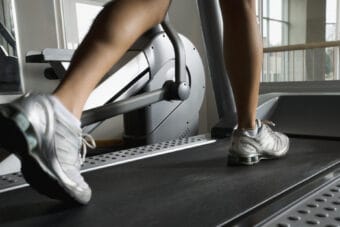
The study, based at Vrije and Amsterdam UMC health center, compared 25 people with long COVID to healthy controls who’d fully recovered from COVID-19 and had no persistent symptoms. Both groups were asked to work out for about 10-15 minutes on a stationary bike, until gradually reaching their maximum aerobic capacity.

Researchers took multiple blood draws and collected two muscle biopsies from their thighs, a week before they exercised and a day after.

“Their baseline was already impaired and that dropped even lower with the maximal exercise,” says Charlton.

As seen in other long COVID studies, the problem wasn’t related to how their lungs or heart were functioning. Instead, something was making it hard for the muscle to take up the oxygen in the blood.

Using a technique called respirometry, the Dutch researchers oversupplied oxygen to the muscle tissue and found evidence the mitochondria weren’t functioning properly

Further tests revealed more clues

Metabolites in the blood related to energy production were also severely reduced in long COVID patients. And they started producing lactate, a fuel of “last resort” for cells, much sooner during exercise than those who were healthy, yet another sign that their cellular energy system had gone awry.

“The mitochondria are operating at a severely reduced capacity compared to healthy people,” says Charlton.

Taken together, the results support the hypothesis that mitochondrial dysfunction plays a role in long COVID symptoms like fatigue and post-exertional malaise, says Dr. David Systrom, a physician at Harvard Medical School and Brigham and Women’s Hospital.

“They were able to link symptoms to these organic changes,” he says. “I was impressed by that.”

In his own research, Systrom has found evidence of abnormal oxygen uptake by the skeletal muscles during peak exercise in both long COVID and ME/CFS patients, which indicates there’s a problem with oxygen delivery to the mitochondria.

Meanwhile, the Dutch study suggests there could be “intrinsic dysfunction” of the mitochondria’s ability to produce energy, he says.

Systrom says it’s possible both could be happening in long COVID patients. “There may be two ends of that spectrum,” he says. “That’s really something future work will have to look at.”

Biopsies carry clear signs of muscle damage

The story doesn’t end with mitochondria, either.

The muscle biopsies taken after the exercise test revealed other troubling events.

“They end up having a lot more muscle damage than a healthy person would have,” says Charlton. “And because their maximal capacity is now also lower, they have that damage happening at a sooner point.”

A close look at the muscle tissue showed long COVID patients had more atrophy — shrinking of the fibers — than the healthy controls. There were also “immense amounts” of cell death, or “necrosis,” which happens when immune cells infiltrate and degrade the tissue, he says.

The data hints at some kind of altered immune response to exercise in post-exertional malaise.

“It’s not just the functionality of their muscles, but the way that their immune system is receiving that exercise signal,” says Charlton.

The tissue-level analysis of defects in the muscle is “striking” and may help explain the pain, fatigue and weakness that patients experience, says Akiko Iwasaki, a professor of immunobiology at Yale University, who was not involved in the research.

The additional finding that T cells — part of the immune system’s arsenal — had infiltrated the muscles of long COVID patients also caught Iwasaki’s attention, possibly indicating “an autoimmune response within the muscle cells.”

“In the healthy muscle, they find very few, if any T cells,” she says.

Microclots portend big problems for blood vessels

The deep dive into muscle tissue also turned up another increasingly familiar character in long COVID pathology — microclots.

The researchers found these were heavily elevated in those with symptoms — a feature that only got worse following exercise.

Researchers in South Africa have zeroed in on these microclots that carry “trapped inflammatory molecules” as an indication of patients’ compromised vasculature.

In the Dutch study, there wasn’t evidence that microclots were blocking the tiny blood vessels, which was one hypothesis. Instead, they were lodged in the tissue.

The implications of this finding are potentially huge, says Resia Pretorius, a professor of physiological sciences at Stellenbosch University in South Africa, who was not involved in the present study.

“That means the microclots can actually have traveled through the damaged vasculature into the muscle,” she says. “What is scary, but possibly very significant, is that this might be happening in other tissues as well.”

In this scenario, the microclots could reflect the extent of damage to the lining of the blood vessels, which would also impair the delivery of oxygen to the muscle tissue.

If the vasculature is “totally shot,” Pretorius says the “mitochondria will be massively affected,” although more work needs to be done before drawing definitive conclusions.

The underlying causes of long COVID remain elusive; however, one leading theory is that an ongoing chronic infection could be driving the downstream consequences.

The researchers probed this hypothesis. They found evidence of viral proteins from SARS-CoV-2 in the muscle tissue, but no difference emerged between the long COVID group and the controls, leading them to conclude these are viral leftovers that don’t necessarily figure into post-exertional malaise.

Experts warn that exercise can “harm” and other approaches are needed

The role of exercise in treating post-exertional malaise remains “intensely controversial,” says Harvard’s Systrom, who has studied exercise in the context of other complex chronic illnesses like ME/CFS.

“Post-exertional malaise is a unique symptom in these disorders and is not a feature of deconditioning,” he says. “You cannot simply ask these patients to go to the gym and fix the problem.”

Long COVID is itself an umbrella term that encompasses a wide range of symptoms that may have different underlying causes.

Systrom says it’s possible a subset of these patients may benefit more than others from gradual exercise, especially after successful medical treatment has been first established.

In their study, Charlton says they looked at other research to verify that what they observed did not stem from physical inactivity. He also notes that the long COVID patients who were enrolled were not bedridden and had an average of 4,000 steps a day.

Putrino at Mount Sinai considers the study a much-needed wake-up call for the broader medical field — clear evidence of a biological basis for the energy crash and onslaught of symptoms that patients with long COVID and similar conditions experience.

“As opposed to what’s been sold to patients over the last few decades, that symptoms such as extreme fatigue and exertional malaise are psychological or physical conditioning issues,” he says. “Physical exertion does harm to the bodies of people with these illnesses.

His general guidance is to avoid exercise if you have post-exertional malaise and instead practice “energy conservation.”

At his clinic, Putrino prescribes what’s called “autonomic rehabilitation” for these patients.

Whereas the aim of exercise is to improve cardiovascular fitness — something he might recommend to patients who’re recovering after severe pneumonia — this type of rehabilitation is done at a much lower intensity and duration, and it takes into account post-exertional malaise.

“We need to step out of this erroneous mindset of no pain, no gain,” he says.

Copyright 2024 NPR. To see more, visit https://www.npr.org.

Will the feds block a grocery megamerger? Kroger and Albertsons will soon find out

(Rogelio V. Solis/AP)

Will America’s two largest grocery store chains get to become one?

That’s the question before U.S. regulators, who are deciding whether to block Kroger’s $24.6 billion purchase of Albertsons. Several state attorneys general, too, have signaled they might sue to halt the deal.

At stake is a shakeup of the U.S. grocery landscape, where the companies say they face stiffening competition from Amazon, Walmart, Costco and even dollar stores. Employees, state officials and some lawmakers have argued the tie-up would reduce options for shoppers and workers, farmers and food producers.

Kroger, the biggest U.S. supermarket operator with 2,719 locations, owns Ralphs, Harris Teeter, Fred Meyer and King Soopers. Albertsons, the second-largest chain with 2,272 stores, owns Safeway and Vons. Kroger employs about 430,000 people; Albertsons 290,000.

The chains overlap particularly in Western states. The companies tried to assuage regulators’ concerns about diminishing grocery competition in those markets by agreeing to sell up to 650 stores as part of the deal.

However, antitrust experts in the Biden administration in the past have expressed skepticism about whether divestitures can sufficiently protect competition — on prices, jobs or terms for suppliers, for example. The regulators have also pushed for tougher scrutiny of megadeals, making this merger a high-profile test.

The Federal Trade Commission has been reviewing the proposed deal for over a year and is expected to make its call as early as this month. A lawsuit to stop the deal would not be a shocker. In May 2023, Kroger CEO Rodney McMullen said the grocery chains “committed to litigate in advance” if federal regulators or state attorneys general rejected the deal.

Combining forces to compete with Walmart

Ohio-based Kroger and Idaho-based Albertsons say together, they’d be in a stronger position to compete against Amazon online and Walmart in physical stores. The latter is the nationwide leader in groceries, selling more than Kroger and Albertsons combined.

“This merger will help protect the local community grocery stores that people love,” Albertsons CEO Vivek Sankaran said in his testimony at a Senate antitrust hearing in 2022.

The companies also argue that together they would be able to lower prices and pay higher wages. They emphasize that they offer union jobs, in contrast to their rivals.

Yet, the United Food & Commercial Workers Union, which represents more than 350,000 workers across the two grocery chains, opposes the merger. At public forums around Colorado, for example, workers noted it could become more difficult to negotiate a union contract with an even bigger, more dominant employer.

“The areas [our members] are concerned with are what happens to competition and food prices,” UFCW International President Marc Perrone said, adding that his members also worried about the long-term prospects for their current collective bargaining agreements.

Will selling off stores satisfy regulators?

Grocery competition historically gets assessed on a local level: Will shoppers in a given area have fewer options after the merger? Trying to address this, Kroger and Albertsons in September agreed to sell at least 413 stores in locations where they overlapped to C&S Wholesale Grocers, a supplier company that also runs some Piggly Wiggly supermarkets.

C&S agreed to buy retail locations in Arizona, California, Colorado and Wyoming, as well as some private brands, distribution centers and offices. The company said it was “committed to retaining” the stores’ existing workers, pledging to recognize the union workforce and keep all collective bargaining agreements.

Perrone said his union welcomed this decision, but remains concerned about the merger’s approval hinging on the sale to the much-smaller C&S:

“Can they operate efficiently and be competitive to where the customers, over the long haul, will stay with them?” he said.

Many antitrust experts in recent years have questioned the effectiveness of such divestitures.

For instance, when Albertsons merged with Safeway in 2015, the FTC required it to sell off 168 stores as part of the deal. Within months, one of its buyers filed for bankruptcy protection and Albertsons repurchased 33 of those stores on the cheap.

“Over time, there has been some skepticism about how well divestitures work,” said Kathleen Bradish, acting president of the American Antitrust Institute, which advocates for tougher scrutiny of mergers. “The divestitures that were deemed acceptable in the past may not be acceptable [now].”

Indeed, federal antitrust regulators last year updated their guidelines for policing mergers to include, for example, greater focus not only on how deals affect prices or consumer choice but also suppliers or workers.

Copyright 2024 NPR. To see more, visit https://www.npr.org.
Site notifications
Update notification options
Subscribe to notifications