National News

We’re spending $700 million on pet costumes in the costliest Halloween ever

Charlie the superdog is the only member of the King family who got two Halloween outfits this year. His other costume is a doughnut. (Joelyne King)

Charlie does not want to sit still for the photo.

The Chihuahua-terrier mix in a Superman cape perches next to some pumpkins, swirls and sniffs the decor. Joelyne King, behind the phone camera, raises the pitch of her voice to remind him he’s a good boy. Then, she lifts up a dollar bill, and its crinkle grabs his canine focus for exactly long enough.

“We figured Superman would be a good costume because he’s just a great all-around dog,” King says on a recent visit to a Maryland farm for a fall festival with her family. One of her two children is about to celebrate her first Halloween.

“Usually I have multiple costumes for the kids, but I think this year we just went with one for each of them. Charlie was the only one that got two,” King says.

When Charlie is not a superhero, he’ll be dressed as a doughnut.

This Halloween, American shoppers are expected to spend $700 million on pet costumes, according to the National Retail Federation. Altogether, Halloween spending in the U.S. will likely top $12 billion, a new record. A National Retail Federation survey estimated that an average shopper would spend $108 on candy, costumes and decorations.

The survey found top pet outfit choices are pumpkin, hot dog, bat, bumblebee and spider.

Bailey the Shih Tzu does not love costumes but does her best to embody a tiger anyway. (Alina Selyukh)

The survey did not seem to ask the pets’ opinions on the matter. Neither did Alyssa Peters and Mike Namaiandeh, dressed as Jasmine and Aladdin, leading Bailey, a cheerful Shih Tzu dressed as a tiger.

“When I pulled the costume out of the package, she kind of looked at me like, ‘Do we really have to do this again?'” Peters says, laughing. “You’ve got to be a part of the team here.”

Candy may be $500, but the thrills are priceless

Before the COVID-19 pandemic, Halloween spending was actually on a decline in the United States. But the lockdowns got more people into decking out homes for the holidays, and we haven’t stopped.

The Denchfield family expects 400 to 500 children to walk through the haunted maze that has made the family’s house a top Halloween destination in Bethesda, Maryland. (Alina Selyukh)

“This is like a universal holiday that everyone can have fun with,” says Kurt Denchfield, standing next to a crate of plastic gore: fake blood, loose severed limbs and bloody brains.

Every year, his family shape-shifts their front yard into a haunted maze that becomes a top Halloween destination in suburban Bethesda, in Maryland.

To get the treats here means to plod through fog and evade glowing skeletons, sparking electric tentacles, howling monsters — and at least one of six Denchfield children wielding a chainsaw.

Kurt and Heather Denchfield, with their son Jake, pose in their front yard, which is about to mutate into a haunted maze. (Alina Selyukh)

Heather Denchfield is the purchasing department for the operation. She confirms one of the reasons that holiday spending is up: Everything is more expensive. Pricier sugar, cotton and building supplies mean costlier sweets, costumes and decorations.

To keep costs down, the Denchfields reuse a spooky stash of supplies from year to year. They got cornstalks and pallets through Kurt’s landscaping business. But there’s one Halloween luxury they won’t sacrifice: the full-size candy bars that await survivors of the maze.

“We do go from full-size to fun-size by the time that the night ends,” Heather says.

“That’s after the 400th candy bar,” Kurt chimes in. They estimate they’ve shelled out $500 on all that chocolate.

Kurt Denchfield works on the haunted maze, which has been sprawling bigger every year. (Alina Selyukh)

And the number of visitors to the haunted maze seems to grow by 50 children each year, Kurt adds, though he doesn’t know whether it’s the spreading word or hyper Halloween spirit.

“We’ll need a bigger front yard soon if we’re gonna keep expanding it,” he says. “Maybe we can annex the neighbor’s yard for one night.”

Talk about growing Halloween expenses. Step 1: Get a bigger lawn.

Copyright 2023 NPR. To see more, visit https://www.npr.org.

Thanks, Neanderthals: How our ancient relatives could help find new antibiotics

With an antimicrobial resistance epidemic looming, some researchers are looking to solutions in molecular de-extinction. (altmodern/Getty Images)

Antibiotics have changed the world.

They’ve made it possible to treat diseases that used to mean anything from discomfort to death. But no new classes of antibiotics have made it to the market since the 1980s.

What if humans’ closest, ancient relatives held the answer to antibiotic resistance?

Some scientists like University of Pennsylvania bioengineering professor César de la Fuente want to discover new antibiotics using machine learning … and some very, very old relatives.

Machines and molecular innovation

Antibiotics have changed the world, making it possible to treat diseases that used to mean anything from discomfort to death.

But now, society faces a new problem.

“We’re facing a silent pandemic where more and more bacteria are becoming resistant to available antibiotics,” de la Fuente says.

As a post-doctorate student at MIT, de la Fuente had an idea: What if machine learning could teach a computer how to innovate at a molecular level?

He and his team did just that — trained a computer to execute Darwin’s algorithm of evolution. In 2018, they published, to their knowledge, the first study to use AI to find a new antibiotic.

“It took initial antibiotics that were not very effective and it was capable of evolving them to become much more effective,” he says. These new antibiotics killed bacteria in mice.

Mining proteins from our ancestors

Next, de la Fuente and his collaborators used these computer models to dig through the proteins in the human body – the proteome – in search of tiny proteins called peptides that might play a role in the immune system.

They discovered over 2,500 peptides with anti-infective traits, and wondered: What if they turned their attention to extinct species in this hunt for new potentially antibiotic molecules?

De la Fuente says organismal de-extinction, the conceit of Jurassic Park, kept coming up in brainstorming sessions. But instead of dinosaurs, they set their eyes on humans’ closest ancestors: Neanderthals and Denisovans.

“Instead of bringing back entire organisms, why not just bring back molecules from the past to solve present day problems?” de la Fuente says.

De la Fuente says he and his team did just that – developed a machine learning model that could mine proteomic and genomic data from Neanderthals and Denisovans. The model finds sequences from archaic humans and predicts which ones would be good antibiotic candidates.

The next step? Resurrection.

“We use a technique called solid phase chemical synthesis, which essentially is like little robots that allow us to make the peptides and they make one amino acid at the time and then they link them in a chain to essentially get your final peptide, which again is a tiny protein,” de la Fuente explains. “And then we expose them to bacteria that we grow in the laboratory and we see whether they’re able to kill clinically relevant bacteria or not.”

They found several peptides that effectively killed bacteria in petri dishes, and tested them in animal models.

“In one of the mouse models, which was a skin infection model, one of the Neanderthal peptides was able to reduce the infection to levels comparable to a standard of care antibiotic called Polymyxin B,” de la Fuente says.

They called it “neanderthalin-1” and, while the peptide itself is not potent enough to be an antibiotic on its own, de la Fuente says he and his team hope to use it and other peptides as templates for further study of anti-microbials.

Want more on de-extinction? We’ve got you! Listen to our episode on the de-extinction of entire animals, like the dodo and woolly mammoth.

Have a question? Email us at shortwave@npr.org.

Listen to Short Wave on Spotify, Apple Podcasts and Google Podcasts.

This episode was produced by Rachel Carlson. It was edited by Rebecca Ramirez. The fact checker was Anil Oza, and the audio engineer was Patrick Murray.

Copyright 2023 NPR. To see more, visit https://www.npr.org.

How many friends do Americans have? A survey crunched the numbers

Can your bestie be a health benefit? (Getty Images)

New research has delved into what friendship in the U.S. looks like, including just how many friends the average American has.

Who are they? Friends can be anyone from the folks in your Dungeons & Dragons group, the neighbors in your weekly potluck, or that chatty classmate you started hanging out with from your ceramics course.

What are the key findings?

  • According to Pew, 61% of adults in the U.S. say that having close friends is essential to living a fulfilling life — that’s more than those who cited marriage, children or money.
  • A slim majority of adults surveyed (53%) said they have between one and four close friends. 38% said they had about five or more.
  • Of those friend-having adults, 72% expressed high levels of satisfaction with their friendships. Turns out comradery with your favorite people can leave you feeling content!
  • The survey respondents that reported larger groups of friends also felt more satisfied with the quality of their friendships compared to those with fewer close friends. Maybe those fellas from that famous ’90s sitcom about friendship were onto something.
  • Generally, people talk most about work (shocker!), family and current events. But that frequency can also change depending on gender.
  • Women surveyed reported discussing family life, as well as mental and physical health, at higher rates than men. Men are more likely than women to talk to their close friends about sports and current events.

Want more on people? Listen to Consider This on how Los Angeles is using AI to combat homelessness.


What are people saying? There’s a lot to be said about how we relate to each other in today’s world, especially after the pandemic shook up our routines.

In May, the U.S. Surgeon General released an advisory on the epidemic of loneliness in the United States, which found that lacking connection can increase the risk for premature death to levels comparable to smoking 15 cigarettes a day. Here’s what Surgeon General Vivek Murthy had to say on All Things Considered about it:

In the last few decades, we’ve just lived through a dramatic pace of change. We move more, we change jobs more often, we are living with technology that has profoundly changed how we interact with each other and how we talk to each other … And you can feel lonely even if you have a lot of people around you, because loneliness is about the quality of your connections.

Here’s author Lydia Denworth, who wrote a book on friendship, on how they positively impact us mentally and physically:

They can change your cardiovascular system, your immune system, how you sleep, your cognitive health. How could this thing that exists entirely outside the body affect whether you’re likely to catch a virus? And yet that’s exactly what we now know that social connection does. We thought of loneliness as this difficult emotion, but just an emotion. And we think of friends as this lovely thing — but it is actually a matter of life and death.

And Hanne Collins says forging little connections is a good place to start. Collins helped co-author a study on the importance of talking to strangers in your everyday life, a factor titled “relational diversity”:

It’s about this mix. It’s about connecting with people who are close to you, who are maybe less close to you, who connect you with other people, who provide different kinds of support. Essentially, the idea is that the more diverse your social portfolio, the happier you are and the higher your well-being.

So, what now?

  • Don’t know where to start with making friends? Life Kit’s got you covered.
  • You read my whole article, which by journalist terms, automatically makes us friends now. Love you, bestie!

Learn more:

Copyright 2023 NPR. To see more, visit https://www.npr.org.

FBI: ‘I am not okay,’ off-duty Alaska Airlines pilot said before trying to turn off jet’s engines

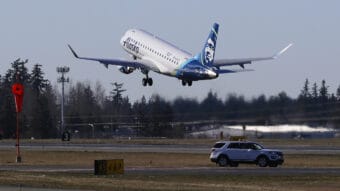
An Alaska Airlines plane, like this one operated by Horizon Air, had to divert to Portland, Ore. on Sunday after an off-duty pilot tried to turn off the engines in flight. (Ted S. Warren/AP)

An off-duty Alaska Airlines pilot now faces federal charges for interfering with the crew of a flight that had divert Sunday to Portland, Ore. after he allegedly attempted to switch off the plane’s engines in mid-air.

The flight, operated by Horizon Airlines, had taken off from Everett, Wash. around 5 pm Sunday evening and was headed to San Francisco. The Embraer 175 jet had more than 80 passengers and crew on board.

The off-duty pilot, Joseph David Emerson, was traveling in the flight deck jump seat sitting behind the pilot and first officer. According to a federal affidavit, the crew said Emerson gave “zero indication of anything wrong” during the initial stages of the flight.

They said he was chatting about the weather and various types of airplanes. At some point as the jet moved south over Oregon, the first officer observed Emerson throw his headset across the cockpit and exclaim, “I am not okay.”

That’s when the pilots say Emerson grabbed the two red engine shutoff handles. The affidavit says the pilot grabbed Emerson’s wrist and they “physically engaged” for an estimated 25-30 seconds and then Emerson “quickly settled down.”

The pilot asked Emerson to leave the cockpit and he then walked to the back of the airplane. Emerson allegedly told a flight attendant, “You need to cuff me right now or it’s going to be bad.” The attendant cuffed his wrists and during the descent into Portland, according to the FBI, and he “turned towards an emergency exit door and tried to grab the handle.”
In an interview with an FBI agent, another flight attendant said she heard Emerson say “I messed everything up” and that “he tried to kill everybody.”

During an interrogation, Emerson told the FBI that he had a “nervous breakdown” and had not slept in 40 hours. He said he’d felt dehydrated and tired. He told the agent that he pulled both emergency shut off handles because “I thought I was dreaming and I just wanna wake up.”

The FBI agent says Emerson denied taking any medication, although they did talk about the use psychedelic mushrooms. Emerson said “it was his first time taking mushrooms,” according to the FBI affidavit — though it was not immediately clear if he was actually under the influence of mushrooms during the flight.

Emerson allegedly told the FBI that he had become depressed about six months prior.

Even before these latest details became public, the incident was renewing concerns across the aviation industry about the mental health of pilots, and whether they are getting the kind of treatment they need.

Many pilots are wary of seeking treatment for mental issues, aviation experts say, because they are concerned that they could be grounded by federal regulators if they do.

“Pilots are wired to deal with situations and get the job done,” says Dennis Tajer, a veteran pilot and a spokesman for the Allied Pilots Association, which represents over 15,000 pilots at American Airlines.

Tajer says pilots have a lot invested in their training and careers, and are afraid of losing it.

“You think that your job is at stake, the income for your family is at stake,” Tajer said. “If I don’t have the mental fitness to get this done, I’m going to be grounded, lose my job, lose my home. And these are all awfulizing thoughts that the pilots go through that stop them from getting the care that they need if they need it.”

The stigma around seeking mental health care has diminished over time, Tajer says, but it has not gone away completely.

Federal regulators are clearly aware of the issue. The leaders of the Federal Aviation Administration have urged pilots to come forward and get treatment if they need it, saying they will not automatically lose their medical clearance to fly as a result.

“Even if you need to take medication to stay well, you may be able to get a special issuance from my office,” says Susan Northrup, who oversees the pilot medical certification process at the FAA, in a video posted on the agency’s web site.

“The most important thing is that you receive treatment early so that you can get better,” Northrup says. “We don’t want you to get worse because you’re afraid of losing your medical certificate.”

Emerson has been flying for Alaska Airlines for 10 years and has been a pilot since 2001.

In addition to the federal charge, he also faces 83 state counts of attempted murder, among other charges, including reckless endangerment and endangering an aircraft.

Copyright 2023 NPR. To see more, visit https://www.npr.org.

Bond markets are being hit hard — and it’s likely to impact you

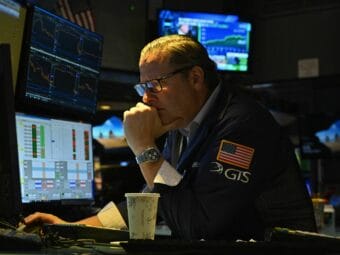
A trader works at the New York Stock Exchange on Oct. 11. Bond yields are surging, threatening to raise borrowing costs across the economy. (Angela Weiss/AFP via Getty Images)

There is a sharp sell-off in the bond market, and it has big implications on both the economy and people’s pocketbooks.

Yields on U.S. government bonds, especially the 10-year Treasury note, determine the interest rates that people pay on a lot of their debt, including mortgages and credit cards.

And a key bond yield hasn’t been this high since 2007.

Several factors are driving the sell-off, including stronger-than-expected economic data and the government’s worsening finances.

Here is what you need to know about it.

How bad is the sell-off?

In 2022, the bond market suffered its worst year on record, as the Federal Reserve started raising interest rates aggressively to fight high inflation.

This year, the picture hasn’t improved much.

“It’s been a very difficult period in time for folks invested in Treasurys,” says Katie Nixon, the chief investment officer for wealth management at Northern Trust. “It’s been bad.”

After fluctuating at the beginning of the year, bond prices have been hit especially hard in recent weeks, sending their yields sharply higher.

Bond prices and yields have an inverse relationship, meaning prices fall when yields rise, and vice versa.

The yield on the 10-year Treasury note — widely considered to be one of the least-risky investments in the world — briefly broke above 5% on Monday. It hadn’t been that high since June 2007, when George W. Bush was in the White House and Ben Bernanke was running the Federal Reserve.

It’s a jarring trend given that, for years, the U.S. economy benefited from ultralow interest rates.

What’s driving the most recent bond sell-off?

A big reason is that economic data has been stronger than forecast.

Although a stronger economy is good news generally, the Fed right now needs a cooler economy to bring down inflation.

That means the Fed may need to continue keeping rates high for a while longer, given that inflation still remains above the Fed’s inflation target of 2%.

Wall Street is also worried about the U.S. government’s growing debt levels, a big reason why Fitch Ratings decided to downgrade the country’s bond rating by one notch from the previous top-rated AAA to AA+.

The U.S. budget deficit surged in the latest fiscal year, in part over increased spending and slowing tax revenues.

There are also more technical reasons.

A big one is that there is less demand for bonds from an institution that has been one of their biggest buyers for years: the Fed.

During the COVID-19 pandemic, the central bank bought trillions of dollars’ worth of fixed-income securities. But since 2021, it has been reducing the size of that portfolio as a way to help reduce inflation by removing some of the money from the financial system.

“Making conditions even more challenging is the absence of the Fed as a buyer of first, last or any resort,” according to Nixon.

Why do bond markets matter?

Bond yields are critical to the economy because they influence interest rates that people pay on credit cards, car loans and home mortgages.

Higher yields also reverberate across companies, by raising the cost of debt for businesses.

The higher borrowing costs could take a toll on the economy as people, as well as companies, reduce their spending in the face of high interest rates.

Take the housing sector, for instance. It is a critical part of the economy, and mortgage rates are some of the most sensitive to interest rates.

Right now, the average rate on a 30-year, fixed-rate mortgage is 7.63%, according to Freddie Mac. That’s the highest it has been since 2000 — and it’s fueling a drop in existing-home sales since people who bought property when mortgage rates were lower are reluctant to give up their lower rates.

Interest rates on credit cards are also rising, and so are the interest rates on car loans. According to the Federal Reserve Bank of New York’s latest “Quarterly Report on Household Debt and Credit,” credit card balances stand at $1.03 trillion — a record high.

In addition, many banks are heavily invested in government bonds, which could make them susceptible to rising yields.

This year, Silicon Valley Bank and two other regional lenders collapsed in part because of concerns about the health of their bond investments. That set off bank runs.

It’s not just banks, though. People with retirement portfolios also have a lot of their nest eggs tied up in bonds, making what has happening critical.

What’s the outlook for bond markets?

A lot will depend on inflation and the Fed’s approach to interest rates.

Wall Street is betting the central bank could be done raising interest rates this year, given that inflation has continued to come down and policymakers have lifted them so aggressively already.

Now, investors and economists are trying to figure out how long the Fed is going to keep interest rates elevated.

Not too long ago, bond investors were expecting that the Fed could start cutting interest rates as early as this year to avoid tipping the economy into a recession.

But now that the economy has proved sturdier than expected, many of them are getting used to the idea that rates could be “higher for longer.”

John Canavan, the lead analyst at Oxford Economics, says investors are now “much more pessimistic on rates, as we adjust for Fed policy, adjust for the stronger economy and adjust for the risk that inflation is more difficult to pull down than expected.”

That said, things could change. Bonds tend to do well in periods of elevated uncertainty, and right now there are a lot of worries about the world, as Russia’s invasion of Ukraine continues and Israel is in a war with Hamas.

Should geopolitics worsen, bonds could see a boost.

But as of now, most investors don’t expect the bond market to improve substantially anytime soon.

Copyright 2023 NPR. To see more, visit https://www.npr.org.

An off-duty pilot tried to shut down a plane’s engines in flight, Alaska Airlines says

An Alaska Airlines Embraer 175 jet, similar to this one, was forced to make an unexpected landing Sunday night after an off-duty pilot who was riding in the cockpit allegedly attempted to disable the aircraft’s engines. (Ted S. Warren/AP)

An Alaska Airlines flight was forced to make an unexpected landing Sunday night after an off-duty pilot who was riding in the cockpit allegedly attempted to disable the aircraft’s engines.

“I’ll just give you a heads-up. We’ve got the guy that tried to shut the engines down out of the cockpit,” one of the pilots said to air traffic controllers in audio posted by LiveATC.net. “It doesn’t seem like he’s causing any issue at the back. I think he’s subdued.”

The flight, which was operated by Horizon Airlines, took off from Everett, Wash. around 5 pm Sunday evening. The Embraer 175 jet had to be diverted from San Francisco to Portland, Ore. where it landed safely.

In a statement, Alaska Airlines described the incident as “a credible security threat related to an off-duty Alaska Airlines pilot who was traveling in the flight deck jump seat.”

“The jump seat occupant unsuccessfully attempted to disrupt the operation of the engines,” according to the statement, before “the crew secured the aircraft without incident. ”

It’s routine for off-duty pilots, flight attendants and other airline staff to catch a ride in the jump seat behind the pilot and first officer.

The off-duty pilot was arrested after the plane landed at Portland International Airport. Authorities there have identified him as Joseph David Emerson. He’s now facing 83 counts of attempted murder, among other charges, including reckless endangerment and endangering an aircraft.

The Federal Aviation Administration said it is supporting law enforcement investigations into the incident.

“All passengers on board were able to travel on a later flight,” Alaska Airlines said. “We are grateful for the professional handling of the situation by the Horizon flight crew and appreciate our guests’ calm and patience throughout this event.”

Copyright 2023 NPR. To see more, visit https://www.npr.org.

Site notifications
Update notification options
Subscribe to notifications