National News

People working on climate solutions are facing a big obstacle: conspiracy theories

Getty Images

Communities big and small are trying to rein in climate change. But many people working on these climate solutions are running into a big obstacle: falsehoods and conspiracy theories about their work. So what does this mean for fighting global warming?

To talk about the current state of climate disinformation, we checked in with three NPR reporters who have reported on climate, disinformation and the media — and they can answer our questions: Climate solutions reporter Julia Simon, media correspondent David Folkenflik, and reporter Huo Jingnan, who writes about conspiracy theories among other things.

This was adapted from a roundtable discussion on All Things Considered.

What kind of false narratives about climate are we talking about?

Julia Simon: Climate disinformation in the past — sometimes paid for by fossil fuel interests — often related to false ideas that global warming is a scam or that the threat is overblown. Those falsehoods are still around, but what we’re seeing a lot more of these days are attacks on climate solutions even if we don’t always know who funds them. Think attacks on renewables. False ideas that wind turbines cause cancer or cause birth defects in animals. Disinformation may be spreading because solutions are really spreading.

For instance, this weekend we’ll have a story about a trend in urban planning called 15-minute cities — designing cities so that you access amenities in a short walk, bike ride or trip on public transport. Now there’s a conspiracy theory saying that this is a way to restrict people’s movement or to trap people in an open-air prison.

Podcaster Joe Rogan spoke about it on his show last month. “You’ll essentially be contained unless you get permission to leave,” Rogan said, “That’s the idea they’re starting to roll out in Europe.”

That is false.

Earlier this week the U.K. transport minister Mark Harper used some of the language of conspiracy theories when talking about 15-minute cities at the conservative Tory party conference. “What is sinister and what we shouldn’t tolerate,” Harper said, “is the idea that local councils can decide how often you go to the shops.”

It is false that local governments in the U.K. are deciding how often citizens can go shopping.

Huo Jingnan: The false narrative surrounding 15-minute cities is but one part of a larger sprawling conspiracy theory called the Great Reset. The theory goes that a shadowy global elite — often Jewish — wants to strip away ordinary people’s freedoms and make us live a life of deprivation. Under this theory, 15-minute cities are a ploy to take away people’s freedom to move around.

More about false narratives about climate change:

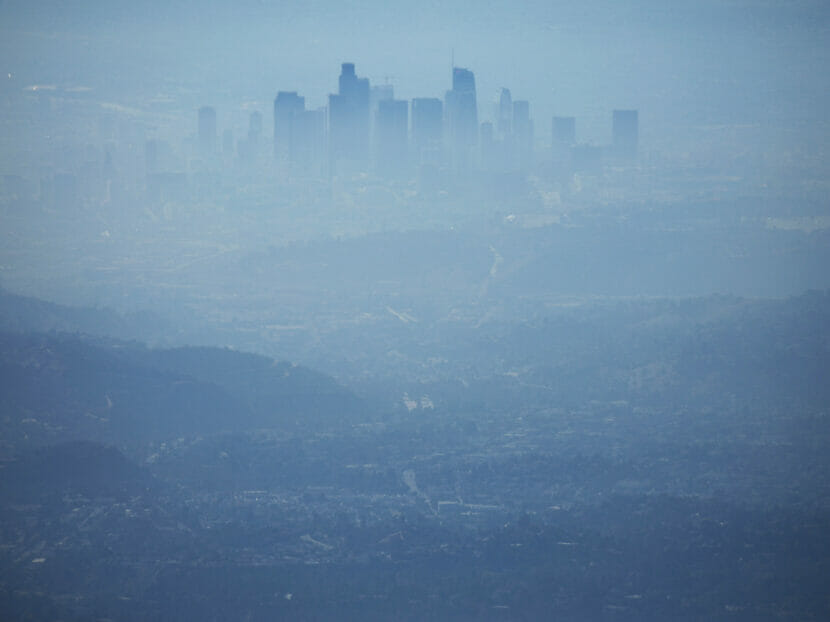
The buildings of downtown Los Angeles are partially obscured because of smog. (Mario Tama/Getty Images)

What is the role of the media in all this?

David Folkenflik: Different kinds of false information spread in different ways. But if you’re considering misleading claims about climate — that’s predominantly on the right. And that involves an information ecosphere defined by Joe Rogan, as we heard above, but also Alex Jones, Breitbart, the Daily Wire, the Daily Mail, the New York Post, and above all Fox News.

The funny thing is they are at once testers and popularizers of things that have gotten some traction online, and then you hear prominent figures on the right picking up the melody.

Back when he was on Fox earlier this year, Tucker Carlson made utterly unsubstantiated claims about dead whales coming ashore on New Jersey, New York and Massachusetts beaches.

Tucker Carlson: The government’s off-shore wind projects, which are enriching their [read: Biden] donors, are killing a huge number of whales, right now.

Folkenflik: But you hear versions of it from former President Donald Trump, Rep. Marjorie Taylor Greene, presidential candidate Robert F. Kennedy Jr. — once it passes audition, it makes the rounds.

More about the role of media:

How does fear-mongering affect the actual implementation of climate solutions?

Huo: It is a distraction from the issues we need to work on. If these narratives ring true to you, you might think that climate activists aren’t really talking about climate but about something else, so much so they could be secret agents of the government trying to take away your freedom.

One interesting example of a strawman here is one of the subplots of the great reset conspiracy theory, which is that the government wants to force people to eat insects. Including insects in the human diet has been an idea on the edges of climate circles. The mainstream idea is simply to eat less meat. But it attracted more attention over the years because many news outlets — including NPR — are easily intrigued by the idea of eating something seen as exotic.

And that gets turned into raw material for conspiracy theorists like Alex Jones in March 2022:

Alex Jones: Coming food crisis recommends more sustainable diets of – wait for it – fly larva, fly larva, fly larva.

Simon: And a muddied information landscape about climate solutions can sometimes complicate the process of getting them enacted, says Jennie King, head of climate research and policy at the Institute for Strategic Dialogue.

“In the end, it actually doesn’t matter if 99% of the public believe in climate change,” King says, “if you’re able to embed real fear and seeds of doubt about the solutions that are on the table you end up with the same outcome, which is no legislative agenda, no meaningful policy proposals, no local action.”

More about how fear-mongering affects solutions:

What sort of impact do these conspiracy theories have on the people in the field trying to work on climate solutions?

Simon: I met with Carlos Moreno, a Franco-Colombian professor who developed this idea of the 15-minute city — these more walkable, bikeable neighborhoods that conspiracy theorists think are preludes to open-air prisons. Moreno says he’s gotten death threats, and so have other scientists and researchers.

Moreno says the attacks give his colleagues a reluctance to publish articles about their work. And he says this is what the conspiracy theorists want: to silence them. And we’ve seen harassment and threats based on conspiracy theories targeting climate scientists and meteorologists for years.

More on the impact of conspiracy theories:

Can anything break the cycle of disinformation or rumors?

Folkenflik: It’s not in the interest of Fox News and others who benefit financially from stoking outrage and, by and large, also have partisan rooting interests. In a few instances, there have been defamation cases against those media outlets — but those all come from specific people and institutions who claim they’ve been knowingly harmed and defamation law isn’t going to solve the wider issue of spreading false claims about climate research and solutions.

For other journalists and others, it’s tricky — you do need to address falsehoods and fact-check them. But by fact-checking, you’re also sometimes elevating these ideas that may not get widespread currency. News organizations, including NPR, generally try to balance those imperatives as they plan out coverage.

Huo: When it comes to social media, the platforms can change how they label, recommend and moderate content to change what users see and how they interact with platforms. Studies by researchers who were able to run experiments on Facebook and Instagram during the 2020 election showed that changing the algorithm changes user behavior, sometimes leading to less time spent on the platforms.

There’s also a practice called pre-bunking, like a form of inoculation against bad information, which has two strands. One way involves preventatively unraveling specific false claims before they reach a critical mass. Another is essentially news literacy training, to help equip people with tools to evaluate such claims critically. These things have to be done in a way that appeals to the people they’re trying to reach, not patronize them, and also acknowledge that known facts sometimes change, as they have for COVID-19.

While we do not have enough experimental studies on altering platform design to draw conclusions beyond specific interventions, experts in the field place hope in them. A lot of people put stock in hearing from those they trust (like friends) and those they admire (like influencers and celebrities). And they need to absorb it in settings where they seek such content out. That said, some major platforms are dialing back how much news they serve up and how much attention they want to spend on moderating. There’s no single easy or widely embraced answer yet.

More on disinformation and rumors:

Copyright 2023 NPR. To see more, visit https://www.npr.org.

Transcript :

ARI SHAPIRO, HOST:

Here’s one obstacle to communities that are trying to fight climate change – falsehoods and conspiracy theories about the groups that are fighting global warming. As part of our week exploring climate solutions, three of our reporters have been looking into the impact of disinformation on climate. NPR climate solutions reporter Julia Simon, reporter Huo Jingnan, who writes about conspiracy theories, and media correspondent David Folkenflik, good to have you all here.

JULIA SIMON, BYLINE: Hi, Ari.

DAVID FOLKENFLIK, BYLINE: Hey, Ari.

HUO JINGNAN, BYLINE: Hey, Ari.

SHAPIRO: Julia, let’s start with you. What are some of the most common false narratives about climate change?

SIMON: Climate disinformation in the past would frequently put out this false idea that global warming is a scam or that the threat is overblown. That disinformation was often paid for by the fossil fuel industry. Those falsehoods are still around. But what we’re seeing a lot more of today are these attacks on climate solutions, even if we don’t always know who funds them. Think things like attacks on renewables, wind turbines cause cancer or cause birth defects in animals. These are false ideas. And this weekend we’ll have this story about a trend in urban planning called 15-minute cities – these denser developments, more walking, less cars. Now there’s a conspiracy theory saying this is a way for global elites to trap people in open-air prisons. Here’s podcaster Joe Rogan talking about it on his show earlier this month.

(SOUNDBITE OF PODCAST, “THE JOE ROGAN EXPERIENCE”)

JOE ROGAN: You’ll essentially be contained unless you get permission to leave.

UNIDENTIFIED PERSON #1: That’s true?

UNIDENTIFIED PERSON #2: Are they?

ROGAN: Yeah. That’s the…

UNIDENTIFIED PERSON #1: How are they going to put us in there?

ROGAN: The idea they’re starting to roll out in Europe.

HUO: Ari, if I might jump in here.

SHAPIRO: Go ahead, Jingnan. Yeah.

HUO: Yeah. So this false narrative surrounding 15-minute cities is just one subplot of an even larger, sprawling conspiracy theory called the Great Reset. So the main gist is that a shadowy global elite, often Jewish, wants to strip away ordinary people’s freedoms and make us all live a life of deprivation. So under this theory, 15-minute cities is a ploy for open-air prisons.

SHAPIRO: So many of these false narratives are interconnected in the way that you describe.

HUO: Absolutely.

SHAPIRO: David, talk about the role of the media in all of this. Beyond podcasters like Joe Rogan, how are these ideas spreading?

FOLKENFLIK: Well, so different kinds of false information’s spread in different ways depending on what it is, who takes an interest of it. But if we’re talking about misleading claims about climate and climate change, that predominantly comes from the right, and that involves an information ecosphere defined by Joe Rogan, as we just heard a moment ago, but also folks like Alex Jones. There are sites like Breitbart, The Daily Wire, and then you get closer and closer to kind of mainstream-like outlets like the Daily Mail, the New York Post, and above all, of course, Fox News. And the funny thing is that these outlets and figures are at once testers and popularizer of the things that get some traction online and on social media. And then you hear these prominent figures on the right picking up the melody. Let’s take the question of dead whales coming ashore in New Jersey, New York and Massachusetts beaches. That’s a real thing. That’s been happening in recent years, and it’s been unclear why. Here’s an influential voice making what are, on the other hand, utterly unsubstantiated claims about them.

(SOUNDBITE OF TV SHOW, “TUCKER CARLSON TONIGHT”)

TUCKER CARLSON: The government’s offshore wind projects, which are enriching their donors, are killing a huge number of whales right now.

FOLKENFLIK: That’s Tucker Carlson back when he was on Fox earlier this year. And again, federal and state agencies have looked in this and found there’s no evidence to support that. But you hear strong versions of it from former President Donald Trump, from Republican Representative Marjorie Taylor Greene, presidential candidate Robert F. Kennedy Jr., a Democrat, who’s taken steps to consider a run as an independent. Once those things kind of pass auditions in, like, the minor leagues, they hit the bigs.

SHAPIRO: Jingnan, how does the fearmongering we’re hearing about affect the actual implementation of climate solutions?

HUO: It’s a distraction. It’s like when – like, we need to work on real issues. But if this narrative rings true to you, you might think that when climate activists talk about climate solutions, they aren’t really talking about climate solutions. They are actually just trying to take away your freedom. So that is, like, really distracting. I mean, one other interesting example of such a straw man-esque distraction is another subplot of the Great Reset conspiracy theory that we just talked about. So in this subplot, the government is trying to force people to eat insects, like, eating bugs. So including insects in human diets, that’s been kind of an idea on the edges of climate circles. The mainstream idea is just to eat less meat. But as we all know, it attracted more attention because many news outlets, including NPR, are very easily intrigued by the idea of eating something seen as exotic to potentially save the planet.

SHAPIRO: I confess I did a story about eating bugs from South Korea.

HUO: I mean…

SHAPIRO: Larva.

HUO: Right. Of course. Of course. And I grew up eating silkworms. So, you know, that gets turned into raw material for conspiracy theorists like Alex Jones.

(SOUNDBITE OF RADIO SHOW, “THE ALEX JONES SHOW”)

ALEX JONES: Overcoming food crisis recommends more sustainable diets of – wait for it – fly larva. Fly larva. Fly larva.

SHAPIRO: It’s a catchy refrain.

SIMON: It is. And, Ari, if I may, a muddied information landscape about these climate solutions – the real ones, like renewables and urban planning ideas especially – can really complicate the process of getting them enacted. We see that with these falsehoods hindering the implementation. Here’s Jennie King. She studies climate misinformation at the Institute for Strategic Dialogue in London.

JENNIE KING: In the end, it actually doesn’t matter if 99% of the public believe in climate change. If you’re able to embed real fear and seeds of doubt about the solutions that are on the table, you end up with the same outcome, which is no legislative agenda, no meaningful policy proposals, no local action.

SHAPIRO: Julia, what kind of impact do these conspiracy theories have on the people in the field trying to work on climate solutions?

SIMON: Yeah. I met with Carlos Moreno. He’s a Franco Colombian professor, and he’s developed this idea of the 15-minute city. That’s these more walkable neighborhoods that conspiracy theorists think are preludes to open-air prisons. Moreno says he’s gotten death threats, and so have other scientists and researchers. Moreno says the attacks give his colleagues a reluctance to publish articles about their work. And he says this is what the conspiracy theorists want – to silence them. And we’ve seen harassment and threats based on conspiracy theories targeting climate scientists and meteorologists for years. It has an impact on their work.

SHAPIRO: OK. So in the spirit of solutions, David, what can break the cycle of disinformation and rumors?

FOLKENFLIK: Well, you know, if you’re talking about trying to reach the audiences that are grabbing on to them, you know, it’s not in the interest of Fox News or of Alex Jones or others who benefit from stoking outrage to say, folks, don’t pay so much attention to this. The financial model and the partisan rooting interests are already there. So you’ve seen some lawyers spring up and say, let’s do this through the courts and file defamation cases. And in some ways, that has helped. But those typically involve claims against specific people. And, you know, when you’re talking about whales writ large, you know, and windmills writ large, that’s harder to file a defamation case.

For journalists, they’ve looked at fact-checking in, you know, in the last decade or so. That is an important journalistic tool but doesn’t seem to solve the problem. You’re also hearing people bring up the idea of inoculation – some people call it prebunking (ph) – by giving people the tools to process some of these claims as they come in, as opposed to addressing specific claims along the way. And that seems to have some promise. But the real question is, how do you reach the people you want to reach without, in some ways, patronizing them but bringing them in? It’s a real question. These aren’t slam-dunks. These are tools.

SHAPIRO: That’s NPR’s David Folkenflik, Huo Jingnan and Julia Simon. Thank you all three of you.

HUO: Thanks so much, Ari.

FOLKENFLIK: You bet.

SIMON: Thank you, Ari. Transcript provided by NPR, Copyright NPR.

Getting a $7,500 tax credit for an electric car will soon get a lot easier

A family inspects the engine of a new Toyota Prius model during the Electrify Expo In D.C. in Washington, D.C., on July 23, 2023. Getting an electric vehicle tax credit of up to $7,500 will get a lot easier next year. (Nathan Howard/Getty Images)

Getting a federal tax credit for buying an electric vehicle is about to get a lot easier — or at least, a lot faster.

Starting in January, EV car shoppers won’t have to wait until tax season to pocket the incentive, worth up to $7,500. Instead, the credit will be available as cash in hand on the day of purchase — and it’ll be available regardless of the size of a customer’s tax bill.

That’s how Congress wanted these incentives to work when they passed them as part of the Inflation Reduction Act. But when it was rolled out last year, it still required EV buyers to claim their credit when they filed their taxes, a more burdensome route. That’s because the IRS needed time to come up with a new system to make the credits work as point-of-sale rebates instead.

That new system to claim the credit was announced Friday. Here’s what to know.

It’s all meant to happen at the dealership

All the requirements for qualifying for the tax credit still apply — for both EV buyers and automakers.

That means there’s still an income cap for buyers and there are limits to how much cars can cost to qualify for the credit. And not all models from automakers will qualify because of complex rules about how the cars are produced, including where the battery components come from.

But for buyers who qualify, actually accessing the credit will be a matter of extra paperwork at the dealership, instead of a monthslong wait for savings delivered through the tax filing process.

Dealers will register with the IRS and confirm that a vehicle qualifies for the tax credit, using the vehicle identification number.

That addresses one major customer concern. As of now, buyers have to do a lot of homework to figure out whether an EV they want to buy would qualify for a tax credit — navigating through a myriad of complicated and shifting rules.

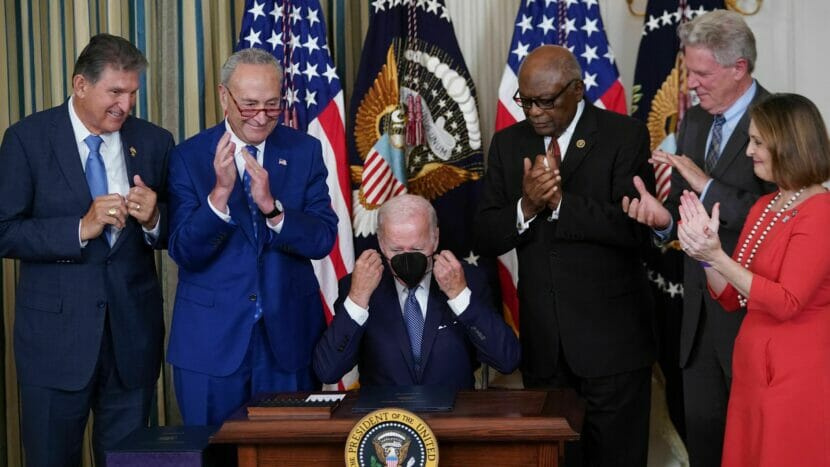
President Biden puts on his mask after signing the Inflation Reduction Act of 2022, in the State Dining Room of the White House in Washington, DC on Aug. 16, 2022. The massive law included a complicated tax credit for electric vehicles. (Mandel Ngan/AFP via Getty Images)

Delivering money faster — and to more people

Buyers will also now have the option to get the credit instantly instead of waiting for the next year’s tax season.

Those purchasing an EV would need to attest that they meet the individual requirements — like that they’re purchasing the vehicle for personal use, they’re not a dependent on anyone’s taxes, and they’re under the income limit.

Then they’d transfer the tax credit to the dealership, and in exchange, the dealer will either give them that much in cash or as a down payment toward the vehicle. The dealer will submit documentation to the IRS, and the IRS says dealers will be reimbursed “promptly” — within 72 hours or so.

Significantly, a buyer taking the credit at the dealership can get it regardless of what their tax bill is that year. Previously, a buyer would need to owe $7,500 in taxes in a given year to get the full benefit of the credit.

That functioned like an income minimum, since many low- and middle-income families owe less than that in taxes. It was also just another headache for people trying to figure out how much the credit was actually worth to them.

Now, even families with no tax liability at all can get the tax credit.

Meanwhile, tax credits for used electric vehicles (worth 30% of the price of the vehicle, up to $4,000) will also be available at the point of sale, through the same system of transferring the credit to the dealership. There is a lower income cap for that program, and some additional criteria for the vehicles.

There are caveats, though

Things can still go wrong. The IRS says there are provisions in place to prevent fraud and deception on the part of dealerships, and dealers can only participate in this program if they’re current on their own taxes.

And there’s one concrete situation where taxpayers may need to give back the credit.

Buyers can qualify under the income cap using either the current year’s income or the previous year’s, whichever is lower. If it turns out their income was over the cap in both years, and they already received the tax credit through a dealership, they would need to repay the tax credit to the IRS.

The income limits for a new vehicle are $150,000 adjusted gross income for an individual, $225,000 for a head of household and $300,000 for a married couples filing jointly or surviving spouses.

For a used vehicle, the income caps are $75,000 for an individual, $112,500 for heads of households, and $150,000 for married couples filing jointly or surviving spouses.

The new system could make a big difference

Though this will simplify things for EV shoppers, the tax credits still remain complicated as the government juggles both encouraging people to buy EVs while also pushing car companies to move more of their supply chains to the U.S.

But a point-of-sale rebate should at least make the credits less of a guessing and waiting game.

The changes “will make a tremendous difference,” says Elizabeth Krear, the vice president of the electric vehicle practice at auto data giant JD Power. “That’s $7,500 right there at the time of the transaction — versus having to finance at a higher price, which increases the monthly payments, and then waiting for that tax rebate down the line sometime in April.”

Copyright 2023 NPR. To see more, visit https://www.npr.org.

With pandemic relief money gone, child care centers face difficult cuts

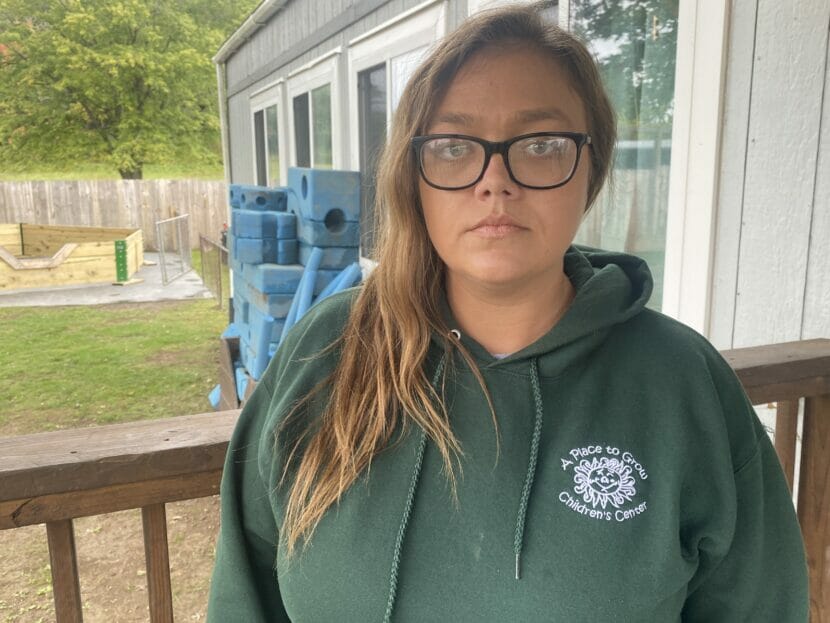
Melissa Colagrosso founded A Place to Grow child care center in Oak Hill, W.Va., 28 years ago. In the pandemic, federal relief dollars allowed her to raise wages and give bonuses, offer paid sick leave and make repairs and improvements at the center. (Andrea Hsu/NPR)

For almost a year, early childhood teachers at A Place to Grow in Oak Hill, W.Va., enjoyed a $200 bonus in every paycheck just for coming to work.

“Just be here, show up, don’t call off, be on time,” the center’s owner Melissa Colagrosso told employees.

Funded through $24 billion in pandemic relief Congress approved in 2021, the bonuses made life a lot easier for the center’s teachers and staff.

But with the expiration of the federal money on Sept. 30 came the end to those bonuses.

“All of the staff have taken a $400-a-month pay cut,” says Colagrosso.

Now, she worries about how her employees will get by. She expects some of them will soon leave her for jobs elsewhere.

A pandemic lifeline disappears

It’s no exaggeration to say government money saved child care in the pandemic.

As part of the 2021 American Rescue Plan, Congress approved a total of $39 billion for child care, an unprecedented level of spending aimed at ensuring essential workers could go to work. The majority — $24 billion — was directed toward stabilizing child care centers and home-based daycares, to guarantee they’d remain open and staffed.

Katelyn Vandal is now director of A Place to Grow. Vandal’s mother Melissa Colagrosso founded the center when Katelyn was 3, in part because her daughter’s daycare had shut down. (Andrea Hsu/NPR)

Colagrosso, who opened A Place to Grow 28 years ago, poured the money into wages and bonuses, repairs and a new HVAC system, playground equipment for what had been an empty field, and even a bus to take older kids to and from school and, in the summers, on field trips.

Now that the September 30 deadline for spending the pandemic funds has passed, she and other child care providers are grappling with what they have to take back.

“We’re going to have to slow down payroll. We have to cut everywhere we can cut,” Colagrosso says.

In addition to curbing bonuses, she has ended paid sick leave for part-time staff and says she will end it for full-time staff soon. She’s eliminated a floating position, someone to help out wherever extra help was needed.

No longer will she be giving $1 an hour raises every year, as she has for the past three. She may resort to larger child-to-teacher ratios, which she says would affect quality.

Affording child care a problem up and down the wage scale

Running her center in a rural, low-income part of West Virginia has never been easy. Colagrosso says there were many months when she struggled to make payroll and found herself at the bank asking for a loan.

Close to three-quarters of the families she serves fall below 85% of West Virginia’s median income, qualifying them for state subsidies. Even those who pay full tuition can hardly afford the cost, particularly those with several young children. They worry that with pandemic relief funds gone, Colagrosso may have to raise her rates.

“We’d either have to work part-time — one of us — or one of us quit our job, which we can’t really do,” says Brittany Smith, a civil engineer. She and her husband have 1-year-old twins and a 12-year old.

Bonuses were life-changing but short-lived

Colagrosso’s immediate concerns are over her staff.

The pandemic bonuses proved life-changing for teachers including Destiny Vansickle, who saved enough money for a down payment on a two-bedroom house next to her sister — a “forever home” for her infant and her 4-year-old.

Destiny Vansickle is a teacher in the 2-year-old classroom at A Place to Grow. Thanks to the bonuses and wage increases she received in the pandemic, she was able to buy her first house. (Andrea Hsu/NPR)

“It’s been really nice to have our own place and having my boys being able to have our own yard,” she says, adding that the low-income housing they left had no yard to play in.

Tena Gee, who’s worked at A Place to Grow for 13 years, says the bonuses allowed her to give her 9- and 12-year-old daughters Christmas for the first time — new bikes, new kayaks, a baby doll with its own bassinet.

“Just being able to do anything on my own for them — not having to lean on somebody — it’s just a feeling you can’t really describe,” she says.

She also decided to do something for herself. She was tired of driving used cars that broke down all the time, so she bought herself a brand new car.

“I took on bills that I was finally able to afford because of the extra money,” she says. “It felt like the work I was doing was finally being acknowledged. Like I feel like my pay matches the hard work I put in.”

Tena Gee has worked at A Place to Grow for 13 years. Now that pandemic bonuses are over, she is considering leaving the field for a job that would pay more. (Andrea Hsu/NPR)

But that satisfaction was short-lived. Without the extra $400 a month in bonuses, Gee is already behind on her car payment.

“I guess maybe it was our fault for getting used to it, thinking maybe it was going to be more than temporary,” she says.

Now, she’s considering finding a better-paying job elsewhere.

Child care not a priority

Senate Democrats have introduced a bill to extend child care stabilization funding for five years, but the measure doesn’t have support from Republicans.

West Virginia and other states are trying to help out, finding money in their budget surpluses to alleviate some of the strain.

Still, Colagrosso is facing deeper cuts.

“You do the math like any other business, and the math doesn’t add up,” she says. “This is what I need. This is what I’m bringing in. It’s not there.”

Colagrosso says she used to think there was a lack of understanding among elected leaders about the value of child care — a lack of understanding that without affordable options, people can’t go to work.

“[Then] the pandemic hit and all this money came, and I thought, ‘Oh, they did understand all along. They understood. They just didn’t prioritize it,'” she says.

And now, after an all-too-brief of recognition of child care as critical — not just for families, but for the economy — she’s afraid the same is true once again.

Copyright 2023 NPR. To see more, visit https://www.npr.org.

Scientists looked at nearly every known amphibian type. They’re not doing great.

A study published in the journal Nature found that the status of amphibians globally is “deteriorating rapidly,” earning them the unenviable title of being the planet’s most threatened class of vertebrates. Here, an endangered Agalychnis annae, commonly known as a Blue-Sided Leaf Frog, is seen at National Biodiversity Institute of Costa Rica, INBio, in Heredia, Costa Rica. (Kent Gilbert/AP)

When JJ Apodaca was starting graduate school for biology in 2004, a first-of-its-kind study had just been released assessing the status of the world’s least understood vertebrates. The first Global Amphibian Assessment, which looked at more than 5,700 species of frogs, toads, salamanders, newts and other amphibians became “pretty much the guiding light of my career,” said Apodaca, who now heads the nonprofit group Amphibian and Reptile Conservancy.

Nineteen years later, a second global assessment of the world’s amphibians has been completed.

“It’s a gut punch,” said Apodaca, who was not involved in the study but has reviewed its findings. “Here we are 19 years later with things not only not improved but getting worse.”

The assessment, published in the journal Nature on Wednesday, looked at two decades worth of data from more than 1,000 scientists across the world. It assessed the status of nearly for nearly every known amphibian on the planet, “Ninety-four percent,” said Jennifer Luedtke, one of the lead authors on the study. Though, she noted, an average of 155 new amphibians are discovered each year.

Discovered or not, the study found that the status of amphibians globally is “deteriorating rapidly,” earning them the unenviable title of being the planet’s most threatened class of vertebrates.

Forty-one percent of the assessed amphibians are threatened with extinction in the immediate and long-term, Luedtke said. “Which is a greater percentage than threatened mammals, reptiles and birds.”

Habitat loss from agriculture, logging and human other encroachment, was the biggest driver of the deterioration. As was the case in 2004. Diseases like the infectious chytrid fungus were a major threat as well.

But the scientists were struck by how fast climate change is emerging as one of the biggest threats to amphibians globally. Between 2004 and 2022, the time surveyed in the new assessment, climate change effects were responsible for 39% of species moving closer to extinction, Luedtke said. “And that’s compared to just one percent in the two decades prior.”

As global temperatures have warmed, driven by the burning of fossil fuels, the length and frequency of droughts is increasing. Seasons are shifting. Precipitation patterns are changing. Extreme weather events like hurricanes, heatwaves and wildfires are becoming more common.

And amphibians are particularly vulnerable to changes in their environment. Many rely on water to reproduce. They’re cold-blooded and, thus, susceptible to small changes in temperature.

“They don’t have any protection in their skin,” said Patricia Burrowes, a professor of biology at the University of Puerto Rico. “They don’t have feathers, they don’t have hair, they don’t have scales.”

Scientists have documented many species moving to new places, retreating to higher ground, as temperatures have shifted. Burrowes studied the forest coqui, Eleutherodactylus portoricensis, a small, endangered yellow or tan frog, native to the mountains of Puerto Rico. It had been observed moving to higher elevations while some similar Puerto Rican frog species were not. Burrowes and a graduate student found that the specific, already endangered, forest coquis that were moving were more sensitive to small shifts in temperature.

“Patterns aren’t predictable anymore,” Burrowes said.

Salamanders and newts were found to be the most at risk, according to the new assessment. The highest concentration of salamander diversity in the world is in the southeastern U.S. — the Southern Appalachia — where Apodaca, the executive director of the Amphibian and Reptile Conservancy, works and lives.

“This isn’t just a problem of things going extinct in the Global South and Australia and Central America and places like that,” he said. “This is the story of things declining and being endangered right here in our own backyard, so it’s our responsibility, our duty to save these things.”

Copyright 2023 NPR. To see more, visit https://www.npr.org.

McCarthy becomes first speaker removed by US House vote

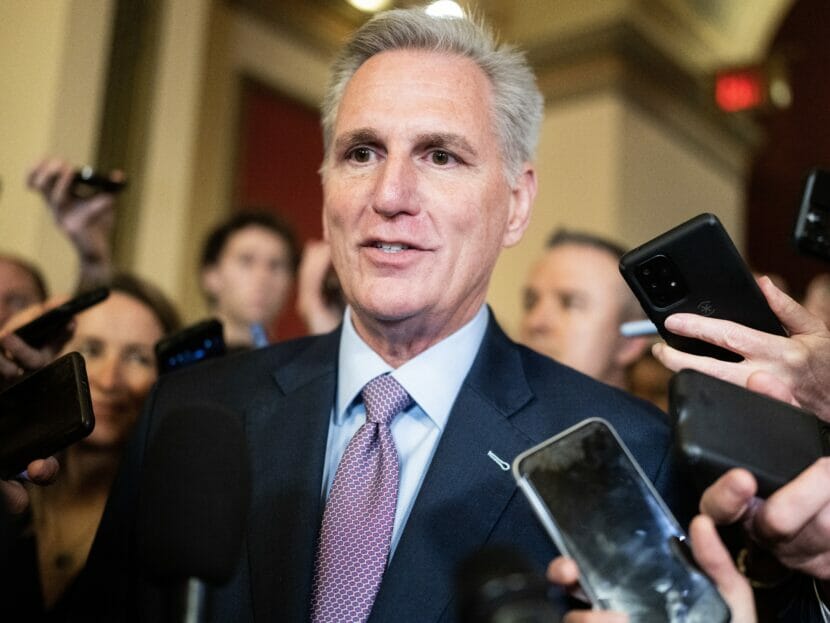
Speaker of the House Kevin McCarthy, R-Calif., makes his way to the House floor in the U.S. Capitol before a procedural vote relating to a motion to vacate against him on Tuesday. (Tom Williams/CQ-Roll Call, Inc via Getty Images)

The House has voted to remove Kevin McCarthy as speaker, marking the first time in history that a House speaker has been removed in this way.

The final vote was 216-210 in favor of a motion to “vacate the chair.” Eight Republicans, led by Florida Rep. Matt Gaetz, joined all Democrats present in voting against McCarthy.

Congress has now entered uncharted territory: The House will be forced to hold votes on a new speaker, though McCarthy’s defectors have not named any alternative nominee. It’s not clear whether McCarthy will run for the position again, or if any other Republican could win enough votes to secure the gavel.

The vote marks what could be the end of a fraught speakership for McCarthy. It took him 15 rounds of voting to secure the position in January. And in recent weeks, hardliners within his party blocked his efforts to pass a temporary spending bill to avoid a government shutdown.

Rep. Patrick McHenry, the chair of the Financial Services Committee, has been named speaker pro tempore, or interim speaker, until a new leader is elected. House Republicans are set to meet Tuesday evening to discuss the path forward.

Republicans split into factions

Gaetz, who never supported McCarthy’s candidacy in January, has cited McCarthy’s decision to pass a short-term spending bill with Democratic support as evidence he has not “fulfilled his promises” to conservatives.

After the vote Tuesday, Gaetz told reporters that this move “represents the ripping off of the band aid, and that’s what we need to do to get back on track.”

McCarthy was defiant but resigned to the vote following a lengthy meeting of House Republicans earlier in the day.

“If you throw a speaker out that has 99 percent of their conference, that kept government open and paid the troops, I think we’re in a really bad place,” McCarthy told reporters in the Capitol Tuesday morning.

Ahead of the vote, Democrats and Republicans huddled in corners and gathered in groups on the House floor, furiously trying to calculate whether or not McCarthy would survive the challenge. It would take a majority of the members present to remove McCarthy, leaving both parties tabulating exactly how many members were in the chamber for the vote.

Counting members turned into an intense project as a group of McCarthy’s critics sat in the back corner of the House floor with Gaetz, the member who set the revolt in motion. Across the room, McCarthy’s allies huddled with the speaker’s floor staff looking at notes and their phones.

Democrats refuse to save McCarthy

Ahead of the vote, there was speculation that Democrats might step in to save McCarthy’s speakership by voting “present” rather than in favor of the motion to vacate. But McCarthy said he was not willing to offer any concessions to Democrats to help him say in power.

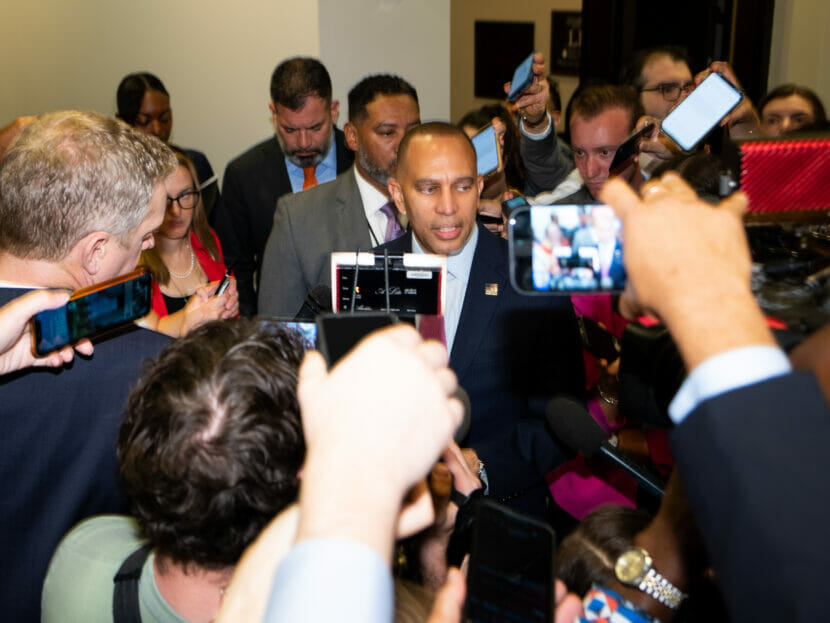
House Minority Leader Hakeem Jeffries, D-N.Y., said it would be up to Republicans to “break with extremists.”

“We are ready, willing and able to work together with our Republican colleagues but it is on them to join us to move the Congress and the country forward,” Jeffries told reporters in the Capitol.

House Minority Leader Hakeem Jeffries, D-N.Y., says it is up to Republicans to find a way out of their political differences. (Bill Clark/CQ-Roll Call, Inc/Getty Images)

His comments followed a lengthy “open mic” meeting of House Democrats in the basement of the Capitol complex Tuesday. One by one lawmakers got up and had one minute to advise on what they thought the caucus should do, and one by one Democrats railed on Speaker McCarthy’s record and his unwillingness to reach across the aisle.

“I think Kevin McCarthy is among the most unprincipled, untrustworthy people I ever have encountered in the entirely of my life, and I think he does damage to this institution and our democracy,” Virginia Rep. Abigail Spanberger, a moderate Democrats, told reporters.

Multiple Democrats told NPR that neither the speaker nor his allies had approached Democratic leaders with any proposal to support him.

Rep. Richard Neal, D-Mass., said McCarthy’s decision to change the rules on who can propose a resolution to remove the speaker, allowing just one member to do it — a concession made for McCarthy to get the speakership in the first place — “essentially puts the fringe in charge of the House of Representatives in terms of rulemaking.”

Neal said he had a “Machiavellian position” about that decision in January: “Once you seal the deal, you have to take the consequences.”

Copyright 2023 NPR. To see more, visit https://www.npr.org.

A nationwide emergency alert test is coming to your phone on Wednesday

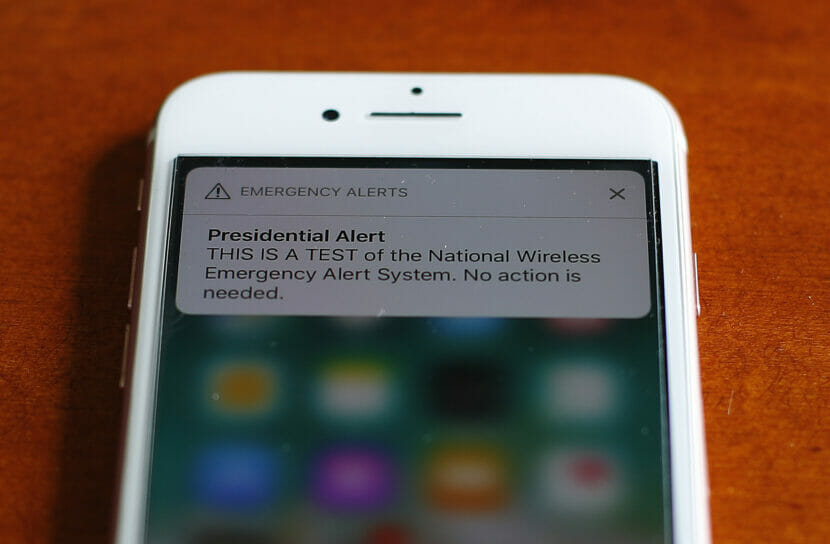
The first test of the national wireless emergency system by the Federal Emergency Management Agency is shown on a cellular phone in 2018. This year’s test will look a lot like this. (Paul Sancya/AP)

Consider yourself warned. The federal government will conduct a nationwide test of the emergency alert system on Wednesday.

The test messages will be sent to all cellphones, televisions and radios. The test will emit sound and — on phones — vibration.

The Federal Emergency Management Agency and the Federal Communications Commission are running the test in preparation for actual emergencies. The aim of the test is to ensure the emergency messaging system is running smoothly in the event Americans are threatened by natural disasters, terrorism or other dangers to public safety.

You may be familiar with the jolting sounds accompanying National Weather Service alerts and AMBER (America’s Missing: Broadcast Emergency Response) alerts. Wednesday’s cellphone alerts will be sent via the same wireless system.

When is the test happening?

The test is scheduled to begin at about 10:20 a.m. Alaska time on Wednesday, Oct. 4.

The testing window runs for 30 minutes, but you should only receive the message once. If an actual emergency happens that day, the test could be postponed — a backup test is scheduled for the following week.

What will the test message look like?

On cellphones, the alert will read:

“THIS IS A TEST of the National Wireless Emergency Alert System. No action is needed.” Phones set to Spanish will display: “ESTA ES UNA PRUEBA del Sistema Nacional de Alerta de Emergencia. No se necesita acción.”

TV and radio will announce:

“This is a nationwide test of the Emergency Alert System, issued by the Federal Emergency Management Agency, covering the United States from 14:20 to 14:50 hours ET. This is only a test. No action is required by the public.”

Why is the test happening?

FEMA is required by law to conduct national tests of the Integrated Public Alert & Warning System (IPAWS) at least once every three years. The last national test was in 2021.

Copyright 2023 NPR. To see more, visit https://www.npr.org.

Site notifications
Update notification options
Subscribe to notifications