1 Sections

Residents in avalanche zones return home after Juneau clears last evacuation advisory

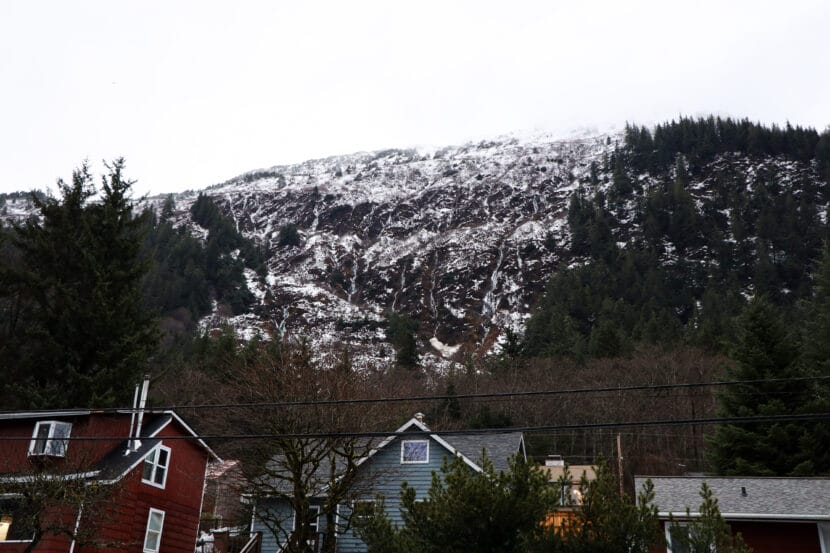
The Behrends slide path on Mount Juneau on Wednesday, Jan. 14, 2026. (Photo by Clarise Larson/KTOO)

Residents living in avalanche-prone downtown neighborhoods got the all-clear to return home Wednesday after the city lifted its last remaining evacuation advisory this morning. 

Mary Amor was finally preparing to leave Juneau’s emergency shelter at Centennial Hall. She’s been staying there with her brother since last Friday, when the city issued an evacuation advisory for residents in all known slide paths downtown and along Thane Road.

“I know that a snow avalanche is nothing to play with,” she said. 

Amor lives on Gastineau Avenue, which borders the city’s avalanche hazard zone and has seen multiple landslides in recent years. She evacuated with her brother because they were scared for their safety. Amor is in her 60s and is disabled. 

She said living away from her home has been stressful, but she was grateful to have a safe place to hunker down.  
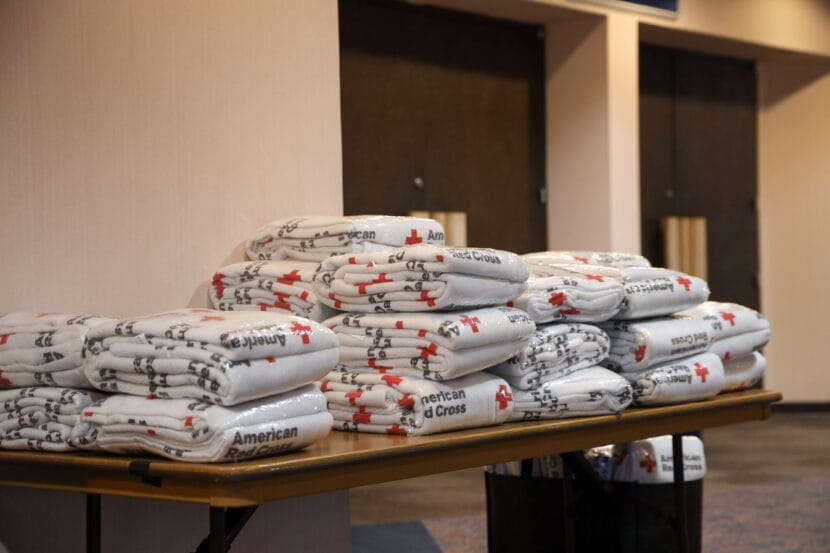
Blankets sit in a stack for avalanche evacuees at Centennial Hall on Friday, Jan. 9, 2025. (Photo by Clarise Larson/KTOO)

“It’s much a blessing, because there ain’t nowhere else to go out except outside,” Amor said. “This is a real blessing, them helping out the people that need it, in a time of need.”

Amor was one of 13 people to stay at the shelter Tuesday night, according to Britt Tonnessen, the community disaster program manager for the American Red Cross of Alaska in Southeast. She says more than 50 people used the shelter over the six days that the risk of large avalanches loomed over downtown neighborhoods and Thane. 

“The partners that came together, I think, did a really incredible job and utilized the limited resources we have in Juneau, brought in what was needed and cared for people to the extent that we could,” she said. 

The Red Cross plans to close the shelter on Thursday morning. 

Some evacuees stayed with family or friends instead, like Carlos Cadiente and his wife. Cadiente said he returned to his home in the Behrends slide path Sunday night after looking at the remaining snow on Mount Juneau and deciding he felt safe enough.

And he said he’s glad to be back.
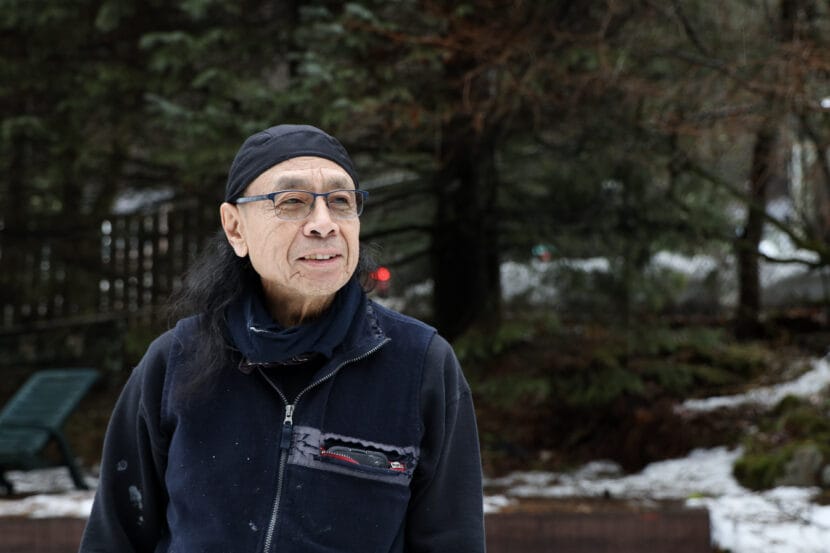
Carlos Cadiente stands in the backyard of his home kitty-corner from Juneau-Douglas High School: Yadaa.at Kalé in the Behrends slide path on Wednesday, Jan. 14, 2026. (Photo by Clarise Larson/KTOO)

“Oh it’s a relief,” Cadiente said. “I’m happy that the big one didn’t come down. I mean, nobody got hurt.”

But now, he said his basement is flooding, and he thinks it’s because some of the shingles on his roof are too short to shed water away from the house.

The Behrends neighborhood evacuation advisory ended Wednesday morning, after the advisory for all other neighborhoods, including Amor’s, ended Sunday evening. 

John Bressette is an avalanche advisor at the City and Borough of Juneau. He said that the city didn’t decide to lift the evacuation advisory lightly. 

“I think people can feel good about going back to their homes,” he said. 

Concern grew again on Tuesday due to winds forecasted to reach as high as 60 miles per hour overnight. 

But Bressette said the city’s new radar system did not detect any new avalanches on Mount Juneau overnight. On Wednesday morning, drone flights showed him that previously undetected avalanches at high elevations had happened earlier on the Behrends slide path, then the rain and warm air melted a lot of the snow that would have made a large avalanche possible. 

“Overall snow levels being reduced quite a bit by all the rain, especially in the lower elevations, where avalanches have a tendency to entrain more snow. There’s just not a whole lot of snow left for that to happen,” he said. 

But Bressette said people in avalanche zones should keep ‘go’ bags packed in case conditions change. 
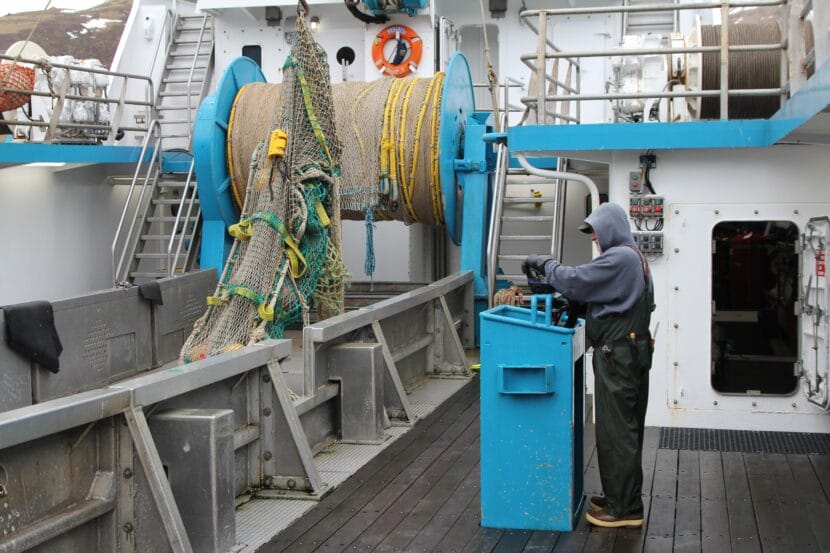
Newly proposed legislation aims to curb Alaska bycatch

A crewmember on the fishing vessel Progress wraps up the 2025 pollock season in Unalaska. A storm caused millions of dollars in damage to the 130-foot trawler during the 2018 fishing season. Those kinds of incidents are rare, thanks in part to NOAA's marine forecast service.
The proposed legislation would establish a fund for fishermen to purchase updated technology and trawl gear to limit seafloor contact and bycatch. (Theo Greenly/KUCB)

Alaska’s congressional delegation introduced legislation Wednesday that aims to reduce bycatch in parts of southwest Alaska using better marine data, technology and gear.

The Bycatch Reduction and Research Act, introduced by U.S. Sens. Dan Sullivan, Lisa Murkowski and Congressman Nick Begich, would address research gaps in environmental data and improve monitoring of fisheries in the Bering Sea, Aleutian Islands and Gulf of Alaska. It would also establish a fund for fishermen to purchase updated technology and trawl gear to limit seafloor contact and bycatch. That’s when harvesters accidentally catch species they’re not targeting.

The proposed legislation builds on recommendations from the federal Alaska Salmon Research Task Force, which concluded in 2024 and aimed to better understand how humans cause declines in fish and crab species, including through factors like bycatch.

The legislation would revive the salmon task force under the new name of the Bycatch Reduction and Research Task Force. The group would review National Oceanic and Atmospheric Administration research on Alaska salmon and trawl gear impacts on the seafloor, and provide recommendations for future research.

“In recent years, Alaskans have witnessed unprecedented declines among some fish and crab species in parts of the state while, in other parts, runs have been strong and historic,” Sullivan said in a press release. “We need to get to the bottom of all potential causes of this increased variability, including concerns about bycatch and trawl gear habitat impacts, to strengthen the sustainability of our fisheries.”

For years, fisheries stakeholders have debated if and how fishing gear types, especially trawl gear, impacts marine species and seafloor habitats. Conservation and tribal groups and various stakeholders have pushed fisheries managers to take stronger action on limiting both bycatch and seafloor contact in trawling.

Representatives in the trawl industry have supported stricter regulations around bycatch, but also cautioned that more extreme limitations could be burdensome to the massive pollock industry, which is a major economic driver to some Western Alaska communities, including Unalaska.

The regional council that manages Alaska’s federal fisheries will discuss chum salmon bycatch management at its upcoming meeting in early February.

The proposed legislation still has to pass both the Senate and House before it would go to the president to be signed into law.

Newscast – Wednesday, Jan. 14, 2026

In this newscast:

  • Residents living in avalanche-prone downtown neighborhoods got the all-clear to return home today after the city lifted its last remaining evacuation advisory this morning,
  • Avalanche risk rose over the weekend, as more snow and then rain pounded Juneau. Meanwhile, staff at the city’s emergency warming shelter for unhoused residents relocated operations three times in two days,
  • A Juneau-born athlete is headed to Italy next month to represent Team USA’s biathlon team in the 2026 Olympic Winter Games,
  • A small population of grizzly bears makes its home above the Arctic Circle, but not much is known about them, or how they find enough food to survive the extreme winters

The freshmen: Two new Mat-Su Republicans prepare for their first session

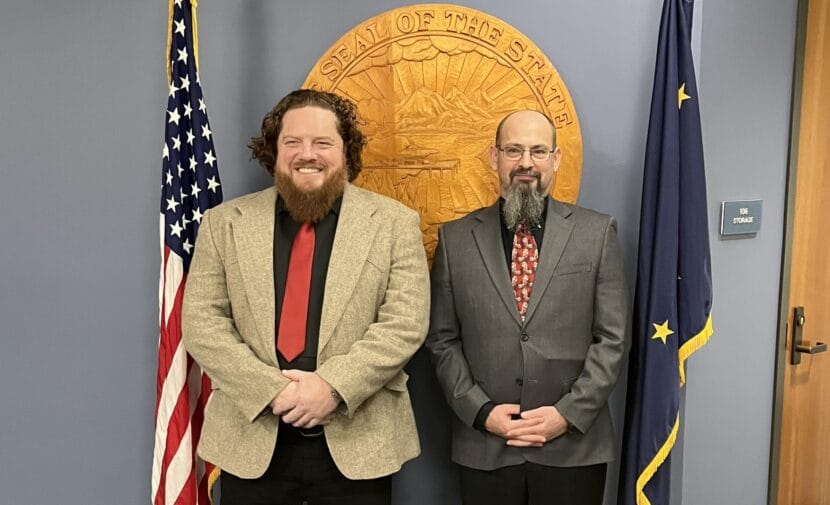
 two men smiling in front of state seal
Republican Reps. Garret Nelson, left, and Steve St. Clair pose for a photograph during a swearing-in ceremony in Anchorage on Dec. 30, 2025. (Alaska House Republicans)

The Alaska House of Representatives will have two new faces when lawmakers return next week for the start of the legislative session. Gov. Mike Dunleavy appointed Mat-Su Republicans Steve St. Clair and Garret Nelson to fill two open seats in the state House.

So, who are these two new lawmakers, and what do they hope to accomplish in their first year as a budget crunch looms?

The newcomer: Rep. Garret Nelson, R-Sutton

Newly minted Rep. Garret Nelson says he’s doing his best to get up to speed with the session fast approaching.

“I’ve never been up until 2 o’clock in the morning so many days in a week in my life as I have been this week, trying to figure this stuff out,” Nelson said in an interview.

Nelson grew up on a family cattle ranch in Mackay, Idaho, and has spent most of his life in the private sector. He spent some of his early career as a welder, later moving into sales at the financial services firm Gravity Payments. He, his wife and nine children moved to the Mat-Su community of Sutton in 2016, where he served as chair of the local community council.

Nelson is steeling himself for what could be a tough first year. He called the world of politics a “cesspool.”

“My expectations are, like, to hold to principles as much as I can,” he said. “I just expect to go down and get my teeth kicked in.”

Nelson has already found himself in something of a spat with a senior Republican senator, Anchorage Sen. Cathy Giessel, who suggested in a newsletter that his large family could compromise his ability to act in the state’s best interest when voting on the Permanent Fund dividend.

“At what point does a vote for a ‘full dividend’ comprise a conflict of interest, or even a breach of ethics? Legislators have gone to jail in the past for accepting money in payment for their votes,” Giessel wrote in a newsletter to constituents.

Nelson said the comment was “grossly inappropriate” and “weird.”

In a text message, Giessel stood by the comment and said she had raised a legitimate question. Giessel said any suggestion that she had insulted Nelson’s family was “absurd.”

Nelson calls himself an “unashamed conservative” and often references his Christian faith and devotion to family. He says he’s in favor of paying large Permanent Fund dividends in line with a formula outlined in state law, about $3,800 this year. Gov. Mike Dunleavy’s budget proposal would do exactly that by taking $1.8 billion from the state’s main savings account.

At the same time, though, Nelson said that drawing from savings might not be the right move. The state shouldn’t just try to live off its savings and put off harder questions for another day, he said, just as a family shouldn’t spend more than it brings in.

“We could raid the Permanent Fund and pay all our bills this year, piece of cake, you know what I’m saying? We could pay all the bills and give everyone a full PFD, and everyone’s going to be happy, but that’s not a good long term solution.”

Nelson says he hasn’t quite figured out the right approach — he says he’s still boning up on the ins and outs of the myriad issues facing the Legislature.

But Nelson says he’s planning to bring with him a built-in support system. Nelson says the whole family will join him in Juneau for the session.

“The way that we’re doing it is, like, it’s a family adventure,” he said. “We are all in this together.”

The veteran: Rep. Steve St. Clair, R-Wasilla

Joining Nelson in the House is Rep. Steve St. Clair, a longtime staffer for former House speaker and now-Sen. Cathy Tilton, a Wasilla Republican. St. Clair spent two decades as a military policeman, including a stint at Fort Wainwright in the early 2000s, before moving into conservative politics.

Like Nelson, St. Clair said in an interview that he, too, is spending long nights preparing for his first session. But with seven years of experience in the Capitol, plus an MBA, he said he thinks he’ll be able to hit the ground running.

“I’m a budget guy,” he said, “but I’m also very familiar with all the other departments, their budgets. I’ve worked on amendments. I’ve worked on bills.”

That means he’s coming into the session with some ideas for how to shrink the state’s budget gap — for example, freezing state workers’ pay, and gradually reducing so-called optional Medicaid services offered by the state. Those include things like dental and vision care and prescription drugs.

“They’re not required by law. Basically, it’s the Cadillac version instead of the (Ford) Pinto version,” he said. “I think we need to pare that down.”

St. Clair said he’s also concerned about proposals to restructure the Permanent Fund to function more like a university endowment, one area he expects the bipartisan House and Senate majorities to focus on this year.

But on most fronts, St. Clair acknowledged he might not get his way, given that he’s in the minority for his first year in office.

St. Clair said he’s not expecting lawmakers to solve the state’s budget issues in the four months of the session, given that it’s an election year, but St. Clair says he’ll do his best to contribute.

“I’m humbled to be here and (I’m) going to do the best I can for my district and Alaskans,” he said.

A Juneau-born athlete is headed to the 2026 Olympic Winter Games

Maxime Germain during a World Cup Biathlon relay in Oberhof, Germany, on Jan. 11, 2026. (Photo by Nordic Focus Photo Agency)

A Juneau-born athlete is headed to Italy next month to represent Team USA’s biathlon team in the 2026 Olympic Winter Games. 

Last month, 24-year-old Maxime Germain made the team for the event that combines cross-country skiing and rifle shooting. 

This week, Germain spoke to KTOO from Germany, where he’s racing in the Biathlon World Cup. He said he’s very excited to represent Alaska, as well as the U.S., in the Olympic Winter Games. 

“There are a lot of opportunities, especially (because) our sport has never had a medal,” he said. “As a team, we’re very excited, and I’m very excited to get that opportunity this year.”

Germain was born in Juneau in 2001, but he says his family moved away after about a year. Then, after living in Hawaii and France, he returned to Juneau for another year to attend kindergarten at Sayéik: Gastineau Community School. 

“I didn’t ski when I was a little kid in Juneau because there was no snow and also I was too young,” he said. “But it made me appreciate the wild as well. I like training in the mountains and open areas like Alaska.”

He spent most of his youth in France, but returned to Alaska when he was a teenager, where he graduated from West Anchorage High School in 2019. During his time in Anchorage, he trained with the Anchorage Biathlon Club and raced for the APU Nordic Ski Center. 

“Maxime has worked really hard throughout the off season, improving his mental game and bringing an overall level up to the World Cup this year,” said Lowell Bailey, U.S. Biathlon High Performance Director, in a press release. “This showed right away at the first World Cup in Ostersund, where he proved he can be among the world’s fastest and best biathletes. Maxime will be a great addition to the U.S. Olympic team!”

Germain said he’s grateful for his time in Alaska. He said living and training in the state was pivotal for his career. He pointed to other successful skiers that have come out of the state, like Gus Schumacher, Luke Jager and Zanden McMullen.

“The Alaskan community in Nordic is awesome. Like, we’re one of the highest producers of high-end athletes in the country, especially in Nordic,” he said. 

The 2026 Winter Olympic Games in Italy begin on Feb. 6. 

Why Juneau’s warming shelter moved multiple times during the avalanche advisory

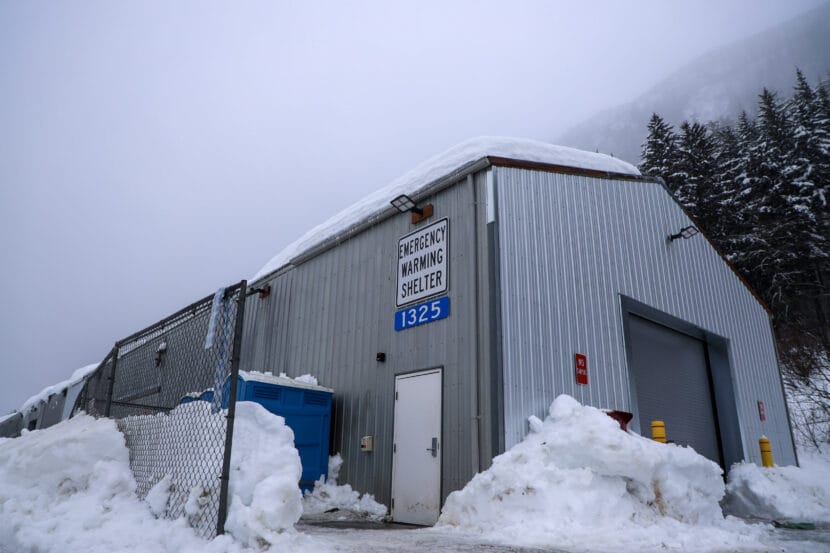
Juneau’s emergency warming shelter on Thursday, Jan. 25, 2024. (Clarise Larson/KTOO)

Avalanche risk rose over the weekend as more snow and then rain pounded Juneau. Meanwhile, staff at the city’s emergency warming shelter for unhoused residents relocated operations three times in two days.

When the city issued evacuation advisories for high risk areas of town on Friday, it said the shelter along Thane Road was too close to historic avalanche paths to stay put, said St. Vincent de Paul Director Jennifer Skinner. 

The warehouse the city and the nonprofit use for the shelter is right below the red zone on the city’s avalanche risk map

“It was intense to realize that we were going to have to relocate our operations to, at that point, an undisclosed location,” she said. “And we were on standby.”

The shelter serves an average of 45 people who don’t have another place to sleep each night.

Shelter staff packed up everything they could — including a refrigerator — in an hour and a half. Skinner said she was preparing for an avalanche to prevent them from accessing the building ever again. 

First, the city told them to move to the Marie Drake building between the high school and Harborview Elementary School.

“And we completely 100% reset there, and as we were finishing, we’re hearing the roof, and we’re hearing all these cracks and creaks and such,” Skinner said. “And so we contacted our city officials again and said, ‘Hey, is this safe?’ And he said, ‘You know what? Get out. Let’s err on the side of caution.’”

So warming shelter staff evacuated that building, too. They had to make a safety plan with the fire department to go back in and get all the equipment they’d moved in.

The city and Red Cross of Alaska has made Centennial Hall available for residents in avalanche slide zones. 

But city Emergency Programs Manager Ryan O’Shaughnessy said the city wanted to avoid housing the two groups together, citing concerns over potential drug use and hygiene. 

So the city identified Sít’ Eetí Shaanáx — Glacier Valley Elementary as the only available building for the warming shelter. The school had closed for part of the school week so crews could shovel snow off the roof. 

With the help of a moving company, Skinner said they were able to set up at the school. They finished setting up an hour before the shelter opened at 9 p.m.   

“So that was a huge success for us — we didn’t skip a beat,” she said. “Our patrons were not impacted at all by having to reset.”

The warming shelter operated out of the school for just one night, and 44 people came to stay. 

Then, on Saturday, city officials determined the Thane warehouse to be safe enough for Skinner and her staff to move back in. 

Some Juneau residents raised concerns on social media about temporarily housing the unhoused population in an elementary school. 

City Manager Katie Koester spoke to some of those concerns at Monday’s Juneau Assembly meeting.

“We had a thorough inspection, a thorough cleaning of the facility,” she said. “But really for life safety of those residents, we had to make that decision, and we had to make that decision quickly.”

But Skinner said she mostly saw support from Juneau residents during the crisis. 

“I can’t express my gratitude to community members and community businesses that are so willing to step in and step up when we have a hard time,” she said. “And help us problem solve and just be like ‘we got you.’”

The emergency warming shelter is once again operating out of its usual location in Thane, with transportation to and from the Glory Hall, which provides meals and other day services. 

Avalanche risk remains high, and the city’s evacuation advisory is still in place for residents living in the Behrends slide path. 

Site notifications
Update notification options
Subscribe to notifications